On February 19, Henry Kissinger traveled to Brazil to sign a cooperation agreement with another friendly dictator, General Ernesto Geisel. In Brasilia, he had to sit through an entire soccer game, even though he didn’t understand the offside rule. At the same time in Colombia, the government declared a state of emergency in response to student protests against the imminent visit of the Secretary of State.
The New York Times on Sunday, February 22, reported on its front page: “The agreement gives a strong boost to Brazil’s aspirations to be recognized as an emerging world power.”[i]
The same article reproduced the Secretary of State’s statements:
“We have expressed our views on the issue of human rights several times,” Kissinger had said.
The United States supports respect for the democratic governments of each country… I want to make it clear that I do not want to turn our policy for the hemisphere into an obsession with a small Caribbean country… Our talks in Brazil have focused exclusively on market issues.
It was not the first or last time that Mr. Kissinger lied to the press with a straight face. It was not the first or last time that the press collaborated in the attempt. One of his masterstrokes was to appear before the television cameras on September 12, 1973, affirming and confirming that his government had nothing to do with the coup d’état in Chile. Despite having been a survivor of Nazi barbarism, he was, above all, a fervent enemy of the Soviets, the only enemies of Nazism when the entire West loved Hitler’s ideas.
In 1976, despite the scandals that forced Nixon to resign and the Church Commission’s discoveries about the systematic manipulation of the press and multiple covert assassination plans, the CIA and its unacknowledged branches remained in command. The Brazilian dictatorship, with ten years more experience than the Chilean one, had already worked on biological weapons at the Butantan laboratory at the University of São Paulo. From this laboratory, Michael Townley received information on the production and effects of nerve toxins that were used to eliminate dissidents without leaving any traces. The Pinochet government received shipments of botulinum neurotoxin, a toxin derived from the bacterium Clostridium botulinum, which is much more potent than cyanide. The dissidents on whom the new discovery was tested suffered from poisoning and muscle paralysis. The painful death was usually caused by this paralysis of the lungs, rather than by asphyxiation from the poisoning. The effectiveness of this new marvel was received with enthusiasm.
At that time, from the Southern Cone to Europe, the deaths of prisoners and dissidents from poisoning in wine, cakes, and hospital medications became commonplace. So did sarin gas. This gas had been discovered by the Nazi government in Germany, and one of its greatest virtues was that it left no traces after its application. After World War II, not only were a thousand Nazi engineers hired by NASA, but many more were channeled by the CIA to support friendly dictatorships around the world, as in the well-known case of Klaus Barbie in Bolivia. All were hired for their knowledge and fanatical anti-communism. Not for their superior race. The CIA itself invested decades and mountains of dollars developing its own experiments with drugs and poisons.
One of its experiments consisted of inoculating a thousand poor people in Guatemala with syphilis and gonorrhea. One of its projects was MK-Ultra, to find the “truth drug,” which started the first outbreak of addiction to LSD and other drugs in the United States. All for a good cause.
After several of these assassination projects planned by the Parallel State were exposed by the US Senate’s Church Commission in 1975, the agency continued its tradition of deciding who deserves to live and who does not, as if nothing had happened. By the end of the decade, biological weapons had multiplied their offerings. One of their targets was, unsurprisingly, the damned and unyielding Caribbean island. Orlando Bosch and other renowned historical heroes from Miami participated in the napalm and phosphorus bombings of Cuba’s sugar mills and fields, which ruined several harvests. However, even this brutal sabotage did not produce the desired results, so other more devastating means were resorted to.
In 1980, Cuban Eduardo Arocena was accused, among other things, of introducing the hemorrhagic dengue epidemic into Cuba, which seriously ill more than 300,000 people. In 1984, before a U.S. federal jury, Arocena admitted to participating in this massive biological weapons attack, planned and executed by his team in Miami.
“We brought some germs to Cuba to use against the Soviets and against the Cuban economy,” Arocena said. “It was not my intention to harm any innocent Cubans…” [ii]
Shortly before, the State Department had dismissed this accusation as absurd, although it was nothing new—neither the sabotage nor the denial of any responsibility for it. The CIA, an agency that almost never reports its activities to other branches of government and respects the law only when it does not get in its way, had done so much earlier. None of its agents has ever been brought before a court for their crimes. Nor will they be, for many generations to come. Their crimes, when they are known in part, are only known decades later, when all those involved are dead and it is no longer necessary to black out their names when some anti-patriot requests official declassification, protected by the Freedom of Information Act.
According to the Washington Post in 1979, the use of biological weapons developed by the CIA to subdue other troublesome countries, such as Vietnam, had focused on the destruction of Cuban agriculture with agents such as thrips palmi, the lethal Newcastle virus against chickens, first, and African swine fever later, in 1971, which killed half a million pigs on the island.[iii]
By pure coincidence (or not?), the catastrophe in Cuba coincided with swine fever on the nearest island. There is no study linking the two events, so we could describe this observation as mere speculation. However, at the same time, the Dominican Republic suffered a devastating plague that wiped out its pigs. To prevent the plague from spreading to the United States, Washington came up with a brilliant idea: to kill and bury a million black pigs in Haiti.
The big business of preventively exterminating Haiti’s black pigs and replacing them with delicate white pigs from Iowa generated huge profits for some companies in the north, but caused another economic crisis in Hispaniola.[iv] Haiti’s poorest farmers received no compensation for killing their black pigs. The OAS and Washington invested the promised $23 million, but only $7 million reached those affected, who never knew that they had actually lost $600 million thanks to the great idea of the country that knows how to get things done. According to the University of Minnesota, if the disease had reached the US market, the country would have lost up to $5 billion. The country or the corporations. Either way, Haiti’s black pigs were replaced by Iowa’s white pigs. For centuries, black pigs had adapted to the conditions of the island, while the replacement plan devised by experts in Washington required that the new pigs from Iowa be cared for better than the farmers themselves could care for their own children. The Iowa pigs, whiter and fatter than the traditional black pigs, could only drink filtered water. Malicious tongues in that country claimed that they also needed air conditioning to survive the island’s heat.
In Cuba, the catastrophe occurred two years after Nixon announced that the United States was abandoning the development and use of biological weapons. In all cases, the CIA’s biological weapons attacks against Cuba were carried out by Cubans, sometimes stationed in Panama and brought into Cuba from the Guantanamo base. [v] When the CIA was questioned by Congress, it blamed the outbreak first on Europe and then on Africa. The contradictory versions provided by the CIA to the congressional committee were refuted by scientists at the time because, among other reasons, the viruses mentioned did not correspond to the extremely high mortality rate caused.
Finally, an intelligence agent (responsible for delivering the virus to the Cubans) leaked the information to journalists Drew Fetherston and John Cummings of the Washington Post. The information confirmed that these pathogens had been introduced into Cuba by Cuban exiles in Miami.
Due to the blockade, the White House denied Cuba a supply of the larvicide temephos to reduce the catastrophe of dengue sabotage. As a usual detail that hardly anyone cares about, it is necessary to remember that, thanks to this brilliant idea, 158 people died, almost all of them children, and hundreds of thousands more were seriously affected by the epidemic. Two decades later, on May 7, 2002, George W. Bush’s undersecretary of state, John Bolton, would accuse Cuba of developing biological weapons.
The leader of Omega 7, Eduardo Arocena (known as Omar), would be one of the few involved in multiple terrorist acts who would end up in a U.S. prison. The FBI accused him of at least two murders and the explosion of thirty bombs along the East Coast. Miami journalists, such as Angel Cuadra of Diario de las Américas, would describe him as «a man convicted for reasons related to the long-standing struggle of anti-Castro Cubans for the freedom of Cuba, their homeland.
Arocena is perhaps the longest-serving political prisoner in the world.» [vi]
In other words, a political prisoner. After a long campaign to collect signatures in his favor, he will be released in 2021. In Miami, he will be welcomed as a hero.
[i] Jonathan Kandell “U.S. and Brazil Sign Accord on Tie” The New York Times. February 22, 1976, p. 1.
[ii] Digital Repository, University of New Mexico. digitalrepository.unm.edu/cgi/viewcontent.cgi?article=9988&context=noticen
[iii] CIA Reading Room. Declassified. CIA /readingroom/docs/CIA-RDP90-01208R000100220001-8.pdf.
[iv] Majfud, Jorge. La frontera salvaje. Rebelde Editores. 2021. p. 501.
[v] CIA Reading Room. Declassified. CIA /readingroom/docs/CIA-RDP90-01208R000100220002-7.pdf
[vi] Ángel Cuadra. “Eduardo Arocena: el prisionero más antiguo” (Eduardo Arocena: the longest-serving prisoner). Diario de la Américas, September 23, 2016.
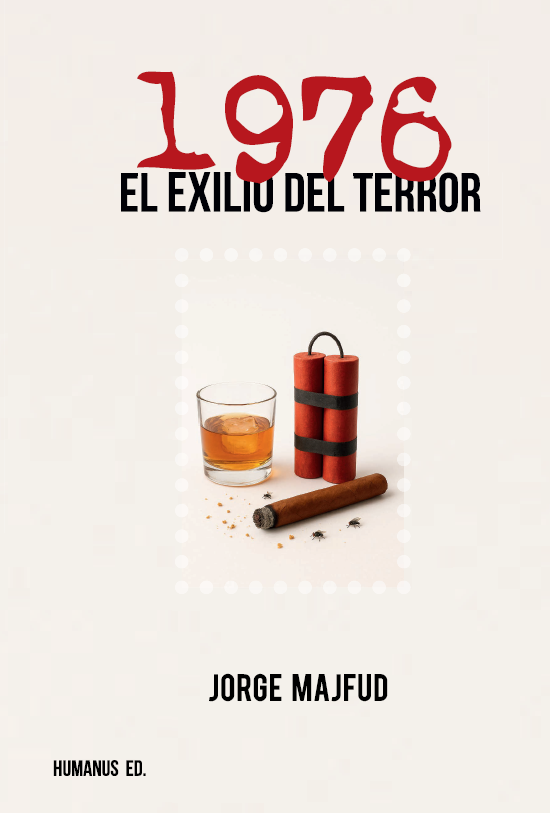
Chapter from the book 1976. The Exile of Terror (2024)


Deja un comentario