إن الإبادة الجماعية في غزة لا تشبه أي إبادة جماعية أخرى في التاريخ. فهي لا تقتصر على منطقة جغرافية واحدة، بل تحدث في جميع أنحاء العالم. في الوقت نفسه، شهد العالم فلسطنة مزدوجة: فقد فلسطن المعارضون على يد القوى الوطنية، بينما نما وعي فلسطيني بين بقية العالم. فلسطين مختبر اجتماعي وجيوسياسي، وقد امتدت مأساتها إلى زوايا غير متوقعة، من أوروبا إلى الولايات المتحدة، وعبر العديد من دول الجنوب العالمي. ستكون فلسطين فيتنام الجيل الجديد. ومثل فيتنام، لن تغير الجغرافيا السياسية العالمية، لأن الجغرافيا السياسية ستتخذ مسارات مختلفة، لكنها ستغير كيفية رؤية جيل للرواية السائدة. سيستغرق التغيير الجذري وقتًا أطول، وسيأتي مع التوازن الجيوسياسي الجديد أو اختلاله من منتصف هذا القرن فصاعدًا. حاليًا، يُعد الصراع الإسرائيلي الفلسطيني هدفًا آخر من الأهداف الملحة للفصل العنصري العالمي (عسكريًا وماليًا) من قبل النخب العالمية الصغيرة قبل أن تفقد السيطرة المطلقة.
On September 29, 2025, the New York Times reported on the White House meeting between President Trump and Israeli Prime Minister Netanyahu. Its front-page headline read: “Trump and Netanyahu Tell Hamas to Accept Their Peace Plan, or Else.” The subheadline clarified: “President Trump said Israel would have a green light to ‘finish the job’ if Hamas refused to agree to the cease-fire deal.”
The cease-fire deal… It’s not that history rhymes. It repeats itself. Since the 15th century, agreements signed by European empires have been systematically ignored when they no longer served those empires or when new opportunities advanced their lines of fire. Destruction and plunder were seasoned with a convenient cause: civilization, freedom, democracy, and the invader’s right to defend itself. For centuries, this was the repeated history of diplomacy between Indigenous peoples and white settlers―not unlike the most recent case of the “peace agreement” proposed and imposed under threat by Washington and Tel Aviv on Palestine. It was the same history of violated peace treaties with Native nations on both sides of the Appalachians, before and after 1776. What historians call the “Louisiana Purchase” (1803) was not a purchase but a brutal dispossession of the Indigenous nations who were the ancestral owners of that territory, territory as large as the entire nascent Anglo-American nation. No Indigenous people were invited to the negotiating table in Paris, a place far from the dispossessed. When any of these agreements included a “representative” of the attacked peoples―as with the Cherokee dispossession of 1835―that representative was false, a Guaidó invented by the white settlers. The same thing happened with the transfer of the last Spanish colonies (Cuba, Puerto Rico, the Philippines, Guam) to the United States. While hundreds of Sioux were staining the snows of Dakota red to demand payment under the treaty that forced them to sell their lands, a new peace agreement for tropical peoples was being signed in Paris. No representative of the dispossessed was invited to negotiate the agreement that supposedly made their liberation possible.
For Theodore Roosevelt, “the most ultimately righteous of all wars is a war with savages, and “the only good Indian is the dead Indian.” Further south he wrote and published that Blacks are “perfectly stupid race.” According to Roosevelt, democracy had been invented for the benefit of the white race — the only one capable of civilization and beauty.
During these years the Anglo-Saxon ethnic group needed a justification for its brutality and its habit of stealing and laundering its crimes with peace agreements imposed by force. Since the epistemological paradigm of science had replaced religion in the second half of the 19th century, that justification became racial superiority.
Europe had subjugated the majority of the world through its fanaticism and its addiction to gunpowder. Theories about the superiority of the white man went hand in hand with a narrative of victimization: blacks, browns, reds, and yellows were accused of taking advantage of white generosity while threatening the minority of the superior race with replacement by the majority of “inferior” races. Does this sound relevant today?
Because these biological theories were insufficiently grounded, proponents turned to history. At the end of the 19th century, linguistic and later anthropological theories about the pure origin of the noble (Aryan, Iranian) race―the white race, traced back to the Hindu Vedas―proliferated in Europe. These far-fetched stories, along with Hindu symbols such as the Nazi swastika and other ancient motifs (the Star of David has a long and complex history), became popular as racial symbols in print.
Not coincidentally, it was at this time that supremacist theories and political Zionism were founded and articulated in northern Europe. Theodor Herzl, one of the founders of modern political Zionism, believed Jews should have their own national home and wrote in the terms of his era; some early Zionist thinkers adopted racialized language.
Until World War II, these supremacists coexisted with frictions, but not enough to prevent agreements such as the Haavara Agreement between Nazi authorities and Zionist organizations, which for years transferred tens of thousands of European Jews to Palestine. The first anti-Zionists were not the Palestinians who opposed colonization, but some European Jews who resisted ethnic-based projects. At the same time as Palestinians were colonized and dispossessed of their lands, Judaism was transformed and stripped of many of its local traditions.
When the Soviets and the Allies defeated Hitler’s Nazis, being a supremacist became a global disgrace. Suddenly, Winston Churchill and American millionaires stopped openly praising fascist ideas. Before that, the 1917 Balfour-Rothschild Declaration was an agreement among imperial powers to divide and occupy a territory inhabited by peoples they deemed “inferior.” As the racist and genocidal Churchill―then a senior minister―wrote, “I am strongly in favour of using poisoned gas against uncivilised tribes.”
But the brutal irrationality of World War II also liquidated the modern age’s naive faith in reason and progress. Science and critical thinking gave way to the irrationality of consumerism and a new kind of religion.
This is how today’s Zionists no longer insist at the UN and the White House on Aryan racial superiority, but rather on the special rights of being God’s chosen. Netanyahu and his evangelical allies cite the biblical sacredness of Israel a thousand times, as if he and King David were the same person, and as if the dark-skinned Semitic people of three thousand years ago were the same as the Khazars of the Caucasus who later adopted Judaism.
The Washington agreement between Trump and Netanyahu, to be accepted by the Palestinians, is illegitimate from the start. It doesn’t matter how many times the word “peace” is repeated―just as it doesn’t matter how many times the word “love” is repeated while a woman is raped. It will forever be a rape, just as Israel’s occupation and apartheid of Palestine is.
On Tuesday, September 30, U.S. officials gathered and quoted George Washington: “He who yearns for peace must prepare for war,” not because Washington “wanted war, but because he loved peace.” President Trump concluded that it would be an insult to the United States if he were not awarded the Nobel Peace Prize.
In 1933, in his Reichstag speech, Adolf Hitler declared that Germany only yearned for peace. Three years later, after militarizing the Rhineland, he insisted that Germany was a pacifist nation seeking its security.
Even if the new agreement between Washington and Tel Aviv is accepted by Hamas (one of Netanyahu’s historical adversaries and opponents), sooner or later it will be violated by Tel Aviv. Because for the superior race, for the chosen peoples, there are no real agreements with those considered inferior―only strategies of plunder and annihilation: strategies of demonizing the slave, of stripping agency from the colonized, and of victimizing the poor white man, that gunpowder addict―now a white-powder addict.
On September 10, 2025, at an event called “The American Comeback Tour” at Utah Valley University, a student asked Charlie Kirk:
“Do you know how many mass shootings there have been in the last ten years?”
“Counting gang violence?” Kirk responded ironically.
Kirk was a professional right-wing haranguer, credited by President Trump for helping him win the election. He had previously argued that a few deaths from gun violence (40,000 annually) were a reasonable price to pay to uphold the sacred Second Amendment. According to the National Rifle Association, which overturned previous Supreme Court interpretations, this amendment protects the right of individuals to carry AR-15 rifles. The 1791 print doesn’t speak of individuals but of “well-regulated militias.” By arms, it meant muskets that wouldn’t kill a rabbit at 100 yards. By “the people,” it meant, not in the least, Black, mixed-race, Native American, or other nonwhite people.
Before he could articulate a complete response, Kirk was shot powerfully in the throat from a building 150 yards away. In the process, coincidentally or not, his enemies on the right—like Ben Shapiro and, perhaps, Tel Aviv—got rid of a traitor who had questioned the October 7, 2023 story.
The media and social networks exploded, blaming “the left,” despite the fact that, in the last fifty years alone, right-wing massacres account for 80 percent of the deaths, while left-wing massacres barely reach five percent.
But who cares about reality if the word creates the world? From Europe to the Southern Cone, those who heard Kirk’s name for the first time organized moving ceremonies for the new martyr of “left-handed violence” and were unstinting in their praise for his “profound influence” that “blazed a path” for good people.
Two days later, the governor of the Mormon state of Utah, Spencer Cox, announced the identity of the killer. Almost in tears, he acknowledged that he “had prayed for 33 hours that the killer would be someone from outside, from another state or another country,” but God didn’t listen. Two days later, he returned to the media, more relieved: the killer, although conservative, a gun lover, and a voter for President Donald Trump, had been influenced by the “leftist ideas” of his partner, a young transgender man.
Religious capitalists don’t believe in collective sin but in individual sin, yet they are always looking for a sinner within an outside group to criminalize the entire group. When Cox acknowledged, “For 33 hours I prayed that the killer would be someone from another country… Sadly, that prayer went unheard,” it didn’t occur to him that “we, who lead the way in giving across the country,” might be criminals, sinners. If we close our eyes to telling God what to do, we can’t be bad.
Now, what’s the social logic (if not engineering) in all this? Let’s put it with a metaphor that spans three continents and more than a thousand years of history: chess.
Like modern mathematics, factual sciences, and Meccans, in the 9th century the Arabs introduced Indian chess to Al-Andalus (present-day Spain). Europe adopted and adapted it. The European feudal system concentrated all social prestige on land ownership and the honor of wars. Like today, nobles invented wars in which their subjects would die in the name of God, while they reaped the spoils and honor. Pawns, that line of faceless and nameless pieces, are modern soldiers and, more recently, civilians who serve only as cannon fodder.
Where’s the trick? In geopolitics, the two sides represent two blocs or alliances of countries. Still, those on the bottom are the first to die. If a pawn survives until the end of the game, it’s because it leaned against the king to protect it.
At the national level, it represents a civil war, but these tend to be rare; they’re the last instance of a longer war that precedes them. When we see these pieces in action, we see White against Black. We see a “culture war”—a war that doesn’t exist today because, if it really were a culture war, freedom of expression would be guaranteed, something that, in the United States and under the libertarian Trump-Rubio administration, has been dying every day.
In other words, the culture war prevents us from seeing the real war that precipitates the conflict: the class war. In the firing line, we have the pawns. Further back, the aristocracy, the rich. Finally, the true masters of the battle: everyone fights and dies to defend a king (BlackRock?) who, without sacrifice, takes it all.
In The Narrative of the Invisible (2004), we proposed a thesis on the political struggle of semantic fields: whoever managed to define and limit the meaning of the ideolexicon (later “culture war”) set the direction of history. This is without denying that the main force of conflict lies in class struggle, which the ruling classes (and their amanuenses) always deny or attribute, with perverse intention, to Marxist critics, conspirators of evil.
Today we can see how this class struggle, exercised by financial elites, has constantly promoted a culture war as the perfect distraction: Black against White, Christian against Muslim, sexist against feminist, God’s chosen against God’s flawed creations…
This oligarchy, which continues to hijack and concentrate the wealth of societies, has realized two problems: (1) The gap between those who have everything and those who have nothing has increased logarithmically—ergo, dangerously. (2) The vampirization of the colonies that supplied the empires of white capitalism is drying up, and the people, who barely benefited from this historic genocide that left hundreds of millions dead, no longer feel the privilege of this international system. They are impoverished, indebted, destroyed by hard drugs and by the drugs of passionate and useless arguments of the entertainment networks, producers of sectarian, nationalist, and tribal hatred.
The main drug of the elites is money and power. They always need more to maintain a minimum of satisfaction, but they know that this situation, both nationally and internationally, is not sustainable. On a national level, it’s the perfect formula for a bloody rebellion. On an international level, it means the collapse of a dictatorial power that in the 19th century was called “white democracy.”
Domestically, to avoid or postpone this rebellion, they need to promote hatred among those at the bottom and militarization as the solution. Abroad, the goal is genocide, the annihilation of any emerging power, or the Third World War.
Palestine is the perfect laboratory where they decide how to achieve brutality despite the opposition of a powerless world. Propaganda is failing them, so they accelerate the silent resort to war violence, whose objective is the cleansing of inconvenient humans through massive, endless, unpunished bombings.
With growing nervousness he made triangular shapes by folding the little paper that said 22-A. He tried to think about the advantages of the A or the K over the intermediate letters. He was sure he would say the word as soon as he faced the woman at door H.
This absurd certainty had frightened him so much that, without looking anywhere, he took a step and left the line. He feigned discomfort. He took his suitcase and headed to the bathroom. He made several suspicious movements: he took a hallway full of people going in the opposite direction; he had to struggle with ten or twenty people who didn’t notice someone was going against the flow. Everyone smelled of perfume, of cleanliness. The men wore black and blue suits. Even the homophobes wore pink socks and ties, because it was fashionable. Sweet perfumes predominated. One even smelled like watermelon, but without the stickiness that comes from the sugar of dried watermelon on the hand. At least five women wore real jewelry, mostly white gold. They all looked alike. They must all have been beautiful, according to the enormous beauty ads in the duty-free shop windows. Full lips of a mouth that could open and swallow a person. Giant eyes with wrinkle-free eyelids.
Although he had been born there, although he had lived there for forty years, 22-A felt like a foreigner, or something caught his attention. He was disturbed by offending the strict routine; lately he hadn’t fulfilled the usual Sunday services; a recent experience in the mountains—he had been disconnected for a week, cut off by a weather accident from all the indices he loved most—had kept him under a mild but suspicious fever. His new state revealed itself in enigmatic phrases, perhaps thoughts. “One day for God,” he said to a friend from the stock exchange, “six days for Money.”
He took another hallway just to save himself from the current that dragged him in a compromising effort. Although he didn’t know where the row of bathrooms he had used half an hour earlier was, he walked with feigned confidence. After several changes of direction that must have been picked up by the hidden cameras in the dark Christmas spheres, he found a restroom.
He entered a stall, dragging his suitcase cart, and forced himself to urinate. But he had nothing to do and feared that someone might be watching him through the air vent. A black hole revealed no glass eye. Nor its absence either.
The obscene dialogues of the sixties, which had been erased for years by the rigorous moral hygiene in place, were beginning to return in a more dignified form. In impeccable red printed letters, the company W wanted to remind the happy urinator that the world was in danger and needed his cooperation. Across the way, on the door, another sign warned the current defecator of the deceptions of all forms of relief and the need for permanent maximum alertness.
He tucked himself away modestly and left, absurdly nervous. What would he say if someone stopped and interrogated him? Why was he nervous? If he had nothing to hide, he wouldn’t have any reason for that pallor on his face, for that revealing sweat on his hands.
While washing his hands, he saw it. This time, yes, there was a small camera. Or it pretended to be a camera, it didn’t matter. Like those half-spheres hanging in big stores. Out of ten, maybe one has a camera that watches. What matters isn’t whether it exists or not, but that no one can say for sure if it exists or not. A kind of agnosticism of the other’s gaze was the best restraint for the basest instincts. Surveillance that no one could accuse of violating privacy, because all those were public places, including the bathroom area where people wash their hands. The cameras (or the suspicion of cameras) were there for the safety of the people themselves. In fact, no one was against this system; quite the opposite. One would have to imagine how terrible it would be if those checkpoints didn’t exist. Those who occasionally dared to imagine it were horrified or wrote voluminous novels that sold like hotcakes.
For some reason, 22A understood that going to the bathroom and not being able to urinate couldn’t be anything extraordinary. Less suspicious. This thought calmed him. Touching his stomach, then his head, trying to think what might have upset him, he left again, heading toward door H.
“The monster must die. What do you think?”
“Which monster?”
“Which one? Beardy.”
“Oh, right, Beardy, the monster…”
“Do you doubt he’s a monster?”
“Me? No, I don’t doubt it. He’s a monster.”
“Then why do you ask which monster? Were you thinking of Oldbeard?”
“Well, no. Not exactly.”
“What other monster could deserve to be judged in a court like the one that judged Beardy? Can you explain it to the audience of Your News Show?”
“Well, I don’t know…”
“But you doubt.”
“Yes, of course, I doubt. I firmly doubt.”
“Incredible. Who are you thinking of?”
“I can’t say.”
“What do you mean you can’t? Don’t we live in a free world?”
“Yes, Sir. We live in a free world.”
“Then say what you’re thinking.”
“I can’t.”
“Aren’t you free to say that Beardy and Oldbeard are two monsters?”
“Yes, sir, I’m free to say it and repeat it.”
“Then?”
“Am I free to say everything I think?”
“Of course. Why do you doubt it?”
“Anything I say could be used against me. It’s better to be a good person.”
“Of course, freedom and licentiousness aren’t the same.”
“Yes, Sir.”
“Are you going to tell me what you were thinking?”
“Yes, sir.”
“Were you thinking that thank God dictators are judged by justice?”
“Yes, sir. I’ve always thought that all dictators should be judged. It saddens me a little that some always escape.”
“Excellent. The problem is that we don’t live in a perfect world. But your words are very brave. Of course, such an act of rebellion wouldn’t have been possible under a monstrous dictatorship like Beardy’s or Oldbeard’s.”
“Yes, sir.”
“Do you realize you can say it freely?”
“Yes, sir.”
“Is anyone torturing you to say what you don’t want to say?”
“No, sir.”
“Do you understand, then, the value of freedom?”
“Yes, sir.”
“Excellent. We’re going back to the studio and continuing with Your News Show, where You are the main star. Can you hear me, Rene? Hello, can you hear me?”
But he didn’t join the line he was waiting in to enter. He wanted to know if he was sure of himself. For a moment he felt better; the symptoms of panic were gone. But he still hadn’t reached the certainty that, even if forced, he wouldn’t utter the word. He knew that fractions of a second were enough to say it. Fractions that had been fatal for many people who, unaware of the danger, unaware of the consequences of their actions, had dared to use it in jest. He knew of the case of a foreign senator who had entered a store to buy a pen. When he passed through the checkout, the clerk asked him what it was. Why the hell did she ask that? Didn’t she know that a pen is usually used for writing? Even if the pen had other functions, for example, sexual or for serving bread at breakfast, what did it matter to her what he wanted that tiny object for, sold in her own store? That is, in the store of someone she didn’t know but for whom she worked day after day under those lights that didn’t allow her to know if it was day or night, like in industrialized chicken coops where the good layers never see the variable light of the sun.
A pen, miss. That’s what the senator should have answered. But no, the fool said the word, as if irony were recognized by the law. How stupid; irony is only recognized by intelligence. If that were that, the senator wouldn’t have said it. He said it because that wasn’t that, and saying it was supposed to be funny, like when the surrealists put a pipe in a museum and titled it This is Not a Pipe.
The senator was lucky because he was a senator. His country paid a fortune, and he was released after several days in jail. A poor devil, who knows what. A poor devil has to be very careful not to say the bad word and, moreover, not to seem like he’s about to say it.
As soon as he reached this point, he realized that saying it was a matter of a slight distraction. A slight betrayal, the kind that a sick man or woman often commits against their own physical integrity, throwing themselves off a balcony for no reason or planting a kiss on the most puritanical woman on the continent, who at the same time is the boss on whom the job and life of a poor devil, a sick devil, depend.
He stood up almost rebelliously. He stood up without thinking. Suddenly he found himself standing, surrounded by people who, without stopping their hurried pace, looked at him as if he were crazy. He was starting to look suspicious, now not just to himself but to everyone else. He realized that far from helping him, the delay and the meditation were doing him harm. In bad, in terrible condition, he would reach the woman at door H. He would face the least attractive of all the officials and say the word. The more he thought about it, the more likely it became. Hadn’t he been thinking about going to door H when suddenly he found himself standing, in one leap, next to his gray suitcase and the other people watching him pass by?
Suddenly, without remembering the previous steps, he found himself in front of the woman at door H, who asked him:
“Anything to declare?”
To which he responded with a silence that suspiciously began to stretch.
The woman at door H looked at him and then at the guard. The guard approached, pulling a transmitter from his belt. Two more appeared immediately.
The woman repeated the previous question.
“Anything to declare?”
“Peace,” he said.
The guards grabbed him by the arms. He felt hydraulic pliers cutting through his muscles and finally breaking his bones.
“Peace!” he shouted this time. “A little Peace, yes, that’s it, Peace! Peace, damn it! Peace, you son of a bitch!”
The guards immobilized him with a high-amperage electric shock.
He was accused in court of threatening public safety and later convicted for having concealed the word in time with the word Peace, which is also dangerous in these special times. The defense appealed the ruling citing psychiatric disturbances resulting from his recent traumatic experience in the mountains.
Although the Western representation of time continues to be a line where the future is forward and the past is backward, reality insists on proving older, more contemplative cultures right: the past is forward and the future is backward, which is why we can only see the former and not the latter. But predicting the future has been more important to humanity than finding the goose that lays the golden eggs.
In the work routine, for example, the most important element in any job application is the resume and the reference letters of the individual or the applying company. In any case, the section on projects and objectives is much smaller and less relevant than the rest, which refers to the applicant’s background, whether ethical or professional. Even though the employer is interested in what the candidate has to contribute in the future, when reading the resume and references, they always focus on analyzing the applicant’s past to form a vague idea of the future. Even artificial intelligence systems that read applications, whose goal is to predict a candidate’s behavior, do so exclusively based on their background.
On a larger scale, sociology and economics do the same: their main tools of understanding and prediction are not in equations but in history. This was already recognized by John Maynard Keynes when, after predicting the tragic consequences of the impositions on defeated Germany in World War I, he failed to foresee the great collapse of markets and economies in 1929. From his obsessive search for a pattern in the stock market, he came to recognize that the unpredictability of the economy is due to the “animal factor” of human psychology. Of course, he did not observe that the animal factor in humans is far more complex and unpredictable than in other animals.
Economists themselves have observed that even today, when one of them manages to predict a crisis, it is due to luck, not to any objective calculation. Out of hundreds and thousands of predictions made by economists before the great crisis of 2008, few specialists were correct. One of them was the economist Nouriel Roubini, who, after becoming famous for his prediction (which he attributed to his intuition, not to a mathematical calculation), continued making predictions that never materialized—even the nose can be wrong.
However, human history is not a succession of chaotic and disconnected events. It not only rhymes but also allows for the identification of certain common elements, certain patterns, such as the cyclical crises of capitalism described by Marx. It is also true that the search for patterns has its dangers, not because patterns do not exist (like the physical and psychological stages of human beings) but because their simplifications often lead to wrong and even opposite conclusions.
One of the simplest and most general abstractions derived from this study is a model we might call the inverse progression model.
(figure 1)
For reasons of space, for this model of history, we will limit ourselves to considering the last thousand years, analyzing only the last five centuries and focusing in more detail on our time. In this sense, we can observe that each period reacts against the previous one and crystallizes its demands, but, in all cases, it is a matter of opposing ideological narratives that serve the same goal: the accumulation of power in a dominant minority, usually the one percent of the population, through the exploitation of the rest by the exercise of physical coercion first, followed by narrative proselytism and, finally, consolidated by “common sense” and the obvious truths created by the media. Once the economic system convenient to the minority is exhausted by the growing inverse consensus of the majority (Christianity in the time of Constantine) or a new minority with growing power (the capitalist bourgeoisie of the 17th century), it is replaced by the alternative claimed by those below (movements against racism, sexism) and, finally, captured, hijacked, and colonized by the dominant minority. In this way, we can see a continuity between opposing ideologies, such as, for example, feudalism and liberalism, rural slavery and industrial corporatism, monarchical absolutism and Soviet statism.
We start from the axiom that the human condition is the result of a dialectic between a historical component and an ahistorical one that precedes it. We will focus mainly on the observation of the first element of the pair, history, but we will consider its ahistorical component as always present, as are psychic and physiological needs.
On the other hand, this model of reading history is based on another ahistorical component, denied for more than half a century by poststructuralist thought: the dualism of action and reaction in human action and perception. For example, in liberal democracies, elections are almost always decided by a coin toss, that is, by two or three percent of the votes. If not by one percent. In many other aspects of individual and social life, the complexity of reality is often reduced to a pair of opposites, from religions (good-evil, angel-demon, yin-yang), politics (right-left, state-private enterprise, socialism-capitalism, liberal-conservative, rich-poor) to any other aspect of intellectual and emotional life: up-down, white-black, forward-backward, cold-hot, pleasure-pain, inside-outside, euphoria-depression, etc.
In June 2016, in an interview about the possibilities of Donald Trump’s victory in the November elections, we mentioned this pattern and this emotional component in political elections, whereby if a goat were to compete with Mahatma Gandhi, after a certain period of electoral campaigning, the goat would close the supposed logical advantage of the rival candidate.[i] In June 2016, most polls and analysts dismissed a Trump victory. As in the 1844 elections, when everyone laughed at the intellectual shortcomings of candidate James Polk. In 2016, the difference in favor of Hillary Clinton was two percent of the total votes (though Trump was elected president due to the electoral college system inherited from the slaveholding era). In 1844, James Polk won the election by one percent, which ultimately led to a radical change in the history of the world in the following century.[1]
Capitalism emerges as a novelty and reaction (though neither intentional nor planned) against monarchical absolutism, which in turn had arisen as a reaction to feudalism and the power of the landowners. Its economic and ideological system opposes the feudal and absolutist systems while simultaneously drawing from both, and later, it ends up reproducing them with the consolidation of economic and financial corporations, through a radically different culture: the oligopolistic power of transnational corporations served by weaker neocolonial states and protected by central metropolises with almost absolute powers, expressions of democratic political systems indebted to dictatorial economic systems.
The new capitalist class, the bourgeoisie, founds and grounds its revolution in democratic opposition to kings and absolutism, but once it becomes the dominant class, spider-like, it does not abandon the tradition of minority accumulation over the majority. Since its banner is democracy, it cannot abandon it once power is monopolized, but must disguise it to continue the dynamic of appropriating the wealth-power of the majority. In this way, it was possible that throughout the Modern Age, the most brutal empires in the world were democracies. Its ideology, liberalism and more recently neoliberalism, also emerges as a critique of the power of the minority of its time (monarchical absolutism) and becomes the narrative that justifies the dominant power of the new minority, corporate and imperial, articulated by economists functional to the current power with a veneer of science and material objectivity. At the center of the new neoliberal narratives lies a purely ideological and cultural component: the reduction of human existence to a single goal: the pursuit of individual profit at any cost, even at the price of the most radical dehumanization, the simplification of the human being as a producing-consuming machine, and the destruction of the planet. All in the name of democracy and freedom.
Liberals are the continuation of feudal lords, opposed to absolutist kings (to central governments), but they cannot renounce the banner of freedom and democracy, even though they only have the words of these two principles, repeated mechanically like a rosary. By freedom, they mean the freedom of capitalist lords, of the minorities in financial power. By democracy, they mean that electoral system that can be bought every two or four years or, as Edward Bernays, the inventor of modern propaganda, will summarize, that system that tells people what to think for their own good.
In all cases, we will see a progressive divorce between narrative and reality until a new super crisis, a social and civilizational paradigm shift, causes both to collapse. The more words like freedom and democracy are hijacked and repeated, the less relevance they have. A reality creates a dominant narrative-web, and this narrative sustains the reality so that it does not dissolve in its own contradictions. To achieve this, the narrative resorts to religious sermonizing, in our time dominated by mass media.
In this study, we will analyze the most significant moments of the last four centuries of this dynamic. Based on the “Inverse Progression” proposal illustrated earlier, we will begin by projecting the same logic to earlier periods in the following scheme, which, without a doubt, must be adjusted in its details for greater clarity for different readers.
Before we begin, let’s provide a few brief examples. When capitalism emerged, feudalism simultaneously transformed into anti-monarchical liberalism in Europe and, later, into slavery against the central government in the United States. This ideocultural tradition persists today in the Southern principle of “defending state independence,” the same principle that led to the Civil War to maintain slavery over a century ago and later the transformation of slaveholders into CEOs and boards of dominant corporations.
Today, neoliberals repeat the imperial rhetoric of the free market when, in reality, they refer to the earlier school they refuted, mercantilism. Mercantilism was a system of currency accumulation that, to a large extent, practiced the interventionism of imperial states to protect their own economies and destroy those of their colonies through protectionist policies and forced purchases at gunpoint. Not without irony, the ideology of the capitalist free market ended the free market. What we have today, five centuries later, is corporate mercantilism, where corporations are no longer medieval guilds but the same feudal lords who accumulate more power than monarchies. Today, the surplus (capital accumulation) prescribed by the mercantilists of the past does not reside in national governments but in the neo-feudal lords of finance. Conversely, countries manage debts.
In the United States, as in other countries, the competition between two political parties will eventually lead to a role reversal, as with the Southern slaveholding Democrats and the Northern liberal Republicans in the past. The inverse identification of Southern Confederates with the Republican Party, to some extent starting with Franklin D. Roosevelt, or perhaps earlier during the Progressive Era, and of the leftist Democrats, follows this model and leads us to predict that it will eventually reverse again, especially given some demands of the Republican right that align with old demands of the Democratic left. I suspect this crossover and inflection will occur sooner in their disputes over international policy, which have never been very antagonistic. In chapters like “Social Networks Are Right-Wing,” we will provide a more recent case.
If we consider the immediate present and a projection into the future, we can see the case of the United States during Postcapitalism. Only in the last century, the superpower experienced the sine wave of the Inverse Progression in an accelerated manner, with periods of fifty years. During the Great Depression of the 1930s, progressive policies not only migrated from the Republicans to the Democrats but also established the paradigm for the next fifty years. This paradigm strengthened unions, made possible the creation of State Social Security, and allowed government intervention in the economy without major questioning. This cycle ended with the election of Ronald Reagan in 1980 and the triumph of the neoconservative-neoliberal reaction, also a consequence of the global crisis of the 1970s. In all cases, ideological changes were followed by transmutations and travesties of the elites at the top of the social power pyramid to maintain continuity amidst change.
Today, fifty years later, the system is once again in crisis for the third time, with minor symptoms but major causes. For the United States, it is not yet a massive economic crisis, but it is already a crisis of hegemony that will end its monetary privileges and, later, geopolitical ones. As happened with the crisis of the Spanish Empire in 1898, this country will have to turn to deep introspection.
This megacrisis will likely occur in the 2030s or 2040s, and it will be a new opportunity, judging by the dynamics of the Inverse Progression, for new generations to reorganize themselves into a system removed from neoliberalism, from capitalism as an existential framework, and to question the postcapitalist dictatorship with atomized options but with the common factor of a less consumerist and more cooperative politics and philosophy. The death of the capitalist paradigm will not mean the automatic disappearance of its institutions, but rather a new way of seeing and living in the world. Extending the theory of the Inverse Progression, it would not be an exaggeration to predict that, even if the two-party system remains, the current Republican Party, hijacked by the nationalist far-right, could even switch roles again in a few decades and represent these new aspirations that in the past century were associated with the left, while the Democratic Party would return to its 19th-century role of representing the conservative, corporate, and Eurocentric South. But this last point would be a detail.
In the 21st century, another pair begins to invert: a large number of center-left politicians and governments position themselves in favor of the “free market” and trade agreements (which have little to nothing to do with a free market but rather guarantee, in secret agreements like the TPP, the freedom of investors) while other conservative right-wing governments, such as that of Donald Trump, align with the traditional protectionist line of the left. While in the West the neo-feudal model represented by mega-companies and corporations whose powers surpass those of the states signifies not only the death of classical capitalism but also a return to its socioeconomic predecessor, feudalism, in China the system of state capitalism centered on the Communist Party is a confirmation of the monarchical model, where the fiefdoms (the corporations) are subordinated to the State.
In a Cartesian graph we can place on the x-axis a progression ranging from (a) absolute government (x=0) to (z) absolute and self-regulated anarchy (x=10) and on the y-axis we distribute the degree of religious fanaticism, starting from (a’) a radically secular or atheist society (y=0) to another (z’) theocratic or sectarian society (y=10). We could speculate that in secular societies with centralized governments, like China, their position would be: x→0; y→0. The Middle Ages or Feudal period could be placed at the top of the curve (x→5; y→10) with a fragmented political power, that of the feudal lords, but not anarchic-democratic. The extreme x→10; y→0 signifies a break with the Middle Ages where the fragmentation of power has surpassed the maximum curve of religious sectarianism to render it ineffective as a ligament (religion, re-ligare) of the concentrated and independent powers of the feudal lords of the Middle Ages or the financial elites of our time. Obviously, the crossing of this critical point (x→5; y→10) cannot occur without a general upheaval, a conflict likely on a global scale.
(figure 2)
[1] We explained this in The Wild Frontier (2021).
On the morning of July 27th, the newspapers and television reported a strange crime committed in Sayago. Two homeless men had killed a third, likely the night before. Though not alarming, the news surprised many. The reasonable thing, and what is most common, is to kill for money, pride, or some family passion. And none of these things could apply to a half-man who lived in the city’s garbage dumps.
The exact reason for the beating was never known; and no one wanted to know more once the judge sentenced the killers to ten years in prison. But I, the judge, never entirely forgot the case, and some years later, I visited the prisoners in jail. I did it almost in secret, as with everything, because people liked to say that I favored criminals over victims. Now, if I had to pass sentence again, I would give them another ten years in prison; not for justice, but out of compassion. I believe I can explain myself.
The dead homeless man was Dr. Enríquez, who had lived without a home for the last six months. Eusebio Enríquez was a surgeon and had lost his eldest daughter in an operating room on January 24th, where he himself had intended to relieve her of an incurable illness. The surgeon had no reason to blame himself for his daughter’s death, but reasons mattered little because, suddenly, he went mad and one night left his home. He crossed the city in the January rain and abandoned himself by the railroad tracks in Sayago. He let his beard grow, dirtied and faded his clothes; he quickly lost weight, and his face grew darker and more sunken, giving him the unfamiliar appearance of a Hindu sannyasin. He became so marginalized from society that he ceased to exist for the government and for society; and that is why they could never find him. Soon after, he met Facundo and Barbarroja, the two men who would later beat him to death with iron bars.
Neither Facundo nor Barbarroja were criminals, but people feared them or, rather, avoided them, as if poverty were contagious. While there were people who believed in God or in Hell, there were alms. But, little by little, good conscience and the tax on evil diminished, and these wretched men became part of the national unconscious, the hidden shame of a prosperous or pretentious economy.
The two men lived a nearly nomadic life. They inhabited any and all corners of the old train station, always avoiding the guard who might catch them sleeping in an abandoned train car or in the iron storage shed where they took refuge on rainy days. «This place is sad,» Enríquez would say to himself, «the good thing is that they don’t know it.»
But, I repeat, neither of them was capable of killing a bird. It is also true that during those six months of living together, Enríquez spoke to them only once. Still, the beggars held no grudge against him. They knew he was a poor madman who had once lived like ordinary people, who must have had a house and a car and even a family, because they had seen him flee from an elegant woman in clean clothes. They had learned to live with him like a family that has a mute or disabled member. Once, when the cold was unbearable and their jaws began to tremble, they brought him a can of boiling herbs. And he did not refuse it.
But that winter was one of the worst the beggars could remember. Temperatures dropped below zero; puddles froze over by morning, and the grass turned white with frost. It became increasingly difficult, if not impossible, to find glass bottles, much less sell them. Because people avoided those men whose beards and clothes worsened with each year. And so, little by little, they lost the little oral contact that connected them to the world.
Barbarroja fell ill from hunger, and Facundo began to complain all night about rheumatism or some other indecipherable ailment. The illnesses and sufferings piled up until they blended into a single hell. Yet, the two beggars continued to wait for spring and the summer heat, which each day seemed further away. Enríquez knew it. He knew this could be the last winter for his companions: their feet were swollen and purple, their faces pale and sunken, their hands useless. Only a depressing optimism kept them going, according to him.
One morning, Enríquez opened his mouth to read them their death sentence. That day was the only time the three of them spoke, and they talked for hours. Facundo and Barbarroja learned who the madman was and almost confirmed what they had imagined. In reality, the madman was, or had been, a rich man. A petty bourgeois, to his acquaintances, but a rich man to those outcasts.
The conversation ended with a proposal from the madman.
«It will get colder,» he told them, «and you will die. You no longer have defenses, and your bodies are failing. The suffering will last until September. Or, in the worst case, until October. But you will die. And if you’re lucky enough to survive this year, you’ll die next year, after suffering twice as much as you will this winter. But you are so poor that you don’t even have ideas. You won’t know how to escape this hell. Not even in the easiest way. You are so poor that you haven’t even thought of going to prison, where inmates enjoy a bed with blankets and a roof and where they eat almost every day. You are so poor that you won’t even have the strength to rob a market, because if you try, they’ll kick you out and you’ll end up with your forehead bleeding on the pavement. And if they jail you for theft, they’ll release you back to the street in two days, because the prisons are full and even the judge will take pity on two miserable, starving men. But since I’m a doctor, I’m going to tell you what you must do to save yourselves.»
The beggars exchanged glances, unsure of what to think. They even began to doubt the story he had told them earlier about his family and his former life.
«To go to prison for many years, you have to kill me. Don’t look at me like idiots. Hide that honest stupidity you’ve been carrying around, stinking in your clothes.»
Facundo and Barbarroja knew or imagined that the madman was worse than ever that day. But he kept insisting, with fanatical realism, on the convenience of sacrificing one of the three.
«God will punish us,» said Barbarroja.
«God has already punished you. Can you imagine a Hell worse than this? Do you see what I’m saying? You are so poor that you have no ideas. You no longer reason. Do I have to come and tell you what to do? Besides, why would God punish someone who kills a murderer? The Bible says, ‘An eye for an eye and a tooth for a tooth.’ I killed a child, my own daughter. Do you feel sorry for me?»
The beggars stood up and retreated, frightened. The madman was beginning to truly scare them. Time passed, a week or two, and they didn’t speak again. They didn’t even approach him and avoided looking at him. On the 24th, it rained heavily. Facundo and Barbarroja moved to the abandoned shed at the station. As I said before, they only went there on rainy days because the guard would hassle them if he found them inside. On the other hand, I think they preferred the roofless train car because it was more discreet and the dark void of the shed’s height didn’t bother them. (Despite living on the street, I discovered that both suffered from a strange form of agoraphobia.)
That day, the madman didn’t enter the shed. He stayed out in the rain all night, like a ghost with his hands in his pockets, sometimes looking up at the sky, which outlined him with lightning and erased him with the dark rain.
On the 25th, the madman, exhausted by hunger, cold, and a lack of will to live, fell unconscious. On the 26th, the beggars decided to bring him a can of boiled herbs, but he no longer responded. His gaze was lost, and he could barely move his eyelids. His skin was white and cold, with no reaction or sensitivity of any kind. Facundo pressed his ear to the madman’s chest and confirmed that his heart was barely beating. Throughout the night of that day, the two men silently monitored the almost imperceptible beats of the madman’s heart. They waited or cared for him with fear and anxiety. Barbarroja began to tremble as never before, his shoulders hunched, unable to control his lips, which seemed to recite a voiceless speech.
On the 27th, the madman’s heart could no longer be heard, and by nightfall they thought he was dead. But he wasn’t. Therefore, the coroner’s conclusion was correct: Eusebio Enríquez did not die of cold or hunger; he was beaten to death by two beggars who confessed to the crime and were saved from a certain lynching outside the courthouse because the police dragged them to a van where they were dumped like trash.
I did not invent this story. It is a story that was once told in many forms, but it always told, more or less, the same thing. Then, due to the urgency of recent centuries, it fell into oblivion. Like the stories that matter, it may not be true, but it is truthful.
They say that two thousand five hundred years ago, there was a very good man who, on a dark night, received a visit from God. He couldn’t see Him, but he could hear Him.
The man was frightened because the voice was not of this world. Immediately, he knew it was God, who had heard his prayers and had, at last, decided to speak to him.
The good man had fallen ill and was alone, abandoned, so God offered to grant him a wish.
His heart raced, but before he could say anything, God continued: «You have always been a compassionate man. In your prayers, the men and women of your village have never been absent. So, whatever you ask for yourself, I will give twice as much to each of them.»
The man fell silent and, after a moment of thought, said:
Research indicates that children’s self-esteem has surged since 1980. In my 1998 book, Crítica de la pasión pura, I argued that parents were obsessively encouraging their children to believe they were as exceptional as Newton, Picasso, or Marilyn Monroe because they feared failure in a hyper-competitive society. The proliferation of self-help books served to enrich their authors, feeding the self-help narrative while boosting sales.
Increasingly, the emphasis is on the belief that happiness is tied to individual success, epitomized by phrases like “yes, you can” and “before anything, love yourself,” implying competence is crucial. Success and self-esteem, intertwined with failure and humiliation, pave the way for electing narcissistic leaders who personify these ideals.
How did we arrive here? Historically, private property was limited to essentials, like a home or the tools of an heir. The existence of trade throughout centuries underscores a primitive form of property: trading a cedar from China for an amber with an ant trapped inside, a contraceptive plant like silphium for an aphrodisiac, or a goat for ten shekels in Sumer. In many societies, private property was restricted or non-existent, especially in terms of lowlands or abstract assets, until the 17th century’s global trading ventures.
In medieval Europe, private property was primarily held by the nobility. Peasants, artisans, and soldiers had little: no land, no surnames. Yet they possessed more rights than chattel slaves, including security to occupy their lord’s lands—not out of altruism, but because they were valued labor. The introduction of money as a societal tool and the rise of the bourgeoisie democratized access to property, untethering individuals from the constraints of land and class.
Medieval noblemen transformed into liberals, opposing centralized power structures—monarchies, socialist states—that threatened their freedom to trade and wield power over people. In France, they opposed monarchies; in England, they allied with them. Modern states, theoretically created to protect common citizens, were swiftly commanded by powerful elites who monopolized capital and finance, buying control over military might.
Capitalism, distinct from previous economic systems, introduced abstract exchange values divorced from tangible use values, driving a wedge between economy and production, and later between economy and finance. This abstraction culminated in phenomena like virtual currencies and capital generation from nothing, as symbolic as medieval cathedrals or pyramids were extravagant displays of power.
Historically, private property was the domain of the noble elite. While capitalism broke class-based property concentration, liberalism exploited new technologies to re-establish similar hierarchies. Universal property ownership ironically enabled new minorities to consolidate power. In late 19th century Mexico, land privatization dispossessed 80% of peasants, as property bought could also be lost financially. Similar dynamics played out on U.S. indigenous reservations. Following the official end of chattel slavery, salaried slavery emerged, maintaining hierarchical control over blacks and poor whites alike. As Britons and Americans noted, consumerism had to replace direct subjugation, fueling desires for unnecessary possessions.
Let us consider the psychological impact. The focus rests not just on desire, but critically on fear. This anxiety over private property ownership fostered a new individual, one obsessed with accumulation for personal and familial survival. The ensuing anxiety and fanaticism spurred a painful cycle of sadomasochistic behaviors.
Reflecting on social structures like those of pre-colonial Native Americans—more socially advanced than their European counterparts before their destruction—reveals societies where individual identity was intimately tied to collective life. Plans and dreams could hold political significance. The advent of private property doctrine and survival predicated on individual gain (“one person’s greed is everyone’s prosperity”) catalyzed the individual’s desocialization. Social interactions became refracted through a lens of self-interest and accumulation. Even those less driven by greed conformed to these cannibalistic norms.
Consequently, individuals became desocialized, and in their desocialization, they became dehumanized.
Jorge Majfud. Summary of a chapter from an upcoming book to be published in 2025
Throughout history, we can observe a frequent and consistent pattern that spans different periods, economic systems, and cultures. This pattern can be summarized in a minimal and simple equation, but with diverse derivations:
P = d.t
where P is the hegemonic power (it need not be absolute power to be dictatorial); d represents dissent against P, diversity (cultural, ideological, political, economic), and “freedom of expression”; and t represents that power’s tolerance of d.
If we solve for t, we have
t = P/d
which leads us to deduce that, as dissent–diversity–freedom of expression (d) increases in a given social system, tolerance (t) decreases, unless power (P) increases in the same proportion. A weakened dominant power, challenged by alternatives or a changing social context, has a low tolerance for dissent in all its forms. A hegemonic power without real opposition embellishes its Pax Romana with greater tolerance, confirming its legitimacy to both insiders and outsiders.
Naturally, this is a logic that refers to the balance of power. It is a zero–sum equilibrium.
P – d.t = 0
From this, we can ask ourselves: what happens when the equation fails to close at zero? The answer is a conjecture derived directly from the formula: in that case, we are facing a revolution where one order replaces (violently, according to the Thucydides Trap) another, and after a crossover: Pa = Pc, a new order is established: Pc > Pa, with a change of roles. So, following the original formula,
dc.tc > da.ta
Both a declining hegemonic power and a rising hegemonic power will be governed by the same formula P = d.t, but the clash between the two conflicting systems cannot resist the formula’s equilibrium (for example,
Pa – d.t = 3 or Pc – d.t = –2
Tolerant, as long as power does not tremble
If we judge the first century AD by biblical accounts (real, imaginary, or distorted by repetition and convenience), we will always see the same dynamic. Jesus was crucified by the political establishment of a ruling Jewish class in complicity with the empire of the day, which allowed freedom of expression and freedom of religion as long as the disorder did not challenge its political hegemony in the colony. With the rise of Christianity and the subsequent decline of the Empire, persecution and intolerance toward these dissidents increased until the collapse of the early fourth century.
Both Jesus and other subversives of the time (from the Zealots to the Sicarii, or hired assassins, both considered terrorists for violently opposing the empire’s occupation) challenged the pyramid of power in different ways, which is why the resolution was a summary trial and political execution using the same method used at the time to execute criminals. Jesus’s bad example lay in a nonviolent challenge to the power of the rich and powerful and to social injustices, something all too common in the tradition of the so–called biblical prophets and therefore especially dangerous. In the case of anti–colonial resistance, it was feared by those in power with greater perplexity than armed resistance.
The same can be said of the political execution of Socrates four centuries earlier, when his dissent touched the most sensitive nerves of the power of Athenian democracy. Socrates was accused of corrupting the youth with excessive questioning (his recourse to maieutics or “birth attendant”) and of his excessive doubts about the dominant gods of Athens.
Among the periods of greatest intolerance in Europe are those where the dominant power was challenged or threatened. Europe radiates an image of civilization, peace, and freedom, but its history of obsessive and continuous violence says exactly the opposite. In the Middle Ages, their fanaticism translated into the Crusades “against the infidel” (the political and intellectual power of the time: the Muslim world) and the Inquisition, a paradigm of intolerance toward dissent and freedom of expression. The brutality of this ideological police (the origin of the modern police and secret agencies like the CIA and the NSA) had different moments and, in all cases, was a response by those in power to new threats to public opinion. From the persecution of the Cathars and Waldensians in the 12th century, the intolerance of Spanish Catholicism during the so–called Reconquista (which contrasted with the greater tolerance of the then hegemonic power, the Islamic world, its main enemy), to the fight against the new heretics, the Protestants, and their subversive reform in the 16th century.
Freedom of expression in open societies
Over the last four centuries of humankind, the most brutal, racist, oppressive, and genocidal empires have been democracies. Political democracies and economic dictatorships. Liberal regimes framed by a single ideology, capitalism, and justified by multiple strategic fictions turned into dogmas, such as the Free Market and Human Rights. At the same time that private mega–companies from the early 17th century, such as the East India Company, the West India Company, and the Virginia Company, plundered and massacred millions of people from Asia to the Americas, instilling racism and racial and hereditary slavery; at the same time that they imposed the worst forms of colonialism known to history, they destroyed prosperous societies through drugs, cannons, and protectionist tariffs; at the same time that they destroyed market freedom, their propaganda machines peddled their own narrative about “the free market,” the “expansion of civilization,” the “promotion of freedom and democracy,” “the struggle for justice,” and the sole recipe for “the progress and prosperity of the people.”
In practice, there was another notable paradox. These same brutal global dictatorships, and even national dictatorships, as in the case of the slave–owning United States, permitted (by law and, often, in practice) freedom of expression for their own citizens and even for foreigners. The American ethnic dictatorship (1776–1868) promulgated and protected the right to freedom of expression and conscience in its First Amendment from the outset. This freedom, like the earlier “We the People” (1787), did not extend to Black people, Native Americans, or Mexicans, despite the fact that “all men are created equal” (1776). When the Southern Confederacy went to war to destroy the Union (the United States) and thus maintain its “peculiar Institution” (the slave system), it established in its 1861 Constitution the sacred right to private property (especially in other human beings) while explicitly establishing the right to “free speech,” albeit somewhat more limited than the original Union Constitution: “Congress shall make no law respecting an establishment of religion, or prohibiting the free exercise thereof, or abridging the freedom of speech, or of the press; or the right of the people peaceably to assemble, and to petition the Government for a redress of such grievances as the delegated powers of this Government may warrant it to consider and redress.” That is, freedom of speech as long as slavery and the power of the slaveholders were not questioned.
In practice, there was also a notable paradox. These same brutal global dictatorships, and even national dictatorships, as in the case of the slave–owning United States, effectively permitted freedom of expression for their own citizens and, often, for foreigners themselves. This freedom of expression and criticism of the dominant power was, from many points of view, indisputable and unquestionable. Karl Marx himself, exiled from the Prussian regime, found refuge in England where, despite his poverty, he wrote sweeping critiques of British colonialism and, thanks to translations from German to English provided by his friend Frederick Engels, was able to publish them in the New York Daily Tribune. Both survived in England on some money given to them by Engels’s father and the ten cents per article paid by the New York newspaper. Both lived under British police surveillance, but censorship did not prevent them from publishing articles in newspapers, nor even the first and most important critical analysis of the capitalist system in history, Das Kapital, published a few years later. The first volume of Capital was published in 1867 and the last in 1894. Karl Marx only saw the first volume published.
Eight years after the publication of the third volume of Capital, in 1902, British professor John A. Hobson published Imperialism: A Study, in which he criticized the brutality of the empire of which he was a citizen and dismantled the meritocratic logic of the superior race: “To a larger extent every year Great Britain has been becoming a nation living upon tribute from abroad, and the classes who enjoy this tribute have had an ever–increasing incentive to employ the public policy, the public purse, and the public force to extend the field of their private investments, and to safeguard and improve their existing investments. This is, perhaps, the most important fact in modern politics, and the obscurity in which it is wrapped has constituted the gravest danger to our State.” Hobson was critically marginalized, discredited by academia and the mainstream press of the time. He was neither arrested nor imprisoned. While the empire he himself denounced continued to kill millions of human beings in Asia and Africa, neither the British government nor the British crown bothered to directly censure the economist. Not a few, as is the case today, pointed to him as an example of the virtues of British democracy. It’s similar to what happens today with those critics of American imperialism, especially if they live in the United States: “Look, he criticizes the country he lives in; if he lived in Cuba, he wouldn’t be able to criticize the government.” In other words, if someone points out the crimes against humanity in the multiple imperial wars and does so in a country that allows freedom of expression, that is proof of the democratic virtues of the country that massacres millions of people and tolerates anyone daring to mention it. For Hobson, the highest stage of capitalism was imperialism, the nationalist enterprise of a financial system dominated by an oligarchy at the center of the Empire, which exploited not only the colonies but also the workers of the imperial nation. This idea (in addition to Marx’s principle of capital accumulation) would be taken up by Lenin in his analysis of Imperialism, the Highest Stage of Capitalism of 1916.
The examples of dissent within the northwestern empires are numerous and notable. How is it possible that Great Britain, France, and the United States, the two centers of Anglo–Saxon capitalist hegemonic power, allowed this radical type of freedom of expression within their own midst?
Every paradox is an apparent contradiction with internal logic. In Moscase en la telaraña (2023), I summarized it this way: “An imperial, dominant power, unanswerable, unafraid of the real loss of its privileges, has no need for direct censorship. Indeed, the acceptance of marginal criticism would prove its merits. It is tolerated if it does not cross the line into genuine questioning. If hegemonic dominance is not in decline and in danger of being replaced by something else.”
Imperial Democracies
Now, if we jump to the 20th century and another center of the “Free World” and a media example of an “Open Society,” we will observe the dynamics of P = dt at different moments. For example, with the reaction to the anti–immigrant laws of 1924, no longer against the Chinese, who in the 19th century threatened to contaminate Anglo–Saxon blood and power, but against the dark–skinned southern Europeans who, besides representing an inferior race, were workers who brought the contamination of socialist or anarchist ideas. By the 1920s and 1930s, these new unwelcome groups were anti–fascists expelled from Italy, Germany, and Spain, threatening the Nazi popularity of big businessmen in the United States.
If we leave aside World War II (which deserves another chapter) and continue with the Cold War in the United States, we will see the phenomenon of McCarthyism and its restrictions on freedom of expression as a direct result of a power insecure in its own forces, despite its privileged position, derived from the Second World War and due to the undeniable economic, social, and geopolitical achievements of its former ally and new enemy by default—the Anglo–Saxon fever cannot live without an enemy, nor with an enemy either—the Soviet Union.
Outside the United States, in its southern colonies, the reality was even more unstable. Freedom of expression (freedom always when it is inconsequential and controlled when it transcends) is characteristic of consolidated empires. Tolerance of others (especially others who think differently and challenge the dominant power) is characteristic of those systems that cannot be threatened by freedom of expression or dissent. Quite the opposite: when popular opinion has been crystallized, either by tradition or by mass propaganda, the opinion of the majority is the best form of legitimation. This is why these systems, always dominant, always imperial, do not grant their colonies the same rights they grant their citizens. The many banana republic dictatorships imposed by imperial democracies are just one example that follows this logic. We will explain further below.
The Ladder of Intolerance
Now let’s review the (2) legal aspect, the second step in controlling dogma after (1) harassment, discrediting, and demonization of dissidents and before (3) police or military intervention where necessary, whether in the form of military dictatorships or proxy wars, as is the case with the last three, two of which are already underway to crush any challenge to the dogma of power: Ukraine and Gaza—Taiwan or the South China Sea would be the third, which we analyzed almost two decades ago, when the world was distracted by “the Islamic threat.” When the United States was in its infancy and fighting for its survival, its government did not hesitate to pass a law prohibiting any criticism of the government under the pretext of spreading false ideas and information—seven years after approving the famous First Amendment, which did not arise from religious tradition but from the European anti–religious Enlightenment. Naturally, that 1798 law was called the Sedition Act. More than a century later, another law, also called the Sedition Act, the 1918 Act, was passed as soon as there was popular resistance to the propaganda organized by masterminds like Edward Bernays in favor of intervening in the First World War—thus ensuring the collection of European debts and (according to other theories) as a bargaining chip in the negotiation of the surrender of Palestine to the growing Zionist movement, a betrayal that turned the country most open to Jewish tradition, Germany, into an anti–Semitic machine. But that would be a topic for another book.
Let’s return to the United States. In 1894, following the national strike crushed by the United States Army, trade unionist Eugene Debs paid for his social activism with six months in prison. There he began studying socialist theory and, in 1901, founded the Socialist Party of America, receiving six percent of the vote in the 1912 presidential election. For the 1920 election, he received almost a million votes while in prison, having been convicted in 1918 of a crime of opinion. Debs opposed the United States’ entry into World War I, for which he was sentenced to ten years under the Sedition Act and pardoned by President Warren G. Harding three years later due to the cardiovascular problems he developed in prison. That’s the fact. Following our formula, we see that Debs was pardoned when the Socialist Party had been dismembered, and World War I had been resolved with the defeat and humiliation of Germany and the consolidation of the Paris–London–Washington axis.
Until a few years earlier, the harsh anti–imperialist critiques of writers and activists like Mark Twain were demonized, but there was no need to tarnish the reputation of a free society by imprisoning a renowned intellectual, as they had done in 1846 to David Thoreau for his criticism of Mexico’s aggression and plundering to expand slavery, under the perfect excuse of not paying taxes. Neither Twain nor most public critics managed to change any policy or reverse any imperialist aggression in the West, since they were read by a minority outside the economic and financial powers. In that regard, modern propaganda had no competition; therefore, direct censorship of these critics would have hampered their efforts to sell aggression in the name of liberty and democracy. On the contrary, the critics served to support that idea, according to which the greatest and most brutal empires of the modern era were proud democracies, not discredited dictatorships. The Free World, the Civilized World…
All ideological and narrative fossils, like when people repeat “extremes are bad.” This popular maxim is easy to understand in medicine; even drinking too much water is dangerous. It also seems easy to understand when we talk about political issues. It’s assumed that we are at the center and that any call for radical change is extremism. Nothing new. During slavery, abolitionists were demonized as extremists, proponents of the end of civilization, of God’s divine order, of freedom and prosperity for societies.
Today, to say that a micro–minority has taken over countries and is leading the planet to catastrophe is to be an extremist.
Forecast: If not by law, then by cannon
Continuing to observe the formula P = d.t, we can deduce that in this century we will see an increase in Chinese t and a progressive decrease in northwestern or Euro–American t due to the inverse balance of Pa and Pb (Northwest and East).
La generación del silencio a modo de ficción y de reflexión
Raúl Fitipaldi: ¿En esta Patria Grande de exiliados políticos, sociales, económicos, por causa del imperialismo y el capitalismo, como fueron condenadas nuestras infancias?
Jorge Majfud: Como en cada una de las tragedias que han azotado diferentes pueblos en diferentes continentes, existe una generación marcada a fuego, con el mismo fuego con la que fue marcada la generación anterior, la que protagonizó y sufrió los hechos. Es la generación de los niños que debieron vivir y crecer en ese contexto de testigos obligados al silencio. Somos la Generación del Silencio, no sólo porque nuestros mayores siempre, por miedo a represalias, nos insistían de no hablar en la escuela o en público de todo lo que inevitablemente sabíamos, sino también por el silencio de la indiferencia de la mayoría de los medios post dictaduras, del aparato cultural y, más recientemente, por la indiferencia obligada de la nueva generación que se siente cansada de que sus padres o sus abuelos insistan en recordar.
RF: ¿Por qué esos cambios?
JM: Es algo natural hasta cierto punto, pero también, en un caso altamente político como lo es que el rescate de la memoria, ha estado bajo un estratégico ataque: lleva la marca de las agencias secretas (esos grandes narradores, esas verdaderas manos invisibles del mercado y de la política) y la marca de los capitales de los lobbies y las corporaciones, dioses inalcanzables por los simples mortales. No se dice, o es muy raro que se diga, que alguien que recuerda el holocausto judío de hace 80 años esté politizado, pero cualquier otra reivindicación de la memoria es desacreditada como un acto político y, peor aún, que es un acto de corrupción. La memoria no es algo que se rescata de una vez para siemrpe sino que hay que mantenerla viva o se muere. En Argentina, por ejemplo, hay una estratégica discusión de si fueron quince o treinta mil los desaparecidos, como si quince o diez mil desaparecidos mitigasen en algo la brutalidad a escala nacional e internacional, como fue el caso de Operación Condor.
RF: El dolor de los niños de ayer tampoco es tomado muy en serio.
JM: Como suele ocurrir con el dolor de los niños en general. Como cuando a las niñas le perforaban las orejas. “No sufrían”. Como los toros en las corridas, no pueden expresarse, entonces no sufren, o su sufrimiento no es real, tal como ocurría con el sufrimiento de la mujeres, de los pobres, de los indios y de los negros. Los niños, que toman cualquier experiencia, por brutal que sea, como algo normal, no podían quejarse, entonces su sufrimiento no era real, profundo, humano como el de un verdadero ser humano. No sin ironía, es precisamente la generación más vulnerable en sus emociones, en sus memorias, en sus miedos y ansiedades, la que menos se considera en las narrativas sociales, en los análisis históricos. La paradoja es múltiple, ya que esa Generación Cero es la que deberá lidiar con los traumas nacionales de una forma más profunda y duradera. Por si esa tragedia no fuese suficiente, la experiencia cronológica de un niño no tiene nada que ver con la de un adulto. De los cinco a los quince años, o de los diez a los veinte, el tiempo existencial equivale a toda una vida. De los 45 a los 55, por ejemplo, es un tiempo diferente, menos extenso, apenas una etapa, a veces breve, raras veces tan profunda como para dejar alguna marca indeleble en los individuos.
RF: ¿Han sido las dictaduras algo así como un permanente que retroalimenta nuestros recuerdos y los mantiene como una alerta ante todo brote fascista?
JM: Solo de forma relativa. Aunque los países latinoamericanos comparten una historia similar de despojo, colonización y brutalidad imperialista, no todos sufrieron de igual forma ni en la misma medida. Los pueblos que tuvieron la desfortuna de nacer sobre un suelo rico en recursos necesarios para desarrollar los imperios noroccidentales a lo largo de la Era Moderna, fueron quienes sufrieron más, por más tiempo y quienes terminaron más pobres, más corruptos y con más violencia económica, política y social. Por otor lado, una dictadura financiera puede ser brutal en el despojo de todo un país y del mundo entero (como lo es el Ultra capitalismo de hoy, como fase previa al Post capitalismo), pero rara vez se experimenta a un nivel emocional, traumático, debida a su alto nivel de abstracción, razón por la cual la resistencia a su dominio es mínima, casi imposible, y solo se puede experimentar a través de sus consecuencias que rara vez son atribuidas a su causa. Entonces, tanto el trauma como el aprendizaje no son algo inevitable sino que depende de una militancia de la memoria.
RF: Hoy te dedicas a enseñar y cultivar la memoria a través de la literatura. ¿Piensas que la infancia y los jóvenes del presente entienden los mensajes fascistas que traen figuras como Trump? Bolsonaro, Meloni, Milei, Bukele, entre otros?
JM: Siempre hay un grupo que lo entiende, que revindica la memoria, pero para responder a esa pregunta veamos por un momento el problema en términos generales, sociales, históricos.
Un individuo, básicamente, reproduce las esperanzas y los miedos ancestrales de sus antepasados como si fuesen algo nuevo. Lo que sentimos ahora lo sintieron cientos de generaciones antes de nosotros. También El mismo fuego integra este factor ahistórico. El fuego de ayer y el de hoy son los mismos fuegos. Por otro lado, las generaciones no experimentan, políticamente hablando, lo mismo que sus predecesores. Diferente a la condición existencial, ahistórica del individuo, desde una dinámica social, histórica, sospecho que las generaciones experimentan tres niveles diferentes sobre un mismo trauma, sobre una misma tragedia. Como lo he desarrollado en otro momento, tenemos que:
Una generación es seducida por la violencia fascista para resolver sus profundas frustraciones.
La generación siguiente sufre un profundo trauma debido a una guerra masiva o a dictaduras fascistas (por lo general, los fascismos son dictaduras funcionales a los imperios capitalistas, pero no es imposible encontrar ejemplos de fascismo pretendidamente de izquierda o en forma de democracias liberales; básicamente, el fascismo es nacionalista, anti intelectualista, añora el pasado, es reaccionario, necesita controlar la vida publica y privada y suele hacerlo a través de la censura, el miedo y la fragmentación del trabajo y de los conceptos privilegiando la fe, la propaganda y el sermón apasionado por sobre la crítica y el análisis complejo.)
La tercera generación, la de los niños como el protagonista de El mismo fuego, como la nuestra en las dictaduras militares de América latina durante la Guerra Fría, conserva la conciencia de la brutalidad y trabaja para exponer los traumas de la generación anterior. El rescate de la memoria es su principal herramienta de rehumanización.
La cuarta generación repite la primera. Si no olvida o si no niega la tragedia de la segunda generación, al menos no la siente. Está más dispuesta a olvidar o restarle importancia a los hechos históricos y a la memoria de sus abuelos, algo que claramente estamos viendo hoy en muchos países, tanto satélites como Argentina, con el ataque contra la educación ilustrada, contra quienes insisten en recordar a los desaparecidos de la última dictadura, como en los imperios mismos (es el caso de Estados Unidos y su reacción cultural y policíaca a las revisiones históricas, “antipatriotas”). Entonces, esta generación comienza a jugar con el fascismo una vez más, como lo hizo la generación que antecedió a la de sus abuelos, hasta que la generación siguiente debe sufrir y repetir la catástrofe y los traumas de la segunda generación.
RF: ¿Puedes explicar un poco más lo que entiendes por historia y por memoria?
JM: Claro, historia y memoria no son la misma cosa. La primera, sobre todo las historias oficiales, las historias fosilizadas por la industria cultural como el cine, la literatura comercial, la prensa, las narrativas sociales en general, están hechas de olvidos estratégicos. El poder nunca podrá narrar su historia sin olvidos, sin desmemoria. Por ejemplo, cuando en la icónica película El Álamo de John Wayne se dramatiza la heroica resistencia de los colonos anglos en Texas, se omite el detalle de que no estaban luchando por la libertad sino para reinstaurar la esclavitud donde los mexicanos la habían ilegalizado. Lo mismo la Teoría de los dos demonios o de “Estábamos en guerra” que impuso la CIA a través de sus narradores militaristas de América latina. La historia oficial es siempre mitológica, desde su narrativa hasta sus monumentos, con héroes yendo a una batalla vestidos como para un baile de gala y montados en un carísimo caballo blanco, que era como ir a la guerra de Ucrania en un Lamborghini.
Ahora, cuando alguien aparece realizando un esfuerzo de rescate de la memoria enterrada junto con los cadáveres de los gloriosos hechos históricos, es acusado de antipatriota, de hereje o de peligroso radical que quiere destruir Occidente.
Pero eso no es todo. Los olvidos de las historias oficiales se realizan también de formas muy sutiles y efectivas, como cuando, en el mejor de los casos, un periódico cuenta todos los hechos pero le dedica un titular a lo que dijo un político y una nota de letra pequeña en la quinta página sobre un genocidio. Es decir, aún cuando la historia no oculte hechos relevantes, fácilmente define qué es importante y qué es irrelevante, con una consistencia que hace que lo irrelevante termine por desaparecer de la conciencia colectiva.
Otra forma es a través de las narrativas simplificadoras pero demagógicas de los políticos. Hace dos o tres días la Primer ministra de Italia, Giorgia Meloni, afirmó: “En Europa se está produciendo un proceso de islamización que está muy alejado de los valores de nuestra civilización”. Millones aplaudieron esta misma lógica que criticamos en “El lento suicidio de Occidente” cuando, en 2002, contestamos a otra italiana célebre con las mismas ideas, Oriana Fallecí.
Lo más obvio no se ve, como no solemos ver nuestras narices por estar demasiado próxima a nuestros ojos. Occidente se levanta con “rabia y orgullo” ante la islamización de Occidente por ser algo que está “muy alejado de los valores de nuestra civilización” cuando ha sido Occidente el que ha invadido todos los rincones del mundo a lo largo y ancho de Asia, África y América durante los últimos cinco siglos y hasta ayer, con sus ejércitos y sus misioneros para imponer a fuerza de espada, de látigo, de cañón y de bancos la estratégica cristianización de todo lo demás que no era ni cristiano ni tenían “nuestro valores”. Es decir, no se trata solo de olvido estratégico, sino también de la eterna presunción de que nuestras leyes, nuestras políticas, nuestra religión, nuestra raza, nuestra cultura y nuestra moral son superiores, especiales, por lo cual deben ser aplicadas a la fuerza y con sangre a los demás (en nombre del amor y la libertad), pero nunca al revés. La regla de oro de las relaciones internacionales e interculturales, la reciprocidad, nunca se aplicó cuando significó un peligro para los intereses del poderoso.
Luego los despojados, oprimidos y masacrados reaccionan y los demonizamos para seguir masacrándolos, como hicimos con los nativos de todo el mundo y seguimos haciendo con cualquier rebelde independentista.
RF: ¿Qué miedos el adulto Jorge Majfud vuelve a recrear como herederos del período del Plano Condor, de los Trujillo, Ríos Montt, Somozas, Pinochet, Videla, “Goyo” Álvarez y otros monstruos más recientes como Janine Agnes?
JM: Son los miedos de volver a la segunda generación, la que debe sufrir los traumas y la brutalidad del fascismo, como te decía antes. A mi edad no tengo muchos miedos personales. Ni la muerte me preocupa. Me preocupa el sufrimiento de la nueva generación, nuestros hijos, que deberá pagar no sólo las deudas masivas que las generaciones han creado para beneficio de una micro elite y me preocupa las consecuencias de esa injusticia global que, tarde o temprano, termina con una revolución o una rebelión dolorosa, aunque necesaria e inevitable, con la tragedia multiplicada por la reacción de fascistas como los que acabás de mencionar, que en definitiva son solo cipayos funcionales, generales bananeros que realizan el trabajo sucio que nuestra generación fue testigo directo, como el secuestro, la tortura, la violación, el asesinato y la desaparición, nada que tenga lugar en un campo de batalla donde se enfrentan dos iguales sino en las cobardes mazmorras de los “salvadores de la patria” o en los campos de refugiados pobres que son masacrados sin emociones por las inteligentes y multimillonarias bombas de los poderosos psicópatas de siempre.
RF: ¿Por qué precisamos leer tu nuevo libro El mismo fuego?
JM: Bueno, no creo que nadie precise leer ninguno de mis libros, sean del género que sea. Yo sólo propongo problemas, a veces posibles soluciones cuando se trata de algún libro de análisis o ensayo. Cuando se trata de novelas, propongo muchas cosas menos soluciones o diversión. Si hay alguien allí que le interese, bien. Si no, tampoco hay drama.
Lo que la gente necesita (y siempre dese mi punto de vista, que no es el punto de vista de ningún elegido, sino todo lo contrario) creo que los pueblos necesitan ser menos sumisos y más decisivos en su propia búsqueda de la verdad, desde lo social a lo individual, desde la ética a la estética, dese el sentido de justicia hasta el sentido de la dignidad y valor.
O bilionário CEO da Palantir, Alex Karp, espetou um clássico do século XIX: «Não acho que todas as culturas sejam iguais… O que estou dizendo é que esta nação [os Estados Unidos] é incrivelmente especial e não devemos vê-la como igual, mas como superior.»
Por Jorge Majfud.
Em 4 de março de 2025, em um discurso na Universidade de Austin, o bilionário CEO da Palantir, Alex Karp, espetou um clássico do século XIX: “Não acho que todas as culturas sejam iguais… O que estou dizendo é que esta nação [os Estados Unidos] é incrivelmente especial e não devemos vê-la como igual, mas como superior.” Como detalhamos no livro Plutocracia: tiranossauros do Antropoceno (2024) e em vários programas de televisão (2, etc.), Karp é membro da seita do Vale do Silício que, com o apoio da CIA e da corpoligarquia de Wall Street, promove a substituição da democracia liberal ineficiente por uma monarquia corporativa.
Agora, nossa nação, nossa cultura, é superior em quê? Em eficiência para invadir, escravizar, oprimir outros povos? Superior em fanatismo e arrogância? Superior na psicopatologia histórica das tribos que acreditam que são escolhidas por seus próprios deuses (que coincidência) e, longe de ser uma responsabilidade em solidariedade com “os povos inferiores”, torna-se automaticamente uma licença para matar, roubar e exterminar o resto? A história da colonização anglo-saxônica da Ásia, África e Américas não é a história da expropriação de terras, bens e exploração obsessiva de seres humanos (índios, africanos, mestiços, brancos pobres) que eram vistos como instrumentos de capitalização e não como seres humanos? De que estamos falando quando falamos de “cultura superior” como essa, com aquelas afirmações indiscriminadas e com um conteúdo religioso místico oculto, mas forte, como foi o Destino Manifesto?
Não apenas respondemos a isso nos jornais há um quarto de século, mas naquela época alertamos sobre o fascismo que iria matar aquele orgulhoso Ocidente que agora reclama que seus inimigos estão cometendo suicídio, como Elon Musk disse dias antes. Um desses extensos ensaios, escrito em 2002 e publicado pelo jornal La República do Uruguai em janeiro de 2003 e pela Monthly Review de Nova York em 2006, foi intitulado “O lento suicídio do Ocidente”.
Essa ideologia do egoísmo e do indivíduo alienado como ideais superiores, promovida desde Adam Smith no século XVIII e radicalizada por escritores como Ayn Rand e presidentes de potências mundiais como Donald Trump e fantoches neocoloniais como Javier Milei, revelou-se pelo que é: supremacia pura e dura, patologia canibal pura e dura. Tanto o racismo quanto o patriotismo imperialista são expressões da egomania tribal, ocultas em seus opostos: o amor e a necessidade de sobrevivência da espécie.
Para dar um verniz de justificativa intelectual, os ideólogos da direita fascista do século 21 recorrem a metáforas zoológicas como a do Macho Alfa. Esta imagem é baseada na matilha de lobos das estepes, onde uma pequena alcateia segue um macho que os salvará do frio e da fome. Uma imagem épica que seduz milionários que nunca sofreram de fome ou frio. Para os demais que não são milionários, mas representados como ameaçados por aqueles que estão na base (ver “O paradoxo das classes sociais“), o Macho Alfa é a tradução ideológica de uma catarse do historicamente privilegiado que vê que seus direitos especiais perdem o adjetivo especial e se tornam apenas direitos, um substantivo nu. Ou seja, reagem furiosamente à possível perda de direitos especiais de gênero, classe, raça, cidadania, cultura, hegemonia. Todos os direitos especiais justificados como no século XIX: “temos o direito de escravizar os negros e saquear nossas colônias porque somos uma raça superior, uma cultura superior e, por isso mesmo, Deus nos ama e odeia nossos inimigos, a quem devemos exterminar antes que eles tenham a mesma ideia, mas sem nossos bons argumentos.”
Ironicamente, a ideia de ser “escolhido por Deus” ou pela natureza não impele os fanáticos a cuidar de “humanos inferiores”, como cuidam de seus animais de estimação, mas muito pelo contrário: o destino dos inferiores e fracos deve ser escravidão, obediência ou extermínio. Se eles se defendem, são terroristas.
A versão mais recente desses supremacismos que cometem genocídio na Palestina ou no Congo com orgulho e convicção fanática e demonizam as mulheres nos Estados Unidos que exigem direitos iguais, mais recentemente encontrou sua metáfora explicativa na imagem do Macho Alfa do Lobo da Estepe. No entanto, se prestarmos atenção ao comportamento desses animais e de outras espécies, veremos uma realidade muito mais complexa e contraditória.
O professor da Universidade Emory, Frans de Waal, por décadas um dos mais renomados especialistas no estudo de chimpanzés, assumiu a responsabilidade de demolir essa fantasia. A ideia do macho alfa vem dos estudos dos lobos na década de 40, mas, não sem ironia, o próprio de Waal lamentou que um político americano (o ultraconservador e presidente da Câmara dos Representantes, Newt Gingrich) popularizou seu livro Chimpanzee Politics (1982) e o conceito de macho alfa, pelos motivos errados.
Os machos alfa não são valentões, mas líderes conciliadores. “Os machos alfa entre os chimpanzés são populares se mantiverem a paz e trouxerem harmonia ao grupo.” Quando um verdadeiro líder adoece (o caso mencionado pelo chimpanzé Amós), ele não é sacrificado, mas o grupo assume seus cuidados.
De acordo com de Wall, “devemos distinguir entre domínio e liderança. Existem machos que podem ser a força dominante, mas esses machos terminam mal no sentido de que são expulsos ou mortos… Depois, há os homens que têm qualidades de liderança, que separam brigas, defendem os oprimidos, confortam os que sofrem. Se ele tem esse tipo de macho alfa, então o grupo se junta a ele e permite que ele permaneça no poder por um longo tempo.” Esse tempo é geralmente de quatro anos, embora haja registros de machos alfa que foram líderes por 12 anos, que costumavam distribuir alimentos e manter uma aliança política com outros líderes mais jovens. De acordo com de Waal, o líder macho alfa será julgado por sua capacidade de resolver conflitos e estabelecer uma ordem pacífica para sua sociedade.
Em um conflito, os líderes alfa “não tomam partido de seu melhor amigo; eles evitam ou resolvem brigas e, em geral, defendem os mais azarões. Isso os torna extremamente populares no grupo porque fornecem segurança para membros de baixo escalão.”
O macho alfa é o líder porque tem o apoio da maioria das fêmeas e de alguns machos, mas outros machos jovens sempre usarão a mesma estratégia para destroná-lo e se impor como dominantes: primeiro eles começam com provocações indiretas e distantes para testar a reação do líder. Se não houver reação, o jovem mais forte tentará conquistar outros jovens do sexo masculino para aumentar suas provocações que estão ganhando terreno e se tornando mais violentas. Então ele conquista aliados, com alguns favores. Embora o candidato alfa não se importe com bebês, mas com poder, ele tenta ser afetuoso com os filhos de diferentes mulheres, exatamente como os políticos fazem na campanha eleitoral.
Março de 2025
Jorge Majfud é escritor e professor de Literatura Latino-americana na Universidade de Jacksonville, Flórida.
The fight for the rights of immigrants is the fight for Human Rights, which is shown to be irrelevant every day when the interests of the powerful are not served. But immigration is not only a right; it is also the consequence of a global system that violently discriminates between rich and poor, capitalists and workers. This old class struggle is not only made invisible through cultural, ethnic, and sexual wars, as has been the case for centuries with racial and religious struggles but also through the very demonization of the concept of “class struggle” practiced by the rich and powerful and attributed to leftist ideologues as a project of evil. The class struggle, the violent dispossession, and the dictatorship of the ultra-millionaires over the rest of the working classes is a fact observable by any quantitative measurement.
This culture of barbarism and humiliation, of the politics of cruelty and the ethics of selfishness, occurs within every nation and is reproduced on a global scale, from the imperial nations to their servile capitalist colonies and their exceptions: the blockaded and demonized rebellious alternatives.
The illegality of immigration was invented more than a century ago to extend the illegality of imperial invasions to weaker countries. It was invented to prevent the consequences of the plundering of colonies held in servitude through the cannon, of systematic massacres, of the eternal and strategic debts that bleed them dry even today, of the secret agencies that murdered, manipulated the media, destroyed democracies, rebellious dictatorships, plunged half the world into chaos and dehumanized slaves from day one, some of them happy slaves.
Illegal immigration not only punished the disinherited of this historical process but also those persecuted by the multiple and brutal dictatorships that Europe and the United States spread throughout Africa and Latin America, with the various terrorist groups designed in Washington, London and Paris, such as the Contras in Central America, the Death Squads in South America, the extermination plans such as Plan Condor, the Organisation armée secrète in Africa, Islamic terrorists such as Al Qaeda, the Taliban, ISIS, all created by the CIA and its complicit mafias to end independence, secular and socialist projects in Africa and the Middle East… In other words, it is not only colonial capitalism that expels its people but the origin of that brutality: imperial capitalism.
Then, the victims become criminals. As with Haiti’s audacity to declare itself free and independent in 1804, as in other cases of the abolition of slavery, the slave owners demanded compensation from the governments for the loss of their private property of flesh and blood. Not the victims who had built the wealth of the United States, of the banks, of the corporations, not the slaves who built the White House and the Congress building. In the same way, according to Trump and his supremacist horde, the Panama Canal belongs to the invading master and not to the Panamanians and Caribbeans who left their lives by the thousands in its construction.
Immigration, in almost all its forms, from economic to political, is a direct consequence of these historical injustices. The rich do not emigrate; they dominate their countries’ economies and media and then send their «profits» to tax havens or in the form of investments that sustain the global slavery system as if it were a «high-risk» activity.
The rich are assured of their entry into any country. The poor, on the other hand, are suspect from the moment they show up at the embassy of a powerful country. Their applications are usually denied, which is why they often go into debt with loans from coyotes for 15 thousand dollars, only to enter a country that prints a global currency and work for years as slaves while being doubly criminalized. They do not victimize themselves, as some assimilated academics define them. They are real victims. They are wage slaves (often not even that) under permanent psychological terrorism that both they and their children suffer. In the United States, hundreds of thousands of children do not attend school regularly because they work under a regime of slavery, no different from the indentured slaves of centuries past.
Every year, for decades, illegal immigrants have been paying a hundred billion dollars into the Social Security system of complaining voters, money that will not be received by them but by those who spend their days complaining about the jobs that immigrants have stolen from them. As if this scale of injustice were not enough, finally, the most selfless, persecuted, and poor workers are thrown into prison as terrorists and returned to their countries in chains and humiliated, ironically by the mercilessness of rulers convicted of serious crimes by the justice system of the very country they govern, as is the case of the current occupants of the White House. They call this remarkable cowardice courage, just as they call the slavery of others’ freedom and the global bullies’ victims. Added to this is the traditional collaboration of the promoted sepoys, from academics to voters, from journalists to Latin, Indian, or African members of the imperial governments who, as a “solution to the problem of immigration” and the sovereign disobedience of some countries of the South, impose more blockades and sanctions to strangle further their less successful brothers who decided not to emigrate to God’s Land. The pathology is then sold as an example of “success based on merit and hard work.” Because that is the only pleasure of psychopaths who cannot be happy with anything: not their own success, but the defeat and humiliation of all others. One of the characteristics of fascism, apart from resorting to a non-existent past, is to exploit, persecute, demonize, blame, and punish all those who do not have the economic or military power to defend themselves, as is the case of poor immigrants in the imperial centers of the world. We, stripped of the sectarian interests of global power and responding only to a sense of morality and Human Rights, raise our voices to protest against the largest organized crime organization in the world, sure that this perversion of human cruelty will eventually collapse – not by its weight, but by the courage and solidarity of those below.
Una de las manifestaciones naturales de cualquier poder social fosilizado en el ápice de la pirámide social es la división de los de abajo. La variación capitalista de esta antigua ley, divide et impera, radicó en la inoculación explícita del racismo y en la desmovilización, desarticulación y desmoralización de cualquier organización social que no fuera el gremio de los millonarios, esos que pueden hacer huelgas de capitales cuando se les cante (en nombre del sagrado derecho a la propiedad privada de sus capitales) y presionar a los pueblos con la necesidad y el hambre cada vez que éstos deciden hacer lo mismo: unirse para defender sus derechos individuales, sus intereses de clase, su dignidad de pueblos colonizados.
El masivo movimiento de protesta de los estudiantes estadounidenses contra la masacre en Gaza que, en una medida importante encendió la mecha para otros levantamientos en otros países occidentales, aparece como un fenómeno paradójico. Al menos así me lo han expresado los periodistas que me han consultado sobre el tema.
Como toda paradoja, es una lógica que parece contradictoria: en el país donde sus ciudadanos son reconocidos por su ignorancia geopolítica, por su desinterés, cuando no insensibilidad por sus propias guerras imperialistas y su patriotismo ciego, por su adicción al consumo y su fanatismo militarista y religioso, las protestas estudiantiles pertenecen a una tradición que se inició en los años 60 con los movimientos antibélicos, continuó en los 80 con sus protestas contra el apartheid en Sud África y, más tarde, con varias reivindicaciones y demandas de desinversión de los administradores de sus poderosas universidades en el negocio de la guerra, de las cárceles privadas y de la contaminación ecocida.
Como en todos los casos, se trató de desacreditarlos como jóvenes irresponsables y fantasiosos, cuando fueron, precisamente esos jóvenes, los mejor informados y los más valientes de su sociedad, pese a que no proceden de un grupo sumergido por la violencia de las necesidades básicas. Lo cual tampoco es difícil de explicar: no sólo el conocimiento no comercializado, no solo el idealismo menos corrupto de los jóvenes explica esta reacción, sino que nadie puede imaginarse un sindicato de homeless organizándose para demandar mejores condiciones de vida, no porque sean productivos sino por la simple razón de ser seres humanos.
Pero creo que hay otra razón que explica este fenómeno y, probablemente, sea una de las razones principales. Como anoté al principio, la división de los de abajo fue siempre un arma de dominación de los arriba. Podría detenerme en una infinidad de ejemplos cruciales en los últimos dos siglos, pero la regla es tan básica que pocos la cuestionarían. Una de sus traducciones, la desmovilización, fue y es una política no escrita pero enquistada en el propio sistema capitalista: primero desmovilización por el desmantelamiento y demonización de las organizaciones sociales, como los sindicatos de trabajadores. Segundo, a través del consuelo de las iglesias que en su casi totalidad apoyaron o justificaron el poder económico, político y social. Tercero, a través de la única secularización sagrada que fue permitida: el consumismo y el dogma del individualismo. El egoísmo y la avaricia, por siglos dos pecados entre los cristianos comuneros de los primeros tres siglos de existencia en la ilegalidad, y pecados morales en la mayoría de las filosofías sociales de la antigüedad, en el siglo XVI se convirtieron en virtudes sagradas para complacer y apoyar la fiebre de la nueva ideología capitalista.
Pero volvamos al caso específico de los estudiantes estadounidenses. Cualquiera que ha sido estudiante o profesor en Estados Unidos tiene una idea clara de cómo funciona la vida de los campuses. Aunque algunos proceden de las clases más altas y no necesitan becas ni préstamos porque sus padres les pagan la carrera en su totalidad, la gran mayoría toma dinero de su propio futuro para pagar las matrículas más caras del mundo. Otros, con más suerte o mérito inicial, reciben becas. En cualquier caso, sin distinción de clases pese a estar insertados en un sistema nacional y global ferozmente segregacionista, donde los privilegios y la lucha de clases no son menos feroces, en los campuses estas diferencias se atenúan hasta casi desaparecer. Ese es el primer punto.
El segundo punto, igual de contradictorio con el resto de la realidad social, radica en la permanente interacción social, grupal, casi familiar de los estudiantes universitarios. Una gran parte (a veces una gran mayoría) vive en los apartamentos del campus. La que no, es como si viviera allí. En mis clases, por ejemplo, apenas un diez porciento procede de la ciudad donde se encuentra la universidad, a pesar de que Jacksonville tiene un millón de habitantes. La mayoría procede de estados tan lejanos como Nueva York o California y de continentes tan diferentes como Europa, América Latina, África y Asia. Me sorprendería si el próximo semestre no tengo una clase con este patrón. Esta maravillosa diversidad (cierto, los pobres son una minoría, pero los hay debido a las becas) produce una conciencia humana y global que no se ve en el fanatismo provinciano de gran parte del resto de la sociedad y que es más conocido en el resto del mundo, porque lo ridículo y absurdo suele popularizarse y viralizarse de forma más rápida.
El tercer punto (para estas reflexiones es el primero) radica en que esta forma de vida no sólo expone a los jóvenes a pensamientos diferentes en sus clases, sino a formas de vida diferentes en la convivencia con sus compañeros extranjeros, desde la distracción del deporte, de las barbacoas en los parques hasta algunas fiestas excesivas en sus fraternidades y sororidades con sus bromas extremas—un día llegué a mi oficina cuando el sol comenzaba a despuntar y, en el camino, me encontré con bombachas y soutiens colgando de un árbol que precedía la entrada a un edificio donde suelo dar clases. Cosas de jóvenes.
Como profesor, he sido miembro de diferentes comités, como el de estudiantes y, aunque mi crítica al sistema universitario estadounidense radica en que no es tan democrático como el de Europa o América latina porque, por ejemplo, los estudiantes no votan, de todas formas, se las arreglan para organizarse y exigir reclamos que consideran justos y necesarios.
Es decir, los estudiantes no están desinformados, desmovilizados, desorganizados y atemorizados como lo estarán cuando se conviertan en un engranaje de la maquinaria. Esto los hace peligrosos para el sistema, todo lo que explica sus poderosas protestas en 50 campuses en todo el país por una causa de derechos humanos que consideraron justa, necesaria y urgente.
El ejemplo de los estudiantes sin más poder que su propia unión debe ser entendido con la seriedad que merece. El primero en entender esto fue el poder político (económico y mediático), razón por la cual no solo permitió la violencia contra los estudiantes, sino que los reprimió con irracional violencia, deteniendo a 3.000 de ellos y a ninguno de los fascistas quienes iniciaron la violencia en los capuces.
Un corolario consiste en la urgente necesidad de que el resto de la sociedad vuelva a organizarse en grupos y uniones, no sólo sindicatos de trabajadores, sino uniones de todo tipo, desde los comités políticos de base hasta los comités barriales. Esto puede ser realizado con los mismos instrumentos de división y desmovilización que se ha usado en su contra: la tecnología digital.
Tendremos un nuevo mundo cuando los individuos se integren a distintos grupos, a distintas asambleas, aunque sean virtuales, para discutir, para escuchar, para proponer, para sentir la pertenencia a algo más allá de la pobre individualidad del consumo. Si los humanos somos egoístas, no somos menos altruistas. Cuando identificamos una causa justa, luchamos por ella más allá de nuestros propios intereses. Ejemplos hay de sobra.
¿Volveremos a entender que el interés común de la humanidad, de la especie es, al menos a largo plazo, el interés más importante del individuo? En la recuperación de este sentido comunitario, de este involucramiento radica la salvación del individuo y de la humanidad.
Con el tiempo, esta multiplicidad de comunidades a distintos niveles y con distintos intereses lograrán que las donaciones voluntarias y los impuestos impuestos dejen de fluir a los ultramillonarios que compran presidentes, senadores, ejércitos y la misma opinión mundial. Porque los ricos no donan, invierten. Cuando no invierten en políticos, en jueces y en periodistas, invierten en el mercado de la moral. Por regla, no por excepción, los ricos siempre tienen una motivación personal para donar.
Los humanos nos movemos por el interés propio y por una causa colectiva. No hace falta aclarar cuál, en términos políticos e ideales, es la derecha y cuál es la izquierda. En todo caso, ambos intereses son humanos y deben ser considerado en la ecuación que hará de esta especie ansiosa, violenta e insatisfecha algo mejor. Para eso, la mayoría debe dejar de ser una clase descartable, irrelevante.
L’une des manifestations naturelles de tout pouvoir social fossilisé au sommet de la pyramide sociale est la division de ceux qui se trouvent en bas. La variante capitaliste de cette ancienne loi, divide et impera, était enracinée dans l’inoculation explicite du racisme et dans la démobilisation, la désarticulation et la démoralisation de toute organisation sociale qui n’était pas la guilde des millionnaires, ceux qui peuvent faire pression sur les peuples avec le besoin et la faim chaque fois qu’ils le décident. Faire de même : s’unir pour défendre leurs droits individuels, leurs intérêts de classe, leur dignité de peuples colonisés.
Le mouvement de protestation massif des étudiants américains contre le massacre de Gaza, qui, dans une large mesure, a allumé la mèche pour d’autres soulèvements dans d’autres pays occidentaux, apparaît comme un phénomène paradoxal. C’est du moins ce que m’ont dit les journalistes qui m’ont consulté sur le sujet.
Comme tout paradoxe, c’est une logique qui semble contradictoire : dans le pays où ses citoyens sont reconnus pour leur ignorance géopolitique, pour leur désintérêt, voire leur insensibilité pour leurs propres guerres impérialistes et leur patriotisme aveugle, pour leur addiction à la consommation et leur fanatisme militariste et religieux, les manifestations étudiantes appartiennent à une tradition qui a commencé dans les années 1960 avec les mouvements anti-guerres. Elle s’est poursuivie dans les années 1980 avec ses protestations contre l’apartheid en Afrique du Sud et, plus tard, avec diverses revendications et demandes de désinvestissement par les administrateurs de ses puissantes universités dans le commerce de la guerre, des prisons privées et de la pollution écocidaire.
Comme dans tous les cas, on a tenté de les discréditer en les qualifiant de jeunes irresponsables et fantaisistes, alors que ce sont précisément ces jeunes qui étaient les mieux informés et les plus courageux de leur société, bien qu’ils ne proviennent pas d’un groupe submergé par la violence des besoins fondamentaux. Ce qui n’est pas difficile à expliquer non plus : non seulement les connaissances non marchandes, non seulement l’idéalisme moins corrompu des jeunes expliquent cette réaction, mais personne ne peut imaginer un syndicat de sans-abri s’organiser pour réclamer de meilleures conditions de vie, non pas parce qu’ils sont productifs mais pour la simple raison d’être des êtres humains.
Mais je pense qu’il y a une autre raison à cela, et c’est probablement l’une des principales raisons. Comme je l’ai noté au début, la division de ceux qui sont en bas a toujours été une arme de domination de ceux qui sont en haut. Je pourrais m’attarder sur une myriade d’exemples cruciaux au cours des deux derniers siècles, mais la règle est si fondamentale que peu de gens la remettraient en question. L’une de ses traductions, la démobilisation, était et est une politique non écrite mais enracinée dans le système capitaliste lui-même : d’abord la démobilisation par le démantèlement et la diabolisation des organisations sociales, telles que les syndicats ouvriers. Deuxièmement, par la consolation des Églises qui soutenaient ou justifiaient presque entièrement le pouvoir économique, politique et social. Troisièmement, par la seule sécularisation sacrée qui était autorisée : le consumérisme et le dogme de l’individualisme. L’égoïsme et la cupidité, pendant des siècles deux péchés chez les communards chrétiens des trois premiers siècles d’existence dans l’illégalité, et les péchés moraux dans la plupart des philosophies sociales de l’antiquité, devinrent au XVIe siècle des vertus sacrées pour plaire et soutenir la fièvre de la nouvelle idéologie capitaliste.
Mais revenons au cas spécifique des étudiants américains. Quiconque a été étudiant ou enseignant aux États-Unis a une idée claire du fonctionnement de la vie sur le campus. Alors que certains viennent des classes supérieures et n’ont pas besoin de bourses ou de prêts parce que leurs parents paient l’intégralité de leurs frais de scolarité, la grande majorité prend de l’argent de leur propre avenir pour payer les frais de scolarité les plus chers du monde. D’autres, avec plus de chance ou de mérite initial, reçoivent des bourses. En tout cas, sans distinction de classe bien qu’insérées dans un système national et mondial farouchement ségrégationniste, où les privilèges et la lutte des classes ne sont pas moins féroces, sur les campus ces différences s’atténuent au point de presque disparaître. C’est le premier point.
Le deuxième point, tout aussi contradictoire avec le reste de la réalité sociale, réside dans l’interaction sociale permanente, de groupe, presque familiale des étudiants universitaires. Une grande partie (parfois une grande majorité) vit dans des appartements sur le campus. Dans mes cours, par exemple, seulement dix pour cent viennent de la ville où se trouve l’université, même si Jacksonville compte un million d’habitants. La plupart viennent d’États aussi éloignés que New York ou la Californie et de continents aussi différents que l’Europe, l’Amérique latine, l’Afrique et l’Asie. Je serais surpris si le semestre prochain je n’avais pas de cours avec ce modèle. Cette merveilleuse diversité (c’est vrai, les pauvres sont une minorité, mais il y en a à cause des bourses) produit une conscience humaine et globale qui ne se voit pas dans le fanatisme provincial d’une grande partie du reste de la société et qui est mieux connue dans le reste du monde, car le ridicule et l’absurde ont tendance à devenir populaires et viraux plus rapidement.
Le troisième point (car ces réflexions sont le premier) est que ce mode de vie expose non seulement les jeunes à des pensées différentes dans leurs classes, mais aussi à des modes de vie différents dans la vie avec leurs pairs étrangers, de la distraction du sport, des barbecues dans les parcs à des fêtes excessives dans leurs fraternités et sororités avec leurs blagues extrêmes – un jour, je suis arrivé à mon bureau alors que le soleil se levait. En chemin, je suis tombée sur des culottes et des soutiens suspendus à un arbre qui précédaient l’entrée d’un bâtiment où j’enseigne habituellement. Des trucs de jeunes.
En tant que professeur, j’ai été membre de différents comités, comme le comité des étudiants, et bien que ma critique du système universitaire américain soit qu’il n’est pas aussi démocratique que celui de l’Europe ou de l’Amérique latine parce que, par exemple, les étudiants ne votent pas, ils parviennent toujours à s’organiser et à exiger des revendications qu’ils jugent justes et nécessaires.
C’est-à-dire que les élèves ne sont pas désinformés, démobilisés, désorganisés et effrayés comme ils le seront lorsqu’ils deviendront des rouages de la machine. Cela les rend dangereux pour le système, ce qui explique leurs puissantes manifestations sur 50 campus à travers le pays pour une cause des droits de l’homme qu’ils jugeaient juste, nécessaire et urgente.
L’exemple des étudiants qui n’ont pas d’autre pouvoir que leur propre syndicat doit être compris avec le sérieux qu’il mérite. Le premier à comprendre cela a été le pouvoir politique (économique et médiatique), c’est pourquoi il a non seulement permis la violence contre les étudiants, mais les a réprimés avec une violence irrationnelle, arrêtant 3 000 d’entre eux et aucun des fascistes qui ont initié la violence dans les quartiers.
Un corollaire est le besoin urgent pour le reste de la société de se réorganiser en groupes et en syndicats, pas seulement des syndicats de travailleurs, mais des syndicats de toutes sortes, des comités politiques de base aux comités de quartier. Cela peut se faire avec les mêmes instruments de division et de démobilisation qui ont été utilisés contre eux : le numérique.
Nous aurons un monde nouveau où les individus seront intégrés dans différents groupes, différentes assemblées, même virtuelles, pour discuter, écouter, proposer, se sentir appartenir à quelque chose au-delà de la pauvre individualité de la consommation. Si les humains sont égoïstes, nous ne sommes pas moins altruistes. Lorsque nous identifions une cause juste, nous nous battons pour elle au-delà de nos propres intérêts. Il y a beaucoup d’exemples.
Comprendrons-nous un jour à nouveau que l’intérêt commun de l’humanité, de l’espèce, est, au moins à long terme, l’intérêt le plus important de l’individu ? Dans la récupération de ce sens de la communauté, de cette implication, réside le salut de l’individu et de l’humanité.
Au fil du temps, cette multiplicité de communautés à différents niveaux et avec des intérêts différents fera en sorte que les dons volontaires et les taxes imposées cesseront d’affluer vers les ultra-millionnaires qui achètent des présidents, des sénateurs, des armées et l’opinion mondiale elle-même. Parce que les riches ne donnent pas, ils investissent. Lorsqu’ils n’investissent pas dans les politiciens, les juges et les journalistes, ils investissent dans le marché de la moralité. En règle générale, et non l’exception, les riches ont toujours une motivation personnelle pour faire un don.
Les humains sont motivés par leur intérêt personnel et une cause collective. Il n’est pas nécessaire de clarifier qui, en termes politiques et idéaux, est de droite et qui est de gauche. Dans tous les cas, les deux intérêts sont humains et doivent être pris en compte dans l’équation qui rendra cette espèce anxieuse, violente et insatisfaite meilleure. Pour cela, la majorité doit cesser d’être une classe jetable et non pertinente.
Los palestinos nunca existieron como pueblo cuando reclaman sus derechos humanos. Sí existieron como el pueblo Amalek hace tres mil años, cuando hay que masacrarlos.
Los palestinos son gente muy rara. Como las partículas subatómicas, según la física cuántica y según los sionistas, tienen la capacidad de existir de dos formas diferentes y en distintos lugares al mismo tiempo. Son y no son.
No existen, pero hay que “matarlos a todos”, como dijo la congresista Andy Ogles en Washington. “Borren toda Gaza de la faz de la Tierra”, insistió la congresista israelí Galit Distel Atbaryan; “cualquier otra cosa es inmoral”. El ministro de defensa israelí, Ben-Gvir, fue claro: “¿Por qué hay tantos arrestos? ¿No puedes matar a algunos? ¿Qué vamos a hacer con tantos arrestados? Eso es peligroso para los soldados”. El ministro de finanzas de Israel, Bezalel Smotrich, dijo en una reunión televisada de gabinete: “Rafah, Deir al-Balah, Nuseirat, todos deben ser aniquilados” según orden de Dios: “Borrarás la memoria de Amalec debajo del cielo”. En diferentes ocasiones, el primer ministro Benjamín Netanyahu, refiriéndose a los palestinos repitió: “Debes recordar lo que Amalec te ha hecho, dice nuestra Santa Biblia”. El profesor de Estudios Judíos Motti Inbari aclaró las palabras de Netanyahu: “El mandamiento bíblico es destruir completamente todo Amalec. Y cuando hablo de destruir completamente, estamos hablando de matar a todos y cada uno de ellos, incluidos los bebés, sus propiedades, los animales, todo”. El miembro del Likud Danny Neumann declaró en la televisión: “En Gaza todos son terroristas. Deberíamos haber matado a 100.000 el primer día. Muy pocos en Gaza son seres humanos”. El ministro de Patrimonio, Amihai Eliyahu propuso ahorrar tiempo y arrojar una bomba atómica sobre Gaza para cumplir con el mandato divino.
En los primeros siete meses de bombardeos, 40 mil hombres, niños y mujeres han sido destrozados por las bombas, sin contar desaparecidos, desplazados, afectados por la hambruna, las enfermedades, las mutilaciones y los traumas irreversibles. Pero desde Netanyahu hasta el presidente Joe Biden, “lo que está haciendo Israel no es genocidio; es defensa propia”. Si un grupo armado responde con violencia (algo reconocido como derecho por la ley internacional), pues se trata de terroristas.
Quienes no se dejan matar son terroristas. Quienes critican la matanza, como los estudiantes estadounidenses, son terroristas. Por eso, en Europa y Estados Unidos, a las protestas contra la masacre en Gaza se las reprime a palos con la policía militarizada, mientras los violentos ataques sionistas y los desfiles nazis son observados con respeto. Porque los poderosos son así de cobardes. Sin poderosas armas, sin medios dominantes y sin capitales secuestrados no son nadie. El brazo duro para el saludo fascista y la mano temblorosa para cuestionar una masacre contra la humanidad de quienes no puede defenderse.
Según los sionistas, Palestina nunca existió y los palestinos nunca existieron. Cuando, por el acuerdo de los sionistas con Hitler, los palestinos inexistentes debieron recibir a los refugiados del nazismo en Europa, los inexistentes eran la abrumadora mayoría de la población desde el río hasta el mar. Los barcos que llegaban “con buen material genético” según los sionistas, llegaron en barcos con banderas nazis y británicas. Cuando en 1947 el Exodus, con 4.500 refugiados se aproximaba a Haifa, el capitán británico les advirtió a sus pasajeros que serían arrestados al llegar, porque el Imperio Británico no permitía la inmigración ilegal. “Si se resisten al arresto, deberemos usar la fuerza”. Al llegar a Palestina, los refugiados desplegaron un cartel que rezaba: “Los alemanes destruyeron nuestras familias. Por favor, no destruyan nuestras esperanzas”. Muchos refugiados permanecieron detenidos, pero un cuarto de millón logró entrar en Palestina, al menos 70 mil de forma ilegal y por la fuerza.
Pronto, una parte (no sabemos qué porcentaje) de las víctimas de Europa se convertirían en los victimarios de Medio Oriente. El plan sionista fue apoyado por una campaña de atentados terroristas en Palestina con bombas que volaron hoteles, estaciones de policía y masacraron cientos de palestinos. Folke Bernadotte, el diplomático sueco que posibilitó la liberación de varios cientos de judíos de campos de concentración nazis en 1945, fue asesinado en Jerusalén dos años después por Leji, grupo sionista que se autodefinía como terrorista y como “luchadores por la libertad”. Leji, una facción de otro grupo terrorista, Irgun, había negociado con los nazis alemanes la creación de Israel como estado totalitario aliado al Reich de Hitler. Cuando esta alianza no prosperó, intentaron con Stalin, con el mismo resultado. Uno de los (ex)terroristas de Irgun, el bielorruso Menachem Begin, se convirtió en primer ministro de Israel en 1977. Lo sucedió uno de los (ex)terroristas de Leji, también bielorruso, Isaac Shamir, quien se convirtió en Primer ministro de Israel en 1983. Naturalmente, todos cambiaros sus nombres y apellidos de nacimiento.
Desde antes de la creación del Estado de Israel, los inexistentes habitantes de Palestina comenzaron a ser despojados de sus casas para recibir a los refugiados. Algunos refugiados judíos y algunos inexistentes palestinos se resistieron al despojo y al exilio, por lo que hubo que recurrir a la fuerza, a una forma especial de derecho a la existencia no reconocida al resto de la humanidad y a la ira de un dios impiadoso, temido por el mismo resto de la humanidad. A principios del año 2024, la directora de cine israelí Hadar Morag recordó: “Cuando mi abuela llegó aquí a Israel, después del holocausto, la agencia judía le prometió una casa. Ella no tenía nada. Toda su familia había sido exterminada. Esperó mucho tiempo, viviendo en una tienda de campaña en una situación muy precaria. Luego la llevaron a Ajami en Jaffa, a una maravillosa casa en la playa. Vio que sobre la mesa todavía estaban los platos de los palestinos que habían vivido allí y que habían sido expulsados. Regresó a la agencia y dijo ‘llévame de regreso a mi tienda, nunca le haré a nadie lo que me han hecho a mí’. Ésta es mi herencia, pero no todos tomaron esa decisión. ¿Cómo podemos convertirnos en aquello que nos oprimió? Ésta es una gran pregunta”.
Algunos de los inexistentes palestinos recibieron a los judíos refugiados cuando ni en Estados Unidos los querían, cuando hasta un presidente como Roosevelt envió de regreso en el St. Louis casi mil judíos refugiados a morir en los campos de concentración de Europa. Cuando en 1948 la ONU creó dos Estados, Israel y Palestina, Israel decidió que ni Palestina ni los palestinos existían, aunque para que ocurriese el milagro cuántico debieron robar sus casas y sus tierras, debieron desplazarlos en masa y matarlos con alegría. Al mismo tiempo que se lamentaban del trabajo sucio que debían hacer. “Nunca les perdonaremos a los árabes por obligarnos a matar a sus hijos”, dijo la inmigrante ucraniana y luego primer ministra Golda Meir. “Los palestinos nunca existieron”, dictaminó en 1969. “Fui palestina de 1921 a 1948 porque tenía un pasaporte palestino”, agregó un año después. Como decir que Alemania es un invento de Hitler y von Papen o que Gran Bretaña es Prusia porque su himno (“Dios salve a la Reina”) suena igual que el himno de Prusia (“Dios con nosotros”).
Las referencias a los árabes y palestinos como animales o subhumanos no es algo nuevo. Es un género clásico del racismo supremacista sionista que a nadie en el mundo imperial y civilizado ofende. Ese mismo mundo civilizado que no tolera escuchar la palabra negro pero no quiere recordar ni reconocer (menos indemnizar) los cientos de millones de negros masacrados por la prosperidad de sus pueblos elegidos. Como hicieron los nazis con los judíos, antes de masacrarlos sin remordimiento necesitaron deshumanizar al otro.
En 1938, uno de los líderes del grupo terrorista sionista Irgun, el bielorruso Yosef Katzenelson, afirmó: “Debemos crear una situación en la que matar a un árabe sea como matar a una rata. Que se entienda que los árabes son basura y que nosotros, no ellos, somos el poder que gobernará Palestina”. En 1967, el diplomático israelí David Hacohen afirmó: “No son seres humanos, no son personas, son árabes”. En noviembre de 2023, el ex embajador de Israel ante la ONU, Dan Gillerman, declaró: “Estoy muy desconcertado por la preocupación constante que el mundo muestra por el pueblo palestino y que de hecho muestra por estos animales horribles e inhumanos que han cometido las peores atrocidades que ha visto este siglo”. Pero si alguien nota que esto es racismo puro y duro, es acusado de antisemita, es decir, de racista.
Los palestinos no existen, pero si se defienden, son terroristas malos. Si no se defienden, son terroristas buenos. Si se dejan masacrar, son terroristas inexistentes. En Gaza “cualquier persona mayor de cuatro años es partidaria de Hamás”, dijo el ex agente del Mossad Rami Igra a la televisión estatal. “Todos los civiles en Gaza son culpables y merecen enfrentarse a la política israelí de castigo colectivo, que impide recibir alimentos, medicinas y ayuda humanitaria”. Se le cayó la nota sobre los bombardeos sistemáticos e indiscriminados que todos los días decapitan y destrozan decenas de niños, incluso menores de cuatro años, que vendrían a ser subhumanos, animales, ratas, pero todavía no terroristas graduados.
Israel sí tiene derecho a defenderse, el que incluye cualquier otro derecho humano y divino: derecho a desplazar, derecho a ocupar, derecho a secuestrar, derecho a encarcelar y torturar sin límites a menores de edad de un pueblo inexistente.
Derecho a que nadie critique su derecho.
Derecho a considerarse un pueblo superior, por gracia de Dios y por gracia de su naturaleza especial, de su espíritu superior hasta donde los goys nunca llegarán.
Derecho a llorar por las victimas que ocasiona esta superioridad étnica y derecho a llorar por las víctimas que le ocasionan los subhumanos, las ratas humanas.
Derecho a comprar a presidentes, a senadores, a representantes y a jefes de redacción de otros países, como Estados Unidos.
Derecho a arruinarle la carrera y la vida a cualquiera que cometa la osadía de cuestionar algunos de estos derechos bajo la acusación de antisemitismo.
Derecho a masacrar cuando lo considere necesario.
Derecho a matar hasta por diversión cuando sus soldados están aburridos.
Derecho a bailar y celebrar cuando diez toneladas de bombas masacran decenas de refugiados en un campamento lleno de gente hambreada.
Todo porque los palestinos son y no son. Según este cuento supremacista y mesiánico, los palestinos nunca existieron como pueblo cuando reclaman sus derechos humanos. Sí existieron como el pueblo Amalek hace tres mil años, como habitantes de un pueblo que había que desplazar y exterminar “hasta que no quede ni uno” de esos seres ficticios, inexistentes.
Ahora, si no crees este cuento, sólo repítelo una infinidad de veces y entenderás que es la pura verdad. Una verdad que si te atreves a cuestionarla te conviertes en un terrorista, como la mujer de Lot se convirtió en una estatua de sal por su osadía de desobedecer y mirar hacia atrás donde, dicen, Dios estaba masacrando a un pueblo por la orientación sexual de algunos de ellos.
Jorge Majfud, mayo 2024.
O mistério do povo palestino. Por Jorge Majfud.
Os palestinos nunca existiram como um povo quando reivindicam seus direitos humanos. Eles existiam como o povo Amaleque há três mil anos, quando tiveram de ser massacrados.
Os palestinos são pessoas muito estranhas. Como as partículas subatômicas, segundo a física quântica e conforme os sionistas, eles conseguem existir em duas formas diferentes e em lugares diferentes ao mesmo tempo. Eles são e não são.
Eles não existem, mas “tem que matar todos eles”, como disse a congressista Andy Ogles em Washington. “Limpem toda Gaza da face da Terra”, insistiu a congressista israelense Galit Distel Atbaryan; “qualquer outra coisa é imoral”. O ministro da defesa israelense, Ben-Gvir, foi claro: “Por que há tantas prisões? Não é possível matar alguns deles? O que faremos com tantos presos? Isso é perigoso para os soldados”. O ministro das finanças de Israel, Bezalel Smotrich, disse em uma reunião de gabinete televisionada: “Rafah, Deir al-Balah, Nuseirat, todos devem ser aniquilados”, conforme a ordem de Deus: “Você apagará a memória de Amaleque sob os céus”. Em diferentes ocasiões, o primeiro-ministro Benjamin Netanyahu, referindo-se aos palestinos, repetiu: “Vocês devem se lembrar do que Amaleque fez a vocês, diz nossa Bíblia Sagrada”. O professor de estudos judaicos Motti Inbari esclareceu as palavras de Netanyahu: “O mandamento bíblico é destruir completamente todo o Amaleque. E quando falo em destruir completamente, estamos falando em matar cada um deles, incluindo os bebês, suas propriedades, os animais, tudo”. Danny Neumann, membro do Likud, declarou na televisão: “Todos em Gaza são terroristas. Deveríamos ter matado 100.000 no primeiro dia. Muito poucos em Gaza são seres humanos”. O Ministro do Patrimônio, Amihai Eliyahu, propôs economizar tempo e lançar uma bomba atômica em Gaza para cumprir o mandato divino.
Nos primeiros sete meses de bombardeio, 40.000 homens, mulheres e crianças foram destruídos por bombas, sem contar os desaparecidos, os desabrigados, os famintos, os doentes, os mutilados e os irreversivelmente traumatizados. Mas, de Netanyahu ao presidente Joe Biden, “o que Israel está fazendo não é genocídio; é autodefesa”. Se um grupo armado responde com violência (reconhecida como um direito segundo a lei internacional), então eles são terroristas.
Aqueles que não se permitem ser mortos são terroristas. Aqueles que criticam a matança, como os estudantes estadunidenses, são terroristas. É por isso que, na Europa e nos Estados Unidos, os protestos contra o massacre em Gaza são reprimidos pela polícia militarizada, enquanto os violentos ataques sionistas e as paradas nazistas são observados com respeito. Porque é assim que os poderosos são covardes. Sem armas poderosas, mídia dominante e capital sequestrado, eles não são ninguém. Um braço rígido para a saudação fascista e uma mão trêmula para questionar um massacre contra a humanidade contra aqueles que não podem se defender.
Conforme os sionistas, a Palestina nunca existiu e os palestinos nunca existiram. Quando, pelo acordo dos sionistas com Hitler, os palestinos inexistentes deveriam receber os refugiados do nazismo na Europa, os inexistentes eram a maioria esmagadora da população, do rio ao mar. Os navios que chegavam “com bom material genético”, segundo os sionistas, chegavam em navios com bandeiras nazistas e britânicas. Quando, em 1947, o Exodus, com 4.500 refugiados, se aproximou de Haifa, o capitão britânico avisou aos passageiros que eles seriam presos na chegada, porque o Império Britânico não permitia a imigração ilegal. “Se vocês resistirem à prisão, teremos que usar a força”. Ao chegarem à Palestina, os refugiados exibiram um cartaz com os seguintes dizeres: “Os alemães destruíram nossas famílias. Por favor, não destruam nossas esperanças”. Muitos refugiados permaneceram detidos, mas um quarto de milhão conseguiu entrar na Palestina, pelo menos 70.000 ilegalmente e à força.
Em breve, uma parte (não sabemos a porcentagem) das vítimas da Europa se tornaria a vítima do Oriente Médio. O plano sionista foi apoiado por uma campanha de bombardeios terroristas na Palestina que explodiu hotéis, delegacias de polícia e massacrou centenas de palestinos. Folke Bernadotte, o diplomata sueco que facilitou a libertação de centenas de judeus dos campos de concentração nazistas em 1945, foi assassinado em Jerusalém dois anos depois pelo Leji, um grupo sionista que se descrevia como terrorista e “combatente da liberdade”. O Leji, uma facção de outro grupo terrorista, o Irgun, havia negociado com os nazistas alemães a criação de Israel como um estado totalitário aliado ao Reich de Hitler. Quando essa aliança fracassou, eles tentaram Stalin, com o mesmo resultado. Um dos (ex) terroristas do Irgun, o bielorrusso Menachem Begin, tornou-se primeiro-ministro de Israel em 1977. Ele foi sucedido por um dos (ex-)esquerdistas, também bielorrusso, Isaac Shamir, que se tornou primeiro-ministro de Israel em 1983. Naturalmente, todos eles mudaram seus nomes e sobrenomes de nascimento.
Desde antes da criação do Estado de Israel, os habitantes inexistentes da Palestina começaram a ser despojados de suas casas para receber refugiados. Alguns refugiados judeus e alguns palestinos inexistentes resistiram à desapropriação e ao exílio, de modo que a força teve de ser usada, uma forma especial de direito à existência não reconhecida pelo resto da humanidade e a ira de um deus impiedoso, temido pelo resto da própria humanidade. No início de 2024, a diretora de cinema israelense Hadar Morag relembrou: “Quando minha avó veio para Israel após o Holocausto, a agência judaica prometeu a ela uma casa. Ela não tinha nada. Toda a sua família havia sido exterminada. Ela esperou por muito tempo, morando em uma barraca em uma situação muito precária. Depois, eles a levaram para Ajami, em Jaffa, para uma casa maravilhosa na praia. Ela viu que na mesa ainda havia os pratos dos palestinos que moravam lá e que haviam sido expulsos. Ela voltou para a agência e disse: ‘Leve-me de volta para minha tenda, nunca farei a ninguém o que foi feito a mim’. Essa é a minha herança, mas nem todos tomaram essa decisão. Como podemos nos tornar aquilo que nos oprimiu?” Essa é uma grande questão.
Alguns dos palestinos inexistentes acolheram refugiados judeus quando nem mesmo os Estados Unidos os queriam, quando até mesmo um presidente como Roosevelt enviou de volta ao St. Louis quase mil refugiados judeus para morrer em campos de concentração na Europa. Quando, em 1948, a ONU criou dois Estados, Israel e Palestina, Israel decidiu que nem a Palestina, nem os palestinos existiam, embora, para o milagre quântico acontecer, eles tivessem que roubar suas casas e suas terras, tinham que deslocá-los em massa e matá-los com alegria. Ao mesmo tempo, lamentavam o trabalho sujo que tinham de fazer. “Nunca perdoaremos os árabes por nos obrigarem a matar seus filhos”, disse a imigrante ucraniana e, mais tarde, primeira-ministra Golda Meir. “Os palestinos nunca existiram”, declarou ela em 1969. “Eu fui palestina de 1921 a 1948 porque tinha um passaporte palestino”, acrescentou um ano depois. É como dizer que a Alemanha é uma invenção de Hitler e von Papen ou que a Grã-Bretanha é a Prússia porque seu hino (“Deus Salve a Rainha) soa igual ao hino da Prússia (“Deus conosco”).
As referências aos árabes e palestinos como animais ou sub-humanos não são novidade. É um gênero clássico de racismo supremacista sionista que não ofende ninguém no mundo imperial e civilizado. Esse mesmo mundo civilizado que não tolera ouvir a palavra “negro”, mas não quer lembrar ou reconhecer (e muito menos compensar) as centenas de milhões de negros massacrados para a prosperidade de seus povos escolhidos. Como os nazistas fizeram com os judeus, antes de massacrá-los sem remorso, eles precisavam desumanizar o outro.
Em 1938, um dos líderes do grupo terrorista sionista Irgun, o bielorrusso Yosef Katzenelson, declarou: “Precisamos criar uma situação em que matar um árabe seja como matar um rato. Que fique claro que os árabes são lixo e que nós, e não eles, somos a força que governará a Palestina”. Em 1967, o diplomata israelense David Hacohen disse: “Eles não são seres humanos, não são pessoas, são árabes”. Em novembro de 2023, o ex-embaixador de Israel na ONU, Dan Gillerman, declarou: “Estou muito intrigado com a preocupação constante que o mundo demonstra pelo povo palestino e, na verdade, demonstra por esses animais horríveis e desumanos que cometeram as piores atrocidades que este século já viu”. Mas se alguém percebe que isso é racismo absoluto, é acusado de ser antissemita, ou seja, racista.
Os palestinos não existem, mas se eles se defenderem, são maus terroristas. Se não revidarem, são bons terroristas. Se permitirem que sejam massacrados, são terroristas inexistentes. Em Gaza, “qualquer pessoa com mais de quatro anos é um apoiador do Hamas”, disse o ex-agente do Mossad Rami Igra à televisão estatal. “Todos os civis de Gaza são culpados e merecem enfrentar a política de punição coletiva de Israel, que os impede de receber alimentos, remédios e ajuda humanitária.” Ele deixou de lado a nota sobre o bombardeio sistemático e indiscriminado que todos os dias decapita e destrói dezenas de crianças, até mesmo com menos de quatro anos, que seriam sub-humanos, animais, ratos, mas ainda não seriam terroristas graduados.
Israel tem, sim, o direito de se defender, o que inclui todos os outros direitos humanos e divinos: o direito de deslocar, o direito de ocupar, o direito de sequestrar, o direito de prender e torturar sem limites menores de um povo inexistente.
O direito de não ter ninguém criticando seu direito.
O direito de se considerarem um povo superior, pela graça de Deus e pela graça de sua natureza especial, de seu espírito superior, para onde os goys jamais irão.
O direito de lamentar as vítimas causadas por essa superioridade étnica e o direito de lamentar as vítimas causadas pelos sub-humanos, os ratos humanos.
O direito de comprar presidentes, senadores, deputados e editores-chefes de outros países, como os Estados Unidos.
O direito de arruinar a carreira e a vida de qualquer um que se atreva a questionar qualquer um desses direitos sob a acusação de antissemitismo.
O direito de massacrar quando julgar necessário.
O direito de matar até mesmo por diversão quando seus soldados estiverem entediados.
O direito de dançar e comemorar quando dez toneladas de bombas massacram dezenas de refugiados em um campo cheio de pessoas famintas.
Tudo porque os palestinos são e não são. De acordo com essa história supremacista e messiânica, os palestinos nunca existiram como povo quando reivindicam seus direitos humanos. Eles existiram, sim, como o povo Amaleque há três mil anos, como habitantes de um povo que teve de ser deslocado e exterminado “até que não restasse um único” desses seres fictícios e inexistentes.
Agora, se você não acredita nessa história, basta repeti-la um número infinito de vezes e você entenderá que ela é a verdade. Uma verdade que, se você ousar questioná-la, se tornará um terrorista, como a mulher de Ló se tornou uma estátua de sal por ousar desobedecer e olhar para trás, onde, dizem, Deus estava massacrando um povo devido à orientação sexual de alguns deles.
Maio de 2024.
Tradução: TFG, para Desacato.info.
Le mystère du peuple palestinien : il existe et en même temps, il n’existe pas
Les Palestiniens n’ont jamais existé en tant que peuple lorsqu’ils revendiquent leurs droits humains. Ils ont existé en tant que peuple Amalek il y a trois mille ans, quand il faut les massacrer.
Les Palestiniens sont un peuple très étrange. Comme les particules subatomiques, selon la physique quantique et selon les sionistes, ils ont la capacité d’exister sous deux formes différentes et dans des lieux différents en même temps. Ils sont et ils ne sont pas.
Ils n’existent pas, mais « tuez-les tous », comme l’a dit la députée Andy Ogles à Washington. « Effacez tout Gaza de la surface de la terre », a insisté la députée israélienne Galit Distel Atbaryan, « toute autre chose est immorale ». Le ministre israélien de la Défense, Ben-Gvir, a été clair : « Pourquoi y a-t-il tant d’arrestations ? Ne pouvez-vous pas en tuer quelques-uns ? Qu’allons-nous faire de tant d’arrestations ? C’est dangereux pour les soldats ». Le ministre israélien des Finances, Bezalel Smotrich, a déclaré lors d’un téléconseil des ministres : « Rafah, Deir al-Balah, Nuseirat, tout doit être anéant », conformément à l’ordre de Dieu : « Vous effacerez la mémoire d’Amalek sous les cieux ». À plusieurs reprises, le Premier ministre Benjamin Netanyahu a répété, en parlant des Palestiniens : « Vous devez vous souvenir de ce qu’Amalek vous a fait, dit notre Sainte Bible ». Motti Inbari, professeur d’études juives, a précisé les propos de Netanyahou : « Le commandement biblique est de détruire complètement tout Amalek. Et quand je parle de détruire complètement, il s’agit de tuer chacun d’entre eux, y compris les bébés, leurs biens, les animaux, tout ». Danny Neumann, membre du Likoud, a déclaré à la télévision : « Tous les habitants de Gaza sont des terroristes. Nous aurions dû en tuer 100 000 le premier jour. Très peu d’habitants de Gaza sont des êtres humains ». Le ministre du Patrimoine, Amihai Eliyahu, a proposé de gagner du temps et de larguer une bombe atomique sur Gaza pour accomplir le mandat divin.
Au cours des sept premiers mois de bombardements, 40 000 hommes, femmes et enfants ont été détruits par les bombes, sans compter les disparus, les déplacés, les affamés, les malades, les mutilés et les traumatisés irréversibles. Mais de Netanyahou au président Joe Biden, « ce que fait Israël n’est pas un génocide, c’est de l’autodéfense ». Si un groupe armé répond par la violence (ce qui est reconnu comme un droit par le droit international), il s’agit alors de terroristes.
Ceux qui ne se laissent pas tuer sont des terroristes. Ceux qui critiquent le massacre, comme les étudiants usaméricains, sont des terroristes. C’est pourquoi, en Europe et aux USA, les manifestations contre le massacre de Gaza sont repoussées par la police militarisée, tandis que les violentes attaques sionistes et les défilés nazis sont observés avec respect. C’est parce que les puissants sont si lâches. Sans armes puissantes, sans médias dominants et sans capitaux saisis, ils ne sont personne. Un bras raide pour le salut fasciste et une main tremblante pour remettre en question un massacre contre l’humanité perpétré contre ceux qui ne peuvent pas se défendre.
Selon les sionistes, la Palestine n’a jamais existé et les Palestiniens n’ont jamais existé. Lorsque, par l’accord des sionistes avec Hitler, les Palestiniens inexistants devaient accueillir les réfugiés du nazisme en Europe, les inexistants constituaient l’écrasante majorité de la population, du fleuve à la mer. Les bateaux arrivant « avec du bon matériel génétique » selon les sionistes, arrivaient sur des navires battant pavillon nazi et britannique. Lorsqu’en 1947, l’Exodus, transportant 4 500 réfugiés, s’est approché de Haïfa, le capitaine britannique a averti ses passagers qu’ils seraient arrêtés à l’arrivée, car l’Empire britannique n’autorisait pas l’immigration illégale. « Si vous résistez à l’arrestation, nous devrons recourir à la force ». À leur arrivée en Palestine, les réfugiés déploient une pancarte sur laquelle on peut lire : « Les Allemands ont détruit nos familles. S’il vous plaît, ne détruisez pas nos espoirs ». De nombreux réfugiés restent en détention, mais un quart de million réussit à entrer en Palestine, dont au moins 70 000 illégalement et par la force.
Bientôt, une partie (nous ne savons pas quel pourcentage) des victimes de l’Europe deviendront les bourreaux du Moyen-Orient. Le plan sioniste a été soutenu par une campagne d’attentats terroristes en Palestine qui a fait sauter des hôtels, des postes de police et massacré des centaines de Palestiniens. Folke Bernadotte, le diplomate suédois qui a facilité la libération de plusieurs centaines de Juifs des camps de concentration nazis en 1945, a été assassiné à Jérusalem deux ans plus tard par le Lehi (bande Stern), un groupe sioniste qui se décrivait comme des terroristes et des « combattants de la liberté ». Le Lehi, une faction d’un autre groupe terroriste, l’Irgoun, avait négocié avec les nazis allemands la création d’Israël en tant qu’État totalitaire allié au Reich d’Hitler. Cette alliance ayant échoué, ils ont essayé Staline, avec le même résultat. L’un des (ex-)terroristes de l’Irgoun, le Biélorusse Menahem Begin, est devenu premier ministre d’Israël en 1977. L’un des (ex-)terroristes, également biélorusse, Isaac Shamir, lui a succédé et est devenu Premier ministre d’Israël en 1983. Naturellement, ils ont tous changé leurs noms et prénoms de naissance.
Dès avant la création de l’État d’Israël, les habitants inexistants de la Palestine ont commencé à être dépossédés de leurs maisons pour accueillir des réfugiés. Certains réfugiés juifs et certains Palestiniens inexistants ont résisté à la dépossession et à l’exil, si bien qu’il a fallu recourir à la force, forme particulière d’un droit à l’existence non reconnu par le reste de l’humanité, et à la colère d’un dieu impitoyable, redouté par le reste de l’humanité elle-même. Début 2024, la réalisatrice israélienne Hadar Morag se souvient : « Lorsque ma grand-mère est arrivée en Israël après l’Holocauste, l’Agence juive lui a promis une maison. Elle n’avait rien. Toute sa famille avait été exterminée. Elle a attendu longtemps, vivant dans une tente dans une situation très précaire. Puis ils l’ont emmenée à Ajami, à Jaffa, dans une magnifique maison sur la plage. Elle a vu que sur la table se trouvaient encore les plats des Palestiniens qui avaient vécu là et qui avaient été expulsés. Elle est retournée à l’agence et a dit : “Ramenez-moi à ma tente, je ne ferai jamais à personne ce qu’on m’a fait”. C’est mon héritage, mais tout le monde n’a pas pris cette décision ; comment pouvons-nous devenir ce qui nous a opprimés ? C’est une grande question ».
Certains des Palestiniens, qui n’existent pas, ont accueilli des réfugiés juifs alors que même les USA n’en voulaient pas, alors qu’un président comme Roosevelt avait renvoyé sur le Saint-Louis près d’un millier de réfugiés juifs pour qu’ils meurent dans des camps de concentration en Europe. Lorsqu’en 1948, les Nations unies ont créé deux États, Israël et la Palestine, Israël a décidé que ni la Palestine ni les Palestiniens n’existaient, même si, pour que le miracle quantique se produise, ils ont dû voler leurs maisons et leurs terres, les déplacer en masse et les tuer avec joie. En même temps, ils déploraient le sale boulot qu’ils avaient à faire. « Nous ne pardonnerons jamais aux Arabes de nous avoir forcés à tuer leurs enfants », a déclaré l’immigrante ukrainienne Golda Meir, qui deviendra plus tard Premier ministre. « Les Palestiniens n’ont jamais existé », a-t-elle déclaré en 1969. « J’ai été Palestinienne de 1921 à 1948 parce que j’avais un passeport palestinien », a-t-elle ajouté un an plus tard. C’est comme dire que l’Allemagne est une invention d’Hitler et de von Papen ou que la Grande-Bretagne est la Prusse parce que son hymne (“God save the Queen”) sonne de la même manière que l’hymne de la Prusse (“Gott mit uns”).
Les références aux Arabes et aux Palestiniens en tant qu’animaux ou sous-hommes n’ont rien de nouveau. Il s’agit d’un genre classique de racisme suprémaciste sioniste qui ne choque personne dans le monde impérial et civilisé. Ce même monde civilisé qui ne tolère pas d’entendre le mot “nègre” mais qui ne veut pas se souvenir ou reconnaître (et encore moins indemniser) les centaines de millions de Noirs massacrés pour la prospérité de ses peuples élus. Comme les nazis l’ont fait avec les Juifs, avant de les massacrer sans remords, il fallait déshumaniser l’autre.
En 1938, l’un des chefs du groupe terroriste sioniste Irgoun, le Biélorusse Yosef Katzenelson, déclarait : « Nous devons créer une situation où tuer un Arabe est comme tuer un rat. Qu’il soit bien entendu que les Arabes sont des déchets et que c’est nous, et non eux, qui gouvernerons la Palestine ». En 1967, le diplomate israélien David Hacohen a déclaré : « Ce ne sont pas des êtres humains, ce ne sont pas des gens, ce sont des Arabes ». En novembre 2023, l’ancien ambassadeur d’Israël aux Nations unies, Dan Gillerman, a déclaré : « Je suis très perplexe quant à l’intérêt constant que le monde porte au peuple palestinien et, en fait, à ces animaux horribles et inhumains qui ont commis les pires atrocités que ce siècle ait connues ». Mais si quelqu’un remarque qu’il s’agit de racisme pur et simple, il est accusé d’être antisémite, c’est-à-dire raciste.
Les Palestiniens n’existent pas, mais s’ils se défendent, ce sont de mauvais terroristes. S’ils ne se défendent pas, ce sont de bons terroristes. S’ils se laissent massacrer, ce sont des terroristes inexistants. À Gaza, « toute personne âgée de plus de quatre ans est un partisan du Hamas » a déclaré Rami Igra, ancien agent du Mossad, à la télévision d’État. « Tous les civils de Gaza sont coupables et méritent d’être confrontés à la politique israélienne de punition collective, qui les empêche de recevoir de la nourriture, des médicaments et de l’aide humanitaire ». Il a laissé tomber la phrase concernant le bombardement systématique et aveugle qui, chaque jour, décapite et détruit des dizaines d’enfants, même âgés de moins de quatre ans, qui seraient des sous-hommes, des animaux, des rats, mais pas encore des terroristes diplômés.
Israël a le droit de se défendre, ce qui inclut tous les autres droits humains et divins : le droit de déplacer, le droit d’occuper, le droit d’enlever, le droit d’emprisonner et de torturer sans limites des mineurs d’un peuple qui n’existe pas.
Le droit à ce que personne ne critique leur droit.
Le droit de se considérer comme un peuple supérieur, par la grâce de Dieu et par la grâce de sa nature particulière, de son esprit supérieur, là jusqu’où les goys n’iront jamais.
Le droit de pleurer les victimes causées par cette supériorité ethnique et le droit de pleurer les victimes causées par les sous-hommes, les rats humains.
Le droit d’acheter des présidents, des sénateurs, des représentants et des rédacteurs en chef d’autres pays, comme les USA.
Le droit de ruiner la carrière et la vie de quiconque ose remettre en cause l’un de ces droits sous l’accusation d’antisémitisme.
Le droit de massacrer lorsqu’il le juge nécessaire.
Le droit de tuer même pour le plaisir lorsque les soldats s’ennuient.
Le droit de danser et de faire la fête lorsque dix tonnes de bombes massacrent des dizaines de réfugiés dans un camp rempli de gens affamés.
Tout cela parce que les Palestiniens sont et ne sont pas. Selon ce récit suprémaciste et messianique, les Palestiniens n’ont jamais existé en tant que peuple lorsqu’ils revendiquent leurs droits de l’homme. Ils ont existé en tant que peuple Amalek il y a trois mille ans, en tant qu’habitants d’un peuple qui devait être déplacé et exterminé « jusqu’à ce qu’il ne reste plus un seul » de ces êtres fictifs et inexistants.
Si vous ne croyez pas à cette histoire, il vous suffit de la répéter un nombre infini de fois pour comprendre qu’il s’agit de la vérité. Si vous osez remettre en question cette vérité, vous devenez un terroriste, comme la femme de Lot est devenue une colonne de sel pour avoir osé désobéir et regarder en arrière, là où, dit-on, Dieu massacrait un peuple à cause de l’orientation sexuelle de certains de ses membres.
On November 22, 2021, Washington announced the end of the war in Afghanistan. After twenty years of continuous occupation, hundreds of thousands of deaths, and an increase in opium trafficking; eleven years after the official death of one of the CIA’s creatures, Osama bin Laden, Washington withdrew almost all of its operational troops from the country.
The sudden urgency, after a two-decade delay, created chaos: not only was the country left to the supposed enemies, the Taliban (another spin-off of the mujahideen, CIA-developed terrorists) but they were also left as a gift millions of dollars in military equipment, from war tanks to ammunition of all kinds.
The chaos and mysterious urgency were visualized in the despair of the collaborationists and the new refugees, a déjà vu from Vietnam, another historic defeat for the greatest military power in the world. Images of people trying to climb the walls of the Kabul airport, of families handing over their children to the sacrificed marines to be rescued from evil, are a historical genre of media propaganda that nullifies any critical view of reality. To illustrate it, it would suffice to republish the articles of the anti-imperialist Marx Twain, responding to Rudyard Kipling’s poem, “The White Man’s Heavy Burden”, gone viral in 1899 by an order of Theodore Roosevelt.
On December 31, the Wall Street Journal titled: “Who Won in Afghanistan?” The same article answered: “Private Contractors. The U.S. military spent $14 trillion [more than seven times the economy of Brazil] during two decades of war; those who benefited range from major manufacturers to entrepreneurs.”
After the significant rout in Afghanistan, I published about something that is becoming increasingly clear: the only thing we could expect is another war. What other reason, if not, could be behind a desperate change of strategy and a clear realignment of forces? Wars are big business for private corporations, but governments must provide tsunamis of money, apart from planning a defeat that can be sold as a victory—and apart from geopolitical reasons, of course.
On January 24, 2022, one month before the Russian invasion of Ukraine, we insisted on another article (“Nuevo enemigo se busca / New Enemy Wanted”): “after the new military fiasco in Afghanistan, and after such a fortune invested by Washington in the private business of war, in the merchants of death, it is urgent to find a new enemy and a new conflict. Before a bigger adventure with China, the choice is clear: continue violating NATO’s promise of no arms expansion to the East, pressure Russia to react by deploying its army on the border with Ukraine, and then, accuse her of trying to invade the neighboring country. Hasn’t this been exactly the history of the treaties signed with the Indians since the eighteenth century? Hasn’t this been exactly the order and method of acting on The Wild Frontier (2021)? Treaties with other peoples have served to buy time, to consolidate a position (forts, bases)”.
A year earlier, in January 2021, the State Department had already threatened European companies with sanctions if their governments continued to build Nord Stream II. “We are informing companies about the risk they are running, and we are inviting them to withdraw from the agreement before it is too late,” according to a government source (Reuters, January 12). This $11 billion project would have meant cheap natural gas for Europe, but it was going to hurt Ukraine by losing fees for older pipelines running through it.
In September of that year, leaks from the Nord Stream II were reported in the Baltic Sea, just after the works were finished. According to Sweden and Denmark, “someone deliberately bombed it”, but the mainstream Western press barely reported it and, when it did, described it as “a mystery” whose main suspect was Russia, the main victim. A classic media war resource, the one that the White House itself supported. In November, the Swedish prosecutor Mats Ljungqvist reported the discovery of explosive remains and the Swedish Security Service confirmed that it had been sabotaged.
Shortly after the start of the war in Ukraine, media censorship began on both sides and with different techniques. Media such as Le Monde of Paris (“En Amérique latine, les accents pro-Poutine de la gauche”) made Ignacio Paco Taibo and me examples of a Latin American left that blames NATO for the war because, according to this well-known technique of demonization and psychological disqualification, we blame everything that comes from Washington. This is not true, because “left-wing intellectuals” like me support all social plans in the United States and I believe that this country will achieve peace when it wakes up from its war and monetary nightmares. We do not support the business of war and its powerful media arm.
My opinion is irrelevant, but the attacks are significant and symptomatic. I never failed to clarify that I did not support a Moscow invasion of Ukraine, out of mere principle: I cannot support any war, much less a preventive one. Perhaps for this reason, after more than a decade of frequent collaboration with RT TV, we never did any more interviews. On the other hand, warning of the powerful Western war propaganda and the non-existent space given to those who criticize and blame NATO is another form of censorship, a very effective, classic of the so-called “Free World”.
The greatest threat to the American people is the owners of the United States (megacorporations, megalomaniac politicians, kidnapped media, and what President and General Eisenhower called in 1961 “the danger of the Military Industrial Complex”) and their happy slaves (lovers of the weapons and wars, fanatic drug addicts, homeless but evangelized capitalists).
On February 8, 2023, journalist Seymour Hersh published his well-known article stating that the 2022 Nord Stream sabotage was a CIA operation. The White House described it as “pure fiction”, despite the fact that exactly one year earlier President Biden had warned that “if Russia invades… then there will be longer Nord Stream 2. We will bring an end to it… I promise you we will be able to do it.” Seven months later and five before the war, the pipes on the Nord Stream II blew again.
Was the urgent and chaotic withdrawal from Afghanistan related to the sabotage against Nord Stream II? I have neither proof nor doubts. In thirty years, the documents will be declassified and prove that Washington and the CIA already had the war in Ukraine in their plans and needed to move the multibillion-dollar resources from the country of opium to a new war that aims to corner China, another enemy invented before that it exists.
As always, in the name of Peace, Freedom, and Democracy.
Am 22. November 2021 verkündete Washington das Ende des Krieges in Afghanistan. Nach zwanzig Jahren ununterbrochener Besetzung, Hunderttausenden von Toten, der Zunahme des Opiumhandels; Elf Jahre nach dem offiziellen Tod eines der CIA-Kreaturen, Osama bin Laden, zog Washington fast alle seine operativen Truppen aus dem Land ab.
Die plötzliche Dringlichkeit, nach einer Verzögerung von zwei Jahrzehnten, schuf Chaos: Das Land wurde nicht nur den vermeintlichen Feinden, den Taliban (ein weiterer Ableger der Mudschaheddin, von der CIA entwickelten Terroristen), überlassen, sondern sie wurden auch als Geschenk hinterlassen Millionen von Dollar in militärischer Ausrüstung, von Kriegspanzern bis hin zu Munition aller Art.
Das Chaos und die mysteriöse Dringlichkeit wurden in der Verzweiflung der Kollaborateure und der neuen Flüchtlinge visualisiert, ein Déjà-vu aus Vietnam, eine weitere historische Niederlage für die größte Militärmacht der Welt. Bilder von Menschen, die versuchen, die Mauern des Flughafens von Kabul zu erklimmen, von Familien, die ihre Kinder den geopferten Marinesoldaten übergeben, um vor dem Bösen gerettet zu werden, sind ein historisches Genre der Medienpropaganda, das jeden kritischen Blick auf die Realität zunichte macht. Um dies zu veranschaulichen, würde es genügen, die Artikel des Antiimperialisten Marx Twain neu zu veröffentlichen, der auf Rudyard Kiplings Gedicht „The White Man’s Heavy Burden“ reagiert, das 1899 im Auftrag von Theodore Roosevelt viral verbreitet wurde.
Am 31. Dezember fragte das Wall Street Journal: „Wer hat in Afghanistan gewonnen?“ Derselbe Artikel antwortete: „Private Auftragnehmer“. Washington gab über zwei Jahrzehnte 14 Billionen Dollar [14 Billionen, mehr als das Siebenfache der Wirtschaft Brasiliens] aus. Diejenigen, die davon profitierten, waren die wichtigsten Waffenhersteller und andere Geschäftsleute.
Nach der großen Niederlage in Afghanistan haben wir über etwas berichtet, das immer deutlicher wird: Das einzige, was wir erwarten können, ist ein weiterer Krieg. Welcher andere Grund, wenn nicht, könnte hinter einem verzweifelten Strategiewechsel und einer klaren Neuausrichtung der Kräfte stecken? Kriege sind ein großes Geschäft für private Unternehmen, aber Regierungen müssen Geldtsunamis bereitstellen, abgesehen davon, dass sie eine Niederlage planen, die als Sieg verkauft werden kann – und natürlich abgesehen von geopolitischen Gründen.
Am 24. Januar 2022, einen Monat vor der russischen Invasion in der Ukraine, bestanden wir auf einem weiteren Artikel („Neuer Feind gesucht“), dass „nach dem neuen militärischen Fiasko in Afghanistan und nach einem solchen Vermögen, das Washington in Kriegsunternehmen investiert hat, in den Kaufleuten des Todes ist es dringend, einen neuen Feind und einen neuen Konflikt zu finden. Vor einem größeren Abenteuer mit China ist die Wahl klar: Verletzen Sie weiterhin die NATO-Verträge [das Versprechen], keine Waffen nach Osten auszudehnen, setzen Sie Russland unter Druck, mit der Stationierung seiner Armee an der Grenze zur Ukraine zu reagieren, und beschuldigen Sie es dann, es versucht zu haben das Nachbarland überfallen. Ist das nicht genau die Geschichte der Verträge mit den Indianern seit dem 18. Jahrhundert? War das nicht genau die Reihenfolge und Vorgehensweise bei The Wild Frontier? Verträge mit anderen Völkern haben dazu gedient, Zeit zu gewinnen, eine Position (stark, basisch) zu festigen.“
Bereits ein Jahr zuvor, im Januar 2021, hatte das US-Außenministerium europäischen Unternehmen mit Sanktionen gedroht, sollten deren Regierungen Nord Stream II weiterbauen. „Wir informieren die Unternehmen über das Risiko, das sie eingehen, und wir fordern sie auf, sich aus dem Abkommen zurückzuziehen, bevor es zu spät ist“, so eine Regierungsquelle (Reuters, 12. Januar). Dieses 11-Milliarden-Dollar-Projekt hätte billiges Erdgas für Europa bedeutet, aber es würde der Ukraine schaden, indem sie Lizenzgebühren für die Rechte verlor, ältere Pipelines durch ihr Land zu führen.
Im September desselben Jahres wurden Lecks von Nord Stream II in der Ostsee gemeldet, kurz nachdem die Arbeiten abgeschlossen waren. Laut Schweden und Dänemark hat „jemand es absichtlich bombardiert“, aber die westliche Mainstream-Presse berichtete kaum darüber und beschrieb es als „ein Mysterium“, dessen Hauptverdächtiger Russland war, das Hauptopfer. Eine klassische Medienkriegsressource, die das Weiße Haus selbst unterstützt. Im November meldete der schwedische Staatsanwalt Mats Ljungqvist den Fund von Sprengstoffresten, und der schwedische Sicherheitsdienst bestätigte, dass es sich um Sabotage gehandelt habe.
Kurz nach Kriegsbeginn in der Ukraine begann die Medienzensur auf beiden Seiten und mit unterschiedlichen Techniken. Medien wie Le Monde de Paris („En Amérique Latine, Les Accents Pro-Poutine de la Gauche“) lieferten Ignacio Paco Taibo und mir Beispiele einer lateinamerikanischen Linken, die gemäß dieser bekannten Technik die NATO für den Krieg verantwortlich macht der Dämonisierung und psychologischen Disqualifikation geben wir allem die Schuld, was aus Washington kommt. Was nicht stimmt, denn „linke Intellektuelle“ wie ich unterstützen alle Sozialpläne in den Vereinigten Staaten und wir glauben, dass dieses Land Frieden finden wird, wenn es aus seinen Kriegs- und Geldalpträumen erwacht. Wir unterstützen nicht das Kriegsgeschäft und seinen mächtigen Medienarm.
Meine Meinung ist irrelevant, aber die Attacken sind signifikant und symptomatisch. Ich habe nie versäumt klarzustellen, dass ich eine Moskauer Invasion in der Ukraine aus reinem Prinzip nicht unterstützt habe: Ich kann keinen Krieg unterstützen, geschweige denn einen präventiven. Vielleicht aus diesem Grund haben wir nach mehr als einem Jahrzehnt häufiger Zusammenarbeit mit RT TV nie wieder Interviews geführt. Andererseits ist die Warnung vor der mächtigen westlichen Kriegspropaganda und dem nicht vorhandenen Raum, der denen gegeben wird, die die NATO kritisieren und beschuldigen, eine andere Form der Zensur, sehr effektiv, ein Klassiker der sogenannten „freien Welt“.
Die größte Bedrohung für das amerikanische Volk sind die Eigentümer der Vereinigten Staaten (Megakonzerne, größenwahnsinnige Politiker, entführte Medien und das, was Präsident und General Eisenhower 1961 „die Gefahr des militärisch-industriellen Komplexes“ nannten) und ihre glücklichen Sklaven (Liebhaber der Waffen und Kriege, fanatische Drogenabhängige, obdachlose, aber evangelisierte Kapitalisten).
Am 8. Februar 2023 veröffentlichte der Journalist Seymour Hersh seinen bekannten Artikel, in dem er erklärte, dass die Nord Stream-Sabotage 2022 eine CIA-Operation war. Das Weiße Haus bezeichnete es als „reine Fiktion“, obwohl Präsident Biden genau ein Jahr zuvor gewarnt hatte, „wenn Russland einmarschiert … wird es Nord Stream II nicht mehr geben; darum kümmern wir uns.» Sieben Monate später und fünf vor dem Krieg brachen die Rohre der Nord Stream II erneut.
Hing der dringende und chaotische Rückzug aus Afghanistan mit der Sabotage gegen Nord Stream II zusammen? Ich habe keine Beweise oder Zweifel. In dreißig Jahren werden die Dokumente freigegeben, die beweisen, dass Washington und die CIA den Krieg in der Ukraine bereits in ihren Plänen hatten und die milliardenschweren Ressourcen aus dem Land des Opiums in einen neuen Krieg verlegen mussten, der darauf abzielt, China in die Enge zu treiben, ein weiterer Feind erfunden, bevor er existiert
Wie immer im Namen von Frieden, Freiheit und Demokratie.
Por una ley de 1994 (Holocaust Education Bill), en las escuelas públicas de Florida hay una materia llamada “Holocausto”, por la cual se estudian las atrocidades racistas ocurridas en Europa contra el pueblo judío. En 2020, el gobernador Ron DeSantis promulgó otra ley que exige que todas las escuelas primarias y secundarias certifiquen que están enseñando a las nuevas generaciones sobre el Holocausto. Por entonces, los senadores de la comunidad afro lograron que también se incluya en los programas la mención a la Masacre de Ocoee, donde 30 personas negras fueron asesinadas en 1920, lo que, para entender el racismo endémico y las injusticias sociales, viene a ser como explicar el cuerpo humano por su sombra.
Por ley, también, desde el año 2022, en esas mismas escuelas secundarias de Florida, está prohibido discutir la historia racista de Estados Unidos. La razón radica, según el gobernador Ron DeSantis, en que “no se debe instruir a nadie para que se sienta como si no fuera igual o avergonzado por su raza. En Florida, no permitiremos que la agenda de la extrema izquierda se apodere de nuestras escuelas y lugares de trabajo. No hay lugar para el adoctrinamiento o la discriminación en Florida”.
Si de eso no se habla, eso no existe. De este lado del Atlántico, el racismo no existe y nunca existió.
Los mismos esclavistas que definían como “propiedad privada” a millones de esclavos (la base de la prosperidad del país) en base a su color de piel, llamaron a ese sistema “bendición de la esclavitud”, la que querían “expandir por todo el mundo” para “luchar por la libertad”, al tiempo que a su sistema de gobierno llamaban “democracia” (Brown, 1858).
Los mismos que robaron y exterminaron a pueblos nativos mucho más democráticos y civilizados que la nueva nación de la fiebre del oro antes de la fiebre del oro, lo llamaron “defensa propia” ante “ataques no provocados” de los salvajes (Jackson, 1833; Wayne, 1972).
Los mismos que inventaron la independencia de Texas para reinstaurar la esclavitud y luego la guerra contra México para apropiarse de la mitad de su territorio, los mismos que mataron y violaron a mujeres frente a hijos y esposos, lo hicieron por el designio divino del “destino manifiesto” de Dios (Scott , 1846).
Los mismos que practicaban el deporte de matar negros en Filipinas lo hicieron para cumplir con “la pesada carga del hombre blanco” de civilizar el mundo (Kipling, 1899).
Los mismos que invadieron, corrompieron y plagaron América latina de repúblicas bananeras, destruyeron democracias y plantaron decenas y decenas de dictaduras sangrientas, lo hicieron para luchar por la libertad y la democracia (Beveridge, 1900; Washington Post, 1920; CIA, XXX).
Los mismos que regaron Asia con bombas atómicas, millones de bombas más benéficas sin un año de tregua, agentes químicos sobre millones de seres humanos y dejaron millares de muertos por donde pasaron, llamaron a ese ejercicio extremo de racismo “heroica victoria”, aun cuando fueron humillantes derrotas (Johnson, 1964; Bush, 2003).
Pero de eso no se puede hablar porque puede ofender a alguien de piel blanca que se sienta identificado con todos esos campeones de la libertad, la democracia y la justicia divina.
Como decía una canción popular para reclutar voluntarios para la guerra inventada contra México:
La justicia es el lema de nuestro país
el que siempre tiene razón (Pratt, 1847).
No por casualidad, cada vez que esos grupos de fanáticos sintieron que sus privilegios estaban amenazados por la nunca aceptada igualdad, inventaron teorías de auto victimización, como la teoría del “exterminio blanco”, articulada en el siglo XIX para justificar el colonialismo y la opresión de pueblos no caucásicos (Pearson, 1893) y ahora ha renacido como una novedad como la “Teoría del reemplazo” que criminaliza a los inmigrantes de países no europeos como “peligrosos invasores” (Camus, 2010).
No por casualidad, Adolf Hitler se inspiró en el por entonces institucionalizado racismo de la extrema derecha estadounidense que adoctrinó a millones de personas a sentirse superior por su color de piel y a otros millones a aceptar su inferioridad por la misma razón (Grant, 1916).
No por casualidad, Hitler condecoró a los grandes hombres de negocios de Estados Unidos y prohibió que en la educación pública se enseñe “cosas de izquierdistas”. Antes de perseguir y matar judíos, en 1933 cerró la célebre escuela Bauhaus por estar lleno de “anti-alemanes” y ser un “refugio de izquierdistas” que querían cuestionar y cambiar la historia.
En Florida y en todo el país, los sistemas de educación deberían empezar por una materia llamada “Hipocresía patriótica” para desarrollar en algo la capacidad intelectual de enfrentar la realidad histórica sin edulcorantes y sin las fantasías de Hollywood, de Disney World y del Ku Klux Klan.
No somos responsable de los crímenes de nuestros antepasados, pero somos responsables de adoptarlos como propios al negarlos o justificarlos. Somos responsables de los crímenes y de las injusticias que se cometen hoy gracias al negacionismo de la realidad que, no sin fanatismo, llamamos patriotismo. Un negacionismo criminal y racista, ya que, otra vez, niega justicia y el básico derecho a la verdad de las víctimas para no incomodar la sensibilidad de los demás, el grupo dominante desde hace más de dos siglos, el que insiste en la estrategia de la autocomplacencia y la auto victimización como forma de calmar sus frustraciones y su odio fundacional. Peor aun cuando ese derecho a la verdad se ha cercenado por leyes y una cultura llena de tabúes, todo en nombre de una democracia que les estorba y usan, como a los demagogos de la antigua Atenas la usaron para demonizar y luego ejecutar a Sócrates por andar cuestionando demasiado. Todo de forma legal, está de más decir, hasta que las leyes son escritas por otros.
¿Qué mayor adoctrinación que el negacionismo o la prohibición de revisar la historia? ¿Qué más adoctrinación que imponer el silencio cómplice o una “historia patriótica” en las escuelas, recargada de mitos creados post factum y sin sustento documental?
En vertu d’une loi de 1994 (Holocaust Education Bill), les écoles publiques de Floride ont une matière appelée “Holocauste”, dans laquelle sont étudiées les atrocités racistes commises en Europe contre les juifs. En 2020, le gouverneur Ron DeSantis a promulgué une autre loi exigeant que toutes les écoles primaires et secondaires certifient qu’elles enseignent l’Holocauste aux nouvelles générations. Dans le même temps, les sénateurs de la communauté afro ont réussi à faire inclure dans le programme la mention du massacre d’Ocoee, où au moins 30 Noirs ont été tués en 1920, ce qui, pour comprendre le racisme endémique et les injustices sociales, revient à expliquer le corps humain par son ombre.
Par la loi également, à partir de 2022, dans ces mêmes lycées de Floride, il est interdit de discuter de l’histoire raciste usaméricaine. La raison, selon le gouverneur Ron DeSantis, est que « personne ne devrait apprendre à se sentir inégal ou à avoir honte de sa race. En Floride, nous ne laisserons pas l’agenda de l’extrême-gauche prendre le contrôle de nos écoles et de nos lieux de travail. Il n’y a pas de place pour l’endoctrinement ou la discrimination en Floride ».
Si on n’en parle pas, ça n’existe pas. De ce côté-ci de l’Atlantique, le racisme n’existe pas et n’a jamais existé.
Les mêmes esclavagistes qui définissaient des millions d’esclaves (la base de la prospérité du pays) comme “propriété privée” sur la base de leur couleur de peau, appelaient ce système une “bénédiction de l’esclavage”, qu’ils voulaient “répandre dans le monde entier” pour “lutter pour la liberté” tout en appelant leur système de gouvernement “démocratie” (Brown, 1858).
Les mêmes personnes qui ont volé et exterminé des peuples autochtones bien plus démocratiques et civilisés que la nouvelle nation de la ruée vers l’or avant la ruée vers l’or, ont appelé cela de la “légitime défense” contre des “attaques non provoquées” de sauvages (Jackson, 1833 ; Wayne, 1972).
Les mêmes personnes qui ont inventé l’indépendance du Texas pour rétablir l’esclavage, puis la guerre contre le Mexique pour s’approprier la moitié de son territoire, les mêmes personnes qui ont tué et violé des femmes devant leurs fils et leurs maris, l’ont fait selon le dessein divin de la “destinée manifeste” de Dieu (Scott, 1846).
Ceux qui pratiquaient le sport de tuer les Noirs aux Philippines le faisaient pour assumer “le lourd fardeau de l’homme blanc” de civiliser le monde (Kipling, 1899).
Ceux-là mêmes qui ont envahi, corrompu et affligé l’Amérique latine de républiques bananières, détruit des démocraties et implanté des dizaines et des dizaines de dictatures sanglantes, l’ont fait pour lutter pour la liberté et la démocratie (Beveridge, 1900 ; Washington Post, 1920 ; CIA, XXX).
Les mêmes personnes qui ont arrosé l’Asie de bombes atomiques, de millions d’autres bombes bénéfiques sans trêve, d’agents chimiques sur des millions d’êtres humains et qui ont laissé des milliers de morts partout où ils sont passés, ont qualifié cet exercice extrême du racisme de “victoire héroïque”, même s’il s’agissait de défaites humiliantes (Johnson, 1964 ; Bush, 2003).
Mais nous ne pouvons pas en parler car cela pourrait offenser une personne à la peau blanche qui s’identifie à tous ces champions de la liberté, de la démocratie et de la justice divine.
Comme le disait une chanson populaire utilisée pour recruter des volontaires pour la guerre inventée contre le Mexique :
La justice est la devise de notre pays Celui qui a toujours raison (Pratt, 1847).
Ce n’est pas un hasard si, chaque fois que ces groupes de fanatiques ont senti que leurs privilèges étaient menacés par l’égalité jamais acceptée, ils ont inventé des théories d’auto-victimisation, comme la théorie de “l’extermination des Blancs”, formulée au XIXe siècle pour justifier le colonialisme et l’oppression des peuples non caucasiens (Pearson, 1893) et qui renaît aujourd’hui sous la forme d’une nouveauté, la “théorie du grand remplacement”, qui criminalise les immigrants des pays non européens en les qualifiant de “dangereux envahisseurs” (Camus, 2010).
Ce n’est pas une hasard si Adolf Hitler a été inspiré par le racisme institutionnalisé de l’extrême droite usaméricaine qui a endoctriné des millions de personnes à se sentir supérieures en raison de la couleur de leur peau et des millions d’autres à accepter leur infériorité pour la même raison (Grant, 1916).
Ce n’est pas un hasard si Hitler a décoré les grands hommes d’affaires usaméricains et a interdit l’enseignement des “choses de gauche” dans l’éducation publique. Avant de persécuter et de tuer les Juifs, il a fermé en 1933 la célèbre école du Bauhaus parce qu’elle était remplie d’“anti-allemands” et qu’elle était un “repaire de gauchistes” qui voulaient remettre en question et changer l’histoire.
En Floride et dans tout le pays, les systèmes éducatifs devraient commencer par une matière appelée “Hypocrisie patriotique” pour développer une certaine capacité intellectuelle à faire face à la réalité historique sans les édulcorants et les fantasmes d’Hollywood, de Disney World et du Ku Klux Klan.
Nous ne sommes pas responsables des crimes de nos ancêtres, mais nous sommes responsables de les faire nôtres en les niant ou en les justifiant. Nous sommes responsables des crimes et des injustices qui sont commis aujourd’hui grâce au déni de la réalité que, non sans fanatisme, nous appelons patriotisme. Un négationnisme criminel et raciste, car, une fois de plus, il nie la justice et le droit fondamental à la vérité des victimes pour ne pas froisser la sensibilité des autres, le groupe dominant depuis plus de deux siècles, celui qui insiste sur la stratégie de l’auto-indulgence et de l’auto-victimisation pour calmer ses frustrations et sa haine fondatrice. Pire encore lorsque ce droit à la vérité a été restreint par des lois et une culture pleine de tabous, tout cela au nom d’une démocratie qui les entrave et qu’ils utilisent, comme les démagogues de l’Athènes antique l’ont fait pour diaboliser puis exécuter Socrate pour avoir posé trop de questions. Tout cela est légal, cela va sans dire, jusqu’à ce que les lois soient écrites par d’autres.
Quel plus grand endoctrinement que le négationnisme ou l’interdiction de réviser l’histoire ? Quel plus grand endoctrinement que d’imposer un silence complice ou une “histoire patriotique” dans les écoles, surchargée de mythes créés post factum et sans support documentaire ?
Il professor Walter Scheidel, nel suo libro The Great Leveler, ha mostrato, in modo più che convincente, che dalla preistoria ai giorni nostri, tutti i sistemi socioeconomici conosciuti dall’umanità tendevano alla disuguaglianza e si sono conclusi in catastrofi globali. Il primo è abbastanza ovvio e lo stiamo vedendo oggi: chi ha potere finanziario ed economico ha infiammato il potere politico, che produce un effetto valanga. I ricchi e le loro corporazioni sono i grandi donatori dei partiti politici e poi scrivono le leggi a loro piacimento. Nel 1971, un classico dei fumetti politici, The Wizard of Id lo riassumeva meglio: “La regola d’oro è che chi ha l’oro fa le regole”.
L’attuale capitalismo corporativo è un’eredità del sistema schiavista: in nome della libertà, dello sfruttamento di coloro che stanno sotto, della concentrazione della ricchezza, della sacralizzazione dei padroni-imprenditori e della demonizzazione dei lavoratori-schiavi.
Nel 2013, il filosofo francese Thomas Piketty ha scritto il suo acclamato libro Il capitale nel ventunesimo secolo in cui sosteneva che, in larga misura, la crescita della disuguaglianza è dovuta al fatto che la ricchezza dei ricchi (basata sullo stock di tutti i beni) è cresciuto più velocemente dell’economia e del reddito degli altri, cioè più velocemente dei salari di coloro che lottano per sopravvivere.
Ma la disuguaglianza non è solo economica; è anche razziale, sessuale, religiosa, ideologica e culturale. Per generazioni, le società hanno dibattuto sul significato della disuguaglianza sociale e se questa sia buona o cattiva. Una delle ipotesi conservatrici (poiché non sono mai arrivate alla categoria delle teorie) si basava sulla giustificazione della disuguaglianza come conseguenza naturale della prosperità. In una tribù o nell’antichità le differenze non erano mai così grandi come nelle nostre (orgogliose) società attuali. Da qui l’idea che (1) la prosperità derivi dalla disuguaglianza o (2) la disuguaglianza sia una conseguenza necessaria e inevitabile della prosperità. “Mai prima d’ora i poveri sono stati meno poveri di oggi”, e per tutto questo dobbiamo ringraziare il capitalismo e i ricchi.
Questa dimostrazione di ignoranza radicale è la bandiera di libertari e neoliberisti, missionari contro l’intervento dei governi (dei loro regolamenti e delle loro tasse) nella vita sociale ed economica dei popoli. Ironia della sorte, hanno come modello ideologico le corporazioni americane, la cui prosperità, come quella europea, è stata costruita sulla schiavitù e sulla forza di brutali interventi imperiali (dei governi e delle loro agenzie segrete) sul resto dell’umanità. Né vedono le corporazioni come dittature come lo erano i feudi nel Medioevo e le repubbliche delle banane più recentemente.
Puri miti. Dove viene mostrato che la prosperità deriva dalla ricchezza accumulata dai ricchi? Perché non vedere che lo sviluppo e la ricchezza sono prodotti dell’umanità, basati sull’esperienza accumulata e sulla conoscenza della storia umana millenaria?
Un altro dogma del mondo di oggi risiede in una lettura errata dello stesso Adam Smith, secondo il quale ogni progresso sociale si basa sull’ambizione e sull’egoismo dell’individuo. Da qui il mito sociale secondo cui progresso e prosperità si basano sull’ambizione degli individui di essere milionari, motivo per cui non c’è bisogno di “punire il successo” con le tasse. Un mito popolare ma a buon mercato, se si considera che tutto il progresso, tutte o quasi tutte le invenzioni tecniche, scientifiche e sociali registrate nella storia (anche nell’era capitalista) sono state fatte da persone che non pensavano a quei dannati soldi.
I miti sociali non vengono dalle persone. Vengono dal potere. Sì, (1) la rivoluzione industriale ha moltiplicato (2) la ricchezza e (3) la disuguaglianza di cento volte, ma non è possibile separare i tre elementi del (4) brutale imperialismo euro-americano. Se il Sudamerica avesse depredato per secoli il resto del mondo, oggi sarebbe un modello di progresso e di sviluppo.
Il fatto che oggi i poveri siano meno poveri di ieri non è una prova dei benefici del capitalismo, poiché l’umanità sta facendo progressi da millenni e tutto a un ritmo accelerato. Nessun progresso tecnico o scientifico non è dovuto al capitalismo o ai capitalisti. I milionari li hanno appena rapiti. L’attuale capitalismo corporativo è un’eredità del sistema schiavista: in nome della libertà, dello sfruttamento di coloro che stanno sotto, della concentrazione della ricchezza, della sacralizzazione dei padroni-imprenditori e della demonizzazione dei lavoratori-schiavi.
In questo momento, il capitalismo non sta portando altro che problemi esistenziali, come (1) la distruzione del pianeta a forza di una crescita basata sul consumo e la distruzione e (2) l’aggravamento delle differenze sociali, che porteranno a maggiori conflitti. Il capitalismo è esausto e la crisi sta nel negare la socializzazione del progresso umano, che sarà inevitabile (dopo il crollo) con la massiccia robotizzazione e lo sviluppo dell’IA.
Suggerire di risolvere il problema della disuguaglianza con le dispense è come combattere un’infezione con l’aspirina. Invece di essere curata, l’infezione aumenta. Il crollo potrebbe essere evitato con un accordo globale, ma se la sanità mentale non fosse una merce rara, non annegheremmo in una crisi ambientale ora. L’alternativa è un collasso globale, una situazione distopica in cui tutte le leggi accettate oggi come dogmi, come il valore del dollaro e della proprietà privata, vengono infrante. Un crollo dove non ci sono vincitori ma una definitiva regressione al medioevo.
Se in una città ci fossero bambini che muoiono di fame e qualcuno si accendesse una sigaretta con una banconota da cento dollari, sarebbe immorale. Bene, questa è la situazione oggi. Vale a dire che siamo nel primo livello di tre:
1) Morale: è immorale che i bambini muoiano di fame in un mondo super ricco e ipertecnologico. I bisogni primari coperti sarebbero il primo passo di una civiltà umanistica.
2) Ingiustizia: Poi, ci sarebbe la discussione dell’ingiustizia di ciò che spetta a ciascuno e in base a quale motivo.
3) Convenienza: una discussione meno rilevante riguarda la necessità o la convenienza dell’iniquità. Per molti di noi, l’equità favorisce lo sviluppo e persino la produzione di ricchezza. La crescita come prerequisito per qualsiasi ridistribuzione è un dogma creato dal potere.
I super ricchi sono i nemici dell’umanità. Non solo rapiscono la ricchezza dal resto dell’umanità, non solo monopolizzano la politica nelle democrazie e nelle dittature, ma le tengono in uno stato di ipnosi attraverso (1) i grandi mezzi di propaganda, (2) i mezzi di distrazione, divertimento tossico e frammentario , e (3) in virtù del fatto di mantenere milioni di altri esseri umani in uno stato di bisogno, come schiavi salariati senza il tempo di pensare che i loro fratelli e vicini non sono i pirati.
Ma gran parte dell’umanità ama, ammira e desidera i super ricchi, come gli schiavi hanno amato i padroni che hanno lanciato loro una pozione alla fine di una giornata estenuante. Il maestro e la pozione furono ricevuti come una benedizione e i ribelli come i demoni che volevano capovolgere il mondo.
Professor Walter Scheidel, in his book The Great Leveler, showed, more than convincingly, that from prehistory to the present day, all the socioeconomic systems known to humanity tended towards inequality and ended in global catastrophes. The first is quite obvious and we are seeing it today: those who have financial and economic power have inflamed political power, which produces a snowball effect. The rich and their corporations are the big donors to the political parties and then write the laws at their convenience. In 1971, a classic of political comics, The Wizard of Id summed it up best: “The golden rule is that he who has the gold makes the rules.”
The current corporate capitalism is a legacy of the Slave system: in the name of freedom, the exploitation of those below, the concentration of wealth, the sacralization of the masters-entrepreneurs, and the demonization of the workers-slaves.
In 2013, the French philosopher Thomas Piketty wrote his acclaimed book Capital in the Twenty-First Century in which he argued that, to a large extent, the growth of inequality is due to the fact that the wealth of the rich (based on stock of all assets) grew faster than the economy and the income of the rest, that is, faster than the wages of those who struggle to survive.
But inequality is not only economic; it is also racial, sexual, religious, ideological, and cultural. For generations, societies have debated the meaning of social inequality and whether this is good or bad. One of the conservative hypotheses (since they never reached the category of theories) was based on justifying inequality as a natural consequence of prosperity. In a tribe or in ancient times the differences were never as great as in our (proud) current societies. Hence the idea that (1) prosperity comes from inequality or (2) inequality is a necessary and inevitable consequence of prosperity prevailed. “Never before have the poor been less poor than today”, and we have to thank Capitalism and the rich for all this.
This show of radical ignorance is the banner of libertarians and neoliberals, missionaries against the intervention of governments (of their regulations and their taxes) in the social and economic livesof the peoples. Ironically, they have the US Corporations as their ideological model, whose prosperity, like Europe’s, was built on slavery and by force of brutal imperial interventions (by governments and their secret agencies) on the rest of humanity. Nor do they see corporations as dictatorships in the way fiefdoms were in the Middle Ages and Banana republics more recently.
Mere myths. Where is it shown that prosperity comes from the accumulated wealth of the rich? Why not see that development and wealth are products of humanity, based on the accumulated experience and knowledge of the millenary human history?
Another dogma of today’s world lies in a misreading of Adam Smith himself, according to whom all social progress is based on the ambition and selfishness of the individual. Hence, the social myth according to which progress and prosperity are based on the ambition of individuals to be millionaires, which is why there is no need to “punish success” with taxes. A popular but cheap myth, if we consider that all the progress, all or almost all the technical, scientific, and social inventions recorded in history (even in the Capitalist Age) have been made by people who were not thinking about the damn money.
Social myths do not come from the people. They come from power. Yes, (1) the Industrial Revolution multiplied (2) wealth and (3) inequality a hundredfold, but you can’t separate the three elements of (4) brutal Euro-American imperialism. If South America had plundered the rest of the world for centuries, today it would be a model of progress and development.
The fact that today the poor are less poor than yesterday is not proof of the benefits of Capitalism, since humanity has been making progress for millennia and all at an accelerated rate. No technical or scientific progress is not due to Capitalism or the capitalists. The millionaires just kidnapped them. The current corporate capitalism is a legacy of the Slave system: in the name of freedom, the exploitation of those below, the concentration of wealth, the sacralization of the masters-entrepreneurs, and the demonization of the workers-slaves.
At this moment, Capitalism is bringing nothing but existential problems, such as (1) the destruction of the planet by dint of growth based on consumption and destruction and (2) the aggravation of social differences, which will lead to greater conflicts. Capitalism is exhausted and the crisis lies in denying the socialization of human progress, which will be inevitable (after the breakdown) with massive robotization and the development of AI.
To suggest that the problem of inequality be solved with handouts is like fighting an infection with aspirin. Instead of being cured, the infection increases. The breakdown could be avoided by a global agreement, but if sanity were not a rare commodity, we would not be drowning in an environmental crisis now. The alternative is a global collapse, a dystopian situation where all the laws accepted today as dogmas, such as the value of the dollar and of private property are broken. A collapse where there are no winners but a definitive regression to the Middle Ages.
If in a town there were kids dying of hunger and someone happened to light a cigarette with a hundred-dollar bill, it would be described as immoral. Well, that’s the situation today. That is to say that we are in the first level of three:
1) Moral: It is immoral that children die of hunger in a super-rich and hyper-technological world. Basic needs covered would be the first step of a humanistic civilization.
2) Injustice: Then, there would be the discussion of the injustice of what falls to each one and based on what reason.
3) Convenience: A less relevant discussion is about the necessity or convenience of inequity. For many of us, equity favors development and even the production of wealth. Growth as a precondition for any redistribution is a dogma created by power.
The super-rich are the enemies of humanity. Not only do they kidnap wealth from the rest, they not only monopolize politics in democracies and dictatorships, but they keep them in a state of hypnosis through (1) the great propaganda media, (2) the media of distraction, toxic fun and fragmentary, and (3) by virtue of keeping millions of other humans in a state of need, as wage slaves with no time to think that their brothers and neighbors are not the pirates.
But a large part of humanity loves, admires, and desires the super-rich, as the slaves loved the masters who threw a potion at them at the end of an exhausting day. The master and the potion were received as a blessing and the rebels as the demons who wanted to turn the world upside down.
The holy verse of conservatives in America is the Second Amendment passed in 1789. Like any verse in any holy book, it is brief and open to different interpretations. As in any religion, they are theological interpretations, that is, political.
A conservative interpretation leads us to conclusions unwelcome by conservatives. Thomas Jefferson (his books were banned for being an “atheist”) was of the undogmatic idea that all laws should be changed according to the needs of each generation. But both Jefferson and the rest of the “founding fathers” were racists, a detail that is not recognized even by today’s racists.
The verse of the amendment reads: “A well-regulated Militia, being necessary to the security of a free State, the right of the people to keep and bear Arms, shall not be infringed.”
Five words are the keys to understanding what the amendment means: Militia, free State, people, and Arms. Let’s start with the last one.
5. Arms. In the same way that the word “car” then meant something quite different from what “car” means today and hence the new traffic laws, the same occurs with the word which meant “arms” meant a flintlock or a musket rifle. In any case, for a person to be able to kill another, he had to be at a distance of a few yards, and, after shooting, he had to do some craft work to reload. For some decades, “the people” and the judges understand that with the word “weapons”, in 1789 the founding fathers also referred to an AR-15 and other assault rifles capable of killing, at a much greater distance, several dozens of people.
4. People. From the same constitution of 1787, the word “people” in “We the people” meant “white man, a slaver, and owner”. By no means black, Indian, or poor white. But a word is an ideolexicon, that is, a bag used to load different ideological meanings.
3.,2. Free State. The idea of “free states” as opposed to “slave states” belongs to an advanced nineteenth century that was struggling to abolish slavery, long after expanding it over Indian and Mexican territories where slavery did not exist or was illegal. In 1789 and for a few generations thereafter, “the free state” was the slave state of whites. In fact, in all the letters, congressional transcripts, and newspaper articles it is assumed that “the free race” was the white race, since the others were incapable of understanding freedom. Slavery expanded in the name of Law, Order, and Freedom. The third stanza of the national anthem written in 1814 by Francis Scott Key, proclaims:
“No refuge could save the hireling and slave
From the terror of flight, or the gloom of the grave”.
The song was prompted by the British burning of the government house in Washington, later painted white by the slaves to hide the memory of the fire. England punished a similar attack by the Americans on Canada, when they wanted that territory as the fourteenth state. Many black slaves sided with the invader, for obvious reasons, and the patriot Scott Key, a slaveholder by law, unleashed his poetic fury in the famous song, now the National Anthem.
1. Militia. As anyone in their right mind can see, the expression “a well-regulated militia” does not mean individuals acting on their own. But that is not all. In both the 18th and 19th centuries these militias were the slavers’ police. How could a handful of white masters subdue a majority of black slaves? Not by the whip but by firearms. But since the masters formed a confederation in each state and among the slave states, the armed militias were of vital importance to safeguard the lives of the white masters and the system itself, which produced the richest men in the country, the slave capitalism of the 19th century, even when the north was already an old pole of commercial and industrial development.
Every right is regulated, and all interpretation depends on the political interests of the moment. Let’s see an absurd example referred to the First Amendment, of which I count myself as a radical defender.
In 2010, the Supreme Court ruled in favor of Citizens United, a “non-profit” organization in favor of the rights of large corporations. Its founder, Floyd Brown, defined it as follows: “We’re just old-fashioned, blue-collar social conservatives. These are people who couldn’t care less about politics, want to be left alone by government, but if their country calls for them to fight abroad, will”. For this type of old Anglo-Saxon fanaticism, the brutal interventions in other countries are not political nor are they about racism and economic interests.
In the lawsuit and in the final ruling, five members out of nine of the Court understood that the limitation of donations from any group to a candidate constituted a “violation of freedom of expression.” In addition, they began to have the right to do so anonymously, which is known as “dark money”. Of course, again, in the “Nation of Laws” everything is legal. Corruption is a thing of Latin Americans and poor blacks in Africa.
As is often the case in a democracy hijacked by corporations, the citizens had a different opinion. In 2010, a survey by ABC and The Washington Post had revealed that 80 percent of Americans were opposed to the elimination of barriers and limits on donations to politicians proposed by Citizens United.
The (political) interpretations against regulations always favor those who are in power. Nobody says that in every airport in the United States the Constitution is violated because the carrying of weapons is not allowed. The age to buy assault rifles is 18 years, but if it were up to the fans, it would be six years, when the victim enters school and does not feel free and safe. Now, is the 18-year limit not a regulation? It is not in the Second Amendment.
Meanwhile, 40,000 people die each year in this country from gun violence. Not accidentally, the killings are often racially motivated against “inferior races,” since that obsession is in the DNA of this country’s history. Blacks, Asians, or Hispanics do not slaughter whites out of hatred. The problem of crime in black neighborhoods is due to this same history of discrimination: when they became citizens, they were immediately segregated at gunpoint and by various policies such as the layout of highways or the criminalization of certain drugs introduced by the same CIA to the country and used by Nixon, deliberately, to criminalize blacks and Latinos.
This is the concept of freedom of those who suffer from a paranoia that does not let them be free. And they impose it on others in the name of freedom—and, as in times of legal slavery, are defended even by the “happy slaves”.


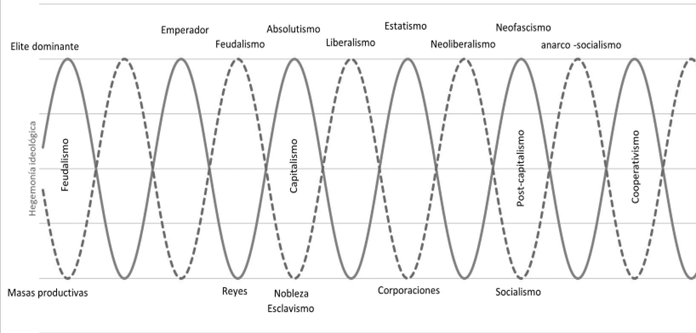




 Escritos Críticos
Debe estar conectado para enviar un comentario.