
Los capítulos de La frontera salvaje: 200 años de fanatismo anglosajón en América latina (2021) sobre los expermientos psicologicos de la CIA, confirmados y ampliados con nuevas desclasificaciones aquí:
El Archivo de Seguridad Nacional publica registros clave sobre el infame programa MKULTRA
La agencia buscaba drogas y técnicas de control de conducta para usar en “interrogatorios especiales” y operaciones ofensivas
Washington, D.C., 23 de diciembre de 2024 – Hoy, el Archivo de Seguridad Nacional y ProQuest (parte de Clarivate) celebran la publicación de una nueva colección de documentos académicos que se ha estado elaborando durante muchos años sobre la impactante historia secreta de los programas de investigación de control mental de la CIA. La nueva colección, CIA and the Behavioral Sciences: Mind Control, Drug Experiments and MKULTRA, reúne más de 1200 registros esenciales sobre uno de los programas más infames y abusivos de la historia de la CIA.
Bajo nombres clave que incluían MKULTRA, BLUEBIRD y ARTICHOKE, la CIA llevó a cabo experimentos aterradores utilizando drogas, hipnosis, aislamiento, privación sensorial y otras técnicas extremas en sujetos humanos, a menudo ciudadanos estadounidenses, que con frecuencia no tenían idea de lo que se les estaba haciendo o de que eran parte de una prueba de la CIA.
El anuncio de hoy se produce 50 años después de que una investigación del New York Times realizada por Seymour Hersh desencadenó investigaciones que sacarían a la luz los abusos de MKULTRA. La nueva colección también llega 70 años después de que el gigante farmacéutico estadounidense Eli Lilly & Company desarrollara por primera vez un proceso para agilizar la fabricación de LSD a fines de 1954, convirtiéndose en el principal proveedor de la CIA de la recién descubierta sustancia química psicoactiva, fundamental para muchos de los esfuerzos de control de la conducta de la Agencia.
Los aspectos más destacados de la nueva colección MKULTRA incluyen:
Un plan aprobado por el DCI en 1950 para el establecimiento de «equipos de interrogatorio» que «utilizarían el polígrafo, las drogas y el hipnotismo para lograr los mejores resultados en las técnicas de interrogatorio». (Documento 2)
Un memorando de 1951 que captura una reunión entre la CIA y funcionarios de inteligencia extranjeros sobre la investigación del control mental y su interés compartido en el concepto de control mental individual. (Documento 3)
Una entrada de 1952 del calendario diario de George White, un agente federal de narcóticos que dirigía una casa de seguridad donde la CIA probaba drogas como el LSD y realizaba otros experimentos con estadounidenses inconscientes. (Documento 5)
Un informe de 1952 sobre el uso “exitoso” de los métodos de interrogatorio ARTICHOKE que combinaban el uso de “narcosis” e “hipnosis” para inducir regresión y posterior amnesia en “agentes rusos sospechosos de estar duplicados”. (Documento 6)
Un memorando de 1956 en el que el jefe de MKULTRA, Sidney Gottlieb, firma un proyecto que “evaluaría los efectos de grandes dosis de LSD-25 en voluntarios humanos normales” en prisioneros federales en Atlanta. (Documento 13)
El informe de 1963 del inspector general de la CIA, que llevó a la dirección de la CIA a reexaminar el uso de estadounidenses inconscientes en su programa encubierto de pruebas de drogas. (Documento 16)
La declaración en 1983 del jefe de MKULTRA, Sidney Gottlieb, en un caso civil interpuesto por Velma “Val” Orlikow, víctima de proyectos patrocinados por la CIA y dirigidos por el Dr. Ewen Cameron en el Instituto Allan Memorial de Montreal. (Documento 20)
Los desafíos a los que se enfrentó este proyecto de documentación fueron considerables, ya que el director de la CIA, Richard Helms, y el antiguo jefe de MKULTRA, Sidney Gottlieb, destruyeron la mayoría de los registros originales del proyecto en 1973. Es una historia sobre el secreto, tal vez el encubrimiento más infame en la historia de la Agencia. También es una historia marcada por la impunidad casi total a nivel institucional e individual por innumerables abusos cometidos a lo largo de décadas, no durante interrogatorios de agentes enemigos o en situaciones de guerra, sino durante tratamientos médicos ordinarios, dentro de hospitales penitenciarios, clínicas de adicciones y centros de detención de menores, y en muchos casos dirigidos por figuras importantes en el campo de las ciencias del comportamiento. A pesar de los esfuerzos de la Agencia por borrar esta historia oculta, los documentos que sobrevivieron a esta purga y que se han reunido aquí presentan una narrativa convincente e inquietante de los esfuerzos de décadas de la CIA por descubrir y probar formas de borrar y reprogramar la mente humana.
La mayor parte de estos registros se extrajeron de los registros recopilados por John Marks, el ex funcionario del Departamento de Estado que presentó las primeras solicitudes de la Ley de Libertad de Información sobre el tema y cuyo libro de 1979, The Search for the “Manchurian Candidate”: The CIA and Mind Control: The Secret History of the Behavioral Sciences (Nueva York, W. W. Norton & Company, 1979) sigue siendo la fuente más importante sobre este episodio. Marks donó más tarde sus documentos de la FOIA y otros trabajos de investigación al Archivo de Seguridad Nacional. Muchas de las redacciones en los documentos se han eliminado de manera efectiva con el paso del tiempo, ya que las investigaciones oficiales, las declaraciones civiles y las historias detalladas han arrojado luz significativa sobre algunos de estos episodios. En muchos casos, las copias de registros desclasificados donados por Marks al Archivo de Seguridad Nacional llevan sus anotaciones escritas a mano.
El legado de MKULTRA va mucho más allá de los diversos “subproyectos” descritos en estos documentos y que fueron en gran parte clausurados a mediados de los años 1970. Como señala el autor Stephen Kinzer, los programas de investigación de control de conducta de la CIA “contribuyeron decisivamente al desarrollo de técnicas que los estadounidenses y sus aliados utilizaron en los centros de detención de Vietnam, América Latina, Afganistán, Irak, la Bahía de Guantánamo y prisiones secretas de todo el mundo”. Las técnicas de MKULTRA fueron citadas en el manual de interrogatorio KUBARK de la CIA de 1963, que fue la base para los interrogatorios de prisioneros en Vietnam y más tarde en las dictaduras anticomunistas de América Latina.[1]
Si bien muchos de los proyectos MKULTRA se llevaron a cabo en hospitales, laboratorios u otros entornos institucionales, otros se llevaron a cabo en casas de seguridad clandestinas de la CIA atendidas no por médicos o clínicos sino por duros agentes federales antinarcóticos como George Hunter White. Bajo la dirección de Gottlieb, White adoptó la personalidad de un artista bohemio llamado “Morgan Hall” para atraer a víctimas desprevenidas a su “piso”, donde él y sus colaboradores de la CIA experimentaban en secreto con ellas y grababan su comportamiento. White, un veterano de la OSS que había trabajado en el desarrollo de la “droga de la verdad” para el Ejército durante la Segunda Guerra Mundial, dosificó subrepticiamente a muchas de sus víctimas con LSD, una droga que la CIA tenía en abundancia gracias a Eli Lilly, que había desarrollado la capacidad de producir la droga en “cantidades enormes” y había aceptado convertirse en el proveedor de la Agencia. Gottlieb, su adjunto Robert Lashbrook y el psicólogo de la CIA John Gittinger se encuentran entre los funcionarios de la CIA que visitaban con frecuencia los refugios de White.
De particular interés es la misteriosa muerte en 1953 de Frank Olson, un químico del Ejército y especialista en aerosoles de la División de Operaciones Especiales (SOD) del Cuerpo Químico del Ejército, el socio militar de la CIA en la investigación del control de la conducta. Oficialmente se consideró que se trató de un suicidio, y la muerte de Olson, que se produjo tras caer desde un piso de diez pisos en la ciudad de Nueva York, se produjo diez días después de que Gottlieb y el personal del TSS le echaran LSD a su cóctel durante un retiro de trabajo de la CIA-SOD en Deep Creek Lake, Maryland. Más tarde se determinó que la droga había contribuido a su muerte, pero muchos, incluidos miembros de su familia, han puesto en duda la conclusión de que Olson (que compartía habitación con Lashbrook esa noche) se arrojó por la ventana del Hotel Statler.
En el centro de todo estaba Sidney Gottlieb, jefe del Personal de Servicios Técnicos (TSS) de la División Química de la CIA y más tarde director de la División de Servicios Técnicos (TSD). Gottlieb era «el principal fabricante de venenos de la CIA», según Kinzer, cuyo libro, Poisoner in Chief: Sidney Gottlieb and the CIA Search for Mind Control (Nueva York: Henry Holt, 2019), es la obra definitiva sobre el químico voluble. Desde su posición en lo profundo de los pasillos secretos de la CIA, Gottlieb dirigió el esfuerzo de décadas de la Agencia para encontrar formas de usar drogas, hipnosis y otros métodos extremos para controlar el comportamiento humano y, se esperaba, convertirlos en herramientas utilizables para las agencias de inteligencia y los responsables políticos.
Las historias sobre la participación de la CIA en los intentos fallidos de asesinar al Primer Ministro del Congo Patrice Lumumba y al líder cubano Fidel Castro, entre otros, se encuentran entre los ejemplos más legendarios, si no los más exitosos, de los esfuerzos de la Agencia para poner en práctica los trucos y herramientas reunidos por la unidad de Gottlieb. Menos conocido es su papel en los experimentos con drogas y los programas de «interrogatorio especial» que dejaron a cientos de personas psicológicamente dañadas y a otras «permanentemente destrozadas», según Kinzer. [2]
Aunque MKULTRA fue aprobado en los niveles más altos, funcionó prácticamente sin supervisión. Como señala Marks, la autorización inicial del presupuesto de MKULTRA “eximió al programa de los controles financieros normales de la CIA” y “permitió a TSS iniciar proyectos de investigación ‘sin la firma de los contratos habituales u otros acuerdos escritos’”. [3] Con poca rendición de cuentas, recursos ilimitados y el respaldo del jefe de operaciones encubiertas de la CIA, Richard Helms, Gottlieb y su personal en TSS desarrollaron una serie de experimentos extraños que creían que mejorarían las operaciones de inteligencia encubierta y, al mismo tiempo, mejorarían las defensas de la Agencia contra el uso de técnicas similares por parte de las fuerzas enemigas.
Cuando Gottlieb llegó a la CIA en 1952, el Proyecto BLUEBIRD, que exploraba “la posibilidad de controlar a un individuo mediante la aplicación de técnicas especiales de interrogatorio”, ya estaba en marcha. [4] Dirigidos por el jefe de la Oficina de Seguridad, Morse Allen, los primeros experimentos BLUEBIRD fueron realizados por equipos que incluían expertos en polígrafo y psicólogos y se llevaron a cabo en detenidos y sospechosos de ser informantes en instalaciones secretas de interrogatorio de Estados Unidos en Japón y Alemania.
El ascenso de Allen Dulles a subdirector de la CIA en 1951 dio lugar a una ampliación de los programas BLUEBIRD bajo un nuevo nombre, ARTICHOKE, y bajo la dirección de Gottlieb en el TSS. El nuevo programa debía incluir, entre otros proyectos, el desarrollo de “pistolas de gas” y “venenos”, y experimentos para comprobar si los “sonidos monótonos”, la “conmoción cerebral”, el “electroshock” y el “sueño inducido” podían utilizarse como medios para obtener “control hipnótico de un individuo”.
Fue bajo ARTICHOKE cuando la Agencia empezó a reclutar de forma más sistemática a los mejores investigadores y a cortejar a las instituciones más prestigiosas para que colaboraran en sus investigaciones sobre el control mental. Uno de los primeros en participar fue el subdirector del Hospital Psicopático de Boston, el Dr. Robert Hyde, que en 1949 fue el primer estadounidense en “viajar” con LSD después de que el hospital adquiriera muestras de la droga del laboratorio Sandoz en Suiza. En 1952, la CIA empezó a financiar la investigación del hospital sobre el LSD, en la que Hyde se utilizó a sí mismo, a sus colegas, a estudiantes voluntarios y a pacientes del hospital como sujetos de estudio. Hyde trabajaría en cuatro subproyectos de MKULTRA durante la década siguiente.
Poco después de que Dulles se convirtiera en DCI en 1953, autorizó MKULTRA, ampliando la investigación de control de la conducta de la Agencia y reorientándola hacia el desarrollo de “una capacidad para el uso encubierto de materiales biológicos y químicos” en “operaciones clandestinas presentes y futuras”. [6] Muchos de los 149 subproyectos de MKULTRA se llevaron a cabo a través de universidades de prestigio como Cornell, Georgetown, Rutgers, Illinois y Oklahoma. El Dr. Carl Pfeiffer, presidente del Departamento de Farmacología de la Universidad Emory, dirigió cuatro subproyectos de MKULTRA, todos los cuales implicaban el uso de drogas, incluido el LSD, para inducir estados psicóticos. La horrible serie de experimentos dejó a muchos de sus sujetos, incluidos prisioneros de la Penitenciaría Federal de Atlanta y jóvenes alojados en un centro de detención en Bordentown, Nueva Jersey, marcados de por vida.
Muchos otros subproyectos de MKULTRA se establecieron mediante subvenciones de fundaciones falsas financiadas por la CIA. Una de ellas, el Fondo Geschickter para la Investigación Médica, dirigido por el Dr. Charles Geschickter, profesor de patología en la Universidad de Georgetown, destinó millones de dólares de la CIA a programas de investigación en Georgetown y otras instituciones. Como parte del acuerdo, la CIA obtuvo acceso a un refugio médico seguro en el recién construido Anexo Gorman del Hospital Universitario de Georgetown, junto con un suministro de pacientes y estudiantes para utilizar como sujetos para los experimentos de MKULTRA.
Otra importante fundación “recortada” de MKULTRA, la Human Ecology Society, estaba dirigida por el neurólogo del Centro Médico Cornell, el Dr. Harold Wolff, quien escribió un estudio temprano sobre las técnicas comunistas de lavado de cerebro para Allen Dulles y más tarde se asoció con la CIA para desarrollar una combinación de drogas y privación sensorial que pudiera usarse para borrar la mente humana. Entre los proyectos MKULTRA más extremos financiados a través del grupo de Wolff estaban los infames experimentos de “desesquematización” realizados por el Dr. D. Ewen Cameron en el Allan Memorial Institute, un hospital psiquiátrico de la Universidad McGill en Montreal, Canadá. Los métodos de Cameron combinaban sueño inducido, electroshocks y “conducción psíquica”, bajo los cuales sujetos drogados eran torturados psicológicamente durante semanas o meses en un esfuerzo por reprogramar sus mentes.
Estos registros también arrojan luz sobre un período especialmente oscuro en la historia de las ciencias del comportamiento en el que algunos de los mejores médicos en el campo llevaron a cabo investigaciones y experimentos generalmente asociados con los médicos nazis que fueron juzgados en Nuremberg. Mientras que algunos profesionales médicos contratados por la CIA aparentemente luchaban con los problemas éticos que planteaba la realización de pruebas dañinas en sujetos humanos inconscientes, otros estaban ansiosos por participar en un programa en el que, según un memorando de 1953, “ninguna área de la mente humana debe quedar sin explorar”. Así como los psicólogos de la CIA supervisaron más tarde la tortura de prisioneros en la Bahía de Guantánamo y en los “sitios negros” de la CIA, durante las primeras décadas del siglo XXI, muchos de los médicos y clínicos reclutados para el trabajo de MKULTRA eran líderes en el campo, cuya participación impulsó el prestigio del programa y atrajo a otros hacia él. Los académicos e investigadores que analizan la participación de psicólogos y otros profesionales médicos en los horribles programas de detención e interrogatorio de Estados Unidos que han sido expuestos en los últimos años encontrarán paralelos y antecedentes históricos a lo largo de esta colección.
La colección también es de gran valor para aquellos interesados en aprender más sobre los primeros años de la CIA y algunas de sus principales personalidades, como Allen Dulles, Richard Helms, Richard Bissell, Franks Wisner y otros, quienes imaginaron y crearon una agencia de inteligencia que favorecía la acción audaz, a menudo encubierta, y donde proyectos controvertidos como MKULTRA podían arraigarse y florecer en secreto.
The Documents
Document 01
Sep 27, 1949
Source
John Marks Collection, Box 1
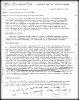
After returning from an overseas trip, the CIA’s Morse Allen summarizes his recommendations for the establishment of “security validation teams” in the U.S. and abroad that would combine the use drugs, hypnosis and the polygraph to perform a variety of intelligence functions, including the screening of Agency personnel and informants, the interrogation of suspected enemy agents, the processing of any “loyalty cases” that might arise, and the possible use of “operational hypnosis.” The teams would also gather information about the “interrogation techniques and special operational procedures being utilized by Russia and Russian dominated countries.”
Document 02
Apr 5, 1950
Source
John Marks Collection, Box 9
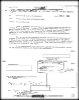
Sheffield Edwards requests that DCI Roscoe Hillenkoetter approve plans for Project BLUEBIRD, sending it directly to the DCI rather than through the normal approval process due to “the extreme sensitivity of this project and its covert nature.” The memo indicates broad agreement among CIA offices “for the immediate establishment of interrogation teams for the operational support of OSO [Office of Special Operations] and OPC [Office of Policy Coordination] activities,” referring to the groups responsible for managing covert operations. The teams would “utilize the polygraph, drugs, and hypnotism to attain the greatest results in interrogation techniques.” Noting that there is “considerable interest in the field of hypnotism” across CIA offices, the idea of Bluebird would be “to bring all such interests within the purview and control of a single project.”
The project envisions “interrogation teams … utilizing the cover of polygraph interrogation to determine the bona fides of high potential defectors and agents, and also for the collection of incidental intelligence from such projects.” Each team would consist of a psychiatrist, a polygraph technician and a hypnotist. An office would be established in Washington “to serve as a cover for training, experimentation, and indoctrination” of psychiatrists “in the use of drugs and hypnotism.” When not deployed abroad, the doctors would be used “for defensive training of covert personnel, study, and experimentation in the application of these techniques.”
A handwritten annotation indicates that Hillenkoetter authorized $65,515 for the project on April 20, 1950.
Document 03
Jun 1, 1951
Source
John Marks Collection, Box 6
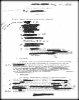
In The Search for the Manchurian Candidate, Marks cites this fascinating account of an “informal get-together” between representatives of the U.S., British and Canadian intelligence services in which “all matters related to the influence or control of the minds of individuals were discussed.” The conversation among the allied intelligence services “ranged from the specific subject of means for extracting information to the broadest aspects of psychological warfare and propaganda.”
One foreign intelligence official (identified by Marks as the British representative) at first seemed skeptical about the idea of individual mind control and was more interested in programs that would research “the psychological factors causing the human mind to accept certain political beliefs” and “aimed at determining means for combatting communism, “‘selling’ democracy,” and preventing the “penetration of communism into trade unions.” However, “after lengthy discussions he became quite enthusiastic” about research into individual mind control, according to the meeting notes.
“All present agreed that there has been no conclusive evidence, either from reports on Soviet activities or in Western research, to indicate that new or revolutionary progress has been made in this field,” but “full investigation of the Soviet cases was essential and basic research in the field is most important because of the importance of this matter in connection with cold war operations… Even though no radical discoveries are made, even small gains in knowledge will justify the effort expended.”
Since the group had only discussed “pure research” and not the offensive use of mind control techniques, the author of the memo recommends that the U.S. strike “a clear separation between the intelligence and the research aspects” of the project when dealing with allied intelligence organizations.
Document 04
Apr 26, 1952
Source
John Marks Collection, Box 6
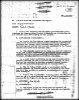
Bureaucratic authority within the CIA for the ARTICHOKE program bounced around during the early 1950s from the Office of Security to the Office of Scientific Intelligence (OSI) before going back to Security and, finally, to the Technical Services Staff (TSS) under Sidney Gottlieb. Less than a month after ARTICHOKE was first transferred from Security to OSI, the new project director, Robert J. Williams, sent this memo to his boss, H. Marshall Chadwell, outlining the program’s major accomplishments and deficiencies and pointing to the need to involve, or even turn the program over to, the CIA Medical Staff since he sees it as “primarily a medical problem.”
Williams reports that “field tests utilizing special techniques for interrogation” had not occurred as previously planned since the Artichoke project leaders lack confidence “in the techniques presently available” for ARTICHOKE interrogations and have been unable “to come up with any new techniques offering significant advantages” known methods. A “major factor” contributing to these conditions, Williams writes, is “the difficulty in obtaining competent medical support, both for the operational teams and for the research effort.”
A seven-page attachment describes ARTICHOKE as “a special agency program established for the development and application of special techniques in CIA interrogations and in other CIA covert activities where control of an individual is desired.” In the weeks since taking over the program, “OSI has endeavored to evaluate known techniques and to uncover new ones using consultants, Armed Service contracts and whatever information may be available within CIA or through other CIA channels.” The new team was also working to “evaluate claims that the USSR and/or its satellites may have developed new and significant techniques for this purpose.”
While no new techniques had been discovered, presently known mind control techniques described in the attachment include the use of LSD and other drugs, hypnosis, the use of the polygraph, neurosurgery, and electric shock treatments. However, field testing of these techniques has been handicapped by the “inability to provide the medical competence for a final evaluation and for such field testing as the evaluation indicates. Repeated efforts to recruit medical personnel have failed and until recently the CIA Medical Staff has not been in a position to assist.”
Document 05
George White appointment book entry, June 9, 1952
Jun 9, 1952
Source
George White Papers, M1111, Dept. of Special Collections, Stanford University Libraries, Stanford, Calif.
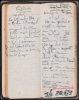
In his daily planner entry for June 6, 1952, federal narcotics agent George White notes a morning meeting with the Sidney Gottlieb of the CIA, jotting at the bottom of the page: “Gottlieb proposes I be CIA consultant – I agree.” Using the alias “Morgan Hall,” White would go on to run CIA safehouses in New York and San Francisco where unwitting individuals would be surreptitiously dosed with LSD and other drugs and subjected to other mind control techniques.
Document 06
Jul 14, 1952
Source
John Marks Collection, Box 6
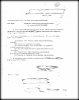
In a memo to the DCI, the CIA Security Office reports on the “successful” use of ARTICHOKE interrogation methods on “Russian agents suspected of being doubled.” Using the cover of a “psychiatric-medical” evaluation, officials from the Security Office and the CIA Medical Office combined the use of “narcosis” and “hypnosis” to induce regression and, in one case, “a subsequent total amnesia produced by post-hypnotic suggestion.” In the second case, CIA handlers used “heavy dosages of sodium pentothal,” a barbiturate, “coupled with the stimulant Desoxyn,” a methamphetamine, “with outstanding success.” The officers involved believed “that the ARTICHOKE operations were entirely successful” and “that the tests demonstrated conclusively the effectiveness of the combined chemical-hypnotic technique in such cases.”
Document 07
Jul 14, 1952
Source
John Marks Collection, Box 6
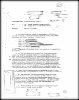
This memo to Deputy Director for Plans Allen Dulles records a meeting of CIA office heads at which it was decided to transfer control of the ARTICHOKE project from OSI back to the Inspection and Security Office (I&SO) with the Office of Technical Services (OTS), home of Sidney Gottlieb and the Technical Services Staff (TSS), taking over responsibility for ARTICHOKE-related research and for maintaining contact with the Defense Department.
Those present at the meeting agreed that “the scope of Project ARTICHOKE is research and testing to arrive at means of control, rather than the more limited concept embodied in ‘special interrogations.’”
Document 08
Dec 1, 1953
Source
Center for National Security Studies (CNSS) FOIA
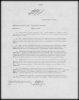
Shortly after the death of U.S. Army scientist Frank Olson was linked to a CIA LSD experiment, this memo recounts steps taken by CIA Technical Services Staff (TSS) chief Willis Gibbons to account for LSD handled and distributed by TSS. Gibbons has “impounded all LSD material in CIA Headquarters in a safe adjacent to his desk” and was “stopping any LSD tests which may have been instituted or contemplated under CIA auspices.” CIA field stations in Manila and Atsugi, Japan, also have LSD on site. The CIA has also provided LSD to federal narcotics agent George White, who Gibbons said was “fully cleared.” Asked for any “reports on the use and effects of LSD,” Gibbons said he likely had “a drawer full of papers.”
Gibbons was not fully clear on how the CIA obtained LSD, but most of it came from the Eli Lilly & Company, according to this memo, which “apparently makes a gift of it to CIA.”
Document 09
Statement of Vincent L. Ruwet on Frank Olson death, December 1, 1953
Dec 1, 1953
Source
CNSS FOIA
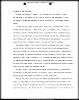
Vincent Ruwet, the head of the Special Operations Division of the Army Chemical Corps and Frank Olson’s boss, gives a firsthand account of the last days and hours of Olson’s life, including comments on his state of mind during and in the days following the Deep Creek Lake experiment, in which he and other CIA and Army officials were unwittingly dosed with LSD.
Document 10
Mar 1954
Source
John Marks Collection
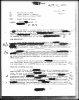
An internal memo describes the interrogation of “an important covert operational asset” by an operational unit of the CIA’s ARTICHOKE program. Conducted at an undisclosed safe house, the ARTICHOKE interrogation was meant to “evaluate his part reports; to accept or not accept his past accounts or future budgets; to determine his future potentialities and clearly re-establish his bonafides.” CIA interrogators applied ARTICHOKE techniques including hypnosis and “massive use of chemicals” under cover of medical treatment for a case of influenza. The report says that the subject “was held under ARTICHOKE techniques for approximately twelve hours” and that they were under “direct interrogation” for 90 minutes. Consultants who reviewed the interrogation report agreed that ARTICHOKE officials “took certain (probably calculated) chances in using the massive dosages of chemicals” but that “ultimate results apparently justified the measures taken.”
Document 11
Nov 15, 1954
Source
George C. Marshall Research Library, James Srodes Collection, Box 8, Folder: “AWD [Allen Welsh Dulles]: Mind Control 1953-1961”
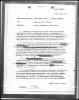
The CIA’s Technical Services Section (TSS) requests authorization for a project at Georgetown University Hospital that would provide cover for research under the Agency’s “biological and chemical warfare program.” Using a philanthropic organization as a “cut-out,” the CIA would partially fund “a new research wing” of the hospital (the Gorman Annex) and would use one sixth of the new annex to conduct “Agency-sponsored research in these sensitive fields.” MKULTRA, the memo observes, provides research and development funding “for highly sensitive projects in certain fields, including covert biological, chemical and radiological warfare” but does not specifically authorize funds to establish cover for these programs.
An attachment describes the rationale for the use of a university hospital as cover for conducting such experiments, noting that “competent individuals in the field of physiological, psychiatric and other biological sciences are very reluctant to enter into signed agreements of any sort which would connect them with this activity since such connection might seriously jeopardize their professional reputations.”
The Agency’s clandestine funding and use of the hospital would be channeled through the Geschickter Fund for Medical Research, named for Dr. Charles Geschickter, a professor of pathology at Georgetown University Hospital who had been secretly working with the CIA since 1951. The Fund was used “both as a cut-out for dealing with contractors in the fields of covert chemical and biological warfare, and as a prime contractor for certain areas of biological research.” In addition to Geschickter, at least two other board members of the Fund were aware that it was being used to conceal the CIA’s “sensitive research projects.”
Agency sponsorship was “completely deniable since no connection would exist between the University and the Agency.” Three “bio-chemical employees of the Chemical Division of TSS” would be given “excellent professional cover” while “human patients and volunteers for experimental use will be available under excellent clinical conditions” and with hospital supervision.
The document was found among the papers of James Srodes, author of Allen Dulles: Master of Spies (Washington, D.C.: Regnery, 1999), which are housed at the George C. Marshall Research Library of the Virginia Military Institute.

Document 12
May 5, 1955
Source
John Marks Collection; George C. Marshall Research Library, James Srodes Collection, Box 8, Folder: “AWD [Allen Welsh Dulles]: Mind Control 1953-1961”
This document was apparently drafted by the TSS Chemical Division after a discussion in which DCI Dulles and others had questioned whether the use of Georgetown University Hospital as a “cut-out” for sensitive experiments was worth the considerable cost and had asked TSS “to draw up a handwritten list of advantages which such a place would afford our people.”
The response from TSS lists 17 “materials and methods” that the Chemical Division was working to develop, including:
- substances that “promote illogical thinking,”
- materials that would “render the induction of hypnosis easier” or “enhance its usefulness,”
- substances that would help individuals to endure “privation, torture and coercion during interrogation” and attempts at ‘brain-washing,’”
- “materials and physical methods” to “produce amnesia” and “shock and confusion over extended periods of time,”
- substances that would “produce physical disablement, including paralysis,
- substances that “alter personality structure” or that “produce ‘pure’ euphoria with no subsequent let-down,”
- and a “knockout pill” for use in surreptitious druggings and to produce amnesia, among other things.
TSS notes that private physicians are often quite willing to test new substances for pharmaceutical companies “in order to advance the science of medicine,” but that, “It is difficult and sometimes impossible for TSS/CD to offer such an inducement with respect to its products.” Outside contractors can be used during the “preliminary phases” of many CIA experiments, but “that part which involves human testing at effective dose levels presents security problems which cannot be handled by the ordinary contractor.”
Document 13
Jun 7, 1956
Source
John Marks Collection
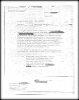
In a memorandum for the record, Gottlib authorizes an MKULTRA subproject to be led by Carl Pfeiffer of Emory University, a frequent collaborator who conducted experiments on prisoners at the federal penitentiary in Atlanta, Georgia. Here Gottlieb approves a request to continue Pfeiffer’s experiments, which include the development of “an anti-interrogation drug” and “tests in human volunteers.”
The attached proposal identifies the name of the study: “The Pharmacological Screening and Evaluation of Chemical Compounds Having Central Nervous System Activities,” summarizing it as the testing of “materials capable of producing alterations in the human central nervous system which are reflected as alterations in human behavior.” Facilities described in the redacted document include “auxilliary [sic] animal testing laboratories,” those used for “preliminary human pharmacological testing,” and additional facilities “for testing in normal human volunteers at [deleted] Penitentiary directed by [deleted].”
Among the “particular projects” on the agenda for the year to come are: (1) “To evaluate the effects of large doses of LSD-25 in normal human volunteers,” and (2) “To evaluate the threshold dose levels in humans of a particular natural product to be supplied by [deleted],” and (3) “To evaluate in human beings a substance which we now believe has the ability to counteract the inebriating effects of ethyl alcohol.”
Document 14
Memorandum for the Record by Sidney Gottlieb, Chief, Technical Services Staff, Chemical Division, “Accountability for Certain Expenditures under Subproject 42 of MKULTRA,” Top Secret, August 17, 1956, 1 p.
Aug 17, 1956
Source
John Marks Collection
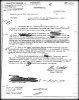
Sidney Gottlieb was shown this one-page document during a 1983 deposition in a lawsuit brought by Velma “Val” Orlikow, a former patient at the Allan Memorial Institute in Montreal, site of some of the most horrific MKULTRA experiments. The memo describes accounting procedures for a CIA safehouse run by federal narcotics agent George White “for conducting experiments involving the covert administration of physiologically active materials to unwitting subjects.” Gottlieb writes that “the highly unorthodox nature of these activities and the considerable risk incurred” by White and his associates make it “impossible to require that they provide a receipt for these payments of that they indicate the precise manner in which the funds were spent.”
Document 15
U.S. Central Intelligence Agency, “Fitness Report” of Sidney Gottlieb, Secret, June 16, 1958, 5 pp.
Jun 16, 1958
Source
Stephen Kinzer donation
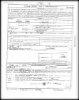
A CIA “Fitness Report” evaluates the first six months of Sidney Gottlieb’s stint as a CIA case officer in Europe. Characterized as “very mature” and “highly intelligent,” the evaluation notes that Gottlieb’s “entire agency career had been technical in nature” before this new assignment, his “first indoctrination to operational activities.” Gottlieb displayed a “keen desire to learn” and a “willingness to undertake all types of operational assignments” despite being “considerably senior in age and grade to other officers at the branch.” Gottlieb’s “only apparent weakness,” according to the evaluation, “is a tendency to let his enthusiasm carry him into more precipitous action than the operational situation will bear.”
Document 16
Jul 26, 1963
Source
John Marks Collection
In a memo forwarding his report on TSD’s management of MKULTRA to the DCI, CIA Inspector General John Earman says that the program’s “structure and operational controls need strengthening”; that the Agency should improve “the administration of research projects”; and that “some of the testing of substances under simulated operational conditions was judged to involve excessive risk to the Agency.”
The attached report briefly reviews the history of the program and finds that many of the projects initiated during that time “do not appear to have been sufficiently sensitive to warrant waiver of normal Agency procedures for authorization and control,” and that TSD was managing the program without proper documentation and oversight.
“Over the ten-year life of the program many additional avenues to the control of human behavior have been designated by the TSD management as appropriate to investigation under the MKULTRA charter, including radiation, electro-shock, various fields of psychology, psychiatry, sociology, and anthropology, graphology, harrassment [sic] substances, and paramilitary devices and materials.”
“TSD has pursued a philosophy of minimum documentation,” according to the report, and the “lack of consistent records precluded use of routine inspection procedures and raised a variety of questions concerning management and fiscal controls.” There were only two people at TSD with “full substantive knowledge of the program,” but these were “highly skilled, highly motivated, professionally competent individuals” who relied on the “‘need to know’ doctrine” to protect “the sensitive nature of the American intelligence capability to manipulate human behavior.”
Earman’s report looks closely at how each phase in the development of and operationalization of “materials capable of producing behavioral or physiological change in humans” is managed by TSD, including arrangements with physicians and scientists where the Agency “in effect ‘buys a piece’ of the specialist in order to enlist his aid in pursuing the intelligence implications of his research.”
With respect to human testing, the IG identifies two stages: the first “involves physicians, toxicologists, and other specialists in mental, narcotics, and general hospitals and in prisons, who are provided the products and findings of the basic research projects and proceed with intensive testing on human subjects.” During this phase, “Where health permits, test subjects are voluntary participants in the program.”
In the “final phase” of MKULTRA drug testing, the substances are given to “unwitting subjects in normal life settings.” Earman says it is “firm doctrine” at TSD “that testing of materials under accepted scientific procedures fails to disclose the full pattern of reactions and attributions that may occur in operational situations.” Because of this, “TSD initiated a program for covert testing of materials on unwitting U.S. citizens in 1955.”
The reports focuses on drug experiments conducted at CIA safehouses in the U.S. and directed by Bureau of Narcotics agent George White. Some of the test subjects “have been informers or members of suspect criminal elements,” but unwitting subjects were drawn from all walks of life: “[T]he effectiveness of the substances on individuals at all social levels, high and low, native American and foreign, is of great significance and testing has been performed on a variety of individuals within these categories.”
Earman nevertheless recommends that the Agency terminate the testing of substances on unwitting U.S. citizens after weighing “possible benefits of such testing against the risk of compromise and of resulting damage to CIA” but is equally clear that such tests can continue to be performed foreign nationals. The Agency’s “deep cover agents overseas” were “more favorably situated than the U.S. narcotics agents” that ran the safehouses in the U.S., and “operational use of the substances clearly serves the testing function.”
Overall, MKULTRA materials had not been very useful in intelligence operations: “As of 1960 no effective knockout pill, truth serum, aphrodisiac, or recruitment pill was known to exist,” although “real progress has been made in the use of drugs in support of interrogation.” Among other obstacles, Some case officers “have basic moral objections to the concept of MKDELTA,” the program meant to operationalize materials and techniques developed through MKULTRA.
Document 17
Nov 29, 1963
Source
John Marks Collection
This memo records a meeting held in the office of Deputy Director of Central Intelligence Gen. Marshall Carter to settle the one major point of disagreement among CIA officials over the inspector general’s MKULTRA recommendations: whether to continue with the testing of MKULTRA substances on unwitting U.S. citizens. Others present were Deputy Director for Plans Richard Helms, CIA executive director (and former inspector general) Lyman Kirkpatrick, current CIA inspector general John Earman, and Sidney Gottlieb, head of the CIA’s Technical Services Division (TSD).
Both Gottlieb and Helms “argued for the continuation of unwitting testing,” while Earman, Carter and Kirkpatrick disagreed. Carter was concerned with the “unwitting aspect,” and a discussion ensued “on the possibility of unwitting test on foreign nationals,” which “had been ruled out” due to opposition from “senior chiefs of stations” as “too dangerous” and who said they lacked “controlled facilities.” Earman finds this “odd,” emphasizing the slipshod nature of some of the safehouses used for unwitting tests in the U.S.
Concluding the meeting, the participants agree that if the Directorate for Plans determined “that unwitting testing on American citizens must be continued to operationally prove out these drugs, it may become necessary to place this problem before the Director [of Central Intelligence] for a decision.” The attached cover memo from 1975 indicates that the DCI decided to defer a decision on testing U.S. citizens for one year and requested that until then the Agency “please continue the freeze on unwitting testing.” The authors of the cover memo found “no record … that this freeze was ever lifted.”
Document 18
Oct 20, 1975
Source
John Marks Collection
In this memo to the DCI, CIA inspector general Douglas Chamberlain describes efforts to recover Agency records on the MKULTRA and MKNAOMI programs, many of which were destroyed in 1973 on the orders of Richard Helms and Sidney Gottlieb.
Document 19A
U.S. Central Intelligence Agency letter to Sidney Gottlieb, Non-classified, April 30, 1979, 3 pp.
Apr 30, 1979
Source
Douglas Valentine donation
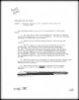
In a letter to the now-retired Sidney Gottlieb, the Agency requests his assistance with a CIA project to “investigate its past involvement with drugs, with emphasis on the use of drugs on unwitting subjects.” The questions mainly have to do with a “secondary” effort of the investigation “to assess the possibility of harm by the specific drugs in the quantities used, and to flesh out the report with enough details of the safehouse operations to lend credence to the report.”
Document 19B
Apr 30, 1979
Source
Douglas Valentine donation
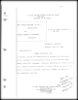
This document records answers given over the phone by Gottlieb in response to questions posed by the CIA in its letter of April 30, 1979 (Document 19A). Among other things, Gottlieb says that the LSD used by George White in the CIA safehouses was “packaged as a solution in approximately 80 microgram units in plastic ampules” and that follow-up with subjects “was conducted when practical.” Gottlieb estimates that there were approximately 40 tests on unwitting subjects that were “performed to explore the full range of the operational use of LSD,” including for “interrogation” and for “provoking erratic behavior.”
Document 20
May 17, 1983
Source
Stephen Kinzer donation
This is the second of three depositions of Sidney Gottlieb by attorneys representing Velma «Val» Orlikow, a former patient of the Allan Memorial Institute, where CIA-backed staff performed horrific experiments on psychiatric patients during the 1950s and 60s.
Asked whether he was involved in “domestic field experimentation” with LSD, Gottlieb said, “If by what you mean ‘field experimentation’, is experiments that involve – that are taking place outside of Washington, D.C., and if by my personal involvement, you mean, was I aware of them or did I have something to do with their instigation, the answer is yes.” When Gottlieb is shown a document indicating that he had personally conducted an interrogation, he claims confusion before admitting that he had indeed been involved in “between one and five” interrogations.
Gottlieb nevertheless denies that the CIA intended to develop techniques to improve U.S. interrogations. “The primary objective of developing new techniques for interrogation … It has to do with the difference between something I have always objected to, namely, that this whole program wanted to create a Manchurian Candidate. The program never did that. That was a fiction, as far as I am concerned, that Mr. Marks indulged in and this question you are asking has to do with that and this is a sensitive area in my mind.”
Asked whether the CIA had tried to identify “techniques of producing retrograde amnesia,” Gottlieb said it was something that they “talked about,” but that he could not “remember any specific projects or specific research mounted in response to that question.” Asked if the CIA ever used “psychosurgery research projects,” Gottlieb said his “remembrance is that they did.”
Gottlieb also describes the role played by the Society for the Investigation of Human Ecology, which he says “was to act in a security sense as a funding mechanism so that the involvement of CIA’s organizational entity would not be apparent in projects that we were funding.” The Geschickter Fund operated much the same way, according to Gottlieb: “It was made as a mechanism to funnel funds for research activities where CIA didn’t want to acknowledge its specific identity as the grantor.”
Gottlieb evades most of the questions about the most important issue before the court in the Orlikow case: the extreme “psychic driving” and “depatterning” experiments conducted by Dr. Ewen Cameron at the Allan Memorial Institute. Again and again, Gottlieb claims to not remember key events and details about the CIA’s relationship to Cameron’s terrifying experiments.
Gottlieb is somewhat more forthcoming about his knowledge of MKULTRA projects in the U.S., including experiments conducted by Dr. Harris Isbell of the NIMH Addiction Research Center in Lexington, Kentucky, which Gottlieb said he visited “at least three or four times.” Gottlieb said Isbell did “some of the early and basic work between dose and response of LSD” on prisoners from the Narcotics Division Hospital. Gottlieb also says he was aware that Isbell offered inmates drugs in exchange for their participation in the project. Asked whether reports that Cameron kept some subjects on LSD for 77 consecutive days was “consistent with the research he was conducting,” Gottlieb said it was, noting that Cameron “had some interest in the quantum effects of LSD, repeated ingestion.” Asked about files on the CIA safehouses run by narcotics agent George White, Gottlieb replies, “They were all destroyed. They don’t exist anymore,” adding, “They were specifically destroyed when the files were destroyed in ’72, ’73.” Asked about White’s purported use of “prostitutes to test methods of slipping drugs to unwitting persons,” Gottlieb said, “the involvement of prostitutes in the West Coast activity had to do with the MO, the modus operandi of this whole drug culture.”
The plaintiffs’ attorneys also ask Gottlieb about the CIA’s work with Dr. Carl Pfeiffer of Emory University, who performed drug experiments on prisoners at the Atlanta federal penitentiary and elsewhere, and Dr. Harold Isbell of the National Institutes for Mental Health, who had conducted drugs tests on patients at the Addiction Research Center in Lexington, Kentucky.

 Escritos Críticos
Debe estar conectado para enviar un comentario.