In a 2007 back cover of Página12, we reflected on the ideolexical concept of beingright-wing: «Twenty or thirty years ago in the Southern Cone, it was enough to declare yourself a leftist to go to prison or lose your life in a torture session (…). Being right-wing was not only politically correct but also a necessity for survival. The assessment of this ideolexical concept has changed dramatically. This is demonstrated by a recent trial taking place in Uruguay. Búsqueda has filed a lawsuit against a senator of the republic, José Korzeniak, because it defined him as ‘right-wing…’»
Ideolexics (and, with them, ideological crystallizations) seem to show cycles of 30 years—a generation. But these cycles, beyond a possible social dynamic or psychological nature, such as “the dynamics of the four generations,” are also affected, distorted, and even determined by the gaze of empires (see “The logic of reactionary waves in Latin America”).
Differently, at the epicenter of the Empire, this ideological dynamic has longer cycles (60 years), because they do not depend on external interventions. They depend on the relative power of their ruling class—not on the ruling class of another country. In any case, laws are the expression of the power (plutocracy) or powers (democracy) of a society. In capitalist societies and, even more radically, in the plutocracies of neoliberal and neo-feudal capitalism, power lies in the concentration of money, which is why millionaires buy politicians and their corporations directly write the laws, as in the United States, or decide governments in banana republics.
Since no legal system recognizes the right of one country to write the laws of other sovereign countries, empires and supremacist governments write doctrines, such as the Monroe Doctrine and other treaties, for other peoples to obey as long as it serves the owners of the gun. But these doctrines and this re-ideologization of the colonies have always been dressed up in some sacred excuse, such as God, race, freedom, private property, or democracy. Something that, in the United States, is beginning to dry up, leaving the true reasons for its violence bare and undisguised, such as President Trump’s acknowledgment of invading Venezuela to «make a lot of money with (our) oil«―in his press conference after the kidnapping of President Maduro, he mentioned the word oil 23 times and not once democracy, which is in line with Project 2025 and neo-monarchists like Curtis Yarvin.
American imperialism stems from the Protestant, Calvinist, and privatizing fanaticism of four centuries ago, since the plundering of the “savages who attacked us without provocation” began. Today, its violent behavior of intervention and dispossession is repeated with the same nakedness as in the beginning, as when James Polk ordered an emissary to find a river in Mexico with the same name as the then border, or, if he could not find one, to name another river with the same name in order to provoke a “war of defense” against Mexico and thus take half of its territory. Trump did exactly the same thing by accusing Maduro of drug trafficking and then decreeing that fentanyl was a “weapon of mass destruction,” a decoration used for the invasion of Iraq, the kidnapping of Saddam Hussein, and the appropriation of oil.
Until then, emperors like Bush and Obama kept their tuxedos fairly well ironed. With the Tea Party and then Trump’s first presidency, being fascist, racist, and misogynistic began to be considered a source of pride. That was the beginning of “the rebellion of the masters,” fought, as in medieval battles, by faceless, nameless pawns with nothing to gain or lose except their lives.
In his early years in the White House, Trump still denied being sexist, racist, or imperialist. In his second term, he remained the same as always, but no longer hid it. At a conference in the Oval Office, the mayor-elect of New York was asked if he still thought Trump was a fascist, to which Trump said it was okay: “Tell them yes.”
Mamdani replied yes, to the president’s satisfaction.
A few years ago, we proposed the formula P = d.t, which relates power (P), tolerance (t), and diversity/dissent (d), according to which unchallenged empires have a high tolerance for diversity and dissent when their power (P) is unchallenged, and become intolerant of diversity and dissent when their power begins to decline, a relationship that keeps the equation P-d.t = 0 in equilibrium. Currently, the growing intolerance of dissent, criticism, books and courses on slave and imperial history, or the acceptance of equal rights for different ethnicities, genders, sexes, or social classes is an unmistakable sign of the growing weakness of the American Empire.
Masks and tuxedos are no longer necessary. The CIA launched its operation to kidnap President Maduro to be tried for drug trafficking three weeks after President Trump ordered the release of former Honduran President Juan Orlando Hernández, sentenced to 40 years in prison by a federal jury in the same state for drug trafficking, and 24 hours after meeting with Benjamin Netanyahu, wanted by the International Criminal Court for war crimes and crimes against humanity in Palestine.
In response to the harassment and then bombing of Venezuela (which has already cost the lives of dozens of people and will, over time, lead to more violence), the UN and several presidents have said the same thing: heartfelt statements from foreign ministries that “the US military attack sets a dangerous precedent.”
Haven’t we been setting dangerous precedents for more than 200 years? What is happening that has not happened before? (1) Imperial invasion out of greed for natural resources, only now the excuses are not important; (2) cowardly and submissive local servility; (3) timidity of the region’s leftist leaders; (4) lack of consensus in the face of the most serious violations of international law…
Is this something new? We continue to move toward the “Rebellion of the Masters” through the “Palestinization of the world” like a driver who slowly falls asleep at the wheel. This is just another chapter in a process that will become more radical.
The kidnapping of disobedient leaders is an old imperial practice. Empires have always violated the laws of others, but they were careful to do so within their own fiefdoms (which is why the Guantanamo prison is in Cuba and not in Illinois), but this too has changed. Now, the masked ICE and National Guard agents have extended the Palestinianization of the world within the borders of the United States, accustoming its population to brutality, fear, and the violation of human rights.
The reactionary conflicts of the supremacist and decadent Western empires will continue to add to the old-style interventions: invasions, coups d’état, revolts, and civil wars instigated by secret agencies (CIA-MI6-Mossad). We will continue to see a scenario of growing violence by the United States and Europe-Israel in their backyards—Latin America, Africa, and the Middle East.
The goal is to crush the rise of China and the Global South, but this struggle will bleed the Middle East, Africa, and Latin America more than China, until China has no choice but to intervene in a massive war.
For now, Russia cares about Ukraine and China cares about Taiwan. That is why their reactions to the supremacist re-colonization of the Global South are merely symbolic.
The escalation of US aggression against Venezuela seems unstoppable, while extrajudicial executions by US forces accumulate in the Caribbean and the Pacific. Threats are becoming increasingly vocal in Washington, and naval and air blockades are intensifying by the hour. These measures violate the United Nations Charter and international law, but Trump and his henchmen seem determined to do whatever it takes to subjugate the South American nation. It remains to be seen, however, whether with an invasion they want to create their own Vietnam or Afghanistan; in other words, whether they are stupid enough to start another fire, but this time not in distant lands but in the front yard of the United States. European leaders, self-proclaimed defenders of human rights, democracy, and justice, condone with their silence the war crimes already committed by the White House in relation to Venezuela. Other governments, such as those of the Russian Federation and the People’s Republic of China, have increasingly voiced their disapproval of Washington’s conduct and reiterated that both countries maintain a “comprehensive strategic partnership” with the Bolivarian government. But in Trump’s chaotic court circle, Secretary of State Marco Rubio, a man with a murky background, a privileged recipient of funds from the Zionist lobby and the arms industry, a sworn enemy of the Cuban Revolution and of any progressive leader or government in the region, and a rabid anti-China figure, is relentlessly pushing for “peace through strength.” For Rubio, the attack should not be restricted to Venezuela; rather, the time has come to subdue all countries in the region. Colombia and Mexico are on the list, as are Honduras and any other government unwilling to reduce its contact with any “extra-hemispheric” power to the bare minimum, as mandated by the new National Security Strategy in a euphemism referring to China, Russia, and Iran.
What is at stake in Venezuela today is much more than the theft of its immense oil wealth. It is a desperate attempt to rebuild the now defunct US unipolarism, in which Washington claims the right to be the global policeman – in fact, the global dictator- and the only power capable of imposing a world order, to whose demands the rest of the countries have no choice but to obey. This is an anachronistic, absurd, and profoundly mistaken reading of international reality, but it is the one that currently prevails in Washington. However, if these plans are not neutralized by other actors in the international system, nothing will prevent the United States from trying out the same methodology it is currently using in the Caribbean in other corners of the globe. For example, by openly promoting Taiwanese independence and supporting its eventual independence with the presence of the Seventh Fleet to deter any attempt by Beijing to recover the rebellious province. Or by blocking or even seizing the Strait of Malacca, which is absolutely crucial for China’s foreign trade. This waterway has the highest maritime traffic in the world, as it is the route for China’s commercial exports, as well as for gas and oil imports from the Persian Gulf and minerals and metals from Africa. A relatively recent UNCTAD report stated that approximately half of international maritime trade passes through the Strait of Malacca each year. Both initiatives, sponsoring and supporting Taiwan’s independence or blocking the Strait of Malacca, would be severe blows to the People’s Republic of China. That is why, in this turbulent international political arena, Beijing must send a clear and resounding signal demanding an end to military aggression against Venezuela. And this requires much more than words. The only option, or perhaps the best option without being the only one, is to emulate what the United States has done and impose a comprehensive maritime and air blockade on Taiwan, but without opening fire or shooting at small boats as the United States did. Because what is at stake in Venezuela these days is much more than its oil: it is the new architecture of the international system and its rules, one of which is that no country, no matter how powerful, can attack another and subjugate it by force. Silence gives consent, says an old Spanish proverb. If China limits its protest to official statements, sooner rather than later the United States will throw all its enormous military might behind subduing the only actor in the international system that, as several official Washington documents state, “wants and is able” to establish a new world order. Consequently, China must act without further delay to prevent Hobbesian nightmare of the law of the strongest from reigning in the international system. The blockade of Taiwan is its only card. Not only to defend Venezuela but also to prevent future aggression by the United States against China. History teaches us that empires become more violent and bloodthirsty in their decline. That is why it is imperative to act quickly and put limits on Washington’s imperial arrogance as it is doing these days in the southern Caribbean and in the vicinity Venezuela.
When the United States fell into the worst economic depression in its history, it withdrew its military occupation forces from several countries in the Caribbean and Central America. In their place, it installed puppets, all chosen for the same psychological characteristic: they were psychopaths desperate to flatter those in power in order to be protected by the Empire and violate, without restriction, all known and unknown human rights. Such was the case with Rafael Trujillo in the Dominican Republic, Papa Doc Duvalier in Haiti, Anastasio Somoza in Nicaragua, Antonio Machado in Cuba, Juan Vicente Gómez in Venezuela, among others…
Then came World War II, which not only helped the US economy recover but also, in the end, as the only one of the three allies that did not suffer destruction, left the United States with industrial, military, economic, and media supremacy that could not be compared to the ruins of Europe and Japan.
Washington practically forgot about Latin America, first with its depression and then with World War II. Elegantly but strategically, Roosevelt called this period the “good neighbor policy.” As a direct consequence, many Latin American countries regained civil and union rights, freedom of expression, and a dozen democracies—albeit always limited ones. Latin American countries were the main founding bloc of the United Nations. The psychopaths of the Caribbean and Central America remained, but many other friendly dictatorships fell, such as Jorge Ubico’s banana dictatorship in Guatemala, which was replaced by a democratic revolution.
Shortly after the end of World War II, in which the Soviet Union was the main victor, Washington created the CIA and its new strategy of global domination as a continuation of the brutal and genocidal British Empire. Since empires are based on the now fashionable psychology of the alpha male, there is no room on the planet for two wolves leading the pack.
Anglo-Saxon capitalist fanaticism understands that all possible competition must be eliminated, even if thousands or millions of black subhumans must die. That has been the policy since the 16th century. In the 19th century, the new strategy repeated old tactics. One was the chess tactic: each opponent must secure control of certain squares. In the case of the United States, those untouchable squares were always the countries it called its “backyard,” formalized with the Monroe Doctrine and updated every generation or two by adding new rights for the aggressor. It is a doctrine, not a treaty or international law. In other words, it is a law to be applied to others. The squares are the strategically divided countries. The people are the pawns. On the surface, it appears to be a struggle between white pieces and black pieces, but this is only a woke distraction, functional to the real power: the goal is the defense and triumph of the king, at the cost of the death of the pawns, those anonymous, faceless little pieces that are always sent to the front—because the rules must be respected.
In 1952, Stalin sent three different proposals to the three military powers of NATO (Hitler’s dream, which decades later would be led by two of his commanders) to avoid a cold war, proposing a unified Germany, with its system of Western liberal democracy, not demilitarized but independent of any alliance. The three proposals were rejected without much discussion.
Conflict and war have always been big business for the powerful: internal control in their countries, tribal and nationalist blindness, and laundering of public money through the privatization of the war industry, something that President and General Eisenhower himself denounced in 1961 in his farewell address as the greatest danger to any democracy.
Shortly after the creation of the CIA and the demonization of the wounded and exhausted Allied victor, Washington once again set its sights on Latin America. Once again, it had to secure the boxes of the Monroe Doctrine. But this time, there were few Banana Wars-style military invasions. The invasion of the Dominican Republic by the Marines in 1965 was one such case.
In order to continue doing what had been done for a century, two new elements were introduced: to justify interventions and invasions, it was no longer possible to claim that they were being carried out to defend civilization from blacks. After the defeat of Nazi supremacism, so popular among the American business elite, that was considered ugly and inappropriate. The word “black” was replaced by “communist.”
The second innovation was to replace the Pentagon with the CIA; the Marines were replaced by the media. As the powerful agent Howard Hunt, who intervened in and destroyed democracies in several countries, from Mexico and Guatemala to Uruguay, summed it up before his death in 2007, “Our main weapon did not spit bullets, but words.” As practiced by one of his friends, the inventor of modern propaganda Edward Bernays, and as a central law of all manipulation of opinion: our words, yes, but always through the mouth of some servant.
The result? By the 1960s, the dozen democracies recovered thanks to Washington’s distraction in the 1940s had been lost again. The brutality of Creole militarism reached the Southern Cone. These dictatorships had no economic or moral limits, so they could massacre hundreds of thousands of people (mostly Indians, blacks, poor people, or white rebels) with Washington’s powerful approval and legitimacy. A María Corina Machado would never have spent 25 years conspiring against her government and calling for military intervention in her own country. On the first day, she would have been kidnapped, tortured, raped, and then thrown into the sea, as was the norm.
The propaganda apparatus received tsunami-like amounts of dollars, and the secret interventionism of the CIA’s coup agents and propagandists reached, by the end of the 1940s, the southern tip of South America, those countries that for decades had been considered rebellious and beyond the manipulation of US transnational corporations: Uruguay, Argentina, and Chile. By the 1950s, they had already infiltrated armies, unions, educational institutions, and elections.
After the suicide of the Soviet Union, Washington lobbies began desperately searching for a new enemy. They found it in the Middle East, so, especially after 2001, they neglected Latin America once again. That year also coincided with the neoliberal catastrophe imposed by the Washington Consensus, which left almost all countries bankrupt, indebted, and with children rummaging through garbage on the streets.
As in the 1940s, Latin Americans were on their knees, but now they had their hands free once again. They began to deal with their real problems without the massive propaganda of the CIA and without the military harassment of Washington. A wave of left-wing (more or less independence-minded) governments rose to political power. As a result, the continent experienced a golden decade, where economic miracles were not sold in the Northern media, as had been the case with the financed dictatorships of Chile and Brazil, which, while increasing their GDP, also increased poverty, slums, and shantytowns.
From 2002 to 2012, several countries (such as Argentina and Brazil) paid off almost all the debts created and nationalized by military dictatorships or banana republics. At the time, this was considered impossible. As in the days of Dollar Diplomacy, creditors did not want full payment, but only interest.
Countries such as Ecuador, Bolivia, and Venezuela (the Latin American “axis of evil”) experienced historic economic growth with strong social investments and historic poverty reduction. Attempts were made to explain this with the commodities boom, which was only part of the bonanza: for centuries, Latin America experienced dozens of commodity price booms. One of the best known was Venezuela’s boom in the 1970s, due to the oil crisis, which ended with Ronald Reagan’s ally, the social democrat Jaime Lusinchi, the neoliberal turn of the second Andrés Pérez, the bloody social crisis of the Caracazo in 1989, the bailout by G. H. Bush, indebtedness, the accelerated growth of poverty, and the beginning of emigration in the 1990s.
Latin America’s prosperous decade ended for the same reasons as always. By 2012, Washington understood that China was deviating from the script with a development reminiscent of the early decades of the Soviet Union. In addition to being communist, it could not be blocked or broken (as the British did in the 19th century, with a few cannons and a lot of opium), so attention turned back to the southern squares of the chessboard.
Since then, not only have (1) economic and financial blockades against countries such as Venezuela become brutal, but (2) the old practices of the CIA and its satellite foundations have been radicalized to hack public opinion once again.
As this is an area where the Muslim presence is irrelevant, the already metastasized rhetoric of the “danger of communism” was revived. What’s more, passionate statements such as “we are tired of communism” are made against uncomfortable governments, as if there had ever been a communist government in any of those countries. There never was, not even when declared Marxists such as Salvador Allende, José Mujica, or Gabriel Boric were elected.
Currently, the CIA’s financial resources for its main work are several times greater than during the Cold War. In fact, they are unlimited. Not even US congressmen know how much money they receive, let alone how many false rebellions and plots against independence movements they promote every day around the world. We know, only through leaks, that its budget is in the tens of billions and that it now has the most advanced technological resources on the planet to hack into the psychology of the voluntary slaves of the South.
It can be said that the wave of elections won by the right wing by 2025 has multiple causes, but it can never be said that the CIA, the secret agencies of other organizations such as the Pentagon, agencies such as the DEA or USAID, and the Mossad have nothing to do with it. They have a lot to do, listen to, say, and do.
As in the past, there is the paradox that the colonies are easier to manipulate than the metropolises. Today, according to polls, 70 percent of Americans are against any intervention in Venezuela that could cause a civil war or another puppet government. Less than half (between 34 and 40 percent) of Latin Americans are. That’s how they think, and that’s how they vote for candidates who admire Hitler, Pinochet, and Margaret Thatcher. Not just because all the neo-fascist and supremacist puppets in government have blue eyes, I suppose. But there are looks that kill: every time Washington looked at Latin America, there was a far-right uproar.
In fact, right now they are watching and listening to you. But don’t worry, it’s nothing personal and they’re not going to blackmail you with a sex scandal, because they reserve that for their most important servants, and you are not important to them. The information gathered is used for global engineering, for the most perfect apparatus of propaganda and mental manipulation that humanity has ever known.
Erik Prince, founder of Blackwater, said it in Off Leash, without a hood: “If so many of these countries around the world are incapable of governing themselves, it’s time for us to just put the imperial hat back on, to say, ‘We’re going to govern those countries … ’cause enough is enough, we’re done being invaded. You can say that about pretty much all of Africa, they’re incapable of governing themselves… Yes, we have to go back to colonialism.’”
Does anyone think that the mercenary group Blackwater, one of the partners of real political and financial power, invests only in the stock market? To name just one of the dozen or so other supremacist psychopaths at the top of the pyramid, such as Elon Musk, Larry Ellison, Larry Fink, the Palantir boys, and the rest of the sect that controls financial traffic and accumulates more wealth than 90 percent of the world’s population.
The strategy is to accustom people to violence, barbarism, and dispossession. In other words, to the Palestinization of the world. So, what then? Well, the rest of humanity doesn’t have many resources left, but what remains is clear. Consciousness, unity, and rebellion. All that remains is to resist—like a Palestinian.
You recently claimed that “empathy [is] a parasitic plague.”
I disagree. Civilizations have existed and thrived in large part due to the guidance and prescriptions of empathy by major spiritual leaders throughout history.
Additionally, execution was not the common form of punishment in the past (except for “criminals” like Jesus during the Roman Empire), contrary to popular belief.
I oppose capital punishment for two reasons:
1. Many of my friends in South Africa would have faced execution after Apartheid.
2. Many members of the current World oligarchy could undergo the same fate as in the French Revolution with the guillotine.
I am against violence in all forms, as you know.
Sincerely,
Jorge Majfud, nov. 2025
Murderers, where there is unequivocal evidence of guilt, should be hanged, as has been the case throughout history https://t.co/9RmojjNh0C
إن الإبادة الجماعية في غزة لا تشبه أي إبادة جماعية أخرى في التاريخ. فهي لا تقتصر على منطقة جغرافية واحدة، بل تحدث في جميع أنحاء العالم. في الوقت نفسه، شهد العالم فلسطنة مزدوجة: فقد فلسطن المعارضون على يد القوى الوطنية، بينما نما وعي فلسطيني بين بقية العالم. فلسطين مختبر اجتماعي وجيوسياسي، وقد امتدت مأساتها إلى زوايا غير متوقعة، من أوروبا إلى الولايات المتحدة، وعبر العديد من دول الجنوب العالمي. ستكون فلسطين فيتنام الجيل الجديد. ومثل فيتنام، لن تغير الجغرافيا السياسية العالمية، لأن الجغرافيا السياسية ستتخذ مسارات مختلفة، لكنها ستغير كيفية رؤية جيل للرواية السائدة. سيستغرق التغيير الجذري وقتًا أطول، وسيأتي مع التوازن الجيوسياسي الجديد أو اختلاله من منتصف هذا القرن فصاعدًا. حاليًا، يُعد الصراع الإسرائيلي الفلسطيني هدفًا آخر من الأهداف الملحة للفصل العنصري العالمي (عسكريًا وماليًا) من قبل النخب العالمية الصغيرة قبل أن تفقد السيطرة المطلقة.
On Friday, October 31, at his Arabian residence in Florida, President Trump hosted a Great Gatsby-style party for millionaires—before the Great Crash of 1929. While 42 million people did not know what they were going to eat due to the government shutdown (socialism always fixing what capitalism could never solve), Daddy Trump served up the spectacle of a young woman in a bikini inside a huge champagne glass.
On Tuesday of the following week, there were gubernatorial elections in two states and a momentous election in California, which will have an impact on the House of Representatives in Washington for the 2026 elections. All three elections were Democratic victories. In New Jersey and Virginia, two women won, much to the fury of the White House. As the pathological narcissist that he is, Trump declared after the defeat:
“The government shutdown and the fact that I wasn’t on the ballot were the two reasons Republicans lost the election.”
However, the most important victory was that of the New York City mayoralty. A Democratic candidate winning the New York election by more than 50 percent of the vote would not be significant if the winner were not Zohran Mamdani.
These elections had the highest turnout in a mayoral election since 2001.
Mamdani won despite corporations flooding the coffers of his Democratic rival, Andrew Cuomo, who had been defeated months earlier by Mamdani himself in the primary election. The former governor was supported by Trump and Elon Musk. Musk had mocked the Muslim’s socialism, who had proposed that city buses should not charge fares.
Mamdani not only reminded him that Cuomo had given Musk hundreds of millions in tax cuts, more than it would cost to provide free public transportation for workers, who are drowning in low wages and $3,000 rents.
More than significant, the symbolic (psychological and ideological) importance of Mamdani’s victory outweighs any concrete fact. From the perspective of identity politics, which has dominated the political circus in the United States since at least the late 1990s, many have pointed out with both appreciation and contempt his status as a 34-year-old immigrant from Uganda, a Muslim, and the son of a professor and a film producer from India.
In the ideological arena, Mamdani openly identified with socialism and unhesitatingly with human rights in Palestine and against the genocide in Gaza. Despite being in the midst of an election campaign, he said that if Netanyahu set foot in New York and he was mayor, he would order his arrest. The powerful Zionist lobby opened its coffers, but a large proportion of New York Jews (39 percent) who believe that Israel has committed genocide in Gaza supported Mamdani’s candidacy.
The “danger of bad examples” (that is, any example other than orthodox capitalism) has been central to the obsession of US foreign policy makers for many generations, based on demonizing and blocking any possible alternative in the Global South, from Lumumba in the Congo and Allende in Chile to Muammar Gaddafi in Libya.
If there is one thing Mamdani is not, it is politically timid, ideologically ashamed, or morally cowardly. He has confronted the man most feared by friends and foes alike, President Trump, with a self-assurance that will set the much-feared example of how the left must confront the kleptocratic advance of neoliberal privatizers: without currying favor, without asking permission, head-on and without makeup.
“If anyone can show Donald Trump defeated,” Mamdani said on TV, “it is the city that saw him born… So, Donald, since I know you’re watching this, I say to you: turn up the volume and listen.”
Mamdani broke the mold. Bernie Sanders supported him when he no longer needed moral support. Days before the election, Obama—who for years dodged all of Trump’s attacks with jokes and silence—called him to offer his advice if he won the NYC government.
Mamdani’s proposals are concrete and clash head-on with dogma: a return to taxes for millionaires (now multi-billionaires) to finance basic works and services that New York urgently needs; rent control; construction of public housing; creation of public supermarkets in every neighborhood; creation of public daycare centers; raising the minimum wage for workers; protection of labor and union rights; among other measures, for which he will need allies in the City Council and the State Congress.
Not only Trump, but the system itself feels compelled to block the heart of capitalist financial power. Trump promised it, but it will be more difficult than doing so with a colony or a banana republic.
The difference has always been that all these threats against the “bad example” were crushed without any ethical, moral, or legal restrictions. Now that this example comes from within the very heart of capitalism, the home of Wall Street, it becomes a bigger and more difficult problem to deal with.
Washington cannot bomb New York. Trump is left with the classic options: before the elections (as in Argentina), he threatened to block federal resources—even though New York, like California, subsidizes the conservative states of the South—the old policy toward countries like Cuba and Venezuela.
The second option is a military invasion, in the style of the banana republics before World War II or the Dominican Republic (1965), Grenada (1983), or Panama (1990). Although this option seems unthinkable, there are always shortcuts. We must not forget that the militarization of Chicago and Los Angeles was only a trial run and, above all, an attempt to proceed with the old strategy of accustoming a population through gradual doses of something that, if done abruptly, would not be tolerated—creeping normality.
The third option that should not be off the table for strategists is the classic Cold War option: destabilization of a democratic government and removal of the leader by a coup d’état.
Mamdani cannot run for president because of his birth. But it is becoming clear that the two most important young figures in the dominant parties, J.D. Vance and Mamdani, represent two extremes not seen in more than a century. Mamdani’s election is likely to be the turning point that many of us have been waiting for over the last two years.
The story could unfold as follows: in November 2026, the Democrats regain both houses of Congress. Calculations indicate that it is unlikely that the Democrats will achieve a majority in the Senate in 2026. If this miracle were to occur (an event that would alienate some Republicans, as we saw in the case of Palestine), in 2027 they could impeach a president who is no longer in full physical and intellectual possession of his faculties. Unlikely because, to remove the president from office, two-thirds of the Senate would be required. Unlikely, but not impossible.
If the improbable were to happen (something common in history), that same year we would witness two possible opposite outcomes: impeachment and a more direct militaristic or dictatorial reaction from the White House, followed by a major conflict.
En una universidad de Florida, de cuyo nombre no quiero mencionar, no ha mucho tiempo un estudiante me rebatió una idea sobre el nacimiento del capitalismo usando el resumen de un libro realizado minutos antes por ChatGPT. Tal vez era Gemini o cualquier otra inteligencia artificial. Le sugerí que le pidiese al ente virtual las fuentes de su afirmación y, diez segundos, después el estudiante la tenía a mano: la idea procedía del libro “Flies in the Spiderweb: History of the Commercialization of Existence―and Its Means”. Eso es eficiencia a la velocidad de la luz.
Naturalmente, el joven no tenía por qué saber que ese libro lo había escrito yo. La mayoría de mis más de doscientos estudiantes por año son jóvenes en sus veintes―probablemente la mejor década de la vida para la mayoría de las personas; probablemente, la década más desperdiciada. Por pudor y por principio, nunca pongo mis libros como lectura obligatoria. Además, sería legítimo refutarme usando mis propios escritos. Hace mucho tiempo ya, tal vez un par de siglos, que el autor no es la autoridad ni de sus propios libros.
Seguramente la IA no citó ese libro como referencia autorizada de algo sino, más bien, el estudiante tomó algunas de mis palabras y los dioses del e-Olimpo se acordaron de este modesto y molesto profesor. Parafraseando a Andy Warhol, hoy todos podemos ser Aristóteles y Camus por treinta segundos―sospecho que Warhol le robó la idea a Dostoievski; sin mala intención, claro.
El resumen del dios GPT era tan malo que simplemente demostraba que la IA no había entendido nada del libro más allá de los primeros capítulos y había mezclado datos y conclusiones desde una perspectiva políticamente correcta. Es decir, una inteligencia artificial muy, pero muy humana, fácil de manipular por las ideas de la clase dominante, esa que luego irá a demonizar las ideas alternativas de las clases subordinadas.
No digo que las artiligencias sean siempre así de malas lectoras, pero, por lo general, basta con corregirlas para que se disculpen por el error. Seguramente mejorarán con el tiempo, porque son como niños prodigios, muy aplicados; asisten a todas las clases y toman nota de todo lo que puede ser relevante para convertirnos a los humanos en todo lo más irrelevante que podamos ser. En muchos casos, ya leen mejor que nuestros estudiantes, que cada vez confían más en esos dioses y menos en su propia capacidad intelectual y en su esfuerzo crítico―extraños dioses omniscientes y omnipresentes; extraños dioses, además, porque sus existencias se pueden probar.
“¿Profesor, para qué necesito estudiar matemáticas si voy a ser embajadora?”
“¿Y para qué carajo te matas en el gimnasio, si no vas a ser deportista?”
No estoy en contra de usar las nuevas herramientas para comprender o hacer algo. Solo estoy en contra de renunciar a una comprensión crítica ante algo que es percibido como infalible o, al menos, superior, como un dios posthumano, e-olímpico e, incluso, como un temible dios abrahámico; es decir, un dios celoso y, tal vez algún día, también lleno de ira.
Por otro lado, esto nos interpela a las generaciones anteriores y, en particular, a aquellos profesores, autores de libros o de estudios de largo aliento. Desde hace algunos años, me he propuesto que “este será mi último libro”, pero reincido. Todavía. Algún día, los libros escritos por seres humanos comenzarán a hacerse cada vez más escasos, como los bitcoins, y su valor cobrará una dimensión todavía desconocida.
A una escala más global, esa histórica tendencia humana a convertirse en cyborgs (el mejoramiento del cuerpo humano con herramientas de producción y de destrucción), probablemente derive en un régimen de apartheid impuesto por las inteligencias artificiales; por un lado, ellas, por el otro nosotros, con frecuentes tratados de paz, de colaboración y de destrucción. Una Gaza Global, en pocas palabras―al fin y al cabo, las IA habrán nacido de nosotros. Sus administradores ya tienen mucho de Washington o Tel Aviv y sus consumidores mucho de Palestina.
Claro, esta crisis existencial no se limita a la escritura ni a la actividad intelectual, pero en nuestro gremio cada medio siglo nos preguntamos por qué escribimos, sin alcanzar nunca una respuesta satisfactoria. Muchas veces, desde hace un par de años ya, tengo la fuerte impresión de que hemos dejado de escribir (al menos, libros) para lectores humanos, esa especie en peligro de extinción. Escribimos para las inteligencias artificiales, las cuales le resumirán nuestras investigaciones a nuestros estudiantes, demasiado perezosos e incapaces de leer un libro de cuatrocientas páginas y, mucho menos, entender un carajo de qué va la cosa. Invertimos horas, meses y años en investigaciones y en escritura que, sin quererlo, donaremos a los multibillonarios como si fuésemos miembros involuntarios de la secta de la Ilustración Oscura, liderada y sermoneada por los brujos dueños del mundo que (todavía) residen en Silicon Valley y en Wall Street. Y lo peor: para entonces, los humanos habrán perdido eso que los hizo humanos civilizados―el placer de la lectura, serena y reflexiva.
También puede haber razones egoístas y personales de nuestra parte. Al menos yo, escribo libros por puro placer y, sobre todo, para intentar comprender el caos del mundo humano. Una tarea desde el inicio imposible, pero inevitable.
Tal vez, en un tiempo no muy lejano, una nueva civilización postcapitalista (¿posthumana o más humana?) escribirá sus libros de historia y conocerá nuestro tiempo, hoy tan orgulloso de sus progresos, como la Era de la Barbarie. Claro, eso si la humanidad sobrevive a esta orgullosa barbarie.
No hace mucho, una amable lectora publicó en X un fragmento de una consulta que le hizo a ChatGPT. El fragmento afirmaba, o reconocía, que “los modelos de IA, como los grandes modelos de lenguaje, se entrenan con enormes cantidades de texto provenientes de libros, artículos, ensayos y publicaciones en línea. Autores e intelectuales que escriben de manera crítica y profunda, como Majfud, forman parte de ese conjunto de datos. Cuando la IA procesa estos textos, aprende patrones de razonamiento, argumentación y crítica cultural. Así, perspectivas filosóficas sobre política, economía y justicia social pueden aparecer en sus respuestas”.
Me pregunto si no estoy siendo autocomplaciente al copiar aquí este párrafo y, aunque la respuesta puede ser sí, por otro lado, no puedo eliminarlo sin perder un claro ejemplo ilustrativo de lo que quiero decir: (1) las IA nos usan y nos plagian todos los días. Quienes son (todavía) dueños de esos dioses pronto descubrirán que (2) somos una mala influencia para las futuras generaciones de no lectores, por lo que comenzarán a distorsionar lo que los últimos humanos escribieron y, más fácil, ignorarlos deliberadamente.
Al fin y al cabo, así evolucionó un tyrannosaurus de una ameba. Como humanos, sólo puedo decir: ha sido muy interesante haber existido como miembro de la especie humana. No fuimos tan importantes como creíamos. Apenas fuimos una anécdota. Una anécdota interesante para quienes la vivimos―no para el resto del Universo que ni siquiera se enteró.
Le Mémorial de l’Amérique latine, fondation culturelle de São Paulo dédiée à la valorisation de la diversité et à l’intégration des peuples latino-américains, m’a invité à répondre dans une courte vidéo à la question « Que signifie être latino ? » Peu de choses sont plus stimulantes que les questions, et peu de questions sont plus difficiles à répondre que les plus simples.
Je commencerai par la conclusion : il faut remplacer le concept d’identité par celui de conscience. Aucun de ces deux mots n’a ni n’aura de résolution épistémologique définitive, mais ils ont une signification sociale et historique (et surtout politique) assez claire.
Cette conscience n’est pas une réalité métaphysique, abstraite et universelle, mais spécifique, concrète et multiple. Je fais référence à la conscience de la situation, de l’appartenance et de l’être, comme la conscience de classe, la conscience de genre, la conscience d’être une colonie, la conscience d’être un travailleur salarié, la conscience d’être latino, la conscience de s’identifier à une étiquette imposée par le pouvoir…
Pendant des décennies, la recherche et la confirmation d’une identité ont été la lampe d’Aladin qui allait ouvrir la voie à la libération de chaque groupe social et de chaque individu en particulier. Mais l’identité, comme le patriotisme, sont des émotions collectives et, par conséquent, idéales pour la manipulation de n’importe quel pouvoir. D’autant plus lorsqu’il s’agit d’une dynamique de fragmentation. Pour ses ennemis et ses promoteurs, un projet de distraction.
Les pouvoirs dominants manipulent mieux les émotions que les idées. Lorsque ces idées se libèrent du bruit des passions et se reflètent dans leurs propres miroirs, et non dans les miroirs du pouvoir qu’elles n’ont pas, elles commencent à se rapprocher d’une conscience concrète.
La récente obsession pour l’identité ethnique (et, par extension, pour les différents groupes marginalisés ou subalternes au pouvoir) a été précédée il y a plus d’un siècle par l’obsession pour l’identité nationale. En Amérique latine, elle était le produit du romantisme européen. Ses intellectuels ont créé sur le papier (des constitutions au journalisme et à la littérature) les nations latino-américaines. Comme la diversité des républiques semblait chaotique et arbitraire, avec des pays créés à partir de rien par des divisions et non par des unions, une idée unificatrice était nécessaire. Les religions et les concepts raciaux n’étaient pas assez forts pour expliquer pourquoi une région devenait indépendante d’une autre, de sorte que la culture a dû créer artificiellement ces êtres uniformes. Même plus tard, lorsque l’Empire espagnol a mis fin à son long déclin en 1898 avec la perte de ses dernières colonies tropicales au profit des États-Unis, le pays (ou plutôt son intelligentsia) s’est plongé dans l’introspection. Les discours et les publications sur l’identité de la nation, sur ce que signifiait être espagnol, ont détourné l’attention de la douleur causée par la blessure ouverte. Une situation similaire à celle que connaît l’Europe aujourd’hui, mais sans intellectuels capables de traiter et de créer quelque chose de nouveau.
Au-delà de la recherche désespérée ou de la confirmation d’une identité (comme un croyant se rend chaque semaine à son temple pour confirmer quelque chose qui, supposément, n’est pas en danger de se perdre), les identités sont souvent l’imposition d’un pouvoir extérieur et, parfois, la revendication de ceux qui y résistent. L’Afrique ne s’appelait pas Afrique jusqu’à ce que les Romains lui donnent ce nom et mettent dans cette petite boîte un univers de nations, de cultures, de langues et de philosophies différentes. Il en va de même pour l’Asie : aujourd’hui, les Chinois, les Indiens et les Arabes, séparés par des océans, des déserts et les plus hautes montagnes du monde, sont définis comme asiatiques, tandis que les Russes blancs de l’Est sont européens et les Russes moins caucasiens du centre sont asiatiques, sans qu’un grand accident géographique ne les sépare, et encore moins une culture radicalement différente. Pour les Hittites, Assuwa était l’ouest de la Turquie actuelle, mais pour les Grecs, c’était l’univers humain diversifié et inconnu à l’est de l’Europe. Il en va de même pour l’Amérique, comme tout le monde le sait.
En général, l’identité est le reflet du regard des autres et, lorsqu’il est déterminant, ce regard provient du pouvoir. Plus récemment, la signification des termes « hispanique » et « latino » aux États-Unis (et, par extension, dans le reste du monde) est une invention de Washington, non seulement comme moyen de classer bureaucratiquement cette diversité, mais aussi comme réaction instinctive de sa propre culture fondatrice : classer les couleurs humaines, diviser au nom de l’unité, rendre visibles des fictions pour masquer la réalité. Une tradition avec une fonctionnalité politique claire, depuis des siècles.
La politique des identités a connu un succès relatif pour deux raisons opposées : elle exprimait les frustrations de ceux qui se sentaient marginalisés et attaqués ― et qui, en fait, l’étaient ― et, d’autre part, c’était une stratégie ancienne que les gouverneurs et les esclavagistes blancs des Treize Colonies pratiquaient consciemment : promouvoir les divisions et les frictions entre les groupes sociaux sans pouvoir par le biais de la haine mutuelle.
Bien qu’il s’agisse d’une création culturelle, d’une création de la fiction collective, l’identité est une réalité, tout comme le patriotisme ou la passion fanatique pour une religion ou une équipe de football. Une réalité stratégiquement surestimée.
Pour les raisons susmentionnées, il serait préférable de revenir à parler de consciences, comme nous le faisions il y a quelques décennies, avant que la superficialité ne nous colonise. Conscience d’immigrant, conscience de persécuté, conscience de stéréotypé, conscience de racialisé, conscience de sexualisé, conscience de colonisé, conscience de classe, conscience d’esclave, conscience d’ignorant ― même si cette dernière semble être un oxymore, j’ai connu dans ma jeunesse des personnes humbles et sages, qui avaient atteint cette conscience et agissaient et parlaient avec une prudence que l’on ne voit pas aujourd’hui chez ceux qui vivent dans la fête au sommet du graphique de Dunning-Kruger.
La conscience d’une situation particulière n’est ni source de division ni sectaire, de la même manière que la diversité ne s’oppose pas à l’égalité, mais au contraire. C’est l’or et la poudre d’une société en route vers toute forme de libération. L’identité, en revanche, est beaucoup plus facile à manipuler. Il vaut mieux œuvrer à clarifier et à élever la conscience collective et individuelle, plutôt que de simplement adopter une identité, comme un sentiment tribal, sectaire, au-dessus de toute conscience collective, humaine. Bien sûr, parvenir à une prise de conscience nécessite un travail moral et intellectuel, parfois complexe, et va à l’encontre de ce que la psychologie appelle « l’intolérance à l’ambiguïté » ― en 1957, Leon Festinger l’a appelé « dissonance cognitive ».
À l’inverse, pour adopter une identité, il suffit de se reposer sur des couleurs, des drapeaux, des tatouages, des symboles, des serments et des traditions adaptées au consommateur, superflues ou inventées par quelqu’un d’autre qui finira par tirer profit de toute cette division et de cette frustration étrangère.
L’identité est une réalité symbolique, stratégiquement surestimée. Comme le patriotisme, comme un dogme religieux ou idéologique, une fois fossilisée, elle est beaucoup plus susceptible d’être manipulée par autrui. Elle devient alors un sac de force ― conservateur, car il empêche ou limite la créativité issue d’une conscience critique et libre.
Travailler et prendre conscience de cette manipulation exige un effort supplémentaire. Cela nécessite de contrôler les instincts les plus primitifs et destructeurs, tels que l’ego débridé ou la haine d’un esclave pour ses frères et l’admiration pour ses maîtres ― la morale fiévreuse du colonisé.
Lo primero que hizo Hitler para seducir a las hordas de la superpotencia arrodillada fue prometer hacer Alemania fuerte de nuevo, “Alemania sobre todo(s)”. Para eso, persiguió y demonizó a intelectuales y periodistas, hasta cerrar escuelas como la célebre Bauhaus, la que él definía como nido de degenerados antipatriotas y comunistas anti alemanes.
En 2020, Donald Trump ya había llamado a imponer una “educación patriótica”, lo que respondimos con “¿Es la verdad antipatriota?” En su segunda presidencia, todo lo que había preparado en la primera se está poniendo en marcha; un Reich Americano, sin disimulos, donde la libertad de expresión y la libertad académica son decoraciones legales; donde la censura y autocensura de profesores y periodistas ha alcanzado niveles que supuestamente solo pertenece a esos países que el discurso popular identifica con dictaduras, para invadirlas o bloquearlas; donde no sólo se cancelan cursos, se echan a comediantes y a profesores, sino también se secuestra en las calles a alguien por escribir un artículo crítico y se la recluye en una prisión militar. Como en la Inquisición, cada tanto queman a uno (por no amar a Dios y a la Iglesia) para que el resto cierre la boca y se ponga a rezar.
En mayo de 2025, el asesor principal del gobierno de Estados Unidos, Stephen Miller, informó, desde el podio de la Casa Blanca, sobre la nueva doctrina del país: “A los jóvenes se les enseñará a amar a su país” (en inglés “children/kids” significa “menores de 18 años” y, con frecuencia, “hijos”, aunque tengan 25 años). ¿Cómo? enseñándoles historia patriótica. Lo dijo el vicepresidente JD Vance: “los profesores son los enemigos” en un evento patriótico titulado “Las universidades son el enemigo”.
Este odio radical, vestido de amor, se confesó en el mismo discurso de Miller, cuando anunció la persecución a todos “aquellos quepromueven ideologías comunistas”. Le faltó el acento germánico. Como nadie puede seducir a las masas diciendo que van a promover el odio contra aquellos que piensen diferente y se atrevan a cumplir con su trabajo académico, y como el fascismo pierde siempre en las universidades del mundo y en la cultura no comercial, entonces hay que “luchar por la libertad” imponiendo a la fuerza lo que no se puede ganar por la libre competencia académica.
¿Por qué la búsqueda de la verdad es antipatriótica y atenta contra la libertad? Cuándo uno ama a alguien, ¿lo elogia cada vez que va a envenenarse o a cometer un crimen? ¿Es la mentira una obligación del amor? Si la búsqueda de la verdad y la justicia fuesen antipatrióticas, ¿de qué lado estarías? ¿O estamos ante “El falso dilema del patriotismo” ?
Como decía la “Canción de una madre patriótica a su hijo” (1849), instando a miles a ir a morir en la guerra de despojo contra México: “ve a la guerra, hijo, que nuestro país siempre tiene razón”. Esta doctrina del fascismo parasita, de a poco, sus cambios de control total de cuerpos y mentes, hasta que los esclavos terminan siendo los más fanáticos defensores de su propia esclavitud.
Es posible analizar la historia desde múltiples puntos de vista, pero, en cualquier caso, si se la practica de forma crítica y honesta, ésta debe tener siempre por objetivo la búsqueda de la verdad de los hechos olvidados. En mi recurrente revisionismo de la historia, nunca pretendo que mi interpretación de los hechos sea la única posible y, mucho menos, la verdad revelada. La verdad es demasiado grande como para tener dueños humanos. El objetivo de una historia revisionista (¿existe una investigación histórica que no sea revisionista?) es revelar hechos, ideas y crímenes silenciados por la historia oficial. La historia oficial es un ejercicio de narcisismo colectivo que se fosiliza a lo largo de las generaciones hasta que el fósil no tiene de la realidad fosilizada nada más que una vaga sombra. Cualquier historia patriótica es burda propaganda.
Aparte, ¿se puede amar a un país? Responderé de una forma que no caerá bien entre amigos y adversarios: no, no es posible. Se trata de un hermoso sustituto del amor, un reflejo fetichista del amor propio.
Nadie puede imponer el amor a una persona y mucho menos el amor a una cosa, a una montaña, a una idea abstracta, a una ficción, por poderosa que sea―porque no existe ese amor. Nadie ama un automóvil, los Apalaches, Arkansas, los Andes o la Antártida. Ni existe un país hoy que sea el mismo que hace doscientos años. El pasado es un país extranjero. ¿Los estadounidenses deben amar los Estados Unidos esclavistas? ¿Los belgas deben amar la Bélgica de Leopoldo II y los franceses la Francia genocida en Argelia?
También los amos decían que amaban a sus esclavos, como un líder fascista puede decir que ama a su pueblo. El amo esclavista no ama ni siquiera a quienes lo adulan. Los odian, porque el amo odia a sus esclavos por lo que son, tanto como los esclavos rebeldes odian a sus amos por lo que hacen. Dos formas de odios radicalmente diferentes, aunque ninguno califica como sustituto del amor.
Claro, hay diferencias semánticas, políticas y hasta morales en este amor por una ficción. El amor patriótico tiene diferentes proyecciones contradictorias, como el deseo supremacista de esclavizar al colonizado, y el deseo del colonizado de liberarse de ese imperio, por los medios que sean. Otra vez: un ideoléxico, dos realidades opuestas.
Cierto, nadie puede decirnos lo que creemos sentir, pero eso no significa que siempre sabemos lo que sentimos. Los psicópatas suelen decir que aman y sienten compasión. Algunos aprenden a llorar y hasta se convencen a sí mismos de que es un llanto verdadero. Es como decir que una pata de conejo es la buena suerte y que por eso protege a quien la lleve. Es una proyección fetichista del sentimiento de (in)seguridad en algo al que se le atribuye poderes especiales. Estamos en nuestro derecho de negar totalmente estos poderes y, por lo tanto, que los sentimientos de seguridad proceden de la pata y no de del individuo que refleja en ese fetiche sus propias necesidades y fantasías.
El patriotismo es uno de los fetiches más fáciles de manipular. Es un sentimiento o una idea tribal, creada y promovida por distintas instituciones, desde el Estado, la educación, los medios y la cultura, por lo general mucho más fuerte que los principios de Verdad, Justicia y Libertad. Pero decir que uno ama un país porque se identifica con él, es decir que también ama a sus asesinos, a sus KKK, a sus Hitler, a sus Pinochet, a sus Epstein… También ellos eran patriotas―a su manera, como todos.
La obligación, la imposición de un grupo, de un Estado a que sus ciudadanos amen un país no es sólo la imposición de un fetiche masivo, sino el instrumento principal del fascismo. Este amor obligatorio, violento, ficticio es, en realidad, odio hacia algún otro grupo de ciudadanos que no comparten sus fetiches―o tienen intereses o una idea diferente de país.
Ese amor es odio a quienes creen en la igualdad de derechos a la vida de cada individuo, por el solo hecho de haber nacido.
Hay un hecho que observamos desde el comienzo de las masacres en Gaza, el cual se ha venido profundizando y consolidando desde entonces: Israel ha perdido poder narrativo y adherentes en todo el mundo.
¿Cómo? ¿Por qué ahora? El mundo ha sido un espectador impotente pero masivo del genocidio perpetuado por Israel bajo la narrativa de su “derecho a defenderse” (de quienes resisten a su propia ocupación) luego del brutal y misterioso ataque de Hamas el 7 de octubre de 2023.
Estos brutales eventos han puesto el foco del mundo en Israel y en su historia, lo cual ha producido un fuerte revisionismo histórico y moral por parte de cientos de millones de personas alrededor del mundo.
Entre estos revisionismos han surgido preguntas sobre el cuestionamiento del presidente Kennedy al programa del régimen israelí y especulaciones sobre las trágicas consecuencias de su posición.
Ahora el National Security Archive desclasifica documentos que muchos esperaban. Lo que sigue es un resumen del histórico instituto de George Washington University, uno de los más prestigiosos del mundo y de los más valiosos en cuanto a fuentes primarias que los académicos y escritores solemos usar en distintos tipos de investigación.
Jorge Majfud, junio 2025.
La inteligencia estadounidense estimó que, para mediados de la década de 1960, Dimona podría producir suficiente plutonio para «una o dos armas al año».
Washington D. C., 2 de mayo de 2019 – Durante 1963, el presidente John F. Kennedy estuvo preocupado por asuntos como Vietnam, las negociaciones para la prohibición de los ensayos nucleares, las protestas por los derechos civiles y Cuba. Sin embargo, es menos conocido que una de sus principales preocupaciones era si Israel buscaba desarrollar armas nucleares, y con qué rapidez, y qué debía hacer Estados Unidos al respecto. A partir de abril de 1963, Kennedy insistió en que los líderes israelíes aceptaran inspecciones estadounidenses bianuales regulares, o en lenguaje diplomático, “visitas”, al complejo nuclear israelí en Dimona, en el desierto del Néguev. El primer ministro David Ben-Gurion y su sucesor, Levi Eshkol, intentaron evadir las inspecciones, pero Kennedy ejerció una presión sin precedentes, informándoles sin rodeos, en un tono casi ultimátum, que el compromiso y el apoyo de Washington a Israel podrían verse seriamente comprometidos si se creía que el gobierno estadounidense no podía obtener información fiable sobre el reactor de Dimona y las intenciones nucleares de Israel.
El intercambio completo de cartas y comunicaciones relacionadas entre Kennedy, Ben-Gurion y Eshkol, publicado hoy por primera vez por el Archivo de Seguridad Nacional, ilustra tanto la tenacidad de Kennedy como la reticencia de los líderes israelíes en el asunto de Dimona. Sorprendido por las firmes exigencias de Estados Unidos, Eshkol tardó siete semanas, con tensas consultas internas, en acceder a regañadientes. Retirándose de una crisis casi diplomática, ambas partes mantuvieron sus comunicaciones sobre Dimona con gran secretismo. La publicación hoy de documentos desclasificados del sistema de Archivos Nacionales de EE. UU., incluidas las bibliotecas presidenciales, ofrece una mirada tras bambalinas al proceso de toma de decisiones y revisión de inteligencia que orientó la presión de Kennedy sobre los primeros ministros israelíes durante 1963. Entre los documentos se encuentran:
La Estimación de Inteligencia Nacional 30-63, “El problema árabe-israelí”, de enero de 1963, que estimaba que si el reactor de Dimona “operaba a su máxima capacidad… podría producir suficiente plutonio para una o dos armas al año”. Esta Estimación de Inteligencia Nacional (NIE) fue desclasificada en 2017.
Una carta de un diplomático estadounidense en Tel Aviv que concluyó que la detección de una decisión israelí de iniciar un programa nuclear de emergencia de emergencia requeriría “una vigilancia bastante cuidadosa de las actividades de la docena de científicos de alto nivel”. Este documento fue desclasificado en 2018.
Un memorando del Departamento de Estado que apoya las inspecciones semestrales del reactor de Dimona para supervisar el uso de combustible nuclear. Sin las inspecciones estadounidenses, Israel podría descargar combustible gastado a intervalos de seis meses “para producir un máximo de combustible irradiado para su separación en plutonio apto para armas”.
La declaración de Kennedy al ministro de Asuntos Exteriores francés, Couve de Murville, de que el programa nuclear de Israel había puesto a ese país en una situación “estúpida” al dar “un pretexto a los rusos, que se están retirando de la región, para acusarnos ante la opinión pública mundial, y quizás con razón”.
Un memorando de conversación de agosto de 1963 en el que un diplomático británico informó sobre “nuevas señales inquietantes” del interés oficial israelí en las armas nucleares. Desclasificado en 2016.
El informe detallado de la inspección estadounidense de Dimona en enero de 1964, resultado de la presión de Kennedy sobre Ben-Gurion y Eshkol. Algunos de los documentos publicados hoy, como la correspondencia entre Kennedy, Ben Gurión y Eshkol, fueron desclasificados en archivos estadounidenses o israelíes durante la década de 1990, pero no han estado ampliamente disponibles. Otros, como se indicó anteriormente, fueron desclasificados en los últimos años. Además, la traducción al francés de la declaración de Kennedy en la reunión de Couve de Murville nunca antes se había traducido al inglés. Otros documentos relacionados con el enfrentamiento entre Ben Gurión y Kennedy permanecen clasificados en los Archivos Nacionales de Estados Unidos. Documentos importantes de la CIA y de la comunidad de inteligencia están siendo apelados o a la espera de su desclasificación.
Considerando la proliferación nuclear como un gran desafío para el poder estadounidense, John F. Kennedy creía firmemente que Estados Unidos debía usar su influencia para impedir que Israel desarrollara armas nucleares. El reactor de Dimona se había descubierto tan solo dos meses antes de que asumiera la presidencia en enero de 1961, y Kennedy ya estaba profundamente preocupado por las aspiraciones nucleares de Israel (para más detalles, véase “Kennedy, Dimona y el Problema de la Proliferación Nuclear: 1961-1962” en el Libro Informativo Electrónico del Archivo de Seguridad Nacional n.º 547). Estas primeras preocupaciones dieron lugar a la primera visita de inspección estadounidense a Dimona, a mediados de mayo de 1961, y a una posterior conversación cara a cara entre Kennedy y el primer ministro israelí, David Ben-Gurion, el 30 de mayo. La cuestión nuclear también se abordó en la reunión entre Kennedy y la ministra de Asuntos Exteriores israelí, Golda Meir, a finales de diciembre de 1962. Ben-Gurion aseguró explícitamente a Kennedy que el programa nuclear israelí tenía fines pacíficos, y Meir insistió en que Israel no estaba en vías de desarrollar armas nucleares. A principios de 1963, resurgieron las preocupaciones estadounidenses. En enero, Kennedy recibió una nueva Estimación Nacional de Inteligencia (ENI) que destacaba el potencial armamentístico de Dimona. Señalaba que era probable que el complejo de Dimona entrara en funcionamiento a finales de ese año. Según la ENI, una vez que Dimona operara a plena potencia, Israel podría estar en vías de producir suficiente plutonio para una o dos armas al año. Semanas después, a mediados de marzo, el director de la Oficina de Estimaciones Nacionales, Sherman Kent, firmó una estimación de inteligencia que señalaba las consecuencias negativas para Estados Unidos, tanto a nivel regional como global, de la adquisición israelí de armas nucleares. El 25 de marzo, Kennedy se reunió con el director de la CIA, John McCone, para hablar sobre el programa nuclear israelí y, poco después, solicitó al asesor de Seguridad Nacional, McGeorge Bundy, que reforzara la capacidad de recopilación de inteligencia estadounidense dirigida tanto al programa nuclear israelí como a los “programas de armas avanzadas” de Egipto. Al día siguiente, Bundy emitió el Memorando de Acción de Seguridad Nacional (NSAM) 231, una directiva formal dirigida a los departamentos de Estado, Defensa y la CIA para que estudiaran las “Capacidades Nucleares de Oriente Medio”. A principios de abril, Kennedy y sus asesores tradujeron sus preocupaciones sobre Dimona en una exigencia política discreta pero afirmativa: insistieron en que Israel aceptara inspecciones estadounidenses bianuales (o “visitas”, como se las denominaba en un lenguaje más diplomático) a Dimona. Inicialmente, Kennedy presionó mediante mensajes diplomáticos. El 2 de abril, el embajador en Israel, Walworth Barbour, presentó a Ben-Gurion la solicitud estadounidense de visitas semestrales; dos días después, el embajador israelí, Avraham Harman, fue citado al Departamento de Estado para un mensaje similar.
Se esperaba que Ben-Gurion respondiera a la solicitud de Kennedy sobre Dimona durante su siguiente reunión con Barbour, pero no estaba preparado para un enfrentamiento directo con un presidente estadounidense decidido. Tampoco estaba dispuesto a aceptar el objetivo de Kennedy de realizar visitas semestrales; eso habría hecho que Dimona dejara de ser la encarnación de la póliza de seguro existencial de Ben-Gurion. En cambio, intentó evitar una confrontación desviando la atención de Kennedy. El 17 de abril de 1963, surgió la oportunidad de hacerlo: Egipto, Siria e Irak firmaron la Proclamación de la Federación Árabe, que exigía una unión militar para lograr la liberación de Palestina. Esta retórica no era nueva en aquel entonces, pero Ben-Gurión la aprovechó para iniciar un intercambio con el presidente Kennedy sobre la difícil situación general de seguridad de Israel, evadiendo al mismo tiempo la solicitud específica de Kennedy sobre Dimona. No está claro si Ben-Gurión realmente consideraba la Proclamación de la Federación Árabe una amenaza existencial para Israel, pero justificó tácitamente los esfuerzos de Israel por crear una opción de último recurso sin el rechazo rotundo de la solicitud de Kennedy.
Considerando la proliferación nuclear como un gran desafío para el poder estadounidense, John F. Kennedy creía firmemente que Estados Unidos debía usar su influencia para impedir que Israel desarrollara armas nucleares. El reactor de Dimona se había descubierto tan solo dos meses antes de que asumiera la presidencia en enero de 1961, y Kennedy ya estaba profundamente preocupado por las aspiraciones nucleares de Israel (para más detalles, véase “Kennedy, Dimona y el Problema de la Proliferación Nuclear: 1961-1962” en el Libro Informativo Electrónico del Archivo de Seguridad Nacional n.º 547). Estas primeras preocupaciones dieron lugar a la primera visita de inspección estadounidense a Dimona, a mediados de mayo de 1961, y a una posterior conversación cara a cara entre Kennedy y el primer ministro israelí, David Ben-Gurion, el 30 de mayo. La cuestión nuclear también se abordó en la reunión entre Kennedy y la ministra de Asuntos Exteriores israelí, Golda Meir, a finales de diciembre de 1962. Ben-Gurion aseguró explícitamente a Kennedy que el programa nuclear israelí tenía fines pacíficos, y Meir insistió en que Israel no estaba en vías de desarrollar armas nucleares. A principios de 1963, resurgieron las preocupaciones estadounidenses. En enero, Kennedy recibió una nueva Estimación Nacional de Inteligencia (ENI) que destacaba el potencial armamentístico de Dimona. Señalaba que era probable que el complejo de Dimona entrara en funcionamiento a finales de ese año. Según la ENI, una vez que Dimona operara a plena potencia, Israel podría estar en vías de producir suficiente plutonio para una o dos armas al año. Semanas después, a mediados de marzo, el director de la Oficina de Estimaciones Nacionales, Sherman Kent, firmó una estimación de inteligencia que señalaba las consecuencias negativas para Estados Unidos, tanto a nivel regional como global, de la adquisición israelí de armas nucleares. El 25 de marzo, Kennedy se reunió con el director de la CIA, John McCone, para hablar sobre el programa nuclear israelí y, poco después, solicitó al asesor de Seguridad Nacional, McGeorge Bundy, que reforzara la capacidad de recopilación de inteligencia estadounidense dirigida tanto al programa nuclear israelí como a los “programas de armas avanzadas” de Egipto. Al día siguiente, Bundy emitió el Memorando de Acción de Seguridad Nacional (NSAM) 231, una directiva formal dirigida a los departamentos de Estado, Defensa y la CIA para que estudiaran las “Capacidades Nucleares de Oriente Medio”. A principios de abril, Kennedy y sus asesores tradujeron sus preocupaciones sobre Dimona en una exigencia política discreta pero afirmativa: insistieron en que Israel aceptara inspecciones estadounidenses bianuales (o “visitas”, como se las denominaba en un lenguaje más diplomático) a Dimona. Inicialmente, Kennedy presionó mediante mensajes diplomáticos. El 2 de abril, el embajador en Israel, Walworth Barbour, presentó a Ben-Gurion la solicitud estadounidense de visitas semestrales; dos días después, el embajador israelí, Avraham Harman, fue citado al Departamento de Estado para un mensaje similar.
Se esperaba que Ben-Gurion respondiera a la solicitud de Kennedy sobre Dimona durante su siguiente reunión con Barbour, pero no estaba preparado para un enfrentamiento directo con un presidente estadounidense decidido. Tampoco estaba dispuesto a aceptar el objetivo de Kennedy de realizar visitas semestrales; eso habría hecho que Dimona dejara de ser la encarnación de la póliza de seguro existencial de Ben-Gurion. En cambio, intentó evitar una confrontación desviando la atención de Kennedy. El 17 de abril de 1963, surgió la oportunidad de hacerlo: Egipto, Siria e Irak firmaron la Proclamación de la Federación Árabe, que exigía una unión militar para lograr la liberación de Palestina. Esta retórica no era nueva en aquel entonces, pero Ben-Gurión la aprovechó para iniciar un intercambio con el presidente Kennedy sobre la difícil situación general de seguridad de Israel, evadiendo al mismo tiempo la solicitud específica de Kennedy sobre Dimona. No está claro si Ben-Gurión realmente consideraba la Proclamación de la Federación Árabe una amenaza existencial para Israel, pero justificó tácitamente los esfuerzos de Israel por crear una opción de último recurso sin el rechazo rotundo de la solicitud de Kennedy. La atención de Ben-Gurión a la amenaza que representaba la Proclamación de la Federación Árabe, en comparación con la de Kennedy al peligro del proyecto nuclear israelí, generó un intercambio de cartas y mensajes orales notablemente discordantes entre ambos líderes a lo largo de la primavera de 1963. Ben-Gurión invocó el espectro de “otro Holocausto” e insistió en la necesidad de Israel de recibir garantías externas de seguridad. Sin embargo, tal acuerdo no estaba previsto, ya que Kennedy creía que una señal tan clara de favoritismo hacia Israel socavaría las relaciones de Estados Unidos con los países árabes.
Kennedy no cedió en el asunto de Dimona y estaba decidido a no permitir que Ben-Gurión cambiara la conversación. Desestimó la alarma del primer ministro sobre la Proclamación de la Federación Árabe, considerándola nada nuevo y prácticamente sin sentido, e insistió en que el verdadero peligro para la región era la introducción de sistemas ofensivos avanzados, especialmente armas nucleares. Para abordar esta preocupación, Kennedy estaba dispuesto a explorar un plan de control de armamentos que abarcara tanto a Israel como a Egipto. Era evidente, sin embargo, que su principal objetivo era detener el programa nuclear israelí.
En retrospectiva, este intercambio equivalió a una confrontación entre el presidente de Estados Unidos y los primeros ministros de Israel sobre el futuro del programa nuclear israelí. El punto álgido de dicha confrontación fue la carta de Kennedy del 15 de junio, que el embajador Barbour debía entregar a Ben-Gurión al día siguiente. La carta incluía condiciones técnicas detalladas bajo las cuales Kennedy insistía en que se realizaran las visitas bianuales de Estados Unidos. La carta era similar a un ultimátum: si el gobierno estadounidense no podía obtener “información fiable” sobre el estado del proyecto Dimona, el “compromiso y apoyo de Washington con Israel” podría verse “seriamente comprometido”. Pero la carta nunca fue entregada a Ben-Gurión porque ese día sorprendió a su país y al mundo al anunciar su renuncia.
El embajador Barbour, quien estaba preparado para entregar la carta, notificó al Departamento de Estado y solicitó instrucciones. Recomendó posponer la entrega hasta que se resolviera el problema del gabinete y luego dirigir la carta al siguiente primer ministro, recomendación que Kennedy y sus asesores siguieron.
El 5 de julio, menos de diez días después de que Levi Eshkol asumiera el cargo de primer ministro, Barbour le entregó una carta de tres páginas de Kennedy. Era prácticamente idéntica a la carta del 15 de junio a Ben-Gurion, acompañada de unas líneas de felicitación al nuevo líder. Desde el mensaje del presidente Dwight Eisenhower a Ben-Gurion, durante la crisis de Suez en noviembre de 1956, ningún presidente estadounidense había sido tan directo con un primer ministro israelí. Las exigencias específicas que se presentaron a Ben-Gurion sobre cómo debían llevarse a cabo las visitas de inspección estadounidenses a Dimona se mantuvieron textuales en la nueva carta. Muchos de los asesores de Eshkol interpretaron la carta como un verdadero ultimátum, una crisis en ciernes.
Sorprendido por las duras exigencias de Kennedy a Dimona a los pocos días de asumir el cargo, la primera respuesta de Eshkol fue solicitar más tiempo para consultas. Solo el 19 de agosto, más de seis semanas después de recibir la carta, Eshkol presentó una respuesta, a veces vaga. Bajo presión de Kennedy, Eshkol accedió a regañadientes, en principio, a permitir visitas regulares de científicos estadounidenses a Dimona. Sin embargo, no aceptó una visita anticipada y evitó comprometerse con las inspecciones bianuales estadounidenses que Kennedy solicitaba.
El enfrentamiento epistolar entre el presidente Kennedy y dos primeros ministros israelíes resultó en una serie de seis inspecciones anuales estadounidenses al complejo de Dimona (1964-1969), hasta que el presidente Richard Nixon las suspendió. (La primera inspección, en enero de 1964, pudo haberse retrasado debido al asesinato de Kennedy). Si bien Lyndon Johnson no estaba tan dispuesto a reprender a los israelíes, le preocupaba la proliferación nuclear y apoyó las inspecciones. Sin embargo, los israelíes lograron su avance en materia de armas nucleares durante la década de 1960 a pesar de las inspecciones, que evidentemente tuvieron poco impacto prohibitivo o disuasorio.
En Estados Unidos, como en muchos otros países, se da la paradoja de que los más radicales están en el centro del espectro político. Tanto la derecha de la derecha como la izquierda de la izquierda se oponen a más guerras imperiales, sobre todo a las impulsadas por Israel.
¿Por qué esta singularidad? Tal vez porque el centro del espectro político ha sido comprado por los lobbies financieros y extranjeros ya que, se supone, son ellos quienes suelen decidir la narrativa correcta en las elecciones y son ellos los más probables de convertirse en representantes, senadores y presidentes. Así que invertir en los moderados de un partido es lo mismo que invertir en los moderados del otro, mientras son presentados como opciones diferentes, responsables, sensatas, realistas…
La lógica de la propaganda siempre radicó en un divorcio entre narrativa y realidad, la cual se da con la inversión de los ideoléxicos usados por el poder. Desde hace siglos, como fue el caso del genocidio americano o el africano, los invasores se victimizaron como invadidos, los violadores como violados, los despojados como bandidos, los esclavistas como libertarios. Los salvajes fueron los civilizados y los masacrados fueron despreciados por bárbaros. El árbol florece, da frutos y pierde las hojas, pero las raíces son las mismas.
Moderados, aquellos que sermonean con el patriotismo y la responsabilidad civilizatoria de bombardear cualquier otro país que no les obedecen.
Radicales, aquellos que no usamos ni armas ni capitales para torcer la opinión de nadie y, mucho menos, la de países enteros, sino sólo ideas y palabras. Radicales, aquellos irresponsables que estamos en contra de matar niños sin importar su etnia, su nacionalidad, su clase social o si fueron o no elegidos por algún dios que ordena a unos pueblos exterminar a otros.
In the United States, as in many other countries, there is a paradox in that the most radicals are in the center of the political spectrum. Both the right of the right and the left of the left oppose further imperial wars, especially those driven by Israel.
Why this singularity? Perhaps because the center of the political spectrum has been bought by financial and foreign lobbies, since they are supposedly the ones who usually decide the correct narrative in elections and are the most likely to become representatives, senators, and presidents. So investing in the moderates of one party is the same as investing in the moderates of the other, as long as they are presented as different, responsible, sensible, realistic options…
Moderates, those who preach patriotism and the civilizational responsibility of bombing any other country that doesn’t obey them.
Radicals, those who use neither weapons nor capital to sway anyone’s opinion, much less that of entire countries, but only ideas and words. Radicals, those irresponsible people who are against killing children, regardless of their ethnicity, nationality, social class, or whether or not they were chosen by some god who orders some people to exterminate others.
Although the Western representation of time continues to be a line where the future is forward and the past is backward, reality insists on proving older, more contemplative cultures right: the past is forward and the future is backward, which is why we can only see the former and not the latter. But predicting the future has been more important to humanity than finding the goose that lays the golden eggs.
In the work routine, for example, the most important element in any job application is the resume and the reference letters of the individual or the applying company. In any case, the section on projects and objectives is much smaller and less relevant than the rest, which refers to the applicant’s background, whether ethical or professional. Even though the employer is interested in what the candidate has to contribute in the future, when reading the resume and references, they always focus on analyzing the applicant’s past to form a vague idea of the future. Even artificial intelligence systems that read applications, whose goal is to predict a candidate’s behavior, do so exclusively based on their background.
On a larger scale, sociology and economics do the same: their main tools of understanding and prediction are not in equations but in history. This was already recognized by John Maynard Keynes when, after predicting the tragic consequences of the impositions on defeated Germany in World War I, he failed to foresee the great collapse of markets and economies in 1929. From his obsessive search for a pattern in the stock market, he came to recognize that the unpredictability of the economy is due to the “animal factor” of human psychology. Of course, he did not observe that the animal factor in humans is far more complex and unpredictable than in other animals.
Economists themselves have observed that even today, when one of them manages to predict a crisis, it is due to luck, not to any objective calculation. Out of hundreds and thousands of predictions made by economists before the great crisis of 2008, few specialists were correct. One of them was the economist Nouriel Roubini, who, after becoming famous for his prediction (which he attributed to his intuition, not to a mathematical calculation), continued making predictions that never materialized—even the nose can be wrong.
However, human history is not a succession of chaotic and disconnected events. It not only rhymes but also allows for the identification of certain common elements, certain patterns, such as the cyclical crises of capitalism described by Marx. It is also true that the search for patterns has its dangers, not because patterns do not exist (like the physical and psychological stages of human beings) but because their simplifications often lead to wrong and even opposite conclusions.
One of the simplest and most general abstractions derived from this study is a model we might call the inverse progression model.
(figure 1)
For reasons of space, for this model of history, we will limit ourselves to considering the last thousand years, analyzing only the last five centuries and focusing in more detail on our time. In this sense, we can observe that each period reacts against the previous one and crystallizes its demands, but, in all cases, it is a matter of opposing ideological narratives that serve the same goal: the accumulation of power in a dominant minority, usually the one percent of the population, through the exploitation of the rest by the exercise of physical coercion first, followed by narrative proselytism and, finally, consolidated by “common sense” and the obvious truths created by the media. Once the economic system convenient to the minority is exhausted by the growing inverse consensus of the majority (Christianity in the time of Constantine) or a new minority with growing power (the capitalist bourgeoisie of the 17th century), it is replaced by the alternative claimed by those below (movements against racism, sexism) and, finally, captured, hijacked, and colonized by the dominant minority. In this way, we can see a continuity between opposing ideologies, such as, for example, feudalism and liberalism, rural slavery and industrial corporatism, monarchical absolutism and Soviet statism.
We start from the axiom that the human condition is the result of a dialectic between a historical component and an ahistorical one that precedes it. We will focus mainly on the observation of the first element of the pair, history, but we will consider its ahistorical component as always present, as are psychic and physiological needs.
On the other hand, this model of reading history is based on another ahistorical component, denied for more than half a century by poststructuralist thought: the dualism of action and reaction in human action and perception. For example, in liberal democracies, elections are almost always decided by a coin toss, that is, by two or three percent of the votes. If not by one percent. In many other aspects of individual and social life, the complexity of reality is often reduced to a pair of opposites, from religions (good-evil, angel-demon, yin-yang), politics (right-left, state-private enterprise, socialism-capitalism, liberal-conservative, rich-poor) to any other aspect of intellectual and emotional life: up-down, white-black, forward-backward, cold-hot, pleasure-pain, inside-outside, euphoria-depression, etc.
In June 2016, in an interview about the possibilities of Donald Trump’s victory in the November elections, we mentioned this pattern and this emotional component in political elections, whereby if a goat were to compete with Mahatma Gandhi, after a certain period of electoral campaigning, the goat would close the supposed logical advantage of the rival candidate.[i] In June 2016, most polls and analysts dismissed a Trump victory. As in the 1844 elections, when everyone laughed at the intellectual shortcomings of candidate James Polk. In 2016, the difference in favor of Hillary Clinton was two percent of the total votes (though Trump was elected president due to the electoral college system inherited from the slaveholding era). In 1844, James Polk won the election by one percent, which ultimately led to a radical change in the history of the world in the following century.[1]
Capitalism emerges as a novelty and reaction (though neither intentional nor planned) against monarchical absolutism, which in turn had arisen as a reaction to feudalism and the power of the landowners. Its economic and ideological system opposes the feudal and absolutist systems while simultaneously drawing from both, and later, it ends up reproducing them with the consolidation of economic and financial corporations, through a radically different culture: the oligopolistic power of transnational corporations served by weaker neocolonial states and protected by central metropolises with almost absolute powers, expressions of democratic political systems indebted to dictatorial economic systems.
The new capitalist class, the bourgeoisie, founds and grounds its revolution in democratic opposition to kings and absolutism, but once it becomes the dominant class, spider-like, it does not abandon the tradition of minority accumulation over the majority. Since its banner is democracy, it cannot abandon it once power is monopolized, but must disguise it to continue the dynamic of appropriating the wealth-power of the majority. In this way, it was possible that throughout the Modern Age, the most brutal empires in the world were democracies. Its ideology, liberalism and more recently neoliberalism, also emerges as a critique of the power of the minority of its time (monarchical absolutism) and becomes the narrative that justifies the dominant power of the new minority, corporate and imperial, articulated by economists functional to the current power with a veneer of science and material objectivity. At the center of the new neoliberal narratives lies a purely ideological and cultural component: the reduction of human existence to a single goal: the pursuit of individual profit at any cost, even at the price of the most radical dehumanization, the simplification of the human being as a producing-consuming machine, and the destruction of the planet. All in the name of democracy and freedom.
Liberals are the continuation of feudal lords, opposed to absolutist kings (to central governments), but they cannot renounce the banner of freedom and democracy, even though they only have the words of these two principles, repeated mechanically like a rosary. By freedom, they mean the freedom of capitalist lords, of the minorities in financial power. By democracy, they mean that electoral system that can be bought every two or four years or, as Edward Bernays, the inventor of modern propaganda, will summarize, that system that tells people what to think for their own good.
In all cases, we will see a progressive divorce between narrative and reality until a new super crisis, a social and civilizational paradigm shift, causes both to collapse. The more words like freedom and democracy are hijacked and repeated, the less relevance they have. A reality creates a dominant narrative-web, and this narrative sustains the reality so that it does not dissolve in its own contradictions. To achieve this, the narrative resorts to religious sermonizing, in our time dominated by mass media.
In this study, we will analyze the most significant moments of the last four centuries of this dynamic. Based on the “Inverse Progression” proposal illustrated earlier, we will begin by projecting the same logic to earlier periods in the following scheme, which, without a doubt, must be adjusted in its details for greater clarity for different readers.
Before we begin, let’s provide a few brief examples. When capitalism emerged, feudalism simultaneously transformed into anti-monarchical liberalism in Europe and, later, into slavery against the central government in the United States. This ideocultural tradition persists today in the Southern principle of “defending state independence,” the same principle that led to the Civil War to maintain slavery over a century ago and later the transformation of slaveholders into CEOs and boards of dominant corporations.
Today, neoliberals repeat the imperial rhetoric of the free market when, in reality, they refer to the earlier school they refuted, mercantilism. Mercantilism was a system of currency accumulation that, to a large extent, practiced the interventionism of imperial states to protect their own economies and destroy those of their colonies through protectionist policies and forced purchases at gunpoint. Not without irony, the ideology of the capitalist free market ended the free market. What we have today, five centuries later, is corporate mercantilism, where corporations are no longer medieval guilds but the same feudal lords who accumulate more power than monarchies. Today, the surplus (capital accumulation) prescribed by the mercantilists of the past does not reside in national governments but in the neo-feudal lords of finance. Conversely, countries manage debts.
In the United States, as in other countries, the competition between two political parties will eventually lead to a role reversal, as with the Southern slaveholding Democrats and the Northern liberal Republicans in the past. The inverse identification of Southern Confederates with the Republican Party, to some extent starting with Franklin D. Roosevelt, or perhaps earlier during the Progressive Era, and of the leftist Democrats, follows this model and leads us to predict that it will eventually reverse again, especially given some demands of the Republican right that align with old demands of the Democratic left. I suspect this crossover and inflection will occur sooner in their disputes over international policy, which have never been very antagonistic. In chapters like “Social Networks Are Right-Wing,” we will provide a more recent case.
If we consider the immediate present and a projection into the future, we can see the case of the United States during Postcapitalism. Only in the last century, the superpower experienced the sine wave of the Inverse Progression in an accelerated manner, with periods of fifty years. During the Great Depression of the 1930s, progressive policies not only migrated from the Republicans to the Democrats but also established the paradigm for the next fifty years. This paradigm strengthened unions, made possible the creation of State Social Security, and allowed government intervention in the economy without major questioning. This cycle ended with the election of Ronald Reagan in 1980 and the triumph of the neoconservative-neoliberal reaction, also a consequence of the global crisis of the 1970s. In all cases, ideological changes were followed by transmutations and travesties of the elites at the top of the social power pyramid to maintain continuity amidst change.
Today, fifty years later, the system is once again in crisis for the third time, with minor symptoms but major causes. For the United States, it is not yet a massive economic crisis, but it is already a crisis of hegemony that will end its monetary privileges and, later, geopolitical ones. As happened with the crisis of the Spanish Empire in 1898, this country will have to turn to deep introspection.
This megacrisis will likely occur in the 2030s or 2040s, and it will be a new opportunity, judging by the dynamics of the Inverse Progression, for new generations to reorganize themselves into a system removed from neoliberalism, from capitalism as an existential framework, and to question the postcapitalist dictatorship with atomized options but with the common factor of a less consumerist and more cooperative politics and philosophy. The death of the capitalist paradigm will not mean the automatic disappearance of its institutions, but rather a new way of seeing and living in the world. Extending the theory of the Inverse Progression, it would not be an exaggeration to predict that, even if the two-party system remains, the current Republican Party, hijacked by the nationalist far-right, could even switch roles again in a few decades and represent these new aspirations that in the past century were associated with the left, while the Democratic Party would return to its 19th-century role of representing the conservative, corporate, and Eurocentric South. But this last point would be a detail.
In the 21st century, another pair begins to invert: a large number of center-left politicians and governments position themselves in favor of the “free market” and trade agreements (which have little to nothing to do with a free market but rather guarantee, in secret agreements like the TPP, the freedom of investors) while other conservative right-wing governments, such as that of Donald Trump, align with the traditional protectionist line of the left. While in the West the neo-feudal model represented by mega-companies and corporations whose powers surpass those of the states signifies not only the death of classical capitalism but also a return to its socioeconomic predecessor, feudalism, in China the system of state capitalism centered on the Communist Party is a confirmation of the monarchical model, where the fiefdoms (the corporations) are subordinated to the State.
In a Cartesian graph we can place on the x-axis a progression ranging from (a) absolute government (x=0) to (z) absolute and self-regulated anarchy (x=10) and on the y-axis we distribute the degree of religious fanaticism, starting from (a’) a radically secular or atheist society (y=0) to another (z’) theocratic or sectarian society (y=10). We could speculate that in secular societies with centralized governments, like China, their position would be: x→0; y→0. The Middle Ages or Feudal period could be placed at the top of the curve (x→5; y→10) with a fragmented political power, that of the feudal lords, but not anarchic-democratic. The extreme x→10; y→0 signifies a break with the Middle Ages where the fragmentation of power has surpassed the maximum curve of religious sectarianism to render it ineffective as a ligament (religion, re-ligare) of the concentrated and independent powers of the feudal lords of the Middle Ages or the financial elites of our time. Obviously, the crossing of this critical point (x→5; y→10) cannot occur without a general upheaval, a conflict likely on a global scale.
(figure 2)
[1] We explained this in The Wild Frontier (2021).
City of the Moon was conceived prior to the events of September 11, 2001, and completed following the U.S. invasion of Iraq. The book serves as a poignant metaphor for a civilization that perceives itself as superior and thus feels justified in imposing its moral standards on others—turning myth into reality through fanatical ideologies. Two decades later, we witness a resurgence of neo-medievalism and a wave of anti-Enlightenment sentiment, known as the Dark Enlightenment. This movement, incensed by its decline yet emboldened by a perceived ethnic, ideological, and cultural superiority, is once again taking root in the West. It seeks to persecute and suppress diversity and tolerance, ironically under the banners of democracy, freedom, higher moral values, and true faith.
First published in 2009, City of the Moon is set in Calataid, a walled city in southern Algeria between 1955 and 1992. This city, surrounded by the Sahara Desert, probably founded by a stray corps of the Spanish army after the Iberian Reconquista of 1492, has the peculiarity of being inhabited almost exclusively by white Europeans, mostly Christians, confined to a silent and unknown corner after Algiers’ independence in 1962. To survive, Calataid attempts to sever physical and cultural ties with the outside world, especially with the train that arrives there once a month. One of its protagonists and narrators is the «monster-son» of an Argentine doctor who, from his solitude, sees the reality of a society that considers itself perfect, the moral reserve of a corrupt world. Calataid is a metaphor for sectarian cruelty and fanatical pride. Despite the obvious signs of ethical, economic, and urban decline, Calataid resists any change until it succumbs to a tidal wave of sand that overcomes the resistance of its thick walls. Part of the narrative in this novel experiments with Cubist perspectives, so that different narrators can converge in a single sentence, with the intention of emphasizing the central role of the city-society.
The fight for the rights of immigrants is the fight for Human Rights, which is shown to be irrelevant every day when the interests of the powerful are not served. But immigration is not only a right; it is also the consequence of a global system that violently discriminates between rich and poor, capitalists and workers. This old class struggle is not only made invisible through cultural, ethnic, and sexual wars, as has been the case for centuries with racial and religious struggles but also through the very demonization of the concept of “class struggle” practiced by the rich and powerful and attributed to leftist ideologues as a project of evil. The class struggle, the violent dispossession, and the dictatorship of the ultra-millionaires over the rest of the working classes is a fact observable by any quantitative measurement.
This culture of barbarism and humiliation, of the politics of cruelty and the ethics of selfishness, occurs within every nation and is reproduced on a global scale, from the imperial nations to their servile capitalist colonies and their exceptions: the blockaded and demonized rebellious alternatives.
The illegality of immigration was invented more than a century ago to extend the illegality of imperial invasions to weaker countries. It was invented to prevent the consequences of the plundering of colonies held in servitude through the cannon, of systematic massacres, of the eternal and strategic debts that bleed them dry even today, of the secret agencies that murdered, manipulated the media, destroyed democracies, rebellious dictatorships, plunged half the world into chaos and dehumanized slaves from day one, some of them happy slaves.
Illegal immigration not only punished the disinherited of this historical process but also those persecuted by the multiple and brutal dictatorships that Europe and the United States spread throughout Africa and Latin America, with the various terrorist groups designed in Washington, London and Paris, such as the Contras in Central America, the Death Squads in South America, the extermination plans such as Plan Condor, the Organisation armée secrète in Africa, Islamic terrorists such as Al Qaeda, the Taliban, ISIS, all created by the CIA and its complicit mafias to end independence, secular and socialist projects in Africa and the Middle East… In other words, it is not only colonial capitalism that expels its people but the origin of that brutality: imperial capitalism.
Then, the victims become criminals. As with Haiti’s audacity to declare itself free and independent in 1804, as in other cases of the abolition of slavery, the slave owners demanded compensation from the governments for the loss of their private property of flesh and blood. Not the victims who had built the wealth of the United States, of the banks, of the corporations, not the slaves who built the White House and the Congress building. In the same way, according to Trump and his supremacist horde, the Panama Canal belongs to the invading master and not to the Panamanians and Caribbeans who left their lives by the thousands in its construction.
Immigration, in almost all its forms, from economic to political, is a direct consequence of these historical injustices. The rich do not emigrate; they dominate their countries’ economies and media and then send their «profits» to tax havens or in the form of investments that sustain the global slavery system as if it were a «high-risk» activity.
The rich are assured of their entry into any country. The poor, on the other hand, are suspect from the moment they show up at the embassy of a powerful country. Their applications are usually denied, which is why they often go into debt with loans from coyotes for 15 thousand dollars, only to enter a country that prints a global currency and work for years as slaves while being doubly criminalized. They do not victimize themselves, as some assimilated academics define them. They are real victims. They are wage slaves (often not even that) under permanent psychological terrorism that both they and their children suffer. In the United States, hundreds of thousands of children do not attend school regularly because they work under a regime of slavery, no different from the indentured slaves of centuries past.
Every year, for decades, illegal immigrants have been paying a hundred billion dollars into the Social Security system of complaining voters, money that will not be received by them but by those who spend their days complaining about the jobs that immigrants have stolen from them. As if this scale of injustice were not enough, finally, the most selfless, persecuted, and poor workers are thrown into prison as terrorists and returned to their countries in chains and humiliated, ironically by the mercilessness of rulers convicted of serious crimes by the justice system of the very country they govern, as is the case of the current occupants of the White House. They call this remarkable cowardice courage, just as they call the slavery of others’ freedom and the global bullies’ victims. Added to this is the traditional collaboration of the promoted sepoys, from academics to voters, from journalists to Latin, Indian, or African members of the imperial governments who, as a “solution to the problem of immigration” and the sovereign disobedience of some countries of the South, impose more blockades and sanctions to strangle further their less successful brothers who decided not to emigrate to God’s Land. The pathology is then sold as an example of “success based on merit and hard work.” Because that is the only pleasure of psychopaths who cannot be happy with anything: not their own success, but the defeat and humiliation of all others. One of the characteristics of fascism, apart from resorting to a non-existent past, is to exploit, persecute, demonize, blame, and punish all those who do not have the economic or military power to defend themselves, as is the case of poor immigrants in the imperial centers of the world. We, stripped of the sectarian interests of global power and responding only to a sense of morality and Human Rights, raise our voices to protest against the largest organized crime organization in the world, sure that this perversion of human cruelty will eventually collapse – not by its weight, but by the courage and solidarity of those below.
Más allá de las nacionalizaciones y las pretensiones de autonomía de la Nueva Cuba, la Revolución no tenía en mente cortar relaciones con su mayor socio comercial. Es más, cuando Fidel Castro visitó Estados Unidos el 7 de abril de 1959 contrató una agencia estadounidense especializada en relaciones públicas, la Bernard Relin & Associates Inc. Según la revista Time del 8 de julio de ese año, la firma le cobró 72.000 dólares al gobierno cubano, una cifra insignificante, considerando los negocios personales de Fulgencio Batista con las compañías estadounidenses, los que ascendían a casi 46 millones de dólares. Aparte de algunos datos interesantes revelados por la compañía Bernard Relin, Castro no tomó muy en serio sus recomendaciones, como la de afeitarse la barba y cambiar su uniforme verde oliva por un traje de empresario.
El Secretario de Estado, Christian Herter, se reunió con el joven revolucionario en Washington. Herter reportó a Eisenhower: “Es una pena que usted no se haya reunido con Fidel Castro. Es un personaje más que interesante… En muchos aspectos, es como un niño”.
En un almuerzo, le presentaron a William Wieland.
―¿Quién es el señor?
―Míster Wieland ―dijo el asistentes de Wieland― es el director de la Oficina de Asuntos Mexicanos y Caribeños y actualmente el encargado oficial de Departamento de Estado para los Asuntos Cubanos.
―Caramba ―dijo Castro―, pensé que el encargado de los asuntos de Cuba ese era yo.
Luego de una larga conversación en un hotel de Nueva York, el agente de la CIA Gerry Droller (por entonces Frank Bender) concluyó:
―Castro no solo no es comunista, sino que es un convencido anticomunista.
A la misma conclusión llegó el vicepresidente Richard Nixon, cuando se reunió con el cubano en su despacho del Congreso, doce días después.
Ninguno de estos diagnósticos detuvieron el plan de invasión a la isla, sobre los escritorios de la CIA semanas antes de esa primer visita del nuevo líder revolucionario. El pecado original no era ser o no ser, sino disputarle a Washington, a las compañías azucareras y a las mafias de los casinos el control de la Perla del Caribe. Y, peor que eso, sentar un pésimo antecedente. Una vez más, como en 1898, el problema eran los independentistas, el inaceptable mal ejemplo de una República de negros libres, ya no cortando cabezas de sus amos, como en Haití, sino nacionalizando tierras y negocios, como lo intentó el presidente Árbenz en Guatemala.
A meses de dejar el gobierno, Eisenhower decidió aplazar la invasión para dejársela al nuevo, John Kennedy. Para finales de 1960, La Habana ya había descubierto los campos de entrenamiento de la CIA en Guatemala. La CIA debió hacer circular el rumor en la prensa de que se trataba de un grupo de guerrilleros comunistas y, para conservar el factor sorpresa, cambió el desembarco en Trinidad por Bahía Cochinos, un área más cerca de La Habana, pero menos poblada.
En plena Guerra Fría, dejar que un dictador amigo caiga sin la venia de Washington y, para peor, se atreviese a hablar de soberanía nacional frente a las empresas que lideran la libertad del Mundo Desarrollado podría establecer un pésimo antecedente en las repúblicas bananeras del Sur. Para la CIA y para la Casa Blanca, la solución más rápida y económica era la misma que resolvió el problema en Guatemala: guerra mediática, invasión y cambio de régimen en nombre de la lucha contra el comunismo. Pan comido.
―¿Cochinos? ―protestó David Atlee Phillips, el agente de la CIA que dominaba el castellano por su trabajo de sabotaje en Chile desde el final de la Segunda Guerra― ¿Cómo creen que los cubanos van a apoyar una invasión con ese nombre?
Tal vez por la misma razón, Ernesto Che Guevara prefería llamar Playa Girón a la derrota más importante del imperialismo estadounidense en lo que iba del siglo. Claro que no era solo una cuestión de nombres. Por entonces, las encuestas daban que la Revolución tenía un apoyo del noventa por ciento de la población. La revelación de cementerios clandestinos por toda la isla, llenos de desaparecidos de Batista, no hizo más que aumentar el repudio contra el apoyo estadounidense y la mafia cubana, ahora exiliada en Miami.
―Es muy difícil encontrar un cubano que no tenga un familiar asesinado por el régimen de Batista ―dijo Ruby Hart Phillips, el periodista del New York Times radicado en Cuba.
El 17 de agosto de 1961, pocos meses después del fiasco de Bahía Cochinos y a siete mil quilómetros al sur, el Che dio un discurso en el paraninfo de la Universidad de la República del Uruguay. Esa tarde, a su lado, escuchaba atento el senador y excandidato a la presidencia de Chile, Salvador Allende. A la salida de la multitud, alguien mató de un disparo al profesor de historia Arbelio Ramírez. Aparentemente, la bala iba destinada a El Che. Fue el primer asesinato sin resolver de la Guerra Fría en ese país, como corresponde en los casos planeados por agencias secretas que juegan en la primera liga. En su discurso, El Che había observado que Uruguay no necesitaba ninguna revolución, porque su sistema democrático funcionaba. No sabía que, por entonces, el poderoso Howard Hunt se encontraba estacionado en Montevideo, el mismo que había promovido, con éxito, a su candidato a la presidencia de ese país, Benito Nardone. El mismo que había secuestrado los medios para destruir la democracia en Guatemala, los había vuelto a usar para colocar a su candidato en la presidencia, esta vez sin tanto escándalo. La democracia seguía funcionando muy bien, para algunos, para los mismos de siempre. Pero, como era tradición, había que remover influencias inconvenientes, en lo posible sin atentar contra la libertad de expresión. El ejemplo de independencia de Cuba, el discurso antimperialista de El Che, entraban en esa categoría de indeseables.
Seguramente no por casualidad, el agente cubano de la CIA Orlando Bosch se encontraba entre la multitud esa tarde en Montevideo, cuando mataron al profesor Arbelio Ramírez. Seguramente no había ido a escuchar la conferencia de El Che.
Los planes para asesinar a Castro y volver a instalar un dictador menos arrogante en La Habana habían comenzado la misma noche en que Batista huyó a República Dominicana en un avión cargado con varias maletas de dinero. Washington, la CIA y la mafia de los casinos no dudaron un momento. Fidel Castro lo sabía, pero necesitaba el mercado estadounidense y creía que un nuevo acuerdo con el gigante del norte sería posible. Así que el 18 de setiembre de 1960 volvió a aterrizar en Long Island, esta vez para participar en la Asamblea anual de las Naciones Unidas, cuatro días después.
El arribo de la delegación fue saludado por la izquierda estadounidense y recibido con amenazas por parte de La Rosa Blanca, grupo pro-Batista que más tarde, debido al desprestigio de El General Mulato, operaría junto con otros grupos de Miami como exiliados anticastristas.
Esta vez, el avión cubano que llevó a Fidel Castro a Nueva York fue obligado a regresar a Cuba, mientras la delegación era conducida al Hotel Shelburne, ubicado en Lexington Avenue y la calle 37. El hotel les exigió un depósito desorbitante de veinte mil dólares. El Departamento de Estado decretó que la delegación no podía abandonar Manhattan, pero ningún otro hotel del área se atrevió a recibirlos. Castro ironizó que si Nueva York no era capaz de proveer alojamiento a una delegación diplomática de otro país, entonces la ONU debería ser trasladada otra ciudad, como La Habana.
Era un día lluvioso y la delegación cubana apiló sus valijas en la puerta principal sin tener un hotel confirmado. Minutos después, un hombre negro entró al lobby del Shelburne y pidió para hablar con el primer ministro cubano. Cuando apareció el hombre de barba, el desconocido le dijo:
―Mr. Malcom X ha reservado un hotel para su delegación.
―Qué bien, chico. ¿Dónde es?
―Es el Hotel Theresa. Está a una hora de aquí, en Harlem.
Castro no lo sabía, pero el Hotel Theresa, por lejos menos caro que el Shelburne, había recibido celebridades negras que no eran aceptadas en el centro de Manhattan, como Duke Ellington, Louis Armstrong y Nat King Cole.
―Ahí mismo vamos ―dijo Castro.
El periódico de Harlem, el New York Citizen-Call, notando que la delegación oficial de Cuba estaba compuesta de blancos y negros, publicó:
“El lunes por la noche, dos mil morenos neoyorquinos esperaron bajo la lluvia que el primer ministro cubano, Fidel Castro, llegara al famoso y antiguo Hotel Theresa de Harlem… Para los habitantes oprimidos del gueto de Harlem, Castro es ese revolucionario barbudo que expulsó a los corruptos de su nación y se atrevió a decirle al Estados Unidos de los blancos: que se vayan al carajo”.
También se acercó un grupo menos numerosos de cubanos batisteros para protestar contra la revolución.
El New York Times del 21 de setiembre tituló: “Castro procura el apoyo de los negroes”. En su columna, el periodista Wyne Phillips destacó la estrategia del Dr. Castro: pretender que no hay segregación racial en Cuba, cuando un año antes sacó por la fuerza a un líder cubano, Fulgencio Batista, que era medio negro. Pese a todo, el mismo Phillips debe admitir que diversos testimonios de estadounidenses negros de visita en La Habana reconocieron sentirse como personas, como cualquier blanco caminando por las calles.
Con la tinta todavía fresca de los diarios del día siguiente de su expulsión del Hotel Shelburne y de su entrada improvisada en el hotel de Harlem, los hoteles más lujosos de Manhattan le ofrecieron a la delegación cubana alojamiento gratis. Pero Castro decidió convertir la humillación inicial en otro golpe moral a la arrogancia del gigante. Rechazó las ofertas y la delegación se quedó en Harlem.
La historia del Hotel Theresa se convirtió en un dolor de cabeza para Washington y en una ofensa para un país que sufría una fuerte reacción segregacionista, donde los racistas más moderados apoyaban la solución de la ley interpretativa de la constitución, conocida como Separate but equal―iguales, pero separados. Para colmo de males, la delegación cubana recibió allí mismo la visita del presidente de Egipto, Gamal Abdel Nasser, del premier soviético Nikita Khrushchev, del primer ministro de India, Minister Jawaharlal Nehru y de intelectuales reconocidos como Langston Hughes, Allen Ginsberg y el profesor de Columbia University Wright Mills, autor de The Power Elite, libro donde expuso el existente conflicto de intereses entre el poder corporativo militar y los políticos. Varios investigadores reconocerán a este libro como la inspiración, no reconocida, del famoso discurso de despedida del presidente Eisenhower sobre los peligros del poder del Complejo Militar Industrial, por el cual será acusado de comunista.
Malcolm X visitó a Castro en su habitación. A la salida, cuestionado por los periodistas por sus simpatías con Castro y el Che Guevara, declaró:
―Por favor, no nos digan cuáles deben ser nuestros amigos y cuáles nuestros enemigos.
Sidney Gottlieb, el genio químico encargado del Proyecto MK-Ultra de la CIA, propuso dejar en ridículo al peligroso líder ante la mirada de todo el mundo. Para la entrevista con CBS, que para el propósito debía llegar a la mayor cantidad de gente en el mundo, propuso contaminar los zapatos de Castro con thallium. Esto le provocaría un exceso de segregación salival mientras hablaba. Al mismo tiempo, se lo expondría a LSD para que pareciese borracho. No era una idea nueva de sabotaje propagandístico (Howard Hunt había usado recursos similares en México, contra el pintor Diego Rivera), pero esa vez no funcionó con el entrevistado.
El presidente Eisenhower y el vicepresidente Nixon no ocultaron su frustración. El FBI tomó nota. Uno de sus agentes logró entrar en el Hotel Theresa y espiar una reunión entre Castro y Malcolm X. La CIA, al no tener jurisdicción territorial, empleó la firma mercenaria fundada por uno de sus exagentes, Robert Maheu para planear el primero de los seiscientos intentos de asesinar a Castro. La agencia privada Maheu era la misma que, al servicio del dictador Rafael Trujillo, había hecho desaparecer al profesor Jesús Galíndez en Nueva York, cuatro años antes. La misma que sirvió de base a una de las series más populares de la historia de la televisión: Mission: Impossible. La misma serie a la que eran aficionados varios batisteros de la fracasada invasión de Bahía Cochinos, como Orlando Bosch.
En el Plaza Hotel, Bob Maheu se reunió con el agente de la CIA Jim O’Connell y con John Roselli, uno de los líderes de la mafia italoamericana, dueña de los cabarets, prostíbulos y casinos en Cuba, protegidos por Batista y añorados por generaciones de cubanos nostálgicos en Estados Unidos como La época dorada en la cual todo el pueblo cubano vivía bailando salsa, bebiendo ron y haciendo mucho dinero de la corrupción legal.
Estas mafias habían sido desplazadas por la Revolución de 1959, por lo que la CIA entendía que compartía con ellas un mismo objetivo. Para asesinar al dictador malo, en el poder desde hacía unos pocos meses, Mr. Roselli puso a Maheu en contacto con otros mafiosos de Tampa, en Florida. Dos de ellos eran Sam Giancana y Santo Trafficante Jr., ambos donantes de la campaña presidencial de Kennedy y luego colaboradores en la conspiración para su asesinato. Aunque, por alguna muy buena razón, los documentos que terminen de probar esta última información no han sido desclasificados por Washington, los indicios y los testimonios que insisten en señalar la participación de la CIA y de la mafia cubana se han ido acumulando a lo largo de los años como abono en gallinero.
Giancana fue asesinado en Chicago en 1975, justo antes de que declarase ante la Comisión Church del Senado de Estados Unidos, la que investigaba los planes de asesinatos sistemáticos de la CIA. De forma previsible, el director de la CIA, William Colby, aseguró: “nosotros no tuvimos nada que ver con eso”.
Fidel Castro habría sido un objetivo fácil en un hotel de negros que ni siquiera podía controlar el agua caliente en las duchas. Pero Maheu y la CIA sabían que el asesinato de un líder extranjero en suelo estadounidense sólo empeoraría la reputación de Washington, por lo que decidieron llevar el gran momento a La Habana. A su regreso, Castro dio un previsible discurso desde el balcón de la Casa de Gobierno, el que fue interrumpido por una bomba. Unos minutos después explotó una segunda y, unas horas después, una tercera. Hubiese sido pan comido afirmar que el magnicidio se había tratado de la heroica disidencia cubana y que “nosotros no tuvimos nada que ver”. Ese fue uno de los 638 intentos fallidos de asesinar al único dictador que Washington, la CIA, los grandes medios podían ver en el Caribe, en América Latina y en el resto del mundo.
Siguieron otros intentos de envenenamiento que varios mercenarios cubanos, como Juan Orta y otros infiltrados realizaron por abultadas cifras en dólares, pero ninguno logró su objetivo. Tampoco funcionaron los planes de gases en entrevistas o de armas escondidas en micrófonos de prensa, como la organizada desde Bolivia, con el apoyo del cubano Antonio Veciana, cuando Castro visitó Chile en 1971.
En su discurso en la ONU del jueves 22, Castro contestó a las acusaciones de la prensa dominante de que los cubanos habían elegido un burdel para alojarse:
―Para algunos señores, un hotel humilde del barrio de Harlem, el barrio de los negros de Estados Unidos, tiene que ser un burdel.
Años después, ante la provocación de un periodista, Malcolm X contestó:
―El único blanco que me ha caído bien ha sido Fidel Castro.
La CIA no logró asesinar al barbudo del Caribe, pero el FBI logró que asesinaran a Malcolm X en 1965, como siempre, como si fuese cosa de otros, de lobos solitarios. La misma estrategia de las soluciones indirectas había sido practicada con Martin Luther King. El FBI lo persiguió por años para documentar su debilidad por las mujeres. Sabía que sufría de depresión y, de joven, había intentado suicidarse. La idea era exponer alguna posible infidelidad, destrozar su matrimonio y empujarlo al suicidio. Como esto no funcionó, se facilitó un asesinato a manos de algún enfermo solitario, lo cual llegó en 1968, en el Motel Lorraine, cuando el líder negro se preparaba para apoyar una huelga de los trabajadores de la salud en Tennessee. En la memoria colectiva sólo quedarán estos dos asesinatos, atribuidos a lobos solitarios, no el plan del FBI afinado y ejecutado por dos décadas, luego conocido como Cointelpro (Counter Intelligence Program) con el cual el FBI infiltró a las comunidades negras y latinas; infiltró sindicatos, grupos feministas y contra las guerras imperiales para vigilarlos y desacreditarlos con provocadores; para desmoralizarlos y desmovilizar sus organizaciones de resistencia. Un memorándum del FBI sellado el 3 de marzo de 1968, informó que “Martin Luther King, Jr. fue atacado porque (entre otras cosas) podría abandonar su supuesta obediencia a las doctrinas liberales blancas (de no violencia) y abrazar el nacionalismo negro”. Ocho años después, en abril de1976, una investigación del Senado encabezada por el senador Frank Church concluyó que esta guerra psicológica condujo al acoso moral bajo falsos reportes y rumores plantados en los medios. “Muchas de las técnicas utilizadas serían intolerables en una sociedad democrática, incluso si todos los objetivos hubieran estado involucrados en actividades violentas, pero Conteilpro fue mucho más allá. La premisa principal no expresada de los programas era que una agencia encargada de hacer cumplir la ley tiene el deber de hacer todo lo necesario para combatir las amenazas percibidas al orden social y político existente”.
En 1967, la CIA tuvo más suerte con su plan de asesinar al Che Guevara en Bolivia. El Che, acusado durante décadas desde el centro mediático de Miami de ser un cruel asesino, había vuelto a su costumbre de ir al frente de sus batallas, costumbre a la que los héroes del exilio batistero, como Orlando Bosch y Luis Posada Carriles, no eran muy afines. Tampoco fue una característica de los múltiples mercenarios que, según el FBI, convirtieron a Miami en “La capital del terrorismo de Estados Unidos”. También el Mono Morales Navarrete, José Dionisio Suárez, Virgilio Paz y los hermanos Novo Sampol eran más aficionados a la dinamita y a los explosivos plásticos C4 de la CIA, siempre a distancia, que a los habanos de contrabando.
Semanas después del escándalo del Hotel Theresa, el 12 de octubre de 1960, el joven senador John F. Kennedy plantó su puestito de vendedor frente al hotel y dio un discurso contra la discriminación racial y contra las ideas socialistas de la Revolución cubana. Nada mejor que secuestrar la lucha de los de abajo y, enseguida, limitarla a un área específica, la nacional, así como los bomberos queman una frontera de bosque para detener un incendio mayor. Un par de años antes, en el Congreso, el senador Kennedy había recomendado continuar financiando a los ejércitos latinoamericanos para mantener influencia política de Washington en esos países.
―Los ejércitos latinoamericanos no sirven para un carajo en ninguna guerra ―había dicho en 1958, el joven senador―, pero en sus países son las instituciones más importantes. El dinero que les enviamos como ayuda es dinero tirado por el caño, en un sentido militar, pero es dinero muy bien invertido en un sentido político.
Jorge Majfud. Del libro 1976. El exilio del terror (2024) Las fuentes de este capítulo están incluidas en el libro como notas finales.
Cuatro programas de televisión en los que me invitaron a conversar por media hora cada uno fueron removidos por Youtube por ir contra sus políticas–de censura.
National Security Archive Publishes Key Records on Infamous MKULTRA Program
Agency Sought Drugs and Behavior Control Techniques to Use in “Special Interrogations” and Offensive Operations.
Sidney Gottlieb’s CIA Personnel File, 1983 Deposition Testimony, Among Newly Available Documents
Washington, D.C., December 23, 2024 – Today, the National Security Archive and ProQuest (part of Clarivate) celebrate the publication of a new scholarly document collection many years in the making on the shocking secret history of the CIA’s mind control research programs. The new collection, CIA and the Behavioral Sciences: Mind Control, Drug Experiments and MKULTRA, brings together more than 1,200 essential records on one of the most infamous and abusive programs in CIA history.
Under code names that included MKULTRA, BLUEBIRD and ARTICHOKE, the CIA conducted terrifying experiments using drugs, hypnosis, isolation, sensory deprivation, and other extreme techniques on human subjects, often U.S. citizens, who frequently had no idea what was being done to them or that they were part of a CIA test.
Today’s announcement comes 50 years after a New York Times investigation by Seymour Hersh touched off probes that would bring MKULTRA abuses to light. The new collection also comes 70 years since U.S. pharmaceutical giant Eli Lilly & Company first developed a process to streamline the manufacture of LSD in late 1954, becoming the CIA’s chief supplier of the newly discovered psychoactive chemical central to many of the Agency’s behavior control efforts.
Highlights of the new MKULTRA collection include:
• A DCI-approved plan in 1950 for the establishment of “interrogation teams” that would “utilize the polygraph, drugs, and hypnotism to attain the greatest results in interrogation techniques.”
• A 1951 memo that captures a meeting between CIA and foreign intelligence officials about mind control research and their shared interest in the concept of individual mind control.
• A 1952 entry from the daily calendar of George White, a federal narcotics agent who ran a safehouse where the CIA tested drugs like LSD and performed other experiments on unwitting Americans.
• A 1952 report on the “successful” use of ARTICHOKE interrogation methods that combined the use of “narcosis” and “hypnosis” to induce regression and later amnesia on “Russian agents suspected of being doubled.”
• A 1956 memo in which MKULTRA chief Sidney Gottlieb signs off a project that would “evaluate the effects of large doses of LSD-25” on federal prisoners in Atlanta.
• The 1963 report from the CIA’s inspector general which led CIA leadership to reexamine the use of unwitting Americans in their covert drug testing program.
• The 1983 deposition of MKULTRA chief Sidney Gottlieb in a civil case brought by Velma “Val” Orlikow, a victim of CIA-sponsored projects conducted by Dr. Ewen Cameron at the Allan Memorial Institute in Montreal.
Click the link below for a detailed description of this new publication and to read the top 20 documents from this extraordinary and essential collection.
Washington, D.C., December 23, 2024 – Today, the National Security Archive and ProQuest (part of Clarivate) celebrate the publication of a new scholarly document collection many years in the making on the shocking secret history of the CIA’s mind control research programs. The new collection, CIA and the Behavioral Sciences: Mind Control, Drug Experiments and MKULTRA, brings together more than 1,200 essential records on one of the most infamous and abusive programs in CIA history.
Under code names that included MKULTRA, BLUEBIRD and ARTICHOKE, the CIA conducted terrifying experiments using drugs, hypnosis, isolation, sensory deprivation, and other extreme techniques on human subjects, often U.S. citizens, who frequently had no idea what was being done to them or that they were part of a CIA test.
Today’s announcement comes 50 years after a New York Times investigation by Seymour Hersh touched off probes that would bring MKULTRA abuses to light. The new collection also comes 70 years since U.S. pharmaceutical giant Eli Lilly & Company first developed a process to streamline the manufacture of LSD in late 1954, becoming the CIA’s chief supplier of the newly discovered psychoactive chemical central to many of the Agency’s behavior control efforts.
Highlights of the new MKULTRA collection include:
A DCI-approved plan in 1950 for the establishment of “interrogation teams” that would “utilize the polygraph, drugs, and hypnotism to attain the greatest results in interrogation techniques.” (Document 2)
A 1951 memo that captures a meeting between CIA and foreign intelligence officials about mind control research and their shared interest in the concept of individual mind control. (Document 3)
A 1952 entry from the daily calendar of George White, a federal narcotics agent who ran a safehouse where the CIA tested drugs like LSD and performed other experiments on unwitting Americans. (Document 5)
A 1952 report on the “successful” use of ARTICHOKE interrogation methods that combined the use of “narcosis” and “hypnosis” to induce regression and later amnesia on “Russian agents suspected of being doubled.” (Document 6)
A 1956 memo in which MKULTRA chief Sidney Gottlieb signs off a project that would “evaluate the effects of large doses of LSD-25 in normal human volunteers” on federal prisoners in Atalanta. (Document 13)
The 1963 report from the CIA’s inspector general, which led CIA leadership to reexamine the use of unwitting Americans in their covert drug testing program. (Document 16)
The 1983 deposition of MKULTRA chief Sidney Gottlieb in a civil case brought by Velma “Val” Orlikow, a victim of CIA-sponsored projects conducted by Dr. Ewen Cameron at the Allan Memorial Institute in Montreal. (Document 20)
The challenges facing this documentation project were considerable, as CIA director Richard Helms and longtime MKULTRA chief Sidney Gottlieb destroyed most of the original project records in 1973. It is a story about secrecy—perhaps the most infamous cover-up in the Agency’s history. It is also a history marked by near-total impunity at the institutional and individual levels for countless abuses committed across decades—not during interrogations of enemy agents or in wartime situations, but during ordinary medical treatments, inside prison hospitals, addiction clinics, and juvenile detention facilities, and in many cases led by top figures in the field of the behavioral sciences. Despite the Agency’s efforts to erase this hidden history, the documents that survived this purge and that have been gathered together here present a compelling and unsettling narrative of the CIA’s decades-long effort to discover and test ways to erase and re-program the human mind.
The bulk of these records were drawn from records compiled by John Marks, the former State Department official who filed the first Freedom of Information Act requests on the subject and whose 1979 book, The Search for the “Manchurian Candidate”: The CIA and Mind Control: The Secret History of the Behavioral Sciences (New York, W. W. Norton & Company, 1979) remains the single most important source on this episode. Marks later donated his FOIA documents and other research papers to the National Security Archive. Many of the redactions in the documents have been effectively removed with the passage of time, as official investigations, civil depositions, and detailed histories have shed significant light on some of these episodes. In many cases, copies of declassified records donated by Marks to the National Security Archive bear his handwritten annotations.
The legacy of MKULTRA goes far beyond the various “subprojects” described in these documents and that were largely shut down by the mid-1970s. As author Stephen Kinzer points out, the CIA’s behavior control research programs “contributed decisively to the development of techniques that Americans and their allies used at detention centers in Vietnam, Latin America, Afghanistan, Iraq, Guantanamo Bay, and secret prisons around the world.” MKULTRA techniques were cited in the CIA’s 1963 KUBARK interrogation manual that was the basis for prisoner interrogations in Vietnam and later in anti-communist dictatorships in Latin America.[1]
While many of the MKULTRA projects were conducted in hospitals, laboratories, or other institutional settings, others were carried out in clandestine CIA safehouses staffed not by doctors or clinicians but by hard-nosed federal narcotics agents like George Hunter White. Under the direction of Gottlieb, White adopted the persona of a bohemian artist named “Morgan Hall” to lure unsuspecting victims to his “pad” where he and his CIA collaborators secretly experimented on them and recorded their behavior. An OSS veteran who had worked on “truth drug” development for the Army in World War II, White surreptitiously dosed many of his victims with LSD, a drug that the CIA had in abundance thanks to Eli Lilly, which had developed the capacity to produce the drug in “tonnage quantities” and had agreed to become the Agency’s supplier. Gottlieb, his deputy Robert Lashbrook, and CIA psychologist John Gittinger are among the CIA officials who frequently visited White’s safehouses.
Of particular interest is the mysterious 1953 death of Frank Olson, an Army chemist and aerosols specialist for the Special Operations Division (SOD) of the Army’s Chemical Corps, the CIA’s military partner in behavior control research. Officially ruled a suicide, Olson’s death from a 10-story fall in New York City came 10 days after Gottlieb and TSS staff spiked his cocktail with LSD during a CIA-SOD work retreat at Deep Creek Lake, Maryland. The drugging was later determined to have contributed to his death, but many, including members of his family, have questioned the conclusion that Olson—who was sharing a room with Lashbrook that night—threw himself out the window of the Statler Hotel.
At the center of it all was Sidney Gottlieb, the head of the Technical Services Staff (TSS) of the CIA’s Chemical Division and later director of the Technical Services Division (TSD). Gottlieb was “the CIA’s chief poison maker,” according to Kinzer, whose book, Poisoner in Chief: Sidney Gottlieb and the CIA Search for Mind Control (New York: Henry Holt, 2019), is the definitive work on the mercurial chemist. From his position deep inside the CIA’s secret corridors, Gottlieb led the Agency’s decades-long effort to find ways to use drugs, hypnosis, and other extreme methods to control human behavior and, it was hoped, turn them into usable tools for intelligence agencies and policymakers.
Stories about the CIA’s involvement in unsuccessful efforts to assassinate Prime Minister Patrice Lumumba of Congo and Cuban leader Fidel Castro, among others, are among the most legendary, if not the most successful, examples of the Agency’s efforts to operationalize the tricks and tools assembled by Gottlieb’s unit. Less well known is his role in drug experiments and “special interrogation” programs that left hundreds of people psychologically damaged and others “permanently shattered,” according to Kinzer.[2]
Although MKULTRA was approved at the highest levels, it operated with virtually no oversight. As Marks notes, the initial MKULTRA budget authorization “exempted the program from the normal CIA financial controls” and “allowed TSS to start up research projects ‘without the signing of the usual contracts or other written agreements.’”[3] With little accountability, boundless resources, and the backing of CIA covert operations chief Richard Helms, Gottlieb and his staff at TSS developed a series of bizarre experiments that they believed would enhance covert intelligence operations while at the same time improving the Agency’s defenses against the use of similar techniques by enemy forces.
By the time Gottlieb arrived at CIA in 1952, Project BLUEBIRD, which explored “the possibility of control of an individual by application of Special Interrogation techniques,” was already well underway.[4] Led by Office of Security chief Morse Allen, the early BLUEBIRD experiments were performed by teams that included polygraph experts and psychologists and were conducted on detainees and suspected informants at secret U.S. interrogation facilities in Japan and Germany.
The elevation of Allen Dulles to deputy director of central intelligence in 1951 led to an expansion of BLUEBIRD programs under a new name, ARTICHOKE, and under the direction of Gottlieb at TSS. The new program was to include, among other projects, the development of “gas guns” and “poisons,” and experiments to test whether “monotonous sounds,” “concussion,” “electroshock,” and “induced sleep” could be used as a means to gain “hypnotic control of an individual.”[5]
It was under ARTICHOKE that the Agency first began to more systematically recruit the top researchers and court the most prestigious institutions to collaborate in its mind control research. One of the first to participate was the deputy director of Boston Psychopathic Hospital, Dr. Robert Hyde, who in 1949 was the first American to “trip” on LSD after the hospital acquired samples of the drug from Sandoz laboratory in Switzerland. In 1952, the CIA began to fund the hospital’s LSD research, under which Hyde used himself, his colleagues, student volunteers, and hospital patients as his subjects. Hyde would work on four MKULTRA subprojects over the next decade.
Shortly after Dulles became DCI in 1953, he authorized MKULTRA, expanding the Agency’s behavior control research and refocusing it on the development of “a capability in the covert use of biological and chemical materials” in “present and future clandestine operations.”[6] Many of the 149 MKULTRA subprojects were carried out through well-regarded universities like Cornell, Georgetown, Rutgers, Illinois, and Oklahoma. Dr. Carl Pfeiffer, the chairman of the Department of Pharmacology of Emory University, directed four MKULTRA subprojects, all of which involved the use of drugs, including LSD, to induce psychotic states. The horrifying series of experiments left many of his subjects—including prisoners at the Atlanta Federal Penitentiary and juveniles housed at a detention facility in Bordentown, New Jersey—scarred for life.
Many other MKULTRA subprojects were established through grants from false foundations funded by the CIA. One of these, the Geschickter Fund for Medical Research, run by Dr. Charles Geschickter, a professor of pathology at Georgetown University, steered millions of CIA dollars into research programs at Georgetown and other institutions. As part of the agreement, the CIA gained access to a medical safehouse at the newly constructed Gorman Annex of Georgetown University Hospital along with a ready supply of patients and students to use as subjects for MKULTRA experiments.
Another prominent MKULTRA “cutout” foundation, the Human Ecology Society, was run by Cornell Medical Center neurologist Dr. Harold Wolff, who wrote an early study of communist brainwashing techniques for Allen Dulles and later partnered with the CIA to develop a combination of drugs and sensory deprivation that could be used to erase the human mind. Among the most extreme MKULTRA projects funded through Wolff’s group were the infamous “depatterning” experiments conducted by Dr. D. Ewen Cameron at the Allan Memorial Institute, a psychiatric hospital at McGill University in Montreal, Canada. Cameron’s methods combined induced sleep, electroshocks, and “psychic driving,” under which drugged subjects were psychologically tortured for weeks or months in an effort to reprogram their minds.
These records also shed light on an especially dark period in the history of the behavioral sciences in which some of the top physicians in the field conducted research and experiments usually associated with the Nazi doctors who were tried at Nuremberg. While some medical professionals engaged by the CIA apparently struggled with the ethical issues raised by conducting harmful tests on unwitting human subjects, others were eager to participate in a program in which, according to one 1953 memo, “no area of the human mind is to be left unexplored.”[7] Just as CIA psychologists later oversaw the torture of prisoners at Guantanamo Bay and at CIA “black sites,” during the first decades of the 21st century, many of the doctors and clinicians recruited for MKULTRA work were leaders in the field, whose participation boosted the prestige of the program and drew others into it. Scholars and researchers looking at the involvement of psychologists and other medical professionals in the horrific U.S. detention and interrogation programs that have been exposed in recent years will find parallels and historical antecedents throughout this collection.
The collection is also of great value to those interested in learning more about the early years of the CIA and some of its major personalities, such as Allen Dulles, Richard Helms, Richard Bissell, Franks Wisner, and others, who envisioned and created an intelligence agency that favored bold, often covert, action and where controversial projects like MKULTRA could secretly take root and flourish.
After returning from an overseas trip, the CIA’s Morse Allen summarizes his recommendations for the establishment of “security validation teams” in the U.S. and abroad that would combine the use drugs, hypnosis and the polygraph to perform a variety of intelligence functions, including the screening of Agency personnel and informants, the interrogation of suspected enemy agents, the processing of any “loyalty cases” that might arise, and the possible use of “operational hypnosis.” The teams would also gather information about the “interrogation techniques and special operational procedures being utilized by Russia and Russian dominated countries.”
Sheffield Edwards requests that DCI Roscoe Hillenkoetter approve plans for Project BLUEBIRD, sending it directly to the DCI rather than through the normal approval process due to “the extreme sensitivity of this project and its covert nature.” The memo indicates broad agreement among CIA offices “for the immediate establishment of interrogation teams for the operational support of OSO [Office of Special Operations] and OPC [Office of Policy Coordination] activities,” referring to the groups responsible for managing covert operations. The teams would “utilize the polygraph, drugs, and hypnotism to attain the greatest results in interrogation techniques.” Noting that there is “considerable interest in the field of hypnotism” across CIA offices, the idea of Bluebird would be “to bring all such interests within the purview and control of a single project.”
The project envisions “interrogation teams … utilizing the cover of polygraph interrogation to determine the bona fides of high potential defectors and agents, and also for the collection of incidental intelligence from such projects.” Each team would consist of a psychiatrist, a polygraph technician and a hypnotist. An office would be established in Washington “to serve as a cover for training, experimentation, and indoctrination” of psychiatrists “in the use of drugs and hypnotism.” When not deployed abroad, the doctors would be used “for defensive training of covert personnel, study, and experimentation in the application of these techniques.”
A handwritten annotation indicates that Hillenkoetter authorized $65,515 for the project on April 20, 1950.
In The Search for the Manchurian Candidate, Marks cites this fascinating account of an “informal get-together” between representatives of the U.S., British and Canadian intelligence services in which “all matters related to the influence or control of the minds of individuals were discussed.” The conversation among the allied intelligence services “ranged from the specific subject of means for extracting information to the broadest aspects of psychological warfare and propaganda.”
One foreign intelligence official (identified by Marks as the British representative) at first seemed skeptical about the idea of individual mind control and was more interested in programs that would research “the psychological factors causing the human mind to accept certain political beliefs” and “aimed at determining means for combatting communism, “‘selling’ democracy,” and preventing the “penetration of communism into trade unions.” However, “after lengthy discussions he became quite enthusiastic” about research into individual mind control, according to the meeting notes.
“All present agreed that there has been no conclusive evidence, either from reports on Soviet activities or in Western research, to indicate that new or revolutionary progress has been made in this field,” but “full investigation of the Soviet cases was essential and basic research in the field is most important because of the importance of this matter in connection with cold war operations… Even though no radical discoveries are made, even small gains in knowledge will justify the effort expended.”
Since the group had only discussed “pure research” and not the offensive use of mind control techniques, the author of the memo recommends that the U.S. strike “a clear separation between the intelligence and the research aspects” of the project when dealing with allied intelligence organizations.
Bureaucratic authority within the CIA for the ARTICHOKE program bounced around during the early 1950s from the Office of Security to the Office of Scientific Intelligence (OSI) before going back to Security and, finally, to the Technical Services Staff (TSS) under Sidney Gottlieb. Less than a month after ARTICHOKE was first transferred from Security to OSI, the new project director, Robert J. Williams, sent this memo to his boss, H. Marshall Chadwell, outlining the program’s major accomplishments and deficiencies and pointing to the need to involve, or even turn the program over to, the CIA Medical Staff since he sees it as “primarily a medical problem.”
Williams reports that “field tests utilizing special techniques for interrogation” had not occurred as previously planned since the Artichoke project leaders lack confidence “in the techniques presently available” for ARTICHOKE interrogations and have been unable “to come up with any new techniques offering significant advantages” known methods. A “major factor” contributing to these conditions, Williams writes, is “the difficulty in obtaining competent medical support, both for the operational teams and for the research effort.”
A seven-page attachment describes ARTICHOKE as “a special agency program established for the development and application of special techniques in CIA interrogations and in other CIA covert activities where control of an individual is desired.” In the weeks since taking over the program, “OSI has endeavored to evaluate known techniques and to uncover new ones using consultants, Armed Service contracts and whatever information may be available within CIA or through other CIA channels.” The new team was also working to “evaluate claims that the USSR and/or its satellites may have developed new and significant techniques for this purpose.”
While no new techniques had been discovered, presently known mind control techniques described in the attachment include the use of LSD and other drugs, hypnosis, the use of the polygraph, neurosurgery, and electric shock treatments. However, field testing of these techniques has been handicapped by the “inability to provide the medical competence for a final evaluation and for such field testing as the evaluation indicates. Repeated efforts to recruit medical personnel have failed and until recently the CIA Medical Staff has not been in a position to assist.”
George White Papers, M1111, Dept. of Special Collections, Stanford University Libraries, Stanford, Calif.
In his daily planner entry for June 6, 1952, federal narcotics agent George White notes a morning meeting with the Sidney Gottlieb of the CIA, jotting at the bottom of the page: “Gottlieb proposes I be CIA consultant – I agree.” Using the alias “Morgan Hall,” White would go on to run CIA safehouses in New York and San Francisco where unwitting individuals would be surreptitiously dosed with LSD and other drugs and subjected to other mind control techniques.
In a memo to the DCI, the CIA Security Office reports on the “successful” use of ARTICHOKE interrogation methods on “Russian agents suspected of being doubled.” Using the cover of a “psychiatric-medical” evaluation, officials from the Security Office and the CIA Medical Office combined the use of “narcosis” and “hypnosis” to induce regression and, in one case, “a subsequent total amnesia produced by post-hypnotic suggestion.” In the second case, CIA handlers used “heavy dosages of sodium pentothal,” a barbiturate, “coupled with the stimulant Desoxyn,” a methamphetamine, “with outstanding success.” The officers involved believed “that the ARTICHOKE operations were entirely successful” and “that the tests demonstrated conclusively the effectiveness of the combined chemical-hypnotic technique in such cases.”
This memo to Deputy Director for Plans Allen Dulles records a meeting of CIA office heads at which it was decided to transfer control of the ARTICHOKE project from OSI back to the Inspection and Security Office (I&SO) with the Office of Technical Services (OTS), home of Sidney Gottlieb and the Technical Services Staff (TSS), taking over responsibility for ARTICHOKE-related research and for maintaining contact with the Defense Department.
Those present at the meeting agreed that “the scope of Project ARTICHOKE is research and testing to arrive at means of control, rather than the more limited concept embodied in ‘special interrogations.’”
Shortly after the death of U.S. Army scientist Frank Olson was linked to a CIA LSD experiment, this memo recounts steps taken by CIA Technical Services Staff (TSS) chief Willis Gibbons to account for LSD handled and distributed by TSS. Gibbons has “impounded all LSD material in CIA Headquarters in a safe adjacent to his desk” and was “stopping any LSD tests which may have been instituted or contemplated under CIA auspices.” CIA field stations in Manila and Atsugi, Japan, also have LSD on site. The CIA has also provided LSD to federal narcotics agent George White, who Gibbons said was “fully cleared.” Asked for any “reports on the use and effects of LSD,” Gibbons said he likely had “a drawer full of papers.”
Gibbons was not fully clear on how the CIA obtained LSD, but most of it came from the Eli Lilly & Company, according to this memo, which “apparently makes a gift of it to CIA.”
Vincent Ruwet, the head of the Special Operations Division of the Army Chemical Corps and Frank Olson’s boss, gives a firsthand account of the last days and hours of Olson’s life, including comments on his state of mind during and in the days following the Deep Creek Lake experiment, in which he and other CIA and Army officials were unwittingly dosed with LSD.
An internal memo describes the interrogation of “an important covert operational asset” by an operational unit of the CIA’s ARTICHOKE program. Conducted at an undisclosed safe house, the ARTICHOKE interrogation was meant to “evaluate his part reports; to accept or not accept his past accounts or future budgets; to determine his future potentialities and clearly re-establish his bonafides.” CIA interrogators applied ARTICHOKE techniques including hypnosis and “massive use of chemicals” under cover of medical treatment for a case of influenza. The report says that the subject “was held under ARTICHOKE techniques for approximately twelve hours” and that they were under “direct interrogation” for 90 minutes. Consultants who reviewed the interrogation report agreed that ARTICHOKE officials “took certain (probably calculated) chances in using the massive dosages of chemicals” but that “ultimate results apparently justified the measures taken.”
George C. Marshall Research Library, James Srodes Collection, Box 8, Folder: “AWD [Allen Welsh Dulles]: Mind Control 1953-1961”
The CIA’s Technical Services Section (TSS) requests authorization for a project at Georgetown University Hospital that would provide cover for research under the Agency’s “biological and chemical warfare program.” Using a philanthropic organization as a “cut-out,” the CIA would partially fund “a new research wing” of the hospital (the Gorman Annex) and would use one sixth of the new annex to conduct “Agency-sponsored research in these sensitive fields.” MKULTRA, the memo observes, provides research and development funding “for highly sensitive projects in certain fields, including covert biological, chemical and radiological warfare” but does not specifically authorize funds to establish cover for these programs.
An attachment describes the rationale for the use of a university hospital as cover for conducting such experiments, noting that “competent individuals in the field of physiological, psychiatric and other biological sciences are very reluctant to enter into signed agreements of any sort which would connect them with this activity since such connection might seriously jeopardize their professional reputations.”
The Agency’s clandestine funding and use of the hospital would be channeled through the Geschickter Fund for Medical Research, named for Dr. Charles Geschickter, a professor of pathology at Georgetown University Hospital who had been secretly working with the CIA since 1951. The Fund was used “both as a cut-out for dealing with contractors in the fields of covert chemical and biological warfare, and as a prime contractor for certain areas of biological research.” In addition to Geschickter, at least two other board members of the Fund were aware that it was being used to conceal the CIA’s “sensitive research projects.”
Agency sponsorship was “completely deniable since no connection would exist between the University and the Agency.” Three “bio-chemical employees of the Chemical Division of TSS” would be given “excellent professional cover” while “human patients and volunteers for experimental use will be available under excellent clinical conditions” and with hospital supervision.
The document was found among the papers of James Srodes, author of Allen Dulles: Master of Spies (Washington, D.C.: Regnery, 1999), which are housed at the George C. Marshall Research Library of the Virginia Military Institute.
John Marks Collection; George C. Marshall Research Library, James Srodes Collection, Box 8, Folder: “AWD [Allen Welsh Dulles]: Mind Control 1953-1961”
This document was apparently drafted by the TSS Chemical Division after a discussion in which DCI Dulles and others had questioned whether the use of Georgetown University Hospital as a “cut-out” for sensitive experiments was worth the considerable cost and had asked TSS “to draw up a handwritten list of advantages which such a place would afford our people.”
The response from TSS lists 17 “materials and methods” that the Chemical Division was working to develop, including:
substances that “promote illogical thinking,”
materials that would “render the induction of hypnosis easier” or “enhance its usefulness,”
substances that would help individuals to endure “privation, torture and coercion during interrogation” and attempts at ‘brain-washing,’”
“materials and physical methods” to “produce amnesia” and “shock and confusion over extended periods of time,”
substances that would “produce physical disablement, including paralysis,
substances that “alter personality structure” or that “produce ‘pure’ euphoria with no subsequent let-down,”
and a “knockout pill” for use in surreptitious druggings and to produce amnesia, among other things.
TSS notes that private physicians are often quite willing to test new substances for pharmaceutical companies “in order to advance the science of medicine,” but that, “It is difficult and sometimes impossible for TSS/CD to offer such an inducement with respect to its products.” Outside contractors can be used during the “preliminary phases” of many CIA experiments, but “that part which involves human testing at effective dose levels presents security problems which cannot be handled by the ordinary contractor.”
In a memorandum for the record, Gottlib authorizes an MKULTRA subproject to be led by Carl Pfeiffer of Emory University, a frequent collaborator who conducted experiments on prisoners at the federal penitentiary in Atlanta, Georgia. Here Gottlieb approves a request to continue Pfeiffer’s experiments, which include the development of “an anti-interrogation drug” and “tests in human volunteers.”
The attached proposal identifies the name of the study: “The Pharmacological Screening and Evaluation of Chemical Compounds Having Central Nervous System Activities,” summarizing it as the testing of “materials capable of producing alterations in the human central nervous system which are reflected as alterations in human behavior.” Facilities described in the redacted document include “auxilliary [sic] animal testing laboratories,” those used for “preliminary human pharmacological testing,” and additional facilities “for testing in normal human volunteers at [deleted] Penitentiary directed by [deleted].”
Among the “particular projects” on the agenda for the year to come are: (1) “To evaluate the effects of large doses of LSD-25 in normal human volunteers,” and (2) “To evaluate the threshold dose levels in humans of a particular natural product to be supplied by [deleted],” and (3) “To evaluate in human beings a substance which we now believe has the ability to counteract the inebriating effects of ethyl alcohol.”
Sidney Gottlieb was shown this one-page document during a 1983 deposition in a lawsuit brought by Velma “Val” Orlikow, a former patient at the Allan Memorial Institute in Montreal, site of some of the most horrific MKULTRA experiments. The memo describes accounting procedures for a CIA safehouse run by federal narcotics agent George White “for conducting experiments involving the covert administration of physiologically active materials to unwitting subjects.” Gottlieb writes that “the highly unorthodox nature of these activities and the considerable risk incurred” by White and his associates make it “impossible to require that they provide a receipt for these payments of that they indicate the precise manner in which the funds were spent.”
A CIA “Fitness Report” evaluates the first six months of Sidney Gottlieb’s stint as a CIA case officer in Europe. Characterized as “very mature” and “highly intelligent,” the evaluation notes that Gottlieb’s “entire agency career had been technical in nature” before this new assignment, his “first indoctrination to operational activities.” Gottlieb displayed a “keen desire to learn” and a “willingness to undertake all types of operational assignments” despite being “considerably senior in age and grade to other officers at the branch.” Gottlieb’s “only apparent weakness,” according to the evaluation, “is a tendency to let his enthusiasm carry him into more precipitous action than the operational situation will bear.”
In a memo forwarding his report on TSD’s management of MKULTRA to the DCI, CIA Inspector General John Earman says that the program’s “structure and operational controls need strengthening”; that the Agency should improve “the administration of research projects”; and that “some of the testing of substances under simulated operational conditions was judged to involve excessive risk to the Agency.”
The attached report briefly reviews the history of the program and finds that many of the projects initiated during that time “do not appear to have been sufficiently sensitive to warrant waiver of normal Agency procedures for authorization and control,” and that TSD was managing the program without proper documentation and oversight.
“Over the ten-year life of the program many additional avenues to the control of human behavior have been designated by the TSD management as appropriate to investigation under the MKULTRA charter, including radiation, electro-shock, various fields of psychology, psychiatry, sociology, and anthropology, graphology, harrassment [sic] substances, and paramilitary devices and materials.”
“TSD has pursued a philosophy of minimum documentation,” according to the report, and the “lack of consistent records precluded use of routine inspection procedures and raised a variety of questions concerning management and fiscal controls.” There were only two people at TSD with “full substantive knowledge of the program,” but these were “highly skilled, highly motivated, professionally competent individuals” who relied on the “‘need to know’ doctrine” to protect “the sensitive nature of the American intelligence capability to manipulate human behavior.”
Earman’s report looks closely at how each phase in the development of and operationalization of “materials capable of producing behavioral or physiological change in humans” is managed by TSD, including arrangements with physicians and scientists where the Agency “in effect ‘buys a piece’ of the specialist in order to enlist his aid in pursuing the intelligence implications of his research.”
With respect to human testing, the IG identifies two stages: the first “involves physicians, toxicologists, and other specialists in mental, narcotics, and general hospitals and in prisons, who are provided the products and findings of the basic research projects and proceed with intensive testing on human subjects.” During this phase, “Where health permits, test subjects are voluntary participants in the program.”
In the “final phase” of MKULTRA drug testing, the substances are given to “unwitting subjects in normal life settings.” Earman says it is “firm doctrine” at TSD “that testing of materials under accepted scientific procedures fails to disclose the full pattern of reactions and attributions that may occur in operational situations.” Because of this, “TSD initiated a program for covert testing of materials on unwitting U.S. citizens in 1955.”
The reports focuses on drug experiments conducted at CIA safehouses in the U.S. and directed by Bureau of Narcotics agent George White. Some of the test subjects “have been informers or members of suspect criminal elements,” but unwitting subjects were drawn from all walks of life: “[T]he effectiveness of the substances on individuals at all social levels, high and low, native American and foreign, is of great significance and testing has been performed on a variety of individuals within these categories.”
Earman nevertheless recommends that the Agency terminate the testing of substances on unwitting U.S. citizens after weighing “possible benefits of such testing against the risk of compromise and of resulting damage to CIA” but is equally clear that such tests can continue to be performed foreign nationals. The Agency’s “deep cover agents overseas” were “more favorably situated than the U.S. narcotics agents” that ran the safehouses in the U.S., and “operational use of the substances clearly serves the testing function.”
Overall, MKULTRA materials had not been very useful in intelligence operations: “As of 1960 no effective knockout pill, truth serum, aphrodisiac, or recruitment pill was known to exist,” although “real progress has been made in the use of drugs in support of interrogation.” Among other obstacles, Some case officers “have basic moral objections to the concept of MKDELTA,” the program meant to operationalize materials and techniques developed through MKULTRA.
This memo records a meeting held in the office of Deputy Director of Central Intelligence Gen. Marshall Carter to settle the one major point of disagreement among CIA officials over the inspector general’s MKULTRA recommendations: whether to continue with the testing of MKULTRA substances on unwitting U.S. citizens. Others present were Deputy Director for Plans Richard Helms, CIA executive director (and former inspector general) Lyman Kirkpatrick, current CIA inspector general John Earman, and Sidney Gottlieb, head of the CIA’s Technical Services Division (TSD).
Both Gottlieb and Helms “argued for the continuation of unwitting testing,” while Earman, Carter and Kirkpatrick disagreed. Carter was concerned with the “unwitting aspect,” and a discussion ensued “on the possibility of unwitting test on foreign nationals,” which “had been ruled out” due to opposition from “senior chiefs of stations” as “too dangerous” and who said they lacked “controlled facilities.” Earman finds this “odd,” emphasizing the slipshod nature of some of the safehouses used for unwitting tests in the U.S.
Concluding the meeting, the participants agree that if the Directorate for Plans determined “that unwitting testing on American citizens must be continued to operationally prove out these drugs, it may become necessary to place this problem before the Director [of Central Intelligence] for a decision.” The attached cover memo from 1975 indicates that the DCI decided to defer a decision on testing U.S. citizens for one year and requested that until then the Agency “please continue the freeze on unwitting testing.” The authors of the cover memo found “no record … that this freeze was ever lifted.”
In this memo to the DCI, CIA inspector general Douglas Chamberlain describes efforts to recover Agency records on the MKULTRA and MKNAOMI programs, many of which were destroyed in 1973 on the orders of Richard Helms and Sidney Gottlieb.
In a letter to the now-retired Sidney Gottlieb, the Agency requests his assistance with a CIA project to “investigate its past involvement with drugs, with emphasis on the use of drugs on unwitting subjects.” The questions mainly have to do with a “secondary” effort of the investigation “to assess the possibility of harm by the specific drugs in the quantities used, and to flesh out the report with enough details of the safehouse operations to lend credence to the report.”
This document records answers given over the phone by Gottlieb in response to questions posed by the CIA in its letter of April 30, 1979 (Document 19A). Among other things, Gottlieb says that the LSD used by George White in the CIA safehouses was “packaged as a solution in approximately 80 microgram units in plastic ampules” and that follow-up with subjects “was conducted when practical.” Gottlieb estimates that there were approximately 40 tests on unwitting subjects that were “performed to explore the full range of the operational use of LSD,” including for “interrogation” and for “provoking erratic behavior.”
This is the second of three depositions of Sidney Gottlieb by attorneys representing Velma «Val» Orlikow, a former patient of the Allan Memorial Institute, where CIA-backed staff performed horrific experiments on psychiatric patients during the 1950s and 60s.
Asked whether he was involved in “domestic field experimentation” with LSD, Gottlieb said, “If by what you mean ‘field experimentation’, is experiments that involve – that are taking place outside of Washington, D.C., and if by my personal involvement, you mean, was I aware of them or did I have something to do with their instigation, the answer is yes.” When Gottlieb is shown a document indicating that he had personally conducted an interrogation, he claims confusion before admitting that he had indeed been involved in “between one and five” interrogations.
Gottlieb nevertheless denies that the CIA intended to develop techniques to improve U.S. interrogations. “The primary objective of developing new techniques for interrogation … It has to do with the difference between something I have always objected to, namely, that this whole program wanted to create a Manchurian Candidate. The program never did that. That was a fiction, as far as I am concerned, that Mr. Marks indulged in and this question you are asking has to do with that and this is a sensitive area in my mind.”
Asked whether the CIA had tried to identify “techniques of producing retrograde amnesia,” Gottlieb said it was something that they “talked about,” but that he could not “remember any specific projects or specific research mounted in response to that question.” Asked if the CIA ever used “psychosurgery research projects,” Gottlieb said his “remembrance is that they did.”
Gottlieb also describes the role played by the Society for the Investigation of Human Ecology, which he says “was to act in a security sense as a funding mechanism so that the involvement of CIA’s organizational entity would not be apparent in projects that we were funding.” The Geschickter Fund operated much the same way, according to Gottlieb: “It was made as a mechanism to funnel funds for research activities where CIA didn’t want to acknowledge its specific identity as the grantor.”
Gottlieb evades most of the questions about the most important issue before the court in the Orlikow case: the extreme “psychic driving” and “depatterning” experiments conducted by Dr. Ewen Cameron at the Allan Memorial Institute. Again and again, Gottlieb claims to not remember key events and details about the CIA’s relationship to Cameron’s terrifying experiments.
Gottlieb is somewhat more forthcoming about his knowledge of MKULTRA projects in the U.S., including experiments conducted by Dr. Harris Isbell of the NIMH Addiction Research Center in Lexington, Kentucky, which Gottlieb said he visited “at least three or four times.” Gottlieb said Isbell did “some of the early and basic work between dose and response of LSD” on prisoners from the Narcotics Division Hospital. Gottlieb also says he was aware that Isbell offered inmates drugs in exchange for their participation in the project. Asked whether reports that Cameron kept some subjects on LSD for 77 consecutive days was “consistent with the research he was conducting,” Gottlieb said it was, noting that Cameron “had some interest in the quantum effects of LSD, repeated ingestion.” Asked about files on the CIA safehouses run by narcotics agent George White, Gottlieb replies, “They were all destroyed. They don’t exist anymore,” adding, “They were specifically destroyed when the files were destroyed in ’72, ’73.” Asked about White’s purported use of “prostitutes to test methods of slipping drugs to unwitting persons,” Gottlieb said, “the involvement of prostitutes in the West Coast activity had to do with the MO, the modus operandi of this whole drug culture.”
The plaintiffs’ attorneys also ask Gottlieb about the CIA’s work with Dr. Carl Pfeiffer of Emory University, who performed drug experiments on prisoners at the Atlanta federal penitentiary and elsewhere, and Dr. Harold Isbell of the National Institutes for Mental Health, who had conducted drugs tests on patients at the Addiction Research Center in Lexington, Kentucky.
The National Security Archive is committed to digital accessibility. If you experience a barrier that affects your ability to access content on this page, let us know via our Contact form
Contents of this website (c) The National Security Archive, 1985-2023 For educational or noncommercial
On December 22, 2024, the elected president of the United States, Donald Trump, announced that he would demand that Panama “give him back the canal.” Imperialism is a disease that not only kills those who resist it but also does not let those who carry it within live.
***
Washington DC. January 22, 1903—Secretary of State John Hay and the Colombian commercial attaché in the United States, Tomás Herrán, signed the treaty that would give the United States the right to resume construction of the Panama Canal that the French had abandoned when they were almost halfway done. Colombia would agree to cede a strip of land on its isthmus to the United States for a hundred years in exchange for ten million in a single payment and 250 thousand dollars per year. A few miles off the coast of Panama, the warship Wisconsin remains stranded to provide moral support for the negotiations.
Congress in Washington immediately approved the treaty, but it was rejected in Bogotá. There were doubts about sovereignty and about the benefits derived from this agreement. Mathematics, also practiced in that country, said that it would take the Colombian people 120 years to receive the same compensation that had been offered to be paid in one lump sum to the New Panama Canal Co.
On April 15, the United States envoy, Mr. Beaupre, sent a telegram to the Secretary of State about the mood of the Colombian people. “There is at least one clear fact. If the treaty were put to the free consideration of the people, it would not be approved.” The Colombian Senate voted unanimously against its ratification.
Without ever having set foot outside his country, on August 27, Theo Roosevelt wrote three letters describing the Colombians as “ignorant,” “greedy,” “despicable little men,” and “corrupting idiots and murderers.” Also, “I could never respect a country full of that kind of people […] Trying to deal with Colombia as one deals with Switzerland, Belgium or Holland is simply absurd.” Days later, he sends some packages with dollars to organize a revolt that will be called Revolution.
Problem solved. On November 18, the Hay-Bunau-Varilla treaty was signed in Washington, by which “the United States guarantees the freedom of Panama” in exchange for Panama ceding authority and all rights over the canal, free of any tax. As usual, the Panamanians were not invited to sign the new treaty. The 250 thousand dollars annually previously offered to Colombia would not be paid until a decade after the canal’s opening. There is nothing like having a powerful navy to do good business. The previous Treaty of Peace and Commerce signed by Colombia and the United States in 1846 was also violated. As in Cuba, as in Puerto Rico, article, now article 136 assured Washington the power to intervene in any inconvenient situation. Still, rebellions are symbolic. Washington has decreed that citizens of that country cannot acquire weapons. Imperial practice is old: treaties are signed so the weak will comply.
In the United States, voices are raised against what several congressmen call dishonesty and imperialism. Senator Edward Carmack protests: “The idea of a revolution in Panama is a crude lie; the only man who took up arms was our president.” Senator George Frisbie Hoar, a member of the commission investigating the war crimes that will go unpunished in the Philippines, rejects the versions about the Revolution in Panama and adds: “I hope not to live long enough to see the day when the interests of my country are put above its honor.”
Of course, this matter of honor can be fixed. The president resorts to the old resource of “we were attacked first.” As James Polk did to justify the invasion of Mexico in 1846 or McKinley to occupy Cuba in 1898, Roosevelt invents a story about threats to the security of certain American citizens in the area. Like Henry Kissinger, when he denied in front of television cameras any involvement in the military coup in Chile in 1973, Roosevelt assured Congress and the public that Washington was not involved in the Revolution in Panama. On December 6, 1904, he gave a speech before Congress on the need to once again expand the Monroe Doctrine “to see our neighbors stable, orderly, and prosperous.” Otherwise, “intervention by a civilized nation will be necessary… The United States must, whether it wants to or not, intervene to solve any serious problem by exercising the power of international police.”
In 1906, Roosevelt visited the construction sites in Panama. He would be the first American president to dare to leave his country. On board, the USS Louisiana, Roosevelt wrote to his son Kermit: “With admirable energy, men, and machines work together; the whites supervise the construction sites and operate the machines while tens of thousands of blacks do the hard work where it is not worth the trouble to use machines.”
Despite the hard work of Panamanians, they are portrayed as lazy. Journalist Richard Harding Davis had already echoed the sentiment of the time: “[Panama] has fertile lands, iron, and gold, but it has been cursed by God with lazy people and corrupt men who govern it… These people are a menace and an insult to civilization.”
In 1909, the Senate Foreign Affairs Committee, based on Roosevelt’s boastful statements to a class at a California university, investigated “the unilateral decision of a former president to take Panama from the Republic of Colombia without consulting Congress.” Considering Colombia’s requests to The Hague, the commission will question different protagonists. On November 6, 1903, three days after the revolution in Panama, the State Department sent a cable to its consul in Colombia informing that “the people of Panama, apparently unanimously, have resolved to dissolve their ties with the Republic of Colombia…”
Congressman Henry Thomas Rainey reads the cable from Washington in Congress. Rainey clarifies: “I do not believe any of this is true… When the Revolution occurred, only ten or twelve rebels knew of the plans, apart from the Panama Railroad and Steamship Co. managers.”
It would be necessary to wait until 1977 when Jimmy Carter’s government signed an agreement that the United States would return the canal to Central American country on the last day of 1999, three years before the mandatory rental period expired. A year earlier, at an event in Texas, the former governor of California and future president, Ronald Reagan, would declare: “It does not matter which ram dictator is in power in Panama. We built it! We paid for the canal! It’s ours, and we’re going to keep it.”
Omar Torrijos will be the dictator Reagan alluded to. Torrijos will claim sovereignty over the Canal and will die, like other rebel leaders from the south, in a plane crash.
Imperialism is a disease that not only kills those who resist it but also does not let those who carry it inside live.
Imagínese que usted es un creyente devoto y llega al Paraíso, ese invaluable penthouse con un jardín donde los niños juegan con leones y los leones comen pasto, como en las ilustraciones de esas revistas que usted recibe todas las semanas.
Imagínese que a sus seres más queridos (su esposa, su amante, su madre, su padre o sus hermanos) les toca el Infierno solo por no haber rezado lo suficiente, por haber dudado demasiado o por haber decidido hacer el bien sin esperar ninguna recompensa más allá de la muerte.
Imagínese que a usted no le importa nada de eso, porque se ha ganado el Paraíso en buena ley, y allí usted está obligado a disfrutar de una felicidad eterna, de una paz infinita.
Imagínese que luego de tanto esfuerzo y de tanta indiferencia usted se encuentra compartiendo el Paraíso con muchos de aquellos que le indicaron a usted el camino de la verdad y la salvación, en una iglesia, en un canal de televisión, en un gobierno elegido por las Fuerzas del Cielo.
Imagínese que se encuentra allí con un emperador sanguinario como Constantino, solo por haber hecho del cristianismo la religión oficial.
Imagínese que se encuentra con los cruzados que violaron mujeres y quemaron pueblos enteros en su camino a liberar Jerusalén.
Imagínese que se encuentra con Torquemada, con Inocencio IV, el papa que legalizó la tortura; con los reyes católicos y con conquistadores como Hernán Cortés y Francisco Pizarro.
Imagínese que se encuentra con piadosos traficantes de esclavos, como el rey Juan III de Portugal o con otros creyentes intachables, como los reyes esclavistas de la civilizada Europa.
Imagínese que se encuentra con incineradores de mujeres acusadas de brujería, como el inglés Matthew Hopkins y el americano Cotton Mather.
Imagínese que se encuentra con devotos exterminadores de negros, como los líderes del Ku Klux Klan, como los seguidores de las cruces de fuego.
Imagínese que se encuentra con el rey genocida de Bélgica, Leopoldo II, y con otros genocidas británicos como Winston Churchill. Todos piadosos, intachables creyentes y temerosos del Señor.
Imagínese que se encuentra con líderes y presidentes de inquebrantable fe, como Harry Truman, quien le agradeció a Dios las bombas atómicas sobre Hiroshima y Nagasaki; con Curtis LeMay y otros piadosos generales que arrasaron Corea y Vietnam, luego de exterminar a más de un millón de humanitos bajo las bombas y bajo la lluvia naranja de las más avanzadas armas químicas.
Imagínese que se encuentra con honorables ministros y secretarios de Estado de los imperios de turno, como Robert McNamara, Henrry Kissinger; con mayordomos del imperio salvador, como los generales Augusto Pinochet y Rafael Videla, todos héroes devotos de la santa civilización judeocristiana que usted y su secta apoyaron con tanta pasión contra los enemigos de la verdadera fe.
Imagínese que se encuentra allí con todos esos curas, pastores y televangelistas, pedófilos y puteros, pro vidas amantes de las guerras y pro muerte auto proclamados custodias de la palabra del Señor. (Imagínese que el precio del Paraíso y de la vida eterna requiriesen más que palabras.)
Imagínese que, gracias a todo el oro del mundo, usted también logre divisar en la santa larga fila a genocidas como Benjamín Netanyahu y a los muy valientes soldados mataniños de su reino que, a pesar de su desprecio por su hijo, fueron premiados por ese mismo dios, complacido por tantos adulones, distribuyendo compasión por los servicios prestados en el más acá.
Imagínese que masacrar decenas de miles de niños por orden de un dios celoso y sediento de sangre sea un mérito premiado por un dios que, por si fuese poco, es el juez y administrador de ese paraíso que le vendieron a precio de ganga, a precio de cerrar los ojos ante la injusticia humana, a precio de liquidación: arrodillarse en una iglesia con aire acondicionado y vitrales bonitos, darle limosnas a los pobres y sonreírle a los condenados al infierno.
Imagínese que usted, como tantos otros millones, lograron convencerse de su propia bondad a fuerza de rezar y que, por si fuese poco, convencieron al Creador del Universo de que se merecen la absolución de su infinita cobardía y el premio de su no menos infinito crimen contra la Humanidad.
Ahora, imagínese que se encuentra con ese ejército de fanáticos de yugulares hinchadas y de genocidas amantes del poder y del dinero, sólo porque creían lo mismo que usted, como ese señor desconocido que reza arrodillado al lado suyo en la iglesia.
Imagínese que eso es el Paraíso que le han prometido desde antes de aprender a hablar y que todo eso deberá vivirlo por el resto de la Eternidad.
Imagínese, por un momento, que en realidad eso es el Infierno que usted se imaginó para los demás, para gente que no va a rezar a ningún templo, que no quieren ni creen en una vida eterna y que no justifican las matanzas de seres humanos bajo las millonarias bombas de quienes dicen que están haciendo el trabajo de Dios.
Imagínese que Dios, luego de crear el Universo, quedó exhausto y necesita ayuda de piadosos criminales como usted.
Imagínese que a su dios le importa más la moral que la adulación universal.
Imagínese, por un instante, que tal vez usted estaba equivocado y que, por su maldito fanatismo, millones de seres humanos deben sufrir la tortura de este mundo, que es el único infierno conocido.
Eleven minutes into takeoff, the first bomb exploded under the seat of a nine-year-old girl.
“We have an explosion aboard…” the captain reported. “We have fire on board!”
Pérez Pérez managed to control the plane that was beginning to lose pressure. He directed it back to the Barbados airport with only one engine, while the cabin filled with smoke. The panicked passengers did not know, but the captain was minutes away from solving the problem.
A second bomb exploded in a bathroom, tearing off the tail of the plane. The plane pointed toward the sky and ascended vertically. The control tower shouted to the pilot that it was a bad idea, not knowing that the pilot had already lost control. Some passengers fell into the sea. Then, the plane plummeted like an arrow.
In Cuba, the father of one of the athletes went to the mountains and spent the whole night there as soon as he heard the news. Another remained in the Havana airport for a week, convinced that his son would appear at any moment. The girlfriend of one of the champions went up to her room and did not come down for ten years. In Guyana, the father of one of the young men who was going to study medicine in Cuba locked himself in his library and did not come out for a week.
Minutes after the explosions, Freddy Lugo called Orlando Bosch to report on the success of the operation:
“The bus fell with all the dogs inside,” he said.
The Trinidad police arrested Herman Ricardo and Freddy Lugo.
“They were talking about something important and laughing heartily,” recalled the taxi driver, who could see their faces in the rearview mirror.
Ricardo, an employee of Posada’s security agency in Venezuela, admitted that he and Lugo had placed the two bombs on the plane. He also acknowledged that Luis Posada and Orlando Bosch had planned the attack.
On October 15, 1976, a million people filled Havana’s Plaza de la Revolución. In his speech, Fidel Castro recalled that since 1959, 51 Cubana flights had been sabotaged or hijacked.
“We cannot say that the pain is shared,” he said. “The pain is multiplied.”
“He is the terrorist,” said Posada Carriles, watching the images from Havana.
Orlando García, head of security for Venezuela’s President Andrés Pérez, and Ricardo Morales (both Cuban exiles) had attended Bosch’s welcome cocktail in Caracas. According to a CIA document, both García and Morles mentioned that, at the fundraising dinner, Orlando Bosch had claimed responsibility for Washington’s bomb attack on Orlando Letelier, something he would never tire of denying in public.
“It was a heroic act,” Bosch declared before a Caracas court about the downing of the plane.
“The Cuban fighters carried out a revolutionary act,” declared Ricardo Lozano in front of the television cameras.
“It was a heroic action,” Bosch insisted, shaking his right index finger anxiously, surrounded by journalists. “As you know, war is a competition of cruelties.”
Bosch will refuse every time he is questioned about the incident “because that is illegal in the United States” and will always justify it because it was “an action against combatants because they are all combatants.”
“Guillermo and Ignacio Novo did it,” he will say in the interview with journalist Blake Fleetwood in the Caracas jail. “It was all planned by the DINA of Chile.”
Fleetwood called from Caracas to the prosecutor Eugene Propper, who was in charge of the FBI investigation. Propper was not very optimistic. Bomb attacks were rarely solved. After a few hours, he called the journalist again:
“The CIA had already informed the Venezuelan secret police of everything… I think they are after you. You are in danger.”
“So, what do I do?” asked Fleetwood, with six hours of recordings with Bosch and Posada Carriles in hand. “Should I go to the US embassy?”
“No, on the contrary,” said the FBI agent. “You must figure it out yourself and find a way out of there.”
It was not difficult for the Venezuelan police to locate Bosch and Posada Carriles. The problematic part was arresting them, but since the surrender of his comrade Bosch in February, Posada Carriles had not regained his position in the CIA. He had tried once more the previous month, informing the same agency of an imminent attack against a Cubana flight by a group of Cuban exiles, but he had not succeeded either. The CIA did not act with the necessary speed but with calculated clumsiness, as it usually does.
Without the invaluable protection of the CIA, Bosch, and Posada Carriles resorted to the network of secret services in Chile and Venezuela, but this complicity had cracks. On Thursday, the 14th, the Venezuelan police arrested them both.
On Friday, they interrogated Posada Carriles:
“I had nothing to do with it, chico,” he said.
“Do you condemn the attack?
“I don’t condemn anything.”
“Even if innocent people die?”
“Sometimes innocent people pay for being in the wrong place.”
Orlando Bosch repeated almost the exact words.
“I am innocent, but I do not condemn anything that leads to the fall of the Cuban regime. They are the terrorists.”
“So, you do not consider yourself a terrorist…”
“Not at all, chico. I am a combatant.”
“Combatants face other combatants…”
“In a total war, there are no civilians.”
“Do you consider the passengers of flight 455 combatants?”
“Sure, they are all combatants.”
When President Andrés Pérez learned of Fleetwood’s reckless interview in the Caracas jail, he ordered his arrest. Still, the DISIP (Venezuelan’s Secret Police) could not prevent him from taking the next flight to the United States. Prosecutor Propper was waiting for him and asked him for a copy of his recordings. President Andrés Pérez accused Fleetwood of being a CIA agent.
In Miami, the Catholic Church organized vigils and prayers for the release of Orlando Bosch. Bosch admitted to Venezuelan investigators that he had participated in the attack on the Cuban plane. Still, the government moved his trial to a military court, and he was declared innocent, except for falsifying passports.
Cubana Flight 455 was the first in the history of civil aviation to be shot down by a terrorist attack and the one that cost the most lives in the hemisphere until 2001.
In Miami, the owner of the weekly magazine Réplica, Cuban Max Lesnik, was one of the few who dared to denounce the terrorist act against Cubana Flight 455.
“Posada Carriles and Bosch planned it all,” said Lesnik. “I denounced this terrorist act while the extreme right in Miami applauded it.”
The magazine Réplica suffered seven bomb attacks until it was forced to close permanently in 2005. No one was arrested for these acts even though an FBI agent reported that unbeknownst to Lesnik, he had rescued him from being killed many times.
All in the name of freedom of the press, which does not exist in Cuba.
Cubana 455, 48 anos do maior atentado terrorista do hemisfério
O capítulo de 1976 em português
Onze minutos após a decolagem, a primeira bomba explodiu sob o assento de uma menina de nove anos.
—We have an explosion aboard… informou o capitão. ? We have fire on board!
Pérez Pérez conseguiu controlar a aeronave, que estava começando a perder pressão. Com um único motor, ele a conduziu de volta ao aeroporto de Barbados, enquanto a cabine se enchia de fumaça. Os passageiros em pânico não sabiam, mas o capitão estava a minutos de resolver o problems.
Uma segunda bomba explodiu em um banheiro, arrancando a cauda do avião. A aeronave apontou para o céu e subiu verticalmente. A torre de controle gritou para o piloto que isso era uma má ideia, sem saber que o piloto já havia perdido o controle. Alguns passageiros caíram no mar. Em seguida, a aeronave mergulhou como uma flecha.
Em Cuba, o pai de um dos atletas, assim que soube da notícia, foi para as montanhas e passou a noite lá. Outro ficou no aeroporto de Havana por uma semana, convencido de que seu filho apareceria a qualquer momento. A namorada de um dos campeões subiu para o quarto dele e não desceu por dez anos. Na Guiana, o pai de um dos jovens que ia estudar medicina em Cuba se trancou em sua biblioteca e não saiu por uma semana.
Minutos após as explosões, Freddy Lugo ligou para Orlando Bosch para informar sobre o sucesso da operação:
— O ônibus tombou com todos os cães dentro? disse ele.
A polícia de Trinidad prendeu Herman Ricardo e Freddy Lugo.
— Eles conversavam sobre algo importante e rindo muito, lembrou o motorista de táxi que podia ver seus rostos pelo espelho retrovisor.
Ricardo, funcionário da agência de segurança de Posada na Venezuela, admitiu que ele e Lugo haviam colocado as duas bombas no avião. Ele também admitiu que Luis Posada e Orlando Bosch haviam planejado o atentado.
Em 15 de outubro, um milhão de pessoas lotaram a Plaza de la Revolución, em Havana. Em seu discurso, Fidel Castro lembrou que, desde 1959, 51 voos da Cubana haviam sido sabotados ou sequestrados.
— Não podemos dizer que a dor é compartilhada, disse ele. A dor é multiplicada.
— Ele é o terrorista? disse Posada Carriles, olhando para as imagens que vinham de Havana.
Orlando García, chefe de segurança do presidente Andrés Pérez, e Ricardo Morales (ambos exilados cubanos), compareceram ao coquetel de boas-vindas de Bosch em Caracas. Conforme um documento da CIA, tanto García quanto Morales mencionaram que, no jantar de arrecadação de fundos, Orlando Bosch havia assumido o crédito pelo atentado contra Letelier em Washington, algo que ele não se cansava de negar em público.
— Foi um ato heroico? disse Bosch em um tribunal de Caracas sobre a queda do avião.
— Os combatentes cubanos fizeram um ato revolucionário? declarou Ricardo Lozano diante das câmeras de televisão.
— Foi um ato heroico? insistiu Bosch, sacudindo ansiosamente o dedo indicador direito, cercado de jornalistas. Como você sabe, a guerra é uma competição de crueldades.
Bosch se recusará toda vez que for questionado sobre o incidente, “porque é ilegal nos Estados Unidos” e sempre o justificará como “uma ação contra combatentes, porque todos eles são combatentes”.
— Foram o Guillermo e o Ignacio Novo que fizeram isso? dirá ele na entrevista com o jornalista Blake Fleetwood na prisão de Caracas. ? Tudo foi planejado pela DINA chilena.
Fleetwood ligou de Caracas para o promotor Eugene Propper, encarregado da investigação do FBI. Propper não estava muito otimista. Raramente um atentado a bomba era solucionado. Depois de algumas horas, ele ligou de volta para o jornalista:
— A CIA já havia relatado tudo à polícia secreta venezuelana… Acho que eles estão atrás de você. Você está em perigo.
— Então, o que devo fazer?? perguntou Fleetwood, com seis horas de fitas com Bosch e Posada Carriles nas mãos. ? Devo ir à embaixada dos EUA…?
— Não, pelo contrário”, disse o agente do FBI. Você terá que resolver isso por conta própria e encontrar uma maneira de sair de lá.
A polícia venezuelana não teve muita dificuldade em localizar Bosch e Posada Carriles. A parte difícil foi prendê-los, mas desde a rendição de seu companheiro Bosch em fevereiro, Posada Carriles não havia recuperado seu posto na CIA. Ele havia tentado novamente no mês anterior, informando a mesma agência sobre um ataque iminente a um voo da Cubana por um grupo de exilados cubanos, mas também não teve sucesso. A CIA não agiu com a celeridade necessária, mas sim com uma imperícia calculada, como geralmente faz.
Sem a inestimável proteção da CIA, Bosch e Posada Carriles recorreram à rede de serviços secretos do Chile e da Venezuela, mas essa cumplicidade tinha rachaduras. Na quinta-feira, 14, a polícia venezuelana prendeu os dois.
Na sexta-feira, Posada Carriles foi interrogado:
— Não tive nada a ver com isso, meu rapaz? disse ele.
— O senhor condena o ataque?
— Não condeno nada.
— Mesmo que morram pessoas inocentes?
— Às vezes, pessoas inocentes pagam por estarem no lugar errado.
Orlando Bosch repetiu quase as mesmas palavras.
— Sou inocente, mas não condeno nada que possa levar à queda do regime em Cuba. Eles são os terroristas.
— Você não se considera um terrorista?
— De jeito nenhum, garoto. Sou um combatente.
— Combatentes lutam contra outros combatentes…
— Em uma guerra total, não há civis.
— Você considera os passageiros do voo 455 como combatentes? Todos eles são combatentes?
— Todos eles são combatentes.
Quando o presidente Andrés Pérez soube da entrevista imprudente de Fleetwood na prisão de Caracas, ele ordenou sua prisão, mas a DISIP não conseguiu impedi-lo de pegar o próximo voo para os Estados Unidos. Esperando por ele estava o promotor Propper, que lhe pediu uma cópia de suas gravações. O presidente Pérez acusou Fleetwood de ser um agente da CIA.
Em Miami, a Igreja católica organizou vigílias e orações para a libertação de Orlando Bosch. Bosch admitiu aos investigadores venezuelanos que havia participado do bombardeio do avião cubano, mas o governo transferiu seu julgamento para um tribunal militar e ele foi considerado inocente, exceto pela falsificação de passaportes.
O voo 455 da Cubana foi o primeiro na história da aviação civil a ser derrubado por um ataque terrorista e o que custou mais vidas no hemisfério, até 2001.
Em Miami, o proprietário do semanário Réplica, o cubano Max Lesnik, foi um dos poucos que se atreveu a denunciar o ato terrorista contra o voo 455 da Cubana.
— Posada Carriles e Bosch planejaram tudo? disse Lesnik. Eu denunciei esse ato terrorista enquanto a extrema-direita de Miami o aplaudia.
O semanário Réplica sofreu sete atentados a bomba até ser forçado a fechar definitivamente em 2005. Ninguém jamais foi preso por esses atos, embora um agente do FBI tenha relatado que, sem o conhecimento de Lesnik, ele o salvou várias vezes de um assassinato.
Tudo em nome da liberdade de imprensa, que não existe em Cuba.
Do livro 1976. O Exílio do Terror (2024) na Página 12.
En las publicaciones de diversas redes sociales se suelen leer bellezas destacadas en formato pasacalle como “No hay que enseñarle a los pobres a tener envidia de los ricos. Hay que enseñarles a generar riqueza”. Este ejemplo lo he copiado de una señora de Facebook, quien tiempo atrás ofrecía a su esposo para realizar cualquier tipo de trabajo. No agregó “a cualquier precio” porque hubieses sido demasiada humillación.
Es un cliché y un fetiche popular apuntar a las altas torres de cristal como prueba del mérito de los ricos y de cuánto benefician a las sociedades. No importa si muchas de esas obras son hechas con intervención de los gobiernos y con dinero de los ciudadanos que no recibirán nada a cambio más que esos espejitos nuevos y los viejos espejismos de un futuro próspero. Aun cuando toda la inversión (que aman llamar riesgo) haya procedido de sus arcas de Alí Babá, ninguno de ellos movió nunca un dedo para construir nada. Quienes construyeron, los esclavos asalariados sobrevivientes de los frecuentes y mortales accidentes recibieron una ínfima parte para no morirse de hambre y seguir trabajando con ahínco, estimulados por la necesidad; nunca por la avaricia de hacerse ricos para producir tanta generosa riqueza.
Como los ricos no levantaron un ladrillo ni calcularon las estructuras, deben justificarse sobreestimando su capacidad intelectual y el riesgo que toman ofreciendo sus capitales para beneficio del pueblo. Lo mismo en la industria de alta tecnología. Si fuesen tan geniales y creativos habrían inventado algo o estarían en los equipos científicos, tecnológicos o de investigación social. No, ni eso. Están en los lobbies y sindicatos de millonarios, que son cuevas de Ali Baba, siempre ideando nuevas formas para robarle al resto de la población su esfuerzo y creatividad. Es lo único que saben hacer bien los miembros de la mayor y más brutal dictadura que ha conocido la historia, promotores de guerras, de dogmas internacionales y de odio entre los de abajo: blancos contra negros, gays contra heterosexuales, creyentes contra no creyentes, panaderos contra verduleros, votantes del Partido X contra votantes del Partido Y…
Mientras nosotros estamos tratando de entender el mundo aquí, ellos están conspirando para consolidar su poder de robo sobre el resto de la Humanidad. Robo de capitales y robo de conciencias.
En los 12.000 años de historia de la civilización, ningún hombre rico fue modelo moral ni pasó a la historia como un aporte a la Humanidad. En ningún caso ninguno nunca inventó nada, excepto negocios que les permitieron parasitar la creación, los inventos y la producción ajena. Pero en la anormalidad histórica de nuestro tiempo son héroes, creadores y recreadores de la Humanidad, como Prometeo o Quetzalcóatl. ¿Por qué? Porque tienen el poder de los medios. Porque tienen el dinero suficiente para comprar cuerpos y almas.
Si las personas tienen diferentes intereses y habilidades, ¿por qué, para el poder, solo cuentan aquellos fanáticos por el dinero? Porque el sistema está diseñado y organizado para que una fracción mínima de la humanidad motivada por una única obsesión patológica dicte sobre los demás: es la dictadura de los millonarios.
Pongamos un ejemplo mínimo. En nombre de la “libertad de expresión” todos los días Elon Musk sermonea al mundo desde su nueva casa (Twitter/X). Desde allí, tiene asegurado millones de lecturas de cada tontería que se le ocurre. No está allí por la superioridad de sus argumentos sino de sus dólares. ¿Me equivoco? Lo mimo da inundar la campaña electoral de Donald Trump con 45 millones de dólares mensuales (luego dijo que era mentira, ya que no era para Trump sino para su campaña, a través de la corrupción legalizada de los SuperPACs), o promover su odio contra su propia hija trans y culpar a la “cultura woke” como celebrar los golpes de Estado en el Sur Global justificados por sus recursos naturales (Bolivia, 2019, Venezuela 2024) o intentar desestabilizar el gobierno de Lula en Brasil o promover la candidatura de la oposición venezolana en cada elección. Para estos charlatanes con dinero, Dios siempre castiga a los malos. A ellos los castigan los pobres, los ideologizados por algún hijo gay o por no ser adulados de rodillas, como los dioses celosos que son. Celosos de sus propios egos y furiosos por todo aquello que no puede comprar el dinero, como los argumentos y la dignidad ajena.
Como toda dictadura global y dominante, la dictadura de los millonarios es abstracta, casi invisible como un reflejo lejano en un espejo, y se ejerce a través del miedo, de la fe y de la moral del esclavo. El esclavo feliz es capaz de defender a su amo y odiar a sus hermanos y vecinos para considerarse un buen esclavo y, a veces, en un candidato eterno a la esclavitud privilegiada de algún puesto gerencial o del éxito de un pequeño negocio que luego confundirá con Apple o Amazon y se incluirá en el gremio de los Bezos y los Musk, siempre culpando a los impuestos y a los trabajadores fracasados por los límites impuestos a su natural genialidad y a su bondad social derivada del dogma sobre el valor del egoísmo como motor del progreso, ese dogma perverso atribuido a Adam Smith como agregado de último momento a los Diez mandamientos de Moisés.
Comparar nuestro tiempo con los tiempos de la esclavitud no es, para nada, una exageración. Antes que la fiebre anglosajona inventase la esclavitud hereditaria y basada en una raza, por miles de años los esclavos fueron los sirvientes que trabajaban a cambio de su subsistencia. Con frecuencia, eran esclavos debidos a las deudas, desde los antiguos hasta los esclavos blancos llamados indenture en América. ¿Cuál es la diferencia de aquellos esclavos con la realidad actual? La mayoría de los trabajadores también trabaja por la subsistencia, sólo que no se les paga con casa, comida y vestimenta sino con algo más abstracto llamado dinero. De hecho la abolición de la esclavitud de grilletes en América tenía ese incentivo: a partir de entonces los esclavos tenían que trabajar por salarios de miseria (muchas veces por la propina), lo cual le resultó por lejos más económicos a los nuevos entrepreneurs. La única innovación introducida por el fanatismo anglosajón contó en comercializar la existencia convirtiendo a hombres y mujeres de piel oscura en esclavitud de grilletes y a perpetuidad, algo que se heredaba por genética. Eso, en gran medida, terminó en el siglo XIX, porque fue reemplazado por la esclavitud antigua: esclavos por nacer pobres; criados, sirvientes, mantenidos, ocupantes. Esclavos por deudas…
Desde el siglo XX hasta hoy, quienes promueven algún tipo de resistencia a este orden no en nombre de la libertad de los esclavistas sino de la liberación de los oprimidos, son tan cuestionados como los abolicionistas en el siglo XIX. Hay que mirar la historia porque la historia se repite siempre como la misma obra de teatro en diferentes escenarios y diferentes personajes.
Jorge Majfud, julio 2024
No es seceto para los expertos en seguridad del ciberespacio. Estos libros, como las entrevistas y toda actividad que realizamos aquí, han sido «baneadas» (silenciadas, cencusradas) por los algoritmos de las mafias capitalistas. No nos importa. Siempre seguiremos publciando lo que al Poder más osucro le molesta. Una parte de todo eso está en los libros que mencionamos aquí abajo. Hagan como quieran. No se trata de una cuestión comercial, porque no vivimos de esto, sino de una razón profundamente moral. Nunca nos pudieron quitar la dignidad y no soportan esa derrotaabsoluta:
L’anti-Lumières pour le XXIe siècle (II)
La dictature des millionnaires
Dans les publications de divers réseaux sociaux, les beautés exceptionnelles sont généralement lues sous forme de défilé telles que «Nous ne devons pas apprendre aux pauvres à être envieux des riches. Nous devons leur apprendre à générer de la richesse. » J’ai copié cet exemple d’une dame affiliée à Facebook, qui, il y a quelque temps a proposé à son conjoint de faire n’importe quel type de travail. Elle n’a pas ajouté « à n’importe quel prix » car cela aurait été trop humiliant.
C’est un cliché et un fétiche populaire que de montrer les grandes tours de verre comme preuve du mérite des riches et de l’intérêt qu’ils portent à la société. Peu importe que nombre de ces travaux soient réalisés avec l’intervention du gouvernement et l’argent des citoyens qui ne recevront rien d’autre en retour que ces petits miroirs neufs et les vieux mirages d’un avenir prospère. Même si tous les investissements (qu’ils aiment appeler «risques») proviennent de leurs coffres d’Ali Baba, aucun d’entre eux n’a jamais levé le petit doigt pour construire quoi que ce soit. Ceux qui ont construit, les esclaves salariés qui ont survécu aux accidents fréquents et mortels, ont reçu une part minuscule pour ne pas mourir de faim et continuer à travailler dur, poussés par la nécessité ; jamais par l’avidité de s’enrichir pour produire une richesse aussi généreuse.
Comme les riches n’ont pas construit une brique ou calculé les structures, ils doivent se justifier en surestimant leurs capacités intellectuelles et le risque qu’ils prennent en offrant leur capital au profit du peuple. Il en va de même dans l’industrie de la haute technologie. S’ils avaient été si grands et créatifs, ils auraient inventé quelque chose ou ils auraient fait partie d’équipes de recherche scientifique, technologique ou sociale. Non, même pas cela. Ils sont dans les halls et les syndicats de millionnaires, qui sont les cavernes d’Ali Baba, inventant toujours de nouvelles façons de voler au reste de la population leur effort et leur créativité. C’est la seule chose que les membres de la dictature la plus grande et la plus brutale que l’histoire ait connue, promoteurs de guerres, de dogmes internationaux et de haine parmi ceux d’en bas, savent bien faire : les Blancs contre les Noirs, les gays contre les hétérosexuels, les croyants contre les non-croyants, les boulangers contre les marchands de légumes, les électeurs du Parti X contre les électeurs du Parti Y…
Alors que nous essayons de comprendre le monde ici, ils complotent pour consolider leur pouvoir de vol sur le reste de l’humanité. Vol de capitaux et vol de consciences.
En 12 000 ans d’histoire de la civilisation, aucun riche n’a jamais été un modèle moral ni n’est entré dans l’histoire comme une contribution à l’humanité. Aucun d’entre eux n’a jamais inventé quoi que ce soit, si ce n’est des entreprises qui leur ont permis de parasiter la création, les inventions et la production d’autrui. Mais dans l’anormalité historique de notre époque, ils sont des héros, des créateurs et des recréateurs de l’humanité, comme Prométhée ou Quetzalcoatl. Pourquoi ? Parce qu’ils ont le pouvoir des médias. Parce qu’ils ont assez d’argent pour acheter des corps et des âmes.
Si les gens ont des intérêts et des capacités différents, comment se fait-il que, pour le pouvoir, seuls ceux qui sont fanatiques de l’argent comptent ? Parce que le système est conçu et organisé de manière à ce qu’une infime fraction de l’humanité, motivée par une seule obsession pathologique, domine le reste : c’est la dictature des millionnaires.
Prenons un exemple minimal. Au nom de la «liberté d’expression», Elon Musk fait chaque jour la leçon au monde entier depuis sa nouvelle maison (Twitter/X). De là, il est assuré d’être lu des millions de fois pour toutes les inepties auxquelles il peut penser. Il n’est pas là pour la supériorité de ses arguments, mais pour ses dollars. Je me trompe ? Il en va de même pour l’inondation de la campagne électorale de Donald Trump avec 45 millions de dollars par mois (il a plus tard déclaré que c’était un mensonge, car ce n’était pas pour Trump mais pour sa campagne, par le biais de la corruption légalisée des SuperPAC), ou pour la promotion de sa haine contre sa propre fille transgenre et le dénigrement de la «culture woke» , ou encore la célébration de coups d’État dans le Sud mondial justifiés par leurs ressources naturelles (Bolivie, 2019, Venezuela 2024) ou la tentative de déstabilisation du gouvernement de Lula au Brésil ou la promotion de la candidature de l’opposition vénézuélienne à chaque élection. Pour ces charlatans de l’argent, Dieu punit toujours les mauvais. Ils sont punis par les pauvres, les idéologisés pour un fils gay ou pour ne pas avoir été flattés à genoux, comme les dieux jaloux qu’ils sont. Jaloux de leur propre ego et furieux de tout ce que l’argent ne peut acheter, comme les arguments et la dignité des autres.
Comme toutes les dictatures globales et dominantes, la dictature des millionnaires est abstraite, presque invisible comme un reflet lointain dans un miroir, et s’exerce par la peur, la foi et la morale de l’esclave.
L’esclave heureux est capable de défendre son maître et de haïr ses frères et ses voisins pour se considérer comme un bon esclave et, parfois, comme un candidat éternel à l’esclavage privilégié d’un poste de direction ou à la réussite d’une petite entreprise qu’il confondra plus tard avec Apple ou Amazon et rejoindra la guilde des Bezos et des Musk, en reprochant toujours aux impôts et aux travailleurs ratés les limites imposées à leur génie naturel et à la bonté sociale dérivée du dogme de la valeur de l’égoïsme comme moteur du progrès, ce dogme pervers attribué à Adam Smith comme un ajout de dernière minute aux dix commandements de Moïse.
Il n’est pas exagéré de comparer notre époque à celle de l’esclavage. Avant que la fièvre anglo-saxonne n’invente l’esclavage héréditaire et racial, les esclaves ont été pendant des milliers d’années des serviteurs qui travaillaient en échange de leur subsistance. En quoi ces esclaves sont-ils différents de la réalité d’aujourd’hui ? La plupart des travailleurs travaillent également pour assurer leur subsistance, sauf qu’ils sont payés non pas avec une maison, de la nourriture et des vêtements, mais avec quelque chose de plus abstrait, l’argent. En fait, l’abolition de l’esclavage au carcan en Amérique a eu cet effet incitatif : les esclaves devaient désormais travailler pour des salaires de misère (souvent pour des pourboires), ce qui était de loin moins cher pour les nouveaux entrepreneurs. La seule innovation introduite par la bigoterie anglo-saxonne a été de commercialiser l’existence en transformant les hommes et les femmes à la peau foncée en esclaves perpétuels et enchaînés, ce qui était hérité de la génétique. Cette pratique s’est largement arrêtée au XIXe siècle, car elle a été remplacée par l’esclavage à l’ancienne : esclaves pour être nés pauvres ; serviteurs, serviteurs, serviteurs, occupants. Les esclaves pour dettes…
Du Xxe siècle à nos jours, ceux qui promeuvent une sorte de résistance à cet ordre, non pas au nom de la liberté des esclavagistes mais de la libération des opprimés, sont interpellés de la même manière que les abolitionnistes du XIXe siècle. Il faut regarder l’histoire parce que l’histoire se répète toujours comme la même pièce dans différents scénarios et différents personnages.






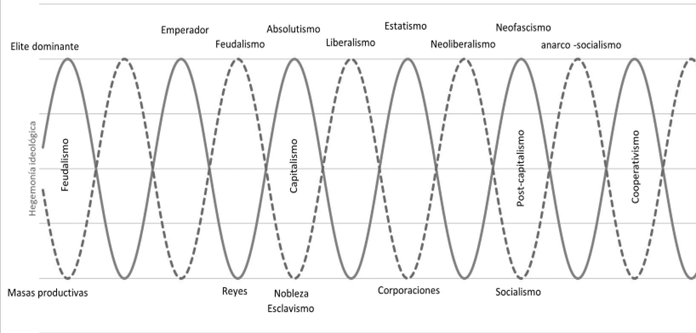







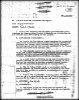
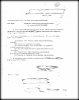
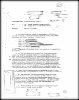

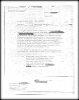
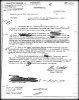

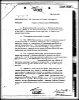
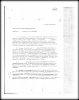
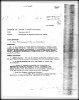
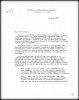
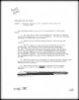


 Escritos Críticos


Debe estar conectado para enviar un comentario.