
Para producir un impacto «suficientemente espectacular» en Japón, Oppenheimer favoreció el «objetivo real de las estructuras construidas».
Un informe preliminar de las Fuerzas Aéreas del Ejército ofreció una «estimación conservadora» de 100.000 muertos en Hiroshima.
Interceptaciones de mensajes diplomáticos japoneses y registros internos japoneses arrojan luz sobre el debate sobre la decisión de rendición.
La génesis del Proyecto Manhattan se explora en los registros del Comité de Política Militar.
Washington, D.C., 5 de agosto de 2025 – El primer informe completo estadounidense sobre los resultados del bombardeo atómico de Hiroshima, realizado hace 80 años esta semana, presentó una «estimación conservadora» de que alrededor de 100.000 personas murieron, según un informe del 8 de agosto de 1945 de las Fuerzas Aéreas del Ejército de EE. UU. en la isla de Tinian, publicado hoy por primera vez. El mensaje de seis páginas sobre los resultados de la «Misión Hiroshima» es uno de los puntos destacados de una colección actualizada de registros desclasificados publicada hoy por el Archivo de Seguridad Nacional para conmemorar el 80.º aniversario de los bombardeos atómicos de Hiroshima y Nagasaki.
Si bien los líderes estadounidenses elogiaron los bombardeos en su momento y durante muchos años después por poner fin a la guerra del Pacífico y salvar incontables miles de vidas estadounidenses, esa interpretación ha sido seriamente cuestionada desde entonces. Muchos otros han planteado cuestiones éticas sobre el uso de armas que causaron tantas muertes de civiles y que, en las décadas siguientes, desembocaron en una costosa y peligrosa carrera armamentística nuclear con la Unión Soviética (actual Rusia) y otros países.
Ochenta años después, Hiroshima y Nagasaki siguen siendo un símbolo de los peligros y el coste humano de la guerra, en concreto del uso de armas nucleares, pero persiste el desacuerdo sobre qué puso fin a la Segunda Guerra Mundial en el Pacífico. Dado que estos temas serán objeto de intenso debate durante muchos años, el Archivo ha actualizado y republicado uno de sus libros electrónicos más populares: una creciente recopilación de documentos desclasificados del gobierno estadounidense y registros japoneses traducidos sobre los bombardeos que aparecieron por primera vez en estas páginas hace 20 años, en 2005.
Entre el nuevo material publicado por primera vez en 2025 se encuentran:
- Material de referencia sobre la creación del Proyecto Manhattan, incluyendo registros de las reuniones del Comité de Política Militar durante 1942 y 1943 e informes al presidente Roosevelt y altos funcionarios sobre los planes para establecer plantas de producción de plutonio y uranio altamente enriquecido necesarios para la fabricación de bombas.
- Planes para lanzar la bomba (denominada el «dispositivo») a su objetivo y causar daños irreparables al máximo número de estructuras (viviendas y fábricas).
- Discusión interna sobre las pruebas de «demostración», en la que el jefe de Los Álamos, J. Robert Oppenheimer, declaró, según un relato, que la única prueba de demostración «suficientemente espectacular» que podría tener impacto en Japón involucraría un «objetivo real de estructuras construidas».
- Un registro de la reunión secreta de Oppenheimer con el director del Proyecto Manhattan, el general Leslie R. Groves, en Chicago el 24 de julio de 1945, donde discutieron el programa de producción de la bomba atómica y los efectos de la prueba Trinity.
- Primera declaración pública de Robert Oppenheimer, el 9 de agosto de 1945, sobre el uso de la bomba y su esperanza de que el peligro de las armas atómicas obligara a los líderes mundiales a evitar conflictos.
La bomba atómica y el fin de la Segunda Guerra Mundial: Una colección de fuentes primarias
Introducción
Por William Burr
Cualquier aniversario de los bombardeos atómicos de Hiroshima y Nagasaki en agosto de 1945 ofrece una ocasión para una seria reflexión. En Japón y en otras partes del mundo, cada aniversario se conmemora con gran solemnidad. Estos bombardeos marcaron la primera vez que se detonaron armas nucleares en operaciones de combate. Causaron terribles pérdidas humanas y destrucción en su momento, y más muertes y enfermedades en los años posteriores debido a los efectos de la radiación. Los bombardeos estadounidenses también aceleraron el proyecto de la bomba atómica de la Unión Soviética y han alimentado una carrera armamentista nuclear entre las grandes potencias hasta el día de hoy. Afortunadamente, las armas nucleares no se han detonado en una guerra desde 1945, quizás debido al tabú contra su uso, generado por el lanzamiento de las bombas sobre Japón. Sin embargo, 80 años después, el peligro de las armas nucleares es tan grande como siempre, con grandes potencias que las poseen y algunas, como Rusia y Corea del Norte, lanzando amenazas nucleares sin impunidad. Con la alta tensión en zonas de crisis que abarcan desde Ucrania hasta el sur de Asia y la península de Corea, el riesgo de un conflicto nuclear podría ser tan grande como lo fue durante la Guerra Fría. En agosto de 1945, el director del Laboratorio de Los Álamos, J. Robert Oppenhemer, esperaba que el peligro de las armas atómicas uniera a las naciones y generara mayor confianza entre ellas, pero esa esperanza ha sido esquiva.
Además de las cuestiones éticas que conlleva el uso de armas atómicas y otras armas con gran impacto, la cuestión de por qué se lanzaron las bombas en primer lugar ha sido objeto de un acalorado debate en ocasiones. Como ocurre con todos los acontecimientos de la historia de la humanidad, las interpretaciones varían y la lectura de fuentes primarias puede llevar a conclusiones diferentes. Por lo tanto, sigue siendo debatible hasta qué punto los bombardeos contribuyeron al fin de la Segunda Guerra Mundial o al inicio de la Guerra Fría. Una cuestión controvertida importante es si, bajo el peso del bloqueo estadounidense y los bombardeos convencionales masivos, los japoneses estaban dispuestos a rendirse antes del lanzamiento de las bombas. También se sigue debatiendo el impacto de la declaración de guerra soviética y la invasión de Manchuria en la decisión japonesa de rendirse. Abundan las controversias sobre cuestiones contrafácticas, como si existían alternativas a los bombardeos atómicos o si Japón se habría rendido si se hubiera utilizado una demostración de la bomba para causar conmoción y terror. Además, el papel de una invasión de Japón en la planificación estadounidense sigue siendo objeto de debate, y algunos argumentan que los bombardeos salvaron miles de vidas estadounidenses que, de otro modo, se habrían perdido en una invasión.
Estas y otras preguntas serán objeto de debate en el futuro. Los lectores interesados seguirán absorbiendo la fascinante literatura histórica sobre el tema. Algunos querrán leer fuentes primarias desclasificadas para profundizar en su propia reflexión sobre los temas. Con ese fin, en 2005, coincidiendo con el 60.º aniversario de los bombardeos, el personal del Archivo de Seguridad Nacional recopiló y escaneó una cantidad significativa de documentos desclasificados del gobierno estadounidense para facilitar su acceso. Los documentos abarcan múltiples aspectos de los bombardeos y su contexto. Para ofrecer una perspectiva más amplia, la publicación también incluyó traducciones de documentos japoneses no disponibles anteriormente. Desde 2005, la colección se ha actualizado varias veces, la más reciente en 2020, cuando el Archivo publicó un nuevo documento sobre las primeras dudas de Dwight D. Eisenhower sobre el uso de armas nucleares. Esta última versión de la colección incluye nuevos documentos, texto revisado y notas al pie actualizadas para incorporar la literatura secundaria publicada recientemente.
Actualización 2020
Washington, D.C., 4 de agosto de 2020 – Para conmemorar el 75.º aniversario de los bombardeos atómicos de Hiroshima y Nagasaki en agosto de 1945, el Archivo de Seguridad Nacional actualiza y vuelve a publicar uno de sus libros electrónicos más populares de los últimos 25 años.
Si bien los líderes estadounidenses elogiaron los bombardeos en su momento y durante muchos años después por poner fin a la guerra del Pacífico y salvar incontables miles de vidas estadounidenses, esa interpretación ha sido seriamente cuestionada desde entonces. Además, cuestiones éticas han envuelto los bombardeos que causaron terribles pérdidas humanas y, en las décadas siguientes, alimentaron una carrera armamentística nuclear con la Unión Soviética y ahora con Rusia, entre otros.
Tres cuartos de siglo después, Hiroshima y Nagasaki siguen siendo un símbolo de los peligros y el coste humano de la guerra, en concreto del uso de armas nucleares. Dado que estos temas serán objeto de intenso debate durante muchos años más, el Archivo ha actualizado una vez más su recopilación de documentos desclasificados del gobierno estadounidense y registros japoneses traducidos que aparecieron por primera vez en estas páginas en 2005.
Introducción
Por William Burr
El 75.º aniversario de los bombardeos atómicos de Hiroshima y Nagasaki en agosto de 1945 es motivo de seria reflexión. En Japón y en otras partes del mundo, cada aniversario se conmemora con gran solemnidad. Los bombardeos marcaron la primera vez que se detonaron armas nucleares en operaciones de combate. Causaron terribles pérdidas humanas y destrucción en su momento, y más muertes y enfermedades en los años posteriores debido a los efectos de la radiación. Los bombardeos estadounidenses aceleraron el proyecto de la bomba atómica de la Unión Soviética y han alimentado una carrera armamentista nuclear entre las grandes potencias hasta el día de hoy. Afortunadamente, las armas nucleares no han explotado en guerras desde 1945, quizás debido al tabú contra su uso, generado por el lanzamiento de las bombas sobre Japón.
Además de las cuestiones éticas que implica el uso de armas atómicas y otras armas con consecuencias masivas, el motivo del lanzamiento inicial de las bombas ha sido objeto de acalorados debates. Como ocurre con todos los acontecimientos de la historia de la humanidad, las interpretaciones varían y la lectura de fuentes primarias puede llevar a conclusiones diferentes. Por lo tanto, el grado en que los bombardeos contribuyeron al fin de la Segunda Guerra Mundial o al inicio de la Guerra Fría sigue siendo un tema de debate. Una cuestión controvertida importante es si, bajo el peso del bloqueo estadounidense y los bombardeos convencionales masivos, los japoneses estaban dispuestos a rendirse antes del lanzamiento de las bombas. También se debate el impacto de la declaración de guerra soviética y la invasión de Manchuria, en comparación con los bombardeos atómicos, en la decisión japonesa de rendirse. También se discuten cuestiones contrafácticas, por ejemplo, si existían alternativas a los bombardeos atómicos o si los japoneses se habrían rendido si se hubiera utilizado una demostración de la bomba para causar conmoción y terror. Además, el papel de una invasión de Japón en la planificación estadounidense sigue siendo tema de debate, y algunos argumentan que los bombardeos salvaron miles de vidas estadounidenses que, de otro modo, se habrían perdido en una invasión.
Estas y otras preguntas serán objeto de debate durante mucho tiempo. Los lectores interesados seguirán absorbiendo la fascinante literatura histórica sobre el tema. Algunos querrán leer fuentes primarias desclasificadas para profundizar en su propia reflexión sobre los temas. Con ese fin, en 2005, coincidiendo con el 60.º aniversario de los bombardeos, el personal del Archivo de Seguridad Nacional recopiló y escaneó una cantidad significativa de documentos desclasificados del gobierno estadounidense para ampliar su acceso. Los documentos abarcan múltiples aspectos de los bombardeos y su contexto. También se incluyeron, para ofrecer una perspectiva más amplia, traducciones de documentos japoneses que antes no estaban ampliamente disponibles. Desde 2005, la colección se ha actualizado. Esta última versión incluye correcciones, algunas revisiones menores y notas al pie actualizadas para tener en cuenta la literatura secundaria publicada recientemente.
Actualización de 2015
4 de agosto de 2015 – Unos meses después de los bombardeos atómicos de Hiroshima y Nagasaki, el general Dwight D. Eisenhower comentó durante un evento social que esperaba que la guerra hubiera terminado sin que hubiéramos tenido que usar la bomba atómica. Esta evidencia, prácticamente desconocida, del diario de Robert P. Meiklejohn, asistente del embajador W. Averell Harriman, publicada hoy por primera vez por el Archivo de Seguridad Nacional, confirma que el futuro presidente Eisenhower albergaba dudas iniciales sobre el primer uso de armas atómicas por parte de Estados Unidos. El general George C. Marshall es el único funcionario de alto rango cuyas dudas contemporáneas (previas a Hiroshima) sobre el uso de armas atómicas contra ciudades están documentadas.
En el 70.º aniversario del bombardeo de Hiroshima el 6 de agosto de 1945, el Archivo de Seguridad Nacional actualiza su publicación de 2005, la colección en línea más completa de documentos desclasificados del gobierno estadounidense sobre el primer uso de la bomba atómica y el fin de la guerra en el Pacífico. Esta actualización presenta material inédito y traducciones de registros difíciles de encontrar. Se incluyen documentos sobre las primeras etapas del proyecto estadounidense de la bomba atómica, el informe del general Curtis LeMay de las Fuerzas Aéreas del Ejército sobre el bombardeo incendiario de Tokio (marzo de 1945), las solicitudes del secretario de Guerra Henry Stimson para modificar las condiciones de la rendición incondicional, documentos soviéticos relacionados con los acontecimientos, extractos de los diarios de Robert P. Meiklejohn mencionados anteriormente y selecciones de los diarios de Walter J. Brown, asistente especial del secretario de Estado James Byrnes. La publicación original de 2005 incluía una amplia gama de material, incluyendo resúmenes «Magic» de comunicaciones japonesas interceptadas, anteriormente ultrasecretos, y las primeras traducciones completas del japonés de relatos de reuniones y debates de alto nivel en Tokio que condujeron a la decisión del Emperador de rendirse. También se documentan las decisiones de Estados Unidos de atacar ciudades japonesas, peticiones de científicos previas a Hiroshima que cuestionaban el uso militar de la bomba atómica, propuestas para demostrar los efectos de la bomba, debates sobre la modificación de las condiciones de rendición incondicional, informes de los bombardeos de Hiroshima y Nagasaki, y un conocimiento tardío de las altas esferas sobre los efectos de la radiación de las armas atómicas.
Los documentos pueden ayudar a los lectores a formarse su propia opinión sobre controversias de larga data, como si el primer uso de armas atómicas estuvo justificado, si el presidente Harry S. Truman tenía alternativas a los ataques atómicos para poner fin a la guerra y cuál fue el impacto de la declaración de guerra soviética en Japón. Desde la década de 1960, cuando comenzó la desclasificación de fuentes importantes, los historiadores han mantenido un intenso debate sobre la bomba atómica y el fin de la Segunda Guerra Mundial. Basándose en fuentes de los Archivos Nacionales y la Biblioteca del Congreso, así como en materiales japoneses, este libro informativo electrónico incluye documentos clave en los que los historiadores de los acontecimientos se han basado para presentar sus hallazgos y avanzar en sus interpretaciones.
La bomba atómica y el fin de la Segunda Guerra Mundial: Una colección de fuentes primarias
Hace setenta años, Estados Unidos lanzó bombas atómicas sobre Hiroshima y Nagasaki, la Unión Soviética declaró la guerra a Japón y el gobierno japonés se rindió ante Estados Unidos y sus aliados. La era nuclear había comenzado realmente con el primer uso militar de armas atómicas. Con el material que sigue, el Archivo de Seguridad Nacional publica la colección en línea más completa hasta la fecha de documentos desclasificados del gobierno estadounidense sobre la bomba atómica y el fin de la guerra en el Pacífico. Además de material de los archivos del Proyecto Manhattan, esta colección incluye resúmenes y traducciones, anteriormente «Top Secret Ultra», de cables diplomáticos japoneses interceptados bajo el programa «Magic». Además, la colección incluye por primera vez traducciones de fuentes japonesas de reuniones y debates de alto nivel en Tokio, incluyendo las conferencias en las que el emperador Hirohito autorizó la decisión final de rendirse.[1]
Desde que las bombas atómicas explotaron sobre ciudades japonesas, historiadores, científicos sociales, periodistas, veteranos de la Segunda Guerra Mundial y ciudadanos de a pie han generado una intensa controversia sobre los sucesos de agosto de 1945. El libro Hiroshima de John Hersey, publicado por primera vez en The New Yorker en 1946, animó a los lectores inquietos a cuestionar los bombardeos, mientras que grupos religiosos y algunos comentaristas, entre ellos Norman Cousins, los criticaron explícitamente. El exsecretario de Guerra Henry Stimson consideró preocupantes las críticas y publicó una influyente justificación de los ataques en Harper’s.[2] Durante la década de 1960, la disponibilidad de fuentes primarias posibilitó la investigación y la escritura histórica, y el debate se intensificó. Los historiadores Herbert Feis y Gar Alperovitz plantearon preguntas inquisitivas sobre el primer uso de armas nucleares y sus amplias implicaciones políticas y diplomáticas. La controversia, especialmente el argumento…
¿Fueron los ataques atómicos necesarios principalmente para evitar una invasión de Japón en noviembre de 1945?
¿Autorizó Truman el uso de bombas atómicas por razones político-diplomáticas (para intimidar a los soviéticos) o su principal objetivo era obligar a Japón a rendirse y poner fin a la guerra antes de lo previsto?
Si la rápida finalización de la guerra fue la principal motivación de Truman y sus asesores, ¿hasta qué punto consideraron la capacidad de «diplomacia atómica» una ventaja?
¿En qué medida la justificación posterior de la bomba atómica exageró o malinterpretó las estimaciones de bajas estadounidenses en tiempos de guerra derivadas de una invasión de Japón?
¿Existían alternativas al uso de las armas? De haberlas, ¿cuáles eran y qué tan plausibles son en retrospectiva? ¿Por qué no se buscaron alternativas?
¿Cómo planeó el gobierno estadounidense utilizar las bombas? ¿Qué conceptos utilizaron los estrategas de guerra para seleccionar los objetivos? ¿Hasta qué punto estaban interesados los altos funcionarios en buscar alternativas a los objetivos urbanos? ¿Qué tan familiarizado estaba el presidente Truman con los conceptos que llevaron a los planificadores a elegir las principales ciudades como objetivos?
¿Por qué el secretario de Guerra Henry Stimson se opuso a los planes militares de atacar Kioto y cómo impidió que el director del Proyecto Manhattan, el general Groves, volviera a incluirla en la lista final de objetivos?
¿Qué sabían los altos funcionarios sobre los efectos de las bombas atómicas antes de su primer uso? En particular, ¿cuánto sabían los altos funcionarios sobre los efectos de la radiación de las armas?
¿Tomó el presidente Truman una decisión, en sentido estricto, de usar la bomba o heredó una decisión ya tomada?
¿Estaban los japoneses dispuestos a rendirse antes del lanzamiento de las bombas? ¿Hasta qué punto el emperador Hirohito prolongó la guerra innecesariamente al no aprovechar las oportunidades para rendirse?
Si Estados Unidos hubiera sido más flexible en cuanto a la exigencia de «rendición incondicional», garantizando explícita o implícitamente una monarquía constitucional, ¿se habría rendido Japón antes?
¿Cuán decisivos fueron los bombardeos atómicos para la decisión japonesa de rendirse?
¿Fue innecesario el bombardeo de Nagasaki? Dado que el bombardeo atómico fue crucial para la decisión japonesa de rendirse, ¿habría bastado con destruir una sola ciudad?
¿Habría bastado la declaración de guerra soviética para obligar a Tokio a admitir la derrota?
¿Era moralmente justificable el lanzamiento de las bombas atómicas?
¿Por qué el presidente Truman detuvo los bombardeos atómicos y cuál fue la trascendencia política de su decisión?
Esta recopilación no intentará responder a estas preguntas ni utilizar fuentes primarias para definir posturas sobre ninguna de ellas. Tampoco pretende sustituir la extraordinariamente rica literatura sobre los bombardeos atómicos y el fin de la Segunda Guerra Mundial. Tampoco incluye entrevistas, documentos elaborados tras los acontecimientos ni correspondencia posterior a la Segunda Guerra Mundial, etc., que los participantes en el debate han aportado para fundamentar sus argumentos. Originalmente, esta recopilación no incluía documentos sobre los orígenes y el desarrollo del Proyecto Manhattan, aunque esta actualización incluye algunos registros significativos para contextualizar. Al proporcionar acceso a una amplia gama de documentos estadounidenses y japoneses, principalmente de la primavera y el verano de 1945, los lectores interesados pueden comprobar por sí mismos el material fuente crucial que los académicos han utilizado para dar forma a las narrativas de los acontecimientos históricos y para fundamentar sus argumentos sobre las cuestiones que han suscitado controversia a lo largo de los años. Para ayudar a los lectores menos familiarizados con los debates, los comentarios sobre algunos documentos señalarán, aunque no de forma exhaustiva, algunas de las maneras en que se han interpretado. Con acceso directo a los documentos, los lectores pueden elaborar sus propias respuestas a las preguntas planteadas. Los documentos pueden incluso suscitar nuevas preguntas.
Quienes han contribuido a la controversia histórica han utilizado los documentos aquí seleccionados para respaldar sus argumentos sobre el primer uso de armas nucleares y el fin de la Segunda Guerra Mundial. El editor ha revisado minuciosamente las notas a pie de página y a final de diversos artículos y libros, así como documentos seleccionados citados por participantes de las distintas posturas de la controversia.[5] Si bien el editor tiene un punto de vista sobre los temas, en la medida de lo posible ha procurado evitar que este influya en la selección de documentos, por ejemplo, excluyendo o incluyendo selectivamente documentos que pudieran respaldar un punto de vista u otro. La tarea de recopilación implicó la consulta de fuentes primarias en los Archivos Nacionales, principalmente en los archivos del Proyecto Manhattan, conservados en los registros del Cuerpo de Ingenieros del Ejército, Grupo de Registros 77, pero también en los registros de la Agencia de Seguridad Nacional. Las colecciones privadas también fueron importantes, como los Documentos de Henry L. Stimson, conservados en la Universidad de Yale (aunque disponibles en microfilm, por ejemplo, en la Biblioteca del Congreso) y los documentos de W. Averell Harriman, conservados en la Biblioteca del Congreso. En gran medida, los documentos seleccionados para esta recopilación han sido desclasificados durante años, incluso décadas; las desclasificaciones más recientes datan de la década de 1990.
Los documentos estadounidenses citados aquí resultarán familiares para muchos lectores conocedores de la controversia de Hiroshima-Nagasaki y la historia del Proyecto Manhattan. Para ofrecer una visión más completa de la transición del antagonismo entre Estados Unidos y Japón a la reconciliación, el editor ha hecho todo lo posible, dentro de las limitaciones de tiempo y recursos, para presentar información sobre las actividades y los puntos de vista de los responsables políticos y diplomáticos japoneses. Esto incluye varios resúmenes, anteriormente ultrasecretos, de comunicaciones diplomáticas japonesas interceptadas, que permiten a los lectores interesados formarse sus propios juicios sobre la dirección de la diplomacia japonesa en las semanas previas a los bombardeos atómicos. Además, para arrojar luz sobre las consideraciones que llevaron a la rendición de Japón, este libro informativo incluye nuevas traducciones de fuentes primarias japonesas sobre eventos cruciales, incluyendo relatos de las conferencias del 9 y el 14 de agosto, donde el emperador Hirohito decidió aceptar las condiciones de rendición de los Aliados.
Nota del editor: Originalmente preparada en julio de 2005, esta publicación ha sido actualizada con nuevos documentos, cambios en la organización y otros cambios editoriales. Como se mencionó, se han incluido algunos documentos relacionados con los orígenes del Proyecto Manhattan, además de entradas de los diarios de Robert P. Meiklejohn y traducciones de algunos documentos soviéticos, entre otros. Asimismo, se han tenido en cuenta importantes contribuciones recientes a la literatura académica.
Nota del editor: Agradecemos al profesor Barton J. Bernstein, emérito del Departamento de Historia de la Universidad de Stanford, por su asesoramiento a lo largo de los años; a Richard W. Groves, por compartir información sobre la historia del Proyecto Manhattan; a Robert S. Norris, por proporcionar valiosas pistas sobre las fuentes documentales; y a Linda Katsiyiannis y Margaret Frank, ambas de la Universidad George Washington, por su asistencia en la investigación.
I. Antecedentes del Proyecto Atómico de EE. UU.
Documentos 1A-C: Informe del Comité del Uranio
Documento 1A
Arthur H. Compton, Comité de Fisión Atómica de la Academia Nacional de Ciencias, a Frank Jewett, Presidente de la Academia Nacional de Ciencias, 17 de mayo de 1941, Secreto
17 de mayo de 1941
Fuente
Archivos Nacionales, Registros de la Oficina de Investigación y Desarrollo Científico, Grupo de Registros 227 (en adelante RG 227), Colección de microfilmes de los documentos Bush-Conant, Rollo 1, Objetivo 2, Carpeta 1, «Archivo Histórico S-1, Sección A (1940-1941)».
Este conjunto de documentos se refiere al trabajo del Comité del Uranio de la Academia Nacional de Ciencias, un proyecto exploratorio que condujo a la producción propiamente dicha del Proyecto Manhattan. El informe inicial, de mayo de 1941, mostró cómo destacados científicos estadounidenses se enfrentaban al potencial de la energía nuclear con fines militares. Inicialmente, se contemplaron tres posibilidades: guerra radiológica, fuente de energía para submarinos y buques, y explosivos. Para producir material para cualquiera de estos fines se requería la capacidad de separar isótopos de uranio para producir U-235 fisionable. Para estas capacidades también era necesario producir una reacción nuclear en cadena. En la época del primer informe, se contemplaban varios métodos para producir una reacción en cadena y se presupuestaba su experimentación.
Más tarde ese año, el Comité del Uranio completó su informe y el presidente de la OSRD, Vannevar Bush, informó de las conclusiones al presidente Roosevelt: Como Bush enfatizó, las conclusiones estadounidenses eran más conservadoras que las del informe británico MAUD: la bomba sería algo «menos efectiva», tardaría más en producirse y tendría un costo mayor. Una de las conclusiones clave del informe fue que una bomba de fisión de poder superlativamente destructivo resultará de la rápida concentración de una masa suficiente del elemento U235. Eso era una certeza, «tan segura como cualquier predicción no probada basada en la teoría y la experimentación». La tarea crucial era desarrollar formas y medios para separar el uranio altamente enriquecido del uranio-238. Para iniciar la producción, Bush quería establecer un «grupo de ingeniería cuidadosamente seleccionado para estudiar los planes para una posible producción». Esta fue la base del Grupo de Políticas Principales, o Comité S-1, que Bush y James B. Conant establecieron rápidamente.[6]
En su análisis de los efectos de un arma atómica, el comité consideró tanto la explosión como los daños radiológicos. Respecto a estos últimos, «es posible que los efectos destructivos sobre la vida causados por la intensa radiactividad de los productos de la explosión sean tan importantes como los de la explosión misma». Esta perspectiva se pasó por alto cuando los altos funcionarios del Proyecto Manhattan consideraron el ataque a Japón en 1945.[7]
Document 1B
Nov 6, 1941
Source
National Archives, Records of the Office of Scientific Research and Development, Record Group 227 (hereinafter RG 227), Bush-Conant papers microfilm collection, Roll 1, Target 2, Folder 1, «S-1 Historical File, Section A (1940-1941).»
See description of document 1A.
Document 1C
Nov 27, 1941
Source
National Archives, Records of the Office of Scientific Research and Development, Record Group 227 (hereinafter RG 227), Bush-Conant papers microfilm collection, Roll 1, Target 2, Folder 1, «S-1 Historical File, Section A (1940-1941).»
See description of document 1A.
Documents 2A-B: Going Ahead with the Bomb
Document 2A
Mar 11, 1942
Source
RG 227, Bush-Conant papers microfilm collection, Roll 1, Target 2, Folder 1, «S-1 Historical File, Section II (1941-1942)
The Manhattan Project never had an official charter establishing it and defining its mission, but these two documents are the functional equivalent of a charter, in terms of presidential approvals for the mission, not to mention for a huge budget. In a progress report, Bush told President Roosevelt that the bomb project was on a pilot plant basis, but not yet at the production stage. By the summer, once “production plants” would be at work, he proposed that the War Department take over the project. In reply, Roosevelt wrote a short memo endorsing Bush’s ideas as long as absolute secrecy could be maintained. According to Robert S. Norris, this was “the fateful decision” to turn over the atomic project to military control.[8]
Some months later, with the Manhattan Project already underway and under the direction of General Leslie Groves, Bush outlined to Roosevelt the effort necessary to produce six fission bombs. With the goal of having enough fissile material by the first half of 1945 to produce the bombs, Bush was worried that the Germans might get there first. Thus, he wanted Roosevelt’s instructions as to whether the project should be “vigorously pushed throughout.” Unlike the pilot plant proposal described above, Bush described a real production order for the bomb, at an estimated cost of a “serious figure”: $400 million, which was an optimistic projection given the eventual cost of $1.9 billion. To keep the secret, Bush wanted to avoid a “ruinous” appropriations request and asked Roosevelt to obtain from Congress the necessary discretionary funds. Initialed by President Roosevelt (“VB OK FDR”), this may have been the closest that he came to a formal approval of the Manhattan Project.
Document 2B
Vannevar Bush to President Roosevelt, 16 December 1942, Secret
Dec 16, 1942
Source
Bush-Conant papers, S-1 Historical File, Reports to and Conferences with the President (1942-1944)
See description of document 2A.

Document 2C
New!
Military Policy Committee Minutes, 12 November 1942, Secret
Nov 12, 1942
Source
Record Group 319, Manhattan Project Background Files, Box 21, folder of Military Policy Committee Minutes
During this meeting of the recently created MPC, Groves and its members laid out production objectives: electromagnetic separation to produce 0.1 kilograms of HEU per day and a nuclear power plant to produce 1.0 kilograms per day of plutonium. The Kellogg company would develop a 600-unit gaseous diffusion plant for producing HEU, but the objective could not take away resources from the electromagnetic uranium enrichment plant or the nuclear power plant. The MPC would develop a report to President Roosevelt.

Document 2D
New!
Minutes of Executive Committee Meeting of Military Policy Committee, 10 December 1942, Secret
Dec 10, 1942
Source
Record Group 319, Manhattan Project Background Files, Box 21, folder of Military Policy Committee Minutes
Continuing work on the report to President Roosevelt, the Committee set the goal of a 4600-unit gaseous diffusion plant and a 500-tank electromagnetic plant to make possible “the earliest production of material.” The “Chicago method,” a nuclear power plant, would go “forward full blast” with the plant sited in an “isolated area, but near power and water.”

Document 2E
New!
Report to President Roosevelt, 15 December 1942, Secret
Dec 15, 1942
Source
Record Group 319, Manhattan Project Background Files, Box 20, Military Policy Committee
This is the full text of the report to President Roosevelt as transcribed by U.S. Army historians as background research for Vincent Jones’ official history, Manhattan: The Army and the Atomic Bomb, published in 1985 by the Army’s Center of Military History. In this report, the Military Policy Committee reviewed key issues, including parameters for various methods of producing fissile material, funding issues, the size of a bomb, time schedules, possibilities for producing nuclear power, heavy water, assessments of German progress, supply of ore, and cooperation and information sharing relations with the Canadians and the British.
According to the report, the chances of bomb production by June 1944 were “small,” while “somewhat better” by 1 January 1945, and “good” during the first half of 1945.

Document 2F
New!
Minutes, Military Policy Committee Meeting, 21 August 1943, Secret
Jan 21, 1943
Source
Record Group 319, Manhattan Project Background Files, Box 21, folder of Military Policy Committee Minutes
General Groves reported that the Kellogg Company would have responsibility for the engineering for the gaseous diffusion plant while Union Carbide would operate it. The Tennessee-Eastman Co. would operate the electromagnetic plant.
Document 3
Memorandum by Leslie R. Groves, “Policy Meeting, 5/5/43,” Top Secret
May 5, 1943
Source
National Archives, Record Group 77, Records of the Army Corps of Engineers (hereinafter RG 77), Manhattan Engineering District (MED), Minutes of the Military Policy Meeting (5 May 1943), Correspondence (“Top Secret”) of the Manhattan Engineer District, 1942-1946, microfilm publication M1109 (Washington, D.C.: National Archives and Records Administration, 1980), Roll 3, Target 6, Folder 23, “Military Policy Committee, Minutes of Meetings”
While Manhattan Project leaders had their sights on developing fissile material production capacity, they were beginning to consider Japanese targets. Besides discussing programmatic matters (e.g., status of gaseous diffusion plants, heavy water production for reactors, and staffing at Las Alamos), the participants in this Military Policy Committee meeting agreed that the first use could be Japanese naval forces concentrated at Truk Harbor, an atoll in the Caroline Islands. If there was a misfire the weapon would be difficult for the Japanese to recover, which would not be the case if Tokyo was targeted. The MPC rejected targeting Germany because the Germans were considered more likely to “secure knowledge” from a defective weapon than the Japanese.[9]
Also of interest is the discussion of project funding: “The estimated total fund requirements of $850,000,000 were reported and explained to the members of the Committee. It was agreed that no report should be made at this time … to higher authority in view of the general indefiniteness.”
Document 3A
New!
Minutes, Military Policy Committee Meeting, 13 August 1943, Secret
Aug 13, 1943
Source
Record Group 319, Manhattan Project Background Files, Box 21, folder of Military Policy Committee Minutes
Reporting that the Norwegian heavy water factory had been repaired after the attempted sabotage, Groves observed that deliveries to Germany had or would be resumed and “that the Germans [had] progressed so far that there is a possibility of using the material in the present war and that heavy water was absolutely necessary to them, both for splitting the atom and in making up the explosive.” Not realizing that Hitler had not demanded a bomb project and that German scientists were not working on bomb physics or plutonium, Groves did not know that the Germans were making no progress at all.[9A]
The discussion of the diffusion process stipulated that it would aim for 36 percent “purity” although any “purity ranging between 20% and 40% would be satisfactory.” The electromagnetic plant would be “capable of taking the entire diffusion production” and enrich the uranium to desired levels. The Committee agreed that “all work should go ahead full blast despite the fact that there were still gaps in the scientific development.”
Document 3B
New!
Aug 21, 1943
Source
RG 77, Harrison-Bundy files, folder 6, Military Policy Committee
This update of the December 1942 report covered many of the same issues based on a greater fund of knowledge and practical experience. It included progress reports on the various methods for producing fissile material, funding issues, the size of a bomb, time schedules, “the secret laboratory,” heavy water, assessments of German progress, supply of ore, cooperation and information sharing relations with the British, as well as Russian activities.
On the Germans, the MPC noted the difficult of getting “satisfactory information,” but the members speculated that the Germany may be “in a position to use this material in the present war, particularly if events should lengthen the struggle unduly.” While the U.S. was “in a position to overtake them and eventually produce like material in greater quantities,” a situation could emerge where “it will be necessary for us to stand the first punishing blows before we are in a position to destroy the enemy.” As previously noted, none of that was within Germany’s capabilities because German scientists did not have an atomic bomb program.
On the size of the bomb, the MPC was assuming a gun-type device using highly enriched uranium or plutonium for fissile material. The fact that plutonium would not work with a gun-type weapon had yet to be discovered. The “size of [a] bomb for good efficiency of explosion may vary from 20 to 80 kilos.” A 20-kilogram bomb would be the equivalent of 10,000 tons of TNT. “What is needed is one decidedly powerful bomb. Plus the ability to follow it up with others. If the enemy is wavering, this might readily end the war.”
Like the December 1942, report, the MPC saw a “good” chance of a bomb being produced during the first half of 1945. Moreover, “this bomb can be followed up at reasonable intervals with other bombs” with the possibility that one bomb could be produced per month.
Document 3C
New!
Letter from Captain W.S. Parsons to General Groves, 19 May 1944, Top Secret
May 19, 1944
Source
RG 77, Top Secret MED Documents, folder 5F
Captain William Sterling Parsons was a senior official at Los Alamos who began work in June 1943 as chief of the Ordnance Division but also as Associate Director, which meant that he was Oppenheimer’s deputy. One of his key responsibilities was to develop plans and programs for using atomic bombs on targeted areas. While Parsons had been interested in developing a weapon for underwater use against battleships, Los Alamos had abandoned it, and Parsons focused on the complex issues involved in aerial delivery of a weapon. As Parsons noted, Los Alamos was already at work on producing an implosion weapon, and he thought prospects were good for developing a device with an explosive yield of 1,000 tons (TNT) or more. A modified B-29 bomber could deliver the weapon.
As Parsons observed, the “assembled gadget” would be “heavy and awkward to handle” with its two tons of high explosives used to detonate the “active material.” That made it necessary “to develop a gadget which will be assembled near enough to the point of take-off so that transportation and unloading operations can be minimized.” That was a scenario for the role of the activities at Tinian Island which would serve as the launch pad for final work on the Fat Man and Little Boy weapons.
An important point that Parsons made was that the “primary and, so far, only contemplated method of delivery toward which the testing program is oriented, is high altitude (about 30,000 feet above sea level), horizontal bombing, with provision for detonating the bomb well above ground, relying primarily on blast effect to do material damage.” According to Parsons the goal was to set a height of detonation that would, “with the minimum probable efficiency,” damage beyond repair “the maximum number of structures (dwellings and factories).” As Sean Malloy has observed, that meant that the bombs were “optimized” for use against cities and civilians.
Document 4
Aug 7, 1944
Source
RG 77, Correspondence («Top Secret») of the Manhattan Engineer District, 1942-1946, file 25M
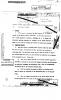
This memorandum from General Groves to General Marshall captured how far the Manhattan Project had come in less than two years since Bush’s December 1942 report to President Roosevelt. Groves did not mention this but around the time he wrote this the Manhattan Project had working at its far-flung installations over 125,000 people ; taking into account high labor turnover some 485,000 people worked on the project (1 out of every 250 people in the country at that time). What these people were laboring to construct, directly or indirectly, were two types of weapons—a gun-type weapon using U-235 and an implosion weapon using plutonium (although the possibility of U-235 was also under consideration). As the scientists had learned, a gun-type weapon based on plutonium was “impossible” because that element had an “unexpected property”: spontaneous neutron emissions would cause the weapon to “fizzle.”[10] For both the gun-type and the implosion weapons, a production schedule had been established and both would be available during 1945. The discussion of weapons effects centered on blast damage models; radiation and other effects were overlooked.

Document 4A
New!
Sep 25, 1944
Source
Library of Congress, Manuscript Division, J. Robert Oppenheimer Papers, Box 291, Government File Supplement 1941-1946 (12 of 14) 1944
Document 4B
New!
J.R. Oppenheimer to General Groves, 6 October 1944, Secret
Oct 6, 1944
Source
Library of Congress, J.R. Oppenheimer Papers, Box 36, Groves, Leslie R. (1 of 2), 1943-1952)
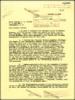
The issue of targeting came up in a September 1944 memorandum to General Groves, where, among other matters, Parsons presented his objections to a non-combat demonstration of the bomb. According to Parsons, people “in high and responsible quarters” had made such a proposal, although he did not identify them. The argument for a demonstration test was that if “we are winning the war,” a “staged field test in an American desert,” would be an impressive way to demonstrate “our victory over the atom and our potential power to win victories over our future enemies.”
Parsons explained why he objected to a demonstration test:
“To have our project culminate in a spectacularly expensive field test in the closing months of the war, or to have it held for such a demonstration after the war, is, in my opinion, one way to invite a political and military fizzle, regardless of the scientific achievement. The principal difficulty with such a demonstration is that it would not be held one thousand feet over Times Square, where the human and material destruction would be obvious, but in an uninhabited desert, where there would be no humans and only sample structures.”
As he had earlier in the year, Parsons assumed that only by using the bomb against a city to demonstrate the “human and material destruction” would, as Malloy has put it, “provide a suitably dramatic display of the bomb’s destructive power:”
A few weeks later, Oppenheimer wrote to General Groves endorsing Parsons’ line of argument: “I agree completely with all the comments of Captain Parsons’ memorandum on the fallacy of regarding a controlled test as the culmination of the work of this laboratory. The laboratory is operating under a directive to produce weapons; this directive has been and will be rigorously adhered to.” [10A]
Document 5
Sep 30, 1944
Source
RG 77, Harrison-Bundy Files (H-B Files), folder 69 (copy from microfilm)
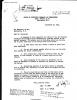
While Groves worried about the engineering and production problems, key War Department advisers were becoming troubled over the diplomatic and political implications of these enormously powerful weapons and the dangers of a global nuclear arms race. Concerned that President Roosevelt had an overly “cavalier” belief about the possibility of maintaining a post-war Anglo-American atomic monopoly, Bush and Conant recognized the limits of secrecy and wanted to disabuse senior officials of the notion that an atomic monopoly was possible. To suggest alternatives, they drafted this memorandum about the importance of the international exchange of information and international inspection to stem dangerous nuclear competition.[11]
Documents 6A-D: President Truman Learns the Secret
Document 6A
Apr 23, 1945
Source
G 77, Commanding General’s file no. 24, tab D
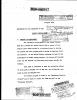
Soon after he was sworn in as president following President Roosevelt’s death, Harry Truman learned about the top secret Manhattan Project from briefings by Secretary of War Stimson and Manhattan Project chief General Groves (who went through the “back door” to escape the watchful press). Stimson, who later wrote up the meeting in his diary, also prepared a discussion paper, which raised broader policy issues associated with the imminent possession of “the most terrible weapon ever known in human history.”
In a background report prepared for the meeting, Groves provided a detailed overview of the bomb project from the raw materials to processing nuclear fuel to assembling the weapons to plans for using them, which were starting to crystallize. With respect to the point about assembling the weapons, Groves and Stimson informed Truman that the first gun-type weapon “should be ready about 1 August 1945” while an implosion weapon would also be available that month. “The target is and was always expected to be Japan.”
These documents have important implications for the perennial debate over whether Truman “inherited assumptions” from the Roosevelt administration that the bomb would be used when available or that he made the decision to do so. Alperovitz and Sherwin have argued that Truman made “a real decision” to use the bomb on Japan by choosing “between various forms of diplomacy and warfare.” In contrast, Bernstein found that Truman “never questioned [the] assumption” that the bomb would and should be used. Norris also noted that “Truman’s ”decision” amounted to a decision not to override previous plans to use the bomb.”[12]
Document 6B
Memorandum discussed with the President, April 25, 1945
Apr 25, 1945
Source
Henry Stimson Diary, Sterling Library, Yale University (microfilm at Library of Congress)
See description of document 6A.
Document 6C
[Untitled memorandum by General L.R. Groves, April 25, 1945
Apr 25, 1945
Source
Record Group 200, Papers of General Leslie R. Groves, Correspondence 1941-1970, box 3, “F”
See description of document 6A.
Document 6D
Apr 25, 1945
Source
Henry Stimson Diary, Sterling Library, Yale University (microfilm at Library of Congress)
See description of document 6A.
II. Targeting Japan
Document 7
Feb 24, 1945
Source
RG 77, MED Records, Top Secret Documents, File no. 5g
The force of B-29 nuclear delivery vehicles that was being readied for first nuclear use—the Army Air Force’s 509th Composite Group—required an operational base in the Western Pacific. In late February 1945, months before atomic bombs were ready for use, the high command selected Tinian, an island in the Northern Marianas Islands, for that base.
Document 8
Mar 10, 1945
Source
Library of Congress, Curtis LeMay Papers, Box B-36
As part of the war with Japan, the Army Air Force waged a campaign to destroy major industrial centers with incendiary bombs. This document is General Curtis LeMay’s report on the firebombing of Tokyo–“the most destructive air raid in history”–which burned down over 16 square miles of the city, killed up to 100,000 civilians (the official figure was 83,793), injured more than 40,000, and made over 1 million homeless. [13] According to the “Foreword,” the purpose of the raid, which dropped 1,665 tons of incendiary bombs, was to destroy industrial and strategic targets “not to bomb indiscriminately civilian populations.” Air Force planners, however, did not distinguish civilian workers from the industrial and strategic structures that they were trying to destroy.
The killing of workers in the urban-industrial sector was one of the explicit goals of the air campaign against Japanese cities. According to a Joint Chiefs of Staff report on Japanese target systems, expected results from the bombing campaign included: “The absorption of man-hours in repair and relief; the dislocation of labor by casualty; the interruption of public services necessary to production, and above all the destruction of factories engaged in war industry.” While Stimson would later raise questions about the bombing of Japanese cities, he was largely disengaged from the details (as he was with atomic targeting).[14]
Firebombing raids on other cities followed Tokyo, including Osaka, Kobe, Yokahama, and Nagoya, but with fewer casualties (many civilians had fled the cities). For some historians, the urban fire-bombing strategy facilitated atomic targeting by creating a “new moral context,” in which earlier proscriptions against intentional targeting of civilians had eroded.[15]
Document 9
Notes on Initial Meeting of Target Committee, May 2, 1945, Top Secret
May 2, 1945
Source
RG 77, MED Records, Top Secret Documents, File no. 5d (copy from microfilm)
On 27 April, military officers and nuclear scientists met to discuss bombing techniques, criteria for target selection, and overall mission requirements. The discussion of “available targets” included Hiroshima, the “largest untouched target not on the 21st Bomber Command priority list.” But other targets were under consideration, including Yawata (northern Kyushu), Yokohama, and Tokyo (even though it was practically “rubble.”) The problem was that the Air Force had a policy of “laying waste” to Japan’s cities which created tension with the objective of reserving some urban targets for nuclear destruction. [16]
Document 10
Memorandum from J. R. Oppenheimer to Brigadier General Farrell, May 11, 1945
May 11, 1945
Source
RG 77, MED Records, Top Secret Documents, File no. 5g (copy from microfilm)
As director of Los Alamos Laboratory, Oppenheimer’s priority was producing a deliverable bomb, but not so much the effects of the weapon on the people at the target. In keeping with General Groves’ emphasis on compartmentalization, the Manhattan Project experts on the effects of radiation on human biology were at the MetLab and other offices and had no interaction with the production and targeting units. In this short memorandum to Groves’ deputy, General Farrell, Oppenheimer explained the need for precautions because of the radiological dangers of a nuclear detonation. The initial radiation from the detonation would be fatal within a radius of about 6/10ths of a mile and “injurious” within a radius of a mile. The point was to keep the bombing mission crew safe; concern about radiation effects had no impact on targeting decisions. [17]
Document 11
May 12, 1945
Source
RG 77, MED Records, Top Secret Documents, File no. 5d (copy from microfilm)
Scientists and officers held further discussion of bombing mission requirements, including height of detonation, weather, radiation effects (Oppenheimer’s memo), plans for possible mission abort, and the various aspects of target selection, including priority cities (“a large urban area of more than three miles diameter”) and psychological dimension. As for target cities, the committee agreed that the following should be exempt from Army Air Force bombing so they would be available for nuclear targeting: Kyoto, Hiroshima, Yokohama, and Kokura Arsenal. Japan’s cultural capital, Kyoto, would not stay on the list. Pressure from Secretary of War Stimson had already taken Kyoto off the list of targets for incendiary bombings and he would successfully object to the atomic bombing of that city. [18]
Document 12
Stimson Diary Entries, May 14 and 15, 1945
May 14, 1945
Source
Henry Stimson Diary, Sterling Library, Yale University (microfilm at Library of Congress)
On May 14 and 15, Stimson had several conversations involving S-1 (the atomic bomb); during a talk with Assistant Secretary of War John J. McCloy, he estimated that possession of the bomb gave Washington a tremendous advantage—“held all the cards,” a “royal straight flush”– in dealing with Moscow on post-war problems: “They can’t get along without our help and industries and we have coming into action a weapon which will be unique.” The next day a discussion of divergences with Moscow over the Far East made Stimson wonder whether the atomic bomb would be ready when Truman met with Stalin in July. If it was, he believed that the bomb would be the “master card” in U.S. diplomacy. This and other entries from the Stimson diary (as well as the entry from the Davies diary that follows) are important to arguments developed by Gar Alperovitz and Barton J. Bernstein, among others, although with significantly different emphases, that in light of controversies with the Soviet Union over Eastern Europe and other areas, top officials in the Truman administration believed that possessing the atomic bomb would provide them with significant leverage for inducing Moscow’s acquiescence in U.S. objectives.[19]
Document 13
Davies Diary entry for May 21, 1945
May 21, 1945
Source
Joseph E. Davies Papers, Library of Congress, box 17, 21 May 1945
While officials at the Pentagon continued to look closely at the problem of atomic targets, President Truman, like Stimson, was thinking about the diplomatic implications of the bomb. During a conversation with Joseph E. Davies, a prominent Washington lawyer and former ambassador to the Soviet Union, Truman said that he wanted to delay talks with Stalin and Churchill until July when the first atomic device had been tested. Alperovitz treated this entry as evidence in support of the atomic diplomacy argument, but other historians, ranging from Robert Maddox to Gabriel Kolko, have denied that the timing of the Potsdam conference had anything to do with the goal of using the bomb to intimidate the Soviets.[20]
Document 14
May 24, 1945
Source
Harrison-Bundy Files relating to the Development of the Atomic Bomb, 1942-1946, microfilm publication M1108 (Washington, D.C.: National Archives and Records Administration, 1980), File 77: «Interim Committee – International Control.»
In what Stimson called the “letter of an honest man,” Oswald C. Brewster sent President Truman a profound analysis of the danger and unfeasibility of a U.S. atomic monopoly. [21] An engineer for the Kellex Corporation, which was involved in the gas diffusion project to enrich uranium, Brewster recognized that the objective was fissile material for a weapon. That goal, he feared, raised terrifying prospects with implications for the “inevitable destruction of our present day civilization.” Once the U.S. had used the bomb in combat other great powers would not tolerate a monopoly by any nation and the sole possessor would be “be the most hated and feared nation on earth.” Even the U.S.’s closest allies would want the bomb because “how could they know where our friendship might be five, ten, or twenty years hence.” Nuclear proliferation and arms races would be certain unless the U.S. worked toward international supervision and inspection of nuclear plants.
Brewster suggested that Japan could be used as a “target” for a “demonstration” of the bomb, which he did not further define. His implicit preference, however, was for non-use; he wrote that it would be better to take U.S. casualties in “conquering Japan” than “to bring upon the world the tragedy of unrestrained competitive production of this material.”
Document 15
Minutes of Third Target Committee Meeting – Washington, May 28, 1945, Top Secret
May 28, 1945
Source
RG 77, MED Records, Top Secret Documents, File no. 5d (copy from microfilm)
More updates on training missions, target selection, and conditions required for successful detonation over the target. The target would be a city–either Hiroshima, Kyoto (still on the list), or Niigata–but specific “aiming points” would not be specified at that time nor would industrial “pin point” targets because they were likely to be on the “fringes” a city. The bomb would be dropped in the city’s center. “Pumpkins” referred to bright orange, pumpkin-shaped high explosive bombs—shaped like the “Fat Man” implosion weapon–used for bombing run test missions.
Document 16
May 29, 1945
Source
RG 77, MED Records, Top Secret Documents, File no. 5g (copy from microfilm)
At the end of May General Groves forwarded to Army Chief of Staff Marshall a “Plan of Operations” for the atomic bombings. While that plan has not surfaced, apparently its major features were incorporated in this 29 May 1945 message on the “special functions” of the 509th Composite Group sent from Chief of Staff General Lauris Norstad to General Curtis LeMay, chief of the XXI Bomber Command, headquartered in the Marianas Islands.[21A] The Norstad message reviewed the complex requirements for preparing B-29s and their crew for delivering nuclear weapons. He detailed the mission of the specially modified B-29s that comprised the 509th Composite Group, the “tactical factors” that applied, training and rehearsal issues, and the functions of “special personnel” and the Operational Studies Group. The targets listed—Hiroshima, Kyoto, and Niigato—were those that had been discussed at the Target Committee meeting on 28 May, but Kyoto would be dropped when Secretary Stimson objected (although that would remain a contested matter) and Kokura would eventually be substituted. As part of the Composite Group’s training to drop “special bombs,” it would practice with facsimiles—the conventionally-armed “Pumpkins.” The 509th Composite Group’s cover story for its secret mission was the preparation for the use of “Pumpkins” in battle.
Document 17
May 29, 1945
Source
Record Group 107, Office of the Secretary of War, Formerly Top Secret Correspondence of Secretary of War Stimson (“Safe File”), July 1940-September 1945, box 12, S-1
Tacitly dissenting from the Targeting Committee’s recommendations, Army Chief of Staff George Marshall argued for initial nuclear use against a clear-cut military target such as a “large naval installation.” If that did not work, manufacturing areas could be targeted, but only after warning their inhabitants. Marshall noted the “opprobrium which might follow from an ill considered employment of such force.” This document has played a role in arguments developed by Barton J. Bernstein that figures such as Marshall and Stimson were “caught between an older morality that opposed the intentional killing of non-combatants and a newer one that stressed virtually total war.”[22]
Document 18
May 31, 1945
Source
RG 77, MED Records, H-B files, folder no. 100 (copy from microfilm)
With Secretary of War Stimson presiding, members of the committee heard reports on a variety of Manhattan Project issues, including the stages of development of the atomic project, problems of secrecy, the possibility of informing the Soviet Union, cooperation with “like-minded” powers, the military impact of the bomb on Japan, and the problem of “undesirable scientists.” In his comments on a detonation over Japanese targets, Oppenheimer mentioned that the “neutron effect would be dangerous to life for a radius of at least two-thirds of a mile,” but did not mention that the radiation could cause prolonged sickness.
Interested in producing the “greatest psychological effect,” the Committee members agreed that the “most desirable target would be a vital war plant employing a large number of workers and closely surrounded by workers’ houses.” Bernstein argues that this target choice represented an uneasy endorsement of “terror bombing”-the target was not exclusively military or civilian; nevertheless, worker’s housing would include non-combatant men, women, and children.[23] It is possible that Truman was informed of such discussions and their conclusions, although he clung to a belief that the prospective targets were strictly military.
Document 18A
New!
Ernest O. Lawrence to Karl K. Darrow, 17 August 1945, Confidential
Aug 17, 1945
Source
University of California Bancroft Library, Ernest O. Lawrence Papers, Carton 28, Folder 20 (Microfilm reel 42) (copy courtesy of the Bancroft Library)
Parsons’ argument against a demonstration shot resonated for months. Lawrence recalled the discussion of an atomic bomb demonstration, which he then supported, during the lunch break of the 31 May 1945 meeting. Secretary of State Byrnes had invited Lawrence to discuss the case for a demonstration and the conclusion was that it “did not appear to be desirable.” First, “the number of people that would be killed by the bomb would not be greater in order of magnitude than the number already killed in fire raids.” Second, Oppenheimer “could think of no demonstration that would be sufficiently spectacular to convince the [Japanese] that further resistance was useless.” Oppenheimer felt, as did Groves and others, “that the only way to put on a demonstration would be to attack a real target of built-up structures.”
Document 19
General George A. Lincoln to General Hull, June 4, 1945, enclosing draft, Top Secret
Jun 4, 1945
Source
Record Group 165, Records of the War Department General and Special Staffs, American-British-Canadian Top Secret Correspondence, Box 504, “ABC 387 Japan (15 Feb. 45)
George A. Lincoln, chief of the Strategy and Policy Group at U.S. Army’s Operations Department, commented on a memorandum by former President Herbert Hoover that Stimson had passed on for analysis. Hoover proposed a compromise solution with Japan that would allow Tokyo to retain part of its empire in East Asia (including Korea and Japan) as a way to head off Soviet influence in the region. While Lincoln believed that the proposed peace teams were militarily acceptable he doubted that they were workable or that they could check Soviet “expansion” which he saw as an inescapable result of World War II. As to how the war with Japan would end, he saw it as “unpredictable,” but speculated that “it will take Russian entry into the war, combined with a landing, or imminent threat of a landing, on Japan proper by us, to convince them of the hopelessness of their situation.” Lincoln derided Hoover’s casualty estimate of 500,000. J. Samuel Walker has cited this document to make the point that “contrary to revisionist assertions, American policymakers in the summer of 1945 were far from certain that the Soviet invasion of Manchuria would be enough in itself to force a Japanese surrender.” [24]
Document 20
Jun 6, 1945
Source
RG 77, MED Records, H-B files, folder no. 100 (copy from microfilm)
In a memorandum to George Harrison, Stimson’s special assistant on Manhattan Project matters, Arneson noted actions taken at the recent Interim Committee meetings, including target criterion and an attack “without prior warning.”
Document 21
Memorandum of Conference with the President, June 6, 1945, Top Secret
Jun 6, 1945
Source
Henry Stimson Papers, Sterling Library, Yale University (microfilm at Library of Congress)
Stimson and Truman began this meeting by discussing how they should handle a conflict with French President DeGaulle over the movement by French forces into Italian territory. (Truman finally cut off military aid to France to compel the French to pull back). [25] As evident from the discussion, Stimson strongly disliked de Gaulle whom he regarded as “psychopathic.” The conversation soon turned to the atomic bomb, with some discussion about plans to inform the Soviets but only after a successful test. Both agreed that the possibility of a nuclear “partnership” with Moscow would depend on “quid pro quos”: “the settlement of the Polish, Rumanian, Yugoslavian, and Manchurian problems.”
At the end, Stimson shared his doubts about targeting cities and killing civilians through area bombing because of its impact on the U.S.’s reputation as well as on the problem of finding targets for the atomic bomb. Barton Bernstein has also pointed to this as additional evidence of the influence on Stimson of an “an older morality.” While concerned about the U.S.’s reputation, Stimson did not want the Air Force to bomb Japanese cities so thoroughly that the “new weapon would not have a fair background to show its strength,” a comment that made Truman laugh. The discussion of “area bombing” may have reminded him that Japanese civilians remained at risk from U.S. bombing operations.
III. Debates on Alternatives to First Use and Unconditional Surrender
Document 22
Jun 12, 1945
Source
RG 77, MED Records, H-B files, folder no. 76 (copy from microfilm)
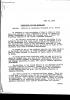
Physicists Leo Szilard and James Franck, a Nobel Prize winner, were on the staff of the “Metallurgical Laboratory” at the University of Chicago, a cover for the Manhattan Project program to produce fuel for the bomb. The outspoken Szilard was not involved in operational work on the bomb and General Groves kept him under surveillance but Met Lab director Arthur Compton found Szilard useful to have around. Concerned with the long-run implications of the bomb, Franck chaired a committee, in which Szilard and Eugene Rabinowitch were major contributors, that produced a report rejecting a surprise attack on Japan and recommended instead a demonstration of the bomb on the “desert or a barren island.” Arguing that a nuclear arms race “will be on in earnest not later than the morning after our first demonstration of the existence of nuclear weapons,” the committee saw international control as the alternative. That possibility would be difficult if the United States made first military use of the weapon. Compton raised doubts about the recommendations but urged Stimson to study the report. Martin Sherwin has argued that the Franck committee shared an important assumption with Truman et al.–that an “atomic attack against Japan would `shock’ the Russians”–but drew entirely different conclusions about the import of such a shock. [26]
Document 23
Jun 13, 1945
Source
Record Group 107, Office of the Secretary of War, Formerly Top Secret Correspondence of Secretary of War Stimson (“Safe File”), July 1940-September 1945, box 8, Japan (After December 7/41)
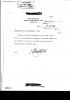
A former ambassador to Japan, Joseph Grew’s extensive knowledge of Japanese politics and culture informed his stance toward the concept of unconditional surrender. He believed it essential that the United States declare its intention to preserve the institution of the emperor. As he argued in this memorandum to President Truman, “failure on our part to clarify our intentions” on the status of the emperor “will insure prolongation of the war and cost a large number of human lives.” Documents like this have played a role in arguments developed by Alperovitz that Truman and his advisers had alternatives to using the bomb such as modifying unconditional surrender and that anti-Soviet considerations weighed most heavily in their thinking. By contrast, Herbert P. Bix has suggested that the Japanese leadership would “probably not” have surrendered if the Truman administration had spelled out the status of the emperor.[27]
Document 24
Jun 14, 1945
Source
Record Group 107, Office of the Secretary of War, Formerly Top Secret Correspondence of Secretary of War Stimson (“Safe File”), July 1940-September 1945, box 8, Japan (After December 7/41)
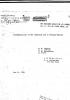
Commenting on another memorandum by Herbert Hoover, George A. Lincoln discussed war aims, face-saving proposals for Japan, and the nature of the proposed declaration to the Japanese government, including the problem of defining “unconditional surrender.” Lincoln argued against modifying the concept of unconditional surrender: if it is “phrased so as to invite negotiation” he saw risks of prolonging the war or a “compromise peace.” J. Samuel Walker has observed that those risks help explain why senior officials were unwilling to modify the demand for unconditional surrender.[28]
Document 25
Jun 16, 1945
Source
RG 77, MED Records, H-B files, folder no. 76 (copy from microfilm)
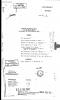
In a report to Stimson, Oppenheimer and colleagues on the scientific advisory panel–Arthur Compton, Ernest O. Lawrence, and Enrico Fermi—tacitly disagreed with the report of the “Met Lab” scientists. The panel argued for early military use but not before informing key allies about the atomic project to open a dialogue on “how we can cooperate in making this development contribute to improved international relations.”
Document 26
“Minutes of Meeting Held at the White House on Monday, 18 June 1945 at 1530,” Top Secret
Jun 18, 1945
Source
Record Group 218, Records of the Joint Chiefs of Staff, Central Decimal Files, 1942-1945, box 198 334 JCS (2-2-45) Mtg 186th-194th
With the devastating battle for Okinawa winding up, Truman and the Joint Chiefs stepped back and considered what it would take to secure Japan’s surrender. The discussion depicted a Japan that, by 1 November, would be close to defeat, with great destruction and economic losses produced by aerial bombing and naval blockade, but not ready to capitulate. Marshall believed that the latter required Soviet entry and an invasion of Kyushu, even suggesting that Soviet entry might be the “decisive action levering them into capitulation.” Truman and the Chiefs reviewed plans to land troops on Kyushu on 1 November, which Marshall believed was essential because air power was not decisive. He believed that casualties would not be more than those produced by the battle for Luzon, some 31,000. This account hints at discussion of the atomic bomb (“certain other matters”), but no documents disclose that part of the meeting.
The record of this meeting has figured in the complex debate over the estimates of casualties stemming from a possible invasion of Japan. While post-war justifications for the bomb suggested that an invasion of Japan could have produced very high levels of casualties (dead, wounded, or missing), from hundreds of thousands to a million, historians have vigorously debated the extent to which the estimates were inflated. [29]
According to accounts based on post-war recollections and interviews, during the meeting McCloy raised the possibility of winding up the war by guaranteeing the preservation of the emperor albeit as a constitutional monarch. If that failed to persuade Tokyo, he proposed that the United States disclose the secret of the atomic bomb to secure Japan’s unconditional surrender. While McCloy later recalled that Truman expressed interest, he said that Secretary of State Byrnes squashed the proposal because of his opposition to any “deals” with Japan. Yet, according to Forrest Pogue’s account, when Truman asked McCloy if he had any comments, the latter opened up a discussion of nuclear weapons use by asking “Why not use the bomb?”[30]
Document 27
Jun 25, 1945
Source
RG 77, MED Records, H-B files, folder no. 100 (copy from microfilm)
For Harrison’s convenience, Arneson summarized key decisions made at the 21 June meeting of the Interim Committee, including a recommendation that President Truman use the forthcoming conference of allied leaders to inform Stalin about the atomic project. The Committee also reaffirmed earlier recommendations about the use of the bomb at the “earliest opportunity” against “dual targets.” In addition, Arneson included the Committee’s recommendation for revoking part two of the 1944 Quebec agreement which stipulated that the neither the United States nor Great Britain would use the bomb “against third parties without each other’s consent.” Thus, an impulse for unilateral control of nuclear use decisions predated the first use of the bomb.
Document 28
Memorandum from George L. Harrison to Secretary of War, June 26, 1945, Top Secret
Jun 26, 1945
Source
RG 77, MED, H-B files, folder no. 77 (copy from microfilm)
Reminding Stimson about the objections of some Manhattan project scientists to military use of the bomb, Harrison summarized the basic arguments of the Franck report. One recommendation shared by many of the scientists, whether they supported the report or not, was that the United States inform Stalin of the bomb before it was used. This proposal had been the subject of positive discussion by the Interim Committee on the grounds that Soviet confidence was necessary to make possible post-war cooperation on atomic energy.
Document 29
Jun 27, 1945
Source
RG 77, MED, H-B files, folder no. 77 (copy from microfilm)
Under Secretary of the Navy Ralph Bard joined those scientists who sought to avoid military use of the bomb; he proposed a “preliminary warning” so that the United States would retain its position as a “great humanitarian nation.” Alperovitz cites evidence that Bard discussed his proposal with Truman who told him that he had already thoroughly examined the problem of advanced warning. This document has also figured in the argument framed by Barton Bernstein that Truman and his advisers took it for granted that the bomb was a legitimate weapon and that there was no reason to explore alternatives to military use. Bernstein, however, notes that Bard later denied that he had a meeting with Truman and that White House appointment logs support that claim.[31]
Document 30
Jun 28, 1945
Source
RG 107, Office of Assistant Secretary of War Formerly Classified Correspondence of John J. McCloy, 1941-1945, box 38, ASW 387 Japan
Despite the interest of some senior officials such as Joseph Grew, Henry Stimson, and John J. McCloy in modifying the concept of unconditional surrender so that the Japanese could be sure that the emperor would be preserved, it remained a highly contentious subject. For example, one of McCloy’s aides, Colonel Fahey, argued against modification of unconditional surrender (see “Appendix ‘C`”).
Document 31
Assistant Secretary of War John J. McCloy to Colonel Stimson, June 29, 1945, Top Secret
Jun 29, 1945
Source
Record Group 107, Office of the Secretary of War, Formerly Top Secret Correspondence of Secretary of War Stimson (“Safe File”), July 1940-September 1945, box 8, Japan (After December 7/41)
McCloy was part of a drafting committee at work on the text of a proclamation to Japan to be signed by heads of state at the forthcoming Potsdam conference. As McCloy observed the most contentious issue was whether the proclamation should include language about the preservation of the emperor: “This may cause repercussions at home but without it those who seem to know the most about Japan feel there would be very little likelihood of acceptance.”
Document 32
Memorandum, “Timing of Proposed Demand for Japanese Surrender,” June 29, 1945, Top Secret
Jun 29, 1945
Source
Record Group 107, Office of the Secretary of War, Formerly Top Secret Correspondence of Secretary of War Stimson (“Safe File”), July 1940-September 1945, box 8, Japan (After December 7/41)
Probably the work of General George A. Lincoln at Army Operations, this document was prepared a few weeks before the Potsdam conference when senior officials were starting to finalize the text of the declaration that Truman, Churchill, and Chiang would issue there. The author recommended issuing the declaration “just before the bombardment program [against Japan] reaches its peak.” Next to that suggestion, Stimson or someone in his immediate office, wrote “S1”, implying that the atomic bombing of Japanese cities was highly relevant to the timing issue. Also relevant to Japanese thinking about surrender, the author speculated, was the Soviet attack on their forces after a declaration of war.
Document 33
Stimson memorandum to The President, “Proposed Program for Japan,” 2 July 1945, Top Secret
Jul 2, 1945
Source
Naval Aide to the President Files, box 4, Berlin Conference File, Volume XI – Miscellaneous papers: Japan, Harry S. Truman Presidential Library
On 2 July Stimson presented to President Truman a proposal that he had worked up with colleagues in the War Department, including McCloy, Marshall, and Grew. The proposal has been characterized as “the most comprehensive attempt by any American policymaker to leverage diplomacy” in order to shorten the Pacific War. Stimson had in mind a “carefully timed warning” delivered before the invasion of Japan. Some of the key elements of Stimson’s argument were his assumption that “Japan is susceptible to reason” and that Japanese might be even more inclined to surrender if “we do not exclude a constitutional monarchy under her present dynasty.” The possibility of a Soviet attack would be part of the “threat.” As part of the threat message, Stimson alluded to the “inevitability and completeness of the destruction” which Japan could suffer, but he did not make it clear whether unconditional surrender terms should be clarified before using the atomic bomb. Truman read Stimson’s proposal, which he said was “powerful,” but made no commitments to the details, e.g., the position of the emperor. [32]
Document 34
Minutes, Secretary’s Staff Committee, Saturday Morning, July 7, 1945, 133d Meeting, Top Secret
Jul 7, 1945
Source
Record Group 353, Records of Interdepartmental and Intradepartmental Committees, Secretary’s Staff Meetings Minutes, 1944-1947 (copy from microfilm)
The possibility of modifying the concept of unconditional surrender so that it guaranteed the continuation of the emperor remained hotly contested within the U.S. government. Here senior State Department officials, Under Secretary Joseph Grew on one side, and Assistant Secretary Dean Acheson and Archibald MacLeish on the other, engaged in hot debate.
Document 35
Jul 8, 1945
Source
RG 218, Central Decimal Files, 1943-1945, CCS 381 (6-4-45), Sec. 2 Pt. 5
This review of Japanese capabilities and intentions portrays an economy and society under “tremendous strain”; nevertheless, “the ground component of the Japanese armed forces remains Japan’s greatest military asset.” Alperovitz sees statements in this estimate about the impact of Soviet entry into the war and the possibility of a conditional surrender involving survival of the emperor as an institution as more evidence that the policymakers saw alternatives to nuclear weapons use. By contrast, Richard Frank takes note of the estimate’s depiction of the Japanese army’s terms for peace: “for surrender to be acceptable to the Japanese army it would be necessary for the military leaders to believe that it would not entail discrediting the warrior tradition and that it would permit the ultimate resurgence of a military in Japan.” That, Frank argues, would have been “unacceptable to any Allied policy maker.”[33]
Document 36
Cable to Secretary of State from Acting Secretary Joseph Grew, July 16, 1945, Top Secret
Jul 16, 1945
Source
Record Group 59, Decimal Files 1945-1949, 740.0011 PW (PE)/7-1645
On the eve of the Potsdam Conference, a State Department draft of the proclamation to Japan contained language which modified unconditional surrender by promising to retain the emperor. When former Secretary of State Cordell Hull learned about it he outlined his objections to Byrnes, arguing that it might be better to wait “the climax of allied bombing and Russia’s entry into the war.” Byrnes was already inclined to reject that part of the draft, but Hull’s argument may have reinforced his decision.
Document 37
Jul 16, 1945
Source
Henry L. Stimson Papers (MS 465), Sterling Library, Yale University (reel 113) (microfilm at Library of Congress)
Still interested in trying to find ways to “warn Japan into surrender,” this represents an attempt by Stimson before the Potsdam conference, to persuade Truman and Byrnes to agree to issue warnings to Japan prior to the use of the bomb. The warning would draw on the draft State-War proclamation to Japan; presumably, the one criticized by Hull (above) which included language about the emperor. Presumably the clarified warning would be issued prior to the use of the bomb; if the Japanese persisted in fighting then “the full force of our new weapons should be brought to bear” and a “heavier” warning would be issued backed by the “actual entrance of the Russians in the war.” Possibly, as Malloy has argued, Stimson was motivated by concerns about using the bomb against civilians and cities, but his latest proposal would meet resistance at Potsdam from Byrnes and other.[34]
Document 38
E. Lapp, Leo Szilard et al., “A Petition to the President of the United States,” July 17, 1945
Jul 17, 1945
Source
RG 77, MED Records, H-B files, folder no. 76 (copy from microfilm)
On the eve of the Potsdam conference, Leo Szilard circulated a petition as part of a final effort to discourage military use of the bomb. Signed by about 68 Manhattan Project scientists, mainly physicists and biologists (copies with the remaining signatures are in the archival file), the petition did not explicitly reject military use, but raised questions about an arms race that military use could instigate and requested Truman to publicize detailed terms for Japanese surrender. Truman, already on his way to Europe, never saw the petition.[35]
IV. The Japanese Search for Soviet Mediation Documents 39A-B: Magic
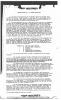
Document 39A
Feb 19, 1945
Source
National Security Agency Mandatory declassification review release.
Beginning in September 1940, U.S. military intelligence began to decrypt routinely, under the “Purple” code-name, the intercepted cable traffic of the Japanese Foreign Ministry. Collectively the decoded messages were known as “Magic.” How this came about is explained in an internal history of pre-war and World War II Army and Navy code-breaking activities prepared by William F. Friedman, a central figure in the development of U.S. government cryptology during the 20th century. The National Security Agency kept the ‘Magic” diplomatic and military summaries classified for many years and did not release the entire series for 1942 through August 1945 until the early 1990s.[36]
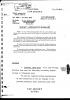
Document 39B
Jul 12, 1945
Source
Record Group 457, Records of the National Security Agency/Central Security Service, “Magic” Diplomatic Summaries 1942-1945, box 18.
The 12 July 1945 “Magic” summary includes a report on a cable from Japanese Foreign Minister Shigenori Togo to Ambassador Naotake Sato in Moscow concerning the Emperor’s decision to seek Soviet help in ending the war. Not knowing that the Soviets had already made a commitment to their Allies to declare war on Japan, Tokyo fruitlessly pursued this option for several weeks. The “Magic” intercepts from mid-July have figured in Gar Alperovitz’s argument that Truman and his advisers recognized that the Emperor was ready to capitulate if the Allies showed more flexibility on the demand for unconditional surrender. This point is central to Alperovitz’s thesis that top U.S. officials recognized a “two-step logic”: relaxing unconditional surrender and a Soviet declaration of war would have been enough to induce Japan’s surrender without the use of the bomb.[37]
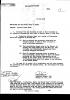
Document 40
Jul 13, 1945
Source
RG 165, Army Operations OPD Executive File #17, Item 13 (copy courtesy of J. Samuel Walker)
The day after the Togo message was reported, Army intelligence chief Weckerling proposed several possible explanations of the Japanese diplomatic initiative. Robert J. Maddox has cited this document to support his argument that top U.S. officials recognized that Japan was not close to surrender because Japan was trying to “stave off defeat.” In a close analysis of this document, Tsuyoshi Hasegawa, who is also skeptical of claims that the Japanese had decided to surrender, argues that each of the three possibilities proposed by Weckerling “contained an element of truth, but none was entirely correct”. For example, the “governing clique” that supported the peace moves was not trying to “stave off defeat” but was seeking Soviet help to end the war.[38]
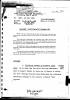
Document 41
Jul 13, 1945
Source
Record Group 457, Records of the National Security Agency/Central Security Service, “Magic” Diplomatic Summaries 1942-1945, box 18
The day after he told Sato about the current thinking on Soviet mediation, Togo requested the Ambassador to see Soviet Foreign Minister Vyacheslav Molotov and tell him of the Emperor’s “private intention to send Prince Konoye as a Special Envoy” to Moscow. Before he received Togo’s message, Sato had already met with Molotov on another matter.
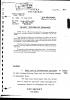
Document 42
Jul 17, 1945
Source
Record Group 457, Records of the National Security Agency/Central Security Service, “Magic” Diplomatic Summaries 1942-1945, box 18.
Another intercept of a cable from Togo to Sato shows that the Foreign Minister rejected unconditional surrender and that the Emperor was not “asking the Russian’s mediation in anything like unconditional surrender.” Incidentally, this “`Magic’ Diplomatic Summary” indicates the broad scope and capabilities of the program; for example, it includes translations of intercepted French messages (see pages 8-9).
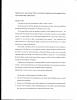
Document 43
Admiral Takagi Diary Entry for July 20, 1945
Jul 20, 1945
Source
Takashi Itoh, ed., Sokichi Takagi: Nikki to Joho [Sokichi Takagi: Diary and Documents] (Tokyo, Japan: Misuzu-Shobo, 2000), 916-917 [Translation by Hikaru Tajima]
In 1944 Navy minister Mitsumasa Yonai ordered rear admiral Sokichi Takagi to go on sick leave so that he could undertake a secret mission to find a way to end the war. Takagi was soon at the center of a cabal of Japanese defense officials, civil servants, and academics, which concluded that, in the end, the emperor would have to “impose his decision on the military and the government.” Takagi kept a detailed account of his activities, part of which was in diary form, the other part of which he kept on index cards. The material reproduced here gives a sense of the state of play of Foreign Minister Togo’s attempt to secure Soviet mediation. Hasegawa cited it and other documents to make a larger point about the inability of the Japanese government to agree on “concrete” proposals to negotiate an end to the war.[39]
The last item discusses Japanese contacts with representatives of the Office of Strategic Services (OSS) in Switzerland. The reference to “our contact” may refer to Bank of International Settlements economist Pers Jacobbson who was in touch with Japanese representatives to the Bank as well as Gero von Gävernitz, then on the staff, but with non-official cover, of OSS station chief Allen Dulles. The contacts never went far and Dulles never received encouragement to pursue them.[40]
V. The Trinity Test
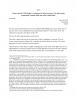
Document 44
Jul 10, 1945
Source
L.D. Riabev, ed., Atomnyi Proekt SSSR (Moscow: izd MFTI, 2002), Volume 1, Part 2, 335-336
This 10 July 1945 letter from NKVD director V. N. Merkulov to Beria is an example of Soviet efforts to collect inside information on the Manhattan Project, although not all the detail was accurate. Merkulov reported that the United States had scheduled the test of a nuclear device for that same day, although the actual test took place 6 days later. According to Merkulov, two fissile materials were being produced: element-49 (plutonium), and U-235; the test device was fueled by plutonium. The Soviet source reported that the weight of the device was 3 tons (which was in the ball park) and forecast an explosive yield of 5 kilotons. That figure was based on underestimates by Manhattan Project scientists: the actual yield of the test device was 20 kilotons.
As indicated by the L.D. Riabev’s notes, it is possible that Beria’s copy of this letter ended up in Stalin’s papers. That the original copy is missing from Beria’s papers suggests that he may have passed it on to Stalin before the latter left for the Potsdam conference.[41]
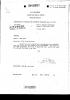
Document 45
Telegram War [Department] 33556, from Harrison to Secretary of War, July 17, 1945, Top Secret
Jul 17, 1945
Source
RG 77, MED Records, Top Secret Documents, File 5e (copy from microfilm)
An elated message from Harrison to Stimson reported the success of the Trinity Test of a plutonium implosion weapon. The light from the explosion could been seen “from here [Washington, D.C.] to “high hold” [Stimson’s estate on Long Island—250 miles away]” and it was so loud that Harrison could have heard the “screams” from Washington, D.C. to “my farm” [in Upperville, VA, 50 miles away][42]
Document 46
Jul 18, 1945
Source
RG 77, MED Records, Top Secret Documents, File no. 4 (copy from microfilm)
General Groves prepared for Stimson, then at Potsdam, a detailed account of the Trinity test.[43]
VI. Aftermath of Trinity: Setting up an Atomic Bomb Production Schedule

Document 46A
New!
Message from Groves to Oppenheimer, 19 July 1945, Top Secret
Jul 19, 1945
Source
RG 77, MED, Top Secret documents, folder 5B
A little-known story in Manhattan Project history is the secret discussions held in Chicago on 24 July 1945 concerning the schedule for the production of atomic weapons, including ones with even higher capacity.[43A] On 19 July 1945, Oppenheimer sent Groves a teletype, NR364T, which remains classified (but the subject of a FOIA request), that included a proposal for using a “large amount” of HEU from Little Boy “to make composite cores with plutonium and enriched uranium.”[43B] By proposing a design change, Oppenheimer may have had in mind advantages in explosive yield or efficiency, but that needs to be clarified. But what he proposed raised questions about the schedule for weapons use and production that Groves refused to consider. Groves declared that, “Factors beyond our control prevent us from considering any decision, other than to proceed according to the existing schedules for the time being”: Little Boy first, then the first Fat Man, “probably a second one,” and possibly a third “to conform to planned strategical operations.” Groves told Oppenheimer he was “planning on coming out to see you and discuss this problem.”

Documents 46B
New!
[Excerpts from Groves Telephone Call Diaries for 19 and 20 July 1945]
Jul 19, 1945
Source
NARA, Leslie R. Groves Personal Papers Lieutenant General Leslie Richard Groves, Jr. Visitations and Telephone Calls Diaries, November 19, 1940–February 28, 1948
On July 19 at 4:32 p.m., Groves spoke with James B. Conant about an earlier discussion with Oppenheimer, although he may have meant the teletyped message. Using Aesopian language, Groves recounted that Oppenheimer had told him that that “the boys out there [at Los Alamos] are discussing the advantages of murdering L.B. and devoting all of his clothes to the F.B” [i.e., Fat Man] In other words, some Los Alamos scientists wanted to stop production of Little Boy HEU-weapons and use the enriched uranium (“clothes”) for producing implosion weapons, the “Fat Man” type.(That may not have been exactly what Oppenheimer had in mind; future declassifications may clarify the point.)
Groves told Conant that such a course “would be a terrible mistake,” and Conant stated most emphatically “SO DO I. I AGREE WITH YOU 100%.” [Emphasis in original] Groves was thinking of going to Los Alamos where apparently Tolman was already.
At 5:25 p.m. the same day, during a call with Groves, Tolman discussed elliptically the proposals for changing the schedule for weapon use. He told Groves that “he didn’t know all the facts but there are a considerable body of people out there who think it should be changed but Tolman believed” otherwise: “we have something to learn by not changing” [the schedule].
Groves then spoke with Oppenheimer about several matters and suggested meeting the following week, possibly in Chicago.
In a somewhat cryptic statement, Oppenheimer “asked whether he would be more useful with Kirk [Possibly a reference to his Berkeley colleague Paul L. Kirk] or where he is and Groves advised he wished Oppenheimer were twins.” Whatever was being said, Groves was plainly flattering Oppenheimer.
During a conversation on 20 July at 4:40 p.m., Oppenheimer told Groves that Los Alamos implosion expert Hartley Rowe “advises that the original plan should go through as originally scheduled.” Apparently [Robert] Bacher wanted to use the fissile material as proposed [to produce uranium implosion weapons?] because 1. “it increases the number [of weapons?] we get out of it,” 2. it “reduces the unreliable feature we have discussed, although does not eliminate” it, and 3. “can’t see that it does any harm”; «to make this change will cost between a week or 10 days and the feeling we have rather strongly is that we ought to do this next time.” The last several points need elucidation.
Groves “asked if the decision had to be made before they met in Chicago and JRO stated if they don’t make the decision now to postpone it 5 days will simply be 3 days later.”
Groves “decided that JRO would fly to Chicago where he and there General would meet for a few hours—to meet in Chicago on Tuesday.”
Document 46C
New!
War Department message 73750, To Secretary of War from George L. Harrison, 23 July 1945, Top Secret
Jul 23, 1945
Source
RG 77, Harrison-Bundy Files, Folder 64, Potsdam Cables
Stimson aide George L. Harrison reported to his boss that the first implosion weapon (“the tested type”) would be ready for delivery on 6 August and that the next one would be “ready” by 24 August. “Additional ones ready at accelerating rate from possibly three in September to we hope seven or more in December. The increased rate above three per month entails changes in design which Groves believes thoroughly sound.” Whether Harrison knew about the proposals for composite uranium-plutonium “composite” weapons—the change in design that Groves had in mind—is not clear, but he knew that Groves would meet with Oppenheimer in Chicago to discuss “future plans.”

Document 46D
New!
“Notes taken in Chicago July 24th, 1944. Meeting Between Gen.
Jul 24, 1945
Source
RG 77, Top Secret MED documents, Box 3, folder 5I, Notes Taken in Chicago
During the 24 July 1945 meeting, Richard Tolman took detailed notes of the discussions of weapons effects and schedules for weapons production. The National Archives declassified the Tolman notes in 1996 in an excised version, but they have remained unknown since then because they reside in the paper copies of top secret Manhattan Project records, which are off limits to researchers (who only have access to the microfilm version). A request to NARA’s reference division was necessary to determine whether the documents mentioned by Robert S. Norris in his book on General Groves had become available, which they had.[43C]
A subtext of Tolman’s detailed notes of the meeting is that, as General Groves insisted on 19 July, the first few bombs (Little Boy and Fat Man) would be used according to the schedule. Whether more weapons would become available for use and when that could happen was a central topic for discussion.
The Tolman notes have significant excisions making them difficult to interpret but the second page consists of three columns, possibly on the production schedule for the three weapons types that had been under discussion—Litle Boy, Fat Man, and the composite uranium-PU weapons. As a guess, the first column lists availabilities for Little Boy weapons, which would have been fewer in number; the second column lists implosion weapons; and the third may list the HEU-PU composite that Oppenheimer had proposed. Justifying that interpretation is the message that Groves sent to Marshall later that day, indicating a sharp increase in numbers of composite weapons later in the year.
The third page of typed notes include a section on “Decision as of today: (July 24, 1945).” The decisions were:
- Continue with 49 as at present [Produce plutonium implosion weapons]
- Develop 25 to achieve effective use immediately [Produce Little Boy weapons using HEU or “25”]
- Prepare to develop 25-49 if called upon by 30 July or later [A reference to the composite HEU-plutonium implosion weapons]
- Prepare to develop 25 to achieve 49 power by l November [Possibly a reference to using HEU cores for implosion weapons]
- LRG to attempt to get additional information which will permit more definite decision.
- LRG to report to S of W and C of S the possibilities” [Groves sent a report to Chief of Staff Marshall later that day.]
None of the three participants had any idea how long the atomic bombings against Japan would last and whether only a few weapons would be used. Evidently, Groves wanted to be prepared for a longer campaign and expected Los Alamos to prepare the numbers of weapons needed for such a purpose. (Within weeks, however, as the war against Japan ended, Army-Air Force leaders were looking closely at Soviet targets, and Groves was critiquing the projected numbers of weapons and targeting arrangements.)
Tolman’s notes for the meeting do not specify who said what to whom but are somewhat in thematic order. The top of the first page concerns weapons effects from the Trinity test, including blast (“B”) damage and radiation (neutrons and gamma rays). The participants optimistically projected “No real effects anticipated on the ground from radioactive materials,” and that “we think we can move troops right through.”
For unexplained reasons, the notes refer to a bet placed by Enrico Fermi in a moment of dark humor during the hours before the Trinity test, on whether there was a “1/30 chance or blowing up New Mexico” or a “1/1000 chance of blowing up World.”[43D]
One sentence refers to staffing at Los Alamos and other sites: “What to do with people – – Keep temporarily, then reduce surplus with kindness.”
A reference to the hydrogen bomb (“super”) consists of: “What to do with super — nothing essential.” That was a touchy issue because of Edward Teller’s central role in managing what was a backburner project. Groves and Oppenheimer made a non-decision by leaving the project alone, without advancing it.
Below the production schedule columns is more discussion of weapons effects as well as plans for using the weapons, including height of burst—with 15 kilotons anticipated at 1850 feet.
A brief discussion of the “overpressure” caused by the blast followed—the powerful blast wave would place objects within its path under severe, sharp increases in atmospheric pressure. If the editor is reading this correctly, the overpressure for the area within 2 and a half square miles would go up to 7 pounds, but within 900 feet the “shock area,” under 150 pounds of overpressure, would be deadly. At 1200 feet the overpressure would be 60 pounds.
One suggestion was that destruction of industrial areas would require a lower blast elevation at 1400 feet.
“Decisions as of today” are followed by more points about weapons effects,
then some unexplained details about a “new plug assembly” for the composite weapon and a plug for an HEU weapon that would cause up to a ten-day delay.
Document 46E
New!
Jul 24, 1945
Source
RG 319, Manhattan Project Background Files, Box 16, Bomb Organization and Materials Procurement
Soon after the meeting in Chicago, Groves sent a report to General Marshall, who was then attending the Potsdam conference. Groves explained the plans to deliver atomic bombs from Tinian Island, the three potential targets, methods of delivery, plans for later delivery of a third and subsequent weapon, and the operation’s military organization, with directives attached. Concerning later plans, Groves informed Marshall that a “sharp increase to seven [weapons] in December is dependent upon the modification of the present implosion bomb which uses plutonium only to one using a combination of plutonium and uranium 235.” Apparently that was consistent with the production schedule that Groves and Oppenheimer had approved earlier that day.
The targets that Groves listed were Hiroshima, Kokura, and Niigata, in that order. That same day, however, Amy Air Force leaders modified the target list so that it included Nagasaki.
Los Alamos developed “composite” weapons in the months ahead and they received their first test in the 1948 “Sandstone” series. Their use along with other innovations would contribute to significant increases in the “efficiency’’ and explosive yields of nuclear weapons.[43E]
VII. The Potsdam Conference
Document 47
Jul 1, 1945
Source
Barton J. Bernstein, “Truman at Potsdam: His Secret Diary,” Foreign Service Journal, July/August 1980, excerpts, used with author’s permission.[44]
Some years after Truman’s death, a hand-written diary that he kept during the Potsdam conference surfaced in his personal papers. For convenience, Barton Bernstein’s rendition is provided here but linked here are the scanned versions of Truman’s handwriting on the National Archives’ website (for 15-30 July).
The diary entries cover July 16, 17, 18, 20, 25, 26, and 30 and include Truman’s thinking about a number of issues and developments, including his reactions to Churchill and Stalin, the atomic bomb and how it should be targeted, the possible impact of the bomb and a Soviet declaration of war on Japan, and his decision to tell Stalin about the bomb. Receptive to pressure from Stimson, Truman recorded his decision to take Japan’s “old capital” (Kyoto) off the atomic bomb target list. Barton Bernstein and Richard Frank, among others, have argued that Truman’s assertion that the atomic targets were “military objectives” suggested that either he did not understand the power of the new weapons or had simply deceived himself about the nature of the targets.
Moreover, notwithstanding Truman’s concern about sparing “women and children” from the bomb, he did not seek information about the targeting plans developed by Army Air Force officers on Tinian Island, who selected “aiming points” designed to maximize destruction on the targeted cities.
Another statement—“Fini Japs when that [Soviet entry] comes about”—has also been the subject of controversy over whether it meant that Truman thought that a Soviet declaration of war could end the conflict without an invasion of Japan.[45]
Document 48
Stimson Diary entries for July 16 through 25, 1945
Jul 16, 1945
Source
Henry Stimson Diary, Sterling Library, Yale University (microfilm at Library of Congress)
Stimson did not always have Truman’s ear, but historians have frequently cited his diary when he was at the Potsdam conference. There Stimson kept track of S-1 developments, including news of the successful first test (see entry for July 16) and the ongoing deployments for nuclear use against Japan. When Truman received a detailed account of the test, Stimson reported that the “President was tremendously pepped up by it” and that “it gave him an entirely new feeling of confidence” (see entry for July 21). Whether this meant that Truman was getting ready for a confrontation with Stalin over Eastern Europe and other matters has also been the subject of debate.
An important question that Stimson discussed with Marshall, at Truman’s request, was whether Soviet entry into the war remained necessary to secure Tokyo’s surrender. Marshall was not sure whether that was so although Stimson privately believed that the atomic bomb would provide enough to force surrender (see entry for July 23). This entry has been cited by all sides of the controversy over whether Truman was trying to keep the Soviets out of the war.[46] During the meeting on August 24, discussed above, Stimson gave his reasons for taking Kyoto off the atomic target list: destroying that city would have caused such “bitterness” that it could have become impossible “to reconcile the Japanese to us in that area rather than to the Russians.” Stimson vainly tried to preserve language in the Potsdam Declaration designed to assure the Japanese about “the continuance of their dynasty” but received Truman’s assurance that such a consideration could be conveyed later through diplomatic channels (see entry for July 24). Hasegawa argues that Truman realized that the Japanese would refuse a demand for unconditional surrender without a proviso on a constitutional monarchy and that “he needed Japan’s refusal to justify the use of the atomic bomb.”[47]
Document 49
Walter Brown Diaries, July 10-August 3, 1945
Aug 3, 1945
Source
Clemson University Libraries, Special Collections, Clemson, SC; Mss 243, Walter J. Brown Papers, box 10, folder 12, Byrnes, James F.: Potsdam, Minutes, July-August 1945
Walter Brown, who served as special assistant to Secretary of State Byrnes, kept a diary which provided considerable detail on the Potsdam conference and the growing concerns about Soviet policy among top U.S. officials. This document is a typed-up version of the hand-written original (which Brown’s family has provided to Clemson University). That there may be a difference between the two sources becomes evident from some of the entries; for example, in the entry for July 18, 1945 Brown wrote: «Although I knew about the atomic bomb when I wrote these notes, I dared not place it in writing in my book.”
The degree to which the typed-up version reflects the original is worth investigating. In any event, historians have used information from the diary to support various interpretations. For example, Bernstein cites the entries for 20 and 24 July to argue that “American leaders did not view Soviet entry as a substitute for the bomb” but that the latter “would be so powerful, and the Soviet presence in Manchuria so militarily significant, that there was no need for actual Soviet intervention in the war.” For Brown’s diary entry of 3 August 9 1945 historians have developed conflicting interpretations (See discussion of document 57).[48]
Document 50
Jul 22, 1945
Source
Record Group 457, Records of the National Security Agency/Central Security Service, “Magic” Diplomatic Summaries 1942-1945, box 18.
This “Magic” summary includes messages from both Togo and Sato. In a long and impassioned message, the latter argued why Japan must accept defeat: “it is meaningless to prove one’s devotion [to the Emperor] by wrecking the State.” Togo rejected Sato’s advice that Japan could accept unconditional surrender with one qualification: the “preservation of the Imperial House.” Probably unable or unwilling to take a soft position in an official cable, Togo declared that “the whole country … will pit itself against the enemy in accordance with the Imperial Will as long as the enemy demands unconditional surrender.”
Document 51
Forrestal Diary Entry, July 24, 1945, “Japanese Peace Feelers”
Jul 24, 1945
Source
Naval Historical Center, Operational Archives, James Forrestal Diaries
Secretary of the Navy James Forrestal was a regular recipient of “Magic” intercept reports; this substantial entry reviews the dramatic Sato-Togo exchanges covered in the 22 July “Magic” summary (although Forrestal misdated Sato’s cable as “first of July” instead of the 21st). In contrast to Alperovitz’s argument that Forrestal tried to modify the terms of unconditional surrender to give the Japanese an out, Frank sees Forrestal’s account of the Sato-Togo exchange as additional evidence that senior U.S. officials understood that Tokyo was not on the “cusp of surrender.” [49]
Document 52
Davies Diary entry for July 29, 1945
Jul 29, 1945
Source
Joseph E. Davies Papers, Library of Congress, Manuscripts Division, box 19, 29 July 1945
Having been asked by Truman to join the delegation to the Potsdam conference, former-Ambassador Davies sat at the table with the Big Three throughout the discussions. This diary entry has figured in the argument that Byrnes believed that the atomic bomb gave the United States a significant advantage in negotiations with the Soviet Union. Plainly Davies thought otherwise.[50]
VIII. Debates among the Japanese – Late July/Early August 1945
Document 53
Jul 29, 1945
Source
Record Group 457, Records of the National Security Agency/Central Security Service, “Magic” Diplomatic Summaries 1942-1945, box 18.
In the Potsdam Declaration the governments of China, Great Britain, and the United States) demanded the “unconditional surrender of all Japanese armed forces. “The alternative is prompt and utter destruction.” The next day, in response to questions from journalists about the government’s reaction to the ultimatum, Prime Minister Suzuki apparently said that “We can only ignore [mokusatsu] it. We will do our utmost to complete the war to the bitter end.” That, Bix argues, represents a “missed opportunity” to end the war and spare the Japanese from continued U.S. aerial attacks.[51] Togo’s private position was more nuanced than Suzuki’s; he told Sato that “we are adopting a policy of careful study.” That Stalin had not signed the declaration (Truman and Churchill did not ask him to) led to questions about the Soviet attitude. Togo asked Sato to try to meet with Soviet Foreign Minister Molotov as soon as possible to “sound out the Russian attitude” on the declaration as well as Japan’s end-the-war initiative. Sato cabled Togo earlier that he saw no point in approaching the Soviets on ending the war until Tokyo had “concrete proposals.” “Any aid from the Soviets has now become extremely doubtful.”
Document 54
Jul 30, 1945
Source
Record Group 457, Records of the National Security Agency/Central Security Service, “Magic” Diplomatic Summaries 1942-1945, box 18.
This report included an intercept of a message from Sato reporting that it was impossible to see Molotov and that unless the Togo had a “concrete and definite plan for terminating the war” he saw no point in attempting to meet with him.
Document 55
Aug 2, 1945
Source
Record Group 457, Records of the National Security Agency/Central Security Service, “Magic” Diplomatic Summaries 1942-1945, box 18.
An intercepted message from Togo to Sato showed that Tokyo remained interested in securing Moscow’s good office but that it “is difficult to decide on concrete peace conditions here at home all at once.” “[W]e are exerting ourselves to collect the views of all quarters on the matter of concrete terms.” Barton Bernstein, Richard Frank, and Tsuyoshi Hasegawa, among others, have argued that the “Magic” intercepts from the end of July and early August show that the Japanese were far from ready to surrender. According to Herbert Bix, for months Hirohito had believed that the “outlook for a negotiated peace could be improved if Japan fought and won one last decisive battle,” thus, he delayed surrender, continuing to “procrastinate until the bomb was dropped and the Soviets attacked.”[52]
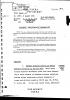
Document 56
Aug 3, 1945
Source
Record Group 457, Records of the National Security Agency/Central Security Service, “Magic” Diplomatic Summaries 1942-1945, box 18.
This summary included intercepts of Japanese diplomatic reporting on the Soviet buildup in the Far East as well as a naval intelligence report on Anglo-American discussions of U.S. plans for the invasion of Japan. Part II of the summary includes the rest of Togo’s 2 August cable which instructed Sato to do what he could to arrange an interview with Molotov.
Document 57
Walter Brown Meeting Notes, August 3, 1945
Aug 3, 1945
Source
Clemson University Libraries, Special Collections, Clemson, SC; Mss 243, Walter J. Brown Papers, box 10, folder 12, Byrnes, James F.: Potsdam, Minutes, July-August 1945
Historians have used this item in the papers of Byrne’s aide, Walter Brown, to make a variety of points. Richard Frank sees this brief discussion of Japan’s interest in Soviet diplomatic assistance as crucial evidence that Admiral Leahy had been sharing “MAGIC” information with President Truman. He also points out that Truman and his colleagues had no idea what was behind Japanese peace moves, only that Suzuki had declared that he would “ignore” the Potsdam Declaration. Alperovitz, however, treats it as additional evidence that “strongly suggests” that Truman saw alternatives to using the bomb.[53]
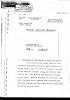
Document 58
Aug 4, 1945
Source
RG 457, Summaries of Intercepted Japanese Messages (“Magic” Far East Summary, March 20, 1942 – October 2, 1945), box 7, SRS 491-547
This “Far East Summary” included reports on the Japanese Army’s plans to disperse fuel stocks to reduce vulnerability to bombing attacks, the text of a directive by the commander of naval forces on “Operation Homeland,” the preparations and planning to repel a U.S. invasion of Honshu, and the specific identification of army divisions located in, or moving into, Kyushu. Both Richard Frank and Barton Bernstein have used intelligence reporting and analysis of the major buildup of Japanese forces on southern Kyushu to argue that U.S. military planners were so concerned about this development that by early August 1945 they were reconsidering their invasion plans.[54]
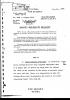
Document 59
Dec 31, 1969
Source
This summary included several intercepted messages from Sato, who conveyed his despair and exasperation over what he saw as Tokyo’s inability to develop terms for ending the war: “[I]f the Government and the Military dilly-dally in bringing this resolution to fruition, then all Japan will be reduced to ashes.” Sato remained skeptical that the Soviets would have any interest in discussions with Tokyo: “it is absolutely unthinkable that Russia would ignore the Three Power Proclamation and then engage in conversations with our special envoy.”
IX. The Execution Order Documents 60A-D: These messages convey the process of creating and transmitting the execution order to bomb Hiroshima. Possibly not wanting to take responsibility for the first use of nuclear weapons, Army Air Force commanders sought formal authorization from Chief of Staff Marshall who was then in Potsdam
Document 60A
Cable VICTORY 213 from Marshall to Handy, July 22, 1945, Top Secret
Jul 22, 1945
Source
RG 77, MED Records, Top Secret Documents, Files no. 5b and 5e (copies from microfilm)
These messages convey the process of creating and transmitting the execution order to bomb Hiroshima. Possibly not wanting to take responsibility for the first use of nuclear weapons, Army Air Force commanders sought formal authorization from Chief of Staff Marshall who was then in Potsdam.[55] On 22 July Marshall asked Deputy Chief of Staff Thomas Handy to prepare a draft; General Groves wrote one which went to Potsdam for Marshall’s approval. Colonel John Stone, an assistant to commanding General of the Army Air Forces Henry H. “Hap” Arnold, had just returned from Potsdam and updated his boss on the plans as they had developed. On 25 July Marshall informed Handy that Secretary of War Stimson had approved the text; that same day, Handy signed off on a directive which ordered the use of atomic weapons on Japan, with the first weapon assigned to one of four possible targets—Hiroshima, Kokura, Niigata, or Nagasaki. “Additional bombs will be delivery on the [targets] as soon as made ready by the project staff.”
Document 60B
Memorandum from Colonel John Stone to General Arnold, “Groves Project,” 24 July 1945, Top Secret
Jul 24, 1945
Source
RG 77, MED Records, Top Secret Documents, Files no. 5b and 5e (copies from microfilm)
See description of document 60A.
Document 60C
Dec 31, 1969
Source
RG 77, MED Records, Top Secret Documents, Files no. 5b and 5e (copies from microfilm)
See description of document 60A.
Document 60D
Cable VICTORY 261 from Marshall to General Handy, July 25, 1945, 25 July 1945, Top Secret
Jul 25, 1945
Source
RG 77, MED Records, Top Secret Documents, Files no. 5b and 5e (copies from microfilm)
See description of document 60A.
Document 60E
General Thomas T. Handy to General Carl Spaatz, July 26, 1945, Top Secret
Jul 26, 1945
Source
RG 77, MED Records, Top Secret Documents, Files no. 5b and 5e (copies from microfilm)
See description of document 60A.
Document 61
Jul 30, 1945
Source
RG 77, MED Records, Top Secret Documents, File no. 5
With more information on the Alamogordo test available, Groves provided Marshall with detail on the destructive power of atomic weapons. Barton J. Bernstein has observed that Groves’ recommendation that troops could move into the “immediate explosion area” within a half hour demonstrates the prevalent lack of top-level knowledge of the dangers of nuclear weapons effects.[56] Groves also provided the schedule for the delivery of the weapons: the components of the gun-type bomb to be used on Hiroshima had arrived on Tinian, while the parts of the second weapon to be dropped were leaving San Francisco. By the end of November over ten weapons would be available, presumably in the event the war had continued.
Documents 62A-C: Weather delays
Document 62A
CG 313th Bomb Wing, Tinian cable APCOM 5112 to War Department, August 3, 1945, Top Secret
Aug 3, 1945
Source
RG 77, Tinian Files, April-December 1945, box 21 (copies courtesy of Barton Bernstein)
The Hiroshima “operation” was originally slated to begin in early August depending on local conditions. As these cables indicate, reports of unfavorable weather delayed the plan. The second cable on 4 August shows that the schedule advanced to late in the evening of 5 August. The handwritten transcriptions are on the original archival copies.
Document 62B
CG 313th Bomb Wing, Tinian cable APCOM 5130 to War Department, August 4, 1945, Top Secret
Aug 4, 1945
Source
RG 77, Tinian Files, April-December 1945, box 21 (copies courtesy of Barton Bernstein)
See description of document 62A.
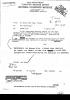
Document 62C
CG 313th Bomb Wing, Tinian cable APCOM 5155 to War Department, August 4, 1945, Top Secret
Aug 4, 1945
Source
RG 77, Tinian Files, April-December 1945, box 21 (copies courtesy of Barton Bernstein)
See description of document 62A.
X. The First Nuclear Strikes and their Impact
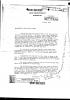
Document 63
Memorandum from General L. R. Groves to the Chief of Staff, August 6, 1945, Top Secret
Aug 6, 1945
Source
RG 77, MED Records, Top Secret Documents, File no. 5b (copy from microfilm)
Two days after the bombing of Hiroshima, Groves provided Chief of Staff Marshall with a report which included messages from Captain William S. Parsons and others about the impact of the detonation which, through prompt radiation effects, fire storms, and blast effects, immediately killed at least 70,000, with many dying later from radiation sickness and other causes.[57]
How influential the atomic bombings of Hiroshima and later Nagasaki compared to the impact of the Soviet declaration of war were to the Japanese decision to surrender has been the subject of controversy among historians. Sadao Asada emphasizes the shock of the atomic bombs, while Herbert Bix has suggested that Hiroshima and the Soviet declaration of war made Hirohito and his court believe that failure to end the war could lead to the destruction of the imperial house. Frank and Hasegawa divide over the impact of the Soviet declaration of war, with Frank declaring that the Soviet intervention was “significant but not decisive” and Hasegawa arguing that the two atomic bombs “were not sufficient to change the direction of Japanese diplomacy. The Soviet invasion was.”[58]
Document 64
Walter Brown Diary Entry, 6 August 1945
Aug 6, 1945
Source
Clemson University Libraries, Special Collections, Clemson, SC; Mss 243, Walter J. Brown Papers, box 68, folder 13, “Transcript/Draft B
Returning from the Potsdam Conference, sailing on the U.S.S. Augusta, Truman learned about the atomic bombing of Hiroshima and announced it twice, first to those in the wardroom (socializing/dining area for commissioned officers), and then to the sailors’ mess. Still unaware of radiation effects, Truman emphasized the explosive yield. Later, he met with Secretary of State Byrnes and they discussed the Manhattan Project’s secrecy and the huge expenditures. Truman, who had been chair of the Senate Special Committee to Investigate the National Defense Program, said that “only on the appeal of Secretary of War Stimson did he refrain and let the War Department continue with the experiment unmolested.”
Document 65
Aug 7, 1945
Source
A. Zolotarev, ed., Sovetsko-Iaponskaia Voina 1945 Goda: Istoriia Voenno-Politicheskogo Protivoborstva Dvukh Derzhav v 30–40e Gody (Moscow: Terra, 1997 and 2000), Vol. 7 (1), 340-341.
To keep his pledge at Yalta to enter the war against Japan and to secure the territorial concessions promised at the conference (e.g., Soviet annexation of the Kuriles and southern Sakhalin and a Soviet naval base at Port Arthur, etc.) Stalin considered various dates to schedule an attack. By early August he decided that 9-10 August 1945 would be the best dates for striking Japanese forces in Manchuria. In light of Japan’s efforts to seek Soviet mediation, Stalin wanted to enter the war quickly lest Tokyo reach a compromise peace with the Americans and the British at Moscow’s expense. But on 7 August, Stalin changed the instructions: the attack was to begin the next day. According to David Holloway, “it seems likely that the atomic bombing of Hiroshima the day before that impelled [Stalin] to speed up Soviet entry into the war” and “secure the gains promised at Yalta.”[59]
Document 66
Memorandum of Conversation, “Atomic Bomb,” August 7, 1945
Aug 7, 1945
Source
Library of Congress Manuscript Division, Papers of W. Averell Harriman, box 181, Chron File Aug 5-9, 1945.
The Soviets already knew about the U.S. atomic project from espionage sources in the United States and Britain so Molotov’s comment to Ambassador Harriman about the secrecy surrounding the U.S. atomic project can be taken with a grain of salt, although the Soviets were probably unaware of specific plans for nuclear use.
Documents 67A-B: Early High-level Reactions to the Hiroshima Bombing
Document 67A
Cabinet Meeting and Togo’s Meeting with the Emperor, August 7-8, 1945
Aug 7, 1945
Source
Gaimusho (Ministry of Foreign Affairs) ed. Shusen Shiroku (The Historical Records of the End of the War), annotated by Jun Eto, volume 4, 57-60 [Excerpts] [Translation by Toshihiro Higuchi]
Excerpts from the Foreign Ministry’s compilation about the end of the war show how news of the bombing reached Tokyo as well as how Foreign Minister’s Togo initially reacted to reports about Hiroshima. When he learned of the atomic bombing from the Domei News Agency, Togo believed that it was time to give up and advised the cabinet that the atomic attack provided the occasion for Japan to surrender on the basis of the Potsdam Declaration. Togo could not persuade the cabinet, however, and the Army wanted to delay any decisions until it had learned what had happened to Hiroshima. When the Foreign Minister met with the Emperor, Hirohito agreed with him; he declared that the top priority was an early end to the war, although it would be acceptable to seek better surrender terms–probably U.S. acceptance of a figure-head emperor–if it did not interfere with that goal. In light of those instructions, Togo and Prime Minister Suzuki agreed that the Supreme War Council should meet the next day. [59A]
Document 67B
Admiral Takagi Diary Entry for Wednesday, August 8 , 1945
Aug 8, 1945
Source
Takashi Itoh, ed., Sokichi Takagi: Nikki to Joho [Sokichi Takagi: Diary and Documents] (Tokyo, Japan: Misuzu-Shobo, 2000), 923-924 [Translation by Hikaru Tajima]
An entry from Admiral Takagi’s diary for August 8 conveys more information on the mood in elite Japanese circles after Hiroshima, but before the Soviet declaration of war and the bombing of Nagasaki. Seeing the bombing of Hiroshima as a sign of a worsening situation at home, Takagi worried about further deterioration. Nevertheless, his diary suggests that military hard-liners were very much in charge and that Prime Minister Suzuki was talking tough against surrender, by evoking last ditch moments in Japanese history and warning of the danger that subordinate commanders might not obey surrender orders. The last remark aggravated Navy Minister Yonai who saw it as irresponsible. That the Soviets had made no responses to Sato’s request for a meeting was understood as a bad sign; Yonai realized that the government had to prepare for the possibility that Moscow might not help. One of the visitors mentioned at the beginning of the entry was Iwao Yamazaki who became Minister of the Interior in the next cabinet.
Document 68
Navy Secretary James Forrestal to President Truman, August 8, 1945
Aug 8, 1945
Source
Naval Historical Center, Operational Archives, James Forrestal Diaries
General Douglas MacArthur had been slated as commander for military operations against Japan’s mainland, this letter to Truman from Forrestal shows that the latter believed that the matter was not settled. Richard Frank sees this as evidence of the uncertainty felt by senior officials about the situation in early August; Forrestal would not have been so “audacious” to take an action that could ignite a “political firestorm” if he “seriously thought the end of the war was near.”
Document 69
Memorandum of Conversation, “Far Eastern War and General Situation,” August 8, 1945, Top Secret
Aug 8, 1945
Source
Library of Congress Manuscript Division, Papers of W. Averell Harriman, box 181, Chron File Aug 5-9, 1945
Shortly after the Soviets declared war on Japan, in line with commitments made at the Yalta and Potsdam conferences, Ambassador Harriman met with Stalin, with George Kennan keeping the U.S. record of the meeting. After Stalin reviewed in considerable detail, Soviet military gains in the Far East, they discussed the possible impact of the atomic bombing on Japan’s position (Nagasaki had not yet been attacked) and the dangers and difficulty of an atomic weapons program. According to Hasegawa, this was an important, even “startling,” conversation: it showed that Stalin “took the atomic bomb seriously”; moreover, he disclosed that the Soviets were working on their own atomic program.[60]
Document 70
Entries for 8-9 August, Robert P. Meiklejohn Diary
Aug 8, 1945
Source
W.A. Harriman Papers, Library of Congress, box 211, Robert Pickens Meiklejohn World War II Diary At London and Moscow March 10, 1941-February 14, 1946, Volume II (Privately printed, 1980 [Printed from hand-written originals]) (Reproduced with permission)
Robert P. Meiklejohn, who worked as Ambassador W. A. Harriman’s administrative assistant at the U.S. Embassies in Moscow and London during and after World War II, kept a detailed diary of his experiences and observations. The entries for 8 and 9 August, prepared in light of the bombing of Hiroshima, include discussion of the British contribution to the Manhattan Project, Harriman (“his nibs’”) report on his meeting with Molotov about the Soviet declaration of war, and speculation about the impact of the bombing of Hiroshima on the Soviet decision. According to Meiklejohn, “None of us doubt that the atomic bomb speeded up the Soviets’ declaration of war.”
Document 71
Memorandum of Conference with the President, August 8, 1945 at 10:45 AM
Aug 8, 1945
Source
Henry Stimson Diary, Sterling Library, Yale University (microfilm at Library of Congress)
At their first meeting after the dropping of the bomb on Hiroshima, Stimson briefed Truman on the scale of the destruction, with Truman recognizing the “terrible responsibility” that was on his shoulders. Consistent with his earlier attempts, Stimson encouraged Truman to find ways to expedite Japan’s surrender by using “kindness and tact” and not treating them in the same way as the Germans. They also discussed postwar legislation on the atom and the pending Henry D. Smyth report on the scientific work underlying the Manhattan project and postwar domestic controls of the atom.

Doc 71A
New!
Aug 8, 1945
Source
Library of Congress Manuscript Division, Henry Arnold Papers, box 5, Chron Correspondence (Reel 5)[60A]
Someone with the 20th Air Force on Tinian Island (in the Northern Mariana Islands) prepared a triumphant report of the destruction of Hiroshima based on blast damage and fire effect, but not radiation injuries. According to the message, “Hiroshima is no more” because “the entire area within a radius of 18,000 feet from the heart of the city has been wiped clean as though it had never existed.” The “pulverization produced by the atomic explosion [was so complete] that not even debris of buildings was left.”
Given Hiroshima’s population of 334,000, if sixty percent of its residents lived in the “totally destroyed area,” that suggested that “more than 200,000 lost their lives during that negligible fraction of time represented by the one-tenth of a microsecond of the atomic explosion.” Nevertheless, “the most conservative estimate here is that at least 100,000 of Hiroshima’s inhabitants had been needlessly sacrificed by their military leaders.” This “conservative” estimate may have reached the White House because, a few days later, President Truman declared that the “thought of wiping out another 100,000 people was too horrible.”[60B] [See Document 78]
The message includes accounts of the bombing by Enola Gay pilots Col. Paul W. Tibbets and Capt. Robert A. Lewis and by Capt. William S. Parsons, who was on board. It concluded with the “tentative text” of a leaflet to be dropped the following day, warning the Japanese of what was “in store for them” unless they “petition the Emperor to end the war.” [See Document 94C for more details.]
Documents 72A-C: The Attack on Nagasaki
Document 72A
Cable APCOM 5445 from General Farrell to O’Leary [Groves assistant], August 9, 1945, Top Secret
Aug 9, 1945
Source
RG 77, Tinian Files, April-December 1945, box 20, Envelope G Tinian Files, Top Secret
The prime target for the second atomic attack was Kokura, which had a large army arsenal and ordnance works, but various problems ruled that city out; instead, the crew of the B-29 that carried “Fat Man” flew to an alternate target at Nagasaki. These cables are the earliest reports of the mission; the bombing of Nagasaki killed immediately at least 39,000 people, with more dying later. According to Frank, the “actual total of deaths due to the atomic bombs will never be known,” but the “huge number” ranges somewhere between 100,000 and 200,000 people. Barton J. Bernstein and Martin Sherwin have argued that if top Washington policymakers had kept tight control of the delivery of the bomb instead of delegating it to Groves the attack on Nagasaki could have been avoided. The combination of the first bomb and the Soviet declaration of war would have been enough to induce Tokyo’s surrender. By contrast, Maddox argues that Nagasaki was necessary so that Japanese “hardliners” could not “minimize the first explosion” or otherwise explain it away.[61]
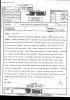
Document 72B
COMGENAAF 8 cable CMDW 576 to COMGENUSASTAF, for General Farrell, August 9, 1945, Top secret
Aug 9, 1945
Source
RG 77, Tinian Files, April-December 1945, box 20, Envelope G Tinian Files, Top Secret
See description of document 72A.
Document 72C
COMGENAAF 20 Guam cable AIMCCR 5532 to COMGENUSASTAF Guam, August 10, 1945, Top Secret
Dec 31, 1969
Source
RG 77, Tinian Files, April-December 1945, box 20, Envelope G Tinian Files, Top Secret
See description of document 72A.
Documents 73A-B: Ramsey Letter from Tinian Island
Document 73A
Letter from Norman Ramsey to J. Robert Oppenheimer, undated [mid-August 1945], Secret, excerpts
Aug 15, 1945
Source
Library of Congress, J. Robert Oppenheimer Papers, box 60, Ramsey, Norman
Ramsey, a physicist, served as deputy director of the bomb delivery group, Project Alberta. This personal account, written on Tinian, reports his fears about the danger of a nuclear accident, the confusion surrounding the Nagasaki attack, and early Air Force thinking about a nuclear strike force.
Document 73B
Transcript of the letter prepared by editor.
Aug 15, 1945
Source
Library of Congress, J. Robert Oppenheimer Papers, box 60, Ramsey, Norman
See description of document 73A.
XI. Toward Surrender
Document 74
Aug 9, 1945
Source
RG 457, Summaries of Intercepted Japanese Messages (“Magic” Far East Summary, March 20, 1942 – October 2, 1945), box 7, SRS 491-547
Within days after the bombing of Hiroshima, U.S. military intelligence intercepted Japanese reports on the destruction of the city. According to an “Eyewitness Account (and Estimates Heard) … In Regard to the Bombing of Hiroshima”: “Casualties have been estimated at 100,000 persons.”
Document 75
“Hoshina Memorandum” on the Emperor’s “Sacred Decision [go-seidan],” 9-10 August, 1945
Aug 9, 1945
Source
Zenshiro Hoshina, Daitoa Senso Hishi: Hoshina Zenshiro Kaiso-roku [Secret History of the Greater East Asia War: Memoir of Zenshiro Hoshina] (Tokyo, Japan: Hara-Shobo, 1975), excerpts from Section 5, “The Emperor made go-seidan [= the sacred decision] – the decision to terminate the war,” 139-149 [translation by Hikaru Tajima]
Despite the bombing of Hiroshima, the Soviet declaration of war, and growing worry about domestic instability, the Japanese cabinet (whose decisions required unanimity) could not form a consensus to accept the Potsdam Declaration. Members of the Supreme War Council—“the Big Six”[62]—wanted the reply to Potsdam to include at least four conditions (e.g., no occupation, voluntary disarmament); they were willing to fight to the finish. The peace party, however, deftly maneuvered to break the stalemate by persuading a reluctant emperor to intervene. According to Hasegawa, Hirohito had become convinced that the preservation of the monarchy was at stake. Late in the evening of 9 August, the emperor and his advisers met in the bomb shelter of the Imperial Palace.
Zenshiro Hoshina, a senior naval official, attended the conference and prepared a detailed account. With Prime Minister Suzuki presiding, each of the ministers had a chance to state their views directly to Hirohito. While Army Minister Anami tacitly threatened a coup (“civil war”), the emperor accepted the majority view that the reply to the Potsdam declaration should include only one condition not the four urged by “Big Six.” Nevertheless, the condition that Hirohito accepted was not the one that foreign minister Togo had brought to the conference. What was at stake was the definition of the kokutai (national policy). Togo’s proposal would have been generally consistent with a constitutional monarchy because it defined the kokutai narrowly as the emperor and the imperial household. What Hirohito accepted, however, was a proposal by the extreme nationalist Kiichiro Hiranuma which drew upon prevailing understandings of the kokutai: the “mythical notion” that the emperor was a living god. “This was the affirmation of the emperor’s theocratic powers, unencumbered by any law, based on Shinto gods in antiquity, and totally incompatible with a constitutional monarchy.” Thus, the Japanese response to the Potsdam declaration opposed “any demand which prejudices the prerogatives of his Majesty as a sovereign ruler.” This proved to be unacceptable to the Truman administration.[63]
Document 76
Aug 10, 1945
Source
RG 457, Summaries of Intercepted Japanese Messages (“Magic” Far East Summary, March 20, 1942 – October 2, 1945), box 7, SRS 491-547
More intercepted messages on the bombing of Hiroshima.

Document 76A
New!
J.R. Oppenheimer to All Division Leaders, 9 August 1945
Aug 9, 1945
Source
California Institute of Technology, Archives and Special Collections, Robert F. Bacher Papers, Box 17, folder 3, Manhattan Project, Miscellaneous Documents 1943-1945 (Thanks to Barton J. Bernstein for calling attention to this document)
The day of the bombing of Nagasaki J. Robert Oppenheimer issued a statement to the North American News Alliance, a wire service of that period, responding to its request for his thoughts on the “tremendously sobering responsibilities of knowledge [of the] atomic bomb and on [the] possible beneficial rather than destructive uses.” Oppenheimer responded with a substantive and thoughtful statement, which he wrote after consulting a few colleagues, that provides insight into how he and others thought about the use of the bomb at the time: as a way to “shorten the war,” but also to stimulate recognition that the terrible danger of atomic weaponry made it imperative to avoid future wars. Oppenheimer distributed the statement to all of the Division Leaders at Los Alamos Laboratory.
The statement called attention to the belief that the use of the bomb “might help shorten the war” against Japan but “above all” to the “thought that this rather spectacular technical development, and the assured prospect of far more terrifying future developments, would force upon the people of this country, and all the war-weary peoples of the world, a recognition of how imperative it has become to avert wars in the future.” That imperative made “cooperation and understanding between nations” a “desperate necessity.” Oppenheimer hoped that “in the hands of statesmen atomic power itself could help to provide a mechanism for bringing peoples together and for establishing confidence between ·nations.” Supporting that hope was the “fact that science itself, out of which this development has been born, is one of the most universal of human efforts, and that its tendency has been to bridge the gap between cultures rather than to deepen it.”
Oppenheimer did not spell out what he meant by “the assured prospect of far more terrifying future developments” but he probably had in mind the possibility of thermonuclear weapons. In the early stages of his research on nuclear weapons, Oppenheimer had worked on the “Super”, the H-bomb project, but that went on the back-burner as the prospect of fission bombs became more tangible.
The next day the Washington Evening Star published Oppenheimer’s statement but as far as can be told it received no further media distribution, at least to newspapers with searchable databases. So far only one study of Oppenheimer has cited his statement. [63A]
Documents 77A-B: The First Japanese Offer Intercepted
Document 77A
Aug 10, 1945
Source
Record Group 457, Records of the National Security Agency/Central Security Service, “Magic” Diplomatic Summaries 1942-1945, box 18
The first Japanese surrender offer was intercepted shortly before Tokyo broadcast it. This issue of the diplomatic summary also includes Togo’s account of his notification of the Soviet declaration of war, reports of Soviet military operations in the Far East, and intercepts of French diplomatic traffic.
Document 77B
Translation of intercepted Japanese messages, circa 10 August 10, 1945, Top Secret Ultra
Aug 10, 1945
Source
Record Group 457, Records of the National Security Agency/Central Security Service, “Magic” Diplomatic Summaries 1942-1945, box 18
A full translation of the surrender offer was circulated separately. The translations differ but they convey the sticking point that prevented U.S. acceptance: Tokyo’s condition that the allies not make any “demand which prejudices the prerogatives of His Majesty as a sovereign ruler.”
Document 78
Diary Entry, Friday, August 10, 1945, Henry Wallace Diary
Aug 10, 1945
Source
Papers of Henry A. Wallace, Special Collections Department, University of Iowa Libraries, Iowa City, Iowa (copy courtesy of Special Collections Department)
Secretary of Commerce (and former Vice President) Henry Wallace provided a detailed report on the cabinet meeting where Truman and his advisers discussed the Japanese surrender offer, Russian moves into Manchuria, and public opinion on “hard” surrender terms. With Japan close to capitulation, Truman asserted presidential control over nuclear weapons and later ordered that atomic bombs were not to be used on Japan without his “express authority from the President.” [See Document 82] Barton J. Bernstein has suggested that Truman’s comment about “all those kids” showed his belated recognition that the bomb caused mass casualties and that the target was not purely a military one.[64]
Document 79
Entries for 10-11 August, Robert P. Meiklejohn Diary
Aug 10, 1945
Source
W.A. Harriman Papers, Library of Congress, box 211, Robert Pickens Meiklejohn World War II Diary At London and Moscow March 10, 1941-February 14, 1946, Volume II (Privately printed, 1980 [Printed from hand-written originals]) (Reproduced with permission)
In these entries, Meiklejohn discussed how he and others in the Moscow Embassy learned about the bombing of Nagasaki from the “OWI Bulletin.” Entries for 10 and 11 August cover discussion at the Embassy about the radio broadcast announcing that Japan would surrender as long the Emperor’s status was not affected. Harriman opined that “surrender is in the bag” because of the Potsdam Declaration’s provision that the Japanese could “choose their own form of government, which would probably include the Emperor.” Further, “the only alternative to the Emperor is Communism,” implying that an official role for the Emperor was necessary to preserve social stability and prevent social revolution.
Document 80
Stimson Diary Entries, Friday and Saturday, August 10 and 11, 1945
Aug 10, 1945
Source
Henry Stimson Diary, Sterling Library, Yale University (microfilm at Library of Congress)
Stimson’s account of the events of 10 August focused on the debate over the reply to the Japanese note, especially the question of the Emperor’s status. The U.S. reply, drafted during the course of the day, did not explicitly reject the note but suggested that any notion about the “prerogatives” of the Emperor would be superceded by the concept that all Japanese would be “Subject to the Supreme Commander of the Allied Powers.” The language was ambiguous enough to enable Japanese readers, upon Hirohito’s urging, to believe that they could decide for themselves the Emperor’s future role. Stimson accepted the language believing that a speedy reply to the Japanese would allow the United States to “get the homeland into our hands before the Russians could put in any substantial claim to occupy and help rule it.” If the note had included specific provision for a constitutional monarchy, Hasegawa argues, it would have “taken the wind out of the sails” of the military faction and Japan might have surrendered several days earlier, on August 11 or 12 instead of August 14.[65]
Document 81
Entries from Walter Brown Diary, 10-11 August 1945
Aug 10, 1945
Source
Clemson University Libraries, Special Collections, Clemson, SC; Mss 243, Walter Brown Papers, box 68, folder 13, “Transcript/Draft B
Brown recounted Byrnes’ debriefing of the 10 August White House meeting on the Japanese peace offer, an account which differed somewhat from that in the Stimson diary. According to what Byrnes told Brown, Truman, Stimson, and Leahy favored accepting the Japanese note, but Byrnes objected that the United States should “go [no] further than we were willing to go at Potsdam.” Stimson’s account of the meeting noted Byrnes’ concerns (“troubled and anxious”) about the Japanese note and implied that he (Stimson) favored accepting it, but did not picture the debate as starkly as Browns’s did.
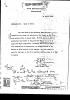
Document 82
Aug 10, 1945
Source
George C. Marshall Papers, George C. Marshall Library, Lexington, VA (copy courtesy of Barton J. Bernstein)
Groves informed General Marshall that he was making plans for the use of a third atomic weapon sometime after 17 August, depending on the weather. With Truman having ordered a halt to the atomic bombings [See document 78], Marshall wrote on Grove’s memo that the bomb was “not to be released over Japan without express authority from the President.”
Document 83
Memorandum of Conversation, “Japanese Surrender Negotiations,” August 10, 1945, Top Secret
Aug 10, 1945
Source
Library of Congress Manuscript Division, Papers of W. Averell Harriman, box 181, Chron File Aug 10-12, 1945
Japan’s prospective surrender was the subject of detailed discussion between Harriman, British Ambassador Kerr, and Soviet Foreign Minister Molotov during the evening of August 10 (with a follow-up meeting occurring at 2 a.m.). In the course of the conversation, Harriman received a message from Washington that included the proposed U.S. reply and a request for Soviet support of the reply. After considerable pressure from Harriman, the Soviets signed off on the reply but not before tensions surfaced over the control of Japan–whether Moscow would have a Supreme Commander there as well. This marked the beginning of a U.S.-Soviet “tug of war” over occupation arrangements for Japan.[66]

Document 83A
New!
Carl Spaatz Diary, 11 August 1945
Aug 11, 1945
Source
Library of Congress, Carl Spaatz Papers.
Up to the point where Japan’s surrender began to appear more likely, General Carl Spaatz, the Commanding General of U.S. Strategic Air Forces in the Pacific, had been unsure whether an invasion could be avoided. Initially, he had opposed using the atomic bomb: “When the atomic bomb was first discussed with me in Washington I was not in favor of it just as I have never favored the destruction of cities as such with all inhabitants being killed.” But his thinking shifted when “it was pointed out to me … that the use of the atomic bomb would certainly mean that an invasion would be unnecessary and that thousands of American lives would be saved.” With his doubts about nuclear use, Spaatz may have insisted on a written order to use the weapons which he received on 24 July 1945 [See Document 60E].[66A]
Although Spaatz believed that the use of “Air Power” would have an important impact on a Japanese decision to surrender, as an organizational loyalist, he worried that an “airman is not to be represented at the peace conference – the sea and the ground will be represented.” As it turned out, Spaatz was present on the battleship Missouri at the official act of Japanese surrender on 2 September 1945.
Document 84
Admiral Takagi Diary Entry for 12 August [1945]
Aug 12, 1945
Source
Takashi Itoh, ed., Sokichi Takagi: Nikki to Joho [Sokichi Takagi: Diary and Documents] (Tokyo, Japan: Misuzu-Shobo, 2000), 926-927 [Translation by Hikaru Tajima]
As various factions in the government maneuvered on how to respond to the Byrnes note, Navy Minister Yonai and Admiral Takagi discussed the latest developments. Yonai was upset that Chief of Staff Yoshijiro Umezu and naval chief Suemu Toyada had sent the emperor a memorandum arguing that acceptance of the Brynes note would “desecrate the emperor’s dignity” and turn Japan into virtually a “slave nation.” The emperor chided Umezu and Toyoda for drawing hasty conclusions; in this he had the support of Yonai, who also dressed them down. As Yonai explained to Takagi, he had also confronted Naval Vice Chief Takijiro Onishi to make sure that he obeyed any decision by the Emperor. Yonai made sure that Takagi understood his reasons for bringing the war to an end and why he believed that the atomic bomb and the Soviet declaration of war had made it easier for Japan to surrender.[67]
Document 85
Aug 12, 1945
Source
National Archives, RG 165, Army Operations OPD, Executive Files 1940-1945, box 12, Exec #2
Not altogether certain that surrender was imminent, Army intelligence did not rule out the possibility that Tokyo would try to “drag out the negotiations” or reject the Byrnes proposal and continue fighting. If the Japanese decided to keep fighting, G-2 opined that “Atomic bombs will not have a decisive effect in the next 30 days.” Richard Frank has pointed out that this and other documents indicate that high level military figures remained unsure as to how close Japan really was to surrender.
Document 86
The Cabinet Meeting over the Reply to the Four Powers (August 13)
Aug 13, 1945
Source
Gaimusho [Ministry of Foreign Affairs], ed., Shusen Shiroku [Historical Record of the End of the War] (Tokyo: Hokuyosha, 1977-1978), vol. 5, 27-35 [Translated by Toshihiro Higuchi]
The Byrnes Note did not break the stalemate at the cabinet level. An account of the cabinet debates on August 13 prepared by Information Minister Toshiro Shimamura showed the same divisions as before; Anami and a few other ministers continued to argue that the Allies threatened the kokutai and that setting the four conditions (no occupation, etc.) did not mean that the war would continue. Nevertheless, Anami argued, “We are still left with some power to fight.” Suzuki, who was working quietly with the peace party, declared that the Allied terms were acceptable because they gave a “dim hope in the dark” of preserving the emperor. At the end of the meeting, he announced that he would report to Hirohito and ask him to make another “Sacred Judgment”. Meanwhile, junior Army officers plotted a coup to thwart the plans for surrender.[68]
Document 87
Aug 13, 1945
Source
George C. Marshall Library, Lexington, VA, George C. Marshall Papers (copy courtesy of Barton J. Bernstein)
While Truman had rescinded the order to drop nuclear bombs, the war was not yet over and uncertainty about Japan’s next step motivated war planner General John E. Hull (assistant chief of staff for the War Department’s Operations Division), and one of Groves’ associates, Colonel L. E. Seeman, to continue thinking about further nuclear use and its relationship to a possible invasion of Japan. As Hull explained, “should we not concentrate on targets that will be of greatest assistance to an invasion rather than industry, morale, psychology, etc.” “Nearer the tactical use”, Seaman agreed and they discussed the tactics that could be used for beach landings. In 1991 articles, Barton Bernstein and Marc Gallicchio used this and other evidence to develop the argument that concepts of tactical nuclear weapons use first came to light at the close of World War II.[69]
Document 88
Aug 13, 1945
Source
Record Group 457, Records of the National Security Agency/Central Security Service, “Magic” Diplomatic Summaries 1942-1945, box 18
The dropping of two atomic bombs, the tremendous destruction caused by U.S. bombing, and the Soviet declaration of war notwithstanding, important elements of the Japanese Army were unwilling to yield, as was evident from intercepted messages dated 12 and 13 August. Willingness to accept even the “destruction of the Army and Navy” rather than surrender inspired the military coup that unfolded and failed during the night of 14 August.
Document 89
“The Second Sacred Judgment”, August 14, 1945
Aug 14, 1945
Source
Hiroshi [Kaian) Shimomura, Shusenki [Account of the End of the War] (Tokyo, Kamakura Bunko, [1948], 148-152 [Translated by Toshihiro Higuchi]
Frightened by the rapid movement of Soviet forces into Manchuria and worried that the army might launch a coup, the peace party set in motion a plan to persuade Hirohito to meet with the cabinet and the “Big Six” to resolve the stalemate over the response to the Allies. Japan was already a day late in responding to the Byrnes Note and Hirohito agreed to move quickly. At 10:50 a.m., he met with the leadership at the bomb shelter in his palace. This account, prepared by Director of Information Shimomura, conveys the drama of the occasion (as well as his interest in shifting the blame for the debacle to the Army). After Suzuki gave the war party–Umeda, Toyoda, and Anami–an opportunity to present their arguments against accepting the Byrnes Note, he asked the emperor to speak.
Hirohito asked the leadership to accept the Note, which he believed was “well intentioned” on the matter of the “national polity” (by leaving open a possible role for the Emperor). Arguing that continuing the war would reduce the nation “to ashes,” his words about “bearing the unbearable” and sadness over wartime losses and suffering prefigured the language that Hirohito would use in his public announcement the next day. According to Bix, “Hirohito’s language helped to transform him from a war to a peace leader, from a cold, aloof monarch to a human being who cared for his people” but “what chiefly motivated him … was his desire to save a politically empowered throne with himself on it.”[70]
Hirohito said that he would make a recording of the surrender announcement so that the nation could hear it. That evening army officers tried to seize the palace and find Hirohito’s recording, but the coup failed. Early the next day, General Anami committed suicide. On the morning of August 15, Hirohito broadcast the message to the nation (although he never used the word “surrender”). A few weeks later, on September 2, 1945 Japanese representatives signed surrender documents on the USS Missouri, in Tokyo harbor.[71]
Document 90
Aug 18, 1945
Source
RG 457, Summaries of Intercepted Japanese Messages (“Magic” Far East Summary, March 20, 1942 – October 2, 1945), box 7, SRS 491-547
This summary includes an intercepted account of the destruction of Nagasaki.
Document 91
Washington Embassy Telegram 5599 to Foreign Office, 14 August 1945, Top Secret
Aug 14, 1945
Source
The British National Archives, Records of the Foreign and Commonwealth Office, FO 800/461
With the Japanese surrender announcement not yet in, President Truman believed that another atomic bombing might become necessary. After a White House meeting on 14 August, British Minister John Balfour reported that Truman had “remarked sadly that he now had no alternative but to order an atomic bomb to be dropped on Tokyo.” [72] This was likely emotional thinking spurred by anxiety and uncertainty. Truman was apparently not considering the fact that Tokyo was already devastated by fire bombing and that an atomic bombing would have killed the Emperor, which would have greatly complicated the process of surrender. Moreover, he may not have known that the third bomb was still in the United States and would not be available for use for nearly another week.[73] As it turned out, a few hours later, at 4:05 p.m., the White House received the Japanese surrender announcement.
XII. Confronting the Problem of Radiation Poisoning
Document 92
Aug 24, 1945
Source
Department of Energy Open-Net
Two scientists at Oak Ridge’s Health Division, Henshaw and Coveyou, saw a United Press report in the Knoxville News Sentinel about radiation sickness caused by the bombings. Victims who looked healthy weakened, “for unknown reasons” and many died. Lacking direct knowledge of conditions in Hiroshima and Nagasaki, Henshaw and Coveyou had their own data on the biological effects of radiation and could make educated guesses. After reviewing the impact of various atomic bomb effects–blast, heat, flash radiation (prompt effects from gamma and neutron radiation), and radiation from radioactive substances–they concluded that “it seems highly plausible that a great many persons were subjected to lethal and sub-lethal dosages of radiation in areas where direct blast effects were possibly non-lethal.” It was “probable,” therefore, that radiation “would produce increments to the death rate and “even more probable” that a “great number of cases of sub-lethal exposures to radiation have been suffered.”[74]
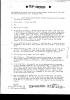
Document 93
Aug 28, 1945
Source
RG 77, MED Records, Top Secret Documents, File no. 5b
Despite the reports pouring in from Japan about radiation sickness among the victims of Hiroshima and Nagasaki, General Groves and Dr. Charles Rea, a surgeon who was head of the base hospital at Oak Ridge (and had no specialized knowledge about the biological effects of radiation) dismissed the reports as “propaganda”. Unaware of the findings of Health Division scientists, Groves and Rhea saw the injuries as nothing more than “good thermal burns.”[75]
Documents 94A-B: General Farrell Surveys the Destruction
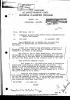
Document 94A
Sep 10, 1945
Source
RG 77, Tinian Files, April-December 1945, box 17, Envelope B
See description of document 94B
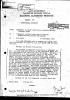
Document 94B
Sep 14, 1945
Source
RG 77, Tinian Files, April-December 1945, box 17, Envelope B
A month after the attacks Groves’ deputy, General Farrell, traveled to Japan to see for himself the destruction of Hiroshima and Nagasaki. His vivid account shows that senior military officials in the Manhattan Project were no longer dismissive of reports of radiation poisoning. As Farrell observed in his discussion of Hiroshima, “Summaries of Japanese reports previously sent are essentially correct, as to clinical effects from single gamma radiation dose.” Such findings dismayed Groves, who worried that the bomb would fall into a taboo category like chemical weapons, with all the fear and horror surrounding them. Thus, Groves and others would try to suppress findings about radioactive effects, although that was a losing proposition.[76]

Document 94C
New!
Sep 15, 1945
Source
RG 77, Reports Pertaining to the Effects of the Atomic Bomb,1945-1946
Drawing on his messages on the effects of the bomb on Hiroshima and Nagasaki [Documents 94A and B], Groves’ deputy, Brig. Gen. Farrell, prepared a longer report on the atomic bombing operations. Beginning with an account of the conference on Guam with General Curtis LeMay on operational issues, including targets and numbers of aircraft, Farrell reviewed the final preparations for the bombings. He then recounted the bombing of Hiroshima and assessed the photographic evidence.
Farrell reported that, after the Hiroshima bombing, he and others recommended further review of targets with a revision of the target list to “include several large cities,” including the Tokyo region “because of its great psychological value.” With the ending of the war in a few days, the recommendation became unnecessary.
Farrell provided details on the propaganda campaign launched after the bombing of Hiroshima, including short-wave broadcasts and Japanese language leaflets and newspapers. The Air Force’s plan included the dropping of over 16 million leaflets on 47 cities, with six million dropped before the Japanese negotiated for surrender.
The account of the atomic strike against Nagasaki included its “difficulties,” notably the cloud cover over the prime target, Kokura, and the decision to strike Nagasaki on the return flight to Iwo Jima. According to Farrell, the bombardier had a view of the target for a “few brief seconds,” with the bomb “released and detonated in the center of the highly industrialized region of Nagasaki.” Nevertheless, the Nagasaki bomb was some three quarters of a mile off target.”
The second half of Farrell’s report recounts his visits to Hiroshima and Nagasaki, including comparisons of their destruction. In that connection, he changed, or removed, language in his earlier report on Nagasaki, which included suggestive information on possible radiation effects [See Document 94B]. The sentence that appears in the telegram as: “The Japanese official reported that anyone who entered the blast area after the explosion has become sick,” was worded in the report as “no one.” The following sentence appeared in the telegram but not in the report: “The Japanese report a considerable number have died in September who did not seem to be wounded originally.” Removing such findings was consistent with the approach that Farrell had taken in his interactions with U.S. medical experts in Japan, to whom he wanted to prove that the bombs caused no radioactivity.[76A]
XIII. Eisenhower and McCloy’s Views on the Bombings and Atomic Weapons
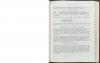
Document 95
Entry for 4 October 1945, Robert P. Meiklejohn Diary
Oct 4, 1945
Source
W.A. Harriman Papers, Library of Congress, box 211, Robert Pickens Meiklejohn World War II Diary At London and Moscow March 10, 1941-February 14, 1946, Volume II (Privately printed, 1980 [Printed from hand-written originals]) (Reproduced with permission)
In this entry written several months later, Meiklejohn shed light on what much later became an element of the controversy over the Hiroshima-Nagasaki bombings: whether any high level civilian or military officials objected to nuclear use. Meiklejohn recounted Harriman’s visit in early October 1945 to the Frankfurt-area residence of General Dwight Eisenhower, who was finishing up his service as Commanding General, U.S. Army, European Theater. It was Meiklejohn’s birthday and during the dinner party, Eisenhower and McCloy had an interesting discussion of atomic weapons, which included comments alluding to scientists’ statements about what appears to be the H-bomb project (a 20 megaton weapon), recollection of the early fear that an atomic detonation could burn up the atmosphere, and the Navy’s reluctance to use its battleships to test atomic weapons. At the beginning of the discussion, Eisenhower made a significant statement: he “mentioned how he had hoped that the war might have ended without our having to use the atomic bomb.” The general implication was that prior to Hiroshima-Nagasaki, he had wanted to avoid using the bomb.
Some may associate this statement with one that Eisenhower later recalled making to Stimson. In his 1948 memoirs (further amplified in his 1963 memoirs), Eisenhower claimed that he had “expressed the hope [to Stimson] that we would never have to use such a thing against an enemy because I disliked seeing the United States take the lead in introducing into war something as horrible and destructive as this new weapon was described to be.” That language may reflect the underlying thinking behind Eisenhower’s statement during the dinner party, but whether Eisenhower used such language when speaking with Stimson has been a matter of controversy. In later years, those who knew both thought it unlikely that the general would have expressed misgivings about using the bomb to a civilian superior. Eisenhower’s son John cast doubts about the memoir statements, although he attested that when the general first learned about the bomb he was downcast.
Stimson’s diary mentions meetings with Eisenhower twice in the weeks before Hiroshima, but without any mention of a dissenting Eisenhower statement (and Stimson’s diaries are quite detailed on atomic matters). The entry from Meiklejohn’s diary does not prove or disprove Eisenhower’s recollection, but it does confirm that he had doubts which he expressed only a few months after the bombings. Whether Eisenhower expressed such reservations prior to Hiroshima will remain a matter of controversy.[77]

Document 96
President Harry S. Truman, Handwritten Remarks for Gridiron Dinner, circa 15 December 1945
Dec 15, 1945
Source
Harry S. Truman Library, President’s Secretary’s Files, Speech Files, 1945-1953, copy on U.S. National Archives Web Site
On 15 December, President Truman spoke about the atomic bombings in his speech at the annual dinner of the Gridiron Club, organized by bureau chiefs and other leading figures of print media organizations. [78] Besides Truman, guests included New York Governor Thomas Dewey (Republican presidential candidate in 1944 and 1948), foreign ambassadors, members of the cabinet and the Supreme Court, the military high command, and various senators and representatives. The U.S. Marine Band provided music for the dinner and for the variety show that was performed by members of the press.[79]
In accordance with the dinner’s rules that “reporters are never present,” Truman’s remarks were off-the record. The president, however, wrote in long-hand a text that that might approximate what he said that evening. Pages 12 through 15 of those notes refer to the atomic bombing of Japan:
“You know the most terrible decision a man ever had to make was made by me at Potsdam. It had nothing to do with Russia or Britain or Germany. It was a decision to loose the most terrible of all destructive forces for the wholesale slaughter of human beings. The Secretary of War, Mr. Stimson, and I weighed that decision most prayerfully. But the President had to decide. It occurred to me that a quarter of a million of the flower of our young manhood was worth a couple of Japanese cities, and I still think that they were and are. But I couldn’t help but think of the necessity of blotting out women and children and non-combatants. We gave them fair warning and asked them to quit. We picked a couple of cities where war work was the principle industry, and dropped bombs. Russia hurried in and the war ended.”
Truman characterized the Potsdam Declaration as a “fair warning,” but it was an ultimatum. Plainly he was troubled by the devastation and suffering caused by the bombings, but he found it justifiable because it saved the lives of U.S. troops. His estimate of 250,000 U.S. soldiers spared far exceeded that made by General Marshall in June 1945, which was in the range of 31,000 (comparable to the Battle of Luzon) [See Document 26]. By citing an inflated casualty figure, the president was giving a trial run for the rationale that would become central to official and semi-official discourse about the bombings during the decades ahead.[80]
Despite Truman’s claim that he made “the most terrible” decision at Potsdam, he assigned himself more responsibility than the historical record supports. On the basic decision, he had simply concurred with the judgments of Stimson, Groves, and others that the bomb would be used as soon as it was available for military use. As for targeting, however, he had a more significant role. At Potsdam, Stimson raised his objections to targeting Japan’s cultural capital, Kyoto, and Truman supported the secretary’s efforts to drop that city from the target list [See Documents 47 and 48].[81]
Where he had taken significant responsibility was by making a decision to stop the atomic bombings just before the Japanese surrender, thereby asserting presidential control over nuclear weapons
Notes
[1]. The World Wide Web includes significant documentary resources on these events. The Truman Library has published a helpful collection of archival documents, some of which are included in the present collection. A collection of transcribed documents is Gene Dannen’s “Atomic Bomb: Decision.” For a print collection of documents, see Dennis Merrill ed., Documentary History of the Truman Presidency: Volume I: The Decision to Drop the Atomic Bomb on Japan (University Publications of America, 1995). A more recent collection of documents, along with a bibliography, narrative, and chronology, is Michael Kort’s The Columbia Guide to Hiroshima and the Bomb (New York: Columbia University Press, 2007). An important on-line collection focuses on the air-raids of Japanese cities and bases, providing valuable context for the atomic attacks.
[2]. For the early criticisms and their impact on Stimson and other former officials, see Barton J. Bernstein, “Seizing the Contested Terrain of Early Nuclear History: Stimson, Conant, and Their Allies Explain the Decision to Use the Atomic Bomb,” Diplomatic History 17 (1993): 35-72, and James Hershberg, James B. Conant: Harvard to Hiroshima and the Making of the Nuclear Age (Stanford, Stanford University Press, 1995), 291-301. For Stimson’s article, see “The Decision to Use the Atomic Bomb,” Harper’s 194 (February 1947): 97-107. Social critic Dwight MacDonald published trenchant criticisms immediately after Hiroshima-Nagasaki; see Politics Past: Essays in Political Criticism (New York: Viking, 1972), 169-180.
[3]. The proposed script for the Smithsonian exhibition can be seen at Philipe Nobile,Judgment at the Smithsonian (New York: Matthews and Company, 1995), pp. 1-127. For reviews of the controversy, see Barton J. Bernstein, “The Struggle Over History: Defining the Hiroshima Narrative,” ibid., 128-256, and Charles T. O’Reilly and William A. Rooney, The Enola Gay and The Smithsonian (Jefferson, NC: McFarland and Company, 2005).
[4]. For the extensive literature, see the references in J. Samuel Walker, Prompt and Utter Destruction: Truman and the Use of Atomic Bombs against Japan, Third Edition (Chapel Hill: University of North Carolina Press, 2016) at 131-136, as well as Walker’s, “Recent Literature on Truman’s Atomic Bomb Decision: A Search for Middle Ground,” Diplomatic History 29 (April 2005): 311-334. For more recent contributions, see Sean Malloy, Atomic Tragedy: Henry L. Stimson and the Decision to Use the Bomb Against Japan (Ithaca: Cornell University Press, 2008), Andrew Rotter, Hiroshima: The World’s Bomb (New York: Oxford, 2008), Campbell Craig and Sergey Radchenko, The Atomic Bomb and the Origins of the Cold War (New Haven, Yale University Press, 2008), Wilson D. Miscamble, The Most Controversial Decision: Truman, the Atomic Bombs, and the Defeat of Japan (New York: Cambridge University Press, 2011). Also important to take into account is John Dower’s extensive discussion of Hiroshima/Nagasaki in context of the U.S. fire-bombings of Japanese cities in Cultures of War: Pearl Harbor/Hiroshima/9-11/Iraq (New York, W. Norton, 2010), 163-285.
[5]. The editor particularly benefited from the source material cited in the following works: Robert S. Norris, Racing for the Bomb: General Leslie S. Groves, The Manhattan Project’s Indispensable Man (South Royalton, VT: Steerforth Press, 2002); Gar Alperovitz, The Decision to Use the Bomb and the Architecture of an American Myth (New York: Alfred E. Knopf, 1995); Richard B. Frank, Downfall: The End of the Imperial Japanese Empire (New York: Random House, 1999), Martin Sherwin, A World Destroyed: Hiroshima and the Origins of the Arm Race (New York, Vintage Books, 1987), and as already mentioned, Hasegawa’s Racing the Enemy: Stalin, Truman, and the Surrender of Japan (Cambridge, Harvard University Press, 2005). Barton J. Bernstein’s numerous articles in scholarly publications (many of them are listed in Walker’s assessment of the literature) constitute an invaluable guide to primary sources. An article that Bernstein published in 1995, “The Atomic Bombings Reconsidered,” Foreign Affairs 74 (1995), 135-152, nicely summarizes his thinking on the key issues. Noteworthy publications since 2015 include Michael D. Gordin and G. John Ikenberry, eds., The Age of Hiroshima (Princeton: Princeton University Press, 2020), especially Alex Wellerstein’s essay, «The Kyoto Misconception: What Truman Knew, Didn’t Know, About Hiroshima,» at 34-54; Sheldon Garon, “On the Transnational Destruction of Cities: What Japan and the United States Learned from the Bombing of Britain and Germany in the Second World War,” Past and Present 247 (2020): 235-271; Katherine E. McKinney, Scott Sagan, and Allen S. Weiner, “Why the Atomic Bombing of Hiroshima Would Be Illegal Today,” The Bulletin of the Atomic Scientists 76 (2020); Gregg Mitchell, The Beginning or the End: How Hollywood and America Learned to Stop Worrying and Love the Bomb (New York: The New Press, 2020); Steve Olson, The Apocalypse Factory: Plutonium and the Making of the Atomic Age (New York: W.W. Norton, 2020); Neil J. Sullivan, The Prometheus Bomb: The Manhattan Project and Government in the Dark (Lincoln, NE: University of Nebraska Press/Potomac Books, 2016); Alex Wellerstein; Restricted Data: The History of Nuclear Secrecy in the United States, (Chicago: University of Chicago Press, forthcoming, 2020), a memoir by a Hiroshima survivor, Taniguchi Sumitero, The Atomic Bomb on My Back: A Life Story of Survival and Activism (Montpelier, VT: Rootstock Publishing, 2020), and a collection of interviews, Cynthia C. Kelly, ed., The Manhattan Project: The Birth of the Atomic Bomb in the Words of Its Creators, Eyewitnesses, and Historians (Black Dog & Leventhal, 2020). A significant recent study is Richard Overy’s Rain of Ruin: Tokyo, Hiroshima, and the Surrender of Japan (New York: W.W. Norton, 2025). Raising useful questions about Japan’s surrender is Sheldon Garon’s «Operation STARVATION 1945: A Transnational History of Blockades and the Defeat of Japan,» The International History Review 46 (2024): 535-550.
[6]. Malloy (2008), 49-50. For more on the Uranium Committee, the decision to establish the S-1 Committee, and the overall context, see James G. Hershberg, James B. Conant: Harvard to Hiroshima and the Making of the Nuclear Age (Stanford, Stanford University Press, 1995), 140-154.
[7]. Sean Malloy, “`A Very Pleasant Way to Die’: Radiation Effects and the Decision to Use the Atomic Bomb against Japan,” Diplomatic History 36 (2012), especially 523. For an important study of how contemporary officials and scientists looked at the atomic bomb prior to first use in Japan, see Michael D. Gordin, Five Days in August: How World War II Became a Nuclear War (Princeton: Princeton University Press, 2007).
[8]. Norris, 169.
[9]. Malloy (2008), 57-58.
[9A] . Manfred Popp, “Why Hitler Did Not Have Atomic Bombs,” Journal of Nuclear Engineering 2 (2021), 9–27, and Manfred Popp and Piet de Klerk, “The Peculiarities of the German Uranium Project (1939–1945),” Journal of Nuclear Engineering 4 (2023): 634-653
[10]. See also Norris, 362.
[10A] . Both Al Christman in Target Hiroshima: Deak Parsons and the Creation of the Atomic Bomb (Annapolis: Naval Institute Press, 1998), 158-159 and Sean Malloy in “‘The Rules of Civilized Warfare’: Scientists, Soldiers, Civilians, and American Nuclear Targeting, 1940-1945,” Journal of Strategic Studies 30 (2007), 489-490, cite and quote the Parsons memorandum, but they attribute it to a William Sterling Parsons collection at the Library of Congress, where it cannot be found, although a copy shows up in the Oppenheimer papers as noted.
[11]. For discussion of the importance of this memorandum, see Sherwin, 126-127, and Hershberg, James B. Conant, 203-207.
[12]. Alperovitz, 662; Bernstein (1995), 139; Norris, 377.
[13]. Quotation and statistics from Thomas R. Searle, “`It Made a Lot of Sense to Kill Skilled Workers’: The Firebombing of Tokyo in March 1945, The Journal of Military History 55 (2002):103. More statistics and a detailed account of the raid is in Ronald Schaffer, Wings of Judgment: American Bombing in World War II (New York: Oxford University Press, 1985), 130-137.
[14]. Searle, “`It Made a Lot of Sense to Kill Skilled Workers,’” 118. For detailed background on the Army Air Forces’ incendiary bombing planning, see Schaffer (1985) 107-127. On Stimson, see Schaffer (1985), 179-180 and Malloy (2008), 54. For a useful discussion of the firebombing of Tokyo and the atomic bombings, see Alex Wellerstein, “Tokyo vs. Hiroshima,” Restricted Data: The Nuclear Secrecy Blog, 22 September 2014
[15]. See for example, Bernstein (1995), 140-141.
[16]. For useful discussion of this meeting and the other Target Committee meetings, see Norris, 382-386.
[17]. Malloy, “A Very Pleasant Way to Die,” 531-534.
[18]. Schaffer, Wings of Judgment, 143-146.
[19]. Alperovitz argues that the possibility of atomic diplomacy was central to the thinking of Truman and his advisers, while Bernstein, who argues that Truman’s primary objective was to end the war quickly, suggests that the ability to “cow other nations, notably the Soviet Union” was a “bonus” effect. See Bernstein (1995), 142.
[20]. Alperovitz, 147; Robert James Maddox, Weapons for Victory: The Hiroshima Decision Fifty Years Later (Columbia: University of Missouri Press, 1995), 52; Gabiel Kolko, The Politics of War: The World and United States Foreign Policy, 1943-1945 (New York: Pantheon Books, 1990), 421-422. As Alperovitz notes, the Davies papers include variant diary entries and it is difficult to know which are the most accurate.
[21]. Malloy (2008), 112
[21A]. Vincent Jones, Manhattan: The Army and the Atomic Bomb (Washington, D.C.: U.S. Army Center of Military History, 1985), 529.
[22]. Bernstein (1995), 146. See also Barton J. Bernstein, “Looking Back: Gen. Marshall and the Atomic Bombing of Japanese Cities,” Arms Control Today, November 2015.
[23]. Bernstein (1995), 144. See also Malloy (2008), at 116-117, including the argument that 1) Stimson was deceiving himself by accepting the notion that a “vital war plant …surrounded by workers’ houses” was a legitimate military target, and 2) that Groves was misleading Stimson by withholding the Target Committee’s conclusions that the target would be a city center.
[24]. Walker (2005), 320.
[25]. Frank Costigliola, France and the United States: The Cold Alliance Since World War II (New York, Twayne, 1992), 38-39.
[26]. Barton J. Bernstein, Introduction to Helen S. Hawkins et al. editors, Toward a Livable World: Leo Szilard and the Crusade for Nuclear Arms Control (Cambridge: MIT Press, 1987), xxx-xxv; Sherwin, 210-215.
[27]. Herbert P. Bix, Hirohito and the Making of Modern Japan (New York: HarperCollins Publishers, 2000), 523.
[28]. Walker (2005), 319-320.
[29]. For a review of the debate on casualty estimates, see Walker (2005), 315, 317-318, 321, 323, and 324-325.
[30]. Hasegawa, 105; Alperovitz, 67-72; Forrest Pogue, George C. Marshall: Statesman, 1945-1959 (New York: Viking, 1987), 18. Pogue only cites the JCS transcript of the meeting; presumably, an interview with a participant was the source of the McCloy quote.
[31]. Alperovitz, 226; Bernstein, “Understanding the Atomic Bomb and the Japanese Surrender,” Diplomatic History 19 (1995), 237, note 22.
[32]. Malloy (2008), 123-124.
[33]. Alperovitz, 242, 245; Frank, 219.
[34]. Malloy (2008), 125-127.
[35]. Bernstein, introduction, Toward a Livable World, xxxvii-xxxviii.
[36]. “Magic” summaries for post-August 1945 remain classified at the National Security Agency. Information from the late John Taylor, National Archives. For background on Magic and the “Purple” code, see John Prados, Combined Fleet Decoded: The Secret History of American Intelligence and the Japanese Navy in World War II ( New York: Random House, 1995), 161-172 and David Kahn, The Codebreakers: The Story of Secret Writing (New York: Scribner, 1996), 1-67.
[37]. Alperovitz, 232-238.
[38]. Maddox, 83-84; Hasegawa, 126-128. See also Walker (2005), 316-317.
[39]. Hasegawa, 28, 121-122.
[40]. Peter Grose, Gentleman Spy: The Life of Allen Dulles (Boston: Houghton Mifflin, 1994), 170-174, 248-249.
[41]. David Holloway, “Barbarossa and the Bomb: Two Cases of Soviet Intelligence in World War II,” in Jonathan Haslam and Karina Urbach, eds., Secret Intelligence in the European States System, 1918-1989 (Stanford: Stanford University Press, 2014), 63-64. For the inception of the Soviet nuclear program and the role of espionage in facilitating it, see Holloway, Stalin and the Bomb (New Haven, Yale University Press, 1994).
[42]. For the distances, see Norris, 407.
[43]. For on-line resources on the first atomic test.
[43A] . So far solely mentioned in Robert S. Norris, Racing for the Bomb: General Leslie R. Groves, The Manhattan Project’s Indispensable Man (Steerforth Press, South Royalton, VT, 2002), 413-416.
[43B] . Lillian Hoddeson et al., Critical Assembly: A Technical History of Los Alamos During the Oppenheimer Years, 1943- 1945 (New York: Cambridge University Press, 1992), 377.
[43C] . Norris, Racing for the Bomb: General Leslie R. Groves), pp. 413–416 and endnotes.
[43D] . James B. Hershberg, James B. Conant: Harvard to Hiroshima and the Making of the Nuclear Age (New York: Knopf, 1993), 232. In preceding years, others had raised the possibility of an atomic explosion setting the atmosphere on fire; see Alex Wellerstein, “Cleansing Thermonuclear Fire,” Restricted Data, 29 June 2018.
[43E] . David A. Rosenberg, “The Origins of Overkill: Nuclear Weapons and American Strategy, 1945-1960,” International Security 7 (1983): 24; B. Cameron Reed, “Composite Cores and Tamper Yield: Lesser-known Aspects of Manhattan Project Fission Bombs,” American Journal of Physics 88 (2020): 108-114.
[44]. Bernstein’s detailed commentary on Truman’s diary has not been reproduced here except for the opening pages where he provides context and background.
[45]. Frank, 258; Bernstein (1995), 147; Walker (2005), 322. See also Alex Wellerstein’s “The Kyoto Misconception”
[46]. Maddox, 102; Alperovitz, 269-270; Hasegawa, 152-153.
[47]. Hasegawa, 292.
[48]. Bernstein, “Understanding the Atomic Bomb and the Japanese Surrender,” Diplomatic History 19 (1995), 146-147; Alperovitz, 415; Frank, 246.
[49]. Alperovitz, 392; Frank, 148.
[50]. Alperovitz, 281-282. For Davies at Potsdam, see Elizabeth Kimball MacLean, Joseph E. Davies: Envoy to the Soviets (Westport, CT: Praeger, 1992), 151-166
[51]. Hasegawa, 168; Bix, 518.
[52]. Bix, 490, 521.
[53]. Alperovitz, 415; Frank, 246.
[54]. Frank, 273-274; Bernstein, “The Alarming Japanese Buildup on Southern Kyushu, Growing U.S. Fears and Counterfactual Analysis: Would the Planned November 1945 Invasion of Southern Kyushu Have Occurred?” Pacific Historical Review 68 (1999): 561-609.
[55]. Maddox, 105.
[56]. Barton J. Bernstein, «‘Reconsidering the ‘Atomic General’: Leslie R. Groves,» The Journal of Military History 67 (July 2003): 883-920. See also Malloy, “A Very Pleasant Way to Die,” 539-540.
[57]. For casualty figures and the experience of people on the ground, see Frank, 264-268 and 285-286, among many other sources. Drawing on contemporary documents and journals, Masuji Ibuse’s novel Black Rain (Tokyo, Kodansha, 1982) provides an unforgettable account of the bombing of Hiroshima and its aftermath. For early U.S. planning to detonate the weapon at a height designed to maximize destruction from mass fires and other effects, see Alex Wellerstein, “The Height of the Bomb.”
[58]. Sadao Asada, “The Shock of the Atomic Bomb and Japan’s Decision to Surrender: A Reconsideration,” Pacific Historical Review 67 (1998): 101-148; Bix, 523; Frank, 348; Hasegawa, 298. Bix appears to have moved toward a position close to Hasegawa’s; see Bix, “Japan’s Surrender Decision and the Monarchy: Staying the Course in an Unwinnable War,” Japan Focus . For emphasis on the “shock” of the atomic bomb, see also Lawrence Freedman and Saki Dockrill, “Hiroshima: A Strategy of Shock,” in Saki Dockrill, ed., From Pearl Harbor to Hiroshima : the Second World War in Asia and the Pacific, 1941-1945 (New York, St. Martin’s Press, 1994), 191-214. For more on the debate over Japan’s surrender, see Hasegawa’s important edited book, The End of the Pacific War: A Reappraisal (Stanford: Stanford University Press, 2007), with major contributions by Hasegawa, Holloway, Bernstein, and Hatano.
[59]. Melvyn P. Leffler, “Adherence to Agreements: Yalta and the Experiences of the Early Cold War,” International Security 11 (1986): 107; Holloway, “Barbarossa and the Bomb,” 65.
[59A]. For more on these developments, see Asada, «The Shock of the Atomic Bomb and Japan’s Decision to Surrender: A Reconsideration,» 486-488.
[60]. Hasegawa, 191-192.
[60A] . Cited and discussed in Walker, Prompt and Utter Destruction, at pages 74 and 85.
[60B] . For a review of casualty estimates, see Alex Wellerstein “Counting the Dead at Hiroshima and Nagasaki,” The Bulletin of the Atomic Scientists, 4 August 2020 at https://thebulletin.org/2020/08/counting-the-dead-at-hiroshima-and-nagasaki/
[61]. Frank, 286-287; Sherwin, 233-237; Bernstein (1995), 150; Maddox, 148.
[62]. The Supreme War Council comprised the prime minister, foreign minister, army and navy ministers, and army and navy chiefs of staff; see Hasegawa, 72.
[63]. For the maneuverings on August 9 and the role of the kokutai, see Hasegawa, 3-4, 205-214
[63A]. Barton J. Bernstein in “The Flawed and Unexamined History of Christopher Nolan’s ‘Oppenheimer’: Science, Scientists, Nuclear Weapons, and Politics,” Journal of Cold War Studies 26 (2024): 223-224. For Oppenheimer and the “Super” in 1942, see pages 224-225. See also Bernstein, “Christopher Nolan’s Forthcoming ‘Oppenheimer’ Movie: A Historian’s Questions, Worries, and Challenges,” Washington Decoded, 11 July 2023. A file on the North American News Alliance in box 286 of the Oppenheimer papers at the Library of Congress includes correspondence with Alliance editors but no information on the statement’s distribution.
[64]. For Truman’s recognition of mass civilian casualties, see also his letter to Senator Richard Russell, 9 August 1945.
[65]. Hasegawa, 295.
[66]. For “tug of war,” see Hasegawa, 226-227.
[66A] . Ronald Schaffer, Wings of Judgement: American Bombing in World War II (New York: Oxford University Press, 1985), 147.
[67]. Hasegawa, 228-229, 232.
[68]. Hasegawa, 235-238.
[69]. Barton J. Bernstein, “Eclipsed by Hiroshima and Nagasaki: Early Thinking about Tactical Nuclear Weapons,” International Security 15 (Spring 1991): 149-173; Marc Gallicchio, “After Nagasaki: General Marshall’s Plans for Tactical Nuclear Weapons in Japan,” Prologue 23 (Winter 1991): 396-404. Letters from Robert Messer and Gar Alperovitz, with Bernstein’s response, provide insight into some of the interpretative issues. “Correspondence,” International Security 16 (Winter 1991/1992): 214-221.
[70]. Bix, “Japan’s Surrender Decision and the Monarchy: Staying the Course in an Unwinnable War,” Japan Focus.
[71]. For Hirohito’ surrender speech–the actual broadcast and a translation–see Japan Times, August 2015.
[72]. Cited by Barton J. Bernstein, “Eclipsed by Hiroshima and Nagasaki: Early Thinking About Tactical Nuclear Weapons,” International Security 15 (1991) at page 167. Thanks to Alex Wellerstein for the suggestion and the archival link.
[73]. For further consideration of Tokyo and more likely targets at the time, see Alex Wellerstein, “Neglected Niigata,” Restricted Data: The Nuclear Secrecy Blog, 9 October 2015.
[74]. See Malloy, “A Very Pleasant Way to Die,” 541-542.
[75]. For Groves and the problem of radiation sickness, see Norris, 339-441, Bernstein, “Reconsidering the ‘Atomic General’: Leslie R. Groves,” Journal of Military History 67 (2003), 907-908, and Malloy, “A Very Pleasant Way to Die,” 513-518 and 539-542
[76]. See Janet Farrell Brodie, “Radiation Secrecy and Censorship after Hiroshima and Nagasaki,” The Journal of Social History 48 (2015): 842-864.
[76A] . On Farrell’s public relations concerns, see Nolan, Atomic Doctors, at page 86.
[77]. For Eisenhower’s statements, see Crusade in Europe (Garden City: Doubleday, 1948), 443, and Mandate for Change (Garden City: Doubleday, 1963), 312-313. Barton J. Bernstein’s 1987 article, “Ike and Hiroshima: Did He Oppose It?” The Journal of Strategic Studies 10 (1987): 377-389, makes a case against relying on Eisenhower’s memoirs and points to relevant circumstantial evidence. For a slightly different perspective, see Malloy (2007), 138
[78]. Cited in Barton J. Bernstein, “Truman and the A-Bomb: Targeting Noncombatants, Using the Bomb, and His Defending the «Decision,” The Journal of Military History 62 (1998), at page 559. Thanks to Alex Wellerstein for the suggestion and the archival link.
[79]. “Truman Plays Part of Himself in Skit at Gridiron Dinner,” and “List of Members and Guests at the Gridiron Show,” The Washington Post, 16 December 1945.
[80]. For varied casualty figures cited by Truman and others after the war, see Walker, Prompt and Utter Destruction: Truman and the Use of Atomic Bombs Against Japan, 101-102.
[81]. See also ibid., 59.

 Escritos Críticos
Debe estar conectado para enviar un comentario.