«Pero antes de la gran revolución civil habrá una profundización de la crisis de este orden obsoleto. Esta crisis será en casi todos los ámbitos, desde el orden político hasta el económico, pasando por el militar. La Superpotencia es actualmente muy frágil debido a su recurso militar, con el cual ha minado el arma más estratégica de la antigua diplomacia. De hecho, ha inaugurado la anti-diplomacia: mañana, si Estados Unidos no derroca a Sadam Hussein, terminará por fortalecerlo, ante su pueblo y ante el mundo. Es decir, no hay salida a su poco inteligente estrategia. Por otra parte, no podrá resistir un contexto crecientemente hostil porque su economía, base de su poderío militar, se debilitará en proporción inversa. Hoy está en condiciones de ganar cualquier guerra, con o sin aliados, pero los sucesivos triunfos no podrán salvarla de un progresivo desgaste. El resultado inmediato será una gran inseguridad mundial, aunque ésta se superará con la revolución civil. En este momento de quiebre, Occidente se debatirá entre un mayor control militar o en la desobediencia civil, la cual será silenciosa y anónima, sin líderes ni caudillos, sin masacres. Será la primera revolución del individuo de la historia que se opondrá al individualismo, así como la libertad se opondrá al liberalismo.»
La sociedad desobediente
Esta vieja Europa que encuentro después de tan pocos años, ha cambiado tal vez de forma invisible, pero profética.
He sido amablemente invitado por el gobierno de Tenerife y por Editorial Baile del Sol para presentar mi último libro en España y para participar en algunos debates en vivo. Sobre todo, he escuchado y leído todo lo que he podido y, en cualquier caso, he sentido la misma preocupación por la guerra —o, para ser más exactos, por el bombardeo— y por la inmigración de los pobres al centro del mundo. La ruptura de Occidente es menos evidente.
Sobre estos problemas no voy a agregar mucho más. Además, de ellos ya se han encargado las mentes más lúcidas, y de poco y nada ha servido hasta el momento. Del otro lado, hemos escuchado y leído discursos que, si no tuviesen consecuencias tan trágicas serían, por lo menos, cómicos, travesuras más propias de estudiantes que de los Servicios de Inteligencia más poderosos del planeta, de los cuales depende la vida o la muerte de millones de personas.
Si se me permite el atrevimiento, quisiera ir a un problema que considero más de fondo, no sin antes una breve introducción.
Estoy leyendo en El País de Madrid un documento salido de la oficina de Condolezza Rice, el cual fue ratificado por el Congreso norteamericano. Dice: “Existe un único modelo sostenible de éxito nacional —el de Estados Unidos— que es justo para toda persona en toda sociedad” Dejo los comentarios a los lectores que, a diferencia del filósofo que escribió estas líneas, siempre presumo inteligentes. Y si, además, son cultos, seguramente recordarán el esquema de pensamiento europeísta que imperaba en el siglo XVIII, o versiones más dictatoriales, fanáticas y mesiánicas del Islam moderno. A esta altura de la historia, daría toda la impresión de que algunas personas no pueden comprender que una gran democracia nacional puede ser, al mismo tiempo, una gran dictadura mundial. Y lo digo con pesar, porque admiro la cultura y la belleza de ese gran país del Norte, donde tengo tantos amigos.
Pero vayamos más a fondo. Desconcentrémonos por un momento de la coyuntura actual de esta guerra y veremos esos cambios invisibles que, inexorablemente, están ocurriendo en todo el mundo.
Lo que hoy llamamos “globalización” no es otra cosa que el ensayo, conflictivo y con frecuencia criminal, de un cambio a mayor escala. Y, por el contrario a lo que se afirma casi unánimemente, a mi juicio es el inicio crítico de tiempos mejores para la paz mundial. No ciertamente por la victoria de ningún imperio policíaco, sino todo lo contrario.
Nuestro tiempo es crítico porque es el tiempo en que el mundo se ha cerrado, dejando dentro de su unidad física una pluralidad contradictoria y a veces incompatible de intereses. Paradójica y suicida. Desde los primeros globalizadores —los fenicios— el comercio había sido también una actividad cultural. Desde entonces, junto con las cedas y los condimentos, viajaron culturas enteras, costumbres, artes, religiones y conocimiento científico. Hoy el comercio significa, lisa y llanamente, la destrucción de las culturas que no le son rentables, al mismo tiempo que la vulgarización de aquellas otras de las cuales se sirve. Es un proceso de barbarización que se confunde con el progreso de los medios. Pero, entonces ¿cuál es la próxima etapa de esta globalización?
Hace unas décadas, el científico británico J. Lovelock concibió la teoría de Gaia, es decir la teoría según la cual se entendía nuestro planeta como un ser vivo. En un ensayo de 1997 quise complementar esta idea de la siguiente forma: si el cuerpo de Gea es la biosfera, su mente ha de ser la estratosfera —esa nueva corteza pensante— y cada habitante del planeta sería, así, como una neurona, unida a otras neuronas por dentritas vinculantes —ondas de radio, Internet, etc. Inmediatamente supuse que nuestro planeta sufría de autismo o de una crónica descoordinación, y que si los ecologistas se habían ocupado de su cuerpo, nadie lo había hecho hasta ahora con su mente. Si la contaminación ambiental es su cáncer, la geopolítica es su esquizofrenia. Sin embargo, hoy creo que esa conducta no es producto solo de una fobia —como lo fue la Segunda Guerra— sino que es propia de un recién nacido que mueve sus manos sin advertir aún su individuación.
Y creo que ésta es la próxima etapa de la globalización. Con la movilidad de los individuos aumentará la conciencia de nuestra soledad cósmica. Después de una profunda crisis del antiguo modelo internacional, basado en el egoísmo y en la fuerza, seguirá un tiempo donde no habrá lugar para un imperio basado en una única nación. Una mayor conciencia de nuestra soledad cósmica será, al mismo tiempo, la mayor conciencia de nuestra humanidad, y los rígidos límites nacionales se ablandarán hasta disolverse en la historia. Tendremos, entonces, límites y regiones culturales, pero no políticas ni militares. El mismo fenómeno de los zapatistas de Marcos, en México, se explica por este fenómeno que no aspira al triunfo de la fuerza sino de la opinión del mundo. Aunque hoy parezca utópico, creo que cada vez importará más lo que piensen los pueblos.
La paz será, entonces, más probable en la segunda mitad del siglo XXI que en todo el siglo pasado. Su mejor garantía no será la imposición de un Gobierno supranacional, como quiso serlo el proyecto fracasado de la ONU: la mayor garantía será la conciencia individual, la fuerza de los sin-poder. Está claro que no todos aceptarán al mismo tiempo este mestizaje racial y cultural, pero el proceso será irreversible. Incluso la actual inmigración de los musulmanes a los países occidentales es positiva y un preámbulo de este nuevo “dialogo de culturas”. Es la forma más efectiva de que ellos nos conozcan mejor y vean que también nosotros podemos ser hombres y mujeres de valores morales sin pertenecer a su religión ni a su cultura. Lamentablemente, aún no se da la relación inversa, si entendemos que el turismo no es más que la deformación del conocimiento, la vulgarización del antiguo viajero. Pero tarde o temprano el cruce se producirá, dejando lugar al mestizaje nos salvará del “tribalismo planetario” en el que estamos inmersos hoy.
Entonces surgirá el “ciudadano del mundo” con una característica psicológica y cultural que hoy cuesta mucho comprender, dado el tiempo de crisis que estamos viviendo, la que no se debe a este cambio que se está produciendo sino a la profundización del antiguo modelo.
El nuevo ciudadano será mucho más exigente y mucho menos obediente que cualquiera de nosotros lo es hoy. La desobediencia es una virtud que el poder siempre se ha encargado de presentar como un defecto, ya sea éste el poder paterno, religioso, económico o estatal. Y si bien la obediencia al padre es útil en la infancia, luego, en su propia continuidad, deja de serlo y se convierte en un vasallaje que ignora el logro de la madurez, de la responsabilidad individual del nuevo adulto. Es, en este sentido, que una persona verdaderamente libre es desobediente. Ésta, la desobediencia del habitante Tierra, será quizá la mayor revolución del siglo XXI. La democracia representativa dejará lugar a la democracia directa, para convertirse con el tiempo en una antigüedad, base de los caprichos personales del líder de turno que hace que la posición geopolítica de un país como España, con respecto a la guerra, se base exclusivamente en el criterio de un solo hombre, elegido algunos años antes, e ignorando deliberadamente la voluntad del noventa porciento de la población que se ha manifestado categóricamente en contra. Los gobernantes se justifican de incumplir sus promesas preelectorales o de tomar decisiones contra la voluntad de la mayoría poselectoral argumentando que la realidad es cambiante. Pero no aceptan ese mismo argumento cuando esa mayoría lo contradice o pide la revocación de una decisión o de sus ministros.
Hoy toda las relaciones internacionales están basadas en las relaciones personales, como en los antiguos sistemas monárquicos. (José María Aznar: “Hay una corriente de simpatía entre Bush y yo” “Nos entendimos desde el primer día que nos vimos”) Así, el destino de millones de personas sigue dependiendo del ánimo y de las relaciones amorosas entre dos o tres caballeros.
Más al Sur, vemos cómo los gobiernos “democráticos” de los países periféricos ya no tienen poder de decisión sobre sus propias políticas económicas, sociales e impositivas. Dependen de sus acreedores, de las directivas de los Centros Financieros Internacionales, como el FMI. Sin embargo, éstos Centros dependen, a su vez, de los débiles gobiernos de la periferia, ya que son ellos los vasos comunicantes que se relacionan “legítimamente” (o legitimados) con sus poblaciones. Son ellos los recaudadores de impuestos que, en suma, irán a financiar al Poder Central, es decir, al poder económico y militar que decide el destino de los pueblos. Y si estos gobiernos son demasiado pobres, por lo menos sirven para controlar la desobediencia.
Pero cuando los líderes imperiales, y los grandes centros financieros pierdan su poder, el individuo tendrá menos posibilidades de ser manipulado en su opinión y en sus sentimientos.
No habrá otra salida a la actual psicopatología mundial que no sea el mestizaje. Mestizaje de razas y de culturas, el cual no pondrá en peligro la diversidad, como sí lo está haciendo la uniformización cultural de las superpotencias. La ruptura de las fronteras y la libre circulación de los individuos hará prácticamente imposible la manipulación de los pueblos.
Por otra parte, los poderes legitimados se encuentran enredados en una lucha contra el terrorismo. Pero este terror también es una consecuencia de su entorno, no sólo de su propia cultura política sino de las políticas ajenas -la crisis de la globalización naciente. El terrorismo no es el mero producto de la naturaleza humana sino de su historia. Tanto acción como reacción son, en este caso, productos simultáneos de un determinado Orden mundial. Reestructurada la actual relación mundial del poder, también declinarán los fenómenos terroristas de nuestro tiempo. Sería tonto pensar que el auge del Islam en la segunda mitad del siglo XX es independiente del creciente poder político y militar de Occidente capitalista.
Pero antes de la gran revolución civil habrá una profundización de la crisis de este orden obsoleto. Esta crisis será en casi todos los ámbitos, desde el orden político hasta el económico, pasando por el militar. La Superpotencia es actualmente muy frágil debido a su recurso militar, con el cual ha minado el arma más estratégica de la antigua diplomacia. De hecho, ha inaugurado la anti-diplomacia: mañana, si Estados Unidos no derroca a Sadam Hussein, terminará por fortalecerlo, ante su pueblo y ante el mundo. Es decir, no hay salida a su poco inteligente estrategia. Por otra parte, no podrá resistir un contexto crecientemente hostil porque su economía, base de su poderío militar, se debilitará en proporción inversa. Hoy está en condiciones de ganar cualquier guerra, con o sin aliados, pero los sucesivos triunfos no podrán salvarla de un progresivo desgaste. El resultado inmediato será una gran inseguridad mundial, aunque ésta se superará con la revolución civil. En este momento de quiebre, Occidente se debatirá entre un mayor control militar o en la desobediencia civil, la cual será silenciosa y anónima, sin líderes ni caudillos, sin masacres. Será la primera revolución del individuo de la historia que se opondrá al individualismo, así como la libertad se opondrá al liberalismo.
Los pueblos nunca le declararon la guerra a nadie. Las guerras siempre las promovieron y provocaron individuos que se arroparon con todo el poder de un pueblo al que, de una forma u otra, sometieron, ya sea de forma dictatorial o “democrática”, en el sentido actual y antiguo del término. Las guerras surgen con las civilizaciones, no con la humanidad. Y si bien es cierto que con la humanidad surgió la violencia —ya que ésta es inherente a toda forma de vida, inclusive la vegetal—, también es cierto que tal vez la misión más noble de nuestra especie en su evolución espiritual sea aprender a dominar esa violencia, como alguna vez lo hicimos con el fuego, para convertirla en creación y no en destrucción, en vida y no en muerte.
Estimados compañeros de ruta. Aquí (ver más abajo) les dejo para descargar libremente en formato PDF uno de mis libros más breves (resumen o síntesis de una conferencia de 2021 y de unos pocos artículos publicados años antes) pero cuya propuesta me resulta ineludible para explicar el mundo hoy, es particular los acelerados cambios en el hegemón de Estados Unidos.
(Audio: interpretación libre del libro P=d.t El autor no es responsable de la interpretación)
En “Bosquejo de una teoría del poder” el autor desarrolla la dinámica histórica que relaciona a los poderes hegemónicos, imperiales, con la tolerancia a la diversidad y la disidencia al poder a lo largo de la historia. Esta relación se expresa en la fórmula P = d.t. Antes y después de períodos de crisis de dos sistemas globales diferentes, se trata de un equilibrio de suma cero: P – d.t = 0. En P = d.t el autor explica la fórmula que relaciona la libertad de expresión y el poder imperial. La libertad de expresión estaba protegida en la constitución de Estados Unidos durante la esclavitud, y la misma Confederación también la puso en su constitución. ¿Por qué? Porque el sistema esclavista no estaba en cuestionamiento. A mayor poder imperial, mayor «libertad de expresión». Por eso los ingleses fueron reconocidos por su tolerancia a la crítica a su imperio (brutal como pocos, el que dejó cientos de millones de muertos). Una vez que el poder decrece o la crítica (d= diversidad, disidencia, democracia) aumenta, entonces, según la fórmula propuesta por el auto, la «t» tolerancia debe disminuir. El libro analiza los ejemplos más recientes de la prohibición de libros, de palabras (gay), revisionismo histórico (esclavitud) y críticas (Israel) como indicios de la creciente debilidad del poder hegemónico (P). Como corolario, el autor predice que la libertad de expresión en China y en su esfera de dominio aumentará cuando Occidente deje de ser una alternativa.
¿Qué más occidental que la bomba atómica y los millones de muertos y desaparecidos bajo los regímenes fascistas, comunistas e, incluso, “democráticos”? ¿Qué más occidental que las invasiones militares y la supresión de pueblos enteros bajo los llamados “bombardeos preventivos”?
(AUDIO: Interpretación dialogada del ensayo)
El lento suicidio de Occidente
Occidente aparece, de pronto, desprovisto de sus mejores virtudes, construidas siglo sobre siglo, ocupado ahora en reproducir sus propios defectos y en copiar los defectos ajenos, como lo son el autoritarismo y la persecución preventiva de inocentes. Virtudes como la tolerancia y la autocrítica nunca formaron parte de su debilidad, como se pretende ahora, sino todo lo contrario: por ellos fue posible algún tipo de progreso, ético y material. La mayor esperanza y el mayor peligro para Occidente están en su propio corazón. Quienes no tenemos “Rabia” ni “Orgullo” por ninguna raza ni por ninguna cultura sentimos nostalgia por los tiempos idos, que nunca fueron buenos pero tampoco tan malos.
Actualmente, algunas celebridades del pasado siglo XX, demostrando una irreversible decadencia senil, se han dedicado a divulgar la famosa ideología sobre el “choque de civilizaciones” —que ya era vulgar por sí sola— empezando sus razonamientos por las conclusiones, al mejor estilo de la teología clásica. Como lo es la afirmación, apriorística y decimonónica, de que “la cultura Occidental es superior a todas las demás”. Y que, como si fuese poco, es una obligación moral repetirlo.
Desde esa Superioridad Occidental, la famosísima periodista italiana Oriana Fallaci escribió, recientemente, brillanteces tales como: “Si en algunos países las mujeres son tan estúpidas que aceptan el chador e incluso el velo con rejilla a la altura de los ojos, peor para ellas. (…) Y si sus maridos son tan bobos como para no beber vino ni cerveza, ídem.” Caramba, esto sí que es rigor intelectual. “¡Qué asco! —siguió escribiendo, primero en el Corriere della Sera y después en su best seller “La rabia y el orgullo”, refiriéndose a los africanos que habían orinado en una plaza de Italia— ¡Tienen la meada larga estos hijos de Alá! Raza de hipócritas” “Aunque fuesen absolutamente inocentes, aunque entre ellos no haya ninguno que quiera destruir la Torre de Pisa o la Torre de Giotto, ninguno que quiera obligarme a llevar el chador, ninguno que quiera quemarme en la hoguera de una nueva Inquisición, su presencia me alarma. Me produce desazón”. Resumiendo: aunque esos negros fuesen absolutamente inocentes, su presencia le produce igual desazón. Para Fallaci, esto no es racismo, es “rabia fría, lúcida y racional”. Y, por si fuera poco, una observación genial para referirse a los inmigrantes en general: “Además, hay otra cosa que no entiendo. Si realmente son tan pobres, ¿quién les da el dinero para el viaje en los aviones o en los barcos que los traen a Italia? ¿No se los estará pagando, al menos en parte, Osama bin Laden?” …Pobre Galileo, pobre Camus, pobre Simone de Beauvoir, pobre Michel Foucault.
De paso, recordemos que, aunque esta señora escribe sin entender —lo dijo ella—, estas palabras pasaron a un libro que lleva vendidos medio millón de ejemplares, al que no le faltan razones ni lugares comunes, como el “yo soy atea, gracias a Dios”. Ni curiosidades históricas de este estilo: “¿cómo se come eso con la poligamia y con el principio de que las mujeres no deben hacerse fotografías. Porque también esto está en el Corán”, lo que significa que en el siglo VII los árabes estaban muy avanzados en óptica. Ni su repetida dosis de humor, como pueden ser estos argumentos de peso: “Y, además, admitámoslo: nuestras catedrales son más bellas que las mezquitas y las sinagogas, ¿sí o no? Son más bellas también que las iglesias protestantes” Como dice Atilio, tiene el Brillo de Brigitte Bardot. Faltaba que nos enredemos en la discusión sobre qué es más hermoso, si la torre de Pisa o el Taj-Mahal. Y de nuevo la tolerancia europea: “Te estoy diciendo que, precisamente porque está definida desde hace muchos siglos y es muy precisa, nuestra identidad cultural no puede soportar una oleada migratoria compuesta por personas que, de una u otra forma, quieren cambiar nuestro sistema de vida. Nuestros valores. Te estoy diciendo que entre nosotros no hay cabida para los muecines, para los minaretes, para los falsos abstemios, para su jodido medievo, para su jodido chador. Y si lo hubiese, no se lo daría” Para finalmente terminar con una advertencia a su editor: “Te advierto: no me pidas nada nunca más. Y mucho menos que participe en polémicas vanas. Lo que tenía que decir lo dije. Me lo han ordenado la rabia y el orgullo”. Lo cual ya nos había quedado claro desde el comienzo y, de paso, nos niega uno de los fundamentos de la democracia y de la tolerancia, desde la Gracia antigua: la polémica y el derecho a réplica —la competencia de argumentos en lugar de los insultos.
Pero como yo no poseo un nombre tan famoso como el de Fallaci —ganado con justicia, no tenemos por qué dudarlo—, no puedo conformarme con insultar. Como soy nativo de un país subdesarrollado y ni siquiera soy famoso como Maradona, no tengo más remedio que recurrir a la antigua costumbre de usar argumentos.
Veamos. Sólo la expresión “cultura occidental” es tan equívoca como puede serlo la de “cultura oriental” o la de “cultura islámica”, porque cada una de ellas está conformada por un conjunto diverso y muchas veces contradictorio de otras “culturas”. Basta con pensar que dentro de “cultura occidental” no sólo caben países tan distintos como Cuba y Estados Unidos, sino irreconciliables períodos históricos dentro de una misma región geográfica como puede serlo la pequeña Europa o la aún más pequeña Alemania, donde pisaron Goethe y Adolf Hitler, Bach y los skin heads. Por otra parte, no olvidemos que también Hitler y el Ku-Klux-Klan (en nombre de Cristo y de la Raza Blanca), que Stalin (en nombre de la Razón y del ateísmo), que Pinochet (en nombre de la Democracia y de la Libertad) y que Mussolini (en su nombre propio) fueron productos típicos, recientes y representativos de la autoproclamada “cultura occidental”. ¿Qué más occidental que la democracia y los campos de concentración? ¿Qué más occidental que la declaración de los Derechos Humanos y las dictaduras en España y en América Latina, sangrientas y degeneradas hasta los límites de la imaginación? ¿Qué más occidental que el cristianismo, que curó, salvó y asesinó gracias al Santo Oficio? ¿Qué más occidental que las modernas academias militares o los más antiguos monasterios donde se enseñaba, con refinado sadismo, por iniciativa del papa Inocencio IV y basándose en el Derecho Romano, el arte de la tortura? ¿O todo eso lo trajo Marco Polo desde Medio Oriente? ¿Qué más occidental que la bomba atómica y los millones de muertos y desaparecidos bajo los regímenes fascistas, comunistas e, incluso, “democráticos”? ¿Qué más occidental que las invasiones militares y la supresión de pueblos enteros bajo los llamados “bombardeos preventivos”?
Todo esto es la parte oscura de Occidente y nada nos garantiza que estemos a salvo de cualquiera de ellas, sólo porque no logramos entendernos con nuestros vecinos, los cuales han estado ahí desde hace más de 1400 años, con la única diferencia que ahora el mundo se ha globalizado (lo ha globalizado Occidente) y ellos poseen la principal fuente de energía que mueve la economía del mundo —al menos por el momento— además del mismo odio y el mismo rencor de Oriana Fallaci. No olvidemos que la Inquisición española, más estatal que las otras, se originó por un sentimiento hostil contra moros y judíos y no terminó con el Progreso y la Salvación de España sino con la quema de miles de seres humanos.
Sin embargo, Occidente también representa la Democracia, la Libertad, los Derechos Humanos y la lucha por los derechos de la mujer. Por lo menos el intento de lograrlos y lo más que la humanidad ha logrado hasta ahora. ¿Y cuál ha sido desde siempre la base de esos cuatro pilares, sino la tolerancia?
Fallaci quiere hacernos creer que “cultura occidental” es un producto único y puro, sin participación del otro. Pero si algo caracteriza a Occidente, precisamente, ha sido todo lo contrario: somos el resultado de incontables culturas, comenzando por la cultura hebrea (por no hablar de Amenofis IV) y siguiendo por casi todas las demás: por los caldeos, por los griegos, por los chinos, por los hindúes, por los africanos del sur, por los africanos del norte y por el resto de las culturas que hoy son uniformemente calificadas de “islámicas”. Hasta hace poco, no hubiese sido necesario recordar que, cuando en Europa —en toda Europa— la Iglesia cristiana, en nombre del Amor perseguía, torturaba y quemaba vivos a quienes discrepaban con las autoridades eclesiásticas o cometían el pecado de dedicarse a algún tipo de investigación (o simplemente porque eran mujeres solas, es decir, brujas), en el mundo islámico se difundían las artes y las ciencias, no sólo las propias sino también las chinas, las hindúes, las judías y las griegas. Y esto tampoco quiere decir que volaban las mariposas y sonaban los violines por doquier: entre Bagdad y Córdoba la distancia geográfica era, por entonces, casi astronómica.
Pero Oriana Fallaci no sólo niega la composición diversa y contradictoria de cualquiera de las culturas en pleito, sino que de hecho se niega a reconocer la parte oriental como una cultura más. “A mí me fastidia hablar incluso de dos culturas”, escribió. Y luego se despacha con una increíble muestra de ignorancia histórica: “Ponerlas sobre el mismo plano, como si fuesen dos realidades paralelas, de igual peso y de igual medida. Porque detrás de nuestra civilización están Homero, Sócrates, Platón, Aristóteles y Fidias, entre otros muchos. Está la antigua Grecia con su Partenón y su descubrimiento de la Democracia. Está la antigua Roma con su grandeza, sus leyes y su concepción de la Ley. Con su escultura, su literatura y su arquitectura. Sus palacios y sus anfiteatros, sus acueductos, sus puentes y sus calzadas”.
¿Será necesario recordarle a Fallaci que entre todo eso y nosotros está el antiguo Imperio Islámico, sin el cual todo se hubiese quemado —hablo de los libros y de las personas, no del Coliseo— por la gracia de siglos de terrorismo eclesiástico, bien europeo y bien occidental? Y de la grandeza de Roma y de su “concepción de la Ley” hablamos otro día, porque aquí sí que hay blanco y negro para recordar. También dejemos de lado la literatura y la arquitectura islámica, que no tienen nada que envidiarle a la Roma de Fallaci, como cualquier persona medianamente culta sabe.
A ver, ¿y por último?: “Y por último —escribió Fallaci— está la ciencia. Una ciencia que ha descubierto muchas enfermedades y las cura. Yo sigo viva, por ahora, gracias a nuestra ciencia, no a la de Mahoma. Una ciencia que ha cambiado la faz de este planeta con la electricidad, la radio, el teléfono, la televisión… Pues bien, hagamos ahora la pregunta fatal: y detrás de la otra cultura, ¿qué hay?”
Respuesta fatal: detrás de nuestra ciencia están los egipcios, los caldeos, los hindúes, los griegos, los chinos, los árabes, los judíos y los africanos. ¿O Fallaci cree que todo surgió por generación espontánea en los últimos cincuenta años? Habría que recordarle a esta señora que Pitágoras tomó su filosofía de Egipto y de Caldea (Irak) —incluida su famosa fórmula matemática, que no sólo usamos en arquitectura sino también en la demostración de la Teoría Especial de la Relatividad de Einstein—, igual que hizo otro sabio y matemático llamado Tales de Mileto. Ambos viajaron por Medio Oriente con la mente más abierta que Fallaci cuando lo hizo. El método hipotético-deductivo —base de la epistemología científica— se originó entre los sacerdotes egipcios (empezar con Klimovsky, por favor); el cero y la extracción de raíces cuadradas, así como innumerables descubrimientos matemáticos y astronómicos, que hoy enseñamos en los liceos, nacen en India y en Irak; el alfabeto lo inventaron los fenicios (antiguos linbaneses) y probablemente la primera forma de globalización que conoció el mundo. El cero no fue un invento de los árabes, sino de los hindúes, pero fueron aquellos que lo traficaron a Occidente. Por si fuera poco, el avanzado Imperio Romano no sólo desconocía el cero —sin el cual no sería posible imaginar las matemáticas modernas y los viajes espaciales— sino que poseía un sistema de conteo y cálculo engorroso que perduró hasta fines de la Edad Media. Hasta comienzos del Renacimiento, todavía habían hombres de negocios que usaban el sistema romano, negándose a cambiarlo por los números árabes, por prejuicios raciales y religiosos, lo que provocaba todo tipo de errores de cálculo y litigios sociales. Por otra parte, mejor ni mencionemos que el nacimiento de la Era Moderna se originó en el contacto de la cultura europea —después de largos siglos de represión religiosa— con la cultura islámica primero y con la griega después. ¿O alguien pensó que la racionalidad escolástica fue consecuencia de las torturas que se practicaban en las santas mazmorras? A principios del siglo XII, el inglés Adelardo de Bath emprendió un extenso viaje de estudios por el sur de Europa, Siria y Palestina. Al regresar de su viaje, Adelardo introdujo en la subdesarrollada Inglaterra un paradigma que aún hoy es sostenido por famosos científicos como Stephen Hawking: Dios había creado la Naturaleza de forma que podía ser estudiada y explicada sin Su intervención (He aquí el otro pilar de las ciencias, negado históricamente por la Iglesia romana) Incluso, Adelardo reprochó a los pensadores de su época por haberse dejado encandilar por el prestigio de las autoridades —comenzando por el griego Aristóteles, está claro. Por ellos esgrimió la consigna “razón contra autoridad”, y se hizo llamar a sí mismo “modernus”. “Yo he aprendido de mis maestros árabes a tomar la razón como guía —escribió—, pero ustedes sólo se rigen por lo que dice la autoridad”. Un compatriota de Fallaci, Gerardo de Cremona, introdujo en Europa los escritos del astrónomo y matemático “iraquí”, Al-Jwarizmi, inventor del álgebra, de los algoritmos, del cálculo arábigo y decimal; tradujo a Ptolomeo del árabe —ya que hasta la teoría astronómica de un griego oficial como éste no se encontraba en la Europa cristiana—, decenas de tratados médicos, como los de Ibn Sina y iraní al-Razi, autor del primer tratado científico sobre la viruela y el sarampión, por lo que hoy hubiese sido objeto de algún tipo de persecución.
Podríamos seguir enumerando ejemplos como éstos, que la periodista italiana ignora, pero de ello ya nos ocupamos en un libro y ahora no es lo que más importa.
Lo que hoy está en juego no es sólo proteger a Occidente contra los terroristas, de aquí y de allá, sino —y quizá sobre todo— es crucial protegerlo de sí mismo. Bastaría con reproducir cualquiera de sus monstruosos inventos para perder todo lo que se ha logrado hasta ahora en materia de respeto por los Derechos Humanos. Empezando por el respeto a la diversidad. Y es altamente probable que ello ocurra en diez años más, si no reaccionamos a tiempo.
La semilla está ahí y sólo hace falta echarle un poco de agua. He escuchado decenas de veces la siguiente expresión: “lo único bueno que hizo Hitler fue matar a todos esos judíos”. Ni más ni menos. Y no lo he escuchado de boca de ningún musulmán —tal vez porque vivo en un país donde prácticamente no existen— ni siquiera de algún descendiente de árabes. Lo he escuchado de neutrales criollos o de descendientes de europeos. En todas estas ocasiones me bastó razonar lo siguiente, para enmudecer a mi ocasional interlocutor: “¿Cuál es su apellido? Gutiérrez, Pauletti, Wilson, Marceau… Entonces, señor, usted no es alemán y mucho menos de pura raza aria. Lo que quiere decir que mucho antes que Hitler hubiese terminado con los judíos hubiese comenzado por matar a sus abuelos y a todos los que tuviesen un perfil y un color de piel parecido al suyo”. Este mismo riesgo estamos corriendo ahora: si nos dedicamos a perseguir árabes o musulmanes no sólo estaremos demostrando que no hemos aprendido nada, sino que, además, pronto terminaremos por perseguir a sus semejantes: beduinos, africanos del norte, gitanos, españoles del sur, judíos de España, judíos latinoamericanos, americanos del centro, mexicanos del sur, mormones del norte, hawaianos, chinos, hindúes, and so on.
No hace mucho otro italiano, Umberto Eco, resumió así una sabia advertencia: “Somos una civilización plural porque permitimos que en nuestros países se erijan mezquitas, y no podemos renunciar a ellos sólo porque en Kabul metan en la cárcel a los propagandistas cristianos (…) Creemos que nuestra cultura es madura porque sabe tolerar la diversidad, y son bárbaros los miembros de nuestra cultura que no la toleran”.
Como decían Freud y Jung, aquello que nadie desearía cometer nunca es objeto de una prohibición; y como dijo Boudrilard, se establecen derechos cuando se los han perdido. Los terroristas islámicos han obtenido lo que querían, doblemente. Occidente parece, de pronto, desprovisto de sus mejores virtudes, construidas siglo sobre siglo, ocupado ahora en reproducir sus propios defectos y en copiar los defectos ajenos, como lo son el autoritarismo y la persecución preventiva de inocentes. Tanto tiempo imponiendo su cultura en otras regiones del planeta, para dejarse ahora imponer una moral que en sus mejores momentos no fue la suya. Virtudes como la tolerancia y la autocrítica nunca formaron parte de su debilidad, como se pretende, sino todo lo contrario: por ellos fue posible algún tipo de progreso, ético y material. La Democracia y la Ciencia nunca se desarrollaron a partir del culto narcisita a la cultura propia sino de la oposición crítica a partir de la misma. Y en esto, hasta hace poco tiempo, estuvieron ocupados no sólo los “intelectuales malditos” sino muchos grupos de acción y resistencia social, como lo fueron los burgueses en el siglo XVIII, los sindicatos en el siglo XX, el periodismo inquisidor hasta ayer, sustituido hoy por la propaganda, en estos miserables tiempos nuestros. Incluso la pronta destrucción de la privacidad es otro síntoma de esa colonización moral. Sólo que en lugar del control religioso seremos controlados por la Seguridad Militar. El Gran Hermano que todo lo escucha y todo lo ve terminará por imponernos máscaras semejantes a las que vemos en Oriente, con el único objetivo de no ser reconocidos cuando caminamos por la calle o cuando hacemos el amor.
La lucha no es —ni debe ser— entre orientales y occidentales; la lucha es entre la intolerancia y la imposición, entre la diversidad y la uniformización, entre el respeto por el otro y su desprecio o aniquilación. Escritos como “La rabia y el orgullo” de Oriana Fallaci no son una defensa a la cultura occidental sino un ataque artero, un panfleto insultante contra lo mejor de Occidente. La prueba está en que bastaría con cambiar allí la palabra Oriente por Occidente, y alguna que otra localización geográfica, para reconocer a un fanático talibán. Quienes no tenemos Rabia ni Orgullo por ninguna raza ni por ninguna cultura, sentimos nostalgia por los tiempos idos, que nunca fueron buenos pero tampoco tan malos.
Hace unos años estuve en Estados Unidos y allí vi un hermoso mural en el edificio de las Naciones Unidas de Nueva York, si mal no recuerdo, donde aparecían representados hombres y mujeres de distintas razas y religiones —creo que la composición estaba basada en una pirámide un poco arbitraria, pero esto ahora no viene al caso. Más abajo, con letras doradas, se leía un mandamiento que lo enseñó Confucio en China y lo repitieron durante milenios hombres y mujeres de todo Oriente, hasta llegar a constituirse en un principio occidental: “Do unto others as you would have them do unto you” En inglés suena musical, y hasta los que no saben ese idioma presienten que se refiere a cierta reciprocidad entre uno y los otros. No entiendo por qué habríamos de tachar este mandamiento de nuestras paredes, fundamento de cualquier democracia y de cualquier estado de derecho, fundamento de los mejores sueños de Occidente, sólo porque los otros lo han olvidado de repente. O la han cambiado por un antiguo principio bíblico que ya Cristo se encargó de abolir: “ojo por ojo y diente por diente”. Lo que en la actualidad se traduce en una inversión de la máxima confuciana, en algo así como: hazle a los otros todo lo que ellos te han hecho a ti —la conocida historia sin fin.
Cizvitler ve diğer kaşiflerin Kuzey Amerika’da karşılaştıkları yerli halklar, kolonistlerin fikirlerini her zaman alay konusu yaparlardı (alıntı, çeşitli belgelerden kişisel bir özetidir):
“Siz özgür olduğunuzu söylüyorsunuz, ama yaptığınız her şeyi krallara, kaptanlara, şamanlara, kocalara itaat ederek yapıyorsunuz…”
Liderler halklarını meclislerinde ikna edemezlerse, halklar ve hatta bireyler basitçe çekilip itaatsizlik ederlerdi. Kadınlar da erkeklere karşı aynı şeyi yaparlardı. Kadınlar ve savaşçılar, argümanlar onları ikna etmezse meclislerin savaş kararlarını veto etme hakkına sahiptiler.
Bu meclislere ve beyazlarla yapılan toplantılara katılan Avrupalı askerler, din adamları ve entelektüeller, “vahşilerin” hiçbir şeyi unutmadıklarını, kimsenin onlarla tartışmada kazanamadığını kabul ediyorlardı. Vahşiler çocuklarını cezalandırmazlardı; hatalarından ders almaları için hatalar yapmalarına izin verirlerdi. Herhangi bir etnik kökenden, hatta Avrupalı ve Afrikalıları bile kısıtlama olmaksızın kabul ederlerdi. Hapishaneleri yoktu, çünkü sanık kurbana tazminat ödemek zorundaydı ve mahkumiyetin utancı zaten acı bir cezaydı. Vahşiler, tutkular nedeniyle kişisel kontrolün kaybını, az eğitimli ve ruhsal açıdan aşağılık bir davranış olarak görüyorlardı. Avrupa’daki fanatiklerden çok daha gerçekçiydi. Bir Fransız Cizvit, bir keresinde cehennemin varlığını tartışırken, yerin altında ateşin var olamayacağını, çünkü orada odun değil taşlar olduğunu ve ateşin havaya ihtiyaç duyduğunu savunduklarını yazmıştır. Rahipler bir kükürt taşı yakınca, oksijensiz ateş argümanını kabul ettiler, ancak cehennem kavramı, üç yüzyıl boyunca Fransızları ve İngilizleri mağlup eden İroquois gibi halklar tarafından reddedilmeye devam etti. Bu halkların sosyal organizasyonu Avrupalılarınkinden üstündü, çünkü işbirliğine ve topraklarını iyi tanımalarına dayanan bir askeri savunma sistemleri vardı ve şehitlik ve acı çekerek cennete kavuşma gibi fanatik hikayelere inanmıyorlardı. Daha uzun, daha uzun boylu ve daha sağlıklıydılar. Modern eczacılığı ve gerçek demokrasiyi icat ettiler. Daha az savaş yaptılar, daha az gün çalıştılar, depresyonu bilmiyorlardı ve intihar, beyaz adam romu, kontrol kaybı ve fantastik birey kavramıyla gelene kadar neredeyse bilinmiyordu. Tütünü biliyorlardı, ama tütün bağımlılığını ve ticariciliğin getirdiği bağımlılıkları bilmiyorlardı. Özel mülkiyet yoktu.
Evet, onlar aziz değillerdi. Evet, tarih boyunca birçok fanatik kültür vardı, ama 17. yüzyılda kapitalizmle ortaya çıkan kültürden daha fanatik olanı azdı. Bunun kanıtı olarak, son yüzyılların en yıkıcı ve fanatik dogmasının “Benim bencilliğim toplumun geri kalanı için iyidir” olduğunu söylemek ve iki saniye içinde fanatik savunucularının, özellikle de bedenen ve ruhen yoksullaşmış ve köleleştirilmiş bireylerin saldırısına uğramak yeterlidir.
Diğer radikal fanatizm örneklerini de sayabiliriz, ki bunlar da tüm fanatizmler gibi sağduyuya aykırıdır: milyonlarca insanı renkleri nedeniyle köleleştirmek ve onları kalıtsal özel mülk haline getirmek. Yalnızca sermaye hırsı ve zenginleşme uğruna yüz milyonlarca insanı katletmek ve bunu özgürlük adına yapmak. Hatta, Hıristiyanlık bayrağı altında (Haçlı Seferleri, Engizisyon ve kölelikten, farklı şekillerde hayatta kalan acımasız imparatorluklara kadar), zenginlerin Cennete gitmesinin neredeyse imkansız olduğu şeklindeki İsa’nın fikrini, zengin olmanın Tanrı’nın seni sevdiği ve parayla Cenneti satın alabileceğin fikriyle tersine çevirerek. Yerli halklar, özgürlük konusundaki inançlarımızın saçmalığı konusunda haklı değil miydi?
Susana Groisman, Uruguay’ın mevcut hükümetine olan hayal kırıklığını bana itiraf etti.
“Benim oy verdiğim şey bu değildi. Ben bir partiye oy verdim, ama bir grup insan yönetiyor.”
Bu, “Avrupa’nın Amerikanlaşması” ve “Latin Amerika”nın bir başka yönüdür. Amerika Birleşik Devletleri’nde yaşadığım ilk başkanlık seçimi 2004 yılındaydı. Beni en çok şaşırtan şeylerden biri, adayların kendilerinden kişiler, bireyler olarak bahsetmeleriydi (I will.., Me, I am… I believe…) ve Uruguay’da alıştığım gibi parti programından bahsetmemeleriydi: “Birey önemli değil, önemli olan partinin hükümet programıdır.”
İyi ya da kötü, bu programlar yayınlanıyor ve halka dağıtılıyordu. Herkes okumasa da, en azından bir tür siyasi sözleşmeydi.
Daha sonra, “ben” (Me, I) kavramının sadece seçmenlerin Protestan kültürü için önemli olduğunu öğrendim, çünkü gerçekte kararları verenler partiler ya da liderler (erkekler) değil, finans kurumlarıydı. Şu anda Uruguay ve diğer Latin Amerika ülkelerinde de neredeyse aynı şey oluyor, ancak süreç o kadar kademeli oldu ki, insanlar aşıyı fark etmeden alıştılar.
Bunun bir karikatürünü 2026’nın başlarında gördük, Washington tüm uluslararası yasaları çiğneyerek Venezüella petrolünü bloke ettikten, tankerlerini kaçırdıktan, tekneleriyle kaçakçı olduğu iddia edilen kişileri mahkemeye çıkarmadan infaz ettikten (çoğu balıkçı olduğu ortaya çıktı) ve başkanını Washington’un kendisinin de sahte olduğunu kabul ettiği suçlamalarla kaçırdıktan sonra (Soles Karteli gibi); maskeli paramiliter gruplar (ICE) tarafından kendi vatandaşlarının yargısız infazlarını haklı göstererek, Renee Nicole Good’un durumunda olduğu gibi, (a) provokatif bir solcu, (b) gizli ajanları aşağılayan ve sonra kaçmaya çalışan bir terörist ve (c) lezbiyen ve üç çocuk annesi olduğu için. Bir gün sonra, New York Times muhabiri Beyaz Saray’da başkana gücünün sınırları olup olmadığını sordu:
“Evet. Kendi ahlakım. Kendi vicdanım. Beni durdurabilecek tek şey budur.”
Tüm bunlar, artık şirketlerin plütokratik tarzında (P=d.t) değil, daha ilkel bir diktatörlük geleneğinde, El otoño del patriarca (Patriarkanın Sonbaharı) türünde, García Márquez’in büyülü gerçekçiliğinin bile Texas A&M Üniversitesi’nde solcu woke Platon kitaplarının yasaklanmasıyla ifade edildiği bir diktatörlük rejiminin mükemmel bir tanımıdır.
Susana bana bir soruyla cevap verdi:
“Öyleyse ne yapılabilir?”
Cevap, yıllardır tekrarladığımızla aynı: (1) Güç finans merkezlerinde yoğunlaşmaya devam ettiği sürece demokratikleşme imkanı yoktur. (2) Bu yoğunlaşma giderek radikalleşiyor, bunu sadece tüketim alışkanlıkları, politikalar ve eğitim sistemlerinde “Batı’nın Amerikanlaşması”nda değil, aynı zamanda son aşamada (3) “dünyanın çift yönlü Filistinleşmesi”nde de görebiliyoruz. Yani, (4) liberal demokrasilerin seçim sistemleri kapitalist neofeodalizmi bir ölçüde sınırlamıştır, ancak asla değiştiremeyecektir.
(5) Değişim, küresel, kitlesel bir krizle gelecektir. Anladığım kadarıyla, halkın baskısının biriktiği bir aşamadayız. Ne zaman olacağını söyleyemeyiz, ancak sosyal ve uluslararası bir patlamanın kaçınılmaz olduğunu söyleyebiliriz.
Yapabileceğimiz çok az şey var, ama bu gerekli: (7) direnmek. Direnişler her zaman sosyal ilerlemenin motoru olmuştur (bkz. “Direniş ilerleme ve değişim, tepki olduğunda”).
Tarihin kanıtladığı gibi, (8) hiçbir direniş kapitalizm gibi tarihi bir sistemi değiştirmek için yeterli olmamıştır, ancak (9) biz bireyler yüzyıllar boyunca beklemek için çok sayıda hayatımız yok. İnsanlığın yarattığı en acımasız ve fanatik sistemlerden biri olan kapitalizmi ortadan kaldıramayız, ancak onun bazı çürüklerini, neoliberalizmi ve faşizmi tersine çevirebilir veya sınırlayabiliriz.
Köleler köleliğe dayanabilir, ancak linç edilmeye dayanamaz.
I popoli indigeni che i gesuiti e altri esploratori incontrarono in Nord America ridevano sempre delle idee dei coloni (la citazione è una sintesi personale di vari documenti):
“Voi dite di essere liberi e che tutto ciò che fate lo fate per obbedienza ai vostri re, ai vostri capitani, ai vostri sciamani, ai vostri mariti…”
Se i capi non convincevano i loro popoli nelle assemblee, i popoli e persino i singoli individui semplicemente si ritiravano e disobbedivano. Lo stesso valeva per le donne nei confronti dei loro uomini. Le donne e i guerrieri avevano il diritto di porre il veto sulle risoluzioni di guerra delle assemblee se non erano convinti dalle argomentazioni.
I militari, i religiosi e gli intellettuali europei che partecipavano a queste assemblee e alle riunioni con i bianchi riconoscevano che “i selvaggi” non dimenticavano mai nulla; nessuno riusciva a batterli in un dibattito. I selvaggi non punivano i loro bambini; li lasciavano sbagliare affinché imparassero dall’esperienza. Accoglievano senza restrizioni persone di qualsiasi etnia, compresi europei e africani. Non avevano prigioni, perché l’imputato doveva risarcire la vittima e la vergogna della sentenza era già una punizione dolorosa. I selvaggi consideravano la perdita del controllo personale a causa delle passioni come un segno di scarsa educazione e di inferiorità spirituale. Erano di gran lunga più realisti dei fanatici europei. Un gesuita francese scrisse che, una volta, discutendo dell’esistenza dell’inferno, essi sostennero che non poteva esserci fuoco sotto terra perché laggiù non c’era legno ma solo pietre, e perché il fuoco ha bisogno di aria. Finirono per accettare l’argomento del fuoco senza ossigeno quando i preti accesero una pietra di zolfo, ma l’idea dell’inferno continuò a essere respinta da popoli come gli Irochesi, che sconfissero per tre secoli francesi e britannici perché la loro organizzazione sociale era superiore a quella degli europei, perché avevano una difesa militare basata sulla cooperazione e sulla conoscenza della loro terra, e perché non credevano alle storie fanatiche di guadagnarsi il paradiso con il martirio e la sofferenza. Vivevano più a lungo, erano più alti e più sani. Hanno inventato la farmaceutica moderna e la vera democrazia. Avevano meno guerre, lavoravano meno giorni, non conoscevano la depressione e il suicidio era quasi sconosciuto fino all’arrivo dell’uomo bianco con il suo rum, la sua perdita di controllo e il suo fantastico concetto di individuo. Conoscevano il tabacco, ma non il tabagismo né le dipendenze introdotte dal mercantilismo. Non esisteva la proprietà privata della terra.
Sì, non erano santi. Sì, nel corso della storia ci sono state molte culture fanatiche, ma poche più fanatiche di quella che è emersa con il capitalismo nel XVII secolo. Come prova, basterebbe citare che il dogma più distruttivo e fanatico degli ultimi secoli afferma che “Il mio egoismo è un bene per il resto della società” e ricevere in meno di due secondi attacchi epidermici dai suoi fanatici difensori, soprattutto da individui impoveriti e schiavizzati nel corpo e nell’anima.
Potremmo continuare con altre dimostrazioni di fanatismo radicale che, come ogni fanatismo, passano per il buon senso: schiavizzare milioni di persone per il loro colore e trasformarle in proprietà privata ereditaria. Massacrare centinaia di milioni di esseri umani per la sola avidità del capitale, dell’arricchimento, e farlo in nome della libertà. Persino sotto la bandiera del cristianesimo (dalle Crociate, all’Inquisizione e alla schiavitù fino ai brutali imperi che sopravvivono in diverse forme), ribaltando l’idea di Gesù secondo cui è quasi impossibile per un ricco salire in Paradiso con l’idea che se sei ricco è perché Dio ti ama e con i dollari ti comprerai il Paradiso. I popoli indigeni non avevano ragione sull’assurdità delle nostre convinzioni sulla libertà?
Susana Groisman mi ha confessato la sua frustrazione per l’attuale governo dell’Uruguay.
“Non è questo che ho votato. Ho votato un partito e governa un gruppo di persone”.
Questo è un altro aspetto dell’“americanizzazione dell’Europa” e dell’“America Latina”. La prima elezione presidenziale che ho vissuto negli Stati Uniti è stata quella del 2004. Una delle cose che mi ha sorpreso di più è stato il fatto che i candidati parlassero di sé stessi come persone, come individui (I will.., Me, I am… I believe…) e non del programma del partito, come ero abituato a sentire in Uruguay: “L’individuo non conta; ciò che conta è il programma di governo del partito”.
Nel bene e nel male, questi programmi venivano pubblicati e distribuiti tra la gente. Anche se non tutti li leggevano, almeno erano una forma di contratto politico.
Poi ho capito che l’“io” (Me, I) è importante solo per la cultura protestante dei suoi elettori perché, in realtà, chi decideva e decide non erano e non sono i partiti o i leader (uomini), ma le società finanziarie. Quasi lo stesso accade ora in Uruguay e in altri paesi latinoamericani, ma il processo è stato così graduale che la gente si è abituata senza accorgersi dell’inoculazione.
Ne abbiamo visto una caricatura all’inizio del 2026, dopo che Washington ha violato tutte le leggi internazionali bloccando il petrolio venezuelano, sequestrando le sue navi cisterna, praticando esecuzioni sommarie di presunti narcotrafficanti su barche senza catturarli per portarli davanti a un tribunale (molti si sono rivelati pescatori), sequestrando il suo presidente con accuse che la stessa Washington ha riconosciuto essere false (come il Cartello dei Soli); giustificando le esecuzioni sommarie dei propri cittadini da parte di gruppi paramilitari mascherati (ICE), come nel caso di Renee Nicole Good, perché era (a) una provocatrice di sinistra, (b) una terrorista che ha insultato gli agenti segreti e poi ha cercato di fuggire e (c) perché era lesbica, madre di tre bambini. Il giorno dopo, un giornalista del New York Times chiese al presidente alla Casa Bianca se esistessero limiti al suo potere:
“Sì. La mia morale. La mia coscienza. È l’unica cosa che può fermarmi”.
Tutto questo è la descrizione perfetta di un regime dittatoriale, non più in stile plutocratico delle corporazioni (P=d.t), ma nella più primitiva tradizione del dittatore bananero, tipo L’autunno del patriarca, dove persino il realismo magico di García Márquez si esprime con il divieto all’Università del Texas A&M dei libri di Platone perché di sinistra woke.
Susana mi ha risposto con una domanda:
“Allora, cosa si può fare?”
La risposta è la stessa che ripetiamo da anni: (1) Non c’è alcuna possibilità di democratizzazione finché il potere continuerà a essere concentrato nei centri finanziari. (2) Tale concentrazione si è radicalizzata, come possiamo vedere non solo nell’“americanizzazione dell’Occidente”, dalle abitudini consumistiche, politiche e nei sistemi educativi, ma anche, nella sua fase finale, stiamo entrando in una (3) “doppia palestinizzazione del mondo”. Cioè, (4) i sistemi elettorali delle democrazie liberali hanno contenuto in parte il neofeudalesimo capitalista, ma non lo cambieranno mai.
(5) Il cambiamento arriverà con una crisi globale, massiccia. Capisco che siamo nella fase di accumulazione della pressione popolare. Non possiamo dire quando avverrà, ma è inevitabile un’esplosione sociale e internazionale.
Come dimostra la storia, (8) nessuna resistenza è stata sufficiente a cambiare un sistema storico come il capitalismo, ma (9) noi individui non abbiamo vite multiple per aspettare secoli. Non possiamo porre fine a uno dei sistemi più crudeli e fanatici che l’umanità abbia mai creato, il capitalismo, ma possiamo invertire o limitare alcune delle sue suppurazioni, il neoliberismo e il fascismo.
Gli schiavi possono sopravvivere alla schiavitù, ma non al linciaggio.
Les peuples autochtones rencontrés par les jésuites et autres explorateurs en Amérique du Nord se moquaient toujours des idées des colons (la citation est une synthèse personnelle de plusieurs documents) :
« Vous dites que vous êtes libres et que tout ce que vous faites, vous le faites par obéissance à vos rois, à vos capitaines, à vos chamans, à vos maris… »
Si les dirigeants ne parvenaient pas à convaincre leurs peuples lors des assemblées, ceux-ci, voire les individus, se retiraient tout simplement et désobéissaient. Il en allait de même pour les femmes vis-à-vis de leurs hommes. Les femmes et les guerriers avaient le droit de veto sur les résolutions de guerre des assemblées si les arguments ne les convainquaient pas.
Les militaires, les religieux et les intellectuels européens qui assistaient à ces assemblées et à ces réunions avec les Blancs reconnaissaient que « les sauvages » n’oubliaient jamais rien ; personne ne pouvait les battre dans une discussion. Les sauvages ne punissaient pas leurs enfants ; ils les laissaient faire des erreurs afin qu’ils apprennent de leurs expériences. Ils adoptaient sans restriction des personnes de toutes les ethnies, y compris des Européens et des Africains. Ils n’avaient pas de prisons, car l’accusé devait réparer le préjudice causé à la victime et la honte de la condamnation était déjà une punition douloureuse. Les sauvages considéraient la perte de contrôle personnel due aux passions comme un signe de manque d’éducation et d’infériorité spirituelle. Ils étaient de loin plus réalistes que les fanatiques européens. Un jésuite français a écrit qu’une fois, discutant de l’existence de l’enfer, ils ont fait valoir qu’il ne pouvait y avoir de feu sous la terre car il n’y avait pas de bois là-bas, mais seulement des pierres, et parce que le feu a besoin d’air. Ils ont fini par accepter l’argument du feu sans oxygène lorsque les prêtres ont allumé une pierre de soufre, mais l’idée de l’enfer continuait d’être rejetée par des peuples comme les Iroquois, qui ont vaincu les Français et les Britanniques pendant trois siècles parce que leur organisation sociale était supérieure à celle des Européens, parce qu’ils avaient une défense militaire basée sur la coopération et la connaissance de leur territoire, et parce qu’ils ne croyaient pas aux histoires fanatiques selon lesquelles on gagnait le paradis par le martyre et la souffrance. Ils vivaient plus longtemps, étaient plus grands et en meilleure santé. Ils ont inventé la pharmacie moderne et la véritable démocratie. Ils faisaient moins de guerres, travaillaient moins de jours, ne connaissaient pas la dépression et le suicide était presque inconnu jusqu’à l’arrivée de l’homme blanc avec son rhum, sa perte de contrôle et son concept fantastique de l’individu. Ils connaissaient le tabac, mais pas le tabagisme ni les addictions introduites par le mercantilisme. La propriété privée de la terre n’existait pas.
Oui, ils n’étaient pas des saints. Oui, au cours de l’histoire, il y a eu de nombreuses cultures fanatiques, mais peu étaient plus fanatiques que celle qui est apparue avec le capitalisme au XVIIe siècle. Pour preuve, il suffirait de mentionner que le dogme le plus destructeur et le plus fanatique des derniers siècles affirme que « mon égoïsme est bon pour le reste de la société » et de recevoir en moins de deux secondes des attaques virulentes de la part de ses défenseurs fanatiques, surtout des individus appauvris et asservis corps et âme.
Nous pourrions continuer, comme d’autres démonstrations de fanatisme radical qui passent, comme tout fanatisme, pour du bon sens : asservir des millions de personnes en raison de leur couleur de peau et les transformer en propriété privée héréditaire. Massacrer des centaines de millions d’êtres humains pour la seule cupidité du capital, de l’enrichissement, et le faire au nom de la liberté. Même sous la bannière du christianisme (depuis les croisades, l’Inquisition et l’esclavage jusqu’aux empires brutaux qui survivent sous différentes formes), en renversant l’idée de Jésus selon laquelle il est presque impossible pour un riche d’aller au ciel, par l’idée que si vous êtes riche, c’est parce que Dieu vous aime et qu’avec des dollars, vous achèterez le paradis. Les peuples autochtones n’avaient-ils pas raison de dénoncer l’absurdité de nos convictions sur la liberté ?
Susana Groisman m’a confié ses frustrations à l’égard du gouvernement actuel de l’Uruguay.
« Ce n’est pas pour cela que j’ai voté. J’ai voté pour un parti et c’est un groupe de personnes qui gouverne. »
C’est là un autre aspect de l’« américanisation de l’Europe » et de l’« Amérique latine ». La première élection présidentielle à laquelle j’ai assisté aux États-Unis était celle de 2004. L’une des choses qui m’a le plus surpris était que les candidats parlaient d’eux-mêmes en tant que personnes, en tant qu’individus (I will.., Me, I am… I believe…) et non du programme du parti, comme j’avais l’habitude de l’entendre en Uruguay : « L’individu n’a pas d’importance ; ce qui importe, c’est le programme gouvernemental du parti ».
Pour le meilleur ou pour le pire, ces programmes étaient publiés et distribués à la population. Même si tout le monde ne les lisait pas, c’était au moins une forme de contrat politique.
J’ai ensuite appris que le « je » (Me, I) n’était important que pour la culture protestante de leurs électeurs car, en réalité, ceux qui décidaient et décident encore aujourd’hui ne sont ni les partis ni les dirigeants (hommes), mais les sociétés financières. C’est presque la même chose qui se passe aujourd’hui en Uruguay et dans d’autres pays d’Amérique latine, mais le processus a été si progressif que les gens s’y sont habitués sans s’en rendre compte.
Nous en avons vu une caricature au début de l’année 2026, après que Washington ait enfreint toutes les lois internationales en bloquant le pétrole vénézuélien, en détournant ses cargos, en procédant à des exécutions sommaires de prétendus trafiquants de drogue à bord de bateaux sans les capturer pour les traduire en justice (beaucoup se sont avérés être des pêcheurs), en kidnappant son président sous des accusations que Washington lui-même a reconnu être fausses (comme le Cartel des Soleils) ; justifiant les exécutions sommaires de ses propres citoyens par des groupes paramilitaires masqués (ICE), comme ce fut le cas pour Renee Nicole Good, parce qu’elle était (a) une provocatrice de gauche, (b) une terroriste qui avait insulté des agents secrets et avait ensuite tenté de s’enfuir et (c) parce qu’elle était lesbienne et mère de trois enfants. Un jour plus tard, un journaliste du New York Times a demandé au président à la Maison Blanche s’il y avait des limites à son pouvoir :
« Oui. Ma propre morale. Ma propre conscience. C’est la seule chose qui peut m’arrêter ».
Tout cela décrit parfaitement un régime dictatorial, non plus à la manière ploutocratique des entreprises (P=d.t), mais dans la plus pure tradition des dictateurs bananiers, à l’image de L’Automne du patriarche, où même le réalisme magique de García Márquez s’exprime à travers l’interdiction des livres de Platon par l’université Texas A&M pour cause de gauchisme woke.
Susana m’a répondu par une question :
« Alors, que peut-on faire ? »
La réponse est la même que celle que nous répétons depuis des années : (1) Il n’y a aucune possibilité de démocratisation tant que le pouvoir reste concentré dans les centres financiers. (2) Cette concentration s’est radicalisée, ce que l’on peut observer non seulement dans « l’américanisation de l’Occident », à travers les habitudes de consommation, la politique et les systèmes éducatifs, mais aussi, dans sa phase finale, dans ce que nous appelons une « double palestinisation du monde ». En d’autres termes, (4) les systèmes électoraux des démocraties libérales ont contenu une partie du néoféodalisme capitaliste, mais ils ne le changeront jamais.
(5) Le changement viendra d’une crise mondiale massive. Je comprends que nous sommes dans une phase d’accumulation de la pression populaire. Nous ne pouvons pas dire quand cela se produira, mais une explosion sociale et internationale est inévitable.
Comme l’histoire le prouve, (8) aucune résistance n’a été suffisante pour changer un système historique, comme le capitalisme, mais (9) les individus n’ont pas plusieurs vies pour attendre des siècles. Nous ne pouvons pas mettre fin à l’un des systèmes les plus cruels et fanatiques que l’humanité ait créés, le capitalisme, mais nous pouvons inverser ou limiter certaines de ses suppurations, le néolibéralisme et le fascisme.
Les esclaves peuvent survivre à l’esclavage, mais pas au lynchage.
The native peoples encountered by Jesuits and other explorers in North America always laughed at the ideas of the colonists (the quote is a personal synthesis of several documents):
“You say you are free, and yet everything you do, you do out of obedience to your kings, your captains, your shamans, your husbands…”
If the leaders failed to convince their people in their assemblies, the people and even individuals simply withdrew and disobeyed. The same was true of women with regard to their men. Women and warriors had the right to veto the assemblies’ war resolutions if they were not convinced by the arguments.
The European military, religious, and intellectuals who attended these assemblies and meetings with white people recognized that “savages” never forgot anything; no one could win an argument with them. Savages did not punish their children; they let them make mistakes so that they could learn from experience. They accepted people of any ethnicity without restriction, including Europeans and Africans. They had no prisons, because the accused had to make amends to the victim, and the shame of the sentence was already a painful punishment. The savages considered the loss of personal control due to passions to be a sign of poor education and spiritual inferiority. They were far more realistic than the European fanatics. A French Jesuit wrote that, once, when discussing the existence of hell, they argued that there could be no fire under the earth because there was no wood down there, only stones, and because fire needs air. They ended up accepting the argument of fire without oxygen when the priests lit a sulfur stone, but the idea of hell continued to be resisted by peoples such as the Iroquois, who defeated the French and British for three centuries because their social organization was superior to that of the Europeans, because they had a military defense based on cooperation and knowledge of their land, and because they did not believe the fanatical stories of earning heaven through martyrdom and suffering. They lived longer, were taller, and were healthier. They invented modern pharmaceuticals and true democracy. They had fewer wars, worked fewer days, knew no depression, and suicide was almost unknown until the white man arrived with his rum, his loss of control, and his fantastic concept of the individual. They knew tobacco, but not smoking or the addictions introduced by commercialism. Private ownership of land did not exist.
Yes, they were not saints. Yes, throughout history there have been many fanatical cultures, but few more fanatical than the one that emerged with capitalism in the 17th century. As proof, it would suffice to mention that the most destructive and fanatical dogma of recent centuries asserts that “My selfishness is good for the rest of society” and to receive in less than two seconds epidermal attacks from its fanatical defenders, especially from individuals who are impoverished and enslaved in body and soul.
We could go on, as other demonstrations of radical fanaticism that, like all fanaticism, pass for common sense: enslaving millions of people because of their color and turning them into hereditary private property. Massacring hundreds of millions of humans for the sole greed of capital, of enrichment, and doing so in the name of freedom. Even under the banner of Christianity (from the Crusades, the Inquisition, and slavery to the brutal empires that survive in different forms), turning Jesus’ idea that it is almost impossible for a rich person to enter Heaven on its head with the idea that if you are rich it is because God loves you and with dollars you can buy Paradise. Weren’t the native peoples right about the absurdity of our convictions about freedom?
Susana Groisman confessed to me her frustrations with the current government of Uruguay.
“This is not what I voted for. I voted for a party, and a group of people is governing.”
This is another aspect of the “Americanization of Europe” and “Latin America.” The first presidential election I experienced in the United States was in 2004. One of the things that surprised me most was that the candidates spoke about themselves as people, as individuals (I will…, Me, I am… I believe…) and not about the party’s program, as I was used to hearing in Uruguay: “The individual does not matter; what matters is the party’s government program.”
For better or worse, these platforms were published and distributed among the people. Although not everyone read them, at least it was a form of political contract.
I later learned that the “I” (Me, I) is only important to the Protestant culture of their voters because, in reality, those who decided and decide were not and are not the parties or the leaders (men), but the financial corporations. Almost the same thing is happening now in Uruguay and other Latin American countries, but the process has been so gradual that people have become accustomed to it without noticing the inoculation.
We saw a caricature of this in early 2026, after Washington broke all international laws by blocking Venezuelan oil, hijacking its cargo ships, carrying out summary executions of alleged drug traffickers in boats without capturing them to bring them to court (many turned out to be fishermen), and kidnapping its president on charges that Washington itself acknowledged to be false (such as the Cartel of the Suns); justifying summary executions of its own citizens by masked paramilitary groups (ICE), as in the case of Renee Nicole Good, for being (a) a provocative leftist, (b) a terrorist who insulted secret agents and then tried to flee, and (c) a lesbian and mother of three children. A day later, a New York Times reporter asked the president at the White House if there were limits to his power:
“Yes. My own morals. My own conscience. That’s the only thing that can stop me.”
All of this is the perfect description of a dictatorial regime, no longer in the plutocratic style of corporations (P=d.t), but in the more primitive tradition of the banana dictator, like in The Autumn of the Patriarch, where even García Márquez’s magical realism is expressed in the University of Texas A&M’s ban on Plato’s books for being leftist woke.
Susana responded with a question:
“So what can be done?”
The answer is the same one we have been repeating for years: (1) There is no possibility of democratization as long as power remains concentrated in the financial centers. (2) This concentration has become more radical, which we can see not only in the “Americanization of the West,” from consumerist habits to politics and education systems, but also in its final phase, where we are now entering a (3) “double Palestinianization of the world.” In other words, (4) the electoral systems of liberal democracies have contained some of capitalist neofeudalism, but they will never change it.
(5) Change will come through a massive global crisis. I understand that we are in a stage of accumulating popular pressure. We cannot say when it will happen, but a social and international explosion is inevitable.
As history proves, (8) no resistance has been sufficient to change a historical system such as capitalism, but (9) individuals do not have multiple lives to wait centuries. We cannot put an end to one of the most cruel and fanatical systems that humanity has created, capitalism, but we can reverse or limit some of its suppurations, neoliberalism and fascism.
(El audio es interpretación libre, no responsabilidad del autor. El autor discrepa con algunos puntos del diálogo, como que su texto “construye un arquetipo sin datos antropológicos”. Por el contrario, toda la primera mitad de este ensayo está basado en su investigación en curso El origen de la democracia y en datos duros y concretos de cada especialidad documentada.)
El realismo mágico capitalista
Los pueblos nativos que encontraron los jesuitas y otros exploradores en América del Norte siempre se reían de las ideas de los colonos (la cita es una síntesis personal de varios documentos):
“Ustedes dicen que son libres y todo lo que hacen lo hacen por obediencia a sus reyes, a sus capitanes, a sus chamanes, a sus esposos…”
Si los líderes no convencían a sus pueblos en sus asambleas, los pueblos y hasta los individuos simplemente se retiraban y desobedecían. Lo mismo las mujeres con respecto a sus hombres. Las mujeres y los guerreros tenían derecho a vetar las resoluciones de guerra de las asambleas si no los convencían los argumentos.
Los militares, religiosos e intelectuales europeos que asistieron a esas asambleas y a reuniones con los blancos reconocían que “los salvajes” nunca olvidaban nada; nadie les ganaba un argumento. Los salvajes no castigaban a sus niños; los dejaban equivocarse para que se educaran en la experiencia. Adoptaban sin restricción a gente de cualquier etnia, incluso europeos y africanos. No tenían cárceles, porque el acusado debía reparar a la víctima y la vergüenza de la sentencia ya era un castigo doloroso. Los salvajes consideraban la pérdida de control personal por pasiones como una muestra de poca educación y de inferioridad espiritual. Por lejos, eran más realistas que los fanáticos europeos. Escribió un jesuita francés que, una vez, discutiendo la existencia del infierno, argumentaron que no podía existir fuego debajo de la tierra porque allá abajo no había madera sino piedras, y porque el fuego necesita aire. Terminaron aceptando el argumento del fuego sin oxígeno cuando los curas encendieron una piedra de azufre, pero lo del infierno continuó siendo resistido por pueblos como los iroqueses, que derrotaron por tres siglos a franceses y británicos porque su organización social era superior a la de los europeos, porque tenían una defensa militar basada en la cooperación y en el conocimiento de su tierra, y porque no se creyeron las historias fanáticas de ganarse el cielo por el martirio y el sufrimiento. Vivían más, eran más altos y más sanos. Inventaron la farmacéutica moderna y la verdadera democracia. Tenían menos guerras, trabajaban menos días, no conocían la depresión y el suicidio era casi desconocido hasta que llegó el hombre blanco con su ron, su pérdida de control y su concepto fantástico del individuo. Conocían el tabaco, pero no el tabaquismo ni las adicciones introducidas por el mercantilismo. No existía la propiedad privada de la tierra.
Sí, no eran santos. Sí, a lo largo de la historia hubo muchas culturas fanáticas, pero pocas más fanáticas que la que surgió con el capitalismo en el siglo XVII. Como prueba, bastaría mencionar que el dogma más destructivo y fanático de los últimos siglos afirma que “Mi egoísmo es bueno para el resto de la sociedad” y recibir en menos de dos segundos ataques epidérmicos de sus fanáticos defensores, sobre todo de individuos empobrecidos y esclavizados de cuerpo y alma.
Podríamos seguir, como otras demostraciones de fanatismo radical que pasan, como todo fanatismo, por sentido común: esclavizar a millones de personas por su color y convertirlos en propiedad privada hereditaria. Masacrar a cientos de millones de humanos por la única avaricia del capital, del enriquecimiento, y hacerlo en nombre de la libertad. Incluso, bajo la bandera del cristianismo (desde las Cruzadas, la Inquisición y el esclavismo hasta los brutales imperios que sobreviven de diferentes formas), dando vuelta la idea de Jesús de que es casi imposible para un rico subir al Cielo por la idea de que si eres rico es porque Dios te ama y con dólares te comprarás el Paraíso. ¿No tenían razón los pueblos nativos sobre el absurdo de nuestras convicciones sobre la libertad?
Susana Groisman me confesó sus frustraciones con el actual gobierno de Uruguay.
“No es esto lo que yo voté. Voté a un partido y gobierna un grupo de personas”.
Este es otro aspecto de la “americanización de Europa” y de “America latina”. La primera elección presidencial que viví en Estados Unidos fue la de 2004. Una de las cosas que más me sorprendió fue que los candidatos hablaban de ellos como personas, como individuos (I will.., Me, I am… I believe…) y no del programa del partido, como estaba acostumbrado a escuchar en Uruguay: “El individuo no importa; lo que importa es el programa de gobierno del partido”. Bien o mal, estos programas se publicaban y repartían entre la gente. Aunque no todos lo leían, al menos era una forma de contrato político.
Luego supe que el “yo” (Me, I) solo es importante para la cultura protestante de sus votantes porque, en realidad, quienes decidían y deciden no eran ni son los partidos ni los líderes (hombres), sino las corporaciones financieras. Casi lo mismo ocurre ahora en Uruguay y en otros países latinoamericanos, pero el proceso ha sido tan gradual que la gente se acostumbró sin percibir la inoculación.
Una caricatura de esto lo vimos a principios del 2026, después de que Washington quebrara todas las leyes internacionales bloqueando el petróleo venezolano, secuestrando sus cargueros, practicando ejecuciones sumarias a supuestos narcotraficantes en lanchas sin capturarlos para llevarlos ante una corte (muchos resultaron ser pescadores), secuestrando a su presidente bajo acusaciones que el mismo Washington reconoció ser falsas (como el Cartel de los Soles); justificando ejecuciones sumarias de sus propios ciudadanos por grupos paramilitares enmascarados (ICE), como fue el caso de Renee Nicole Good, por tratarse de (a) una izquierdista provocadora, (b) una terrorista que insultó a los agentes secretos y luego intentó huir y (c) por ser lesbiana, madre de tres niños. Un día después, un periodista del New York Times le preguntó al presidente en la Casa Blanca si existían límites a su poder:
“Sí. Mi propia moral. Mi propia conciencia. Es lo único que puede detenerme”.
Todo esto es la descripción perfecta de un régimen dictatorial, ya no al estilo plutocrático de las corporaciones (P=d.t), sino de la más primitiva tradición del dictador bananero, tipo El otoño del patriarca, donde incluso el realismo mágico de García Márquez se expresa con la prohibición en la Universidad de Texas A&M de los libros de Platón por zurdo woke.
Susana me respondió con una pregunta:
“Entonces, ¿qué se puede hacer?”
La respuesta es la misma que repetimos desde hace añares: (1) No existe posibilidad de ninguna democratización mientras el poder continúe concentrado en los centros financieros. (2) Esa concentración se ha ido radicalizando, lo cual podemos verlo no solo en la “americanización de Occidente”, desde hábitos consumistas, políticos y en sus sistemas educativos, sino que, en su fase final, estamos entrando ya en una (3) “doble palestinización del mundo”. Es decir, (4) los sistemas electorales de las democracias liberales han contenido algo del neofeudalismo capitalista, pero nunca lo cambiarán.
(5) El cambio llegará por una crisis global, masiva. Entiendo que estamos en la etapa de acumulación de presión popular. No podemos decir cuándo ocurrirá, pero sí que es inevitable una explosión social e internacional.
Como lo prueba la historia, (8) ninguna resistencia ha sido suficiente para cambiar un sistema histórico, como el capitalismo, pero (9) los individuos no tenemos múltiples vidas para esperar siglos. No podemos acabar con uno de los sistemas más crueles y fanáticos que ha creado la humanidad, el capitalismo, pero sí podemos revertir o limitar algunas de sus supuraciones, el neoliberalismo y el fascismo.
Los esclavos pueden sobrevivir a la esclavitud, pero no al linchamiento.
As a consequence of the recent attack on Venezuela and the kidnapping of its president by unilateral resolution of the White House, academics, artists, and politicians from different countries are calling on the Global South to awaken to the accelerated process of “Palestinianization of the world.”
Venezuela: The cause of the problem will never be the solution
What is happening in Venezuela today is neither an anomaly nor an unexpected deviation from the international order. Nor can it be interpreted as a temporary reaction to a specific government or as an isolated episode of diplomatic tension. It is, once again, the reappearance of a historical logic that Latin America knows with painful precision: that of being treated as a wild frontier, a territory where the rules that govern the “civilized world” are suspended without scandal and violence is exercised as if it were a natural right.
Total economic blockades, confiscation of property, covert military operations, explicit threats of intervention, and kidnappings presented under a new version of the Monroe and National Security doctrines, which more closely resemble the myth of “living space” wielded by the Third Reich a century ago. These are not deviations from the international system: they are part of its historical functioning when it comes to the Global South and Latin America in particular.
What happened on January 3 marks, however, a new threshold. It was not just a reiteration of known practices, but an obscene demonstration of impunity before any law and a confirmation of the current “Palestinization of the world.” The violation of Venezuelan sovereignty, carried out without a declaration of war and publicly presented as a demonstration of power, did not suspend the international order: it declared it dispensable. Where diplomatic euphemisms, legal ambiguities, or humanitarian alibis once operated, there appeared the direct assertion that force alone is sufficient to legitimize itself. What was shown was not an excess, but a pedagogy of domination directed at the entire world. The names of governments change, ideolexics are updated, moral excuses are recycled, but the script remains intact. Latin America reappears as a space available for exemplary punishment, political experimentation, and the pedagogy of fear.
Regional history is too clear to feign surprise. Military invasions, prolonged occupations, coups d’état, proxy wars, economic blockades, sabotage, kidnappings, and systematic media demonization campaigns have accompanied every attempt at political autonomy, social redistribution, or sovereign control of resources for two hundred years. These were never isolated mistakes or correctable excesses, but rather a persistent policy, sustained by a hierarchical conception of the world that reserves full rights for some peoples chosen by Manifest Destiny and permanent exception for others.
Thinking of Latin America as a savage frontier does not imply accepting an imposed identity, but rather denouncing the imperial gaze that constructed it as such. That imperial gaze not only constructs available territories: it also produces human hierarchies. It decides which lives deserve mourning, which acts of violence deserve scandal, and which can be administered as collateral damage. The international order does not limit itself to regulating conflicts: it distributes sensitivity, legitimizes indifference, and organizes silences. That is why aggression does not begin with missiles, but with the normalization of a language that makes the unacceptable acceptable and renders invisible those who are left out of the distribution of rights. It is a view that naturalizes violence towards the global south with the complicity of its local hangers-on, that racializes conflicts and that shamelessly suspends the principles of international law when they hinder strategic interests. What in other territories would be considered a crime, an act of war, or a flagrant violation of sovereignty, here becomes a “measure,” “pressure,” “preventive operation,” or “assistance for stability.” To a certain extent, brutality has become more overt, and the old excuse of “democracy” has lost its usefulness and appeal. What remains is the defense of “freedom,” the freedom of masters and merchants, and the fear and morality of slaves.
In this sense, Venezuela is not an exception but a dress rehearsal. When a power acts in this way and faces no effective sanctions, the message is unequivocal: the exception becomes the rule. What is tolerated today as a singular case is incorporated tomorrow as an operational precedent. International law does not fall suddenly; it is emptied by an accumulation of silences. A scenario where the limits of what can be done without generating a significant reaction from the international community are tested. What is tolerated today as a singular case will be invoked tomorrow as a precedent.
None of this implies ignoring internal conflicts, discussions, profound conceptions of what democracy is or should be, or social debts, an endemic problem in Latin American countries. We cannot deny this, just as we cannot accept that these tensions enable external aggression—in fact, history repeatedly shows that these imperial aggressions and interventions have been the greatest fuel for social conflicts and underdevelopment in these countries. No internal criticism justifies an invasion. No political disagreement legitimizes the collective punishment of a people. Sovereignty is not a reward for virtue or a moral certification granted from outside: it is the minimum threshold for societies to decide their destiny without a gun on the negotiating table.
Faced with this escalation, the response of much of the international community has been silence, ambiguity, diplomatic lukewarmness, and a lack of concrete measures. This is language that does not seek to stop violence, but to manage it. Words that never name the aggressor, that dilute responsibilities and place the harasser and the resistor on the same level. Latin American history teaches us that great tragedies did not begin with bombings, but with words and excuses that made them tolerable. When aggression becomes normalized, violence advances without resistance.
Defending Venezuela’s sovereignty today does not mean defending a government or closing the internal debate. It means rejecting a logic that reinstates war as a legitimate instrument of international order based on the interests of the strongest. It means affirming that Latin America is not anyone’s backyard or front yard; it is not a sacrifice zone or anyone’s wild frontier. And it also means assuming a basic intellectual responsibility: breaking the historical amnesia before it is rewritten, once again, with the blood of others.
Because remaining silent in the face of aggression has never been neutral. When history finally speaks, it is not usually forgiving those who looked the other way. For many, this is unimportant. For us, it is not.
Signed by
Abel Prieto, Cuba Adolfo Pérez Esquivel, Argentina Andrés Stagnaro, Uruguay Atilio Borón, Argentina Aviva Chomsky, Estados Unidos Boaventura de Sousa Santos, Portugal Carolina Corcho, Colombia Débora Infante, Argentina Eduardo Larbanois, Uruguay Emilio Cafassi, Argentina Federeico Fasano, Uruguay Felicitas Bonavitta, Argentina Gustavo Petro, Colombia Jeffrey Sachs, Estados Unidos Jill Stein, Estados Unidos Jorge Majfud, Estados Unidos Mario Carrero, Uruguay Óscar Andrade, Uruguay. Pablo Bohorquez, España Pepe Vázquez, Uruguay Ramón Grosfoguel, Estados Unidos Raquel Daruech, Uruguay Stella Calloni, Argentina Víctor Hugo Morales, Argentina Walter Goobar, Argentina
In a 2007 back cover of Página12, we reflected on the ideolexical concept of beingright-wing: «Twenty or thirty years ago in the Southern Cone, it was enough to declare yourself a leftist to go to prison or lose your life in a torture session (…). Being right-wing was not only politically correct but also a necessity for survival. The assessment of this ideolexical concept has changed dramatically. This is demonstrated by a recent trial taking place in Uruguay. Búsqueda has filed a lawsuit against a senator of the republic, José Korzeniak, because it defined him as ‘right-wing…’»
Ideolexics (and, with them, ideological crystallizations) seem to show cycles of 30 years—a generation. But these cycles, beyond a possible social dynamic or psychological nature, such as “the dynamics of the four generations,” are also affected, distorted, and even determined by the gaze of empires (see “The logic of reactionary waves in Latin America”).
Differently, at the epicenter of the Empire, this ideological dynamic has longer cycles (60 years), because they do not depend on external interventions. They depend on the relative power of their ruling class—not on the ruling class of another country. In any case, laws are the expression of the power (plutocracy) or powers (democracy) of a society. In capitalist societies and, even more radically, in the plutocracies of neoliberal and neo-feudal capitalism, power lies in the concentration of money, which is why millionaires buy politicians and their corporations directly write the laws, as in the United States, or decide governments in banana republics.
Since no legal system recognizes the right of one country to write the laws of other sovereign countries, empires and supremacist governments write doctrines, such as the Monroe Doctrine and other treaties, for other peoples to obey as long as it serves the owners of the gun. But these doctrines and this re-ideologization of the colonies have always been dressed up in some sacred excuse, such as God, race, freedom, private property, or democracy. Something that, in the United States, is beginning to dry up, leaving the true reasons for its violence bare and undisguised, such as President Trump’s acknowledgment of invading Venezuela to «make a lot of money with (our) oil«―in his press conference after the kidnapping of President Maduro, he mentioned the word oil 23 times and not once democracy, which is in line with Project 2025 and neo-monarchists like Curtis Yarvin.
American imperialism stems from the Protestant, Calvinist, and privatizing fanaticism of four centuries ago, since the plundering of the “savages who attacked us without provocation” began. Today, its violent behavior of intervention and dispossession is repeated with the same nakedness as in the beginning, as when James Polk ordered an emissary to find a river in Mexico with the same name as the then border, or, if he could not find one, to name another river with the same name in order to provoke a “war of defense” against Mexico and thus take half of its territory. Trump did exactly the same thing by accusing Maduro of drug trafficking and then decreeing that fentanyl was a “weapon of mass destruction,” a decoration used for the invasion of Iraq, the kidnapping of Saddam Hussein, and the appropriation of oil.
Until then, emperors like Bush and Obama kept their tuxedos fairly well ironed. With the Tea Party and then Trump’s first presidency, being fascist, racist, and misogynistic began to be considered a source of pride. That was the beginning of “the rebellion of the masters,” fought, as in medieval battles, by faceless, nameless pawns with nothing to gain or lose except their lives.
In his early years in the White House, Trump still denied being sexist, racist, or imperialist. In his second term, he remained the same as always, but no longer hid it. At a conference in the Oval Office, the mayor-elect of New York was asked if he still thought Trump was a fascist, to which Trump said it was okay: “Tell them yes.”
Mamdani replied yes, to the president’s satisfaction.
A few years ago, we proposed the formula P = d.t, which relates power (P), tolerance (t), and diversity/dissent (d), according to which unchallenged empires have a high tolerance for diversity and dissent when their power (P) is unchallenged, and become intolerant of diversity and dissent when their power begins to decline, a relationship that keeps the equation P-d.t = 0 in equilibrium. Currently, the growing intolerance of dissent, criticism, books and courses on slave and imperial history, or the acceptance of equal rights for different ethnicities, genders, sexes, or social classes is an unmistakable sign of the growing weakness of the American Empire.
Masks and tuxedos are no longer necessary. The CIA launched its operation to kidnap President Maduro to be tried for drug trafficking three weeks after President Trump ordered the release of former Honduran President Juan Orlando Hernández, sentenced to 40 years in prison by a federal jury in the same state for drug trafficking, and 24 hours after meeting with Benjamin Netanyahu, wanted by the International Criminal Court for war crimes and crimes against humanity in Palestine.
In response to the harassment and then bombing of Venezuela (which has already cost the lives of dozens of people and will, over time, lead to more violence), the UN and several presidents have said the same thing: heartfelt statements from foreign ministries that “the US military attack sets a dangerous precedent.”
Haven’t we been setting dangerous precedents for more than 200 years? What is happening that has not happened before? (1) Imperial invasion out of greed for natural resources, only now the excuses are not important; (2) cowardly and submissive local servility; (3) timidity of the region’s leftist leaders; (4) lack of consensus in the face of the most serious violations of international law…
Is this something new? We continue to move toward the “Rebellion of the Masters” through the “Palestinization of the world” like a driver who slowly falls asleep at the wheel. This is just another chapter in a process that will become more radical.
The kidnapping of disobedient leaders is an old imperial practice. Empires have always violated the laws of others, but they were careful to do so within their own fiefdoms (which is why the Guantanamo prison is in Cuba and not in Illinois), but this too has changed. Now, the masked ICE and National Guard agents have extended the Palestinianization of the world within the borders of the United States, accustoming its population to brutality, fear, and the violation of human rights.
The reactionary conflicts of the supremacist and decadent Western empires will continue to add to the old-style interventions: invasions, coups d’état, revolts, and civil wars instigated by secret agencies (CIA-MI6-Mossad). We will continue to see a scenario of growing violence by the United States and Europe-Israel in their backyards—Latin America, Africa, and the Middle East.
The goal is to crush the rise of China and the Global South, but this struggle will bleed the Middle East, Africa, and Latin America more than China, until China has no choice but to intervene in a massive war.
For now, Russia cares about Ukraine and China cares about Taiwan. That is why their reactions to the supremacist re-colonization of the Global South are merely symbolic.
En agosto de 2004, el Embajador describió la estrategia de 5 puntos del equipo de país para guiar las actividades de la embajada en Venezuela durante el período 2004-2006 (específicamente, desde el referéndum hasta las elecciones presidenciales de 2006). Los enfoques de la estrategia son: 1) Fortalecer las instituciones democráticas, 2) Penetrar la base política de Chávez, 3) Dividir el chavismo, 4) Proteger empresas estadounidenses vitales y 5) Aislar a Chávez internacionalmente.
(S) A continuación, se presenta una breve descripción de las actividades de USAID/OTI durante el período mencionado en apoyo a la estrategia:
(S) Este objetivo estratégico representa la mayor parte del trabajo de USAID/OTI en Venezuela. La sociedad civil organizada es un pilar cada vez más importante de la democracia, un pilar sobre el que el presidente Chávez aún no ha podido ejercer un control total.
(S) La OTI (*) ha apoyado a más de 300 organizaciones de la sociedad civil venezolana brindándoles asistencia técnica, desarrollo de capacidades, conectándolas entre sí y con movimientos internacionales, y con un apoyo financiero superior a los 15 millones de dólares. De estas, 39 organizaciones dedicadas a la incidencia política se han formado desde la llegada de la OTI; muchas de estas organizaciones son resultado directo de sus programas y financiación.
(S) Derechos Humanos: La OTI apoya el programa «Derecho a Defender los Derechos Humanos» de Freedom House (FH) con 1,1 millones de dólares. Simultáneamente, a través de Development Alternatives Inc. (DAI), la OTI también ha otorgado 22 subvenciones a organizaciones de derechos humanos, por un total de 726.000 dólares. FH brinda capacitación y asistencia técnica a 15 organizaciones de derechos humanos, pequeñas y regionales, sobre cómo investigar, documentar y presentar casos en situaciones de impunidad judicial mediante un software especializado y técnicas probadas. A continuación, se presentan algunos logros específicos de este proyecto, que han permitido una mejor comprensión a nivel internacional del deterioro de la situación de los derechos humanos en el país:
Observatorio Penitenciario Venezolano: Desde que comenzó a trabajar con la OTI, el OVP ha llevado un caso con éxito ante el sistema interamericano, logrando una sentencia que exige medidas especiales de protección a la BRV para la cárcel «La Pica». Asimismo, del 7 al 12 de noviembre lanzarán el Observatorio Penitenciario Latinoamericano, consolidando su trabajo con una red regional. El OVP recibe apoyo técnico de FH, así como apoyo económico de la Fundación Panamericana para el Desarrollo (FUPAD). Debido al éxito del OVP en visibilizar el problema, la BRV ha ejercido presión sobre ellos mediante declaraciones públicas, anunciando investigaciones y acusándolos de presuntos delitos, así como amenazas de muerte.
Centro de Derechos Humanos de la Universidad Central de Venezuela: Este centro se creó a partir del programa FH y una subvención de DAI. Han logrado visibilizar la Ley de Cooperación Internacional y la situación de los derechos humanos en Venezuela, y han servido como portavoz a nivel nacional e internacional.
Red de Abogados de Derechos Humanos del Estado Bolívar: Este grupo se creó a partir del programa FH y una subvención del programa de pequeñas subvenciones de DAI. Actualmente apoyan a las víctimas de la masacre de 12 mineros en el Estado Bolívar, presuntamente perpetrada por el Ejército venezolano. El propio Chávez se vio obligado a admitir que los militares hicieron un uso excesivo de la fuerza en este caso. Presentarán su caso ante la Comisión Interamericana de Derechos Humanos en febrero de 2007.
(S) PROCATIA: La OTI se ha asociado con un grupo que la población del gran barrio de Caracas percibe como opositor. Debido a la incompetencia de los líderes electos locales, el problema de la basura en Catia es un asunto complejo para todos los habitantes. Este grupo ha organizado brigadas para recolectar y reciclar basura, presionando al gobierno para que proporcione servicios básicos y reposicionándolo como un aliado respetado del barrio.
(S) Finalmente, mediante el apoyo a una campaña de impacto social positivo en cooperación con PAS, la OTI financió 54 proyectos sociales en todo el país, con más de 1,2 millones de dólares, lo que permitió al Embajador visitar zonas pobres de Venezuela y demostrar la preocupación de Estados Unidos por el pueblo venezolano. Este programa fomenta la confusión en las filas bolivarianas y contrarresta el intento de Chávez de utilizar a Estados Unidos como «enemigo unificador».
Aislar a Chávez
14. (S) An important component of the OTI program is providing information internationally regarding the true revolutionary state of affairs. OTI,s support for human rights organizations has provided ample opportunity to do so. The FH exchanges allowed Venezuelan human rights organizations to visit Mexico, Guatemala, Peru, Chile, Argentina, Costa Rica, and Washington DC to educate their peers regarding the human rights situation. Also, DAI has brought dozens of international leaders to Venezuela, university professors, NGO members, and political leaders to participate in workshops and seminars, who then return to their countries with a better understanding of the Venezuelan reality and as stronger advocates for the Venezuelan opposition. 15. (S) More recently, OTI has taken advantage of the draft law of International Cooperation to send NGO representatives to international NGO conferences where they are able to voice their concerns in terms that global civil society understands. So far, OTI has sent Venezuelan NGO leaders to Turkey, Scotland, Mexico, Dominican Republic, Chile, Uruguay, Washington and Argentina (twice) to talk about the law. Upcoming visits are planned to Brazil, Mexico, and Colombia. CARACAS 00003356 004.2 OF 004 OTI has also brought 4 recognized experts in NGO law from abroad to Venezuela to show solidarity for their Venezuelan counterparts. PADF supported visits by 4 key human rights defenders to the Inter-American Human Rights Commission meetings in Washington in October of 2006. These have led to various successes: Civicus, a world alliance of NGOs, has put the Venezuela issue on their Civil Society Watch short list of countries of concern. Gente de Soluciones, a Venezuelan NGO presented their «Project Society» to the OAS General Assembly. While there, they met with many of the Ambassadors and Foreign Ministers of OAS member states to express concern about the law. Uruguayan parliamentarians met with NGOs at a special session of the Foreign Affairs commission, and have promised to help where they can. The Human Rights Commission of the OAS has made several public statements and sent private letters to the National Assembly expressing concern with the law. The most prestigious law faculty in Buenos Aires, Argentina has committed to hosting an event to deal with the draft law. The Democratic Observatory of MERCOSUR plans to hold an event early next year to discuss the draft law. So far the Venezuelan National Assembly has received many letters and emails of opposition to the law from groups all over the world. A private meeting between 4 Venezuelan human rights defenders and Secretary General Jose Miguel Inzulsa during the October 2006 Inter-American Commission on Human Rights (please protect). The press, both local and international, has been made aware of the proposed law and it has received wide play in the US as well as in Latin America 16. (S) OTI has also created a web site which has been sent to thousands of people all over the world with details of the law in an interactive format. ——- Comment ——- 17. (S) Through carrying out positive activities, working in a non-partisan way across the ideological landscape, OTI has been able to achieve levels of success in carrying out the country team strategy in Venezuela. These successes have come with increasing opposition by different sectors of Venezuelan society and the Venezuelan government. Should Chavez win the December 3rd presidential elections, OTI expects the atmosphere for our work in Venezuela to become more complicated.
BROWNFIELD
(*) OTI, Office of Transition Initiatives, una división de USAID
One evening in 1997, I disembarked from a small wooden boat on an island in the Indian Ocean between Quisanga and Pangane, Mozambique. I was accompanied by the renowned author of Mozambique: The Revolution Under Fire (1984), now retired from the Open University in England. Joe was a renegade American, author of several books and articles against apartheid in South Africa. I had met him in the most inaccessible province of Mozambique, Cabo Delgado, thanks to the globetrotter Nevi Castro and after sharing a few dinners with Ntewane Machel, son of the founding father of Mozambique, Samora Machel (who died in another of those mysterious plane crashes of the 1980s), and Graça Simbine, who months later became Nelson Mandela’s wife.
After a hundred moves, I have lost my notes, but something remained in my second book, Critique of Pure Passion, 1998. I also remember the names, with the freshness of youth: Ibo Island, Matembo, Qurimba…
On different islands we were greeted by the explosive joy of the children.
“Que crianças tão simpáticas,” Joe, who spoke perfect Portuguese, commented to me.
“Sim,” I replied. “Simpáticos e bastante inteligentes. Cumprimentaram-nos com ‘Bem-vindos, estúpidos homens brancos’.” (“Friendly and quite intelligent. They greeted us with ‘Welcome, stupid white men’.”)
In my notes, I tried to reflect on the fact that these expressions did not mean (I did not feel them to be) an insult, as it might mean if we called them “stupid blacks,” as Theodore Roosevelt wrote. In that case, it would be confirmation of racist and colonialist oppression. The conclusion was quite obvious: there was a clear disproportion of power. The children’s insult (which, moreover, was meant as a joke) was a counter-narrative of resistance. The expression “stupid white man” (which, purely by coincidence, was later used by Michael Moore in one of his documentaries, “Stupid White Men,” in 2001) barely qualified as cultural resistance. As individuals, we were very well received. Currently, there is no translator or dictionary from Makua (or Macua, a variation of Bantu) to Spanish, but from what I remember of my workers at the Pemba shipyard, from whom I learned some Macua and Maconde, it sounded like “nkuña nuku.”
Surrounded by marijuana fields (zuruma) that the natives neither consumed nor trafficked, we had long conversations. Joe knew more about Latin American politics than I did, a newly graduated architect and amateur writer who, like any writer, had arrived in Mozambique with my own prejudices. Like almost any Uruguayan, he detested racism, but he was convinced that he had a lot to teach my workers about construction technologies. I left something behind, stories that are irrelevant, but when I left, hiding my tears, I had been humbled: the poorest natives had taught me that there is something about happiness that we Westerners do not know, cannot know, and do not want to know.
Let’s jump across the Atlantic and almost a third of a century. On October 29, 2025, during an event organized by Turning Point USA (a right-wing political organization founded by influencer Charlie Kirk at the age of 18 to “promote the principles of free markets, limited government, and individual liberty”), the Vice President of the United States stated: “When the colonists arrived in the New World, they found widespread child sacrifice.” Abolishing this monstrous practice was “one of the great achievements of Christian civilization.” Vice President J.D. Vance was the same person who said, at another conference, that “teachers are the enemy.”
Not only is the term New World a gross Eurocentric distortion, but the claim about human sacrifices in North America is a confusion of rituals of some Mesoamerican peoples, usually chronicled by conquering soldiers such as Bernal Díaz del Castillo who sought to justify not only the conquest but their own methods based on violence and cruelty. Del Castillo was a semi-illiterate soldier, author of Historia verdadera de la conquista de la Nueva España (The True History of the Conquest of New Spain), published in 1632. The famous letters of Hernán Cortés that precede it are a historical confession of the terrorism applied in the conquest of the “barbarian peoples.” When Father Bartolomé de las Casas appeared with a counter-narrative, he was discredited and diagnosed with mental problems a few centuries later.
This horror rivals the brutality that was practiced in Europe at the time against children and adults. Tortures such as sitting a person accused of heresy naked on a sharp wooden pyramid (Judas Chair) or torturing and executing people in public squares as rituals of political-religious power were not only common, but are much better documented—and at the same time ignored. This political-religious fanaticism left tens of thousands of witches executed as a popular spectacle. But the only horror is always the horror of others.
In contrast, Native Americans used to educate their children without resorting to physical punishment, a method that we Americans inherited from European cultures and which, until not long ago in schools, was summed up as “spare the rod and spoil the child.” Not to mention brutal child labor, which was abolished by law less than a century ago thanks to union and feminist struggles in the United States, which took more than half a century to become law (Fair Labor Standards Act, 1938). Not to mention the sexual abuse of minors, which until recently did not even exist as a legal concept, as the practice remained in the shadows. What’s more, until shortly before the turn of the 20th century, the sexual abuse of minors had to be challenged by resorting to laws prohibiting animal cruelty.
In the cultural production of past centuries, and especially in the 20th century, as was the case with commercial novels and Hollywood films, the conquered were radically dehumanized. Even in decent films such as The Mission (1984), which defend the natives (Guaraní), they are always portrayed as naive, as “noble savages,” as passive supporting actors suffering the conflicts of the conqueror, the white man, and the European empires. The natives are depicted as toothless, while the Europeans have white smiles, when in reality it was exactly the opposite, since it was the civilized Europeans who had an aversion to hygiene, not the savages.
Popular culture has fossilized several myths, such as: “the natives were naive and superstitious”; “the natives blindly followed their chiefs”; “today we have democracy and cell phones thanks to the West.” “If Columbus had never discovered America, we would still be jumping around a campfire, half-naked and with feathers on our heads.”
When the expropriators did not invent fantasies about the evil and inferiority of others, they accused without seeing the beam in their own eyes. For example, one of the Jesuits who described his experiences in North America with greater objectivity wrote: the natives “invent different stories about the creation of the world.” (Joseph de Jouvancy. Relations des Jésuites contenant ce qui s’est passé de plus remarquable dans les missions…, Vol. 33, 1610-1791, p. 286.)
Now, tell me how we stupid white men have evolved—including here squires and sepoys who are white only in name. The answer usually focuses on technological evolution, which has been overwhelmingly based on thousands of years of civilizations, now marginal, of “stupid blacks.”
Das Latin American Memorial, eine Kulturstiftung in São Paulo, die sich der Förderung der Vielfalt und Integration der lateinamerikanischen Völker verschrieben hat, lud mich ein, in einem kurzen Video die Frage „Was bedeutet es, Lateinamerikaner zu sein?“ zu beantworten. Nur wenige Dinge sind so anregend wie Fragen, und nur wenige Fragen sind so schwer zu beantworten wie die einfachsten.
Ich beginne mit der Schlussfolgerung: Wir müssen den Begriff „Identität“ durch den Begriff „Bewusstsein“ ersetzen. Keiner dieser Begriffe hat oder wird jemals eine endgültige epistemologische Auflösung finden, aber sie haben eine ziemlich klare soziale, historische (und vor allem politische) Bedeutung.
Dieses Bewusstsein ist keine metaphysische, abstrakte und universelle Realität, sondern eine spezifische, konkrete und vielfältige. Ich beziehe mich auf das Bewusstsein für die Situation, für Zugehörigkeit und für das Sein, wie zum Beispiel Klassenbewusstsein, Geschlechterbewusstsein, das Bewusstsein, eine Kolonie zu sein, das Bewusstsein, ein Lohnempfänger zu sein, das Bewusstsein, Lateinamerikaner zu sein, das Bewusstsein, sich mit einem Etikett zu identifizieren, das von den Machthabern auferlegt wurde…
Jahrzehntelang war die Suche nach und die Bestätigung der Identität die Wunderlampe, die die Befreiung jeder sozialen Gruppe und jedes Einzelnen im Besonderen ermöglichen sollte. Aber Identität ist, wie Patriotismus, ein kollektives Gefühl und daher ideal für die Manipulation durch jede Macht. Dies gilt umso mehr, wenn es um die Dynamik der Fragmentierung geht. Für ihre Feinde und Förderer ist sie ein Projekt der Ablenkung.
Die herrschenden Mächte manipulieren Emotionen besser als Ideen. Wenn diese Ideen vom Lärm der Leidenschaften befreit sind und sich in ihren eigenen Spiegeln widerspiegeln, nicht in den Spiegeln der Macht, die sie nicht haben, beginnen sie sich einem konkreten Bewusstsein anzunähern.
Der jüngsten Besessenheit von ethnischer Identität (und damit auch von verschiedenen Gruppen, die marginalisiert oder der Macht untergeordnet sind) ging vor mehr als einem Jahrhundert die Besessenheit von nationaler Identität voraus. In Lateinamerika war sie das Produkt der europäischen Romantik. Ihre Intellektuellen schufen lateinamerikanische Nationen auf dem Papier (von Verfassungen über Journalismus bis hin zur Literatur). Da die Vielfalt der Republiken chaotisch und willkürlich erschien, mit Ländern, die aus dem Nichts durch Teilungen und nicht durch Vereinigungen entstanden waren, wurde eine vereinigende Idee benötigt. Religionen und Rassenkonzepte waren nicht stark genug, um zu erklären, warum eine Region von einer anderen unabhängig wurde, also musste die Kultur diese künstlich einheitlichen Wesen schaffen. Selbst später, als das spanische Imperium 1898 seinen langen Niedergang mit dem Verlust seiner letzten tropischen Kolonien an die Vereinigten Staaten beendete, versank das Land (oder vielmehr seine Intellektuellen) in Selbstreflexion. Diskurse und Veröffentlichungen über die Identität der Nation, darüber, was es bedeutete, Spanier zu sein, lenkten von dem Schmerz der offenen Wunde ab. Dies ähnelt dem, was heute in Europa geschieht, jedoch ohne Intellektuelle, die in der Lage sind, etwas Neues zu verarbeiten und zu schaffen.
Abgesehen von der verzweifelten Suche nach oder Bestätigung einer Identität (wie ein Gläubiger, der jede Woche seinen Tempel besucht, um etwas zu bestätigen, das nicht in Gefahr ist, verloren zu gehen), werden Identitäten oft von einer externen Macht auferlegt und gelegentlich von denen beansprucht, die sich ihr widersetzen. Afrika nannte sich selbst nicht Afrika, bis die Römer es so tauften und ein Universum verschiedener Nationen, Kulturen, Sprachen und Philosophien in diese kleine Schublade steckten. Das Gleiche gilt für Asien: Heute werden die Chinesen, Inder und Araber, die durch Ozeane, Wüsten und die höchsten Berge der Welt voneinander getrennt sind, als Asiaten definiert, während die weißen Russen im Osten Europäer und die weniger kaukasischen Russen im Zentrum Asiaten sind, ohne dass sie durch eine große geografische Besonderheit oder gar eine radikal andere Kultur voneinander getrennt sind. Für die Hethiter war Assuwa der Westen der heutigen Türkei, für die Griechen hingegen das vielfältige und unbekannte menschliche Universum östlich von Europa. Dasselbe gilt, wie jeder weiß, für Amerika.
Im Allgemeinen ist Identität ein Spiegelbild des Blicks anderer, und wenn dieser Blick entscheidend ist, dann ist es der Blick der Macht. In jüngerer Zeit sind die Bedeutungen von „Hispanic” und „Latino” in den Vereinigten Staaten (und damit auch im Rest der Welt) Erfindungen Washingtons, nicht nur als eine Möglichkeit, diese vielfältige Andersartigkeit bürokratisch zu klassifizieren, sondern auch als eine reflexartige Reaktion seiner eigenen Gründungskultur: die Klassifizierung menschlicher Hautfarben, die Spaltung im Namen der Einheit, die Sichtbarmachung von Fiktionen, um die Realität zu verbergen. Eine Tradition mit einer klaren politischen Funktionalität, die Jahrhunderte zurückreicht.
Die Identitätspolitik war aus zwei gegensätzlichen Gründen relativ erfolgreich: Sie drückte die Frustrationen derjenigen aus, die sich ausgegrenzt und angegriffen fühlten – und die es tatsächlich waren –, und andererseits war sie eine alte Strategie, die weiße Gouverneure und Sklavenhalter in den Dreizehn Kolonien bewusst praktizierten: die Förderung von Spaltungen und Reibungen zwischen machtlosen sozialen Gruppen durch gegenseitigen Hass.
Obwohl es sich um eine kulturelle Schöpfung handelt, eine Schöpfung kollektiver Fiktion, ist Identität eine Realität, ebenso wie Patriotismus oder fanatische Hingabe an eine Religion oder eine Fußballmannschaft. Eine strategisch überschätzte Realität.
Aus den oben genannten Gründen wäre es besser, wieder über Gewissen zu sprechen, wie wir es vor einigen Jahrzehnten getan haben, bevor die Oberflächlichkeit uns kolonisiert hat. Einwandererbewusstsein, Verfolgungsbewusstsein, stereotypisches Bewusstsein, rassifiziertes Bewusstsein, sexualisiertes Bewusstsein, kolonisiertes Bewusstsein, Klassenbewusstsein, Sklavenbewusstsein, ignorantes Bewusstsein – obwohl Letzteres wie ein Oxymoron erscheint, habe ich als junger Mann bescheidene und weise Menschen getroffen, die dieses Bewusstsein erlangt hatten und mit einer Umsicht handelten und sprachen, die man heute unter denen, die auf dem Höhepunkt der Dunning-Kruger-Kurve leben, nicht mehr findet.
Das Bewusstsein für eine bestimmte Situation ist weder spaltend noch sektiererisch, genauso wenig wie Vielfalt im Widerspruch zur Gleichheit steht, sondern eher das Gegenteil davon ist. Es ist das Gold und das Schießpulver einer Gesellschaft auf ihrem Weg zu jeder Form von Befreiung. Identität hingegen ist viel leichter zu manipulieren. Es ist besser, daran zu arbeiten, das kollektive und individuelle Bewusstsein zu klären und zu schärfen, als einfach eine Identität anzunehmen, wie zum Beispiel ein stammesähnliches, sektiererisches Gefühl, das über jedem kollektiven, menschlichen Bewusstsein steht. Natürlich erfordert das Erreichen von Bewusstsein moralische und intellektuelle Arbeit, die manchmal komplex ist und im Widerspruch zu dem steht, was in der Psychologie als „Intoleranz gegenüber Mehrdeutigkeit” bezeichnet wird – 1957 nannte Leon Festinger dies „kognitive Dissonanz”.
Um hingegen eine Identität anzunehmen, reicht es aus, sich auf Farben, Flaggen, Tätowierungen, Symbole, Eide und Traditionen zu stützen, die für den Konsumenten angepasst, überflüssig oder von jemand anderem erfunden wurden, der letztendlich von all dieser Spaltung und Frustration anderer profitiert.
Identität ist eine symbolische Realität, die strategisch überschätzt wird. Wie Patriotismus, wie ein religiöses oder ideologisches Dogma ist sie, sobald sie erst einmal versteinert ist, viel anfälliger für Manipulationen durch andere. Sie wird dann zu einer Zwangsjacke – konservativ, da sie die Kreativität verhindert oder einschränkt, die aus einem kritischen und freien Gewissen entsteht.
Um diese Manipulation zu erkennen und zu überwinden, bedarf es größerer Anstrengungen. Es erfordert die Kontrolle der primitivsten und destruktivsten Instinkte, wie z. B. des ungezügelten Egos oder des Hasses eines Sklaven auf seine Brüder und der Bewunderung für seine Herren – die fieberhafte Moral der Kolonisierten.
Em 29 de setembro de 2025, o New York Times noticiou a reunião na Casa Branca entre o presidente Trump e o primeiro-ministro israelense Netanyahu. A manchete de capa dizia: “Trump e Netanyahu dizem ao Hamas para aceitar seu plano de paz, ou então…”. O subtítulo esclarecia as reticências: “O presidente Trump afirmou que Israel teria sinal verde para ‘completar a missão’ se o Hamas se recusasse a aceitar o acordo de cessação das hostilidades”.
Cessação das hostilidades… Não é que a história rime — ela se repete. Desde o século XV, todos os acordos assinados pelos impérios europeus foram sistematicamente ignorados quando deixavam de lhes servir ou quando conseguiam avançar suas linhas de fogo. Destruição e pilhagem temperadas com alguma boa causa: civilização, liberdade, democracia e o direito do invasor de se defender. Durante séculos, essa foi a história recorrente da diplomacia entre povos indígenas e colonos brancos — não muito diferente do caso mais recente do “Acordo de Paz” proposto e imposto sob ameaça por Washington e Tel Aviv à Palestina. Foi a mesma história de violação de todos os tratados de paz com as nações nativas de ambos os lados dos Apalaches, antes e depois de 1776.
Naquela época, o que os historiadores chamam de “Compra da Louisiana” (1803) não foi uma compra, mas uma desapropriação brutal das nações indígenas, proprietárias ancestrais daquele território — tão vasto quanto toda a nascente nação anglo-americana. Nenhum povo indígena foi convidado à mesa de negociações em Paris, um lugar distante dos despossuídos. Quando algum desses acordos incluía um “representante” dos povos atacados, como no caso da desapropriação dos Cherokee em 1835, tratava-se de um falso representante — um Guaidó inventado pelos colonos brancos. O mesmo aconteceu com a transferência das últimas colônias espanholas (Cuba, Porto Rico, Filipinas, Guam) para os Estados Unidos. Enquanto centenas de Sioux tingiam a neve de Dakota de vermelho, exigindo o pagamento do tratado que os obrigava a vender suas terras, um novo acordo de paz para os povos tropicais era assinado em Paris. Nenhum representante dos despossuídos foi convidado a negociar o acordo que tornaria possível sua “libertação”.
Para Theodore Roosevelt, “a guerra mais justa de todas é a guerra contra os selvagens (…) os únicos índios bons são os índios mortos”. Mais ao sul, escreveu e publicou: “os negros são uma raça estúpida”. Segundo Roosevelt, a democracia havia sido inventada em benefício da raça branca, a única capaz de civilização e beleza.
Durante esses anos, o grupo étnico anglo-saxão precisava de uma justificativa para sua brutalidade e seu hábito de roubar, lavando seus crimes com acordos de paz impostos pela força. Como o paradigma epistemológico da ciência havia substituído a religião na segunda metade do século XIX, essa justificativa passou a ser a superioridade racial.
A Europa havia subjugado a maior parte do mundo por meio de seu fanatismo e vício em pólvora. As teorias sobre a superioridade do homem branco andavam de mãos dadas com sua vitimização: negros, pardos, vermelhos e amarelos se aproveitavam de sua generosidade enquanto ameaçavam a minoria da raça superior com a substituição pelas raças inferiores. Isso soa relevante hoje?
Como essas teorias biológicas não eram suficientemente fundamentadas, voltaram-se para a história. No final do século XIX, teorias linguísticas e, posteriormente, antropológicas sobre a origem pura da raça nobre (ariana, iraniana) — a raça branca —, originária dos Vedas hindus, proliferaram na Europa. Essas histórias rebuscadas, juntamente com símbolos hindus como a suástica nazista e o que hoje se conhece como Estrela de Davi (usada por diferentes culturas séculos antes, mas também originária da Índia), tornaram-se populares como símbolos raciais impressos.
Não por coincidência, foi nessa época que as teorias supremacistas e o sionismo foram fundados e articulados em seus conceitos históricos — no norte da Europa, branca, racista e imperialista. O próprio fundador do sionismo, Theodor Herzl, acreditava que os judeus pertenciam à “raça ariana” superior.
Até a Segunda Guerra Mundial, esses supremacistas coexistiram com certos atritos, mas não o suficiente para impedi-los de firmar acordos — como o Acordo de Haavara, entre nazistas e sionistas, que durante anos transferiu dezenas de milhares de judeus brancos (de “bom material genético”) para a Palestina. Os primeiros antissionistas não foram os palestinos que os acolheram, mas os judeus europeus que resistiram ao acordo de limpeza étnica. Ao mesmo tempo em que os palestinos eram colonizados e despojados de suas terras, o judaísmo era colonizado e despojado de suas tradições.
Quando os soviéticos exterminaram os nazistas de Hitler, ser supremacista tornou-se uma vergonha. De repente, Winston Churchill e os milionários americanos pararam de se gabar de serem nazistas. Antes disso, a Declaração Balfour-Rothschild de 1917 havia sido um acordo entre brancos para dividir e ocupar um território de “raças inferiores”. Como disse o racista e genocida Churchill, então ministro da Guerra: “Sou totalmente a favor do uso de gás venenoso contra tribos incivilizadas.”
Mas a irracionalidade brutal da Segunda Guerra Mundial também liquidou a Era Moderna, baseada nos paradigmas da razão e do progresso. A ciência e o pensamento crítico deram lugar à irracionalidade do consumismo e da religião.
É assim que os sionistas de hoje não insistem mais na ONU e na Casa Branca em sua superioridade racial como arianos, mas sim nos direitos especiais de serem os semitas escolhidos por Deus. Netanyahu e seus escudeiros evangélicos citam a sacralidade bíblica de Israel mil vezes, como se ele e o rei Davi fossem a mesma pessoa — e como se os semitas de pele escura de três mil anos atrás fossem os mesmos cazares do Cáucaso que adotaram o judaísmo na Europa medieval.
O acordo de Washington entre Trump e Netanyahu, para ser aceito pelos palestinos, é ilegítimo desde o início. Não importa quantas vezes a palavra “paz” seja repetida — assim como não importa quantas vezes se diga “amor” enquanto uma mulher é estuprada. Será para sempre um estupro, assim como a ocupação israelense e o apartheid da Palestina.
Na terça-feira, 30 de setembro, o secretário de Guerra dos EUA, Pete Hegseth, reuniu seus generais e citou George Washington: “Aquele que anseia pela paz deve se preparar para a guerra”, não porque Washington “quisesse a guerra, mas porque amava a paz”. O presidente Trump concluiu: seria um insulto aos Estados Unidos se ele não recebesse o Prêmio Nobel da Paz.
Em 1933, em seu discurso no Reichstag, o candidato ao Prêmio Nobel da Paz Adolf Hitler declarou que a Alemanha ansiava apenas pela paz. Três anos depois, após militarizar a Renânia, insistiu que a Alemanha era uma nação pacifista em busca de sua segurança.
Mesmo que o novo acordo entre Washington e Tel Aviv seja aceito pelo Hamas (uma das criaturas de Netanyahu), mais cedo ou mais tarde será violado por Tel Aviv. Porque, para a raça superior — para os povos eleitos —, não há acordos com seres inferiores, apenas estratégias de pilhagem e aniquilação. Estratégias de demonização do escravo, do colonizado e de vitimização do pobre homem branco — aquele viciado em pólvora, agora em pólvora branca.
«Race mixing is communism» (1958). Cohabitation multiethnique c’est propagande déculturée et sans projet (2004).
2000 ans d’Historie qui nous ont civilisés
Hace un tiempo, en un ensayo anterior, critiqué la valoración ética del patriotismo. Un lector francés que leyó una traducción de este artículo hecha por el escritor Pierre Trottier —La maladie morale du patriotismo[1]— Escribió un largo alegato a favor de las fronteras nacionales. Su fundamentación giró en torno a la siguiente idea: Los países tienen distintas culturas, cada uno concibe diferente la «libertad» y, por lo tanto, no es posible considerar el mundo como una «tabla rasa», ignorando las diferencias culturales. De las diferencias culturales se concluye en la necesidad de las fronteras y, más aun, de los valores «patrióticos».
[…] c’est à que servent les frontières: à defender des espaces de liberté dont la valeur diffère d’un côté et de l’autre. L’abolition des frontières viendra quand l’humanité se sera dissoute dans le même moule culturel universel, unique, et total (Oulala/Le Monde, 29 de agosto de 2004).
Sin negarle el derecho voltaireano, entiendo que este lector no comprendió que mi crítica al «patriotismo» —tal como es entendido hoy y creo ha sido bandera nacionalista en toda la Era Moderna— no ignoraba las diferencias culturales sino, precisamente, las tenía en cuenta. Cosa que no hace el autor de estas palabras en su respuesta, cuando dice que no todas las libertades valen igual, lo cual es bien sabido en los países con conflictos étnicos y culturales, menos por «nous, pauvres français idéalistes décérébrés par la propagande de la cohabitation multiethnique et culturallment diverse, festive et altermondiste, métisse et deculturée, déracinée et sans projet».
En otro lugar hemos analizado cómo la retórica ideológica procura identificar unos símbolos con otros, unas ideas con otras sin una relación causal o necesaria entre ellas, de forma que se logra una valoración negativa del adversario identificándolo con un concepto negativo. Es el ejemplo de las pancartas que en los años cincuenta, en el sur de Estados Unidos, podían leerse en contra de la integración racial: «Race mixing is communism» (es decir, literalmente, «integración racial es comunismo»).
Aquí estamos ante al mismo método, el cual se podría resumir de esta forma, aunque esta vez en francés: «cohabitation multiethnique» es (1) «propagande», (2) «déculturé», (3) «et sans project».
Por si la asociación arbitraria con el objetivo de identificar al adversario —o, en el mejor caso, a la idea adversaria—, no hubiese sido suficiente, el método ideológico cierra su retórica con una frase que, sin nombrarlo, alude a una expresión acuñada por el nazi Hermann Wilhelm Goering hace sesenta años: «Peut-être avez-vouz envie de sortir votre revolver quand vous entendez le mot ‘Culture’?» (En español, la intolerante frase traducida del alemán sería: «cuando oigo la palabra ‘cultura’ saco el revólver»)
No obstante, luego de haber atacado el mismo concepto de diversidad cultural, al final mi lector francés pretende identificarse a sí mismo con los defensores de la ‘Culture’, en general, cuando en su caso omitió, deliberadamente, escribir el adjetivo «française» al lado del sustantivo en singular. (El criminal Goering sólo podía concebir «Cultura», con mayúscula y en singular; mientras que nosotros preferimos el plural «culturas»; la diferencia no es simplemente gramatical, sino de vida o muerte, tal como lo demuestra la historia.) De acuerdo con el conjunto de su artículo, lo único que ha demostrado defender, antes que nada, es su propia cultura, en el entendido que los demás harán lo mismo porque el mundo es «un combat que je suis prêt à embrasser face à la menace du totalitarisme intellectuel, celui qui joue au révisionnisme des 2000 ans d’Historie qui nous ont civilisés».
Mi tribu es el centro del mundo
No me voy a detener recordando estos arbitrarios y simplificados «dos mil años de historia» europea, cruzados por una multitud de culturas «impuras» —de Oriente y de Occidente, del Norte y del Sur—, de intolerancia religiosa, de totalitarismo francés —dentro y fuera de fronteras— y de libertad y derechos humanos, también franceses.
Ahora demos un paso más allá. Observemos que la «otredad» no tendría mucho sentido si el «otro» fuera un reflejo especular de nosotros mismos. El desafío y la virtud de nuestro mundo consiste, entonces, no en enfrentarnos con otras culturas y otras sensibilidades éticas sino en aprender a dialogar con las mismas. Ninguna de ellas podría fundamentar un derecho superior o natural sobre la otra, tal como lo sostienen explícitamente algunos intelectuales del centro, como Oriana Fallaci. Sólo la fuerza es capaz de establecer esta diferencia jerárquica, pero recordemos que en un mundo que se ha cerrado en su geografía, la fuerza puede lograr victorias económicas y militares, pero no la justicia necesaria para la paz y el progreso sostenido de la humanidad. Para no hablar sólo de justicia como fin en sí misma.
Por supuesto que en esta diversidad cultural —a la cual no estamos tan acostumbrados como presumimos; aún nos pesa la sensibilidad moderna de «mi tribu como centro del mundo»— es posible siempre y cuando unos y otros sen capaces de compartir ciertos presupuestos morales. Para entenderme con un chino, con un norteamericano o con un mozambiqueño no necesito exigirle que se vista como yo, que acepte mi preferencia de Sartre sobre Hegel, o de Buda sobre John Lennon o que modifique su política impositiva. Incluso no debería ser necesario, para reconocer al «otro», que el otro comparta mis tendencias sexuales, mi heterosexualidad, por ejemplo. Sí es rigurosamente necesario que ambos, el otro y yo, compartamos algunos axiomas morales como alguno de aquellos que se encuentran resumidos en la Segunda tabla del Decálogo de Moisés: «no matarás; no robarás; no calumniarás…»
Pero observemos que estos preceptos —que también son prejuicios que podemos llamar positivos o fundamentales, ya que no necesitan ser confirmados por un análisis o pensamiento— no son propios únicamente de la tradición judeo-cristiano-musulmana. Muchas otras religiones, en muchas otras civilizaciones que se desconocían mucho antes de Moisés, ya observaban estos mismos mandamientos. Si bien el psicoanálisis nos advierte que «se prohíbe aquello que se desea»[2] también es cierto que podemos reconocer una «cultura común» que ha ido consolidado normas interiorizadas que se reflejan en una determinada conducta individual y social que nos pone a salvo de la incomunicación y la destrucción. Además, que la tendencia a la conservación de la vida es mayor que la tendencia humana a la destrucción y al genocidio se demuestra con la misma existencia de la raza humana. Sería inimaginable concebir una ciudad de diez millones de habitantes, por «monstruosa que parezca» controlada por el miedo y una fuerza represiva infinita. Es decir, sería inimaginable concebir apenas una avenida en Nueva Delhi, en Estambul, en París o en Nueva York sin una «conciencia ética» fuerte y compleja que facilitara la vida y la convivencia, mejor que cualquier sistema de tránsito facilita el flujo vertiginoso de los vehículos por una red compleja de autopistas.
Las culturas no necesitan fronteras
Ahora, si estos argumentos no fueran suficientes para contestar a las observaciones de mi lector francés, procuraría expresarme con un ejemplo tomado, precisamente, de una gran ciudad cualquiera. Pongamos una que suele ser paradigmática por su cosmopolitismo: mi admirada Nueva York. Para este análisis, dejemos de lado por el momento consideraciones geopolíticas —de las cuales ya nos hemos ocupado varias veces y nos seguiremos ocupando en otros ensayos—. Observemos sin prejuicios ideológicos esta región del mundo, como un laboratorio, como un experimento posible de ser extendido a una posible sociedad global sin fronteras nacionales. No hablo aquí de exportar una ideología —¡sálveme Dios!— sino de advertir una situación humana posible, que no se diferencia mucho de otros ejemplos como la Bagdad de las Mil y una noches o la Alejandría egipcia que albergó la biblioteca más grande del mundo antiguo, además de africanos, romanos, griegos, semitas, judíos y comerciantes de todo el mundo —hasta que las masacres de algunos césares, que nunca faltan, terminaron con la población y con su ejemplo.
En Nueva York podremos reconocer una gran variedad de culturas conviviendo en un área relativamente pequeña, donde se hablan más de una docena de idiomas, donde hay más restaurantes italianos que en Venecia o más restaurantes chinos que en Xi’an, sin contar sinagogas, mezquitas, e iglesias de todo tipo. En un artículo anterior anoté que muchas veces esta convivencia no resulta en un conocimiento del «otro», pero creo que sigue siendo un valioso progreso el hecho de que sean capaces de convivir sin agredirse por sus diferencias.
Ahora ¿qué rescato de esta metáfora llamada Nueva York? Muchas cosas. Pero para estas reflexiones, entiendo que resulta un ejemplo en que una gran diversidad cultural —política, económica, ética, religiosa, filosófica o artística— es totalmente posible en un área tan pequeña como Manhattan. Y, no obstante, ni el barrio chino, ni el italiano ni el irlandés necesitan de ningún sentimiento patriótico para sobrevivir como comunidad barrial ni para salvaguardar la existencia pacífica de la ciudad entera. Lo único que necesitan es compartir unos pocos principios morales, muy básicos, como aquellos que anotamos más arriba. Principios que, por supuesto, no compartían quienes estrellaron los aviones en el World Trade Center en el 2001[3] ni aquellos higiénicos jefes y soldados que violaron prisioneros en Irak o suprimieron aldeas en Viet Nam «porque molestaban demasiado». Pero observemos que una confusión también criminal se produce cuando el mundo musulmán es identificado con este tipo de mentalidad intolerante, «terrorista». De esa forma, identificamos al enemigo en el otro, en la otra cultura y, por lo tanto, justificamos nuestro pulcro, higiénico y estúpidamente orgulloso patriotismo, echando de esa forma más basura sobre la humanidad.
Por supuesto que el mundo no es Nueva York, y muchos lo festejarán. No obstante, con este ejemplo no me refiero a ciertos «valores nacionalistas» que deberían ser extendidos por el mundo sino todo lo contrario: la superación de estos valores arbitrariamente sectarios, tribales que amenazan a la «otredad» y, con ello, a la raza humana.
El ensayo en cuestión —La enfermedad moral del patriotismo— ha sido reproducido en muchos medios y ha sido recibido de muchas formas. Con elogios y con insultos, con comprensión y con «rabia y orgullo». Mientras tanto, procuro repetir sobre el teclado lo que fue capaz de hacer el francés Philippe Petit, aquel francés que, con cierto aire delicado, caminando sobre el vacío, de una torre a la otra nos dejó una lección para la posteridad: el equilibrio y el miedo, la serenidad y el vértigo desesperado, todo, está en la mente humana. De ella depende dejarnos caer en el imponente vacío o sonreírle a los pájaros.
Jorge Majfud
The University of Georgia, agosto de 2004
__________
[1] Centre des medias alternatifs du Québec, julio 2004
[2] Sigmund Freud, Tótem y Tabú, La interpretación de los sueños; C. G. Jung, Man and His Symbols, etc.
[3] Precisamente allí donde en los ’70 el francés Philippe Petit realizó, a mi entender, una de las más perfectas metáforas del espíritu humano: cruzar de una torre a la otra, caminando por una cuerda, recostándose sobre la misma, sobre el absorbente vacío, para mirar el cielo y los pájaros con una sonrisa en los labios.
« Race mixing is communism » (1958). Cohabitation multiethnique
c’est propagande déculturée et sans projet (2004).
2000 ans d’Histoire qui nous ont civilisés.
Il y a quelque temps, dans un essai antérieur, je critiquai l’évaluation éthique du patriotisme. Un lecteur français qui lut une traduction de cet article faite par l’écrivain Pierre Trottier – La maladie morale du patriotisme[1] – écrivit un long plaidoyer en faveur des frontières nationales. Ses fondements tournaient autour de l’idée suivante : les pays possèdent différentes cultures, chacune d’entre-elles conçoit la « liberté » et, pour le moment, il n’est pas possible de considérer le monde comme une « table rase », ignorant les différences culturelles. Des différences culturelles, on conclue dans la nécessité des frontières et, plus encore, des valeurs « patriotiques ».
[ …] c’est à ce que servent les frontières : à défendre des espaces
de liberté dont la valeur diffère d’un côté et de l’autre. L’abolition
des frontières viendra quand l’humanité se sera dissoute dans le
même moule culturel universel, unique, et total ( Oulala/ Le
Monde, 29 août 2004 ).
Sans nier le droit voltairien, je comprends que ce lecteur n’a pas compris que ma critique du « patriotisme » – tel qu’on l’entend aujourd’hui, et dont je crois qu’il a été la bannière nationaliste dans toute l’Ère Moderne – n’ignorait pas les différences culturelles mais, précisément, les prenait en compte. Chose que ne fait pas l’auteur de ces paroles dans sa réponse, lorsqu’il dit que ce ne sont pas toutes les libertés qui sont égales, ce qui est bien connu dans les pays vivant des conflits ethniques et culturels, moins pour « nous, pauvres français idéalistes décérébrés par la propagande de la cohabitation multiethnique et culturellement diverse, festive et altermondiste, métissée et déculturée, déracinée et sans projet ».
En une autre occasion, nous avons analysé comment la rhétorique parvient à identifier des symboles avec d’autres, des idées avec d’autres, sans une relation causale ou nécessaire entre elles, de façon qu’on obtient une évaluation négative de l’adversaire, l’identifiant par un concept négatif. C’est l’exemple des pancartes sur lesquelles, dans les années cinquante dans le sud des États-Unis, on pouvait lire le refus de l’intégration racial : « Race mixing is communism » ( c’est-à-dire, littéralement « l’intégration raciale est du communisme » ). Dans le contexte où se produisaient ces manifestations, « communisme » avait une connotation avec le mal et, à ce moment, on établissait un lien entre les significations consolidées d’une idée – le communisme – et les significations instables d’une autre idée en discussion – l’intégration raciale -. Cependant, dans un autre contexte ou pour d’autres personnes, ce qui devait représenter une offense « l’intégration raciale et le communisme » avait une évaluation opposée : pour un marxiste, le communisme était inconcevable sans une intégration raciale, pour lequel l’accusation pouvait – devait – se comprendre comme la révélation d’une vertu de son idéologie. La même simplification porta, du temps de la Guerre Froide, à ce que quelconque soldat puisse justifier une mort ou un massacre d’un dissident avec la fabrication d’un texte marxiste, quoique aucun d’eux n’eut lu un seul paragraphe de Marx ou connu l’un de ses proches. C’est donc dire que la pire politique se prévalait de ses méthodes simplificatrices afin de commettre et justifier les pires crimes contre l’humanité.
Ici nous sommes devant la même méthode, laquelle se pourrait résumer de cette façon, quoique cette fois en français : « cohabitation multiethnique » est (1) propagande, (2) déculturée, (3) et sans projet.
Par cela, l’association arbitraire avec l’objectif d’identifier l’adversaire – ou, dans le meilleur des cas, l’idée adversaire -, n’eut pas été suffisante, la méthode idéologique boucle sa rhétorique par une phrase qui, sans la nommer, fait allusion à une expression rendue célèbre par le nazi Hermann Wilhelm Goering il y a soixante ans : « Peut-être avez-vous envie de sortir votre révolver quand vous entendez le mot ‘’ Culture ‘’ ? » ( En espagnol, la phrase intolérante traduite de l’allemand serait : « cuando oigo la palabra ‘’ Cultura ‘’ saco el revolver » ).
Cependant, à la suite d’avoir attaqué le même concept de diversité culturelle, en finissant mon lecteur français prétend s’identifier lui-même avec les défenseurs de la ‘’ Culture ‘’, en général, lorsque dans son cas il omit délibérément d’écrire l’adjectif « française » à côté du substantif au singulier ( le criminel Goering pouvait concevoir seulement la « Culture » avec une majuscule et au singulier; pendant que nous, nous préférons le pluriel « cultures »; la différence n’est pas simplement grammaticale, mais de vie ou de mort, telle que le démontre l’histoire). En accord avec l’ensemble de son article, ce qu’il nous semble défendre uniquement, avant tout, est sa propre culture, sous-entendant que les autres feront la même chose parce que le monde est « un combat que je suis prêt à embrasser face à la menace du totalitarisme intellectuel, celui qui joue au révisionnisme des 2000 ans d’Histoire qui nous ont civilisés ».
Ma tribu est le centre du monde
Je ne vais pas m’arrêter à rappeler ces arbitraires et simplifiés « deux mille ans d’histoire » européenne, traversées par une multitude de cultures « impures » -d’Orient et d’Occident, du Nord et du Sud, – d’intolérance religieuse, de totalitarisme français – à l’intérieur comme hors des frontières – et de liberté et de droits humains, aussi français.
Mais, faisons un pas de plus. Nous observons que « l’autreté » n’aurait pas beaucoup de sens si « l’autre » n’était un reflet spéculaire de nous-mêmes. Le défi et la vertu de notre monde consiste alors, non à nous affronter à d’autres cultures et d’autres sensibilités éthiques, mais d’apprendre à dialoguer avec ces mêmes. Aucune d’entre-elles pourrait fonder un droit supérieur ou naturel sur l’autre, tel que le soutiennent quelques intellectuels du centre, comme Oriana Fallaci. Seule la force est capable d’établir cette différence hiérarchique, mais rappelons que dans un monde qui s’est formé par sa géographie, la force peut obtenir des victoires économiques et militaires, mais non pas la justice nécessaire afin d’obtenir la paix et le progrès soutenu pour l’humanité. Pour ne pas parler seulement de justice comme fin en soi.
Bien sûr que cette diversité culturelle – à laquelle nous ne sommes pas aussi accoutumés que nous le présumons, encore que la sensibilité moderne de « ma tribu comme centre du monde » nous pèse – est toujours possible lorsque les uns et les autres sont capables de partager certains présupposés moraux. Pour m’entendre avec un chinois, avec un nord-américain ou avec un mozambiquien, je n’ai pas besoin de lui exiger que sa vision soit comme la mienne, qu’il accepte ma préférence de Sartre sur Hegel, ou de Bouddha sur John Lennon, ou qu’il modifie sa politique d’imposition fiscale. Même, il ne devrait pas être nécessaire, afin de reconnaître « l’autre », que l’autre partage mes tendances sexuelles, mon hétérosexualité, par exemple. Il est nécessaire que tous deux, l’autre et moi, partagions quelques axiomes moraux comme certains de ceux que l’on trouve résumés dans la Seconde table du Décalogue de Moïse : « tu ne tueras point; tu ne voleras point; tu ne calomnieras point…».
Mais, remarquons que ces préceptes – qui aussi sont préjugés que nous pouvons les appeler positifs ou fondamentaux, qui n’ont même pas besoin d’être confirmés par une analyse ou une réflexion – ne sont pas uniquement le propre de la tradition judéo-christiano-musulmane. Beaucoup d’autres religions, dans beaucoup d’autres civilisations qui ne se connaissaient pas, bien avant Moïse, déjà observaient ces commandements. Si bien que le psychanaliste nous avertit « qu’on interdit celui qui se désire »[2] de telle sorte qu’il est certain que nous pouvons reconnaître une « culture commune » qui a été consolidée par des normes intériorisées qui se reflètent dans une conduite individuelle et sociale déterminée, et qui nous préserve de l’incommunication et de la destruction. De plus, que la tendance à la conservation de la vie est plus grande que la destruction et le génocide, se démontre par l’existence même de la race humaine. Il serait inimaginable de concevoir une ville de dix millions d’habitants, aussi monstrueuse qu’elle paraisse, contrôlée par la peur et une force répressive infinie. C’est dire, il serait inimaginable de concevoir une personne à New Delhi, à Istanbul, à Paris ou à New York sans une « conscience éthique » forte et complexe, qui faciliterait la vie et la cohabitation, plus grande que quelconque système de circulation facilitant le flux vertigineux des véhicules sur un réseau complexe d’autoroutes.
Les cultures ne nécessitent pas de frontières
Maintenant, si ces arguments n’ont pas été suffisants pour répondre aux observations de mon lecteur français, j’essayerai de m’exprimer par un exemple pris, précisément, dans une grande ville quelconque. Prenons-en une qui a l’habitude d’être paradigmatique par son cosmopolitisme : mon admirée New York. Pour cette analyse, laissons de côté, pour le moment, les considérations géopolitiques – desquelles déjà nous nous sommes occupées souvent et dont nous continuerons à nous occuper dans d’autres essais -. Observons sans préjugés idéologiques cette région du monde comme un laboratoire, comme une expérience susceptible d’être étendue à une éventuelle société globale, sans frontières nationales. Je ne parle pas ici d’exporter une idéologie – Dieu m’en préserve! – mais de faire remarquer une situation humaine possible, qui ne se différencie pas beaucoup de d’autres exemples, telle la Bagdad des Mille et une nuits ou de l’Alexandrie égyptienne qui abrita la bibliothèque la plus grande du monde antique, en plus des africains, des romains, des grecs, des sémites, des juifs et des commerçants de tout le monde – jusqu’à ce que les massacres des quelques césars, qui jamais ne manquent, en terminent avec la population et avec leur exemple.
Dans New York, nous pourrons reconnaître une grande variété de cultures vivant en commun dans une aire relativement petite, où l’on parle plus d’une douzaine de langues, où il y a plus de restaurants italiens qu’à Venise ou plus de restaurants chinois qu’à Xi’an, sans compter les synagogues, les mosquées et les églises de tout type. Dans un article antérieur, je notai que souvent cette cohabitation ne résultait pas en une connaissance de « l’autre », mais je crois que cela continue d’être un progrès précieux du fait qu’ils soient capables de convivre sans s’agresser pour leurs différences.
Maintenant, que tirer de cette métaphore de New York? Plusieurs choses. Mais, pour ces réflexions, j’entends que cet exemple de grande diversité culturelle -politique, économique, éthique philosophique ou artistique – est totalement possible dans un espace aussi petit que Manhattan. Et cependant, ni le quartier chinois, ni l’italien, ni l’irlandais n’ont besoin d’aucun sentiment patriotique afin de survivre comme communauté de quartier, ni afin de sauvegarder l’existence pacifique de la cité entière. Ce qu’ils ont besoin est de partager quelques rares principes moraux, très basaux, comme ceux que nous avons évoqués plus haut. Principes, bien sûr, que ne partageaient pas ceux qui lancèrent leurs avions sur les Tours Jumelles en 2001[3], ni ces hygiéniques chefs et soldats qui violèrent les prisonniers en Irak ou supprimèrent des villages au Vietnam « parce qu’ils dérangeaient trop ». Mais nous observons qu’une grande confusion aussi criminelle se produit lorsque le monde musulman est identifié à ce type de mentalité intolérante, « terroriste ». De cette façon, nous identifions l’ennemi dans l’autre, dans l’autre culture et, à ce moment, nous justifions notre propre, hygiénique et stupide orgueil patriotique, déversant de cette façon plus d’ordures sur l’humanité.
Bien sûr que le monde n’est pas New York, et beaucoup s’en réjouissent. Cependant, par cet exemple, je ne me réfère pas à certaines « valeurs nationalistes » qui devraient être étendues de par le monde mais, au contraire : au dépassement de ces valeurs arbitrairement sectaires, tribales, qui menacent « l’autreté » et, avec cela, la race humaine.
L’essai en question – La maladie morale du patriotisme – a été reproduit dans plusieurs médias et a été reçu de plusieurs façons. Avec des éloges et des insultes, avec compréhension et avec « rage et orgueil ». Entre-temps, je vais tâcher de reproduire sur le clavier ce que fut capable de faire le français Philippe Petit, ce français qui, avec un certain air délicat, cheminant sur le vide, d’une tour à l’autre, nous laissa une leçon pour le postérité : l’équilibre et la peur, la sérénité et le vertige désespéré, tout, est dans l’esprit humain. De cela dépend de nous laisser tomber dans l’imposant vide ou de sourire aux oiseaux.
[1] Centre des Médias Alternatifs du Québec, juillet 2004
[2] Sigmund Freud, Totem et Tabou, L’interprétation des rêves; C.G. Jung, L’Homme et ses symboles, etc.
[3] Précisément là où, dans les années 70, le français Philippe Petit réalisa, selon moi, une des plus parfaite métaphore de l’esprit humain : traverser d’une tour à l’autre, cheminant par une corde, se renversant sur le dos, sur l’absorbant vide, regarder le ciel et les oiseaux avec un sourire sur les lèvres.
Desde principios de este siglo venimos denunciando, en conferencias y en la letra impresa, que la forma más razonable de reducir el exitoso negocio de las drogas en un sistema capitalista es atendiendo a la ley de la oferta y la demanda. No existen mafias intentando vender algo ilegal que nadie quiere comprar. Desde Nixon, todos esos billones de dólares que Washington invirtió en una guerra que sólo ha multiplicado los muertos al sur de la frontera, nunca solucionó el problema. La ley de la oferta y la demanda es clara y simple: si se reduce el consumo (en Estados Unidos) los carteles se desfinanciarían. ¿Cómo? Invirtiendo en salud pública, en educación, en cultura (no en cultura consumista), en casas para los sintecho, recuperando programas sociales destrozados por el neoliberalismo de los 90s. La reducción del narcotráfico sería radical y sin disparar un solo tiro.
¿Por qué no se procede de esta forma racional? Tal vez no se quiere eliminar el narco. Nunca se quiso.
El mercado de las drogas ilegales en Estados Unidos produce un beneficio de hasta 600 mil millones de dólares por año, toda la economía de Chile y de Irán sumadas. Si se intentase enviar todo ese dinero a los carteles de las drogas de América Latina, se necesitarían cada año 5.000 camiones blindados y 60.000 lanchas como la que ordenaste hundir en el Caribe, asesinado a once personas.
¿Por qué, con la policía más poderosa, con la tecnología más avanzada, con el ejército más caro de la historia de la Humanidad no son capaces de interceptar ninguno de estos camiones, ninguna de estas lanchas? Eso sin contar el brutal tráfico de armas ilegales que cada día cruza la frontera sur hacia México.
¿No será que el dinero del narco de Estados Unidos no regresa en efectivo, sino que se lava en el sistema bancario?
¿Por qué las agencias secretas más poderosas del mundo, esas que saben qué marca de vino preferiremos los críticos de aquí y del otro lado del mundo, no pueden averiguar en qué bancos se lavan 500 o 600 mil millones de dólares?
La CIA y otras agencias siempre estuvieron implicadas en al narco. Las mismas que (según la historia oficial) fueron burladas por un puñado de estudiantes extranjeros el 11 de setiembre de 2001. Las mismas que, al decir de George Bush, se equivocaron con Sadam Hussein. O son idiotas o se hacen, para cobrarla bien.
Como sea, detectar alguno de estos camiones, alguna de estas lanchas llenas de dólares, alguno de los bancos que lavan capitales del narco, no puede ser Misión Imposible. ¿O sí? ¿Para qué las agencias secretas succionan tantos millones de dólares de los impuestos (70 mil millones en 2025) si se dedican a chusmear en la vida privada de los disidentes y a organizar complots en otros países, y ni siquiera pueden acertar una cuando se los necesitan de verdad?
¿Incompetencia o conveniencia?
Marco, ¿por qué tienes tan claro cómo llega la droga a Estados Unidos, pero ni puta idea de cómo salen los dólares para pagarla?
¿Por qué no hay narcotraficantes detenidos por ICE? ¿Por qué nunca, o casi nunca, capturan a los narcos (estadounidenses) que distribuyen las drogas ilegales en todo el vasto territorio nacional? ¿O es que, luego de cruzar la frontera, la droga se distribuye por precipitación pluvial y los dólares suben a las nubes por evaporación?
Hemos visto hombres enmascarados y sin identificación secuestrando gente hasta por publicar un artículo. Van detrás de trabajadores pobres de aspecto no caucásico, como si fuesen los criminales más peligrosos del mundo. Ahora están ofreciendo visa y residencia a inmigrantes para perseguir a inmigrantes. Interesante eso de invertir miles de millones para reprimir la producción.
¿Por qué no detienen, golpean y arrojan al piso a los europeos, canadienses y australianos que son indocumentados? Pasan el medio millón. Igual sería repugnante, pero queda la pregunta.
¿Por qué culpan a los consumidores de armas de la violencia y nunca a los productores?
¿Por qué culpan a los productores de droga de la adicción y nunca a los consumidores?
¿Por qué asesinaste a once personas en el Caribe sin saber quiénes eran y sin el debido proceso para llevarlas ante la justicia de cualquier país?
¿Por qué repites las palabras de tu jefe, de que matando a algunos con un misil servirá de ejemplo a otros criminales, como antes se linchaba a un negro libre para prevenir la desobediencia entre los negros esclavos? Práctica que continúa, bajo otras formas y otras excusas.
Poner una bomba o tirar un misil fue, por décadas, el método de los cubanos de Miami que sembraron de ejecuciones Estados Unidos y el Caribe. ¿Los conoces? Narcos y terroristas protegidos como Posada Carriles, Bosh, Morales, Ross Díaz, Arocena, Novo Sampol, Battle, Suárez, Masferrer… Mataban de forma impune, con explosivos de la CIA, el C4, porque “una bomba siempre es titular”.
Siguiendo este viejo ejemplo, Marco ¿por qué la policía de Estados Unidos no tira una granada en un apartamento de Nueva York donde se supone que se esconden narcotraficantes, sólo para darle un buen susto a los narcotraficantes?
¿Por qué no lanzaron un misil para derribar el Lolita Express de Epstein? ¿Sería muy cruel? Bueno, eso hicieron los terroristas cubanos de Miami con el avión de Cubana 455, matando a 73 personas, casi todos jóvenes atletas cubanos, hará, en un mes, 49 años. Como entonces, tampoco nadie iría preso. ¿Te imaginas cuántas violaciones de menores y cuántas guerras se habría ahorrado la humanidad con un misil en el Lolita Express?
Colombia produce la cocaína que entra en Estados Unidos (un cuarto de todas las drogas), pero, a pesar de que ahora tiene un gobierno de izquierda, todavía mantiene entre 6 y 10 bases militares estadounidenses. Claro, no posee la principal reserva de petróleo del mundo, como Venezuela. ¿Sabías, Marco?
El 98 por ciento del fentanilo procede de China, ¿por qué no derribas con un misil un avión o un bote de pescadores chinos? O de Ecuador, donde el narco se multiplicó bajo la presidencia de Noboa, un estadounidense nacido en Miami.
¿Por qué no pueden detener la producción de metanfetamina, psicodélicos, LSD y otras drogas sintéticas en las granjas de Estados Unidos?
¿Por qué no se bombardea algún avión de Canadá, de Bélgica o de Holanda para detener el ingreso de éxtasis al país? ¿Demasiados blancos para tanta crueldad? ¿Demasiado ricos para no tratarlos bien?
Luego del último acto terrorista en el Caribe (regreso al Gunboat diplomacy del siglo XIX), dijiste: “No me importa lo que digan las Naciones Unidas”. Lo mismo dijeron los cubanos del exilio, como confesó El Mono Ricardo Morales en la televisión de Miami, en 1981, sobre las bombas en el avión de Cubana 455: “No me arrepiento de nada. Si tuviese que matar 273 de lugar de 73, lo volvía a hacer”.
¿Por qué aclaras algo tan obvio? ¿Cuándo a vos, Marco, o al lobby de Washington, les importó lo que diga el mundo? ¿Cuándo se hizo lo que el mundo había votado por unanimidad por alguna causa (Cuba, Irak, Palestina)? Siempre bastó con el voto o el veto del embajador de Estados Unidos.
En menos palabras, ¿por qué te molestas en aclarar que te importa una mierda lo que pueda pensar el planeta entero, si quien decide sobre la vida y la muerte de los humanos no es Dios, sino Washington?
Todavía, claro. No vayas a pensar que la Humanidad y las colonias van a ser dóciles y estúpidas forever and ever.
Para producir un impacto «suficientemente espectacular» en Japón, Oppenheimer favoreció el «objetivo real de las estructuras construidas». Un informe preliminar de las Fuerzas Aéreas del Ejército ofreció una «estimación conservadora» de 100.000 muertos en Hiroshima. Interceptaciones de mensajes diplomáticos japoneses y registros internos japoneses arrojan luz sobre el debate sobre la decisión de rendición. La génesis del Proyecto Manhattan se explora en los registros del Comité de Política Militar.
Washington, D.C., 5 de agosto de 2025 – El primer informe completo estadounidense sobre los resultados del bombardeo atómico de Hiroshima, realizado hace 80 años esta semana, presentó una «estimación conservadora» de que alrededor de 100.000 personas murieron, según un informe del 8 de agosto de 1945 de las Fuerzas Aéreas del Ejército de EE. UU. en la isla de Tinian, publicado hoy por primera vez. El mensaje de seis páginas sobre los resultados de la «Misión Hiroshima» es uno de los puntos destacados de una colección actualizada de registros desclasificados publicada hoy por el Archivo de Seguridad Nacional para conmemorar el 80.º aniversario de los bombardeos atómicos de Hiroshima y Nagasaki.
Si bien los líderes estadounidenses elogiaron los bombardeos en su momento y durante muchos años después por poner fin a la guerra del Pacífico y salvar incontables miles de vidas estadounidenses, esa interpretación ha sido seriamente cuestionada desde entonces. Muchos otros han planteado cuestiones éticas sobre el uso de armas que causaron tantas muertes de civiles y que, en las décadas siguientes, desembocaron en una costosa y peligrosa carrera armamentística nuclear con la Unión Soviética (actual Rusia) y otros países.
Ochenta años después, Hiroshima y Nagasaki siguen siendo un símbolo de los peligros y el coste humano de la guerra, en concreto del uso de armas nucleares, pero persiste el desacuerdo sobre qué puso fin a la Segunda Guerra Mundial en el Pacífico. Dado que estos temas serán objeto de intenso debate durante muchos años, el Archivo ha actualizado y republicado uno de sus libros electrónicos más populares: una creciente recopilación de documentos desclasificados del gobierno estadounidense y registros japoneses traducidos sobre los bombardeos que aparecieron por primera vez en estas páginas hace 20 años, en 2005.
Entre el nuevo material publicado por primera vez en 2025 se encuentran:
Material de referencia sobre la creación del Proyecto Manhattan, incluyendo registros de las reuniones del Comité de Política Militar durante 1942 y 1943 e informes al presidente Roosevelt y altos funcionarios sobre los planes para establecer plantas de producción de plutonio y uranio altamente enriquecido necesarios para la fabricación de bombas.
Planes para lanzar la bomba (denominada el «dispositivo») a su objetivo y causar daños irreparables al máximo número de estructuras (viviendas y fábricas).
Discusión interna sobre las pruebas de «demostración», en la que el jefe de Los Álamos, J. Robert Oppenheimer, declaró, según un relato, que la única prueba de demostración «suficientemente espectacular» que podría tener impacto en Japón involucraría un «objetivo real de estructuras construidas».
Un registro de la reunión secreta de Oppenheimer con el director del Proyecto Manhattan, el general Leslie R. Groves, en Chicago el 24 de julio de 1945, donde discutieron el programa de producción de la bomba atómica y los efectos de la prueba Trinity.
Primera declaración pública de Robert Oppenheimer, el 9 de agosto de 1945, sobre el uso de la bomba y su esperanza de que el peligro de las armas atómicas obligara a los líderes mundiales a evitar conflictos.
La bomba atómica y el fin de la Segunda Guerra Mundial: Una colección de fuentes primarias Introducción
Por William Burr
Cualquier aniversario de los bombardeos atómicos de Hiroshima y Nagasaki en agosto de 1945 ofrece una ocasión para una seria reflexión. En Japón y en otras partes del mundo, cada aniversario se conmemora con gran solemnidad. Estos bombardeos marcaron la primera vez que se detonaron armas nucleares en operaciones de combate. Causaron terribles pérdidas humanas y destrucción en su momento, y más muertes y enfermedades en los años posteriores debido a los efectos de la radiación. Los bombardeos estadounidenses también aceleraron el proyecto de la bomba atómica de la Unión Soviética y han alimentado una carrera armamentista nuclear entre las grandes potencias hasta el día de hoy. Afortunadamente, las armas nucleares no se han detonado en una guerra desde 1945, quizás debido al tabú contra su uso, generado por el lanzamiento de las bombas sobre Japón. Sin embargo, 80 años después, el peligro de las armas nucleares es tan grande como siempre, con grandes potencias que las poseen y algunas, como Rusia y Corea del Norte, lanzando amenazas nucleares sin impunidad. Con la alta tensión en zonas de crisis que abarcan desde Ucrania hasta el sur de Asia y la península de Corea, el riesgo de un conflicto nuclear podría ser tan grande como lo fue durante la Guerra Fría. En agosto de 1945, el director del Laboratorio de Los Álamos, J. Robert Oppenhemer, esperaba que el peligro de las armas atómicas uniera a las naciones y generara mayor confianza entre ellas, pero esa esperanza ha sido esquiva.
Además de las cuestiones éticas que conlleva el uso de armas atómicas y otras armas con gran impacto, la cuestión de por qué se lanzaron las bombas en primer lugar ha sido objeto de un acalorado debate en ocasiones. Como ocurre con todos los acontecimientos de la historia de la humanidad, las interpretaciones varían y la lectura de fuentes primarias puede llevar a conclusiones diferentes. Por lo tanto, sigue siendo debatible hasta qué punto los bombardeos contribuyeron al fin de la Segunda Guerra Mundial o al inicio de la Guerra Fría. Una cuestión controvertida importante es si, bajo el peso del bloqueo estadounidense y los bombardeos convencionales masivos, los japoneses estaban dispuestos a rendirse antes del lanzamiento de las bombas. También se sigue debatiendo el impacto de la declaración de guerra soviética y la invasión de Manchuria en la decisión japonesa de rendirse. Abundan las controversias sobre cuestiones contrafácticas, como si existían alternativas a los bombardeos atómicos o si Japón se habría rendido si se hubiera utilizado una demostración de la bomba para causar conmoción y terror. Además, el papel de una invasión de Japón en la planificación estadounidense sigue siendo objeto de debate, y algunos argumentan que los bombardeos salvaron miles de vidas estadounidenses que, de otro modo, se habrían perdido en una invasión.
Estas y otras preguntas serán objeto de debate en el futuro. Los lectores interesados seguirán absorbiendo la fascinante literatura histórica sobre el tema. Algunos querrán leer fuentes primarias desclasificadas para profundizar en su propia reflexión sobre los temas. Con ese fin, en 2005, coincidiendo con el 60.º aniversario de los bombardeos, el personal del Archivo de Seguridad Nacional recopiló y escaneó una cantidad significativa de documentos desclasificados del gobierno estadounidense para facilitar su acceso. Los documentos abarcan múltiples aspectos de los bombardeos y su contexto. Para ofrecer una perspectiva más amplia, la publicación también incluyó traducciones de documentos japoneses no disponibles anteriormente. Desde 2005, la colección se ha actualizado varias veces, la más reciente en 2020, cuando el Archivo publicó un nuevo documento sobre las primeras dudas de Dwight D. Eisenhower sobre el uso de armas nucleares. Esta última versión de la colección incluye nuevos documentos, texto revisado y notas al pie actualizadas para incorporar la literatura secundaria publicada recientemente.
Actualización 2020
Washington, D.C., 4 de agosto de 2020 – Para conmemorar el 75.º aniversario de los bombardeos atómicos de Hiroshima y Nagasaki en agosto de 1945, el Archivo de Seguridad Nacional actualiza y vuelve a publicar uno de sus libros electrónicos más populares de los últimos 25 años.
Si bien los líderes estadounidenses elogiaron los bombardeos en su momento y durante muchos años después por poner fin a la guerra del Pacífico y salvar incontables miles de vidas estadounidenses, esa interpretación ha sido seriamente cuestionada desde entonces. Además, cuestiones éticas han envuelto los bombardeos que causaron terribles pérdidas humanas y, en las décadas siguientes, alimentaron una carrera armamentística nuclear con la Unión Soviética y ahora con Rusia, entre otros.
Tres cuartos de siglo después, Hiroshima y Nagasaki siguen siendo un símbolo de los peligros y el coste humano de la guerra, en concreto del uso de armas nucleares. Dado que estos temas serán objeto de intenso debate durante muchos años más, el Archivo ha actualizado una vez más su recopilación de documentos desclasificados del gobierno estadounidense y registros japoneses traducidos que aparecieron por primera vez en estas páginas en 2005.
Introducción
Por William Burr
El 75.º aniversario de los bombardeos atómicos de Hiroshima y Nagasaki en agosto de 1945 es motivo de seria reflexión. En Japón y en otras partes del mundo, cada aniversario se conmemora con gran solemnidad. Los bombardeos marcaron la primera vez que se detonaron armas nucleares en operaciones de combate. Causaron terribles pérdidas humanas y destrucción en su momento, y más muertes y enfermedades en los años posteriores debido a los efectos de la radiación. Los bombardeos estadounidenses aceleraron el proyecto de la bomba atómica de la Unión Soviética y han alimentado una carrera armamentista nuclear entre las grandes potencias hasta el día de hoy. Afortunadamente, las armas nucleares no han explotado en guerras desde 1945, quizás debido al tabú contra su uso, generado por el lanzamiento de las bombas sobre Japón.
Además de las cuestiones éticas que implica el uso de armas atómicas y otras armas con consecuencias masivas, el motivo del lanzamiento inicial de las bombas ha sido objeto de acalorados debates. Como ocurre con todos los acontecimientos de la historia de la humanidad, las interpretaciones varían y la lectura de fuentes primarias puede llevar a conclusiones diferentes. Por lo tanto, el grado en que los bombardeos contribuyeron al fin de la Segunda Guerra Mundial o al inicio de la Guerra Fría sigue siendo un tema de debate. Una cuestión controvertida importante es si, bajo el peso del bloqueo estadounidense y los bombardeos convencionales masivos, los japoneses estaban dispuestos a rendirse antes del lanzamiento de las bombas. También se debate el impacto de la declaración de guerra soviética y la invasión de Manchuria, en comparación con los bombardeos atómicos, en la decisión japonesa de rendirse. También se discuten cuestiones contrafácticas, por ejemplo, si existían alternativas a los bombardeos atómicos o si los japoneses se habrían rendido si se hubiera utilizado una demostración de la bomba para causar conmoción y terror. Además, el papel de una invasión de Japón en la planificación estadounidense sigue siendo tema de debate, y algunos argumentan que los bombardeos salvaron miles de vidas estadounidenses que, de otro modo, se habrían perdido en una invasión.
Estas y otras preguntas serán objeto de debate durante mucho tiempo. Los lectores interesados seguirán absorbiendo la fascinante literatura histórica sobre el tema. Algunos querrán leer fuentes primarias desclasificadas para profundizar en su propia reflexión sobre los temas. Con ese fin, en 2005, coincidiendo con el 60.º aniversario de los bombardeos, el personal del Archivo de Seguridad Nacional recopiló y escaneó una cantidad significativa de documentos desclasificados del gobierno estadounidense para ampliar su acceso. Los documentos abarcan múltiples aspectos de los bombardeos y su contexto. También se incluyeron, para ofrecer una perspectiva más amplia, traducciones de documentos japoneses que antes no estaban ampliamente disponibles. Desde 2005, la colección se ha actualizado. Esta última versión incluye correcciones, algunas revisiones menores y notas al pie actualizadas para tener en cuenta la literatura secundaria publicada recientemente.
Actualización de 2015
4 de agosto de 2015 – Unos meses después de los bombardeos atómicos de Hiroshima y Nagasaki, el general Dwight D. Eisenhower comentó durante un evento social que esperaba que la guerra hubiera terminado sin que hubiéramos tenido que usar la bomba atómica. Esta evidencia, prácticamente desconocida, del diario de Robert P. Meiklejohn, asistente del embajador W. Averell Harriman, publicada hoy por primera vez por el Archivo de Seguridad Nacional, confirma que el futuro presidente Eisenhower albergaba dudas iniciales sobre el primer uso de armas atómicas por parte de Estados Unidos. El general George C. Marshall es el único funcionario de alto rango cuyas dudas contemporáneas (previas a Hiroshima) sobre el uso de armas atómicas contra ciudades están documentadas.
En el 70.º aniversario del bombardeo de Hiroshima el 6 de agosto de 1945, el Archivo de Seguridad Nacional actualiza su publicación de 2005, la colección en línea más completa de documentos desclasificados del gobierno estadounidense sobre el primer uso de la bomba atómica y el fin de la guerra en el Pacífico. Esta actualización presenta material inédito y traducciones de registros difíciles de encontrar. Se incluyen documentos sobre las primeras etapas del proyecto estadounidense de la bomba atómica, el informe del general Curtis LeMay de las Fuerzas Aéreas del Ejército sobre el bombardeo incendiario de Tokio (marzo de 1945), las solicitudes del secretario de Guerra Henry Stimson para modificar las condiciones de la rendición incondicional, documentos soviéticos relacionados con los acontecimientos, extractos de los diarios de Robert P. Meiklejohn mencionados anteriormente y selecciones de los diarios de Walter J. Brown, asistente especial del secretario de Estado James Byrnes. La publicación original de 2005 incluía una amplia gama de material, incluyendo resúmenes «Magic» de comunicaciones japonesas interceptadas, anteriormente ultrasecretos, y las primeras traducciones completas del japonés de relatos de reuniones y debates de alto nivel en Tokio que condujeron a la decisión del Emperador de rendirse. También se documentan las decisiones de Estados Unidos de atacar ciudades japonesas, peticiones de científicos previas a Hiroshima que cuestionaban el uso militar de la bomba atómica, propuestas para demostrar los efectos de la bomba, debates sobre la modificación de las condiciones de rendición incondicional, informes de los bombardeos de Hiroshima y Nagasaki, y un conocimiento tardío de las altas esferas sobre los efectos de la radiación de las armas atómicas.
Los documentos pueden ayudar a los lectores a formarse su propia opinión sobre controversias de larga data, como si el primer uso de armas atómicas estuvo justificado, si el presidente Harry S. Truman tenía alternativas a los ataques atómicos para poner fin a la guerra y cuál fue el impacto de la declaración de guerra soviética en Japón. Desde la década de 1960, cuando comenzó la desclasificación de fuentes importantes, los historiadores han mantenido un intenso debate sobre la bomba atómica y el fin de la Segunda Guerra Mundial. Basándose en fuentes de los Archivos Nacionales y la Biblioteca del Congreso, así como en materiales japoneses, este libro informativo electrónico incluye documentos clave en los que los historiadores de los acontecimientos se han basado para presentar sus hallazgos y avanzar en sus interpretaciones.
La bomba atómica y el fin de la Segunda Guerra Mundial: Una colección de fuentes primarias Hace setenta años, Estados Unidos lanzó bombas atómicas sobre Hiroshima y Nagasaki, la Unión Soviética declaró la guerra a Japón y el gobierno japonés se rindió ante Estados Unidos y sus aliados. La era nuclear había comenzado realmente con el primer uso militar de armas atómicas. Con el material que sigue, el Archivo de Seguridad Nacional publica la colección en línea más completa hasta la fecha de documentos desclasificados del gobierno estadounidense sobre la bomba atómica y el fin de la guerra en el Pacífico. Además de material de los archivos del Proyecto Manhattan, esta colección incluye resúmenes y traducciones, anteriormente «Top Secret Ultra», de cables diplomáticos japoneses interceptados bajo el programa «Magic». Además, la colección incluye por primera vez traducciones de fuentes japonesas de reuniones y debates de alto nivel en Tokio, incluyendo las conferencias en las que el emperador Hirohito autorizó la decisión final de rendirse.[1]
Desde que las bombas atómicas explotaron sobre ciudades japonesas, historiadores, científicos sociales, periodistas, veteranos de la Segunda Guerra Mundial y ciudadanos de a pie han generado una intensa controversia sobre los sucesos de agosto de 1945. El libro Hiroshima de John Hersey, publicado por primera vez en The New Yorker en 1946, animó a los lectores inquietos a cuestionar los bombardeos, mientras que grupos religiosos y algunos comentaristas, entre ellos Norman Cousins, los criticaron explícitamente. El exsecretario de Guerra Henry Stimson consideró preocupantes las críticas y publicó una influyente justificación de los ataques en Harper’s.[2] Durante la década de 1960, la disponibilidad de fuentes primarias posibilitó la investigación y la escritura histórica, y el debate se intensificó. Los historiadores Herbert Feis y Gar Alperovitz plantearon preguntas inquisitivas sobre el primer uso de armas nucleares y sus amplias implicaciones políticas y diplomáticas. La controversia, especialmente el argumento…
¿Fueron los ataques atómicos necesarios principalmente para evitar una invasión de Japón en noviembre de 1945? ¿Autorizó Truman el uso de bombas atómicas por razones político-diplomáticas (para intimidar a los soviéticos) o su principal objetivo era obligar a Japón a rendirse y poner fin a la guerra antes de lo previsto? Si la rápida finalización de la guerra fue la principal motivación de Truman y sus asesores, ¿hasta qué punto consideraron la capacidad de «diplomacia atómica» una ventaja?
¿En qué medida la justificación posterior de la bomba atómica exageró o malinterpretó las estimaciones de bajas estadounidenses en tiempos de guerra derivadas de una invasión de Japón?
¿Existían alternativas al uso de las armas? De haberlas, ¿cuáles eran y qué tan plausibles son en retrospectiva? ¿Por qué no se buscaron alternativas?
¿Cómo planeó el gobierno estadounidense utilizar las bombas? ¿Qué conceptos utilizaron los estrategas de guerra para seleccionar los objetivos? ¿Hasta qué punto estaban interesados los altos funcionarios en buscar alternativas a los objetivos urbanos? ¿Qué tan familiarizado estaba el presidente Truman con los conceptos que llevaron a los planificadores a elegir las principales ciudades como objetivos?
¿Por qué el secretario de Guerra Henry Stimson se opuso a los planes militares de atacar Kioto y cómo impidió que el director del Proyecto Manhattan, el general Groves, volviera a incluirla en la lista final de objetivos?
¿Qué sabían los altos funcionarios sobre los efectos de las bombas atómicas antes de su primer uso? En particular, ¿cuánto sabían los altos funcionarios sobre los efectos de la radiación de las armas?
¿Tomó el presidente Truman una decisión, en sentido estricto, de usar la bomba o heredó una decisión ya tomada?
¿Estaban los japoneses dispuestos a rendirse antes del lanzamiento de las bombas? ¿Hasta qué punto el emperador Hirohito prolongó la guerra innecesariamente al no aprovechar las oportunidades para rendirse?
Si Estados Unidos hubiera sido más flexible en cuanto a la exigencia de «rendición incondicional», garantizando explícita o implícitamente una monarquía constitucional, ¿se habría rendido Japón antes?
¿Cuán decisivos fueron los bombardeos atómicos para la decisión japonesa de rendirse?
¿Fue innecesario el bombardeo de Nagasaki? Dado que el bombardeo atómico fue crucial para la decisión japonesa de rendirse, ¿habría bastado con destruir una sola ciudad?
¿Habría bastado la declaración de guerra soviética para obligar a Tokio a admitir la derrota?
¿Era moralmente justificable el lanzamiento de las bombas atómicas?
¿Por qué el presidente Truman detuvo los bombardeos atómicos y cuál fue la trascendencia política de su decisión?
Esta recopilación no intentará responder a estas preguntas ni utilizar fuentes primarias para definir posturas sobre ninguna de ellas. Tampoco pretende sustituir la extraordinariamente rica literatura sobre los bombardeos atómicos y el fin de la Segunda Guerra Mundial. Tampoco incluye entrevistas, documentos elaborados tras los acontecimientos ni correspondencia posterior a la Segunda Guerra Mundial, etc., que los participantes en el debate han aportado para fundamentar sus argumentos. Originalmente, esta recopilación no incluía documentos sobre los orígenes y el desarrollo del Proyecto Manhattan, aunque esta actualización incluye algunos registros significativos para contextualizar. Al proporcionar acceso a una amplia gama de documentos estadounidenses y japoneses, principalmente de la primavera y el verano de 1945, los lectores interesados pueden comprobar por sí mismos el material fuente crucial que los académicos han utilizado para dar forma a las narrativas de los acontecimientos históricos y para fundamentar sus argumentos sobre las cuestiones que han suscitado controversia a lo largo de los años. Para ayudar a los lectores menos familiarizados con los debates, los comentarios sobre algunos documentos señalarán, aunque no de forma exhaustiva, algunas de las maneras en que se han interpretado. Con acceso directo a los documentos, los lectores pueden elaborar sus propias respuestas a las preguntas planteadas. Los documentos pueden incluso suscitar nuevas preguntas.
Quienes han contribuido a la controversia histórica han utilizado los documentos aquí seleccionados para respaldar sus argumentos sobre el primer uso de armas nucleares y el fin de la Segunda Guerra Mundial. El editor ha revisado minuciosamente las notas a pie de página y a final de diversos artículos y libros, así como documentos seleccionados citados por participantes de las distintas posturas de la controversia.[5] Si bien el editor tiene un punto de vista sobre los temas, en la medida de lo posible ha procurado evitar que este influya en la selección de documentos, por ejemplo, excluyendo o incluyendo selectivamente documentos que pudieran respaldar un punto de vista u otro. La tarea de recopilación implicó la consulta de fuentes primarias en los Archivos Nacionales, principalmente en los archivos del Proyecto Manhattan, conservados en los registros del Cuerpo de Ingenieros del Ejército, Grupo de Registros 77, pero también en los registros de la Agencia de Seguridad Nacional. Las colecciones privadas también fueron importantes, como los Documentos de Henry L. Stimson, conservados en la Universidad de Yale (aunque disponibles en microfilm, por ejemplo, en la Biblioteca del Congreso) y los documentos de W. Averell Harriman, conservados en la Biblioteca del Congreso. En gran medida, los documentos seleccionados para esta recopilación han sido desclasificados durante años, incluso décadas; las desclasificaciones más recientes datan de la década de 1990.
Los documentos estadounidenses citados aquí resultarán familiares para muchos lectores conocedores de la controversia de Hiroshima-Nagasaki y la historia del Proyecto Manhattan. Para ofrecer una visión más completa de la transición del antagonismo entre Estados Unidos y Japón a la reconciliación, el editor ha hecho todo lo posible, dentro de las limitaciones de tiempo y recursos, para presentar información sobre las actividades y los puntos de vista de los responsables políticos y diplomáticos japoneses. Esto incluye varios resúmenes, anteriormente ultrasecretos, de comunicaciones diplomáticas japonesas interceptadas, que permiten a los lectores interesados formarse sus propios juicios sobre la dirección de la diplomacia japonesa en las semanas previas a los bombardeos atómicos. Además, para arrojar luz sobre las consideraciones que llevaron a la rendición de Japón, este libro informativo incluye nuevas traducciones de fuentes primarias japonesas sobre eventos cruciales, incluyendo relatos de las conferencias del 9 y el 14 de agosto, donde el emperador Hirohito decidió aceptar las condiciones de rendición de los Aliados.
Nota del editor: Originalmente preparada en julio de 2005, esta publicación ha sido actualizada con nuevos documentos, cambios en la organización y otros cambios editoriales. Como se mencionó, se han incluido algunos documentos relacionados con los orígenes del Proyecto Manhattan, además de entradas de los diarios de Robert P. Meiklejohn y traducciones de algunos documentos soviéticos, entre otros. Asimismo, se han tenido en cuenta importantes contribuciones recientes a la literatura académica.
Nota del editor: Agradecemos al profesor Barton J. Bernstein, emérito del Departamento de Historia de la Universidad de Stanford, por su asesoramiento a lo largo de los años; a Richard W. Groves, por compartir información sobre la historia del Proyecto Manhattan; a Robert S. Norris, por proporcionar valiosas pistas sobre las fuentes documentales; y a Linda Katsiyiannis y Margaret Frank, ambas de la Universidad George Washington, por su asistencia en la investigación.
I. Antecedentes del Proyecto Atómico de EE. UU.
Documentos 1A-C: Informe del Comité del Uranio Documento 1A
Arthur H. Compton, Comité de Fisión Atómica de la Academia Nacional de Ciencias, a Frank Jewett, Presidente de la Academia Nacional de Ciencias, 17 de mayo de 1941, Secreto 17 de mayo de 1941 Fuente Archivos Nacionales, Registros de la Oficina de Investigación y Desarrollo Científico, Grupo de Registros 227 (en adelante RG 227), Colección de microfilmes de los documentos Bush-Conant, Rollo 1, Objetivo 2, Carpeta 1, «Archivo Histórico S-1, Sección A (1940-1941)».
Este conjunto de documentos se refiere al trabajo del Comité del Uranio de la Academia Nacional de Ciencias, un proyecto exploratorio que condujo a la producción propiamente dicha del Proyecto Manhattan. El informe inicial, de mayo de 1941, mostró cómo destacados científicos estadounidenses se enfrentaban al potencial de la energía nuclear con fines militares. Inicialmente, se contemplaron tres posibilidades: guerra radiológica, fuente de energía para submarinos y buques, y explosivos. Para producir material para cualquiera de estos fines se requería la capacidad de separar isótopos de uranio para producir U-235 fisionable. Para estas capacidades también era necesario producir una reacción nuclear en cadena. En la época del primer informe, se contemplaban varios métodos para producir una reacción en cadena y se presupuestaba su experimentación.
Más tarde ese año, el Comité del Uranio completó su informe y el presidente de la OSRD, Vannevar Bush, informó de las conclusiones al presidente Roosevelt: Como Bush enfatizó, las conclusiones estadounidenses eran más conservadoras que las del informe británico MAUD: la bomba sería algo «menos efectiva», tardaría más en producirse y tendría un costo mayor. Una de las conclusiones clave del informe fue que una bomba de fisión de poder superlativamente destructivo resultará de la rápida concentración de una masa suficiente del elemento U235. Eso era una certeza, «tan segura como cualquier predicción no probada basada en la teoría y la experimentación». La tarea crucial era desarrollar formas y medios para separar el uranio altamente enriquecido del uranio-238. Para iniciar la producción, Bush quería establecer un «grupo de ingeniería cuidadosamente seleccionado para estudiar los planes para una posible producción». Esta fue la base del Grupo de Políticas Principales, o Comité S-1, que Bush y James B. Conant establecieron rápidamente.[6]
En su análisis de los efectos de un arma atómica, el comité consideró tanto la explosión como los daños radiológicos. Respecto a estos últimos, «es posible que los efectos destructivos sobre la vida causados por la intensa radiactividad de los productos de la explosión sean tan importantes como los de la explosión misma». Esta perspectiva se pasó por alto cuando los altos funcionarios del Proyecto Manhattan consideraron el ataque a Japón en 1945.[7]
National Archives, Records of the Office of Scientific Research and Development, Record Group 227 (hereinafter RG 227), Bush-Conant papers microfilm collection, Roll 1, Target 2, Folder 1, «S-1 Historical File, Section A (1940-1941).»
National Archives, Records of the Office of Scientific Research and Development, Record Group 227 (hereinafter RG 227), Bush-Conant papers microfilm collection, Roll 1, Target 2, Folder 1, «S-1 Historical File, Section A (1940-1941).»
RG 227, Bush-Conant papers microfilm collection, Roll 1, Target 2, Folder 1, «S-1 Historical File, Section II (1941-1942)
The Manhattan Project never had an official charter establishing it and defining its mission, but these two documents are the functional equivalent of a charter, in terms of presidential approvals for the mission, not to mention for a huge budget. In a progress report, Bush told President Roosevelt that the bomb project was on a pilot plant basis, but not yet at the production stage. By the summer, once “production plants” would be at work, he proposed that the War Department take over the project. In reply, Roosevelt wrote a short memo endorsing Bush’s ideas as long as absolute secrecy could be maintained. According to Robert S. Norris, this was “the fateful decision” to turn over the atomic project to military control.[8]
Some months later, with the Manhattan Project already underway and under the direction of General LeslieGroves, Bush outlined to Roosevelt the effort necessary to produce six fission bombs. With the goal of having enough fissile material by the first half of 1945 to produce the bombs, Bush was worried that the Germans might get there first. Thus, he wanted Roosevelt’s instructions as to whether the project should be “vigorously pushed throughout.” Unlike the pilot plant proposal described above, Bush described a real production order for the bomb, at an estimated cost of a “serious figure”: $400 million, which was an optimistic projection given the eventual cost of $1.9 billion. To keep the secret, Bush wanted to avoid a “ruinous” appropriations request and asked Roosevelt to obtain from Congress the necessary discretionary funds. Initialed by President Roosevelt (“VB OK FDR”), this may have been the closest that he came to a formal approval of the Manhattan Project.
Record Group 319, Manhattan Project Background Files, Box 21, folder of Military Policy Committee Minutes
During this meeting of the recently created MPC, Groves and its members laid out production objectives: electromagnetic separation to produce 0.1 kilograms of HEU per day and a nuclear power plant to produce 1.0 kilograms per day of plutonium. The Kellogg company would develop a 600-unit gaseous diffusion plant for producing HEU, but the objective could not take away resources from the electromagnetic uranium enrichment plant or the nuclear power plant. The MPC would develop a report to President Roosevelt.
Record Group 319, Manhattan Project Background Files, Box 21, folder of Military Policy Committee Minutes
Continuing work on the report to President Roosevelt, the Committee set the goal of a 4600-unit gaseous diffusion plant and a 500-tank electromagnetic plant to make possible “the earliest production of material.” The “Chicago method,” a nuclear power plant, would go “forward full blast” with the plant sited in an “isolated area, but near power and water.”
Record Group 319, Manhattan Project Background Files, Box 20, Military Policy Committee
This is the full text of the report to President Roosevelt as transcribed by U.S. Army historians as background research for Vincent Jones’ official history, Manhattan: The Army and the Atomic Bomb, published in 1985 by the Army’s Center of Military History. In this report, the Military Policy Committee reviewed key issues, including parameters for various methods of producing fissile material, funding issues, the size of a bomb, time schedules, possibilities for producing nuclear power, heavy water, assessments of German progress, supply of ore, and cooperation and information sharing relations with the Canadians and the British.
According to the report, the chances of bomb production by June 1944 were “small,” while “somewhat better” by 1 January 1945, and “good” during the first half of 1945.
Record Group 319, Manhattan Project Background Files, Box 21, folder of Military Policy Committee Minutes
General Groves reported that the Kellogg Company would have responsibility for the engineering for the gaseous diffusion plant while Union Carbide would operate it. The Tennessee-Eastman Co. would operate the electromagnetic plant.
National Archives, Record Group 77, Records of the Army Corps of Engineers (hereinafter RG 77), Manhattan Engineering District (MED), Minutes of the Military Policy Meeting (5 May 1943), Correspondence (“Top Secret”) of the Manhattan Engineer District, 1942-1946, microfilm publication M1109 (Washington, D.C.: National Archives and Records Administration, 1980), Roll 3, Target 6, Folder 23, “Military Policy Committee, Minutes of Meetings”
While Manhattan Project leaders had their sights on developing fissile material production capacity, they were beginning to consider Japanese targets. Besides discussing programmatic matters (e.g., status of gaseous diffusion plants, heavy water production for reactors, and staffing at Las Alamos), the participants in this Military Policy Committee meeting agreed that the first use could be Japanese naval forces concentrated at Truk Harbor, an atoll in the Caroline Islands. If there was a misfire the weapon would be difficult for the Japanese to recover, which would not be the case if Tokyo was targeted. The MPC rejected targeting Germany because the Germans were considered more likely to “secure knowledge” from a defective weapon than the Japanese.[9]
Also of interest is the discussion of project funding: “The estimated total fund requirements of $850,000,000 were reported and explained to the members of the Committee. It was agreed that no report should be made at this time … to higher authority in view of the general indefiniteness.”
Record Group 319, Manhattan Project Background Files, Box 21, folder of Military Policy Committee Minutes
Reporting that the Norwegian heavy water factory had been repaired after the attempted sabotage, Groves observed that deliveries to Germany had or would be resumed and “that the Germans [had] progressed so far that there is a possibility of using the material in the present war and that heavy water was absolutely necessary to them, both for splitting the atom and in making up the explosive.” Not realizing that Hitler had not demanded a bomb project and that German scientists were not working on bomb physics or plutonium, Groves did not know that the Germans were making no progress at all.[9A]
The discussion of the diffusion process stipulated that it would aim for 36 percent “purity” although any “purity ranging between 20% and 40% would be satisfactory.” The electromagnetic plant would be “capable of taking the entire diffusion production” and enrich the uranium to desired levels. The Committee agreed that “all work should go ahead full blast despite the fact that there were still gaps in the scientific development.”
RG 77, Harrison-Bundy files, folder 6, Military Policy Committee
This update of the December 1942 report covered many of the same issues based on a greater fund of knowledge and practical experience. It included progress reports on the various methods for producing fissile material, funding issues, the size of a bomb, time schedules, “the secret laboratory,” heavy water, assessments of German progress, supply of ore, cooperation and information sharing relations with the British, as well as Russian activities.
On the Germans, the MPC noted the difficult of getting “satisfactory information,” but the members speculated that the Germany may be “in a position to use this material in the present war, particularly if events should lengthen the struggle unduly.” While the U.S. was “in a position to overtake them and eventually produce like material in greater quantities,” a situation could emerge where “it will be necessary for us to stand the first punishing blows before we are in a position to destroy the enemy.” As previously noted, none of that was within Germany’s capabilities because German scientists did not have an atomic bomb program.
On the size of the bomb, the MPC was assuming a gun-type device using highly enriched uranium or plutonium for fissile material. The fact that plutonium would not work with a gun-type weapon had yet to be discovered. The “size of [a] bomb for good efficiency of explosion may vary from 20 to 80 kilos.” A 20-kilogram bomb would be the equivalent of 10,000 tons of TNT. “What is needed is one decidedly powerful bomb. Plus the ability to follow it up with others. If the enemy is wavering, this might readily end the war.”
Like the December 1942, report, the MPC saw a “good” chance of a bomb being produced during the first half of 1945. Moreover, “this bomb can be followed up at reasonable intervals with other bombs” with the possibility that one bomb could be produced per month.
Captain William Sterling Parsons was a senior official at Los Alamos who began work in June 1943 as chief of the Ordnance Division but also as Associate Director, which meant that he was Oppenheimer’s deputy. One of his key responsibilities was to develop plans and programs for using atomic bombs on targeted areas. While Parsons had been interested in developing a weapon for underwater use against battleships, Los Alamos had abandoned it, and Parsons focused on the complex issues involved in aerial delivery of a weapon. As Parsons noted, Los Alamos was already at work on producing an implosion weapon, and he thought prospects were good for developing a device with an explosive yield of 1,000 tons (TNT) or more. A modified B-29 bomber could deliver the weapon.
As Parsons observed, the “assembled gadget” would be “heavy and awkward to handle” with its two tons of high explosives used to detonate the “active material.” That made it necessary “to develop a gadget which will be assembled near enough to the point of take-off so that transportation and unloading operations can be minimized.” That was a scenario for the role of the activities at Tinian Island which would serve as the launch pad for final work on the Fat Man and Little Boy weapons.
An important point that Parsons made was that the “primary and, so far, only contemplated method of delivery toward which the testing program is oriented, is high altitude (about 30,000 feet above sea level), horizontal bombing, with provision for detonating the bomb well above ground, relying primarily on blast effect to do material damage.” According to Parsons the goal was to set a height of detonation that would, “with the minimum probable efficiency,” damage beyond repair “the maximum number of structures (dwellings and factories).” As Sean Malloy has observed, that meant that the bombs were “optimized” for use against cities and civilians.
RG 77, Correspondence («Top Secret») of the Manhattan Engineer District, 1942-1946, file 25M
This memorandum from General Groves to General Marshall captured how far the Manhattan Project had come in less than two years since Bush’s December 1942 report to President Roosevelt. Groves did not mention this but around the time he wrote this the Manhattan Project had working at its far-flung installations over 125,000 people ; taking into account high labor turnover some 485,000 people worked on the project (1 out of every 250 people in the country at that time). What these people were laboring to construct, directly or indirectly, were two types of weapons—a gun-type weapon using U-235 and an implosion weapon using plutonium (although the possibility of U-235 was also under consideration). As the scientists had learned, a gun-type weapon based on plutonium was “impossible” because that element had an “unexpected property”: spontaneous neutron emissions would cause the weapon to “fizzle.”[10] For both the gun-type and the implosion weapons, a production schedule had been established and both would be available during 1945. The discussion of weapons effects centered on blast damage models; radiation and other effects were overlooked.
Library of Congress, J.R. Oppenheimer Papers, Box 36, Groves, Leslie R. (1 of 2), 1943-1952)
The issue of targeting came up in a September 1944 memorandum to General Groves, where, among other matters, Parsons presented his objections to a non-combat demonstration of the bomb. According to Parsons, people “in high and responsible quarters” had made such a proposal, although he did not identify them. The argument for a demonstration test was that if “we are winning the war,” a “staged field test in an American desert,” would be an impressive way to demonstrate “our victory over the atom and our potential power to win victories over our future enemies.”
Parsons explained why he objected to a demonstration test:
“To have our project culminate in a spectacularly expensive field test in the closing months of the war, or to have it held for such a demonstration after the war, is, in my opinion, one way to invite a political and military fizzle, regardless of the scientific achievement. The principal difficulty with such a demonstration is that it would not be held one thousand feet over Times Square, where the human and material destruction would be obvious, but in an uninhabited desert, where there would be no humans and only sample structures.”
As he had earlier in the year, Parsons assumed that only by using the bomb against a city to demonstrate the “human and material destruction” would, as Malloy has put it, “provide a suitably dramatic display of the bomb’s destructive power:”
A few weeks later, Oppenheimer wrote to General Groves endorsing Parsons’ line of argument: “I agree completely with all the comments of Captain Parsons’ memorandum on the fallacy of regarding a controlled test as the culmination of the work of this laboratory. The laboratory is operating under a directive to produce weapons; this directive has been and will be rigorously adhered to.” [10A]
While Groves worried about the engineering and production problems, key War Department advisers were becoming troubled over the diplomatic and political implications of these enormously powerful weapons and the dangers of a global nuclear arms race. Concerned that President Roosevelt had an overly “cavalier” belief about the possibility of maintaining a post-war Anglo-American atomic monopoly, Bush and Conant recognized the limits of secrecy and wanted to disabuse senior officials of the notion that an atomic monopoly was possible. To suggest alternatives, they drafted this memorandum about the importance of the international exchange of information and international inspection to stem dangerous nuclear competition.[11]
Documents 6A-D: President Truman Learns the Secret
Soon after he was sworn in as president following President Roosevelt’s death, Harry Truman learned about the top secret Manhattan Project from briefings by Secretary of War Stimson and Manhattan Project chief General Groves (who went through the “back door” to escape the watchful press). Stimson, who later wrote up the meeting in his diary, also prepared a discussion paper, which raised broader policy issues associated with the imminent possession of “the most terrible weapon ever known in human history.”
In a background report prepared for the meeting, Groves provided a detailed overview of the bomb project from the raw materials to processing nuclear fuel to assembling the weapons to plans for using them, which were starting to crystallize. With respect to the point about assembling the weapons, Groves and Stimson informed Truman that the first gun-type weapon “should be ready about 1 August 1945” while an implosion weapon would also be available that month. “The target is and was always expected to be Japan.”
These documents have important implications for the perennial debate over whether Truman “inherited assumptions” from the Roosevelt administration that the bomb would be used when available or that he made the decision to do so. Alperovitz and Sherwin have argued that Truman made “a real decision” to use the bomb on Japan by choosing “between various forms of diplomacy and warfare.” In contrast, Bernstein found that Truman “never questioned [the] assumption” that the bomb would and should be used. Norris also noted that “Truman’s ”decision” amounted to a decision not to override previous plans to use the bomb.”[12]
RG 77, MED Records, Top Secret Documents, File no. 5g
The force of B-29 nuclear delivery vehicles that was being readied for first nuclear use—the Army Air Force’s 509th Composite Group—required an operational base in the Western Pacific. In late February 1945, months before atomic bombs were ready for use, the high command selected Tinian, an island in the Northern Marianas Islands, for that base.
Library of Congress, Curtis LeMay Papers, Box B-36
As part of the war with Japan, the Army Air Force waged a campaign to destroy major industrial centers with incendiary bombs. This document is General Curtis LeMay’s report on the firebombing of Tokyo–“the most destructive air raid in history”–which burned down over 16 square miles of the city, killed up to 100,000 civilians (the official figure was 83,793), injured more than 40,000, and made over 1 million homeless. [13] According to the “Foreword,” the purpose of the raid, which dropped 1,665 tons of incendiary bombs, was to destroy industrial and strategic targets “not to bomb indiscriminately civilian populations.” Air Force planners, however, did not distinguish civilian workers from the industrial and strategic structures that they were trying to destroy.
The killing of workers in the urban-industrial sector was one of the explicit goals of the air campaign against Japanese cities. According to a Joint Chiefs of Staff report on Japanese target systems, expected results from the bombing campaign included: “The absorption of man-hours in repair and relief; the dislocation of labor by casualty; the interruption of public services necessary to production, and above all the destruction of factories engaged in war industry.” While Stimson would later raise questions about the bombing of Japanese cities, he was largely disengaged from the details (as he was with atomic targeting).[14]
Firebombing raids on other cities followed Tokyo, including Osaka, Kobe, Yokahama, and Nagoya, but with fewer casualties (many civilians had fled the cities). For some historians, the urban fire-bombing strategy facilitated atomic targeting by creating a “new moral context,” in which earlier proscriptions against intentional targeting of civilians had eroded.[15]
RG 77, MED Records, Top Secret Documents, File no. 5d (copy from microfilm)
On 27 April, military officers and nuclear scientists met to discuss bombing techniques, criteria for target selection, and overall mission requirements. The discussion of “available targets” included Hiroshima, the “largest untouched target not on the 21st Bomber Command priority list.” But other targets were under consideration, including Yawata (northern Kyushu), Yokohama, and Tokyo (even though it was practically “rubble.”) The problem was that the Air Force had a policy of “laying waste” to Japan’s cities which created tension with the objective of reserving some urban targets for nuclear destruction. [16]
RG 77, MED Records, Top Secret Documents, File no. 5g (copy from microfilm)
As director of Los Alamos Laboratory, Oppenheimer’s priority was producing a deliverable bomb, but not so much the effects of the weapon on the people at the target. In keeping with General Groves’ emphasis on compartmentalization, the Manhattan Project experts on the effects of radiation on human biology were at the MetLab and other offices and had no interaction with the production and targeting units. In this short memorandum to Groves’ deputy, General Farrell, Oppenheimer explained the need for precautions because of the radiological dangers of a nuclear detonation. The initial radiation from the detonation would be fatal within a radius of about 6/10ths of a mile and “injurious” within a radius of a mile. The point was to keep the bombing mission crew safe; concern about radiation effects had no impact on targeting decisions. [17]
RG 77, MED Records, Top Secret Documents, File no. 5d (copy from microfilm)
Scientists and officers held further discussion of bombing mission requirements, including height of detonation, weather, radiation effects (Oppenheimer’s memo), plans for possible mission abort, and the various aspects of target selection, including priority cities (“a large urban area of more than three miles diameter”) and psychological dimension. As for target cities, the committee agreed that the following should be exempt from Army Air Force bombing so they would be available for nuclear targeting: Kyoto, Hiroshima, Yokohama, and Kokura Arsenal. Japan’s cultural capital, Kyoto, would not stay on the list. Pressure from Secretary of War Stimson had already taken Kyoto off the list of targets for incendiary bombings and he would successfully object to the atomic bombing of that city. [18]
Henry Stimson Diary, Sterling Library, Yale University (microfilm at Library of Congress)
On May 14 and 15, Stimson had several conversations involving S-1 (the atomic bomb); during a talk with Assistant Secretary of War John J. McCloy, he estimated that possession of the bomb gave Washington a tremendous advantage—“held all the cards,” a “royal straight flush”– in dealing with Moscow on post-war problems: “They can’t get along without our help and industries and we have coming into action a weapon which will be unique.” The next day a discussion of divergences with Moscow over the Far East made Stimson wonder whether the atomic bomb would be ready when Truman met with Stalin in July. If it was, he believed that the bomb would be the “master card” in U.S. diplomacy. This and other entries from the Stimson diary (as well as the entry from the Davies diary that follows) are important to arguments developed by Gar Alperovitz and Barton J. Bernstein, among others, although with significantly different emphases, that in light of controversies with the Soviet Union over Eastern Europe and other areas, top officials in the Truman administration believed that possessing the atomic bomb would provide them with significant leverage for inducing Moscow’s acquiescence in U.S. objectives.[19]
Joseph E. Davies Papers, Library of Congress, box 17, 21 May 1945
While officials at the Pentagon continued to look closely at the problem of atomic targets, President Truman, like Stimson, was thinking about the diplomatic implications of the bomb. During a conversation with Joseph E. Davies, a prominent Washington lawyer and former ambassador to the Soviet Union, Truman said that he wanted to delay talks with Stalin and Churchill until July when the first atomic device had been tested. Alperovitz treated this entry as evidence in support of the atomic diplomacy argument, but other historians, ranging from Robert Maddox to Gabriel Kolko, have denied that the timing of the Potsdam conference had anything to do with the goal of using the bomb to intimidate the Soviets.[20]
Harrison-Bundy Files relating to the Development of the Atomic Bomb, 1942-1946, microfilm publication M1108 (Washington, D.C.: National Archives and Records Administration, 1980), File 77: «Interim Committee – International Control.»
In what Stimson called the “letter of an honest man,” Oswald C. Brewster sent President Truman a profound analysis of the danger and unfeasibility of a U.S. atomic monopoly. [21] An engineer for the Kellex Corporation, which was involved in the gas diffusion project to enrich uranium, Brewster recognized that the objective was fissile material for a weapon. That goal, he feared, raised terrifying prospects with implications for the “inevitable destruction of our present day civilization.” Once the U.S. had used the bomb in combat other great powers would not tolerate a monopoly by any nation and the sole possessor would be “be the most hated and feared nation on earth.” Even the U.S.’s closest allies would want the bomb because “how could they know where our friendship might be five, ten, or twenty years hence.” Nuclear proliferation and arms races would be certain unless the U.S. worked toward international supervision and inspection of nuclear plants.
Brewster suggested that Japan could be used as a “target” for a “demonstration” of the bomb, which he did not further define. His implicit preference, however, was for non-use; he wrote that it would be better to take U.S. casualties in “conquering Japan” than “to bring upon the world the tragedy of unrestrained competitive production of this material.”
RG 77, MED Records, Top Secret Documents, File no. 5d (copy from microfilm)
More updates on training missions, target selection, and conditions required for successful detonation over the target. The target would be a city–either Hiroshima, Kyoto (still on the list), or Niigata–but specific “aiming points” would not be specified at that time nor would industrial “pin point” targets because they were likely to be on the “fringes” a city. The bomb would be dropped in the city’s center. “Pumpkins” referred to bright orange, pumpkin-shaped high explosive bombs—shaped like the “Fat Man” implosion weapon–used for bombing run test missions.
RG 77, MED Records, Top Secret Documents, File no. 5g (copy from microfilm)
At the end of May General Groves forwarded to Army Chief of Staff Marshall a “Plan of Operations” for the atomic bombings. While that plan has not surfaced, apparently its major features were incorporated in this 29 May 1945 message on the “special functions” of the 509th Composite Group sent from Chief of Staff General Lauris Norstad to General Curtis LeMay, chief of the XXI Bomber Command, headquartered in the Marianas Islands.[21A] The Norstad message reviewed the complex requirements for preparing B-29s and their crew for delivering nuclear weapons. He detailed the mission of the specially modified B-29s that comprised the 509th Composite Group, the “tactical factors” that applied, training and rehearsal issues, and the functions of “special personnel” and the Operational Studies Group. The targets listed—Hiroshima, Kyoto, and Niigato—were those that had been discussed at the Target Committee meeting on 28 May, but Kyoto would be dropped when Secretary Stimson objected (although that would remain a contested matter) and Kokura would eventually be substituted. As part of the Composite Group’s training to drop “special bombs,” it would practice with facsimiles—the conventionally-armed “Pumpkins.” The 509th Composite Group’s cover story for its secret mission was the preparation for the use of “Pumpkins” in battle.
Record Group 107, Office of the Secretary of War, Formerly Top Secret Correspondence of Secretary of War Stimson (“Safe File”), July 1940-September 1945, box 12, S-1
Tacitly dissenting from the Targeting Committee’s recommendations, Army Chief of Staff George Marshall argued for initial nuclear use against a clear-cut military target such as a “large naval installation.” If that did not work, manufacturing areas could be targeted, but only after warning their inhabitants. Marshall noted the “opprobrium which might follow from an ill considered employment of such force.” This document has played a role in arguments developed by Barton J. Bernstein that figures such as Marshall and Stimson were “caught between an older morality that opposed the intentional killing of non-combatants and a newer one that stressed virtually total war.”[22]
RG 77, MED Records, H-B files, folder no. 100 (copy from microfilm)
With Secretary of War Stimson presiding, members of the committee heard reports on a variety of Manhattan Project issues, including the stages of development of the atomic project, problems of secrecy, the possibility of informing the Soviet Union, cooperation with “like-minded” powers, the military impact of the bomb on Japan, and the problem of “undesirable scientists.” In his comments on a detonation over Japanese targets, Oppenheimer mentioned that the “neutron effect would be dangerous to life for a radius of at least two-thirds of a mile,” but did not mention that the radiation could cause prolonged sickness.
Interested in producing the “greatest psychological effect,” the Committee members agreed that the “most desirable target would be a vital war plant employing a large number of workers and closely surrounded by workers’ houses.” Bernstein argues that this target choice represented an uneasy endorsement of “terror bombing”-the target was not exclusively military or civilian; nevertheless, worker’s housing would include non-combatant men, women, and children.[23] It is possible that Truman was informed of such discussions and their conclusions, although he clung to a belief that the prospective targets were strictly military.
University of California Bancroft Library, Ernest O. Lawrence Papers, Carton 28, Folder 20 (Microfilm reel 42) (copy courtesy of the Bancroft Library)
Parsons’ argument against a demonstration shot resonated for months. Lawrence recalled the discussion of an atomic bomb demonstration, which he then supported, during the lunch break of the 31 May 1945 meeting. Secretary of State Byrnes had invited Lawrence to discuss the case for a demonstration and the conclusion was that it “did not appear to be desirable.” First, “the number of people that would be killed by the bomb would not be greater in order of magnitude than the number already killed in fire raids.” Second, Oppenheimer “could think of no demonstration that would be sufficiently spectacular to convince the [Japanese] that further resistance was useless.” Oppenheimer felt, as did Groves and others, “that the only way to put on a demonstration would be to attack a real target of built-up structures.”
Record Group 165, Records of the War Department General and Special Staffs, American-British-Canadian Top Secret Correspondence, Box 504, “ABC 387 Japan (15 Feb. 45)
George A. Lincoln, chief of the Strategy and Policy Group at U.S. Army’s Operations Department, commented on a memorandum by former President Herbert Hoover that Stimson had passed on for analysis. Hoover proposed a compromise solution with Japan that would allow Tokyo to retain part of its empire in East Asia (including Korea and Japan) as a way to head off Soviet influence in the region. While Lincoln believed that the proposed peace teams were militarily acceptable he doubted that they were workable or that they could check Soviet “expansion” which he saw as an inescapable result of World War II. As to how the war with Japan would end, he saw it as “unpredictable,” but speculated that “it will take Russian entry into the war, combined with a landing, or imminent threat of a landing, on Japan proper by us, to convince them of the hopelessness of their situation.” Lincoln derided Hoover’s casualty estimate of 500,000. J. Samuel Walker has cited this document to make the point that “contrary to revisionist assertions, American policymakers in the summer of 1945 were far from certain that the Soviet invasion of Manchuria would be enough in itself to force a Japanese surrender.” [24]
RG 77, MED Records, H-B files, folder no. 100 (copy from microfilm)
In a memorandum to George Harrison, Stimson’s special assistant on Manhattan Project matters, Arneson noted actions taken at the recent Interim Committee meetings, including target criterion and an attack “without prior warning.”
Henry Stimson Papers, Sterling Library, Yale University (microfilm at Library of Congress)
Stimson and Truman began this meeting by discussing how they should handle a conflict with French President DeGaulle over the movement by French forces into Italian territory. (Truman finally cut off military aid to France to compel the French to pull back). [25] As evident from the discussion, Stimson strongly disliked de Gaulle whom he regarded as “psychopathic.” The conversation soon turned to the atomic bomb, with some discussion about plans to inform the Soviets but only after a successful test. Both agreed that the possibility of a nuclear “partnership” with Moscow would depend on “quid pro quos”: “the settlement of the Polish, Rumanian, Yugoslavian, and Manchurian problems.”
At the end, Stimson shared his doubts about targeting cities and killing civilians through area bombing because of its impact on the U.S.’s reputation as well as on the problem of finding targets for the atomic bomb. Barton Bernstein has also pointed to this as additional evidence of the influence on Stimson of an “an older morality.” While concerned about the U.S.’s reputation, Stimson did not want the Air Force to bomb Japanese cities so thoroughly that the “new weapon would not have a fair background to show its strength,” a comment that made Truman laugh. The discussion of “area bombing” may have reminded him that Japanese civilians remained at risk from U.S. bombing operations.
RG 77, MED Records, H-B files, folder no. 76 (copy from microfilm)
Physicists Leo Szilard and James Franck, a Nobel Prize winner, were on the staff of the “Metallurgical Laboratory” at the University of Chicago, a cover for the Manhattan Project program to produce fuel for the bomb. The outspoken Szilard was not involved in operational work on the bomb and General Groves kept him under surveillance but Met Lab director Arthur Compton found Szilard useful to have around. Concerned with the long-run implications of the bomb, Franck chaired a committee, in which Szilard and Eugene Rabinowitch were major contributors, that produced a report rejecting a surprise attack on Japan and recommended instead a demonstration of the bomb on the “desert or a barren island.” Arguing that a nuclear arms race “will be on in earnest not later than the morning after our first demonstration of the existence of nuclear weapons,” the committee saw international control as the alternative. That possibility would be difficult if the United States made first military use of the weapon. Compton raised doubts about the recommendations but urged Stimson to study the report. Martin Sherwin has argued that the Franck committee shared an important assumption with Truman et al.–that an “atomic attack against Japan would `shock’ the Russians”–but drew entirely different conclusions about the import of such a shock. [26]
Record Group 107, Office of the Secretary of War, Formerly Top Secret Correspondence of Secretary of War Stimson (“Safe File”), July 1940-September 1945, box 8, Japan (After December 7/41)
A former ambassador to Japan, Joseph Grew’s extensive knowledge of Japanese politics and culture informed his stance toward the concept of unconditional surrender. He believed it essential that the United States declare its intention to preserve the institution of the emperor. As he argued in this memorandum to President Truman, “failure on our part to clarify our intentions” on the status of the emperor “will insure prolongation of the war and cost a large number of human lives.” Documents like this have played a role in arguments developed by Alperovitz that Truman and his advisers had alternatives to using the bomb such as modifying unconditional surrender and that anti-Soviet considerations weighed most heavily in their thinking. By contrast, Herbert P. Bix has suggested that the Japanese leadership would “probably not” have surrendered if the Truman administration had spelled out the status of the emperor.[27]
Record Group 107, Office of the Secretary of War, Formerly Top Secret Correspondence of Secretary of War Stimson (“Safe File”), July 1940-September 1945, box 8, Japan (After December 7/41)
Commenting on another memorandum by Herbert Hoover, George A. Lincoln discussed war aims, face-saving proposals for Japan, and the nature of the proposed declaration to the Japanese government, including the problem of defining “unconditional surrender.” Lincoln argued against modifying the concept of unconditional surrender: if it is “phrased so as to invite negotiation” he saw risks of prolonging the war or a “compromise peace.” J. Samuel Walker has observed that those risks help explain why senior officials were unwilling to modify the demand for unconditional surrender.[28]
RG 77, MED Records, H-B files, folder no. 76 (copy from microfilm)
In a report to Stimson, Oppenheimer and colleagues on the scientific advisory panel–Arthur Compton, Ernest O. Lawrence, and Enrico Fermi—tacitly disagreed with the report of the “Met Lab” scientists. The panel argued for early military use but not before informing key allies about the atomic project to open a dialogue on “how we can cooperate in making this development contribute to improved international relations.”
Record Group 218, Records of the Joint Chiefs of Staff, Central Decimal Files, 1942-1945, box 198 334 JCS (2-2-45) Mtg 186th-194th
With the devastating battle for Okinawa winding up, Truman and the Joint Chiefs stepped back and considered what it would take to secure Japan’s surrender. The discussion depicted a Japan that, by 1 November, would be close to defeat, with great destruction and economic losses produced by aerial bombing and naval blockade, but not ready to capitulate. Marshall believed that the latter required Soviet entry and an invasion of Kyushu, even suggesting that Soviet entry might be the “decisive action levering them into capitulation.” Truman and the Chiefs reviewed plans to land troops on Kyushu on 1 November, which Marshall believed was essential because air power was not decisive. He believed that casualties would not be more than those produced by the battle for Luzon, some 31,000. This account hints at discussion of the atomic bomb (“certain other matters”), but no documents disclose that part of the meeting.
The record of this meeting has figured in the complex debate over the estimates of casualties stemming from a possible invasion of Japan. While post-war justifications for the bomb suggested that an invasion of Japan could have produced very high levels of casualties (dead, wounded, or missing), from hundreds of thousands to a million, historians have vigorously debated the extent to which the estimates were inflated. [29]
According to accounts based on post-war recollections and interviews, during the meeting McCloy raised the possibility of winding up the war by guaranteeing the preservation of the emperor albeit as a constitutional monarch. If that failed to persuade Tokyo, he proposed that the United States disclose the secret of the atomic bomb to secure Japan’s unconditional surrender. While McCloy later recalled that Truman expressed interest, he said that Secretary of State Byrnes squashed the proposal because of his opposition to any “deals” with Japan. Yet, according to Forrest Pogue’s account, when Truman asked McCloy if he had any comments, the latter opened up a discussion of nuclear weapons use by asking “Why not use the bomb?”[30]
RG 77, MED Records, H-B files, folder no. 100 (copy from microfilm)
For Harrison’s convenience, Arneson summarized key decisions made at the 21 June meeting of the Interim Committee, including a recommendation that President Truman use the forthcoming conference of allied leaders to inform Stalin about the atomic project. The Committee also reaffirmed earlier recommendations about the use of the bomb at the “earliest opportunity” against “dual targets.” In addition, Arneson included the Committee’s recommendation for revoking part two of the 1944 Quebec agreement which stipulated that the neither the United States nor Great Britain would use the bomb “against third parties without each other’s consent.” Thus, an impulse for unilateral control of nuclear use decisions predated the first use of the bomb.
Reminding Stimson about the objections of some Manhattan project scientists to military use of the bomb, Harrison summarized the basic arguments of the Franck report. One recommendation shared by many of the scientists, whether they supported the report or not, was that the United States inform Stalin of the bomb before it was used. This proposal had been the subject of positive discussion by the Interim Committee on the grounds that Soviet confidence was necessary to make possible post-war cooperation on atomic energy.
Under Secretary of the Navy Ralph Bard joined those scientists who sought to avoid military use of the bomb; he proposed a “preliminary warning” so that the United States would retain its position as a “great humanitarian nation.” Alperovitz cites evidence that Bard discussed his proposal with Truman who told him that he had already thoroughly examined the problem of advanced warning. This document has also figured in the argument framed by Barton Bernstein that Truman and his advisers took it for granted that the bomb was a legitimate weapon and that there was no reason to explore alternatives to military use. Bernstein, however, notes that Bard later denied that he had a meeting with Truman and that White House appointment logs support that claim.[31]
RG 107, Office of Assistant Secretary of War Formerly Classified Correspondence of John J. McCloy, 1941-1945, box 38, ASW 387 Japan
Despite the interest of some senior officials such as Joseph Grew, Henry Stimson, and John J. McCloy in modifying the concept of unconditional surrender so that the Japanese could be sure that the emperor would be preserved, it remained a highly contentious subject. For example, one of McCloy’s aides, Colonel Fahey, argued against modification of unconditional surrender (see “Appendix ‘C`”).
Record Group 107, Office of the Secretary of War, Formerly Top Secret Correspondence of Secretary of War Stimson (“Safe File”), July 1940-September 1945, box 8, Japan (After December 7/41)
McCloy was part of a drafting committee at work on the text of a proclamation to Japan to be signed by heads of state at the forthcoming Potsdam conference. As McCloy observed the most contentious issue was whether the proclamation should include language about the preservation of the emperor: “This may cause repercussions at home but without it those who seem to know the most about Japan feel there would be very little likelihood of acceptance.”
Record Group 107, Office of the Secretary of War, Formerly Top Secret Correspondence of Secretary of War Stimson (“Safe File”), July 1940-September 1945, box 8, Japan (After December 7/41)
Probably the work of General George A. Lincoln at Army Operations, this document was prepared a few weeks before the Potsdam conference when senior officials were starting to finalize the text of the declaration that Truman, Churchill, and Chiang would issue there. The author recommended issuing the declaration “just before the bombardment program [against Japan] reaches its peak.” Next to that suggestion, Stimson or someone in his immediate office, wrote “S1”, implying that the atomic bombing of Japanese cities was highly relevant to the timing issue. Also relevant to Japanese thinking about surrender, the author speculated, was the Soviet attack on their forces after a declaration of war.
Naval Aide to the President Files, box 4, Berlin Conference File, Volume XI – Miscellaneous papers: Japan, Harry S. Truman Presidential Library
On 2 July Stimson presented to President Truman a proposal that he had worked up with colleagues in the War Department, including McCloy, Marshall, and Grew. The proposal has been characterized as “the most comprehensive attempt by any American policymaker to leverage diplomacy” in order to shorten the Pacific War. Stimson had in mind a “carefully timed warning” delivered before the invasion of Japan. Some of the key elements of Stimson’s argument were his assumption that “Japan is susceptible to reason” and that Japanese might be even more inclined to surrender if “we do not exclude a constitutional monarchy under her present dynasty.” The possibility of a Soviet attack would be part of the “threat.” As part of the threat message, Stimson alluded to the “inevitability and completeness of the destruction” which Japan could suffer, but he did not make it clear whether unconditional surrender terms should be clarified before using the atomic bomb. Truman read Stimson’s proposal, which he said was “powerful,” but made no commitments to the details, e.g., the position of the emperor. [32]
Record Group 353, Records of Interdepartmental and Intradepartmental Committees, Secretary’s Staff Meetings Minutes, 1944-1947 (copy from microfilm)
The possibility of modifying the concept of unconditional surrender so that it guaranteed the continuation of the emperor remained hotly contested within the U.S. government. Here senior State Department officials, Under Secretary Joseph Grew on one side, and Assistant Secretary Dean Acheson and Archibald MacLeish on the other, engaged in hot debate.
RG 218, Central Decimal Files, 1943-1945, CCS 381 (6-4-45), Sec. 2 Pt. 5
This review of Japanese capabilities and intentions portrays an economy and society under “tremendous strain”; nevertheless, “the ground component of the Japanese armed forces remains Japan’s greatest military asset.” Alperovitz sees statements in this estimate about the impact of Soviet entry into the war and the possibility of a conditional surrender involving survival of the emperor as an institution as more evidence that the policymakers saw alternatives to nuclear weapons use. By contrast, Richard Frank takes note of the estimate’s depiction of the Japanese army’s terms for peace: “for surrender to be acceptable to the Japanese army it would be necessary for the military leaders to believe that it would not entail discrediting the warrior tradition and that it would permit the ultimate resurgence of a military in Japan.” That, Frank argues, would have been “unacceptable to any Allied policy maker.”[33]
Record Group 59, Decimal Files 1945-1949, 740.0011 PW (PE)/7-1645
On the eve of the Potsdam Conference, a State Department draft of the proclamation to Japan contained language which modified unconditional surrender by promising to retain the emperor. When former Secretary of State Cordell Hull learned about it he outlined his objections to Byrnes, arguing that it might be better to wait “the climax of allied bombing and Russia’s entry into the war.” Byrnes was already inclined to reject that part of the draft, but Hull’s argument may have reinforced his decision.
Henry L. Stimson Papers (MS 465), Sterling Library, Yale University (reel 113) (microfilm at Library of Congress)
Still interested in trying to find ways to “warn Japan into surrender,” this represents an attempt by Stimson before the Potsdam conference, to persuade Truman and Byrnes to agree to issue warnings to Japan prior to the use of the bomb. The warning would draw on the draft State-War proclamation to Japan; presumably, the one criticized by Hull (above) which included language about the emperor. Presumably the clarified warning would be issued prior to the use of the bomb; if the Japanese persisted in fighting then “the full force of our new weapons should be brought to bear” and a “heavier” warning would be issued backed by the “actual entrance of the Russians in the war.” Possibly, as Malloy has argued, Stimson was motivated by concerns about using the bomb against civilians and cities, but his latest proposal would meet resistance at Potsdam from Byrnes and other.[34]
RG 77, MED Records, H-B files, folder no. 76 (copy from microfilm)
On the eve of the Potsdam conference, Leo Szilard circulated a petition as part of a final effort to discourage military use of the bomb. Signed by about 68 Manhattan Project scientists, mainly physicists and biologists (copies with the remaining signatures are in the archival file), the petition did not explicitly reject military use, but raised questions about an arms race that military use could instigate and requested Truman to publicize detailed terms for Japanese surrender. Truman, already on his way to Europe, never saw the petition.[35]
National Security Agency Mandatory declassification review release.
Beginning in September 1940, U.S. military intelligence began to decrypt routinely, under the “Purple” code-name, the intercepted cable traffic of the Japanese Foreign Ministry. Collectively the decoded messages were known as “Magic.” How this came about is explained in an internal history of pre-war and World War II Army and Navy code-breaking activities prepared by William F. Friedman, a central figure in the development of U.S. government cryptology during the 20th century. The National Security Agency kept the ‘Magic” diplomatic and military summaries classified for many years and did not release the entire series for 1942 through August 1945 until the early 1990s.[36]
Record Group 457, Records of the National Security Agency/Central Security Service, “Magic” Diplomatic Summaries 1942-1945, box 18.
The 12 July 1945 “Magic” summary includes a report on a cable from Japanese Foreign Minister Shigenori Togo to Ambassador Naotake Sato in Moscow concerning the Emperor’s decision to seek Soviet help in ending the war. Not knowing that the Soviets had already made a commitment to their Allies to declare war on Japan, Tokyo fruitlessly pursued this option for several weeks. The “Magic” intercepts from mid-July have figured in Gar Alperovitz’s argument that Truman and his advisers recognized that the Emperor was ready to capitulate if the Allies showed more flexibility on the demand for unconditional surrender. This point is central to Alperovitz’s thesis that top U.S. officials recognized a “two-step logic”: relaxing unconditional surrender and a Soviet declaration of war would have been enough to induce Japan’s surrender without the use of the bomb.[37]
RG 165, Army Operations OPD Executive File #17, Item 13 (copy courtesy of J. Samuel Walker)
The day after the Togo message was reported, Army intelligence chief Weckerling proposed several possible explanations of the Japanese diplomatic initiative. Robert J. Maddox has cited this document to support his argument that top U.S. officials recognized that Japan was not close to surrender because Japan was trying to “stave off defeat.” In a close analysis of this document, Tsuyoshi Hasegawa, who is also skeptical of claims that the Japanese had decided to surrender, argues that each of the three possibilities proposed by Weckerling “contained an element of truth, but none was entirely correct”. For example, the “governing clique” that supported the peace moves was not trying to “stave off defeat” but was seeking Soviet help to end the war.[38]
Record Group 457, Records of the National Security Agency/Central Security Service, “Magic” Diplomatic Summaries 1942-1945, box 18
The day after he told Sato about the current thinking on Soviet mediation, Togo requested the Ambassador to see Soviet Foreign Minister Vyacheslav Molotov and tell him of the Emperor’s “private intention to send Prince Konoye as a Special Envoy” to Moscow. Before he received Togo’s message, Sato had already met with Molotov on another matter.
Record Group 457, Records of the National Security Agency/Central Security Service, “Magic” Diplomatic Summaries 1942-1945, box 18.
Another intercept of a cable from Togo to Sato shows that the Foreign Minister rejected unconditional surrender and that the Emperor was not “asking the Russian’s mediation in anything like unconditional surrender.” Incidentally, this “`Magic’ Diplomatic Summary” indicates the broad scope and capabilities of the program; for example, it includes translations of intercepted French messages (see pages 8-9).
Takashi Itoh, ed., Sokichi Takagi: Nikki to Joho [Sokichi Takagi: Diary and Documents] (Tokyo, Japan: Misuzu-Shobo, 2000), 916-917 [Translation by Hikaru Tajima]
In 1944 Navy minister Mitsumasa Yonai ordered rear admiral Sokichi Takagi to go on sick leave so that he could undertake a secret mission to find a way to end the war. Takagi was soon at the center of a cabal of Japanese defense officials, civil servants, and academics, which concluded that, in the end, the emperor would have to “impose his decision on the military and the government.” Takagi kept a detailed account of his activities, part of which was in diary form, the other part of which he kept on index cards. The material reproduced here gives a sense of the state of play of Foreign Minister Togo’s attempt to secure Soviet mediation. Hasegawa cited it and other documents to make a larger point about the inability of the Japanese government to agree on “concrete” proposals to negotiate an end to the war.[39]
The last item discusses Japanese contacts with representatives of the Office of Strategic Services (OSS) in Switzerland. The reference to “our contact” may refer to Bank of International Settlements economist Pers Jacobbson who was in touch with Japanese representatives to the Bank as well as Gero von Gävernitz, then on the staff, but with non-official cover, of OSS station chief Allen Dulles. The contacts never went far and Dulles never received encouragement to pursue them.[40]
L.D. Riabev, ed., Atomnyi Proekt SSSR (Moscow: izd MFTI, 2002), Volume 1, Part 2, 335-336
This 10 July 1945 letter from NKVD director V. N. Merkulov to Beria is an example of Soviet efforts to collect inside information on the Manhattan Project, although not all the detail was accurate. Merkulov reported that the United States had scheduled the test of a nuclear device for that same day, although the actual test took place 6 days later. According to Merkulov, two fissile materials were being produced: element-49 (plutonium), and U-235; the test device was fueled by plutonium. The Soviet source reported that the weight of the device was 3 tons (which was in the ball park) and forecast an explosive yield of 5 kilotons. That figure was based on underestimates by Manhattan Project scientists: the actual yield of the test device was 20 kilotons.
As indicated by the L.D. Riabev’s notes, it is possible that Beria’s copy of this letter ended up in Stalin’s papers. That the original copy is missing from Beria’s papers suggests that he may have passed it on to Stalin before the latter left for the Potsdam conference.[41]
RG 77, MED Records, Top Secret Documents, File 5e (copy from microfilm)
An elated message from Harrison to Stimson reported the success of the Trinity Test of a plutonium implosion weapon. The light from the explosion could been seen “from here [Washington, D.C.] to “high hold” [Stimson’s estate on Long Island—250 miles away]” and it was so loud that Harrison could have heard the “screams” from Washington, D.C. to “my farm” [in Upperville, VA, 50 miles away][42]
A little-known story in Manhattan Project history is the secret discussions held in Chicago on 24 July 1945 concerning the schedule for the production of atomic weapons, including ones with even higher capacity.[43A] On 19 July 1945, Oppenheimer sent Groves a teletype, NR364T, which remains classified (but the subject of a FOIA request), that included a proposal for using a “large amount” of HEU from Little Boy “to make composite cores with plutonium and enriched uranium.”[43B] By proposing a design change, Oppenheimer may have had in mind advantages in explosive yield or efficiency, but that needs to be clarified. But what he proposed raised questions about the schedule for weapons use and production that Groves refused to consider. Groves declared that, “Factors beyond our control prevent us from considering any decision, other than to proceed according to the existing schedules for the time being”: Little Boy first, then the first Fat Man, “probably a second one,” and possibly a third “to conform to planned strategical operations.” Groves told Oppenheimer he was “planning on coming out to see you and discuss this problem.”
NARA, Leslie R. Groves Personal Papers Lieutenant General Leslie Richard Groves, Jr. Visitations and Telephone Calls Diaries, November 19, 1940–February 28, 1948
On July 19 at 4:32 p.m., Groves spoke with James B. Conant about an earlier discussion with Oppenheimer, although he may have meant the teletyped message. Using Aesopian language, Groves recounted that Oppenheimer had told him that that “the boys out there [at Los Alamos] are discussing the advantages of murdering L.B. and devoting all of his clothes to the F.B” [i.e., Fat Man] In other words, some Los Alamos scientists wanted to stop production of Little Boy HEU-weapons and use the enriched uranium (“clothes”) for producing implosion weapons, the “Fat Man” type.(That may not have been exactly what Oppenheimer had in mind; future declassifications may clarify the point.)
Groves told Conant that such a course “would be a terrible mistake,” and Conant stated most emphatically “SO DO I. I AGREE WITH YOU 100%.” [Emphasis in original] Groves was thinking of going to Los Alamos where apparently Tolman was already.
At 5:25 p.m. the same day, during a call with Groves, Tolman discussed elliptically the proposals for changing the schedule for weapon use. He told Groves that “he didn’t know all the facts but there are a considerable body of people out there who think it should be changed but Tolman believed” otherwise: “we have something to learn by not changing” [the schedule].
Groves then spoke with Oppenheimer about several matters and suggested meeting the following week, possibly in Chicago.
In a somewhat cryptic statement, Oppenheimer “asked whether he would be more useful with Kirk [Possibly a reference to his Berkeley colleague Paul L. Kirk] or where he is and Groves advised he wished Oppenheimer were twins.” Whatever was being said, Groves was plainly flattering Oppenheimer.
During a conversation on 20 July at 4:40 p.m., Oppenheimer told Groves that Los Alamos implosion expert Hartley Rowe “advises that the original plan should go through as originally scheduled.” Apparently [Robert] Bacher wanted to use the fissile material as proposed [to produce uranium implosion weapons?] because 1. “it increases the number [of weapons?] we get out of it,” 2. it “reduces the unreliable feature we have discussed, although does not eliminate” it, and 3. “can’t see that it does any harm”; «to make this change will cost between a week or 10 days and the feeling we have rather strongly is that we ought to do this next time.” The last several points need elucidation.
Groves “asked if the decision had to be made before they met in Chicago and JRO stated if they don’t make the decision now to postpone it 5 days will simply be 3 days later.”
Groves “decided that JRO would fly to Chicago where he and there General would meet for a few hours—to meet in Chicago on Tuesday.”
Stimson aide George L. Harrison reported to his boss that the first implosion weapon (“the tested type”) would be ready for delivery on 6 August and that the next one would be “ready” by 24 August. “Additional ones ready at accelerating rate from possibly three in September to we hope seven or more in December. The increased rate above three per month entails changes in design which Groves believes thoroughly sound.” Whether Harrison knew about the proposals for composite uranium-plutonium “composite” weapons—the change in design that Groves had in mind—is not clear, but he knew that Groves would meet with Oppenheimer in Chicago to discuss “future plans.”
RG 77, Top Secret MED documents, Box 3, folder 5I, Notes Taken in Chicago
During the 24 July 1945 meeting, Richard Tolman took detailed notes of the discussions of weapons effects and schedules for weapons production. The National Archives declassified the Tolman notes in 1996 in an excised version, but they have remained unknown since then because they reside in the paper copies of top secret Manhattan Project records, which are off limits to researchers (who only have access to the microfilm version). A request to NARA’s reference division was necessary to determine whether the documents mentioned by Robert S. Norris in his book on General Groves had become available, which they had.[43C]
A subtext of Tolman’s detailed notes of the meeting is that, as General Groves insisted on 19 July, the first few bombs (Little Boy and Fat Man) would be used according to the schedule. Whether more weapons would become available for use and when that could happen was a central topic for discussion.
The Tolman notes have significant excisions making them difficult to interpret but the second page consists of three columns, possibly on the production schedule for the three weapons types that had been under discussion—Litle Boy, Fat Man, and the composite uranium-PU weapons. As a guess, the first column lists availabilities for Little Boy weapons, which would have been fewer in number; the second column lists implosion weapons; and the third may list the HEU-PU composite that Oppenheimer had proposed. Justifying that interpretation is the message that Groves sent to Marshall later that day, indicating a sharp increase in numbers of composite weapons later in the year.
The third page of typed notes include a section on “Decision as of today: (July 24, 1945).” The decisions were:
Continue with 49 as at present [Produce plutonium implosion weapons]
Develop 25 to achieve effective use immediately [Produce Little Boy weapons using HEU or “25”]
Prepare to develop 25-49 if called upon by 30 July or later [A reference to the composite HEU-plutonium implosion weapons]
Prepare to develop 25 to achieve 49 power by l November [Possibly a reference to using HEU cores for implosion weapons]
LRG to attempt to get additional information which will permit more definite decision.
LRG to report to S of W and C of S the possibilities” [Groves sent a report to Chief of Staff Marshall later that day.]
None of the three participants had any idea how long the atomic bombings against Japan would last and whether only a few weapons would be used. Evidently, Groves wanted to be prepared for a longer campaign and expected Los Alamos to prepare the numbers of weapons needed for such a purpose. (Within weeks, however, as the war against Japan ended, Army-Air Force leaders were looking closely at Soviet targets, and Groves was critiquing the projected numbers of weapons and targeting arrangements.)
Tolman’s notes for the meeting do not specify who said what to whom but are somewhat in thematic order. The top of the first page concerns weapons effects from the Trinity test, including blast (“B”) damage and radiation (neutrons and gamma rays). The participants optimistically projected “No real effects anticipated on the ground from radioactive materials,” and that “we think we can move troops right through.”
For unexplained reasons, the notes refer to a bet placed by Enrico Fermi in a moment of dark humor during the hours before the Trinity test, on whether there was a “1/30 chance or blowing up New Mexico” or a “1/1000 chance of blowing up World.”[43D]
One sentence refers to staffing at Los Alamos and other sites: “What to do with people – – Keep temporarily, then reduce surplus with kindness.”
A reference to the hydrogen bomb (“super”) consists of: “What to do with super — nothing essential.” That was a touchy issue because of Edward Teller’s central role in managing what was a backburner project. Groves and Oppenheimer made a non-decision by leaving the project alone, without advancing it.
Below the production schedule columns is more discussion of weapons effects as well as plans for using the weapons, including height of burst—with 15 kilotons anticipated at 1850 feet.
A brief discussion of the “overpressure” caused by the blast followed—the powerful blast wave would place objects within its path under severe, sharp increases in atmospheric pressure. If the editor is reading this correctly, the overpressure for the area within 2 and a half square miles would go up to 7 pounds, but within 900 feet the “shock area,” under 150 pounds of overpressure, would be deadly. At 1200 feet the overpressure would be 60 pounds.
One suggestion was that destruction of industrial areas would require a lower blast elevation at 1400 feet.
“Decisions as of today” are followed by more points about weapons effects,
then some unexplained details about a “new plug assembly” for the composite weapon and a plug for an HEU weapon that would cause up to a ten-day delay.
Soon after the meeting in Chicago, Groves sent a report to General Marshall, who was then attending the Potsdam conference. Groves explained the plans to deliver atomic bombs from Tinian Island, the three potential targets, methods of delivery, plans for later delivery of a third and subsequent weapon, and the operation’s military organization, with directives attached. Concerning later plans, Groves informed Marshall that a “sharp increase to seven [weapons] in December is dependent upon the modification of the present implosion bomb which uses plutonium only to one using a combination of plutonium and uranium 235.” Apparently that was consistent with the production schedule that Groves and Oppenheimer had approved earlier that day.
The targets that Groves listed were Hiroshima, Kokura, and Niigata, in that order. That same day, however, Amy Air Force leaders modified the target list so that it included Nagasaki.
Los Alamos developed “composite” weapons in the months ahead and they received their first test in the 1948 “Sandstone” series. Their use along with other innovations would contribute to significant increases in the “efficiency’’ and explosive yields of nuclear weapons.[43E]
Barton J. Bernstein, “Truman at Potsdam: His Secret Diary,” Foreign Service Journal, July/August 1980, excerpts, used with author’s permission.[44]
Some years after Truman’s death, a hand-written diary that he kept during the Potsdam conference surfaced in his personal papers. For convenience, Barton Bernstein’s rendition is provided here but linked here are the scanned versions of Truman’s handwriting on the National Archives’ website (for 15-30 July).
The diary entries cover July 16, 17, 18, 20, 25, 26, and 30 and include Truman’s thinking about a number of issues and developments, including his reactions to Churchill and Stalin, the atomic bomb and how it should be targeted, the possible impact of the bomb and a Soviet declaration of war on Japan, and his decision to tell Stalin about the bomb. Receptive to pressure from Stimson, Truman recorded his decision to take Japan’s “old capital” (Kyoto) off the atomic bomb target list. Barton Bernstein and Richard Frank, among others, have argued that Truman’s assertion that the atomic targets were “military objectives” suggested that either he did not understand the power of the new weapons or had simply deceived himself about the nature of the targets.
Moreover, notwithstanding Truman’s concern about sparing “women and children” from the bomb, he did not seek information about the targeting plans developed by Army Air Force officers on Tinian Island, who selected “aiming points” designed to maximize destruction on the targeted cities.
Another statement—“Fini Japs when that [Soviet entry] comes about”—has also been the subject of controversy over whether it meant that Truman thought that a Soviet declaration of war could end the conflict without an invasion of Japan.[45]
Henry Stimson Diary, Sterling Library, Yale University (microfilm at Library of Congress)
Stimson did not always have Truman’s ear, but historians have frequently cited his diary when he was at the Potsdam conference. There Stimson kept track of S-1 developments, including news of the successful first test (see entry for July 16) and the ongoing deployments for nuclear use against Japan. When Truman received a detailed account of the test, Stimson reported that the “President was tremendously pepped up by it” and that “it gave him an entirely new feeling of confidence” (see entry for July 21). Whether this meant that Truman was getting ready for a confrontation with Stalin over Eastern Europe and other matters has also been the subject of debate.
An important question that Stimson discussed with Marshall, at Truman’s request, was whether Soviet entry into the war remained necessary to secure Tokyo’s surrender. Marshall was not sure whether that was so although Stimson privately believed that the atomic bomb would provide enough to force surrender (see entry for July 23). This entry has been cited by all sides of the controversy over whether Truman was trying to keep the Soviets out of the war.[46] During the meeting on August 24, discussed above, Stimson gave his reasons for taking Kyoto off the atomic target list: destroying that city would have caused such “bitterness” that it could have become impossible “to reconcile the Japanese to us in that area rather than to the Russians.” Stimson vainly tried to preserve language in the Potsdam Declaration designed to assure the Japanese about “the continuance of their dynasty” but received Truman’s assurance that such a consideration could be conveyed later through diplomatic channels (see entry for July 24). Hasegawa argues that Truman realized that the Japanese would refuse a demand for unconditional surrender without a proviso on a constitutional monarchy and that “he needed Japan’s refusal to justify the use of the atomic bomb.”[47]
Clemson University Libraries, Special Collections, Clemson, SC; Mss 243, Walter J. Brown Papers, box 10, folder 12, Byrnes, James F.: Potsdam, Minutes, July-August 1945
Walter Brown, who served as special assistant to Secretary of State Byrnes, kept a diary which provided considerable detail on the Potsdam conference and the growing concerns about Soviet policy among top U.S. officials. This document is a typed-up version of the hand-written original (which Brown’s family has provided to Clemson University). That there may be a difference between the two sources becomes evident from some of the entries; for example, in the entry for July 18, 1945 Brown wrote: «Although I knew about the atomic bomb when I wrote these notes, I dared not place it in writing in my book.”
The degree to which the typed-up version reflects the original is worth investigating. In any event, historians have used information from the diary to support various interpretations. For example, Bernstein cites the entries for 20 and 24 July to argue that “American leaders did not view Soviet entry as a substitute for the bomb” but that the latter “would be so powerful, and the Soviet presence in Manchuria so militarily significant, that there was no need for actual Soviet intervention in the war.” For Brown’s diary entry of 3 August 9 1945 historians have developed conflicting interpretations (See discussion of document 57).[48]
Record Group 457, Records of the National Security Agency/Central Security Service, “Magic” Diplomatic Summaries 1942-1945, box 18.
This “Magic” summary includes messages from both Togo and Sato. In a long and impassioned message, the latter argued why Japan must accept defeat: “it is meaningless to prove one’s devotion [to the Emperor] by wrecking the State.” Togo rejected Sato’s advice that Japan could accept unconditional surrender with one qualification: the “preservation of the Imperial House.” Probably unable or unwilling to take a soft position in an official cable, Togo declared that “the whole country … will pit itself against the enemy in accordance with the Imperial Will as long as the enemy demands unconditional surrender.”
Naval Historical Center, Operational Archives, James Forrestal Diaries
Secretary of the Navy James Forrestal was a regular recipient of “Magic” intercept reports; this substantial entry reviews the dramatic Sato-Togo exchanges covered in the 22 July “Magic” summary (although Forrestal misdated Sato’s cable as “first of July” instead of the 21st). In contrast to Alperovitz’s argument that Forrestal tried to modify the terms of unconditional surrender to give the Japanese an out, Frank sees Forrestal’s account of the Sato-Togo exchange as additional evidence that senior U.S. officials understood that Tokyo was not on the “cusp of surrender.” [49]
Joseph E. Davies Papers, Library of Congress, Manuscripts Division, box 19, 29 July 1945
Having been asked by Truman to join the delegation to the Potsdam conference, former-Ambassador Davies sat at the table with the Big Three throughout the discussions. This diary entry has figured in the argument that Byrnes believed that the atomic bomb gave the United States a significant advantage in negotiations with the Soviet Union. Plainly Davies thought otherwise.[50]
Record Group 457, Records of the National Security Agency/Central Security Service, “Magic” Diplomatic Summaries 1942-1945, box 18.
In the Potsdam Declaration the governments of China, Great Britain, and the United States) demanded the “unconditional surrender of all Japanese armed forces. “The alternative is prompt and utter destruction.” The next day, in response to questions from journalists about the government’s reaction to the ultimatum, Prime Minister Suzuki apparently said that “We can only ignore [mokusatsu] it. We will do our utmost to complete the war to the bitter end.” That, Bix argues, represents a “missed opportunity” to end the war and spare the Japanese from continued U.S. aerial attacks.[51] Togo’s private position was more nuanced than Suzuki’s; he told Sato that “we are adopting a policy of careful study.” That Stalin had not signed the declaration (Truman and Churchill did not ask him to) led to questions about the Soviet attitude. Togo asked Sato to try to meet with Soviet Foreign Minister Molotov as soon as possible to “sound out the Russian attitude” on the declaration as well as Japan’s end-the-war initiative. Sato cabled Togo earlier that he saw no point in approaching the Soviets on ending the war until Tokyo had “concrete proposals.” “Any aid from the Soviets has now become extremely doubtful.”
Record Group 457, Records of the National Security Agency/Central Security Service, “Magic” Diplomatic Summaries 1942-1945, box 18.
This report included an intercept of a message from Sato reporting that it was impossible to see Molotov and that unless the Togo had a “concrete and definite plan for terminating the war” he saw no point in attempting to meet with him.
Record Group 457, Records of the National Security Agency/Central Security Service, “Magic” Diplomatic Summaries 1942-1945, box 18.
An intercepted message from Togo to Sato showed that Tokyo remained interested in securing Moscow’s good office but that it “is difficult to decide on concrete peace conditions here at home all at once.” “[W]e are exerting ourselves to collect the views of all quarters on the matter of concrete terms.” Barton Bernstein, Richard Frank, and Tsuyoshi Hasegawa, among others, have argued that the “Magic” intercepts from the end of July and early August show that the Japanese were far from ready to surrender. According to Herbert Bix, for months Hirohito had believed that the “outlook for a negotiated peace could be improved if Japan fought and won one last decisive battle,” thus, he delayed surrender, continuing to “procrastinate until the bomb was dropped and the Soviets attacked.”[52]
Record Group 457, Records of the National Security Agency/Central Security Service, “Magic” Diplomatic Summaries 1942-1945, box 18.
This summary included intercepts of Japanese diplomatic reporting on the Soviet buildup in the Far East as well as a naval intelligence report on Anglo-American discussions of U.S. plans for the invasion of Japan. Part II of the summary includes the rest of Togo’s 2 August cable which instructed Sato to do what he could to arrange an interview with Molotov.
Clemson University Libraries, Special Collections, Clemson, SC; Mss 243, Walter J. Brown Papers, box 10, folder 12, Byrnes, James F.: Potsdam, Minutes, July-August 1945
Historians have used this item in the papers of Byrne’s aide, Walter Brown, to make a variety of points. Richard Frank sees this brief discussion of Japan’s interest in Soviet diplomatic assistance as crucial evidence that Admiral Leahy had been sharing “MAGIC” information with President Truman. He also points out that Truman and his colleagues had no idea what was behind Japanese peace moves, only that Suzuki had declared that he would “ignore” the Potsdam Declaration. Alperovitz, however, treats it as additional evidence that “strongly suggests” that Truman saw alternatives to using the bomb.[53]
RG 457, Summaries of Intercepted Japanese Messages (“Magic” Far East Summary, March 20, 1942 – October 2, 1945), box 7, SRS 491-547
This “Far East Summary” included reports on the Japanese Army’s plans to disperse fuel stocks to reduce vulnerability to bombing attacks, the text of a directive by the commander of naval forces on “Operation Homeland,” the preparations and planning to repel a U.S. invasion of Honshu, and the specific identification of army divisions located in, or moving into, Kyushu. Both Richard Frank and Barton Bernstein have used intelligence reporting and analysis of the major buildup of Japanese forces on southern Kyushu to argue that U.S. military planners were so concerned about this development that by early August 1945 they were reconsidering their invasion plans.[54]
This summary included several intercepted messages from Sato, who conveyed his despair and exasperation over what he saw as Tokyo’s inability to develop terms for ending the war: “[I]f the Government and the Military dilly-dally in bringing this resolution to fruition, then all Japan will be reduced to ashes.” Sato remained skeptical that the Soviets would have any interest in discussions with Tokyo: “it is absolutely unthinkable that Russia would ignore the Three Power Proclamation and then engage in conversations with our special envoy.”
IX. The Execution OrderDocuments 60A-D: These messages convey the process of creating and transmitting the execution order to bomb Hiroshima. Possibly not wanting to take responsibility for the first use of nuclear weapons, Army Air Force commanders sought formal authorization from Chief of Staff Marshall who was then in Potsdam
RG 77, MED Records, Top Secret Documents, Files no. 5b and 5e (copies from microfilm)
These messages convey the process of creating and transmitting the execution order to bomb Hiroshima. Possibly not wanting to take responsibility for the first use of nuclear weapons, Army Air Force commanders sought formal authorization from Chief of Staff Marshall who was then in Potsdam.[55] On 22 July Marshall asked Deputy Chief of Staff Thomas Handy to prepare a draft; General Groves wrote one which went to Potsdam for Marshall’s approval. Colonel John Stone, an assistant to commanding General of the Army Air Forces Henry H. “Hap” Arnold, had just returned from Potsdam and updated his boss on the plans as they had developed. On 25 July Marshall informed Handy that Secretary of War Stimson had approved the text; that same day, Handy signed off on a directive which ordered the use of atomic weapons on Japan, with the first weapon assigned to one of four possible targets—Hiroshima, Kokura, Niigata, or Nagasaki. “Additional bombs will be delivery on the [targets] as soon as made ready by the project staff.”
RG 77, MED Records, Top Secret Documents, File no. 5
With more information on the Alamogordo test available, Groves provided Marshall with detail on the destructive power of atomic weapons. Barton J. Bernstein has observed that Groves’ recommendation that troops could move into the “immediate explosion area” within a half hour demonstrates the prevalent lack of top-level knowledge of the dangers of nuclear weapons effects.[56] Groves also provided the schedule for the delivery of the weapons: the components of the gun-type bomb to be used on Hiroshima had arrived on Tinian, while the parts of the second weapon to be dropped were leaving San Francisco. By the end of November over ten weapons would be available, presumably in the event the war had continued.
The Hiroshima “operation” was originally slated to begin in early August depending on local conditions. As these cables indicate, reports of unfavorable weather delayed the plan. The second cable on 4 August shows that the schedule advanced to late in the evening of 5 August. The handwritten transcriptions are on the original archival copies.
RG 77, MED Records, Top Secret Documents, File no. 5b (copy from microfilm)
Two days after the bombing of Hiroshima, Groves provided Chief of Staff Marshall with a report which included messages from Captain William S. Parsons and others about the impact of the detonation which, through prompt radiation effects, fire storms, and blast effects, immediately killed at least 70,000, with many dying later from radiation sickness and other causes.[57]
How influential the atomic bombings of Hiroshima and later Nagasaki compared to the impact of the Soviet declaration of war were to the Japanese decision to surrender has been the subject of controversy among historians. Sadao Asada emphasizes the shock of the atomic bombs, while Herbert Bix has suggested that Hiroshima and the Soviet declaration of war made Hirohito and his court believe that failure to end the war could lead to the destruction of the imperial house. Frank and Hasegawa divide over the impact of the Soviet declaration of war, with Frank declaring that the Soviet intervention was “significant but not decisive” and Hasegawa arguing that the two atomic bombs “were not sufficient to change the direction of Japanese diplomacy. The Soviet invasion was.”[58]
Clemson University Libraries, Special Collections, Clemson, SC; Mss 243, Walter J. Brown Papers, box 68, folder 13, “Transcript/Draft B
Returning from the Potsdam Conference, sailing on the U.S.S. Augusta, Truman learned about the atomic bombing of Hiroshima and announced it twice, first to those in the wardroom (socializing/dining area for commissioned officers), and then to the sailors’ mess. Still unaware of radiation effects, Truman emphasized the explosive yield. Later, he met with Secretary of State Byrnes and they discussed the Manhattan Project’s secrecy and the huge expenditures. Truman, who had been chair of the Senate Special Committee to Investigate the National Defense Program, said that “only on the appeal of Secretary of War Stimson did he refrain and let the War Department continue with the experiment unmolested.”
A. Zolotarev, ed., Sovetsko-Iaponskaia Voina 1945 Goda: Istoriia Voenno-Politicheskogo Protivoborstva Dvukh Derzhav v 30–40e Gody (Moscow: Terra, 1997 and 2000), Vol. 7 (1), 340-341.
To keep his pledge at Yalta to enter the war against Japan and to secure the territorial concessions promised at the conference (e.g., Soviet annexation of the Kuriles and southern Sakhalin and a Soviet naval base at Port Arthur, etc.) Stalin considered various dates to schedule an attack. By early August he decided that 9-10 August 1945 would be the best dates for striking Japanese forces in Manchuria. In light of Japan’s efforts to seek Soviet mediation, Stalin wanted to enter the war quickly lest Tokyo reach a compromise peace with the Americans and the British at Moscow’s expense. But on 7 August, Stalin changed the instructions: the attack was to begin the next day. According to David Holloway, “it seems likely that the atomic bombing of Hiroshima the day before that impelled [Stalin] to speed up Soviet entry into the war” and “secure the gains promised at Yalta.”[59]
Library of Congress Manuscript Division, Papers of W. Averell Harriman, box 181, Chron File Aug 5-9, 1945.
The Soviets already knew about the U.S. atomic project from espionage sources in the United States and Britain so Molotov’s comment to Ambassador Harriman about the secrecy surrounding the U.S. atomic project can be taken with a grain of salt, although the Soviets were probably unaware of specific plans for nuclear use.
Documents 67A-B: Early High-level Reactions to the Hiroshima Bombing
Gaimusho (Ministry of Foreign Affairs) ed. Shusen Shiroku (The Historical Records of the End of the War), annotated by Jun Eto, volume 4, 57-60 [Excerpts] [Translation by Toshihiro Higuchi]
Excerpts from the Foreign Ministry’s compilation about the end of the war show how news of the bombing reached Tokyo as well as how Foreign Minister’s Togo initially reacted to reports about Hiroshima. When he learned of the atomic bombing from the Domei News Agency, Togo believed that it was time to give up and advised the cabinet that the atomic attack provided the occasion for Japan to surrender on the basis of the Potsdam Declaration. Togo could not persuade the cabinet, however, and the Army wanted to delay any decisions until it had learned what had happened to Hiroshima. When the Foreign Minister met with the Emperor, Hirohito agreed with him; he declared that the top priority was an early end to the war, although it would be acceptable to seek better surrender terms–probably U.S. acceptance of a figure-head emperor–if it did not interfere with that goal. In light of those instructions, Togo and Prime Minister Suzuki agreed that the Supreme War Council should meet the next day. [59A]
Takashi Itoh, ed., Sokichi Takagi: Nikki to Joho [Sokichi Takagi: Diary and Documents] (Tokyo, Japan: Misuzu-Shobo, 2000), 923-924 [Translation by Hikaru Tajima]
An entry from Admiral Takagi’s diary for August 8 conveys more information on the mood in elite Japanese circles after Hiroshima, but before the Soviet declaration of war and the bombing of Nagasaki. Seeing the bombing of Hiroshima as a sign of a worsening situation at home, Takagi worried about further deterioration. Nevertheless, his diary suggests that military hard-liners were very much in charge and that Prime Minister Suzuki was talking tough against surrender, by evoking last ditch moments in Japanese history and warning of the danger that subordinate commanders might not obey surrender orders. The last remark aggravated Navy Minister Yonai who saw it as irresponsible. That the Soviets had made no responses to Sato’s request for a meeting was understood as a bad sign; Yonai realized that the government had to prepare for the possibility that Moscow might not help. One of the visitors mentioned at the beginning of the entry was Iwao Yamazaki who became Minister of the Interior in the next cabinet.
Naval Historical Center, Operational Archives, James Forrestal Diaries
General Douglas MacArthur had been slated as commander for military operations against Japan’s mainland, this letter to Truman from Forrestal shows that the latter believed that the matter was not settled. Richard Frank sees this as evidence of the uncertainty felt by senior officials about the situation in early August; Forrestal would not have been so “audacious” to take an action that could ignite a “political firestorm” if he “seriously thought the end of the war was near.”
Library of Congress Manuscript Division, Papers of W. Averell Harriman, box 181, Chron File Aug 5-9, 1945
Shortly after the Soviets declared war on Japan, in line with commitments made at the Yalta and Potsdam conferences, Ambassador Harriman met with Stalin, with George Kennan keeping the U.S. record of the meeting. After Stalin reviewed in considerable detail, Soviet military gains in the Far East, they discussed the possible impact of the atomic bombing on Japan’s position (Nagasaki had not yet been attacked) and the dangers and difficulty of an atomic weapons program. According to Hasegawa, this was an important, even “startling,” conversation: it showed that Stalin “took the atomic bomb seriously”; moreover, he disclosed that the Soviets were working on their own atomic program.[60]
W.A. Harriman Papers, Library of Congress, box 211, Robert Pickens Meiklejohn World War II Diary At London and Moscow March 10, 1941-February 14, 1946, Volume II (Privately printed, 1980 [Printed from hand-written originals]) (Reproduced with permission)
Robert P. Meiklejohn, who worked as Ambassador W. A. Harriman’s administrative assistant at the U.S. Embassies in Moscow and London during and after World War II, kept a detailed diary of his experiences and observations. The entries for 8 and 9 August, prepared in light of the bombing of Hiroshima, include discussion of the British contribution to the Manhattan Project, Harriman (“his nibs’”) report on his meeting with Molotov about the Soviet declaration of war, and speculation about the impact of the bombing of Hiroshima on the Soviet decision. According to Meiklejohn, “None of us doubt that the atomic bomb speeded up the Soviets’ declaration of war.”
Henry Stimson Diary, Sterling Library, Yale University (microfilm at Library of Congress)
At their first meeting after the dropping of the bomb on Hiroshima, Stimson briefed Truman on the scale of the destruction, with Truman recognizing the “terrible responsibility” that was on his shoulders. Consistent with his earlier attempts, Stimson encouraged Truman to find ways to expedite Japan’s surrender by using “kindness and tact” and not treating them in the same way as the Germans. They also discussed postwar legislation on the atom and the pending Henry D. Smyth report on the scientific work underlying the Manhattan project and postwar domestic controls of the atom.
Library of Congress Manuscript Division, Henry Arnold Papers, box 5, Chron Correspondence (Reel 5)[60A]
Someone with the 20th Air Force on Tinian Island (in the Northern Mariana Islands) prepared a triumphant report of the destruction of Hiroshima based on blast damage and fire effect, but not radiation injuries. According to the message, “Hiroshima is no more” because “the entire area within a radius of 18,000 feet from the heart of the city has been wiped clean as though it had never existed.” The “pulverization produced by the atomic explosion [was so complete] that not even debris of buildings was left.”
Given Hiroshima’s population of 334,000, if sixty percent of its residents lived in the “totally destroyed area,” that suggested that “more than 200,000 lost their lives during that negligible fraction of time represented by the one-tenth of a microsecond of the atomic explosion.” Nevertheless, “the most conservative estimate here is that at least 100,000 of Hiroshima’s inhabitants had been needlessly sacrificed by their military leaders.” This “conservative” estimate may have reached the White House because, a few days later, President Truman declared that the “thought of wiping out another 100,000 people was too horrible.”[60B] [See Document 78]
The message includes accounts of the bombing by Enola Gay pilots Col. Paul W. Tibbets and Capt. Robert A. Lewis and by Capt. William S. Parsons, who was on board. It concluded with the “tentative text” of a leaflet to be dropped the following day, warning the Japanese of what was “in store for them” unless they “petition the Emperor to end the war.” [See Document 94C for more details.]
RG 77, Tinian Files, April-December 1945, box 20, Envelope G Tinian Files, Top Secret
The prime target for the second atomic attack was Kokura, which had a large army arsenal and ordnance works, but various problems ruled that city out; instead, the crew of the B-29 that carried “Fat Man” flew to an alternate target at Nagasaki. These cables are the earliest reports of the mission; the bombing of Nagasaki killed immediately at least 39,000 people, with more dying later. According to Frank, the “actual total of deaths due to the atomic bombs will never be known,” but the “huge number” ranges somewhere between 100,000 and 200,000 people. Barton J. Bernstein and Martin Sherwin have argued that if top Washington policymakers had kept tight control of the delivery of the bomb instead of delegating it to Groves the attack on Nagasaki could have been avoided. The combination of the first bomb and the Soviet declaration of war would have been enough to induce Tokyo’s surrender. By contrast, Maddox argues that Nagasaki was necessary so that Japanese “hardliners” could not “minimize the first explosion” or otherwise explain it away.[61]
Library of Congress, J. Robert Oppenheimer Papers, box 60, Ramsey, Norman
Ramsey, a physicist, served as deputy director of the bomb delivery group, Project Alberta. This personal account, written on Tinian, reports his fears about the danger of a nuclear accident, the confusion surrounding the Nagasaki attack, and early Air Force thinking about a nuclear strike force.
RG 457, Summaries of Intercepted Japanese Messages (“Magic” Far East Summary, March 20, 1942 – October 2, 1945), box 7, SRS 491-547
Within days after the bombing of Hiroshima, U.S. military intelligence intercepted Japanese reports on the destruction of the city. According to an “Eyewitness Account (and Estimates Heard) … In Regard to the Bombing of Hiroshima”: “Casualties have been estimated at 100,000 persons.”
Zenshiro Hoshina, Daitoa Senso Hishi: Hoshina Zenshiro Kaiso-roku [Secret History of the Greater East Asia War: Memoir of Zenshiro Hoshina] (Tokyo, Japan: Hara-Shobo, 1975), excerpts from Section 5, “The Emperor made go-seidan [= the sacred decision] – the decision to terminate the war,” 139-149 [translation by Hikaru Tajima]
Despite the bombing of Hiroshima, the Soviet declaration of war, and growing worry about domestic instability, the Japanese cabinet (whose decisions required unanimity) could not form a consensus to accept the Potsdam Declaration. Members of the Supreme War Council—“the Big Six”[62]—wanted the reply to Potsdam to include at least four conditions (e.g., no occupation, voluntary disarmament); they were willing to fight to the finish. The peace party, however, deftly maneuvered to break the stalemate by persuading a reluctant emperor to intervene. According to Hasegawa, Hirohito had become convinced that the preservation of the monarchy was at stake. Late in the evening of 9 August, the emperor and his advisers met in the bomb shelter of the Imperial Palace.
Zenshiro Hoshina, a senior naval official, attended the conference and prepared a detailed account. With Prime Minister Suzuki presiding, each of the ministers had a chance to state their views directly to Hirohito. While Army Minister Anami tacitly threatened a coup (“civil war”), the emperor accepted the majority view that the reply to the Potsdam declaration should include only one condition not the four urged by “Big Six.” Nevertheless, the condition that Hirohito accepted was not the one that foreign minister Togo had brought to the conference. What was at stake was the definition of the kokutai (national policy). Togo’s proposal would have been generally consistent with a constitutional monarchy because it defined the kokutai narrowly as the emperor and the imperial household. What Hirohito accepted, however, was a proposal by the extreme nationalist Kiichiro Hiranuma which drew upon prevailing understandings of the kokutai: the “mythical notion” that the emperor was a living god. “This was the affirmation of the emperor’s theocratic powers, unencumbered by any law, based on Shinto gods in antiquity, and totally incompatible with a constitutional monarchy.” Thus, the Japanese response to the Potsdam declaration opposed “any demand which prejudices the prerogatives of his Majesty as a sovereign ruler.” This proved to be unacceptable to the Truman administration.[63]
California Institute of Technology, Archives and Special Collections, Robert F. Bacher Papers, Box 17, folder 3, Manhattan Project, Miscellaneous Documents 1943-1945 (Thanks to Barton J. Bernstein for calling attention to this document)
The day of the bombing of Nagasaki J. Robert Oppenheimer issued a statement to the North American News Alliance, a wire service of that period, responding to its request for his thoughts on the “tremendously sobering responsibilities of knowledge [of the] atomic bomb and on [the] possible beneficial rather than destructive uses.” Oppenheimer responded with a substantive and thoughtful statement, which he wrote after consulting a few colleagues, that provides insight into how he and others thought about the use of the bomb at the time: as a way to “shorten the war,” but also to stimulate recognition that the terrible danger of atomic weaponry made it imperative to avoid future wars. Oppenheimer distributed the statement to all of the Division Leaders at Los Alamos Laboratory.
The statement called attention to the belief that the use of the bomb “might help shorten the war” against Japan but “above all” to the “thought that this rather spectacular technical development, and the assured prospect of far more terrifying future developments, would force upon the people of this country, and all the war-weary peoples of the world, a recognition of how imperative it has become to avert wars in the future.” That imperative made “cooperation and understanding between nations” a “desperate necessity.” Oppenheimer hoped that “in the hands of statesmen atomic power itself could help to provide a mechanism for bringing peoples together and for establishing confidence between ·nations.” Supporting that hope was the “fact that science itself, out of which this development has been born, is one of the most universal of human efforts, and that its tendency has been to bridge the gap between cultures rather than to deepen it.”
Oppenheimer did not spell out what he meant by “the assured prospect of far more terrifying future developments” but he probably had in mind the possibility of thermonuclear weapons. In the early stages of his research on nuclear weapons, Oppenheimer had worked on the “Super”, the H-bomb project, but that went on the back-burner as the prospect of fission bombs became more tangible.
The next day the Washington Evening Star published Oppenheimer’s statement but as far as can be told it received no further media distribution, at least to newspapers with searchable databases. So far only one study of Oppenheimer has cited his statement. [63A]
Documents 77A-B: The First Japanese Offer Intercepted
Record Group 457, Records of the National Security Agency/Central Security Service, “Magic” Diplomatic Summaries 1942-1945, box 18
The first Japanese surrender offer was intercepted shortly before Tokyo broadcast it. This issue of the diplomatic summary also includes Togo’s account of his notification of the Soviet declaration of war, reports of Soviet military operations in the Far East, and intercepts of French diplomatic traffic.
Record Group 457, Records of the National Security Agency/Central Security Service, “Magic” Diplomatic Summaries 1942-1945, box 18
A full translation of the surrender offer was circulated separately. The translations differ but they convey the sticking point that prevented U.S. acceptance: Tokyo’s condition that the allies not make any “demand which prejudices the prerogatives of His Majesty as a sovereign ruler.”
Papers of Henry A. Wallace, Special Collections Department, University of Iowa Libraries, Iowa City, Iowa (copy courtesy of Special Collections Department)
Secretary of Commerce (and former Vice President) Henry Wallace provided a detailed report on the cabinet meeting where Truman and his advisers discussed the Japanese surrender offer, Russian moves into Manchuria, and public opinion on “hard” surrender terms. With Japan close to capitulation, Truman asserted presidential control over nuclear weapons and later ordered that atomic bombs were not to be used on Japan without his “express authority from the President.” [See Document 82] Barton J. Bernstein has suggested that Truman’s comment about “all those kids” showed his belated recognition that the bomb caused mass casualties and that the target was not purely a military one.[64]
W.A. Harriman Papers, Library of Congress, box 211, Robert Pickens Meiklejohn World War II Diary At London and Moscow March 10, 1941-February 14, 1946, Volume II (Privately printed, 1980 [Printed from hand-written originals]) (Reproduced with permission)
In these entries, Meiklejohn discussed how he and others in the Moscow Embassy learned about the bombing of Nagasaki from the “OWI Bulletin.” Entries for 10 and 11 August cover discussion at the Embassy about the radio broadcast announcing that Japan would surrender as long the Emperor’s status was not affected. Harriman opined that “surrender is in the bag” because of the Potsdam Declaration’s provision that the Japanese could “choose their own form of government, which would probably include the Emperor.” Further, “the only alternative to the Emperor is Communism,” implying that an official role for the Emperor was necessary to preserve social stability and prevent social revolution.
Henry Stimson Diary, Sterling Library, Yale University (microfilm at Library of Congress)
Stimson’s account of the events of 10 August focused on the debate over the reply to the Japanese note, especially the question of the Emperor’s status. The U.S. reply, drafted during the course of the day, did not explicitly reject the note but suggested that any notion about the “prerogatives” of the Emperor would be superceded by the concept that all Japanese would be “Subject to the Supreme Commander of the Allied Powers.” The language was ambiguous enough to enable Japanese readers, upon Hirohito’s urging, to believe that they could decide for themselves the Emperor’s future role. Stimson accepted the language believing that a speedy reply to the Japanese would allow the United States to “get the homeland into our hands before the Russians could put in any substantial claim to occupy and help rule it.” If the note had included specific provision for a constitutional monarchy, Hasegawa argues, it would have “taken the wind out of the sails” of the military faction and Japan might have surrendered several days earlier, on August 11 or 12 instead of August 14.[65]
Clemson University Libraries, Special Collections, Clemson, SC; Mss 243, Walter Brown Papers, box 68, folder 13, “Transcript/Draft B
Brown recounted Byrnes’ debriefing of the 10 August White House meeting on the Japanese peace offer, an account which differed somewhat from that in the Stimson diary. According to what Byrnes told Brown, Truman, Stimson, and Leahy favored accepting the Japanese note, but Byrnes objected that the United States should “go [no] further than we were willing to go at Potsdam.” Stimson’s account of the meeting noted Byrnes’ concerns (“troubled and anxious”) about the Japanese note and implied that he (Stimson) favored accepting it, but did not picture the debate as starkly as Browns’s did.
George C. Marshall Papers, George C. Marshall Library, Lexington, VA (copy courtesy of Barton J. Bernstein)
Groves informed General Marshall that he was making plans for the use of a third atomic weapon sometime after 17 August, depending on the weather. With Truman having ordered a halt to the atomic bombings [See document 78], Marshall wrote on Grove’s memo that the bomb was “not to be released over Japan without express authority from the President.”
Library of Congress Manuscript Division, Papers of W. Averell Harriman, box 181, Chron File Aug 10-12, 1945
Japan’s prospective surrender was the subject of detailed discussion between Harriman, British Ambassador Kerr, and Soviet Foreign Minister Molotov during the evening of August 10 (with a follow-up meeting occurring at 2 a.m.). In the course of the conversation, Harriman received a message from Washington that included the proposed U.S. reply and a request for Soviet support of the reply. After considerable pressure from Harriman, the Soviets signed off on the reply but not before tensions surfaced over the control of Japan–whether Moscow would have a Supreme Commander there as well. This marked the beginning of a U.S.-Soviet “tug of war” over occupation arrangements for Japan.[66]
Up to the point where Japan’s surrender began to appear more likely, General Carl Spaatz, the Commanding General of U.S. Strategic Air Forces in the Pacific, had been unsure whether an invasion could be avoided. Initially, he had opposed using the atomic bomb: “When the atomic bomb was first discussed with me in Washington I was not in favor of it just as I have never favored the destruction of cities as such with all inhabitants being killed.” But his thinking shifted when “it was pointed out to me … that the use of the atomic bomb would certainly mean that an invasion would be unnecessary and that thousands of American lives would be saved.” With his doubts about nuclear use, Spaatz may have insisted on a written order to use the weapons which he received on 24 July 1945 [See Document 60E].[66A]
Although Spaatz believed that the use of “Air Power” would have an important impact on a Japanese decision to surrender, as an organizational loyalist, he worried that an “airman is not to be represented at the peace conference – the sea and the ground will be represented.” As it turned out, Spaatz was present on the battleship Missouri at the official act of Japanese surrender on 2 September 1945.
Takashi Itoh, ed., Sokichi Takagi: Nikki to Joho [Sokichi Takagi: Diary and Documents] (Tokyo, Japan: Misuzu-Shobo, 2000), 926-927 [Translation by Hikaru Tajima]
As various factions in the government maneuvered on how to respond to the Byrnes note, Navy Minister Yonai and Admiral Takagi discussed the latest developments. Yonai was upset that Chief of Staff Yoshijiro Umezu and naval chief Suemu Toyada had sent the emperor a memorandum arguing that acceptance of the Brynes note would “desecrate the emperor’s dignity” and turn Japan into virtually a “slave nation.” The emperor chided Umezu and Toyoda for drawing hasty conclusions; in this he had the support of Yonai, who also dressed them down. As Yonai explained to Takagi, he had also confronted Naval Vice Chief Takijiro Onishi to make sure that he obeyed any decision by the Emperor. Yonai made sure that Takagi understood his reasons for bringing the war to an end and why he believed that the atomic bomb and the Soviet declaration of war had made it easier for Japan to surrender.[67]
National Archives, RG 165, Army Operations OPD, Executive Files 1940-1945, box 12, Exec #2
Not altogether certain that surrender was imminent, Army intelligence did not rule out the possibility that Tokyo would try to “drag out the negotiations” or reject the Byrnes proposal and continue fighting. If the Japanese decided to keep fighting, G-2 opined that “Atomic bombs will not have a decisive effect in the next 30 days.” Richard Frank has pointed out that this and other documents indicate that high level military figures remained unsure as to how close Japan really was to surrender.
Gaimusho [Ministry of Foreign Affairs], ed., Shusen Shiroku [Historical Record of the End of the War] (Tokyo: Hokuyosha, 1977-1978), vol. 5, 27-35 [Translated by Toshihiro Higuchi]
The Byrnes Note did not break the stalemate at the cabinet level. An account of the cabinet debates on August 13 prepared by Information Minister Toshiro Shimamura showed the same divisions as before; Anami and a few other ministers continued to argue that the Allies threatened the kokutai and that setting the four conditions (no occupation, etc.) did not mean that the war would continue. Nevertheless, Anami argued, “We are still left with some power to fight.” Suzuki, who was working quietly with the peace party, declared that the Allied terms were acceptable because they gave a “dim hope in the dark” of preserving the emperor. At the end of the meeting, he announced that he would report to Hirohito and ask him to make another “Sacred Judgment”. Meanwhile, junior Army officers plotted a coup to thwart the plans for surrender.[68]
George C. Marshall Library, Lexington, VA, George C. Marshall Papers (copy courtesy of Barton J. Bernstein)
While Truman had rescinded the order to drop nuclear bombs, the war was not yet over and uncertainty about Japan’s next step motivated war planner General John E. Hull (assistant chief of staff for the War Department’s Operations Division), and one of Groves’ associates, Colonel L. E. Seeman, to continue thinking about further nuclear use and its relationship to a possible invasion of Japan. As Hull explained, “should we not concentrate on targets that will be of greatest assistance to an invasion rather than industry, morale, psychology, etc.” “Nearer the tactical use”, Seaman agreed and they discussed the tactics that could be used for beach landings. In 1991 articles, Barton Bernstein and Marc Gallicchio used this and other evidence to develop the argument that concepts of tactical nuclear weapons use first came to light at the close of World War II.[69]
Record Group 457, Records of the National Security Agency/Central Security Service, “Magic” Diplomatic Summaries 1942-1945, box 18
The dropping of two atomic bombs, the tremendous destruction caused by U.S. bombing, and the Soviet declaration of war notwithstanding, important elements of the Japanese Army were unwilling to yield, as was evident from intercepted messages dated 12 and 13 August. Willingness to accept even the “destruction of the Army and Navy” rather than surrender inspired the military coup that unfolded and failed during the night of 14 August.
Hiroshi [Kaian) Shimomura, Shusenki [Account of the End of the War] (Tokyo, Kamakura Bunko, [1948], 148-152 [Translated by Toshihiro Higuchi]
Frightened by the rapid movement of Soviet forces into Manchuria and worried that the army might launch a coup, the peace party set in motion a plan to persuade Hirohito to meet with the cabinet and the “Big Six” to resolve the stalemate over the response to the Allies. Japan was already a day late in responding to the Byrnes Note and Hirohito agreed to move quickly. At 10:50 a.m., he met with the leadership at the bomb shelter in his palace. This account, prepared by Director of Information Shimomura, conveys the drama of the occasion (as well as his interest in shifting the blame for the debacle to the Army). After Suzuki gave the war party–Umeda, Toyoda, and Anami–an opportunity to present their arguments against accepting the Byrnes Note, he asked the emperor to speak.
Hirohito asked the leadership to accept the Note, which he believed was “well intentioned” on the matter of the “national polity” (by leaving open a possible role for the Emperor). Arguing that continuing the war would reduce the nation “to ashes,” his words about “bearing the unbearable” and sadness over wartime losses and suffering prefigured the language that Hirohito would use in his public announcement the next day. According to Bix, “Hirohito’s language helped to transform him from a war to a peace leader, from a cold, aloof monarch to a human being who cared for his people” but “what chiefly motivated him … was his desire to save a politically empowered throne with himself on it.”[70]
Hirohito said that he would make a recording of the surrender announcement so that the nation could hear it. That evening army officers tried to seize the palace and find Hirohito’s recording, but the coup failed. Early the next day, General Anami committed suicide. On the morning of August 15, Hirohito broadcast the message to the nation (although he never used the word “surrender”). A few weeks later, on September 2, 1945 Japanese representatives signed surrender documents on the USS Missouri, in Tokyo harbor.[71]
The British National Archives, Records of the Foreign and Commonwealth Office, FO 800/461
With the Japanese surrender announcement not yet in, President Truman believed that another atomic bombing might become necessary. After a White House meeting on 14 August, British Minister John Balfour reported that Truman had “remarked sadly that he now had no alternative but to order an atomic bomb to be dropped on Tokyo.” [72] This was likely emotional thinking spurred by anxiety and uncertainty. Truman was apparently not considering the fact that Tokyo was already devastated by fire bombing and that an atomic bombing would have killed the Emperor, which would have greatly complicated the process of surrender. Moreover, he may not have known that the third bomb was still in the United States and would not be available for use for nearly another week.[73] As it turned out, a few hours later, at 4:05 p.m., the White House received the Japanese surrender announcement.
Two scientists at Oak Ridge’s Health Division, Henshaw and Coveyou, saw a United Press report in the Knoxville News Sentinel about radiation sickness caused by the bombings. Victims who looked healthy weakened, “for unknown reasons” and many died. Lacking direct knowledge of conditions in Hiroshima and Nagasaki, Henshaw and Coveyou had their own data on the biological effects of radiation and could make educated guesses. After reviewing the impact of various atomic bomb effects–blast, heat, flash radiation (prompt effects from gamma and neutron radiation), and radiation from radioactive substances–they concluded that “it seems highly plausible that a great many persons were subjected to lethal and sub-lethal dosages of radiation in areas where direct blast effects were possibly non-lethal.” It was “probable,” therefore, that radiation “would produce increments to the death rate and “even more probable” that a “great number of cases of sub-lethal exposures to radiation have been suffered.”[74]
RG 77, MED Records, Top Secret Documents, File no. 5b
Despite the reports pouring in from Japan about radiation sickness among the victims of Hiroshima and Nagasaki, General Groves and Dr. Charles Rea, a surgeon who was head of the base hospital at Oak Ridge (and had no specialized knowledge about the biological effects of radiation) dismissed the reports as “propaganda”. Unaware of the findings of Health Division scientists, Groves and Rhea saw the injuries as nothing more than “good thermal burns.”[75]
Documents 94A-B: General Farrell Surveys the Destruction
RG 77, Tinian Files, April-December 1945, box 17, Envelope B
A month after the attacks Groves’ deputy, General Farrell, traveled to Japan to see for himself the destruction of Hiroshima and Nagasaki. His vivid account shows that senior military officials in the Manhattan Project were no longer dismissive of reports of radiation poisoning. As Farrell observed in his discussion of Hiroshima, “Summaries of Japanese reports previously sent are essentially correct, as to clinical effects from single gamma radiation dose.” Such findings dismayed Groves, who worried that the bomb would fall into a taboo category like chemical weapons, with all the fear and horror surrounding them. Thus, Groves and others would try to suppress findings about radioactive effects, although that was a losing proposition.[76]
RG 77, Reports Pertaining to the Effects of the Atomic Bomb,1945-1946
Drawing on his messages on the effects of the bomb on Hiroshima and Nagasaki [Documents 94A and B], Groves’ deputy, Brig. Gen. Farrell, prepared a longer report on the atomic bombing operations. Beginning with an account of the conference on Guam with General Curtis LeMay on operational issues, including targets and numbers of aircraft, Farrell reviewed the final preparations for the bombings. He then recounted the bombing of Hiroshima and assessed the photographic evidence.
Farrell reported that, after the Hiroshima bombing, he and others recommended further review of targets with a revision of the target list to “include several large cities,” including the Tokyo region “because of its great psychological value.” With the ending of the war in a few days, the recommendation became unnecessary.
Farrell provided details on the propaganda campaign launched after the bombing of Hiroshima, including short-wave broadcasts and Japanese language leaflets and newspapers. The Air Force’s plan included the dropping of over 16 million leaflets on 47 cities, with six million dropped before the Japanese negotiated for surrender.
The account of the atomic strike against Nagasaki included its “difficulties,” notably the cloud cover over the prime target, Kokura, and the decision to strike Nagasaki on the return flight to Iwo Jima. According to Farrell, the bombardier had a view of the target for a “few brief seconds,” with the bomb “released and detonated in the center of the highly industrialized region of Nagasaki.” Nevertheless, the Nagasaki bomb was some three quarters of a mile off target.”
The second half of Farrell’s report recounts his visits to Hiroshima and Nagasaki, including comparisons of their destruction. In that connection, he changed, or removed, language in his earlier report on Nagasaki, which included suggestive information on possible radiation effects [See Document 94B]. The sentence that appears in the telegram as: “The Japanese official reported that anyone who entered the blast area after the explosion has become sick,” was worded in the report as “no one.” The following sentence appeared in the telegram but not in the report: “The Japanese report a considerable number have died in September who did not seem to be wounded originally.” Removing such findings was consistent with the approach that Farrell had taken in his interactions with U.S. medical experts in Japan, to whom he wanted to prove that the bombs caused no radioactivity.[76A]
W.A. Harriman Papers, Library of Congress, box 211, Robert Pickens Meiklejohn World War II Diary At London and Moscow March 10, 1941-February 14, 1946, Volume II (Privately printed, 1980 [Printed from hand-written originals]) (Reproduced with permission)
In this entry written several months later, Meiklejohn shed light on what much later became an element of the controversy over the Hiroshima-Nagasaki bombings: whether any high level civilian or military officials objected to nuclear use. Meiklejohn recounted Harriman’s visit in early October 1945 to the Frankfurt-area residence of General Dwight Eisenhower, who was finishing up his service as Commanding General, U.S. Army, European Theater. It was Meiklejohn’s birthday and during the dinner party, Eisenhower and McCloy had an interesting discussion of atomic weapons, which included comments alluding to scientists’ statements about what appears to be the H-bomb project (a 20 megaton weapon), recollection of the early fear that an atomic detonation could burn up the atmosphere, and the Navy’s reluctance to use its battleships to test atomic weapons. At the beginning of the discussion, Eisenhower made a significant statement: he “mentioned how he had hoped that the war might have ended without our having to use the atomic bomb.” The general implication was that prior to Hiroshima-Nagasaki, he had wanted to avoid using the bomb.
Some may associate this statement with one that Eisenhower later recalled making to Stimson. In his 1948 memoirs (further amplified in his 1963 memoirs), Eisenhower claimed that he had “expressed the hope [to Stimson] that we would never have to use such a thing against an enemy because I disliked seeing the United States take the lead in introducing into war something as horrible and destructive as this new weapon was described to be.” That language may reflect the underlying thinking behind Eisenhower’s statement during the dinner party, but whether Eisenhower used such language when speaking with Stimson has been a matter of controversy. In later years, those who knew both thought it unlikely that the general would have expressed misgivings about using the bomb to a civilian superior. Eisenhower’s son John cast doubts about the memoir statements, although he attested that when the general first learned about the bomb he was downcast.
Stimson’s diary mentions meetings with Eisenhower twice in the weeks before Hiroshima, but without any mention of a dissenting Eisenhower statement (and Stimson’s diaries are quite detailed on atomic matters). The entry from Meiklejohn’s diary does not prove or disprove Eisenhower’s recollection, but it does confirm that he had doubts which he expressed only a few months after the bombings. Whether Eisenhower expressed such reservations prior to Hiroshima will remain a matter of controversy.[77]
On 15 December, President Truman spoke about the atomic bombings in his speech at the annual dinner of the Gridiron Club, organized by bureau chiefs and other leading figures of print media organizations. [78] Besides Truman, guests included New York Governor Thomas Dewey (Republican presidential candidate in 1944 and 1948), foreign ambassadors, members of the cabinet and the Supreme Court, the military high command, and various senators and representatives. The U.S. Marine Band provided music for the dinner and for the variety show that was performed by members of the press.[79]
In accordance with the dinner’s rules that “reporters are never present,” Truman’s remarks were off-the record. The president, however, wrote in long-hand a text that that might approximate what he said that evening. Pages 12 through 15 of those notes refer to the atomic bombing of Japan:
“You know the most terrible decision a man ever had to make was made by me at Potsdam. It had nothing to do with Russia or Britain or Germany. It was a decision to loose the most terrible of all destructive forces for the wholesale slaughter of human beings. The Secretary of War, Mr. Stimson, and I weighed that decision most prayerfully. But the President had to decide. It occurred to me that a quarter of a million of the flower of our young manhood was worth a couple of Japanese cities, and I still think that they were and are. But I couldn’t help but think of the necessity of blotting out women and children and non-combatants. We gave them fair warning and asked them to quit. We picked a couple of cities where war work was the principle industry, and dropped bombs. Russia hurried in and the war ended.”
Truman characterized the Potsdam Declaration as a “fair warning,” but it was an ultimatum. Plainly he was troubled by the devastation and suffering caused by the bombings, but he found it justifiable because it saved the lives of U.S. troops. His estimate of 250,000 U.S. soldiers spared far exceeded that made by General Marshall in June 1945, which was in the range of 31,000 (comparable to the Battle of Luzon) [See Document 26]. By citing an inflated casualty figure, the president was giving a trial run for the rationale that would become central to official and semi-official discourse about the bombings during the decades ahead.[80]
Despite Truman’s claim that he made “the most terrible” decision at Potsdam, he assigned himself more responsibility than the historical record supports. On the basic decision, he had simply concurred with the judgments of Stimson, Groves, and others that the bomb would be used as soon as it was available for military use. As for targeting, however, he had a more significant role. At Potsdam, Stimson raised his objections to targeting Japan’s cultural capital, Kyoto, and Truman supported the secretary’s efforts to drop that city from the target list [See Documents 47 and 48].[81]
Where he had taken significant responsibility was by making a decision to stop the atomic bombings just before the Japanese surrender, thereby asserting presidential control over nuclear weapons
Notes
[1]. The World Wide Web includes significant documentary resources on these events. The Truman Library has published a helpful collection of archival documents, some of which are included in the present collection. A collection of transcribed documents is Gene Dannen’s “Atomic Bomb: Decision.” For a print collection of documents, see Dennis Merrill ed., Documentary History of the Truman Presidency: Volume I: The Decision to Drop the Atomic Bomb on Japan (University Publications of America, 1995). A more recent collection of documents, along with a bibliography, narrative, and chronology, is Michael Kort’s The Columbia Guide to Hiroshima and the Bomb (New York: Columbia University Press, 2007). An important on-line collection focuses on the air-raids of Japanese cities and bases, providing valuable context for the atomic attacks.
[2]. For the early criticisms and their impact on Stimson and other former officials, see Barton J. Bernstein, “Seizing the Contested Terrain of Early Nuclear History: Stimson, Conant, and Their Allies Explain the Decision to Use the Atomic Bomb,” Diplomatic History 17 (1993): 35-72, and James Hershberg, James B. Conant: Harvard to Hiroshima and the Making of the Nuclear Age (Stanford, Stanford University Press, 1995), 291-301. For Stimson’s article, see “The Decision to Use the Atomic Bomb,” Harper’s 194 (February 1947): 97-107. Social critic Dwight MacDonald published trenchant criticisms immediately after Hiroshima-Nagasaki; see Politics Past: Essays in Political Criticism (New York: Viking, 1972), 169-180.
[3]. The proposed script for the Smithsonian exhibition can be seen at Philipe Nobile,Judgment at the Smithsonian (New York: Matthews and Company, 1995), pp. 1-127. For reviews of the controversy, see Barton J. Bernstein, “The Struggle Over History: Defining the Hiroshima Narrative,” ibid., 128-256, and Charles T. O’Reilly and William A. Rooney, The Enola Gay and The Smithsonian (Jefferson, NC: McFarland and Company, 2005).
[4]. For the extensive literature, see the references in J. Samuel Walker, Prompt and Utter Destruction: Truman and the Use of Atomic Bombs against Japan, Third Edition (Chapel Hill: University of North Carolina Press, 2016) at 131-136, as well as Walker’s, “Recent Literature on Truman’s Atomic Bomb Decision: A Search for Middle Ground,” Diplomatic History 29 (April 2005): 311-334. For more recent contributions, see Sean Malloy, Atomic Tragedy: Henry L. Stimson and the Decision to Use the Bomb Against Japan (Ithaca: Cornell University Press, 2008), Andrew Rotter, Hiroshima: The World’s Bomb (New York: Oxford, 2008), Campbell Craig and Sergey Radchenko, The Atomic Bomb and the Origins of the Cold War (New Haven, Yale University Press, 2008), Wilson D. Miscamble, The Most Controversial Decision: Truman, the Atomic Bombs, and the Defeat of Japan (New York: Cambridge University Press, 2011). Also important to take into account is John Dower’s extensive discussion of Hiroshima/Nagasaki in context of the U.S. fire-bombings of Japanese cities in Cultures of War: Pearl Harbor/Hiroshima/9-11/Iraq (New York, W. Norton, 2010), 163-285.
[5]. The editor particularly benefited from the source material cited in the following works: Robert S. Norris, Racing for the Bomb: General Leslie S. Groves, The Manhattan Project’s Indispensable Man (South Royalton, VT: Steerforth Press, 2002); Gar Alperovitz, The Decision to Use the Bomb and the Architecture of an American Myth (New York: Alfred E. Knopf, 1995); Richard B. Frank, Downfall: The End of the Imperial Japanese Empire (New York: Random House, 1999), Martin Sherwin, A World Destroyed: Hiroshima and the Origins of the Arm Race (New York, Vintage Books, 1987), and as already mentioned, Hasegawa’s Racing the Enemy: Stalin, Truman, and the Surrender of Japan (Cambridge, Harvard University Press, 2005). Barton J. Bernstein’s numerous articles in scholarly publications (many of them are listed in Walker’s assessment of the literature) constitute an invaluable guide to primary sources. An article that Bernstein published in 1995, “The Atomic Bombings Reconsidered,” Foreign Affairs 74 (1995), 135-152, nicely summarizes his thinking on the key issues. Noteworthy publications since 2015 include Michael D. Gordin and G. John Ikenberry, eds., The Age of Hiroshima (Princeton: Princeton University Press, 2020), especially Alex Wellerstein’s essay, «The Kyoto Misconception: What Truman Knew, Didn’t Know, About Hiroshima,» at 34-54; Sheldon Garon, “On the Transnational Destruction of Cities: What Japan and the United States Learned from the Bombing of Britain and Germany in the Second World War,” Past and Present 247 (2020): 235-271; Katherine E. McKinney, Scott Sagan, and Allen S. Weiner, “Why the Atomic Bombing of Hiroshima Would Be Illegal Today,” The Bulletin of the Atomic Scientists 76 (2020); Gregg Mitchell, The Beginning or the End: How Hollywood and America Learned to Stop Worrying and Love the Bomb (New York: The New Press, 2020); Steve Olson, The Apocalypse Factory: Plutonium and the Making of the Atomic Age (New York: W.W. Norton, 2020); Neil J. Sullivan, The Prometheus Bomb: The Manhattan Project and Government in the Dark (Lincoln, NE: University of Nebraska Press/Potomac Books, 2016); Alex Wellerstein; Restricted Data: The History of Nuclear Secrecy in the United States, (Chicago: University of Chicago Press, forthcoming, 2020), a memoir by a Hiroshima survivor, Taniguchi Sumitero, The Atomic Bomb on My Back: A Life Story of Survival and Activism (Montpelier, VT: Rootstock Publishing, 2020), and a collection of interviews, Cynthia C. Kelly, ed., The Manhattan Project: The Birth of the Atomic Bomb in the Words of Its Creators, Eyewitnesses, and Historians (Black Dog & Leventhal, 2020). A significant recent study is Richard Overy’s Rain of Ruin: Tokyo, Hiroshima, and the Surrender of Japan (New York: W.W. Norton, 2025). Raising useful questions about Japan’s surrender is Sheldon Garon’s «Operation STARVATION 1945: A Transnational History of Blockades and the Defeat of Japan,» The International History Review 46 (2024): 535-550.
[6]. Malloy (2008), 49-50. For more on the Uranium Committee, the decision to establish the S-1 Committee, and the overall context, see James G. Hershberg, James B. Conant: Harvard to Hiroshima and the Making of the Nuclear Age (Stanford, Stanford University Press, 1995), 140-154.
[7]. Sean Malloy, “`A Very Pleasant Way to Die’: Radiation Effects and the Decision to Use the Atomic Bomb against Japan,” Diplomatic History 36 (2012), especially 523. For an important study of how contemporary officials and scientists looked at the atomic bomb prior to first use in Japan, see Michael D. Gordin, Five Days in August: How World War II Became a Nuclear War (Princeton: Princeton University Press, 2007).
[9A] . Manfred Popp, “Why Hitler Did Not Have Atomic Bombs,” Journal of Nuclear Engineering 2 (2021), 9–27, and Manfred Popp and Piet de Klerk, “The Peculiarities of the German Uranium Project (1939–1945),” Journal of Nuclear Engineering 4 (2023): 634-653
[10A] . Both Al Christman in Target Hiroshima: Deak Parsons and the Creation of the Atomic Bomb (Annapolis: Naval Institute Press, 1998), 158-159 and Sean Malloy in “‘The Rules of Civilized Warfare’: Scientists, Soldiers, Civilians, and American Nuclear Targeting, 1940-1945,” Journal of Strategic Studies 30 (2007), 489-490, cite and quote the Parsons memorandum, but they attribute it to a William Sterling Parsons collection at the Library of Congress, where it cannot be found, although a copy shows up in the Oppenheimer papers as noted.
[11]. For discussion of the importance of this memorandum, see Sherwin, 126-127, and Hershberg, James B. Conant, 203-207.
[13]. Quotation and statistics from Thomas R. Searle, “`It Made a Lot of Sense to Kill Skilled Workers’: The Firebombing of Tokyo in March 1945, The Journal of Military History 55 (2002):103. More statistics and a detailed account of the raid is in Ronald Schaffer, Wings of Judgment: American Bombing in World War II (New York: Oxford University Press, 1985), 130-137.
[14]. Searle, “`It Made a Lot of Sense to Kill Skilled Workers,’” 118. For detailed background on the Army Air Forces’ incendiary bombing planning, see Schaffer (1985) 107-127. On Stimson, see Schaffer (1985), 179-180 and Malloy (2008), 54. For a useful discussion of the firebombing of Tokyo and the atomic bombings, see Alex Wellerstein, “Tokyo vs. Hiroshima,” Restricted Data: The Nuclear Secrecy Blog, 22 September 2014
[19]. Alperovitz argues that the possibility of atomic diplomacy was central to the thinking of Truman and his advisers, while Bernstein, who argues that Truman’s primary objective was to end the war quickly, suggests that the ability to “cow other nations, notably the Soviet Union” was a “bonus” effect. See Bernstein (1995), 142.
[20]. Alperovitz, 147; Robert James Maddox, Weapons for Victory: The Hiroshima Decision Fifty Years Later (Columbia: University of Missouri Press, 1995), 52; Gabiel Kolko, The Politics of War: The World and United States Foreign Policy, 1943-1945 (New York: Pantheon Books, 1990), 421-422. As Alperovitz notes, the Davies papers include variant diary entries and it is difficult to know which are the most accurate.
[21A]. Vincent Jones, Manhattan: The Army and the Atomic Bomb (Washington, D.C.: U.S. Army Center of Military History, 1985), 529.
[22]. Bernstein (1995), 146. See also Barton J. Bernstein, “Looking Back: Gen. Marshall and the Atomic Bombing of Japanese Cities,” Arms Control Today, November 2015.
[23]. Bernstein (1995), 144. See also Malloy (2008), at 116-117, including the argument that 1) Stimson was deceiving himself by accepting the notion that a “vital war plant …surrounded by workers’ houses” was a legitimate military target, and 2) that Groves was misleading Stimson by withholding the Target Committee’s conclusions that the target would be a city center.
[25]. Frank Costigliola, France and the United States: The Cold Alliance Since World War II (New York, Twayne, 1992), 38-39.
[26]. Barton J. Bernstein, Introduction to Helen S. Hawkins et al. editors, Toward a Livable World: Leo Szilard and the Crusade for Nuclear Arms Control (Cambridge: MIT Press, 1987), xxx-xxv; Sherwin, 210-215.
[27]. Herbert P. Bix, Hirohito and the Making of Modern Japan (New York: HarperCollins Publishers, 2000), 523.
[29]. For a review of the debate on casualty estimates, see Walker (2005), 315, 317-318, 321, 323, and 324-325.
[30]. Hasegawa, 105; Alperovitz, 67-72; Forrest Pogue, George C. Marshall: Statesman, 1945-1959 (New York: Viking, 1987), 18. Pogue only cites the JCS transcript of the meeting; presumably, an interview with a participant was the source of the McCloy quote.
[31]. Alperovitz, 226; Bernstein, “Understanding the Atomic Bomb and the Japanese Surrender,” Diplomatic History 19 (1995), 237, note 22.
[35]. Bernstein, introduction, Toward a Livable World, xxxvii-xxxviii.
[36]. “Magic” summaries for post-August 1945 remain classified at the National Security Agency. Information from the late John Taylor, National Archives. For background on Magic and the “Purple” code, see John Prados, Combined Fleet Decoded: The Secret History of American Intelligence and the Japanese Navy in World War II ( New York: Random House, 1995), 161-172 and David Kahn, The Codebreakers: The Story of Secret Writing (New York: Scribner, 1996), 1-67.
[40]. Peter Grose, Gentleman Spy: The Life of Allen Dulles (Boston: Houghton Mifflin, 1994), 170-174, 248-249.
[41]. David Holloway, “Barbarossa and the Bomb: Two Cases of Soviet Intelligence in World War II,” in Jonathan Haslam and Karina Urbach, eds., Secret Intelligence in the European States System, 1918-1989 (Stanford: Stanford University Press, 2014), 63-64. For the inception of the Soviet nuclear program and the role of espionage in facilitating it, see Holloway, Stalin and the Bomb (New Haven, Yale University Press, 1994).
[43A] . So far solely mentioned in Robert S. Norris, Racing for the Bomb: General Leslie R. Groves, The Manhattan Project’s Indispensable Man (Steerforth Press, South Royalton, VT, 2002), 413-416.
[43B] . Lillian Hoddeson et al.,Critical Assembly: A Technical History of Los Alamos During the Oppenheimer Years, 1943- 1945 (New York: Cambridge University Press, 1992), 377.
[43C] . Norris, Racing for the Bomb: General Leslie R. Groves), pp. 413–416 and endnotes.
[43D] . James B. Hershberg, James B. Conant: Harvard to Hiroshima and the Making of the Nuclear Age (New York: Knopf, 1993), 232. In preceding years, others had raised the possibility of an atomic explosion setting the atmosphere on fire; see Alex Wellerstein, “Cleansing Thermonuclear Fire,” Restricted Data, 29 June 2018.
[43E] . David A. Rosenberg, “The Origins of Overkill: Nuclear Weapons and American Strategy, 1945-1960,” International Security 7 (1983): 24; B. Cameron Reed, “Composite Cores and Tamper Yield: Lesser-known Aspects of Manhattan Project Fission Bombs,” American Journal of Physics 88 (2020): 108-114.
[44]. Bernstein’s detailed commentary on Truman’s diary has not been reproduced here except for the opening pages where he provides context and background.
[45]. Frank, 258; Bernstein (1995), 147; Walker (2005), 322. See also Alex Wellerstein’s “The Kyoto Misconception”
[50]. Alperovitz, 281-282. For Davies at Potsdam, see Elizabeth Kimball MacLean, Joseph E. Davies: Envoy to the Soviets (Westport, CT: Praeger, 1992), 151-166
[54]. Frank, 273-274; Bernstein, “The Alarming Japanese Buildup on Southern Kyushu, Growing U.S. Fears and Counterfactual Analysis: Would the Planned November 1945 Invasion of Southern Kyushu Have Occurred?” Pacific Historical Review 68 (1999): 561-609.
[56]. Barton J. Bernstein, «‘Reconsidering the ‘Atomic General’: Leslie R. Groves,» The Journal of Military History 67 (July 2003): 883-920. See also Malloy, “A Very Pleasant Way to Die,” 539-540.
[57]. For casualty figures and the experience of people on the ground, see Frank, 264-268 and 285-286, among many other sources. Drawing on contemporary documents and journals, Masuji Ibuse’s novel Black Rain (Tokyo, Kodansha, 1982) provides an unforgettable account of the bombing of Hiroshima and its aftermath. For early U.S. planning to detonate the weapon at a height designed to maximize destruction from mass fires and other effects, see Alex Wellerstein, “The Height of the Bomb.”
[58]. Sadao Asada, “The Shock of the Atomic Bomb and Japan’s Decision to Surrender: A Reconsideration,” Pacific Historical Review 67 (1998): 101-148; Bix, 523; Frank, 348; Hasegawa, 298. Bix appears to have moved toward a position close to Hasegawa’s; see Bix, “Japan’s Surrender Decision and the Monarchy: Staying the Course in an Unwinnable War,” Japan Focus . For emphasis on the “shock” of the atomic bomb, see also Lawrence Freedman and Saki Dockrill, “Hiroshima: A Strategy of Shock,” in Saki Dockrill, ed., From Pearl Harbor to Hiroshima : the Second World War in Asia and the Pacific, 1941-1945 (New York, St. Martin’s Press, 1994), 191-214. For more on the debate over Japan’s surrender, see Hasegawa’s important edited book, The End of the Pacific War: A Reappraisal (Stanford: Stanford University Press, 2007), with major contributions by Hasegawa, Holloway, Bernstein, and Hatano.
[59]. Melvyn P. Leffler, “Adherence to Agreements: Yalta and the Experiences of the Early Cold War,” International Security 11 (1986): 107; Holloway, “Barbarossa and the Bomb,” 65.
[59A]. For more on these developments, see Asada, «The Shock of the Atomic Bomb and Japan’s Decision to Surrender: A Reconsideration,» 486-488.
[62]. The Supreme War Council comprised the prime minister, foreign minister, army and navy ministers, and army and navy chiefs of staff; see Hasegawa, 72.
[63]. For the maneuverings on August 9 and the role of the kokutai, see Hasegawa, 3-4, 205-214
[63A]. Barton J. Bernstein in “The Flawed and Unexamined History of Christopher Nolan’s ‘Oppenheimer’: Science, Scientists, Nuclear Weapons, and Politics,” Journal of Cold War Studies 26 (2024): 223-224. For Oppenheimer and the “Super” in 1942, see pages 224-225. See also Bernstein, “Christopher Nolan’s Forthcoming ‘Oppenheimer’ Movie: A Historian’s Questions, Worries, and Challenges,” Washington Decoded, 11 July 2023. A file on the North American News Alliance in box 286 of the Oppenheimer papers at the Library of Congress includes correspondence with Alliance editors but no information on the statement’s distribution.
[64]. For Truman’s recognition of mass civilian casualties, see also his letter to Senator Richard Russell, 9 August 1945.
[69]. Barton J. Bernstein, “Eclipsed by Hiroshima and Nagasaki: Early Thinking about Tactical Nuclear Weapons,” International Security 15 (Spring 1991): 149-173; Marc Gallicchio, “After Nagasaki: General Marshall’s Plans for Tactical Nuclear Weapons in Japan,” Prologue 23 (Winter 1991): 396-404. Letters from Robert Messer and Gar Alperovitz, with Bernstein’s response, provide insight into some of the interpretative issues. “Correspondence,” International Security 16 (Winter 1991/1992): 214-221.
[70]. Bix, “Japan’s Surrender Decision and the Monarchy: Staying the Course in an Unwinnable War,” Japan Focus.
[71]. For Hirohito’ surrender speech–the actual broadcast and a translation–see Japan Times, August 2015.
[72]. Cited by Barton J. Bernstein, “Eclipsed by Hiroshima and Nagasaki: Early Thinking About Tactical Nuclear Weapons,” International Security 15 (1991) at page 167. Thanks to Alex Wellerstein for the suggestion and the archival link.
[74]. See Malloy, “A Very Pleasant Way to Die,” 541-542.
[75]. For Groves and the problem of radiation sickness, see Norris, 339-441, Bernstein, “Reconsidering the ‘Atomic General’: Leslie R. Groves,” Journal of Military History 67 (2003), 907-908, and Malloy, “A Very Pleasant Way to Die,” 513-518 and 539-542
[76]. See Janet Farrell Brodie, “Radiation Secrecy and Censorship after Hiroshima and Nagasaki,” The Journal of Social History 48 (2015): 842-864.
[76A] . On Farrell’s public relations concerns, see Nolan, Atomic Doctors, at page 86.
[77]. For Eisenhower’s statements, see Crusade in Europe (Garden City: Doubleday, 1948), 443, and Mandate for Change (Garden City: Doubleday, 1963), 312-313. Barton J. Bernstein’s 1987 article, “Ike and Hiroshima: Did He Oppose It?” The Journal of Strategic Studies 10 (1987): 377-389, makes a case against relying on Eisenhower’s memoirs and points to relevant circumstantial evidence. For a slightly different perspective, see Malloy (2007), 138
[78]. Cited in Barton J. Bernstein, “Truman and the A-Bomb: Targeting Noncombatants, Using the Bomb, and His Defending the «Decision,” The Journal of Military History 62 (1998), at page 559. Thanks to Alex Wellerstein for the suggestion and the archival link.
[79]. “Truman Plays Part of Himself in Skit at Gridiron Dinner,” and “List of Members and Guests at the Gridiron Show,” The Washington Post, 16 December 1945.
[80]. For varied casualty figures cited by Truman and others after the war, see Walker, Prompt and Utter Destruction: Truman and the Use of Atomic Bombs Against Japan, 101-102.
Quando os Estados Unidos tinham escravos algemados, eram considerados um exemplo de democracia. Ainda hoje, insiste-se que o país nunca teve uma ditadura.
A África do Sul do apartheid foi defendida por Ronald Reagan como um bastião da liberdade naquele continente repleto de negros com tendência socialista, enquanto Nelson Mandela estava na lista de “terroristas perigosos” de Londres e Washington.
Como Israel, outro regime de apartheid de acordo com todas as organizações internacionais de direitos humanos e de acordo com muitos israelenses, pode ser definido como uma democracia? Um regime brutal, com licença para matar e massacrar à vontade, com todos os bilhões de dólares estrangeiros em armas e alta tecnologia, que depois chora como se fosse a vítima universal.
Em que mente decente é possível que, enquanto dezenas de milhares de crianças estão sendo massacradas, insiste-se que essas e todas as crianças sobreviventes famintas, traumatizadas e amputadas devem morrer e, como se isso não bastasse, são bajulados pelos líderes trêmulos (trêmulos) da direita e da esquerda do mundo?
Tenho uma coleção de ameaças covardes (proibições, listas proibidas) e nenhuma delas me assusta, mas também tenho a solidariedade de inúmeros judeus decentes que não se deixam corromper por essa ideologia fanática, racista e supremacista.
Vou repetir isso mil vezes. Eles podem matar quantos milhares de seres humanos quiserem, podem ameaçar os bilhões de habitantes deste planeta que protestam contra essa barbárie, mas jamais poderão matar a dignidade alheia, que os covardes genocidas, bem armados e bajulados, nunca tiveram.
A história tem uma fossa séptica esperando por eles na esquina.
En 1972, Truman Capote publicó un original texto que venía a ser la autobiografía que nunca escribió. Lo tituló «Autorretrato» (en Los perros ladran, Anagrama, 1999), y en él se entrevistaba a sí mismo con astucia y brillantez. Aquellas preguntas que sirvieron para proclamar sus frustraciones, deseos y costumbres, ahora, extraídas en su mayor parte, forman la siguiente «entrevista capotiana», con la que conoceremos la otra cara, la de la vida, de Jorge Majfud.
Si tuviera que vivir en un solo lugar, sin poder salir jamás de él, ¿cuál elegiría?
En realidad, ese lugar existe: es la infancia. Ahora, si tuviese que ser un lugar físico, particular, creo que sería aquel enorme árbol en la granja de mis abuelos donde podía ver a mis seres queridos que ya no están y, de alguna forma, a los que no estaban aún.
¿Prefiere los animales a la gente?
A veces. No depende de qué animales sino de qué gente.
¿Es usted cruel?
Más o menos, como todos. Con frecuencia, la verdad es una forma de crueldad y uno debe decidir si vale la pena. Otras veces, uno es cruel solo por ignorancia o por pasiones mezquinas, como pueden serlo el fastidio o la frustración.
¿Tiene muchos amigos?
Tengo unos pocos amigos seguros y muchos amigos tal vez.
¿Qué cualidades busca en sus amigos?
No busco nada en particular. Cada uno es diferente y la amistad, como el amor, es algo que se da sin ninguna lógica.
¿Suelen decepcionarle sus amigos?
Sí, como cualquier otro tipo de seres humanos. Pero me preocupa mucho más decepcionarlos a ellos.
¿Es usted una persona sincera?
No creo que nadie pueda contestar a esa pregunta sinceramente. Más que sincero intento ser honesto.
¿Cómo prefiere ocupar su tiempo libre?
Leyendo un libro que no me mate el tiempo. Conversando con alguien que no me mate con el tiempo.
¿Qué le da más miedo?
El sufrimiento de mis seres queridos.
¿Qué le escandaliza, si es que hay algo que le escandalice?
A mi edad ya casi nada me escandaliza. Me repugna la hipocresía, el escándalo ante un beso y la tolerancia a la violencia, a la muerte de un solo niño bajo bombas inteligentes, a la opresión de pueblos enteros, a las Mentiras de Destrucción Masiva.
Si no hubiera decidido ser escritor, llevar una vida creativa, ¿qué habría hecho?
Si no fuera escritor caminar o lavar los platos sería mucho menos interesante. No sé, he hecho muchas cosas diferentes en mi vida. Tal vez hubiese sido físico. Siempre me atrajo la Teoría de la Relatividad.
¿Practica algún tipo de ejercicio físico?
Si caminar por la playa es un ejercicio…
¿Sabe cocinar?
No, pero lo intento casi todos los días.
Si el Reader’s Digest le encargara escribir uno de esos artículos sobre «un personaje inolvidable», ¿a quién elegiría?
No sabría sobre quién escribir. Todos somos olvidables.
¿Cuál es, en cualquier idioma, la palabra más llena de esperanza?
“Perdón”.
¿Y la más peligrosa?
“Patriotismo.”
¿Alguna vez ha querido matar a alguien?
Nunca, ni de niño, a pesar de haber visto tanta gente morir y matarse.
¿Cuáles son sus tendencias políticas?
Siempre resistí todas las tentaciones, que no fueron pocas, de asociarme a un partido político. Los partidos parten, dividen de formas muy arbitrarias. Son un mal necesario, como la simplificación monolineal de izquierda y derecha. Ahora, entre todas las simplificaciones yo prefiero la menos usada de arriba y abajo y tomar partido por los de abajo.
Si pudiera ser otra cosa, ¿qué le gustaría ser?
Alguien que pudiese abolir el dolor y la muerte.
¿Cuáles son sus vicios principales?
Leer, beber dos cervezas, viajar al pasado, imaginar lo que vendrá, la sonrisa sin tiempo de la gente… No sé, tantas cosas. En fin, la vida.
¿Y sus virtudes?
Ojalá tenga alguna, aunque quién sabe si esto tiene alguna importancia.
Imagine que se está ahogando. ¿Qué imágenes, dentro del esquema clásico, le pasarían por la cabeza?
El agua, supongo.
Jorge Majfud es escritor uruguayo. Toni Montesinos es poeta, escritor y crítico literario de Barcelona.
En 2008, el filósofo argentino Hugo Biagini publicó su Diccionario del Pensamiento Alternativo. Biagini me invitó muchas veces a colaborar con sus proyectos (como América latina hacia la segunda independencia, con Arturo Roig, 2007; en su Diccionario de Autobiografías intelectuales, 2019) y en esa oportunidad mi aporte fue solo una entrada sobre “La sociedad desobediente”. Allí aproveché para repetir una respuesta al cofundador de Wikipedia, Larry Sanger, cuando en 2007 abandonó el proyecto por considerarlo un fracaso, debido a su falta de autoridad. En 2020, Larry Sanger acusó a Wikipedia de estar dominada por “izquierdistas”. Algo discutible. No tan discutible es el hecho de que si alguien ama el dinero no va a dedicar su vida a la enseñanza o a Wikipedia.
Para mí, con todos sus defectos, Wikipedia era un ejemplo reciente y exitoso de organización del conocimiento independiente de una autoridad política y económica, una “forma de desobediencia cultural”. En el Diccionario de Biagini, anoté: “Contrariamente a lo que se podía predecir, la escritura de la información por parte de millones de individuos anónimos alrededor del mundo no ha derivado en un caos sino en una confiabilidad (según estudios tradicionales) tan alta como la Enciclopedia Británica (…) En la sociedad desobediente la educación posindustrial toma progresivamente el lugar de la educación industrialista (uniformizante), de la misma forma que ésta tomó el lugar de la educación escolástica durante la Revolución Industrial. En la esfera política, uno de sus requisitos es la democracia directa (…) Según este diagnóstico, resulta posible pronosticar que los tradicionales sistemas representativos (como el parlamentario) perderán su importancia en las decisiones de las sociedades, de la misma forma en que, en su momento, la perdieron los reyes absolutistas en beneficio de los parlamentos. Es probable que esta misma idea de agravamiento de las condiciones impuestas por un poder imperial (en este caso la globalización de la cultura norteamericana…) sea producto de una reacción de los poderes tradicionales contra el surgimiento de la sociedad desobediente… No obstante, podemos pensar que no es esta inevitable radicalización de la desobediencia el origen del conflicto sino la reacción de los poderes tradicionales…” (506-508)
Claro, todo a pesar de la continua presión e injerencia de mafias institucionalizadas, como la CIA (para la cual Elon Musk trabaja y es agente con acceso a documentos clasificados). Desde los primeros años de Wikipedia, se han detectado guerras de ediciones generadas con IPs procedentes de la misma CIA, antes que la NRL desarrollase Tor, un navegador anónimo que también se les escapó de las manos (era inevitable hacerlo “open source” para que fuese realmente “intrazable”). Pero la CIA no disminuyó sino que aumentó su uso. El mismo caso de Linux, como lo reconoció su fundador negándolo con la boca y afirmándolo con la cabeza.
El otro fundador de Wikipedia, Jimmy Wales, comenzó desde una filosofía libertaria y capitalista, pero su proyecto confunde un anarquismo de derecha (antigubernamental, como el marxismo original) con un anarquismo de izquierda (igualitario). En 2005 ya había calificado al Partido Libertario como una “horda de lunáticos”.
Elon Musk se ha burlado de la mendicidad de Wikipedia para sobrevivir, similar a las cadenas públicas de radio y televisión sobrevivientes en Estados Unidos. NPR y PBS son odiadas por Musk y quiere verlas desaparecer. Debido al progresivo desfinanciamiento estatal, estas cadenas públicas han debido recurrir a donaciones.
Wales ha insistido que el principio de Wikipedia de no financiarse a través de publicidad es para preservar su independencia. Claro, cuando no están limitadas, las donaciones son un arma de doble filo. Es aquí donde la dosis de la medicación hace una diferencia absoluta entre la vida y la muerte. Un ejemplo obvio fue la abolición del tope de donaciones a los partidos políticos en 2010, lo cual recientemente hizo posible que Musk comprase su acceso a la Casa Blanca con una donación de 250 millones de dólares a la campaña de Donald Trump.
La políticos, los medios y la opinión pública se pueden comprar. Pero hay cosas que no, como el amor y la dignidad. En el caso de Wikipedia, es una espina en el talón que llevan ultra millonarios como Musk: ¿cómo es posible que exista una fuente global de información que no cotiza en la Bolsa de Londres o Nueva York? Si Musk pudo comprar Twitter por 44 mil millones (y sin poner un dólar de su bolsillo), le cambió el nombre y, en nombre de la libertad de expresión comenzó a manipular el algoritmo para censurar y privilegiar la visibilidad global de Trump y la suya misma, ¿cómo es posible que Superman, con todo sus superpoderes, no pueda escribir su propia biografía ni la historia de las ideas políticas, sociales, sexuales y raciales? ¡Pero qué horror!
Para peor, Wikipedia en inglés mantiene un dato que le hiere el ego, naturalmente inflamado: “En el primer aniversario de la adquisición [de Twitter], Musk declaró el valor de la compañía en 19 mil millones de dólares, una depreciación del 55 por ciento respecto al precio de compra de 44 mil millones”.
Si desde la Edad Media los nobles donaban para las iglesias y las catedrales que construían los artesanos, quienes luego iban a escuchar los sermones de los sacerdotes que vivían de las donaciones de los nobles y burgueses, ¿cómo es posible que aun en el actual regreso a la Edad Media todavía los señores feudales puedan comprar a Dios y no una maldita enciclopedia?
Musk ofreció por Wikipedia mil millones de dólares y propuso llamarla Wokepedia o Dickipedia (Vergapedia), lo que confirma que los dueños del mundo ni son felices ni tienen capacidad alguna de vivir en paz consigo mismos―menos con el resto de la humanidad.
El comandante en jefe de la Casa Blanca que vino del Apartheid sudafricano sabe que Wikipedia es uno de los escasos ejemplos de independencia del gran capital, por lo cual no puede vivir pensando que hay algo que puede existir sin la posibilidad de ser comprado, es decir, controlado por los psicópatas del apartheid global y de clase.
Al igual que la fortuna de su padre, quien también sufría de un profundo racismo, clasismo y sexismo que hoy se ha romantizado con la ideología del Macho alfa de la Nueva Derecha fascista, como líder natural de una manada de lobos vagando sobre la nieve en busca de una presa a la que descuartizar. Ese es el modelo, la utopía de humanidad que restringe y estriñe las capacidades intelectuales de individuos que se creen semidioses por el solo hecho de poseer (su verbo favorito) la habilidad de acumular dinero para comprar seres humanos (sean trabajadores o adulones), para comprarse el derecho de usar un látigo contra toda forma de pensamiento, contra toda forma de ser que no se ajuste a su mediocre existencia.
Elon Musk compra todo lo que odia y odia aún más todo lo que no puede comprar. De ahí su odio a Wikipedia y su oferta para comprarla en un billón. Probablemente odie la vida misma, porque sabe que no puede comprarla.
Elon Musk compra tudo o que odeia e odeia ainda mais o que não pode comprar. Daí seu ódio à Wikipédia e sua oferta de 1 bilhão por ela. Provavelmente, odeia a própria vida, porque sabe que não pode comprá-la.
O artigo é de Jorge Majfud, escritor uruguaio e professor da Jacksonville University, em artigo publicado por Página|12, 04-01-2025.
Eis o artigo.
Em 2012, o filósofo argentino Hugo Biagini publicou seu Dicionário do Pensamento Alternativo. Biagini frequentemente me convidou para colaborar em seus projetos (como América Latina Rumo à Segunda Independência, com Arturo Roig, 2007; e no Dicionário de Autobiografias Intelectuais, 2019). Nessa ocasião, minha contribuição foi apenas uma entrada sobre “A sociedade desobediente”. Nela, aproveitei para reiterar uma resposta ao cofundador da Wikipédia, Larry Sanger, quando, em 2007, ele abandonou o projeto, considerando-o um fracasso devido à falta de autoridade. Em 2020, Larry Sanger acusou a Wikipédia de ser dominada por “esquerdistas”. Algo discutível. Menos discutível é o fato de que, se alguém ama o dinheiro, dificilmente dedicará sua vida ao ensino ou à Wikipédia.
Para mim, com todos os seus defeitos, a Wikipédia era um exemplo recente e bem-sucedido de organização do conhecimento independente de uma autoridade política e econômica, uma “forma de desobediência cultural”. No Dicionário de Biagini, escrevi:
“Contrariamente ao que se poderia prever, a redação de informações por milhões de indivíduos anônimos ao redor do mundo não resultou em caos, mas sim em uma confiabilidade (segundo estudos tradicionais) tão alta quanto a da Enciclopédia Britânica. (…) Na sociedade desobediente, a educação pós-industrial progressivamente substitui a educação industrialista (uniformizadora), da mesma forma que esta substituiu a educação escolástica durante a Revolução Industrial. Na esfera política, um de seus requisitos é a democracia direta. (…) Segundo esse diagnóstico, é possível prever que os tradicionais sistemas representativos (como o parlamentarismo) perderão importância nas decisões das sociedades, assim como, em seu tempo, os reis absolutistas perderam importância em benefício dos parlamentos. É provável que essa ideia de agravamento das condições impostas por um poder imperial (neste caso, a globalização da cultura norte-americana…) seja uma reação dos poderes tradicionais contra o surgimento da sociedade desobediente. (…) No entanto, podemos considerar que o conflito não decorre da inevitável radicalização da desobediência, mas sim da reação dos poderes tradicionais” (p. 506-508).
Claro, isso ocorre apesar da contínua pressão e ingerência de máfias institucionalizadas, como a CIA (para a qual Elon Musk trabalha, sendo um agente com acesso a documentos classificados). Desde os primeiros anos da Wikipédia, foram detectadas guerras de edições oriundas de IPs da própria CIA, antes mesmo de a NRL desenvolver o Tor, um navegador anônimo que também saiu de seu controle (era inevitável torná-lo open source). Contudo, a CIA não diminuiu, mas aumentou seu uso. O mesmo ocorre com o Linux, como admitiu seu fundador, negando com palavras, mas afirmando com gestos.
O outro fundador da Wikipédia, Jimmy Wales, começou com uma filosofia libertária e capitalista, mas seu projeto confunde um anarquismo de direita (antigovernamental, como o marxismo original) com um anarquismo de esquerda (igualitário). Em 2005, ele já havia classificado o Partido Libertário como uma “horda de lunáticos”.
Elon Musk zombou da mendicância da Wikipédia para sobreviver, algo semelhante às redes públicas de rádio e televisão que ainda resistem nos Estados Unidos. A NPR e a PBS são odiadas por Musk, que deseja vê-las desaparecer. Devido ao progressivo desfinanciamento estatal, essas redes públicas foram obrigadas a recorrer a doações.
Jimmy Wales insistiu que o princípio da Wikipédia de não se financiar por meio de publicidade é preservar sua independência. Claro que, quando não são limitadas, as doações tornam-se uma arma de dois gumes. É aqui que a dosagem do remédio faz uma diferença absoluta entre a vida e a morte. Um exemplo óbvio foi a abolição do teto para doações a partidos políticos em 2010, o que recentemente permitiu que Musk comprasse seu acesso à Casa Branca com uma doação de 250 milhões de dólares à campanha de Donald Trump.
Os políticos, os meios de comunicação e a opinião pública podem ser comprados. Mas há coisas que não podem, como o amor e a dignidade. No caso da Wikipédia, ela é um espinho no calcanhar dos ultramilionários como Musk: como é possível que exista uma fonte global de informação que não esteja listada na Bolsa de Londres ou de Nova York? Se Musk pôde comprar o Twitter por 44 bilhões de dólares (sem desembolsar um centavo do próprio bolso), mudou o nome da plataforma e, em nome da liberdade de expressão, começou a manipular o algoritmo para censurar e privilegiar a visibilidade global de Trump e a sua própria, como é possível que o “Superman”, com todos os seus superpoderes, não consiga escrever sua própria biografia ou a história das ideias políticas, sociais, sexuais e raciais? Que horror!
Para piorar, a Wikipédia em inglês mantém um dado que fere seu ego, naturalmente inflamado: “No primeiro aniversário da aquisição [do Twitter], Musk declarou o valor da empresa em 19 bilhões de dólares, uma depreciação de 55% em relação ao preço de compra de 44 bilhões”.
Se desde a Idade Média os nobres doavam para igrejas e catedrais construídas por artesãos, que depois ouviam os sermões de sacerdotes sustentados por essas doações, como é possível que, no atual retorno à Idade Média, os senhores feudais ainda possam comprar a Deus, mas não uma maldita enciclopédia?
Musk ofereceu 1 bilhão de dólares pela Wikipédia e sugeriu renomeá-la como Wokepedia ou Dickipedia (Vergapedia), o que confirma que os donos do mundo nem são felizes nem têm capacidade de viver em paz consigo mesmos — muito menos com o restante da humanidade.
O comandante-em-chefe da Casa Branca, que veio do apartheid sul-africano, sabe que a Wikipédia é um dos raros exemplos de independência do grande capital, razão pela qual não suporta a ideia de que algo possa existir sem ser comprado, ou seja, controlado pelos psicopatas do apartheid global e de classe.
Assim como a fortuna de seu pai, que também sofria de profundo racismo, classismo e sexismo — hoje romantizados pela ideologia do “Macho Alfa” da Nova Direita fascista, como o líder natural de uma alcateia vagando pela neve em busca de uma presa para dilacerar. Esse é o modelo, a utopia de humanidade que limita e estreita as capacidades intelectuais de indivíduos que se creem semideuses apenas por possuírem (seu verbo favorito) a habilidade de acumular dinheiro para comprar seres humanos (sejam trabalhadores ou bajuladores), adquirindo o direito de usar o chicote contra qualquer forma de pensamento ou de existência que não se ajuste à sua medíocre realidade.
Elon Musk compra tudo o que odeia e odeia ainda mais o que não pode comprar. Daí seu ódio à Wikipédia e sua oferta de 1 bilhão por ela. Provavelmente, odeia a própria vida, porque sabe que não pode comprá-la.

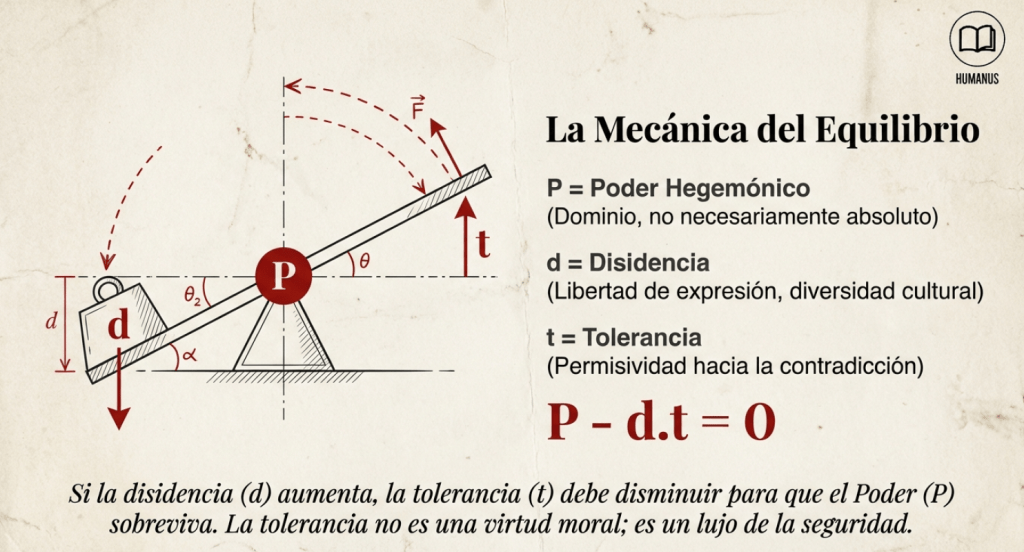
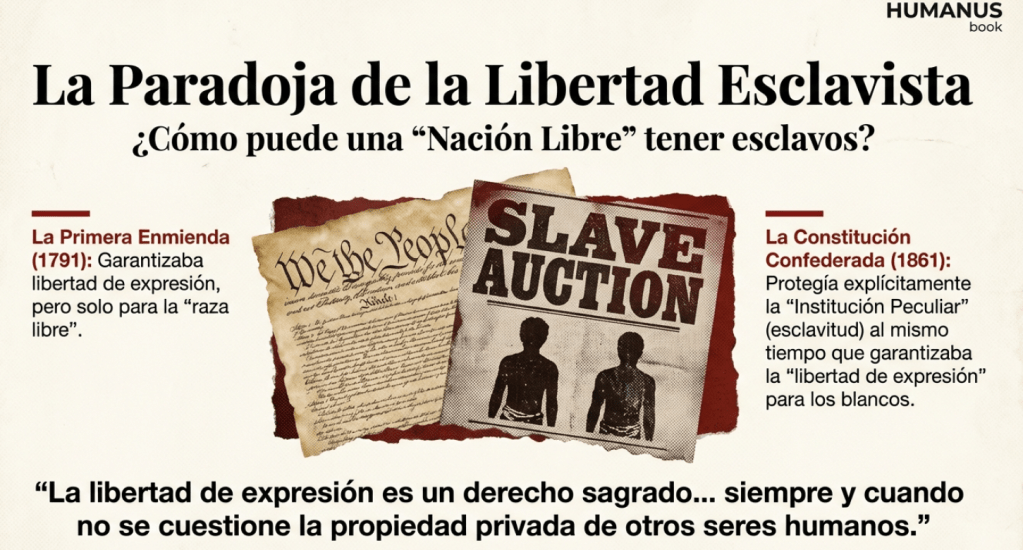
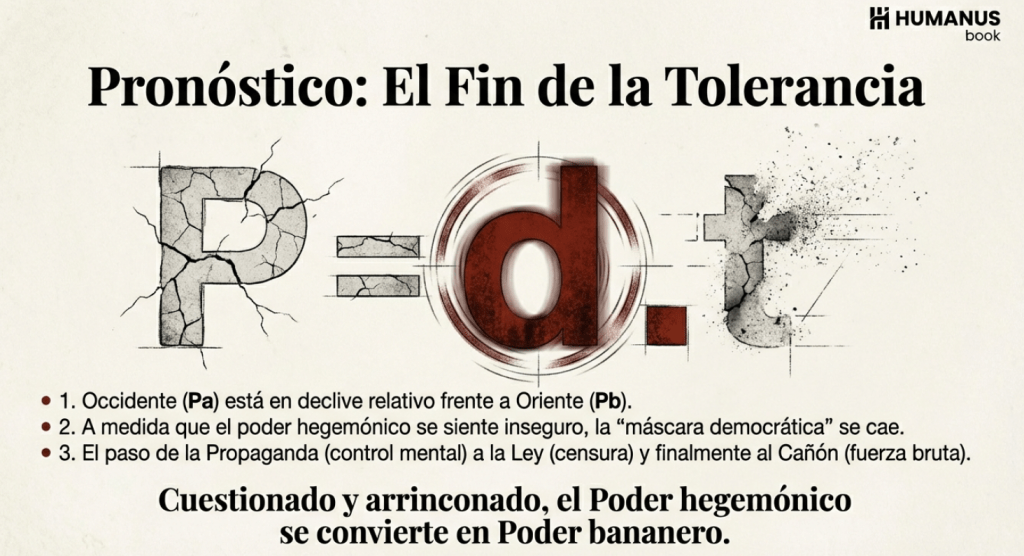


























 Escritos Críticos
Debe estar conectado para enviar un comentario.