Dos equipos de estudiantes de Jacksonville University han sido seleccionados como finalistas en el Desafío de Aterrizaje Humano de la NASA. El objetivo de esta competencia nacional es desarrollar soluciones innovadoras para el almacenamiento y la transferencia de combustible criogénico en el espacio, lo que podría ayudar a la NASA en sus preparativos para enviar astronautas de regreso a la Luna y, eventualmente, a Marte con su nuevo programa Artemis. Jacksonville University es la única universidad que tiene dos equipos finalistas. Cada equipo recibirá $9,250 para perfeccionar sus conceptos antes de presentarlos a la NASA y a líderes de la industria en Huntsville, Alabama, en junio.
Jill Stein In conversation at Jacksonville University
Prof. Richard Mullaney: Thank you for coming out for this event, we’re very privileged to have a presidential candidate. The Institute Policy Institute on behalf of Jackson University President Tim Cost, the Board of Trustees, Jackson University and the Stein College of Fine Arts and Humanities want to welcome all of you to this very special conversation and a warm and special welcome to Doctor Stein, who is running for President of the United States as the candidate for the Green Party. By the way, election date is just over 60 days away. A truly historic election.
We’re very pleased to have Dr. Stein on campus. She is a physician. She went to Harvard for undergraduate school, graduating Magna Cumulate. But I would like to mention that cause we believe in great academic standards here at Jackson University too. She went on to Harvard Medical School. She was a practicing physician, and in the 1990s she began to notice that the toxic exposure, the link of toxic exposure, was having a tremendous impact on health, illness and well-being. And she began a career in addition to being a physician and that is as an activist –at the Public Policy Institute, we call this somebody interested in public policy. And she became to advocate and advocate in a number of areas. And I’d like to outline a few of those for you. In the 1990s, she began, and this has continued into this very day, fighting for a healthy environment and the closure of toxic facilities and improving air quality standards for coal plants. That included, by the way, and she was in Massachusetts at the time she helped lead the fight to clean up the filthy five coal plants in Massachusetts. She helped close a toxic medical waste incinerator. In Lawrence, MA, which is one of the poorest communities in New England she saw, by the way, she became a big advocate for campaign finance reform when she saw the effect that lobbyists and campaign contributions were having on health, environmental and worker protection. And she used that, and she worked to help pass the clean election law by voter referendum in Massachusetts. Doctor Stein Co-founded the Massachusetts Coalition for Healthy Communities, a nonprofit organization that fought for health and the well-being of Massachusetts communities, including healthcare, local green economies, Environmental Protection, labor rights, and grassroots democracy. She also helped lead the effort to secure a green future ballot initiative to move subsidies from fossil fuels to renewable energy and to create green jobs. These are just some, and they continued to this day with that passion for what we’d like to call “public policy” and others call “career activism,” no surprise that she would run for elective office. And by the way, she became the green rainbow party candidate and running for Governor of Massachusetts in 2002 and 2010. Unsuccessful in those bids, ran as a third party and then as many of you may. She ran for president in 2012. That was year Barack Obama won, getting about half a million votes. She ran again in 2016, the year Donald Trump won, getting about 1.5 million votes and been very successful this year in 2024 and getting on the ballot because remember how this is done? This is done in 50 states. It’s an Electoral College you need to be on the ballot of all 50 states, getting a very favorable ruling from the Wisconsin Supreme Court recently, that’s allowing her to stay on the ballot in Wisconsin, a whole separate conversation we can have as to why some parties might spend millions of dollars to keep people off ballots when in fact it’s so hard for third parties to get on ballots. But what’s important for this election and in many elections, the swing states. Is being on the ballot and the Big Blue wall, which is Wisconsin, Pennsylvania and Michigan, very important areas for the outcome of this election as well as Arizona and Nevada, North Carolina.
I think working towards Georgia, all that’s a long way of saying that doctor Stein could have a very significant impact both in policy and otherwise, and this year’s presidential race, and we are very pleased to have this discussion led as you just heard by Doctor Jorge Majfud, who teaches International Studies here at Jacksonville University. So, I hope all of you will join me in welcoming Dr. Stein and Professor. Food for this great conversation.
Jorge Majfud: Jill, thank you for accepting our invitation to come to Jacksonville University. I didn’t plan this, but we have to start with very bad news. Few minutes ago, we learned that a new shooting in a school in Georgia between Athens and Atlanta, I think it is called Apalachee High School, where four people were killed, two teachers and two students. This is, unfortunately, a never-ending story that is in some way connected to our conversation today, for example, connected to the lobbies problem. Would you like to comment briefly about that tragedy?
Jill Stein: Sure. This news about the school shooting in Georgia is absolutely tragic. Both the loss of life and the fact that it’s a 14-year-old child, apparently now in custody for doing the shooting. So, this is just a tragedy upon. Entity and the fact that this is so commonplace now in the US that we’ve had at this point, I don’t know what the number is, but it’s lots of mass shootings. It’s lots and lots in spite of the strong feelings of the American people who want common sense in gun control. The Second Amendment is here to stay, at least for the foreseeable future, but the American people want action, common sense action which has enormous support for things like an assault weapons ban, the ban on further sales, and a voluntary buyback program for waiting periods; for raising the age of purchase, for closing the so-called gun show loopholes, for red flag laws that clarify when gun owners are in a very dangerous position at risk for doing harm to others or to themselves. There are many things that we can do to reduce gun violence within the limits of the law, and unfortunately, we have, you know, we have very powerful interests, in this case the NRA, but there are many other examples of powerful lobbies who basically buy their way into either action or, more commonly, non-action to prevent the passage of laws that are broadly supported by the American people. I would add that it’s not only the power of lobbyists, but it’s the very essence of our political system which is bought and paid for by very big money. And it’s well established that laws that move policies that actually get passed in the US Congress are those that have the support of very powerful financial interests. There was a study done at Northwestern and Princeton maybe 10 years ago, something like this, a definitive study of decades worth of policy which established very clearly that there is a near zero relationship between what the public’s priorities are and what Congress actually passes. So this great tragedy that we’re hearing about today, which is so commonplace, which could be greatly reduced is, unfortunately, the rule and not the exception for how laws either get passed or don’t passed and whose interests are elected officials are serving in the current political climate, and I should just add, you know, that’s part of the reason why the Green Party exists. That’s why people like me run for office outside of the system of big money politics so that we can have policies that actually meet the needs and the really strong, urgent interests of the American people because we don’t take that money. We do not take corporate money. We do not use the loopholes like Super PACs, for example, which allows single donors to pour in millions, actually unlimited amounts of money, so-called dark money. There are many ends runs around the rules of campaign finance, so-called “victory funds”, which began, I think, with the Hillary Clinton campaign in 2016 that allow a single donor to write one check, for now it’s up to $1,000,000. A single donor can write $1,000,000 check for the presidential campaign and that money basically gets directed to that campaign, even though the laws according to the Federal Election Commission limit donations to $3300 per election cycle. That’s not a small amount of money, but it’s a very small amount of money compared to $1,000,000 and more. If you’re going through super PACs. So again, we have the best democracy money can buy, which is no democracy at all, which accounts for the fact that policies are being sold right out for. Under us, and it’s commonplace for our elected officials to be taking marching orders from their big donors and from the parties that survive on that big donor money rather than meeting the interests of the American people.
Jorge Majfud: You mentioned the Second Amendment. You know, the American Constitution is so old that it’s like a religious text. So, it’s a matter of interpretation. “A well-regulated militia.” What does it mean? In the 30’s, the Supreme Court had a completely different interpretation to the current interpretation of what that line means. And that was basically due to the NRA lobbies that began in the 70s. So it’s basically a matter of interpretation and regulation. You don’t even need to change the constitution, but to regulate it. In an airport, the Second Amendment doesn’t apply. Now, many journalists in different countries asked me a very, very simple question. They ask, how different is the Green Party or this Green Party from the Twin Parties, Democrat and Republican?
Jill Stein: You know, I think the overarching difference between the Green Party and the establishment parties you know, really is the money and who therefore pulls the strings, and you know, that’s kind of like the overarching framework. But what that then results in is the fact that Greens can advocate to meet the really urgent needs. Of regular, everyday people. We’re not out there fighting for what the lobbyists want. We’re out there fighting for what regular people want. So what is that? It’s things like healthcare as a human right for every. One, you know, we have a continuing crisis here in the US in spite of the passage of the Affordable Care Act, healthcare is still not affordable. It’s far from it. Even if you are getting your healthcare through the Affordable Care Act, it’s a very tough road to hoe. And it’s somewhere around the numbers are now somewhere around 60 million Americans who do not have adequate healthcare, who either are uninsured, or they’re not adequately insured yet. We could have a system like expanded improved Medicare for All, which basically covers everyone comprehensively. It covers your mental health, your dental care, your eyeglasses, your hearing, and your chronic care. If your parents were you or a child need chronic care at home that’s actually covered. Under Medicare for All, it’s not covered currently, unless you spend yourself into poverty and then you can get covered under Medicaid. But if you have chronic conditions, it’s very hard right now. For example, if you get a diagnosis of cancer, the answer is the odds are more than 40% that within two years you will have spent down your life savings and may even you know, lose your house on account of just taking care of your cancer. So, the Greens advocate for healthcare for everyone. As a human right and, by the way, through Medicare for All, it actually saves us half a trillion dollars a year because when you have only one insurance provider instead of hundreds of them. You save so much money on the bureaucracy and the red tape right now we need a whole army of bureaucrats just to figure out what insurance company is going to cover you or not cover you for everything that you need? If you go into a hospital and you need an aspirin they ask, does your insurance company cover the aspirin? And how much of the aspirin do they cover? I mean, it’s minutiae like this that we are spending actually one out of every three healthcare dollars. Now for just the bureaucracy in the red tape. Medicare does away with all of that instead of a 30%. Overhead, it has more like a 3% overhead. So, by consolidating those administrative expenses, we can actually expand healthcare to cover everyone and still have half a trillion leftover. That’s one of the main issues for Greens.
Another one, is the endless wars, the endless wars which are actually costing us? Half of our congressional dollars right now are being spent on the endless war machine, so it’s about a trillion dollars a year. We advocate for cutting that at least 50% right now. We’re spending more than the next 10 biggest spenders combined. And what does that get us? It gets us a lot of interventions. We’ve sent the military in 250 times in the last 30 years. That’s according to the Congressional Research Service, you know, and it’s trillions of dollars that we’re spending on major war after major war, which are not making the world a safer place. Don’t make us safer. Get us embroiled in all kinds of conflicts that we should not be involved in so. That’s another place where we differ, we say cut the military budget. Let’s have an actual defense policy rather than an offense policy. And let’s put those dollars into true security here at home, ensuring that we have the healthcare, the quality schools, the education.
I should mention we also call for a public higher education. As a human right covering that for free, which was done in my day in my higher education, was a public higher education either free or just about free. We call for bailing out the students who are locked into virtually unpayable student debt. We call for paying that off as a major public investment to unleash incredible, you know, productivity. In our economy, we know from the GI Bill, every dollar that we spend on higher education is returned sevenfold back into the economy, from what we get out of that investment.
And I’ll just mention one other thing about Greens aside from our, you know, environmental policies and all that, which maybe I’ll go into later, but we also call for addressing the housing emergency. We have an absolute housing crisis in this country right now, where half of all renters are spending 30 to 50% of their income, which is almost impossible. People are severely financially stressed trying to keep a roof over their heads. We call for rent control and on a federal basis right now to stabilize rents. We call for ending the power of private equity to buy up housing right now and basically just hanging on to it in order to drive the cost up and lower the supply of housing. We also call for a tenant Bill of Rights so that you cannot be evicted simply because your landlord wants to upgrade and drive the rent up and gentrify the neighborhood. And we also call for so-called social housing back in the Clinton administration, Bill Clinton passed a bill called the Faircloth amendment, that ended public dollars for public housing. It basically ended the institution of public housing and allowed it to basically degrade over, you know, the coming decades, so that there’s very little public housing and the quality has been just really devastated over the years. We call for investing again in public housing. And as a social good, we call for housing as a human. And right in the same way that healthcare should also be a human right, these should not be allowed to be profiteered into absolute unaffordability and create the crisis that we have for a reasonable investment we can create. We actually call for 15,000,000 units of. Affordable public housing, which is high quality, which is built according to integrated green principles. Meaning, they’re very energy efficient. They are provided with public transportation so that they don’t add to, you know, the problems of sprawl and pollution and traffic congestion and all that protects green space through concentrated housing and include. Green space as an essential component of healthy communities and healthy housing. People are much healthier if we have access to green space and recreational space.
Jorge Majfud: We are going to go back to the plutocracy problem, but we still have a structural problem with the electoral system.
The current electoral system is very indirect and rooted in the legacy of slavery. States like California, Texas, and New York require twice as many votes as Alaska or Mississippi for each elector, undermining the democratic principle of “one person, one vote.” Additionally, every state, regardless of population, elects two senators so sparsely populated states like Alaska (with less than one million people) have the same Senate representation as populous states like California ―with 40 million people.
Currently, the real third party in the U.S. is the Abstention Party, with about 80 million eligible voters not participating in the 2020 election. Biden received 81 million votes. Many feel their vote doesn’t matter in solid red and blue states. For instance, in California, Biden got 11 million votes to Trump’s 6 million. Even if 3 to 5 million people voted for a third party, it wouldn’t change the elector distribution due to the winner-takes-all system.
Jill Stein: A great point. You know, the question is really, how do we create a real system of democracy when there are so many things in our system right now which are quite anti-democratic and you know, that includes not only the Electoral College. It includes the first past the post system, which gives all the Electoral College votes to whatever candidate gets the largest chunk, and it may not even be a major purity. It is the ballot access laws that make it very hard by design, for other choices to appear on the ballot. And we know that the American people are really hungry for more choices. We see this in poll after poll. There’s a poll that’s run by Gallup every year that asks people you know, are they satisfied with the two-party system? Or do they see the need for another option? And that number keeps going up and up. It’s now at a record 63% of Americans who say yes, we really need another major political party because the two that we have are doing such a bad job of responding to the public interest. So, you know, there are there many things that contribute.
This crisis of democracy is the difficulty, even getting on the ballot to be a choice for the American people who are saying yes, we need more choices. That is part of the crisis you may have seen some coverage in the news recently about the challenges. To our ballot lines, we are fighting to provide another choice in this election, a choice which is Antiwar, Anti Genocide, pro workers. Addressing the climate emergency, things that are not actually dealt with at all by the other campaigns, and we’re fighting to get into the public discussion, because if you just leave it to the two major players, they’re not going to mention.
You know these issues about the genocide, about the endless war machine that’s robbing us blind about the climate crisis. You’re not hearing them talk about that, not at all. And the Democrats in particular claim to have solved the problem, but they’re not solving the problem in the least. Maybe we’ll get to that later. But they, you know, they provide lip service without actually solving the problem.
We know, for example, that both Joe Biden and Barack Obama broke all records for fossil fuel emissions and for exports and made the US the leading producer of fossil fuels at the same time. That they’re claiming to be the friends of the climate well. No, it doesn’t work that way. The climate actually doesn’t care about renewable energy. People do, but the climate doesn’t. The climate really cares about fossil fuel production, and the Democrats have been every bit as bad as the Republicans. In fact, have exceeded Republicans, both in extraction on public land and the sales of public land for the purpose of fossil fuel extraction, and also for actually the emissions, so this problem is not getting solved at all and that’s why you know fundamentally we are fighting to be on the ballot so that we can offer a choice. We also address the, you know, the the crisis of democracy. In our system, one of the things I didn’t mention was the role of money in politics, which has totally gone off the charts. You may have seen at the Democratic National Convention. Currently coverage by actually it was Chris Cuomo on News Nation if you saw…
Jorge Majfud: Yes, I did. Chris Cuomo mentioned the suites that were in the upper ring of the Chicago Bulls stadium, which cost between $500,000 and $5 million each.
Jill Stein: Each!
Jorge Majfud: Those are the donors to the Democratic and Republican parties. Meanwhile, Kamala Harris was talking about regulating the rich and taxing their earnings. I guess they were laughing…
Today the New York Times published a report that shows that in local elections in the US, they mentioned 27,400 local elections, and out of those, 14,400 cases had only one candidate on the ballot. That is a single party candidate, mostly Republican. The report mentioned Missouri, for example, but that is also connected with plutocracy, something we can call, instead of democracy, demo-crazy.
The post-Civil War mega-corporations continued the legacy of the slave corporations. 1888 President Rutherford Hayes complained: “The real difficulty is with the vast wealth and power in the hands of the few… Hundreds of laws of Congress and the state legislatures are in the interest of these men and against the interests of workingmen… This is a government of the people, by the people, and for the people no longer. It is a government of corporations, by corporations, and for corporations.”
In 2010, the Supreme Court held that corporate funding to parties cannot be limited under the First Amendment and that these limitless donations can sometimes be kept secret.
According to a 2016 USA Today investigation, thousands of laws passed by state legislatures were “copy and paste” of texts that congressmen received from big corporations. Another proof of legalized corruption, which may explain why, from 1975 through 2018, 90 percent of Americans transferred the equivalent of two USA economies to the top one percent.
It looks like a Political Democracy trapped in an economic dictatorship. How could ordinary people or a Third Party change that long and powerful tradition of legal corruption?
Jill Stein: Great. I mean, that’s kind of the $24,000 question. How do we ever change this, when the system is so locked down? And I want to come back to that in just a second. But, as evidence of how hard it is to change is the fact that, you know, the Democratic Party announced back in March that they had hired an army of lawyers to throw competitors like myself off the ballot. And Robert Kennedy Jr., and Cornell West. You know, they’re trying to throw their competitors off the ballot by hiring lawyers to basically conduct law fair, which is essentially looking for little technical gotchas, violating the spirit of the law and finding little ways to block their competition, which is extremely anti-democratic from the get-go. They didn’t stop there though, and they’ve challenged us in three states so far we’ve prevailed. We’ve been able to fight them in court and to win and secure our ballot status. So far in these three states. One more challenge to go right now, but they also started advertising for infiltrators and spies, and we actually have that job posting to manage infiltrators and spies in order to wreck our, you know, our ballot access drives. And they also hijacked our public funding. There’s just a little bit of public funding right now that was part of this system to create an alternative to corporate funding. So, candidates wouldn’t have to sell their souls.
That program still exists. We are one of the few candidates and parties that actually use it. They were to have provided us with about $300,000 almost two months ago for part of our ballot access drives and they refused to provide that money. They found a technical excuse basically to hang on to it. We may be getting it in coming weeks, but they. Blocked it also to make it even harder to get on the ballot, you know, so and this is the Democratic Party.
Let me just describe one other thing that they did. This was in 2020-22 where they impersonated the Green Party and they called up people who had signed the petition of one of our candidates running for Senate in North Carolina in 2022, running at the federal level for Senate, and they called people who had signed his petition and told them that they were the green. Party. They weren’t the Green Party. These were people being managed by the Democratic National Committee. The DNC [Democratic National Committee] hired people to basically fraudulently misrepresent themselves as saying that they were the Green Party and they wanted names taken off the position because they decided they didn’t want this guy running for office anymore, but they happened to call the Co-chair of the Green Party. And tell him that they were the Green Party and would he please take his name off the off the ballot petition and he had the presence of mind to record the conversation, which was then brought to court and the Democrats were convicted and found guilty of so-called operating with dirty hands. I don’t know why they don’t call that fraud and election interference. I mean, we talk about election interference from foreign power. Is based on tweets. How is it not election interference when you’re fraudulently misrepresenting yourselves in order to get candidates taken off the ballot, so you know the bottom line here. Is that people always talk about the Republicans and how they interfere with democracy after the election? Well, the Democrats also do it in advance of the election. They do it. Honestly, and you know, it’s not like we have to wait for Donald Trump for fascism to get here. We have fascism, authoritarianism, wherever you want to draw the line. But this is completely anti-democratic. And you know that is being done.
So back to your question, on how do we ever solve this problem? They’re in charge and they have control over the airwaves. They have control over mainstream, you know, but they don’t have perfect control. Put it that way. And they especially don’t have control over social media. In the year 2020, as you pointed out, it was one out of every three eligible voters who did not vote because they didn’t buy what was being rammed down their throats the candidates. Back in 2016, the numbers were even higher. It was more like 40, 42 percent of eligible voters, something like that. It was a higher percentage that was not voting. So, the American people are not happy and they are looking for other options, and the question is, when is that tipping point going to be hit? Because right now people are struggling. Against incredible economic and racial disparities. A younger generation has basically been locked out of survival. Polls of young people now under age 25, half of young people, say that they are hopeless about the future, and 1/4 of young people are actually saying that they’ve contemplated harming themselves within two weeks of the poll.
Things are that bad and not going well when you have two major parties who are bought. Paid for by the war machine by Wall Street, by the health insurance and Big Pharma. When they’re running the show, it’s not working for ordinary people, and ordinary people have really reached the end of their rope. Over 60 per cent of Americans are living paycheck to paycheck and are not happy about it. So, the question is, when will we break through in this race? You know, because the genocide is a red line for many voters who are saying they’re not going to hold their nose and vote for genocide, not with either party.
We’re seeing a whole lot of interest and organized power coming into our campaign and into the Green Party now, which suggests that maybe we’re getting to a tipping point. Because the genocide doesn’t stand alone. It’s part of this very overblown military industrial complex which is robbing us blind and depriving us of the things that we really urgently need right now. It’s anybody’s guess what will happen in this election.
A poll was just released (I think three days ago) of Muslim American voters showing that I am tied with Kamala Harris now. Basically, the vote is divided between the two of us. This is absolutely unprecedented and represents a huge drop-in support for the Democrats. Arab Americans and Muslim Americans are taking the genocide very seriously because they are up close and personal to what’s going on. Americans in general are personally impacted by the squandering of our tax dollars on the endless war machine and the failure to actually provide health care and housing and quality education, things that. Countries far poorer than us, you know, have a better shot at than we do here in this country.
I just want to make the point that this is a moving target right now and to quote Frederick Douglass, “Power concedes nothing without a demand, it never has, and it never will.” So that’s number one. If we don’t stand up for what we want, we’re never going to get it and people are forever being intimidated out of voting for what they want, whether it’s peace in Palestine and Israel, whether it is cutting the war budget and putting that money into education here, people are forever being told “No, don’t vote for what you need. Vote for whatever the power that be tell you to do.”
The question when are we gonna break away from that? Well, the companion to the Frederick Douglass quote is Alice Walker saying, “The most common way people give up their power is by thinking they don’t have any.” If you add up the number of people who want to end the genocide right now, the number of people who are locked into student debt, that’s 44 million. The number of people who are struggling with their healthcare, and that’s about 60 million. Right now, you have more than the numbers needed to win a three-way presidential race, so you know, in my mind the answer to that question about how do we break through the most critical thing is for us to exercise the courage of our convictions and to flick the switch in our own minds. From being powerless, which is what we’re told all the time to being powerful to actually having the power to cast our votes and stand up, whether it’s five percent or whether it’s 51 percent, you have to start from where you are and build from there and not be intimidated out of your power. Power in democracy is our votes. If we’re not using our votes, we’re basically contributing to the shutdown of our democracy.
Jorge Majfud: Some of us are waiting for a new 60s in the next decade that maybe more or less what you are suggesting. You know, civil rights movements, etcetera. However, in the last 20 years, we have been moving towards the Middle Ages and now in a more conscious way. Some people, particularly in the Republican Party are more in favor of a Dark Illustration. That is a reversal of the equality principle of democracy and certain ideals of the Illustration. That brings me to another topic, which is freedom of speech and education. That’s very important, particularly here in Florida.
In June 2021, General Mark Milley responded in Congress about the Critical Race Theory and the accusation of being “woke”: He said: “I’ve read Mao Zedong. I’ve read Karl Marx. I’ve read Lenin. That doesn’t make me a communist.”
In 2021-22, just 11 people were responsible for filing 60 percent of thousands of book challenges. Thousands of books were removed from schools and libraries. Even topics or words like gay or slavery have been limited when not directly silenced. For freedom, the most devastating effect is not only censorship but self-censorship.
On August 2, Rey Rodrigues (Chancellor of the Board of Governors of the State University System of Florida) emailed every Florida public university and college to “review relevant course resources such as textbooks … for either antisemitic material and/or anti-Israeli bias.” Gonsales wrote: “Any course that contains the following keywords: Israel, Israeli, Palestine, Palestinian, Middle East, Zionism, Zionist, Judaism, Jewish, or Jews will be flagged for review.”
Some people and parties win elections by repeating freedom, freedom, and freedom ―but once in power, they practice ban, ban, and bang.
Why this open attack on academic freedom? Are we finally moving from making free speech irrelevant (like during Slavery) to censoring it directly, in the name of freedom?
Jill Stein: That’s a great question. Why this attack on academic freedom, you know, in the form of banning books and banning ideas… The statistic you pointed out is really incredible, that just 11 people were responsible basically for banning 60 percent of the books that were banned. I mean, it’s still just shocking. That tells you how incredibly, you know, anti Democratic this whole regime is.
Jorge Majfud: Florida is epicenter, and Texas as well.
Jill Stein: I want to connect the dots here because it’s not just books that are being banned and ideas that are being banned. You know, we saw with the assault on Julian Assange that went on for about 14 years, an absolute assault on freedom of the press. We’re looking at an assault on freedom of speech. And the right to protest, which is also under fire, both on campuses as well as you know out there in the world. We’re looking at a ban on basically on political discourse as well. Just yesterday, we were in Tampa, where the so-called Uhuru movement, which is basically a left African American group, is being charged essentially as a “foreign agent,” that to criticize US foreign policy is being a foreign agent. No, I don’t think so.
These are like, lifelong, deeply held beliefs of these activists who are now being threatened with 15 years in jail, for participating in elections and running on their beliefs. I had the same challenge thrown at me in 2016 for basically standing up on the issues. You know, for being an anti-war candidate for being an anti-nuclear candidate on a pro-peace candidate I was accused of being a Russian. Is that mainly because that was politically convenient? It was a politically convenient charge that was essentially issued by Hillary Clinton and the DNC, who were trying to marginalize me by trying to brand me as a Russian asset. I was investigated for three years by the Senate Intelligence Committee. Because of that and essentially, you know, eventually I proved my innocence, which is ridiculous to have to prove your innocence. You’re supposed to be innocent until proven guilty. But the tide is turned when you have a political accusation.
Jorge Majfud: Sounds like McCarthyism.
Jill Stein: McCarthyism, exactly. This is a new kind of McCarthyism, which is very full blown. And that’s what’s happening on campus. This is what’s happening politically. This is part of the effort of the Democratic Party now to shut down its political opposition. This is not what democracy looks like. This is the opposite of democracy. This is why, in my view, we don’t have to wait for Donald Trump to see fascism growing in this country when we have the Israeli Defense forces training our local police all across the country in these very vicious and horrific abusive tactics for policing. This is going on not only at the cop’s city in Atlanta, but there are also about 80 such cop cities. That are under construction now across the whole country. Unbeknownst to many people, the draft is also back. It’s not been activated, but the database is up to date and if you have kids between what 18 and 25, they are registered in that database and Uncle Sam’s knows where you are. We are being essentially railroaded into this very militarized economy. A very militarized society. And the price we pay is our democracy and our right to free speech, the right to protest. The reason Julian Assange was targeted is because he exposed war crimes, torture, abuse and corruption. This is the role of journalism. That’s what the press is supposed to do. They’re not supposed to be lap dogs to power. They’re supposed to be watchdogs to power. But we’re in a situation right now where we’re seeing incredible abuses of power, and that includes this assault on our First Amendment. Our 4th Amendment rights and our right to privacy and our basic constitutional protections are under assault. The American people do not like this. Do not want this. Want this to be debated.
This is another reason why we are fighting to be on the ballot and to be in the debates and in the discussion and covered by the media. Because the basics of our democracy, our economy, our environment are being sold out from under us to the highest bidder. This is a very dangerous situation for all of us, and what’s going on with the banning of books, unfortunately, is just one detail in this larger situation. If democracy prevails, we will roll all that back. Because it does not have public support, but in the same way you made the point that we’re, I think you said, a plutocracy, we are ruled by the very few and the very rich because our political system is bought and paid for. This is a crisis, as money has been more and more concentrated into fewer and fewer hands, to wear the richest three people in the US now have as much money as 50 percent of the population. So, wealth and power are very concentrated and in the words of the famous Supreme Court Justice Louis Brandeis, “we can have democracy in this country, or we can have great wealth concentrated in the hands of the few, but we can’t have both.” Unfortunately, in this country we have chosen vast concentrations of wealth. When wealth is concentrated into very few hands, it finds ways to buy power and to basically. Through legalized forms of corruption, and sometimes not so legalized to buy its way to ever greater power, we are in the crisis of that moment right now, and it’s absolutely unsustainable and unsurvivable now to the majority of the American public. And the question is when are we going to have a real debate? About this and set it right that. What happened? The minute our democracy is unleashed, that’s not going to happen from the two political parties that are now running the show, we need to open up our democracy and have more voices and more choices so that the American people can actually have a fighting chance.
Jorge Majfud: After the U.S. took over more than half of Mexico’s territory―from Texas to California―to expand slavery where it was previously illegal, expansion halted at the Rio Grande. This was to avoid incorporating areas heavily populated by what congressmen of the time considered «inferior races.» Instead, the U.S. established protectorates and military bases in Latin America.
In the 19th century, Washington conducted thousands of military interventions in Latin America to teach the N-people to govern themselves. This continued into the 20th century. During the Great Depression, the U.S. withdrew marines from some “banana republics” but left behind its local psychopaths in their governments, dictatorships that lasted for many generations.
During World War II, Washington neglected Latin America, which is why that region recovered a dozen democracies. But, just born, the CIA replaced the N-word with communists in every speech. Once again, Washington sent tsunamis of dollars to finance Latin American armies and coups.
In 1959, Senator John F. Kennedy said in Congress: “I don’t think giving this aid to South America is to strengthen them against the Soviet Union… (This money) is down the drain in a military sense, but in the political sense we hope they make effective use of it.”
President Nixon confirmed that idea in 1970; “I will never agree with the policy of downgrading the military in Latin America. They are power centers subject to our influence. The others (the intellectuals) are not subject to our influence.”
By the 1970s, a dozen democracies in Latin America had been lost, transformed into bloody military dictatorships (when not “obedient democracies”), guardians of American corporations’ “freedom of enterprise” and their accomplices, the Latin American oligarchy.
This story never ended; today, it is practiced in other ways.
What would be a Green Party Foreign Policy?
Jill Stein: The Green Party foreign policy would be very different. Just to add to what you were describing about what US foreign policy looks like actually. Since the Second World War, there have been approximately 70, 75 regimes change operations covert conducted largely by the CIA and by the US regime change operations like overthrowing the democratically elected government of Guatemala in order to prevent a land reform, which the United Fruit Company did not want. They did not want to be land reformed out of their monopoly over the land, which was basically starving the peasants. So, you know, the CIA came into the rescue and overthrew that government and installed one of their own. Same thing in Iran around the same time in the in the early 1950s, where the democratically elected government of Iran was going to nationalize the oil and use the oil supply of Iran for the Iranian people and the US and the UK came in and overthrew Mosaddeq and installed the Shah, a brutal dictator who was there for basically generations, a cruel and vicious dictator who was there essentially until the Islamic revolution overthrew him. The point here is that when the US has come into mess with, other sovereign nations, we create an incredible mess that lasts for a long time, and this blows back at us as well through global instability through failed states, like in Libya, where there are open air slave markets after US and NATO intervention. Arter overthrow Gaddafi in Libya, you have mass migrations as people flee the desperate conditions of their countries and continuing terrorist threats, it resolves nothing to basically overthrow governments and install violent dictatorships.
It’s a disaster. So, the Green Party would have none of that. We would move from a foreign policy based on currently on military might and economic domination and neocolonialism. We would move from that to a foreign policy based on international law, human rights and diplomacy, and use that as our guide and. Not use raw militarism instead of enforcing. This current concept of a monopolar world, a world dominated by the US empire. Instead, we would join with the Community of nations to be a multipolar world living according to the laws of nations, because it will either be the laws of nations or the laws of the jungle.
The US is no longer the dominant economic power, so we are not going nor are we now the dominant military power. So, we need to get with the program and start operating like a mature adult member of the Community, not like the bully in the schoolyard so that we can have a sustainable, peaceful world that will work for all of us.
Because this monopolar, imperial dominated world is actually not working for anyone and is extremely unstable. We have at least three areas now of very serious conflict. Two of them are hot wars, obviously around Ukraine and in Israel Gaza that’s they’re both enlarging hot wars. And then there’s a Cold War that could easily turn hot right now around China and all of these could go nuclear. Not hard to imagine how that could happen. So, we are on a very dangerous trajectory on this imperial notion of US domination. We would leave that behind us and get with the program of a foreign policy based on International Law, Human Rights and diplomacy that we can all live with.
Jorge Majfud: Let’s move quickly to Immigration. Illegal immigrants have much lower criminal rates than US citizens despite having a disproportionate number of young males. Still, every time some of them commit a crime, he immediately makes the headlines, and politicians escalate the criminalization of a vast group that cannot vote and has no lobby.
They don’t know the language or the laws, but they still manage to find jobs, which are crucial for our society. Unlike outsourcing, they produce and consume here and are ready to work from the first day without the usual government investment of 12 or 20 years of education and health care.
We are against illegal immigration but also against the criminalization of a very vulnerable group. Usually, poor, desperate people take Coyote’s 10- or 15-thousand-dollar loans to come here illegally. Why? Because the US immigration laws hate poor workers. In a US embassy, it is better to say you are a lazy, sluggish person with an exciting bank account than a hard worker if you don’t want to be denied a visa.
Besides all that, in proportion, the US is one of the least compassionate countries in the World receiving refugees.
What would be the Immigration policy of the Green Party?
Jill Stein: That the most important thing we can do to fix the immigration crisis is to stop causing it in the first place through regime change operations which need to come to an end, we need to respect the sovereignty of other nations. We need to end the war on drugs by treating. Drug use as a public health issue, not as a criminal issue. And the minute we do that, we pull the rug out from under the drug cartels and their violence, which is also forcing many people to leave their homes. We, on day one, would legalize marijuana and we would begin a program to decriminalize other drugs as well, in order to basically end the power of the drug cartels. We would also address, you know, the economic exploitation; to look at Haiti, for example, where we overthrew the Aristide Government twice, we could then suppress the minimum wage laws which had raised the minimum wage from something like $0.30 an hour up to $0.60 an hour. That was the minimum wage law, which had been passed. We were able to suppress that minimum wage law and push it back down, in order to protect the profits of basically the clothing industry that was making out like bandits with cheap labor in Haiti. These are the kinds of policies that created the instability which is driving people here. You know, if you look at the countries and also, we would end the economic sanctions, for example against Cuba and Venezuela and Nicaragua, economic sanctions that are actually illegal (in violation of international law) and drive incredible instability and drive people to force, you know, forcing them to flee for their survival here…
So number one, we would stop causing the migration crisis in the first place, and greatly decompress the numbers of people who are having to flee here. We would also address the climate crisis, by the way, through a green New Deal here, but also assisting other countries in their efforts to green their economies and cope with the climate crisis because it is drought. That have put millions of farmers out of work that is also driving much of the migration coming here, so we would address.
These drivers, some of them are, can be addressed more quickly than others, like the drug cartels that can be addressed fairly quickly, but not the other issues that will take some time. We want to decompress what’s forcing people to flee their homes, and in addition, instead of spending billions of dollars on a wall, which is completely ineffective. All it does is kill people and kill wildlife and destroy ecosystems. Instead of spending money on the wall, we will spend the money on the immigration attorneys on the civil society supports so that people can be quickly process [they request and] can get their background checks. We can ensure that they’re not allowing people with a history of violent criminal records into the country. We can do those checks expeditiously, give people their papers and then allow them in with papers, so they can go to work.
Because when migrants are actually working, they more than pay their own way in their taxes and, contrary to the mythology that’s being peddled now (particularly by Republicans, but increasingly Democrats as well) migrants are peaceful. They actually make our communities more peaceful and secure. They are not bringing the drugs. The drugs are crossing the border in portals of entry carried largely by Americans, not by migrants.
Also, migrants are our hard working and represent, basically, a huge economic resource. A recent study showed that over the next decade, migrants are worth basically about $7 trillion worth of economic development for the country. So, we can do the right thing by way of, you know, human rights, asylum laws, but the right thing for this country as well, by offloading the drivers that are causing the crisis and by expeditiously processing migrants so that they can go to work and become contributing, vibrant members of our communities.
Jorge Majfud: My last question. Very recently, Mr. Trump have said: “if you want to eliminate Israel, then we don’t want you in our country.” On August 14, you published an open letter stating: “The only way to end this madness is to break free from the twin parties of war and Wall Street and vote Green… to end this genocide and forge a new path rooted in justice for Palestine.” On August 15, Trump blamed “our left-wing media institutions” for the rise of antisemitism.
It looks like we cannot discuss moral values and Human Rights outside the ideological box. Antisemitism, historically associated with extreme right-wing groups, has been on the rise due to a neo-Nazi revival in both the USA and Europe, even before the recent conflict in Gaza. But Mr. Trump blamed “a certain candidate for the president of the United States, which is hard to believe in our colleges and universities…” I think he was talking about you. Who else? Not Ms. Harris, for sure.
How do you respond to these very easy and common accusations? How do you respond to this? Very easy common trap of identifying Zionism. It is Judaism and the antisemitism with anti-Semitism for example. What is going on in Gaza and Palestine?
Jill Stein: Yeah. Yeah. So that’s a common mistake. Take to think that, Zionism and Judaism are the same thing. They are not the same thing. Zionism was actually regarded with a lot of skepticism within the Jewish religion for a long time. It’s only recently that there’s been such a strong focus on Zionism. But Zionism is a political ideology. It is not a religion, and we have a duty, in this country, to look carefully at our wars and the wars that we are sponsoring.
You know, I grew up in the Jewish community, attending a Reform synagogue right after the Holocaust, after the Second World War. And I, my community was coming to terms with the Holocaust, and we came to terms with that genocide by vowing that it would not happen again, not to anyone. In the community as I grew up, it’s not just the perpetrators of genocide that we held accountable. We held accountable the bystanders to genocide, the people who just looked the other way and let it happen, and we vowed that we would never do that.
So, you know, to my mind that’s why I am active in fighting against this genocide in Gaza because it is a crime against humanity. It is a crime against all of us. This is not a religious conflict. Jews, Christians and Muslims. Lived in peace for millennia in Palestine, in Jerusalem. It was only with the arrival of the Zionists that conflict erupted, and that conflict was not just the Zionists against the Palestinians. It was also the Zionists against the Jews and the Zionists against the Christians as well.
There’s a lot of just basic education that needs to take place. Right now, the National Archives of Israel only became available for public inspection and for historians to look at in the 1990s. Starting in the 1990s, there was a whole lot more awareness of what kind of happened, even before Israel was founded. The issue was essentially that Zionists were intent on claiming this land, which did not belong to them. There were other occupants there and having been the victims of a genocide doesn’t make it OK for you then to conduct a genocide yourself. So, this is a readily solved problem. It’s solved by international law and the International Court of Justice has had several rulings on this has, as has the United Nations. Over and over again, the genocide needs to, and the occupation needs to end. Israel needs to withdraw from Gaza and from the West Bank, which they’re also in the process of trying to appropriate now. And the apartheid government of Israel also needs to end, and the ethnic cleansing.
This did not begin on October 7th. This has been the story since before the founding of the State of Israel. This began somewhere around 75 or 77 years ago. This is solved by international law and human rights to look the other way is to basically give a thumbs up to the torture and murder of children on an industrial scale. The issue is not, you know, of people like myself and most Americans, I must say 68 percent of Americans, according to a Reuters poll, who want an immediate end to the genocide. That is not anti-Semitic. To say that it’s antisemitic to object to genocide is like saying that Jews approve of genocide, and to my mind that is the most antisemitic thing that anyone could say.
I feel like it’s being faithful to the highest principles not only of Judaism but of Islam, Christianity, and just plain Humanity to say that we cannot allow this absolutely senseless slaughter for no justification whatsoever to continue. It needs to be stopped and the rules of international law need to be abided by.
We can make this happen with a simple. One call, Ronald Reagan did that when Israel had entered Lebanon pursuing the PLO, which was basically the Hamas of its day. It was the resistance force of its day, and thousands of people were being massacred in Lebanon, and Ronald Reagan picked up the phone and he told Menachem Begin, the current Prime Minister at that time to Israel that hat had to stop, that Israel had to withdraw its troops and had to end the missile strikes and the bombing. It was over that day. Dwight Eisenhower did the same thing. When Israel went into Egypt. We need to do the same thing right now. It’s as simple as a phone call. And if Israel and Netanyahu, who is a war criminal, will not comply, then the weapons are cut off.
It’s actually against U.S. law right now to be providing weapons to countries that are violating human rights, that are interfering with the delivery of humanitarian aid and which are out of compliance with nuclear weapons treaties, which Israel is by having nuclear weapons in defiance of the Non-Proliferation Treaty.
So based on three laws, it’s actually illegal for the United States to be providing military assistance to Israel right now. In fact it is illegal for us not to be doing that right now and on day one, our administration would do that immediately and ensure that this is a disaster not just for Gaza and Palestine. This is also a disaster for Israel, and Israel is mobilizing its neighbors against. People are leaving Israel by the droves. Its economy is a mess. Having a fascist state is not compatible with survival really for any country in this day and age.
Israel needs to begin complying with international law. We can make that happen. We have the power to do that in the blink of an eye. Otherwise, we are normalizing the torture and murder of children on an industrial scale. We are making mincemeat of international law. We are not going to be top dog around the world for very much longer, so we ourselves need international law here in the US to ensure that we have, you know, we have a world that is. Survivable for all of us because, given the weapons that we have. Right now, not just us, but Russia and China and probably Iran too. There’s a lot of weapons out there that can transcend boundaries readily. We cannot feel that just because it’s over there, we’re safe. We are all in the target hairs. We are all being impoverished by this endless war machine, and we are all endangered by it as well. So, we need to step up to the plate and get with the program, start supporting international law instead of tearing it down. And that begins by ending the genocide in Gaza now.
Jorge Majfud conversa con la candidata presidencial de EE.UU por el Partido Verde.
El escritor uruguayo y académico conversó el pasado 4 de setiembre en el auditorio Terry Concert Hall de Jacsonville University con la tercera postulante a la presidencia de ese país. Las críticas sobre los ejes de la política local: sistema bipartidario, inmigración, economía, armas, política exterior, alineamiento con Israel.
Jorge Majfud: Jill, muchas gracias por aceptar nuestra invitación para venir a la Universidad de Jacksonville. No lo tenía planeado, pero tenemos que empezar con una muy mala noticia. Hace unos minutos nos enteramos de que hubo un nuevo tiroteo en una escuela. En Georgia, donde murieron cuatro personas, dos maestros y dos estudiantes. Esta es una historia sin fin que de alguna manera está relacionada con nuestra conversación de hoy, por ejemplo, sobre los lobbies. ¿Te gustaría comentar brevemente sobre esto?
Jill Stein: Si, claro. La noticia sobre este nuevo tiroteo es devastadora, tanto por la pérdida de vidas humanas como por el hecho de que se trata de un niño de 14 años, quien ha perpetrado el tiroteo. Es una tragedia tras otra. Y el hecho de que esto sea tan cotidiano. Cada año son muchos tiroteos masivos. Los estadounidenses tienen sentimientos contradictorios. Muchos quieren un control de armas con sentido común.
La segunda enmienda llegó para quedarse, al menos en un futuro previsible, pero el pueblo estadounidense quiere ver una reacción y muchos apoyan medidas como la prohibición de las armas de asalto, un programa de recompra voluntaria, períodos de espera, un incremento de la edad para comprarlas, terminar con el exhibicionismo de armas, leyes de alerta roja que se apliquen cuándo los propietarios de armas se encuentran en una situación muy peligrosa y en riesgo de dañar a otros o a sí mismos. Hay muchas cosas que podemos hacer para reducir la violencia armada dentro de los límites de la ley.
Desafortunadamente, tenemos intereses muy poderosos, en este caso, el de la Asociación Nacional del Rifle. Hay muchos otros ejemplos de grupos de presión poderosos que básicamente compran su camino para actuar o, más comúnmente, para no actuar, para impedir la aprobación de leyes que son ampliamente apoyadas por la gente. Yo añadiría que no es sólo el poder de los lobistas sino la esencia misma de nuestro sistema político que se compra y se vende con grandes cantidades de dinero.
Se ha demostrado que las leyes que se aprueban en el Congreso de Estados Unidos son aquellas que cuentan con el apoyo de intereses financieros muy poderosos. Hubo un estudio realizado en Northwestern y Princeton, tal vez hace 10 años, un estudio definitivo sobre décadas de políticas, que demostró muy claramente que existe una relación casi nula entre las prioridades públicas y lo que el Congreso realmente aprueba. Entonces, esta gran tragedia de la que estamos escuchando hoy, que es tan común y que podría reducirse en gran medida, es la regla y no la excepción en cuanto a cómo se aprueban o no las leyes y a quiénes sirven los políticos electos.
Debo agregar que esto es parte de la razón por la que existe el Partido Verde y es por eso que personas como yo se postulan para un cargo público, fuera del sistema político del Big Money, para que podamos tener políticas que realmente satisfagan las necesidades y los intereses urgentes del pueblo estadounidense. Porque nosotros no aceptamos dinero corporativo, no usamos los súper paquetes (super PACs) que permiten a ciertos individuos invertir millones de dólares de manera ilimitada, algo que también se llama Dinero Oscuro. Así mismo, hay muchos fondos de las campañas electorales, los llamados “fondos de la victoria” (creo que comenzaron con la campaña de Hillary Clinton en 2016), los que permiten a un solo donante emitir un cheque de hasta un millón de dólares directamente a favor de una campaña presidencial, aunque las leyes, según la Comisión Federal Electoral, limitan las donaciones individuales a 3300 dólares por ciclo electoral. Esto no es una cantidad pequeña de dinero, pero es una cantidad insignificante en comparación con un millón de dólares; o más, si te acoges a un Super PAC.
Tenemos la mejor democracia que el dinero puede comprar, que no es democracia en absoluto, lo que explica el hecho de que los políticos se están vendiendo directamente delante nuestros ojos y es habitual que los funcionarios electos acepten pedidos de sus grandes donantes, en lugar de ganarse la confianza del pueblo.
JM: Mencionaste la Segunda Enmienda. La Constitución estadounidense es tan antigua que parece un texto religioso, expuesto a múltiples interpretaciones. En los años 30, la Corte Suprema tenía una interpretación completamente diferente a la actual sobre lo que significaba esa enmienda. Ese cambio se debe, básicamente, al lobby de la Asociación del Rifle que comenzó en los años 70. Es decir, es básicamente una cuestión de interpretación. Ni siquiera haría falta cambiar la constitución para regular estas cosas. En un aeropuerto, por ejemplo, no se aplica la Segunda Enmienda.
Ahora, Jill, ¿cuál es la principal diferencia en esos aspectos entre los Partidos Gemelos (Demócrata y Republicano), entre el establishment y el Partido Verde? Aparte del dinero…
JS: Bueno, pienso que la principal diferencia entre el Partido Verde y los partidos establecidos es el dinero. Es lo que mueve los hilos en el marco general. Por el otro lado, el resultado de esto es que los Verdes pueden abogar por satisfacer las necesidades realmente urgentes de la gente común y corriente. No estamos luchando por lo que quieren los lobbies, estamos luchando por lo que quiere la gente. ¿A qué me refiero con esto? Me refiero a cosas como la atención médica que debe ser un derecho humano para todos. Tenemos una crisis interminable en este país. A pesar de la aprobación de la Ley de Atención Médica Asequible (Affordable Care Act), la atención médica todavía no es asequible, está lejos de serlo.
Alrededor de 60 millones de estadounidenses no tienen atención médica adecuada, no tienen seguro o no tienen un mínimo adecuado. Podríamos tener un sistema público como un Medicare ampliado y mejorado para todos, que cubra la salud mental, la salud dental, los lentes, la audición y las enfermedades crónicas… Todo esto debería estar cubierto por un Medicare para Todos. Actualmente, no lo está, a menos que millones de personas se quieren gastar hasta el último dólar para que su seguro cubra estos servicios. Si tienes enfermedades crónicas, es más difícil todavía. En la actualidad, cuando alguien recibe un diagnóstico de cáncer, las probabilidades de que en dos años esa persona gaste los ahorros de toda su vida son más del 40 por ciento. Incluso puede perder su casa, simplemente por curar su cáncer.
Es por eso que los Verdes abogamos por una atención médica para todos como un derecho humano. Además, con un Medicare para Todos, nos ahorraríamos medio billón de dólares al año ya que, si hay un solo proveedor de seguros en lugar de cientos, la población ahorraría muchísimo dinero en burocracia. En estos momentos, necesitamos todo un ejército de burócratas sólo para determinar qué compañía de seguros te cubrirá, si te cubre o no todo lo que necesitas. Si alguien va a un hospital y necesita una aspirina, esta burocracia revisa si su compañía de seguros cubre la aspirina y, si es así, cuántas cubre. No estoy exagerando, es con este tipo de pesquisas que actualmente estamos gastando uno de cada tres dólares de atención médica solo en burocracia.
Medicare para Todos eliminaría todo eso y bajaría los gastos generales de un 30 por ciento a un 3 por ciento. Al eliminar estos gastos administrativos, podemos ampliar la cobertura de atención médica y todavía nos sobra medio billón de dólares. Así que, esta es una de las principales cuestiones para el Partido Verde.
Otra son las guerras sin fin. En estos momentos la mitad de cada dólar del Congreso se está gastando en la máquina de las guerras infinitas. Se trata, pues, de un billón de dólares al año. Nosotros abogamos por recortar ese porcentaje al menos en un 50 por ciento. En la actualidad, Estados Unidos gasta más que los siguientes diez compradores de armas juntos. ¿Qué nos aporta todo eso? Nos aporta muchas intervenciones militares.
Según el Servicio de Investigación del Congreso, en los últimos 30 años enviamos nuestro ejército 250 veces a intervenciones militares. Estos son trillones de dólares que nos estamos gastando en guerra tras guerra y que no hacen del mundo un lugar más seguro, ni nos hace más seguros a nosotros. Nos involucramos en todo tipo de conflictos en los que no deberíamos estar, así que ese es otro punto en el que diferimos. Abogamos por recortar el presupuesto militar, tener una política de defensa en lugar de una política ofensiva y destinar esos dólares a una seguridad real aquí en casa y a una mejor atención médica, a una mejor en la educación.
Debo mencionar que también luchamos por una educación superior pública y gratuita como otro Derecho Humano. Lo teníamos en mi época, cuando la educación superior publica era gratuita o casi gratuita. Exigimos que se rescate a los estudiantes que se enfrentan a préstamos estudiantiles prácticamente impagables. Exigimos que estos préstamos se paguen en concepto de una inversión pública importante para liberar la increíble productividad de nuestra economía. Sabemos que por cada dólar que gastamos en educación superior, regresan a la economía siete dólares.
Digo esto solo por mencionar algunas de los temas de los que nos ocupamos los Verdes aparte de nuestras políticas medioambientales. También hacemos un llamado de atención sobre el serio problema con el acceso al a vivienda. Tenemos una crisis inmobiliaria en este país, donde la mitad de todos los inquilinos gastan entre el 30 y el 50 por ciento de sus ingresos. La gente se encuentra en graves dificultades económicas para no perder sus casas. Exigimos un control de los alquileres a nivel federal. Exigimos que se ponga fin al poder del capital privado, de los poderosos private equity (capitales de inversión), que pueden comprar viviendas y mantenerlas vacías sólo para aumentar el costo y reducir la oferta de viviendas. También exigimos regular los derechos de los inquilinos mediante un decreto para que no se los pueda desalojar simplemente porque el propietario quiere aumentar el alquiler a su antojo. Po otro lado, reclamamos la construcción de viviendas sociales. En la administración Clinton, se aprobó un proyecto de ley llamado la Enmienda Faircloth, la que acabó con los fondos públicos para la construcción de viviendas sociales. Básicamente, la vivienda pública institucional fue liquidada, permitiendo que las viviendas sociales se degradaran durante las décadas siguientes, por lo que hoy en día hay muy poca vivienda pública y si existe es de muy mala calidad.
Por lo tanto, exigimos invertir nuevamente en vivienda pública como un bien social. La vivienda es un Derecho Humano igual que la atención sanitaria. No se puede permitir que el capital se aproveche hasta convertir la vivienda en algo absolutamente inasequible creando la crisis que tenemos hoy en día. Calculamos que una inversión razonable serían 15 millones de unidades de vivienda pública asequible de buena calidad y de acuerdo con unos principios ecológicos integrales, lo que significa que serían muy eficientes en su uso de energía, contarían con transporte público para que no sumen a los problemas actuales de expansión urbana, a la contaminación y congestión del tráfico, etc. Así también protegeremos los espacios naturales a través de la concentración de viviendas que incluyan espacios verdes como un componente esencial de las comunidades y viviendas saludables. Las personas son mucho más saludables si tienen acceso a espacios verdes y espacios recreativos.
JM: Tenemos un problema estructural en el sistema electoral, el cual es muy indirecto y se basa en una herencia de la esclavitud. Estados como Texas, California y Nueva York requieren el doble de votos que Alaska o Mississippi por cada elector, lo que socava el principio democrático de “una persona, un voto”. Además, cada estado, independientemente de su población, elige dos senadores, por lo que estados escasamente poblados como Alaska, con menos de un millón de habitantes, tienen la misma representación en el Senado que estados poblados como California, donde viven casi 40 millones de personas.
Ahora, el verdadero partido alternativo es el Partido Abstencionista, con alrededor de 80 millones de votantes elegibles que no participaron en las elecciones de 2020. En esas elecciones, Biden recibió 81 millones de votos. Muchos sienten que su voto no importa en los llamados Estados Azules (Blue States). Por ejemplo, en California, Biden obtuvo 11 millones de votos frente a los 6 millones de Trump. Incluso si entre 3 y 5 millones de personas votaran por un partido alternativo, eso no cambiaría la distribución del electorado debido al sistema “El ganador se lo lleva todo” (The Winner takes it All).
¿Qué tan difícil ves cambiar este viejo sistema para hacerlo más democrático?
Stein: Gran punto. ¿Cómo creamos un sistema democrático real? Hay muchas cosas en nuestro sistema actual que más bien son antidemocráticos. Y esto incluye no sólo a los colegios electorales sino también al sistema mayoritario uninominal que otorga todos los votos electorales a cualquier candidato que obtenga la mayor parte de los votos populares y no necesariamente tiene que ser la mayoría. Es la “ley de acceso a las boletas” (Ballot Access Law) lo que hace que sea muy difícil, por diseño, que otras opciones aparezcan en la boleta de votación. Actualmente la gente está comenzando a reclamar más opciones. Vemos esto en cada encuesta que se publica. Una, realizada por Gallup le pregunta a la gente cada año: ¿Está usted satisfecho con el sistema bipartidista o ve la necesidad de otra opción? Y ese número va subiendo cada año. Actualmente, el 63 por ciento de los estadounidenses dice: “Sí, realmente necesitamos otro partido político alternativo porque los dos que tenemos están haciendo un trabajo muy malo y no responden al interés público.”
Hay muchas cosas que contribuyen a la crisis de la democracia. La dificultad que tiene un Tercer Partido para llegar a las urnas forma parte de esta crisis. Tal vez viste alguna noticias recientemente sobre los juicios contra nuestro acceso a las mesas de votación. Estamos luchando para ofrecer otra opción en estas elecciones, una opción que sea contra la guerra, contra el genocidio, a favor de los trabajadores, y que aborde la emergencia climática, cosas que las campañas de los partidos tradicionales no hablan.
Estamos luchando para entrar en los debates públicos organizados por las grandes cadenas de televisión. Si lo dejamos sólo a los dos actores principales, ellos no van a decir una palabra sobre el genocidio, sobre la interminable maquinaria de la guerra que también nos está robando a ciegas, sobre la crisis climática. No los oímos hablar de eso, para nada. Los demócratas, en particular, afirman que han resuelto el problema, pero no lo están resolviendo y podemos hablar de esto más adelante con más detalle. Al mismo tiempo que afirman ser partidarios de la protección del clima, sabemos, por ejemplo, que tanto Joe Biden como Barak Obama batieron todos los récords de emisiones y exportaciones de combustibles fósiles y convirtieron a Estados Unidos en el principal productor de combustibles fósiles. Pues no. No funciona así.
En realidad, al clima no le importa las energías renovables. Al clima le importa la producción de los combustibles fósiles. Los Demócratas han tratado este asunto igual de mal que los Republicanos. De hecho, han superados a los Republicanos, tanto por la extracción en terrenos públicos como por la venta de terrenos públicos con el propósito de ser usados para la explotación de combustibles fósiles. Eso es porque estamos luchando para estar en las urnas para que la gente tenga una alternativa.
Bueno, estábamos hablando de la crisis de nuestra democracia en nuestro sistema y una cosa que todavía no he mencionado es el rol del dinero en la política que está completamente fuera de control. Tal vez viste la Convención de los Demócratas hace poco, la que fue cubierta por Chris Cuomo, de News Nation…
JM: Sí, la vi. Cuomo mencionó las suites que estaban en el anillo superior del estadio de los Chicabo Bulls, las que costaban entre 500.000 y 5 millones de dólares cada una.
JS: ¡Cada una!
JM: Esos son los donantes de los partidos Demócratas y Republicanos. Mientras, Kamala Harris estaba hablando de ponerle límites a los ricos y gravar con impuestos sus ganancia. Supongo que se estaban riendo…
En relación a los partidos alternativos, el New York Times ha publicado hoy un informe que muestra que en las elecciones locales en Estados Unidos había en más de la mayoría de los casos sólo un candidato en las boletas, en su mayoría de los Republicanos, en Estados como Missouri. Esto también tiene que ver con la plutocracia, la que tiene un impacto en la historia de la democracia de este país.
Los grandes conglomerados que se crearon después de la guerra civil continuaron con el legado de las corporaciones esclavistas. En 1888 Christian Rutherford Hayes se quejó: “El gran problema es la riqueza inmensa y el poder en manos de unos pocos. Cientos de leyes del Congreso son aprobados a favor de estas personas y en contra de la clase trabajadora. Esto ya no es el gobierno del pueblo, por el pueblo y para el pueblo, sino el gobierno de las corporaciones, por las corporaciones y para las corporaciones”. Esta cita es del año 1888.
Según una investigación del US Today en 2016, miles de leyes (mencionaron más de 10.000 de los cuales 2000 fueron aprobados) eran un “copy and paste” de textos que los congresistas recibieron de las grandes corporaciones. Es una prueba más de corrupción legalizada.
Es como que la democracia política se encuentra atrapada en una dictadura económica. Yo veo que, en estas condiciones, debido a la estructura del sistema electoral y por la falta de fondos, es muy difícil que un partido alternativo pueda cambiar esta realidad.
Cómo crees que sería posible un cambio, desde un punto de vista práctico?
JS: Bueno, esa es la pregunta del millón. ¿Cómo podemos cambiar un sistema tan cerrado. Una prueba de lo difícil que es cambiar algo en este sistema es que el partido demócrata anunció en marzo 2024 que habían contratado un ejército de abogados para quitarse encima competidores como yo misma en la urnas. Contratan a abogados para ejercer una guerra legal (lawfare) con cerramientos técnicos, desafiando el espíritu de las leyes y encontrando pequeñas puertas traseras para terminar con la competencia. Estos es un comportamiento extremamente antidemocrático desde el principio al fin. Pero ni siguiera pararon allí. Nos bloquearon en tres estados, pero fallaron dado que hemos sido capaces de combatirles en los juzgados y ganamos las demandas en esos tres estados. Así mismo, empezaron a publicar anuncios para contratar infiltrados y espías que hackeasen nuestro acceso a los boletas. También secuestraron el poco dinero público que nos correspondía, ese dinero que los candidatos no tienen para no vender sus almas al mejor postor.
Nosotros eramos uno de los pocos partidos que realmente utilizábamos estos fondos. Ahora, desde hace dos meses, nos deben unos 300.000 dólares de estos fondos, pero encontraron una excusa técnica para no dárnoslo. Es probable que lo vamos a recibir en las próximas semanas pero el objetivo era claramente bloquearlos para que se nos hiciera todavía más duro seguir en la carrera electoral. Esto es el partido Demócrata.
Déjame contarte una cosa más. En 2022 se hicieron pasar por el Partido Verde y llamaron a mucha gente que había firmado una petición de uno de nuestros candidatos que se postulaba a nivel federal en la carrera al senado en Carolina del Norte. Llamaron a esa gente y les dijeron que eran el Partido Verde. Eran infiltrados de los Demócratas. Querían que la gente se quitara de la petición porque no querían que nuestro candidatos continuara en carrera. Por suerte pudimos grabar una de estas llamadas, les denunciamos y el Partido Demócrata fue declarado culpable. No lo llamaron por su nombre, que es interferencia fraudulenta en unas elecciones. Como no se llama interferencia en las elecciones cuando un partido se hace pasar por otro y pretende representar de manera fraudulenta a otro partido para sacar a ciertos candidatos de la carrera electoral.
Así que sólo quiero recordarles (porque la gente siempre habla de los Republicanos y como interfieren en los procesos electorales) que los Demócratas también lo hacen, y lo hacen antes de las elecciones sin ninguna vergüenza. No tenemos que esperar a Donald Trump para llegar al fascismo. El fascismo ya lo tenemos instalado.
Ahora, volviendo a tu pregunta. ¿Cómo podemos resolver este problema cuando ellos están en el poder y controlan los medios? Bueno, afortunadamente no tienen un control perfecto. No tienen el control sobre todas las redes sociales. Tal como dijiste, en el año 2020 uno de cada 3 votantes no votó porque no compraron lo que los candidatos les quisieron vender. En 2016 los números de votantes que se abstuvieron fue todavía más alto, alrededor de 42 por ciento. Es decir, los estadounidenses no están conformes con lo que hay y están buscando otras opciones. La pregunta es cuándo llegamos al punto de no retorno, porque ahora mismo la gente está sufriendo una gran disparidad económica y racial. Toda una generación se ha quedado a las puertas de la supervivencia. Encuestas recientes muestran que de los jóvenes hasta 25 años, la mitad dice que no tienen esperanza para el futuro. Un cuarto dice que contemplan la opción de atentar contra ellos mismos dentro de las próximas dos semanas.
Está claro que las cosas no van bien cuando tienes dos partidos mayoritarios que han sido comprados por la maquinaria de la guerra, por Wall Street, por las compañías de seguros, por las farmacéuticas. Cuando son ellos quienes se encargan del show, no tienen en cuenta a la gente común. Y la gente común claramente ha llegado a sus límites. El 60 por ciento de los estadounidenses viven de sus pagos mes a mes y, obviamente, no están conformes con esto.
Para muchos votantes, el genocidio en Palestina es una línea roja y dicen que no van a dar su voto a ninguno de los dos partidos por esta razón. Ahora estamos viendo mucho interés del poder popular organizado que apoya la campana del Partido Verde y que surgiere que tal vez ya hemos llegado a este punto de no retorno. El genocidio en Gaza forma parte de ese tremendo aparato militar/industrial que nos roba y que nos priva incluso aquí de las cosas más básicas que necesitamos.
Hace unos tres días se publicó una encuesta a votantes musulmanes que decían que yo estaba cabeza a cabeza con Kamala Harris, es decir que su voto se divide entre las dos candidatos. Esta es la primera vez que pasa y representa un caída enorme en el apoyo a los Demócratas. Los estadounidenses árabes y musulmanes se toman el genocidio muy en serio porque están muy cerca de lo que pasa en esta región. Los votantes estadounidenses en general también se sienten impactados por el despilfarro de nuestros impuestos por la maquinaria de las guerras sin fin y la falta de servicios de salud, vivienda y educación de calidad aquí mismo, cosas que países mucho más pobres que nosotros han solucionado mucho mejor que nosotros.
Así que sólo quiero hacer hincapié que el nuestro es un objetivo en marcha. Citando a Frederick Douglass, podemos decir que “el poder no concede nada si no se le exige”. Si no luchamos por nuestros derechos, no los vamos a conseguir nunca. La gente no puede dejarse intimidar de votar lo que quieren, sea la paz en Palestina o recortar el presupuesto militar para utilizarlo en educación. La gente siempre ha oído, “no votes por lo que necesitas; vota por donde está el poder”. La cuestión es si podemos romper con esto de una vez por todas.
Alguna vez Alice Walker dijo que la mejor forma de perder el poder es pensar que no lo tenemos. Pero si sumas toda esa gente que quiere terminar el genocidio en Palestina ahora mismo o toda la gente que está atada a esa gran deuda que contrajeron solo por estudiar (en total, 44 millones) o la gente que no tiene un seguro de salud adecuado que son aproximadamente 60 millones, sólo con esto tendrías un cuórum suficiente para ganar las elecciones presidenciales.
Así, en mi opinión, la respuesta a tu pregunta de cómo podemos romper este sistema es que necesitamos tener coraje, estar convencidos y cambiar el chip en nuestra propia mente que nos dice que tenemos ningún poder. Eso es lo que nos han contado siempre, pero podemos rebelarnos entender que sí tenemos un poder verdadero para hacer valer nuestras demandas y nuestros votos, ya sean en un cinco o en un 51 por ciento. Tenemos que comenzar a construir nuestro camino desde donde estamos y no dejarnos intimidar. El poder en una democracia son nuestros votos y sin hacer uso de ellos contribuiríamos a la abolición de la democracia.
JM: Muchos esperamos el regreso de unos nuevos Años 60 (y su valentía antiguerra, anticolonialista y por los derechos civiles), pero durante los últimos 20 años nos hemos ido moviendo aún más hacia una nueva Edad Media. Ahora, desde un punto de vista todavía más consciente, sobre todo en el Partido Republicano con Trump y J.D. Vance, muchos parecen más dispuesta dar un vuelco a nuestras creencias democráticas, como la igualdad o los ideales de la Ilustración. Muchos conservadores entienden que debemos movernos hacia una Ilustración Oscura que elimina nuestra igual-libertad de expresión y la educación misma.
En junio de 2021, el general Mark Milley respondió en el Congreso sobre la teoría crítica de la raza y la acusación de ser Woke: “He leído a Mao Zedong. He leído a Karl Marx. He leído a Lenin. Eso no me convierte en comunista”.
En 2021-22, solo 11 personas fueron responsables de presentar el 60 por ciento de miles de impugnaciones de libros. Miles de libros fueron retirados de escuelas y bibliotecas. Incluso temas o palabras como homosexualidad o esclavitud han sido limitados, cuando no silenciados directamente. Para la libertad, el efecto más devastador no es solo la censura, sino la autocensura.
El 2 de agosto, Rey Rodrigues (rector de la Junta de Gobernadores del Sistema Universitario Estatal de Florida) envió un correo electrónico a todas las universidades y colegios públicos de Florida para “revisar los recursos de los cursos relevantes, como los libros de texto… en busca de material antisemita y/o sesgo antiisraelí”.
Gonsales escribió: “Todo curso que contenga las siguientes palabras clave: Israel, israelí, Palestina, palestino, Oriente Medio, sionismo, sionista, judaísmo, judío o judíos será marcado para su revisión”. Algunas personas y partidos ganan elecciones repitiendo libertad, libertad y libertad, pero una vez en el poder, practican prohibición, prohibición y censura.
Jill ¿por qué este ataque abierto a la libertad académica? ¿Estamos pasando finalmente de hacer irrelevante la libertad de expresión (como durante la esclavitud) a censurarla directamente, en nombre de la libertad?
JS: Es una pregunta muy buena. Existe un ataque a nuestra libertad académica y en la prohibición de ciertos libros e ideas. Las estadísticas al respecto son increíbles. Me dices que tan solo 11 personas son las responsables de censurar el 60% de los libros en los Estados Unidos. Eso es inaceptable, antidemocrático. Libros e ides son censuradas… Recordemos a Julian Assange y lo significó su caso. Recordemos todos los asaltos contra la libertad de expresión, y de protesta como el de los campus universitarios aquí y en el mundo. Hay una censura al discurso político también. Aquí, en Tampa, un movimiento suburbano fue acusado de ser “un agente extranjero” y es apenas un grupo de izquierda que critica la política exterior de los Estados Unidos. Esos activistas han sido amenazados con 15 años de prisión por expresar sus ideas. Lo mismo me ha pasado a mí. En 2016, por ser una candidata que estaba en contra de la guerra y del uso de armas nucleares, me acusaron de ser una “agente al servicio de Rusia”. Esa acusación era muy conveniente para Hillary Clinton y para el partido Demócrata, que querían sacarme del medio. Me hicieron investigar durante tres años por el comité de la Central de Inteligencia. Tuve que probar mi inocencia, lo cual es ridículo. Nadie debe probar su inocencia. Ellos tienen que probar que eres culpable.
JM: Un nuevo Macartismo…
JS: Exacto. Una nueva clase de macartismo, como el que está sucediendo hoy en día, por ejemplo en el partido Demócrata, que intenta parar de esa forma a sus oponentes. En estop se ha convertido la democracia. Por eso insisto en que no hay que esperar a que gane Trump para ver al fascismo instalarse en este país. Ya tenemos a nuestras policías locales siendo entrenadas por las fuerzas de defensa israelís a lo largo de todo el país, y los entrenan en tácticas abusivas. Actualmente, existen cerca de 80 ciudades como Atlanta, donde la policía está siendo entrenada de esta forma. También ha vuelto el reclutamiento. Si tienes hijos de entre 18 y 25 años, el Tío Sam en sus bases de datos sabe dónde están. Vivimos en una sociedad muy militarizada y el precio que pagamos es nuestra democracia, nuestro derecho a manifestarnos y nuestra libertad de expresión.
La razón por la cual Julian Assange fue perseguido fue por denunciar crímenes de guerra, abusos, corrupción y torturas. Ese es el papel del periodismo. El periodismo no debería ser el perro guardián del poder. Por eso estamos en la carrera electoral, en los debates, en las discusiones, en los medios. Porque la base de nuestra democracia, de nuestra economía, de nuestro ambiente, están siendo subastados a nuestras espaldas al mejor postor.
Estamos gobernados por una plutocracia, por los poquísimos que son extremadamente ricos, porque nuestro sistema político ha sido privatizado, y por eso la riqueza se concentra cada día más. Las tres personas más ricas de Estados Unidos, tiene más dinero que el 50 por ciento de su población.
En palabras del fallecido juez de la Suprema Corte Louis Brandeis: tenemos que elegir entre una enorme concentración de la riqueza y la democracia” No podemos tener los dos y, desafortunadamente, hemos escogido la concentración de riqueza. De ahí eso de la corrupción legalizada. Ahora ¿cuándo vamos a tener una discusión real sobre esto? Eso no va a pasar con los dos partidos políticos que están protagonizando este espectáculo. Ellos no van a permitir que haya más voces o más partidos para que el pueblo tenga una oportunidad de luchar por sus propias causas.
JM: Jill, hablemos un poco de América Latina, para luego pasar brevemente a la problemática de la inmigración en Estados Unidos.
Después de que Estados Unidos se apoderó de más de la mitad del territorio mexicano —desde Texas hasta California— para expandir la esclavitud donde antes era ilegal, la expansión se detuvo en el Río Grande. Esto se hizo para evitar incorporar áreas densamente pobladas por lo que los congresistas de la época consideraban «razas inferiores». En cambio, Estados Unidos estableció protectorados y bases militares en América Latina.
En el siglo XIX, Washington llevó a cabo miles de intervenciones militares en América Latina para “enseñar a los negros a gobernarse a sí mismos”. Esto continuó hasta el siglo XX.
Durante la Gran Depresión, Estados Unidos retiró a los marines de algunas “repúblicas bananeras”, pero dejó a sus psicópatas criollos en sus gobiernos, dictaduras que duraron muchas generaciones.
Durante la Segunda Guerra Mundial, Washington descuidó a América Latina, por lo que esa región recuperó una docena de democracias. Sin embargo, recién nacida, la CIA reemplazó la palabra “negros” por “comunistas” en todos sus discursos. Una vez más, Washington envió tsunamis de dólares para financiar ejércitos y golpes de Estado en América Latina.
En 1959, el senador John F. Kennedy dijo en el Congreso: “No creo que dar esta ayuda a América del Sur sea para fortalecerla contra la Unión Soviética… Es dinero tirado por el caño, en un sentido militar, pero en el sentido político esperamos que hagan un uso efectivo de él”.
El presidente Nixon confirmó esa idea en 1970: “Nunca estaré de acuerdo con la política de desvalorización de las fuerzas armadas en América Latina. Son centros de poder sujetos a nuestra influencia. Los otros (los intelectuales) no están sujetos a nuestra influencia”.
Para los años 70, ya se habían perdido una docena de democracias en América Latina, transformadas en sangrientas dictaduras militares (cuando no “democracias obedientes”), guardianes de la “libertad de empresa” de las corporaciones estadounidenses y sus cómplices, la oligarquía latinoamericana.
Esta historia nunca terminó; hoy, se practica de otras maneras.
Jill, Considerando esta larga historia, ¿cuál sería una política exterior del Partido Verde?
JS: Sin duda nuestra política sería muy diferente. Desde la segunda guerra mundial la CIA ha realizado más de 75 operaciones secretas con el objetivo de cambiar gobiernos, como en Guatemala para evitar la reforma agraria, contra los intereses de las United Fruit Company, que tenía el monopolio mientras los campesinos pasaban hambre. Al mismo tiempo, Gran Bretaña y la CIA evitaron que el gobierno de Irán nacionalizara su petróleo. Así que derrocaron al presidente electo Mohammad Mosaddegh y en su lugar pusieron al Shah, un dictador cruel que estuvo durante muchos años hasta que la Revolución Islámica lo derrocó.
Cuando Estados Unidos hace ese tipo de intervenciones, no solo hace un gran daño en esos países, sino que eso también tiene repercusiones en nuestro país. Debido a la inestabilidad mundial, se crearon estados fallidos, como Libia, donde aparecieron mercados de esclavos al aire libre tras las intervenciones de Estados Unidos y de la OTAN para derrocar y asesinar a Gadafi. Poco después tenemos migraciones masivas de millones de personas de esos países.
El Partido Verde quiere cambiar ese modelo militarista de intervencionismo neocolonial por una política de derechos humanos. En lugar de imaginar un mundo dominado por el imperio de Estados Unidos, trabajaremos en favor de una comunidad de naciones, multipolar, donde prevalezcan la ley de las naciones.
Estados Unidos ya no es la potencia dominante. No podemos seguir comportándonos como el matón de la escuela haciendo bullying a los otros. Este mundo monopolar no funciona para nadie. Ahora mismo tenemos tres zonas muy peligrosas, dos de ellas con conflictos militares (Ucrania e Israel) y el peligro de un conflicto con China, seguido de una guerra nuclear. Estamos todos en peligros debido a nuestra idea nociva del dominio imperial, debemos dejar eso atrás.
JM: Los inmigrantes ilegales tienen tasas de criminalidad mucho más bajas que los ciudadanos estadounidenses a pesar de que tienen una cantidad desproporcionada de varones jóvenes. Aun así, cada vez que alguno de ellos comete un delito, inmediatamente aparece en los titulares y los políticos intensifican la criminalización de un amplio grupo que no puede votar y no tiene lobbies en el Congreso.
No conocen el idioma ni las leyes, pero aun así logran encontrar empleos, que son cruciales para nuestra sociedad. A diferencia de los trabajos contratados por las grandes compañías en otros países, producen y consumen aquí y están listos para trabajar desde el primer día sin la inversión gubernamental de 12 o 20 años de educación y atención médica.
Estamos en contra de la inmigración ilegal, pero también en contra de la criminalización de un grupo muy vulnerable. Por lo general, la gente pobre y desesperada toma préstamos de 10 o 15 mil dólares de un Coyote para venir aquí ilegalmente. ¿Por qué esto? Porque las leyes de inmigración de Estados Unidos odian a los trabajadores pobres. En una embajada de Estados Unidos, es mejor decir que eres una persona perezosa y lenta con una cuenta bancaria interesante que un trabajador esforzado si no quieres que te nieguen una visa. Además de todo esto, en proporción, Estados Unidos es uno de los países menos solidarios del mundo en la recepción de refugiados.
¿Cuál sería la política migratoria del Partido Verde?
Lo más importante que podemos hacer para combatir la crisis inmigratoria, es dejar de causarla con nuestras intervenciones en otros países. Debemos empezar a respetar la soberanía de otros países. Debemos tratar el problema de uso de drogas como un problema de uso de drogas de salud y no como un problema policial. Por eso, desde el principio, legalizaríamos la marihuana y empezaríamos a estudiar la descriminalización de otras drogas para disminuir el poder de los carteles. También tomaríamos medidas económicas para favorecer a otros países para que su gente no tenga que emigrar. Recordemos que hemos derrocado dos gobiernos en Haití, obligando a bajar el salario mínimo y forzando a su gente a emigrar.
También eliminaríamos las sanciones económicas contra Cuba, Venezuela y Nicaragua. Esas sanciones son ilegales y fuerzan a la gente de marcharse de sus países. En la frontera de México por ejemplo en lugar de levantar un muro, agilizaríamos los sistemas de identificación de las personas detectar criminales y permitir que los inmigrantes que quieran puedan tener papeles para trabajar. La inmensa mayoría de los inmigrantes son personas honestas y pacíficas. La mayor parte de los que entran la droga, por ejemplo, son estadounidenses, no inmigrantes . Los inmigrantes son una gran recurso económico y en la próxima década se calcula que pueden contribuir con siete billones de dólares a la economía de este país.
JM: Trump afirmó que “si alguien quiere eliminar a Israel, entonces no los queremos en nuestro país”. El 15 de agosto, Trump culpó a “nuestras instituciones mediáticas de izquierda” por el aumento del antisemitismo.
El antisemitismo, históricamente asociado con grupos de extrema derecha, ha estado en aumento debido a un resurgimiento neonazi tanto en Europa como en Estados Unidos, incluso antes del reciente conflicto en Gaza.
Trump también culpó a “cierta candidata a la presidencia de los Estados Unidos, lo cual es difícil de creer en nuestras universidades…” Creo que estaba hablando de ti. ¿De quién más? No de la señora Harris, seguro. ¿Cómo respondes a estas acusaciones tan fáciles y comunes que confunden Sionismo y judaísmo? ¿Que nos puedes decir del IPAC, el lobby sionista?
Un error muy común es confundir judaísmo con sionismo. El sionismo es una ideología política, no una religión. Yo crecí en una comunidad judía, iba a una sinagoga donde todo el mundo tenía claro que los judíos habían sufrido una holocausto y que eso no debería ocurrir nunca más a nadie. En esa comunidad teníamos claro que también eran culpables quienes miraron hacia otro lado y lo permitieron. Estop no es una conflicto religioso: en lo que es ahora Palestina vivieron en paz musulmanes, judíos y cristianos, hasta que llegaron los sionistas y empezaron a tener problemas no solo con los Palestinos sino con musulmanes y cristianos.
Hasta los 90s no se permitió el acceso a los archivos nacionales de Israel y fue solo que entonces supimos con más claridad qué paso antes de la fundación de Israel. El sionismo quiso quedarse con una tierra en la que ya había otras personas a través de una limpieza étnica. El hecho de haber sido víctimas de un genocidio no les habilita a cometer un genocidio ellos mismos.
El genocidio tiene que parar, el estado separatista de Israel debe retirarse de Gaza y de Cisjordania, en este momento en el proceso de ser ocupada también. La limpieza étnica y el apartheid de Israel también deben terminarse. Esta historia no comenzó el 7 de octubre sino años antes de la fundación de Israel hace 77 años. Se debe cumplir con la Ley Internacional. Así lo exige la comunidad internacional, la Corte Penal Internacional y las Naciones Unidas. Mirar para otro lado es aprobar la tortura y el asesinato de hombres, mujeres y niños a una escala industrial.
Según las encuestas de Reuters, el 68 por ciento de los estadunidenses quieren un final inmediato al genocidio y eso no antisemitismo. Decir que exigir el fin del genocidio es ser antisemita, es una forma de antisemitismo. Estar contra el genocidio es una de las formas más altas no solo del judaísmo, del cristianismo y del islam, sino de la Humanidad.
Esta matanza debe terminar. Eso se puede parar con una simple llamada de teléfono como hizo Reagan en el Líbano donde cientos de miles de personas se salvaron de ser masacradas durante la persecución de la Organización de Liberación de Palestina, algo así como el Hamas de la época. El primer ministro de Israel Menachem Begin tuvo que detener el bombardeo del Líbano y retirar sus tropas. Eisenhower hizo lo mismo cuando Israel invadió Egipto y ahora debemos hacer lo mismo para que Netanyahu, que es un criminal de guerra, haga lo mismo. Si no lo hace, se les corta la provisión de armas. Sin embargo, se le están dando más armas lo cual es contrario a las mismas leyes de Estados Unidos proveer armas a países que violan los Derechos Humanos, que bloquea la ayuda humanitaria incluso aquellos que no cumplen con los tratados de control de armas nucleares, como es el caso de Israel no es signatario del Tratado de No Proliferación de Armas Nucleares. Por eso la ayuda de Estados Unidos a Israel es ilegal y debería terminar, ya mismo.
Nosotros aplicaríamos la ley el primer día de nuestro gobierno para terminar con esta tragedia. Israel debe cumplir con la ley internacional y nosotros tenemos el poder de pararlo. Un estado fascista no es compatible con la ley internacional. No podemos normalizar la tortura y asesinato de niños a escala industrial.
Todos estamos amenazados por esta maquinaria de guerra que existe en el mundo entero y que debería empezar por detener el genocidio en Gaza ahora mismo. Por otro lado, es necesario reducir la carrera armamentística en el mundo. Nadie está seguro en este mundo. Estamos todos implicados y empobrecidos por esta maquinaria de la guerra.
En el otoño del 2003, volvía de mis clases en la University of Georgia caminando al pequeño estudio que alquilaba con mi esposa en un apartamento de 190 Baxter Dr. No sin ironía, UGA nos había rescatado de la crisis neoliberal en América del Sur. Cubría todos mis estudios de posgrado al tiempo que me pagaba un salario de subsistencia para dar unas clases muy básicas a los nuevos estudiantes.
Por unos años vivimos en un estudio mínimo, durmiendo en el piso, comiendo enlatados y sin usar el aire acondicionado para no pasarnos del presupuesto. Con todo, fueron años felices. Casi tan felices como en Mozambique en 1997 o cuando le dimos la vuelta al mundo en nueve meses como estudiantes de arquitectura en 1995, gracias a la cooperativa estudiantil de Viajes de fin de carrera de la Facultad de Arquitectura de Uruguay, la que debe estar por cumplir sus 75 años de tradición. Todo, siempre sin contar con una cuenta bancaria. “¿Cómo el hijo de un carpintero puede visitar treinta países en solo un año”, me preguntaron los guardias que me interrogaron por una hora en el aeropuerto de Tel Aviv, en octubre de 1995, con destino a Roma y poco antes del asesinato de Yitzhak Rabin―como siempre, estaban buscando en el lugar equivocado.
Solía caminar los cuarenta minutos de regreso al estudio a las 7:00 de la noche, a veces bajo la lluvia. Como nunca había estudiado inglés, caminaba prendido a una radio que no siempre entendía.
―¿Por qué no pides un préstamo y te compras un auto ―insistían mis colegas.
―¿Para qué endeudarme, si puedo caminar? ―era mi respuesta.
Caminaba con una radio de bolsillo que había comprado en un Dollar Tree por un dólar. Diferente a los medios escritos, todos los programas de radio eran ultraconservadores, como los de Rush Limbaugh. Todos tenían el mismo tono de los pastores en sus escenarios eclesiásticos, como el pastor de una iglesia al que a veces íbamos con mi esposa porque su esposa solía invitarnos a conocer otros hispanos, la mayoría ilegales. Dejé de ir cuando el pastor nos invitó a cazar ciervos con unos rifles que me provocaban repugnancia.
Recuerdo la defensa que entonces se le hacía en uno de esos programas radiales un representante del Estado de Georgia para “prohibir la enseñanza de teorías en lugar de hechos”. Publiqué algunos artículos sobre este momento en el diario Milenio de México antes que decidieran (luego de diez años de colaboraciones semanales) borrarme por completo y sin ninguna explicación, disculpa o agradecimiento.
El representante de Georgia calificaba de teoría a la Teoría de la evolución. Si se llama teoría, es teoría, como Nazi (Nacional Socialismo) es socialismo y el repollo nace del rehuevo. El creacionismo y el (por entonces) más reciente Diseño inteligente (apoyado por George Bush) no eran teorías sino hechos, registrados en la Biblia. La idea de que un texto debe ser interpretado en su contexto no entraba en la ecuación, menos cuando franceses ateos (por entonces estaba de moda Derrida en las universidades) revindicaban la muerte del autor, la libertad de cualquier interpretación y hasta el vacío mismo de un texto. Escribí algo que todavía me parece obvio: el lector puede entender lo que quiera de un texto, pero el sentido de la escritura es limitar la libertad de interpretación (ver La narrativa de lo invisible).
Segunda obviedad: toda creencia es una teoría también. La diferencia entre la Teoría de la Creación en siete días y la Teoría de la Evolución es que una no necesita datos, ni hechos, ni nada más que fe.
Ahora permítanme saltar veinte años gardelianos para intentar comprender el problema desde un punto de vista menos epistemológico y más psicológico, que es el que importa en la dinámica social, política, mediática.
Suelo iniciar muchas de mis clases en Jacksonville University con la presentación de un estudiante, para ver cómo entienden los jóvenes un tema y para no condicionarlos de entrada con lo que, supuestamente, sé o entiendo yo sobre el mismo. De todas formas, ellos saben desde el primer día cómo pienso sobre determinados temas globales. Se los aviso como obligación de honestidad: “Muchachos, no esperen de mí ninguna neutralidad. Vivir en una sociedad es estar comprometido con determinados valores, lo que significa que para mí algunas cosas están bien y otras mal. Lo mismo cualquiera de ustedes.
Eso no quiere decir que los hechos no existan independientemente de las opiniones personales, sino que cada hecho es siempre interpretado por alguien. (Por otra parte, así les doy la oportunidad a algunos que no resisten una perspectiva diferente a que abandonen el curso a tiempo y busquen algo que les confirme en su fe, como en sus iglesias.)
En la primavera de 2024 estuvimos discutiendo el caso de Operación Sinsonte (Operation Mockingbird, organizada por la CIA para crear opinión en todo el hemisferio) y las diferentes formas de manipulación de los hechos a través de las narrativas sociales. Uno de mis puntos resistidos por los estudiantes consistía en la idea de que un individuo es siempre vulnerable a creer, a aceptar como hecho aquella afirmación que procede de la autoridad que presentara los hechos con obviedad.
No hubo acuerdo, lo cual está bien. La clase continuó con la presentación del día, a cargo de una estudiante. Me fui al fondo del salón para escuchar. A un costado, observé que uno de los estudiantes comenzaba a dormirse. Unos minutos después, estaba completamente knockout. Cuando terminó la presentación de Ingrid y luego de los aplausos de sus compañeros, noté que Christian no se despertaba. Algunos de mis estudiantes compiten en atletismo se levantan a las cuatro de la madrugada para ir al gimnasio o para hacer remo en el rio que está al borde del campus. Aproveché para poner dos sillas sobre la mesa en la que dormía, con el silencio cómplice de sus compañeros.
Christian se despertó quince o veinte minutos más tarde. Cuando despertó, comenzó a bajar las sillas con discreción.
―Christian, ¿por qué has puesto las sillas sobre la mesa? ―pregunté.
Christian dudó un momento y dijo:
―Es que quería tener un poco de privacidad.
―No vuelvas a poner la sillas sobre la mesa ―le dije―. Es una fata de respeto.
―Lo siento, profesor ―dijo Christian―. Le aseguro que no volverá a pasar.
El salón se llenó de un silencio tenso. Ni risas ni protestas, hasta que le aclaré a Christian lo que realmente había pasado y que todos sus compañeros sabían. Él había aceptado sin cuestionar un hecho establecido por la autoridad, en este caso, el profesor.
Cuando terminó la clase, Christian fue el último en irse.
―Discúlpame ―le dije―. No era mi intención hacerte sentir mal, sino ilustrar nuestra discusión anterior.
―Por el contrario, profesor ―dijo Christian―. You blow my mind. No he podido dejar de pensar que eso mismo es lo que hacemos todos los días…
En fin, pensé, qué buena la actitud de Christian.
No estaba tan seguro si el resto de la sociedad lo podía entender de la misma manera.
Who is Who?, seeks to highlight and make known the work of the hispanic residents in north Florida outstanding in activities useful to our society
In this edition, Eco Latino wants to highlight the Uruguayan writer and educator Jorge Majfud resident of Jacksonville. Author of the novels: La reina de América (2001), La ciudad de la Luna (2009) y Crisis (2012).
Doctor Majfud was honored with the Excellence in Research Award in Humanities and Letters. Was a finalist in the contest Casa de America and Juan Rulfo. He is one of the most important Latin American Writers from the new generation.
Ecolatino: How did you get to the United States?
Jorge Majfud: A professor of the University of Georgia, that had read my books, invited me to apply for a scholarship at his university. After the GRE and TOEFL, I started a graduate degree where I worked as a teaching assistant. It was an opportunity to devote completely to my first vocation.
EL: What do you miss most about Uruguay?
JM: My parents, my people, the value given to time as a human experience and not as financial resource, all of that doesn’t exist anymore and I can only visit it from time to time in my memory.
How did you get involved with Jacksonville University?
JM: After UGA, I taught for two years at Lincoln University, but my family and I aren’t made for cold weather, snow and shadows. I looked for a city in frontof the ocean and coincidentally there was a request for a Spanish and literature professor at JU. After the process of interviews, I got the offer to come here. JU has one of the most beautiful campus in the country, a team of very professional teachers and students with merits and respectful, in a city with a river, an ocean and a nature that allows outdoor life the whole year.
What message would you give to the Hispanics that want to succeed in the United States?
JM: I always tell my students not to believe me, I tell them to investigate by themselves. But if you ask me, I’d tell them to first reconsider what succeeding means. If it’s about a project that helps the passion for life, it’s welcome. If it’s about being rich and famous, it’s very probable that they’ll turn into poor and unknown. And if any of them gets rich and famous, perhaps he or she will end up like many of the rich and famous we know, which is very discouraging. Isn’t? In the United States there are many possibilities, a lot of good people, almost as much as the other ones. If we consider the terrible initial conditions of many immigrants, the fact that they can support their families, it’s already a bigger success than the one of any new rich. There are very few groups as hardworking and sacrificed as immigrants. Many illegal immigrants don’t even speak English, they don’t have documents, they don’t know the law and they don’t get many of the state benefits and despite all this, they find a job while others who prefer to stay home and benefit from the help of the same state complain that immigrants are taking their jobs. They are shameless. Then, the invisible immigrants expelled from their countries arrive here and are blamed for all the bad things. But the world has always been unfair, so until something is done to improve it, there is a lot that can be done to live the life that we have with as much joy as possible. That’s succeeding, according to me. In any case, the formula is very simple: acquire the sense of responsibility, sacrifice and joy of children. Without that, the rest of the skills are not as useful or are useless on the long run.
Hace unos meses el presidente de Uruguay, José Mujica, propuso legalizar la marihuana. La discusión giró principalmente en torno a los efectos en la salud. Esto fue una distracción al centro de la propuesta, ya que no se trata de promover el uso de la marihuana sino de hacerse de su control. Como el consumo de marihuana es legal en Uruguay pero no su comercialización, se da la contradicción de que los consumidores deben recurrir al mercado negro para obtener el producto, mercado que, obviamente, está controlado en gran parte por la mafia internacional.
Sin embargo, el mismo presidente reconoció que si el 60 por ciento de la población estaba en contra, este proyecto sería retirado. Actualmente las encuestas indican que el 66 por ciento de la población está en contra de la legalización. El porcentaje es mucho más alto entre la población que sólo tiene educación primaria (normalmente la población más conservadora en todo el mundo), y mucho más bajo entre aquellos que tienen educación terciaria.
Pero más allá de esta discriminación por educación, que no mide ni considera la alta cultura de muchos individuos que ni siquiera han terminado la educación secundaria, el problema radica en la educación general del pueblo sobre un tema puntual. No ha habido suficiente debate y casi todos han girado en torno a distractores. Muchos de ellos apoyados por psiquiatras en franca contradicción con estudios profundos sobre el tema de diferentes universidades norteamericanas que han dedicado décadas al problema. Podríamos mencionar una lista de estos estudios pero creo que necesitaríamos un espacio mucho mayor.
Creo que un argumento razonable en contra sería la observación de que estos estudios están realizados con participantes mayoritariamente norteamericanos. No obstante, también podemos pensar que el cuerpo humano no varía mucho entre Michigan y Ushuaia (quienes mencionan los efectos negativos de la marihuana también hacen referencia a estudios norteamericanos, sólo que más antiguos o sin mencionar que dichos estudios todavía son materia de debates y han sido cuestionados por muchas otras investigaciones). Por otra parte, las conductas sociales relacionadas a este tema no son muy diferentes desde el momento en que los consumidores en Occidente y en gran parte de Oriente viven según las reglas culturales del consumismo y según las reglas del mercado capitalista. Sí hay algunas diferencias. Paradójicamente se menciona a Holanda como un ejemplo de fracaso en la legalización. Pero aparte que la experiencia holandesa no ha sido un fracaso, ya que ha podido realizar ajustes según su realidad concreta, lo interesante es que la situación de Holanda con respecto a la violencia del narcotráfico está muy lejos de la violencia diaria que deben sufrir los países latinoamericanos.
Como vivo en el área, habitualmente me entero de primera mano de algunas cosas. Uno de los estudios más recientes, por ejemplo, lo hizo la Universidad de Florida. Aquí han estudiado largamente la marihuana y hace pocos días, caminando por este campus universitario, me enteré sobre los detalles de un estudio que establece que el alcohol, no la marihuana, es la puerta de acceso a otras derogas más peligrosas en la juventud. La información y el estudio completo se podrá leer en el número del mes próximo, agosto, del Journal of School Health.
Este es sólo uno de los tantos estudios sobre el tema. Lamentablemente la población mundial continúa juzgando en base a la ignorancia en los temas tabúes (lo cual tampoco es una excepción sino la regla). Y lo digo yo como alguien que aprecia la calidad del buen vino y que no consume marihuana ni le interesa. Por el contrario, me preocupa la falta de estímulo que las sociedades consumistas pretenden sustituir con una abundancia de estimulantes artificiales y excitaciones que sólo dejan beneficios en las arcas de las grandes corporaciones.
Entonces, no me interesa la marihuana. Me interesa la verdad. Como mencioné en algunos artículos anteriores, algunos estudios recientes realizados en universidades norteamericanas demuestran que para el hígado es lo mismo tomar cierta cantidad de alcohol que una aparentemente inofensiva gaseosa, debido al shock de azúcar que significa. El vino, por lo menos, tiene beneficios para la salud; una gaseosa, ninguno. Pero a ningún gobierno se le ocurriría prohibir el consumo de bebidas colas o de tortas de cumpleaños. No porque entones tendríamos lógicamente cola y pastelestraficantes, sino porque basan sus juicios finales en el prejuicio y en la reacción conservadora antes de abrirse a un verdadero debate desinteresado y no uno de esos clásicos, aburridos y anesteciantes debates políticos donde cada uno defiende su posición rodeándose de trincheras de ideas.
Teacher, writer and novelist Jorge Majfud. (Photo/ Jacksonville University)
Jorge Majfud is a writer, novelist and professor of Spanish and Latin American literature at the University of Jacksonville in Florida whose books — including his fourth, Crisis, to be on the market in the U.S. in June — share a common thread: They are born from his experiences as a Latino and as an immigrant.
Uruguayan by birth, Majfud’s childhood in the 70’s was imprinted by the stream of political affairs in the Southern Hemisphere: political persecution, corruption, years of suffering and torture – real, psychological and moral — and social solidarity. “Those were years of listening at the official speeches and holding back the unofficial truth, of watching universal injustices and being unable to stop them,” Majfud told Voxxi.
“Until someone pushed you to take sides, and when you refused to do it, then you became a ‘critic’ of the events, a suspicious one but ultimately a critic.”
Beginnings
A writer who confesses learning to read newspapers before nursery rhymes in kindergarten, Majfud, 42, describes himself as an avid devourer of the “classics” during those formidable childhood years. Perhaps as a form of escape from reality. “It was a time of fantastic discoveries, perceiving literature as something useless but fascinating,” he said.
Taking after his mother, Majfud explored the world of painting and sculpture, and ended up at the School of Architecture in the University of the Republic of Uruguay. However, he could not resist writing essays and fiction during those years, which “not only channeled my psychological conflicts but also gave me a new philosophical perspective about reality and fiction, of what was important and not.”
During seven years working as an architect, Majfud came to realize that reality was built more from words than from bricks. Soon after, his first novel, Memorias de un desaparecido (Memories of a Missing Person), was published in 1996.
Highlight
Fast forward to 2012 and Majfud is about to give birth to his fourth novel, Crisis, which will be printed in Spain and available to the U.S. market next month. “On its surface, Crisis is the drama ofLatin-American immigrants, especially those undocumented ones, in the United States,” Majfud told Voxxi. “At a deeper level, it is the universal drama of those individuals fleeing from a geographical space, apparently looking for a better life but in reality, fleeing themselves; fleeing a reality perceived as unfair but rarely solved through the actual physical relocation.”
Missing, moving, fleeing individuals seem to be recurrent characters in Majfud’s writings, which document their paths towards permanent discovery of their own identity in different realities and situations. These characters stumble upon communication barriers and live through moral, economic and cultural violence as inevitable components of their double drama: as social and as existential beings.
Faithful to his architectural past, Majfud chose a “mosaic” format for his new novel.
“They are fractals in the sense that they may be nearly the same at different scales,” he said. “Each story can be read by itself but when read through, they form an image, such as the pieces of a mosaic, a reality that is less visible to the individual but it can be seen from afar as a collective experience.”
Many of its characters are different but they share the same names – Guadalupe, Ernesto, and so on – because they are collective roles. “Sometimes we believe our life is unique and particular without perceiving we are merely replicating our ancestors’ past experiences or the same dramas of our contemporaries living in different spaces but in similar conditions,” Majfud said. “We are individuals in our particularities but we are collectives in our human condition.”
Each story is set in a different U.S. location with Latin American images appearing in inevitable flash-backs. “Each time a character goes to eat at a Chili’s – a Tex-Mex chain restaurant – trying to navigate a reality between a Hispanic and an Anglo-Saxon context, it is hard to say if they are in California, Pennsylvania or Florida,” Majfud said.
Likewise, he chose Spanish names for all the cities where the stories take place. “It is a way to vindicate a culture that has been under attack for a long time. Just looking at the United States map, you can find a large amount of geographical spaces named with Spanish words, names like‘Escondido’, ‘El Cajón’, ‘Boca Ratón’ o ‘Colorado,’ especially in certain states where they are predominant.”
Novel «La ciudad de la luna» by Jorge Majfud. (The city of the moon)
“However,” he said, “they are invisible to the English speaker, who in his/her ignorance considers them as part of the daily vocabulary. The history ofHispanic culture becomes then subdued, disappears under this blanket of collective amnesia, in the name of a non-existent tradition. Spanish language and culture were in this country one century before the first English settlers arrived, and have never left. Consequently, we cannot qualify Spanish language and culture as being ‘foreign.’ This label is a violent strategy for an indiscernible but dreadful culturicide.”
Although Majfud believes all individuals share a common base – not only biological and psychological but also moral in its most primitive levels – they also differ in certain characteristics, which in our times are considered positive, with certain exceptions, such as cultural diversity.
“Such differences produce fears and conflicts, actions and reactions, discrimination and mutual rejection,” he said. “It is natural that these cultural currents, the Anglo-Saxon and the Hispanic cultures, would reproduce the universal dynamics of dialogue and conflict, and integration and rejection from one another, elements that are also present in Crisis.”
Achievements
Finally, Majfud talked about his achievements. “A writer’s life, like any other person’s, looks like his résumé: the most impressive record of achievements hides a number of failures, sometimes larger than the successes.”
Majfud believes his best achievement is his family; one with failures, because he is human, but his main achievement so far.
“I doubt my actions, sometimes obsessively; however, I never have doubts about the angel I have brought to this life, my son. I hope he will be a good man, not without conflicts or contradictions but an honest one, serene and the happiest he can be,” Majfud said.
“This desire does not have a rational explanation, it just is. As the most important things in life, which are few, it does not depend on reason.”
Shown here is Ernesto Camacho’s painting, “Christie’s World“ from his Series, “Diaries of a City”. “Christie’s World” Christie’s World is a depiction of a single mother in a big city. Although surrounded by the hard, fast paced society of New York, she never looses the quality of being a gracious woman. Even though life in the Big Apple can become disheartening at times, Christy remains alive. (Photo/ Courtesy Majfud with artist permission)
À propos des accusations de paroles racistes contre le footballeur uruguayen Luis Suárez en Angleterre, ex-député anglais, a affirmé que « l’Uruguay est la nation la plus raciste du monde entier ».
Bien entendu que je ne vais pas dire qu’en Uruguay il n’y a pas de racisme. J’espère m’être soigné depuis longtemps du chauvinisme et des patriotismes de cocardes et d’hypocrites révérences. En fait je ne peux pas signaler un seul pays dans le monde où il n’y a pas de racisme. Aux États-Unis nous connaissons déjà l’historique qu’il a ; dans les meilleurs cas de lutte contre le racisme mais très peu sont capables de nier les barbaries historiques contre la population noire qu’ils appellent de façon incorrecte et euphémiquement « afro-américains ». Le mot « noir » en espagnol (negro) est très proche de « nègre » ou directement « negro » en anglais et c’est l’une des offenses les plus infamantes, sans ambiguïtés d’intention, comme en espagnol ou en portugais, par sa charge historique et par sa particularité sémantique. En espagnol, c’est certainement ambiguë, selon l’intentionnalité de celui qui parle, et cela va de l’expression d’affection et d’amitié à l’insulte la plus primitive.
En Uruguay mon grand-père parfois m’appelait « negro », avec affection, parce que ma peau était plus foncé que celle du reste de mes cousins. Cependant, en Afrique du Sud, ils m’ont presque assassiné à coups de couteau dans une rue de Johannesburg ; pour être blanc, comme un chauffeur noir de taxi me l’a expliqué peu après.
Dans mon cher Mozambique, le premier mois je ne pouvais pas distinguer les macuas et les macondes [branche différente des macuas] et eux s’entretuaient pour leurs différences. Attitude tribale et raciste dont ont bien profité des Anglais, portugais, Hollandais, hindous et d’autres blancs africains, jusqu’à il n’y a pas longtemps, comme je l’ai constaté. Sans parler des hutus qui, dans le Rwanda des années 90, ont massacré presque un million de tutsis pour des raisons ethniques et raciales, ce qui ici revient au même.
Mais dans les mille dernières années le prix (toute personne de culture moyenne sait cela) l’a emporté le racisme blanc avec son siège et origine dans les grands empires européens. Quand ce ne fut pas lors des massacres commis par les croisés au début du millénaire, dans le meilleur style Atila, ce fut l’honorable Reconquista d’abord et la Conquête espagnole du Nouveau Monde après, une entreprise, entre d’autres choses, profondément raciste et ethnocide, si entreprise il y a eu ; l’incommensurable holocauste juif aux mains des nazis et les purifications ethniques successives, comme celle des Balkans. Sans oublier ces actes quotidiens du racisme dont souffrent aujourd’hui, avec cruauté ou une subtile discrimination, des minorités ou de faibles majorités, du monde développé jusqu’au Moyen-Orient, de quelques latinos pauvres aux États-Unis jusqu’aux palestiniens sans droits civils et parfois sans droits de l’homme sur leur propre terre.
Monsieur George Galloway mentionne l’annihilation des charrúas au XIXe siècle, par la main des Créoles blancs. C’est strictement vrai. Nous avons souvent critiqué sans délicatesse le chauvinisme qui dissimule toute sorte de racisme ; dans notre pays ; nous avons signalé à plusieurs reprises ce génocide comme tous les génocides indigènes dans le reste de l’Amérique et rarement mentionné dans les médias. Les indigènes qui avaient survécu à la colonisation européenne gênaient les propriétés et les appropriations des propriétaires fonciers et ils ont été exterminés ou on les a dépouillés de leurs terres sous l’excuse que c’était une race incapable de civilisation, comme le président et enseignant l’argentin Domingo Faustino Sarmiento l’a défini dans ses multiples livres. Sans parler du racisme contre des populations indigènes souvent fois supérieures, comme au Paraguay, en Bolivie, au Pérou, en Équateur ou en Amérique Centrale ; que dire du racisme contre les populations afro descendantes aux Caraïbes et surtout au Brésil.
Certes, le racisme a pris place dans notre Amérique Latine. Mais qu’un Anglais vienne à déclarer que « l’Uruguay est la nation la plus raciste au monde » (et il l’a lancé dans en anglais très britannique, pour que le monde entier le comprenne, en prenant soin de mettre au clair qu’ « il connaissait l’Uruguay » parce que « il y avait été »), ce serait une plaisanterie de mauvais goût si ce n’était pas une hypocrisie si pathétique.
Non parce qu’un anglais n’importe lequel ne puisse pas signaler le racisme dans un autre pays. Je m’explique.
Le même ex-député et showman George Galloway sait parfaitement le très long historique du racisme le plus féroce qu’a connu le monde durant les derniers siècles, œuvre du civilisé et flegmatique empire britannique qui s’est seulement opposé au trafic d’esclaves en Amérique et a commencé à parler de morale quand le commerce millionnaire négrier a cessé d’être rentable. Un empire qui a rasé des villages entiers, de la Chine à l’Amérique, en passant par l’Inde, l’Afrique ou par toute autre région maritime où habitaient quelques animaux humanoïdes de teint obscure. Il les a envahis, il les a soumis et il les a systématiquement humiliés.
C’est pour cela que la mise au point est critique et nécessaire. Ce n’est pas qu’en Uruguay il n’y a pas de racisme comme l’affirment quelques chauvins qui vivent en regardant ailleurs. Le problème réside en deux mots comme « le plus » et avec la circonstance aggravante spéciale que celui qui le dit fut un député d’une puissance politico-militaire raciste par tradition et récidiviste par intérêt.
Mister George Galloway, comme député anglais, s’est opposé à la Guerre en Irak et il a eu l’élégance de signer plusieurs déclarations en défense de l’humanité. Précisément, pour les deux conditions, celle d’anglais et de celle d’humaniste (ou quelque chose qui ressemble), il devrait être vacciné contre l’hypocrisie. Mais par des détails comme ceux-ci, il démontre qu’au fond c’est un autre premiermondiste colonialiste. Ce qui devrait également être le motif d’une plainte devant des tribunaux internationaux. Avec la circonstance aggravante que si le footballeur Suárez est un garçon qui a pu avoir dit une stupidité dans la fièvre d’un match de football, Monsieur George Galloway est un vieil homme politique, avec une aura d’intellectuel, avec tout le temps du monde pour réfléchir à ses propres stupidités et aux stupidités criminelles des gouvernements successifs qui se sont succédés dans son pays et qui ont déjà quelques siècles d’ insistance impunie.
Un número significa el universo infinito de objetos, elementos, conceptos y de cualquier cosa individualizable de unidades agrupadas en un conjunto determinado. El “3” significa una agrupación única de unidades no individualizadas ontológicamente. Cuando significamos “3” podemos referirnos a un conjunto de llaves, de días, de ideas o de planetas. Por esta razón, comúnmente se opone matemáticas a literatura, porque una es el reino de la abstracción y la otra es el reino de lo concreto, de lo encarnado, de las ideas y de las emociones. Esto, que puede ser sostenido como primera aproximación, es una idea intuitiva pero no menos arbitraria.
Cada palabra también es una abstracción. Cuando significamos árbol estamos haciendo una abstracción de nuestra propia experiencia y de la experiencia colectiva. La palabra árbol no se refiere a nada concreto sino a un conjunto infinitamente variable de una misma unidad. Un número es un conjunto despojado de sus cualidades, mientras que una palabra es algo con todas las cualidades de un mismo conjunto despojado de sus cantidades. Incluso cuando pretendo nombrar directamente una unidad, definida por una identidad, como por ejemplo cuando significo el nombre de una persona —de un individuo concreto— que conozca, Juan R., estoy haciendo una abstracción. Hay infinitos Juan R., pero sus amigos podemos reconocer elementos comunes que identificamos con él: su aspecto físico, su carácter, algunas anécdotas que hemos compartido con él y otras que él nos ha contado, etc. Pero mi Juan R. seguramente no es el mismo que el Juan R. de su hermano o del propio Juan. En cualquier caso Juan R. como árbol son abstracciones, es decir, símbolos que representan para el lector una determinada cualidad de algo. Juan R. pretende indicar a una persona concreta así como “3 manzanas” pretenden indicar un conjunto de objetos concretos. Se podría decir que en este último caso la abstracción del número “3” ha desaparecido al indicarse los objetos concretos con los cuales está relacionado, las manzanas. Pero observemos que “manzanas” no es una abstracción menor. ¿A cuáles manzanas nos estamos refiriendo? Supongamos que las manzanas no están en nuestras manos y se refieren a una promesa futura. Entonces manzana representa al universo infinito de diferentes tipos de manzanas. Sólo dejaría de ser una abstracción cualitativa si me imagino las manzanas con sus formas, brillos y colores particulares. Pero esto ya no es un símbolo (el símbolo-palabra) sino una imagen figurativa construida por la imaginación como una visualización directa.
Tenemos, entonces, que el conjunto posible de significados de 3 manzanas es igualmente infinito que los conjuntos “3” y “manzanas”. Pero sus campos semánticos son diferentes (en un libro anterior ya nos ocupamos esta idea de los Campos Semánticos). El C(-) de 3 manzanas es mayor, por ser la intersección de los dos campos negativos de los términos que lo componen (“3” y “manzanas”). Como se puede apreciar, el lenguaje que estamos manejando en este último párrafo está tomado del lenguaje matemático, por lo que podemos aclarar la idea usando una metáfora de esa disciplina. Podemos decir que el conjunto de números impares es infinito, pero pertenece al conjunto de números naturales. Existe un conjunto, también infinito, de números pares que no le pertenecen al primero pero sí pertenecen al mismo conjunto de números naturales.
La abstracción, en el caso de una palabra, no es cuantitativa (como en los números) sino cualitativa. Lo cuantitativo se puede medir mientras que lo cualitativo depende de un juicio subjetivo. Es por ello que lo primero pertenece al ámbito tradicional de las ciencias mientras que lo segundo se lo identifica con el universo del arte y la especulación filosófica. Las dos son formas de abstracción, aunque son formas de abstracciones diferentes. Sin la abstracción no hay símbolo, porque el símbolo necesita identificarse sólo con una parte del objeto aludido al mismo tiempo que se identifica con un conjunto mayor a la unidad de esos mismos objetos. Esto le da flexibilidad significante al mismo tiempo que hace posible la transferencia sígnica, sin la cual no sería posible una combinación infinita de signos y términos para la creación infinita de significados.
US Politics and Economics: the patriotism of the rich
Almost nowhere in the world do the rich emigrate. They rarely form part of the armies that they send off to wars, and that they then cover with honours and applause, and they curse the state that sucks their blood. When the economy is doing well, they demand tax cuts to maintain prosperity, and when things do badly they demand that the accursed state bail them out–with tax money, of course.
Since the financial crisis of 2008, the US middle classes have been worried about the deficit and unemployment, both inherited from the Republican government of George W. Bush. Within this party, the splinter known as the Tea Party has risen with such force as to dominate the discourse, but which could put paid to the Republican Party’s chances to win an election, which in principle would seem in their favor. Their banner is the Reagan-Thatcher ideology and opposition to any tax increases. They assure us that it is wrong to penalize the successful, the rich, with taxes, since it is the rich who create jobs when the riches trickle down from above. In a debate in 2008, Obama noted that those who propose this theory (or rather, this ideology) learned when the crisis struck, that when one waits for the riches to trickle down in droplets, the pain rises up from the bottom.
Contemporary data – to go no further – contradicts the «trickle down» theory which was brought to extremes by the last Republican government, since (1) the avarice of those on top has no limits, it is infinite, and (2) unemployment has not decreased in the last few years, on the contrary it has risen.
Even though the 700.000 jobs that were lost every month a couple of years ago has not continued, the creation of new jobs is extremely weak (between 15.000 and 250.000 monthly; a healthy rhythm to bring down the 9.2 per cent of unemployment would require 300.000 new jobs every month).
On the other hand, during the last year productivity has increased in much larger proportions, and above all, the profit levels of the big companies. Each week one can read in the specialized press the results of a financial, industrial or service giant that has increased profits by 30, 50 or 60 per cent, as something perfectly normal, even routine. Any of these percentages come to several billion dollars. This even includes the once fallen motor industries of Detroit. Without going into details as to how the middle classes, through the State, have financed the rescue of these giants, without an election and under the threat that if this were not done, worse things would happen.
Since the 1980s, wealth continues to accumulate at the top while unemployment, since 2009, continues at historical levels. Studies have demonstrated that the gap between rich and poor (Bureau of Economic Analysis), characteristic of Latin American economies, has grown significantly under the trickle down ideology.
Long before the crisis of 2008, when there was still a surplus inherited from the Clinton administration, the Republicans managed to lower taxes for the richest sectors of the economy, among others the oil companies. This period of grace is to end this year and was extended by Obama under pressure from the Republicans, shortly after the Democrats lost control of the House of Representatives. At that time Obama was strongly criticized from within his own party for granting concessions to the Republicans without gaining anything in return.
Nevertheless, in recent weeks the positions have polarized. In one of the last meetings with Republicans Obama, who never loses his cool, stood up to them with the threat: «don’t try me.»
In face of negotiations to increase the debt limit (a normal practice in the United States and in many other countries; the Bush administration had done this seven times) the Republicans continue to attempt to suspend and eliminate various social programmes even as they deny any rise in taxes to the richest citizens (in many cases, billionaires).
On their part, the Democrats and President Obama oppose the reduction of social services and demand an increase in taxes for the very wealthy. I have heard a few millionaires asking why they shouldn’t pay more taxes when it is they who have more to contribute when the country needs it. When the country from the middle on down is in need, we might point out. But apparently these millionaires are not the ones who lobby the legislatures of the rich countries.
In any event, in spite of all this Republican mise-en-scène, I have no doubt that before the second of August Congress will vote to raise the debt limit. Why? Because this is good for the gods of Wall Street. Not because there are unemployed workers or soldiers without legs hoping for help from the State that sent them to the front in exchange for some speeches and a few medals.
– Jorge Majfud, Jacksonville University
(ALAI Amlatina, 18/07/2011. Translation: Jordan Bishop).
Exhibition runs December 13, 2010 through March 13, 2011 Main Library, Fourth Floor
«Nazism is applied biology.» — Rudolf Hess, Deputy to Adolf Hitler
The Jacksonville Public Library, in partnership with United States Holocaust Memorial Museum and Remembering for the Future Community Holocaust Initiative, is honored to present Deadly Medicine: Creating the Master Race. Through compelling images, Deadly Medicine examines the Nazi regime’s collaboration with medical professionals to develop a racist ideology intended to cleanse German society of those viewed as threats to the health of the nation. A powerful visual testament to the atrocities of the Holocaust, this traveling exhibition illustrates how German doctors, scientists and public health officials legitimized persecution and genocide through pseudo-scientific eugenics programs.
Deadly Medicine is based on an acclaimed 2004 exhibition of the same name that opened at the United States Holocaust Memorial Museum in Washington, DC. Since then, versions of the exhibition have traveled to Canada, Germany and across the United States. Deadly Medicine has been made possible by The Lerner Foundation and Eric F. and Lore Ross.
The local exhibition is sponsored by the Jacksonville Public Library, Friends of the Jacksonville Public Library, Fanny Landwirth Foundation, Mr. Jay Stein/Stein Mart Inc. and Remembering for the Future Community Holocaust Initiative.
Location and Hours
Time: Daily, during regular library operating hours. Closed for major holidays.
Location: Jacksonville Main Library, 303 N. Laura Street, Jacksonville, Florida
Lecture Series, Presented by Remembering for the Future Community Holocaust Initiative
Deadly Medicine’s companion lecture series extends the exhibition’s dialog into our community, bringing together experts and thinkers to explore issues that are still as relevant as ever. The lecture series includes presentations at the University of North Florida, Jacksonville University, Florida State College at Jacksonville, the Schultz Center for Teaching and Leadership and Florida Coastal School of Law.
Schedule of Events
Thursday, February 17, 2011
Panel: Complicity & Resistance in a Controlled Society—This discussion explores the decision to comply with and the decision to resist the established order from the perspectives of business, sociology, literature, philosophy, the military, and the sciences.
Moderator: Douglas M. Hazzard, Ph.D., Dean, College of Arts & Sciences, Jacksonville University
Time: Program at 7:00 p.m.
Location: Terry Concert Hall, Jacksonville University
Panelists:
Business: Joe Buck, Ph.D. It’s Only Business: Cooperation & Denial in International ConflictSociology: Nathan Rousseau, Ph.D. The Intrinsic Dangers of BureaucracyLiterature: Jorge Majfud, Ph.D. The Technology of BarbarismPhilosopy: Scott Kimbrough, Ph.D. The Capacity for EvilThe Military: Captain Lee Steele, USN Abu Ghraib – What Went WrongHistory: Lois Becker, Ph.D. Everyday Complicity & Resistance in Stalinist russiaThe Sciences: Andy Ouellette, Ph.D. DNA Profiling and a Universal DNA database
Monday, February 28, 2011
Stand Up/Speak Out: Dismantling Structural and Institutional Racism in Healthcare
Time: Reception at 5:30 p.m., Program at 7:00 p.m.
Location: Florida State College at Jacksonville, Downtown Campus, Advanced Technology Center, T-140
Reservations required due to limited seating. To RSVP, contact Brenda Sapp at (904) 899-6300 X4113 or bsapp@rrhs.org
Tuesday, March 8, 2011
Panel: Neo-Nazis and Others: the Hate Continues—Hatred and persecution did not disappear with the defeat of Hitler and the end of World War II. According to the Southern Poverty Law Center, there are 932 known hate groups operating across the country, including neo-Nazis, Klansmen, white nationalists, neo-Confederates, racist skinheads, black separatists, border vigilantes and others. And their numbers are growing. Panelists will discuss Jacksonville’s need for a campaign of awareness and action that will unite our community to confront prejudice, hate speech and violence, promote democratic ideals and strengthen pluralism.
Time: Reception at 6:00 p.m.; Program at 7:00 p.m.
Location:Atrium, Florida Coastal School of Law
Moderator: Joanmarie Ilaria Davoli, Associate Professor of Law, Florida Coastal School of Law
Panelists:
Robert Tanen Associate Regional Director, Florida Anti-Defamation LeagueMark Brutnell Special Agent Supervisor Jacksonville Regional Operations Center Florida Department of Law EnforcementAlex Silverstein Special Agent Federal Bureau of InvestigationBobby Lyle Sergeant Intelligence/Special Investigations Unit Jacksonville Sheriff’s OfficeNareissa L. Smith Assistant Professor of Law Florida Coastal School of Law
Informed Consent in Research and Mental Health Medicine
Details TBA
About Remembering for the Future Community Holocaust Initiative
Remembering for the Future is a collaborative partnership of community organizations and individuals that has promoted Holocaust education and remembrance in Northeast Florida since 2004. For more information, call (904) 246-0457.
JU Hosted Panel Discussion on Lessons and Topics surrounding the Holocaust on Feb. 17
Jacksonville University and Remembering for the Future Community Holocaust Initiative presented “Complicity & Resistance in a Controlled Society” on Thursday, February 17 at 7 p.m. in Terry Concert Hall on campus.
The event, which was moderated by Dr. Douglas Hazzard, dean of the College of Arts and Sciences, was part of the Future’s 2011 lecture series which engages experts and the public in a discussion of some of the most important questions we face today on medical ethics, eugenics, perceptions of disability and diversity.
The following JU faculty and administrators presented at the event:
Dr. Andy Quellette, “DNA Profiling and a Universal DNA Database;” Dr. Nathan Rousseau, “The Intrinsic Dangers of Bureaucracy;” Dr. John Buck, “It’s Only Business: Cooperation & Denial in International Conflict;” Dr. Lois Becker, “Everyday Complicity & Resistance in Stalinist Russia;” Captain Lee Steele, USN, “Abu Ghraib—What Went Wrong;” Dr. Jorge Majfud, “The Technology of Barbarism;” and Dr. Scott Kimbrough, “The Capacity for Evil.”
There was also a photographic works on display, which were created by JU photography program students Jesse Brantman, Elise Gates, Ross Howard, Taylor Middleton, Dustin Mollohan, Suvarna Shah and Lauren Tidwell, under the direction of Ginger Sheridan, assistant professor of photography. Each student interviewed a Complicity and Resistance program panelist, and then created a small series of Modernist, B&W photographs expressing the photographer’s internal response to their speaker’s theme using abstract expressionist vocabulary.
ABOUT REMEMBERING FOR THE FUTURE Remembering for the Future Community Holocaust Initiative uses the lessons of the Holocaust to confront hatred and discrimination and build understanding and acceptance throughout our community. Working together since 2004, we are a collaborative partnership of Jacksonville’s leading education, humanitarian, non-profit and government organizations, businesses and community leaders.
El país industrializado con mayores problemas raciales contra los negros es el país que primero puso a un negro en la Presidencia y a toda una familia de negros en la Casa Blanca.
El país que, como pocos, ha discriminado a los negros a lo largo de su historia, es el país donde no se puede pronunciar la palabra negro sin riesgo de ofender a los negros.
El país donde los derechos y las oportunidades laborales de las mujeres han alcanzado niveles históricos, es el país que nunca ha tenido una presidenta o vicepresidenta mujer.
El país que inventó las ciudades de rascacielos define su estilo de vida por sus casas rodeadas de árboles y extensas sábanas de césped, mientras que los descendientes de los africanos que habitaban las calientes selvas de África ahora se concentran en los centros más urbanos de las frías ciudades de los rascacielos.
El país cuya cultura afro, como el blues o el rap, se distingue por su tristeza o por su rebeldía intrascendente, procede de las culturas africanas que en África y en el Caribe se distinguen por su alegría. El dolor distintivo de esta cultura y la violencia que no libera, como la religión, la lengua, la ideología y todo lo que no se refiera a la biología de los negros norteamericanos procede de Europa. Razón por la cual los afroamericanos deberían llamarse euroamericanos, si no considerásemos algo tan superficial como el color de la piel.
El país que tiene una de las ciudades con más problemas de violencia por armas de fuego se llama Filadelfia, que significa amor fraternal.
El país donde sus patriotas más conservadores han impuesto la idea de que su país es fundamentalmente cristiano y conservador fue fundado por un puñado de políticos y filósofos ilustrados, anarquistas, revolucionarios y por lo menos laicos, seculares o agnósticos.
El primer país del mundo que se funda en base al secularismo, a la separación del Estado y la religión, es el país de Occidente donde la religión es más omnipresente y decisiva en la sociedad, en la política y en el gobierno.
El país donde con más rigor se cumple la ley, donde la autoridad se respeta más, donde los ciudadanos comunes son más respetuosos de las reglas, las normas y los derechos ajenos es uno de los países que con más frecuencia y con mayor gravedad ha violado las leyes internacionales.
En el país donde más odian tener algún tipo de gobierno que se meta en la vida privada de los ciudadanos es el país donde primero se puso en práctica el espionaje panóptico en la vida privada de sus ciudadanos y donde los ciudadanos más reclaman del gobierno un control estricto de las personas sospechosas, que vienen a ser todas aquellas que están de acuerdo con tener algún tipo de gobierno.
En los estados más industrializados del país más industrializado del mundo viven los Amish, quienes andan en algunas autopistas con sus carritos tirados por caballos. Todo para no contaminarse de las contradicciones del mundo industrializado.
El país que tiene al intelectual vivo más citado del mundo y sólo menos citado que Marx entre los muertos, Noam Chomsky, es sistemáticamente criticado por su intelectual más reconocido y citado en el mundo.
El país que suele arrasar con los premios Nobel, el país que monopoliza los rankings de las mejores universidades del mundo, el país que más ha contribuido con inventos, descubrimientos y teorías madres en más de un siglo, es el país que tiene la población más ignorante en geografía, historia, matemáticas, filosofía, física y todo lo que tenga que ver con algún conocimiento sofisticado.
El país que tiene más medallas olímpicas de la historia, que más ha acumulado récords en los juegos de invierno y de verano, es el país donde la gente más anda y menos camina, es el país con los mayores problemas de obesidad en el mundo.
Es también el país donde los pobres sufren de obesidad y los ricos y educados parecen hambrientos.
Es el país donde una hamburguesa con papas fritas y Coca-Cola cuesta 5,99 dólares y sin Coca-Cola cuesta 6,35.
Es el país cuyos estados más liberales, los del noreste, son estados católicos y cuyos estados más conservadores, los del sur, son estados protestantes.
Es el país donde sus religiosos más conservadores y que más profesan la religión del amor de Cristo y la otra mejilla por la no violencia, son aquellos que con más vehemencia defienden el derecho a portar armas, tienen clubes de caza, poderosas asociaciones de rifles, son los únicos en justificar las bombas de Hiroshima y Nagasaki y los primeros en promover intervenciones militares en otras partes del mundo que no han entendido en qué consiste el amor.
Es el país con la mayor influencia política del mundo y cuyos habitantes y votantes menos se interesn por la política secular.
El país que más ha intervenido en los gobiernos ajenos en el último siglo, es donde sus habitantes más ignoran conceptos básicos de historia y geografía, sea del mundo o de su propio país; es el país donde (quizás no sea casualidad) ni siquiera existe una materia llamada geografía en sus escuelas secundarias.
El país por el cual el mundo entero celebra con el feriado más universal el día de los trabajadores, no celebra ni recuerda ese día sino un día más abstracto e impersonal, el día del trabajo, otro día, para no mencionar a los innombrables.
El país que es venerado por su cultura del trabajo, no celebra a sus trabajadores, pero recuerda dos veces al año a los soldados caídos en las guerras. Porque las guerras y la destrucción son más importantes que el trabajo y la construcción para defender la libertad. La libertad de la gente que no necesita trabajar.
Es el país que ha globalizado la contradicción radical del narcisismo voyerista, principal característica de la generación virtual.
Es el país que ha logrado reemplazar la política y la ideología por la economía, lo que significa un radical triunfo político e ideológico a escala mundial.
Ese país es, también, el país más criticado del mundo, por propios y por ajenos, y es, al mismo tiempo, el país más imitado. Sobre todo, por los países emergentes, según la definición de sumergidos desarrollada por el país emergido.
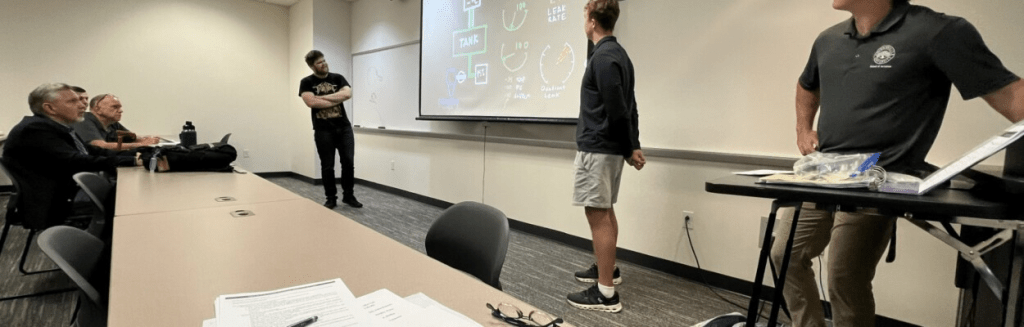









 Escritos Críticos
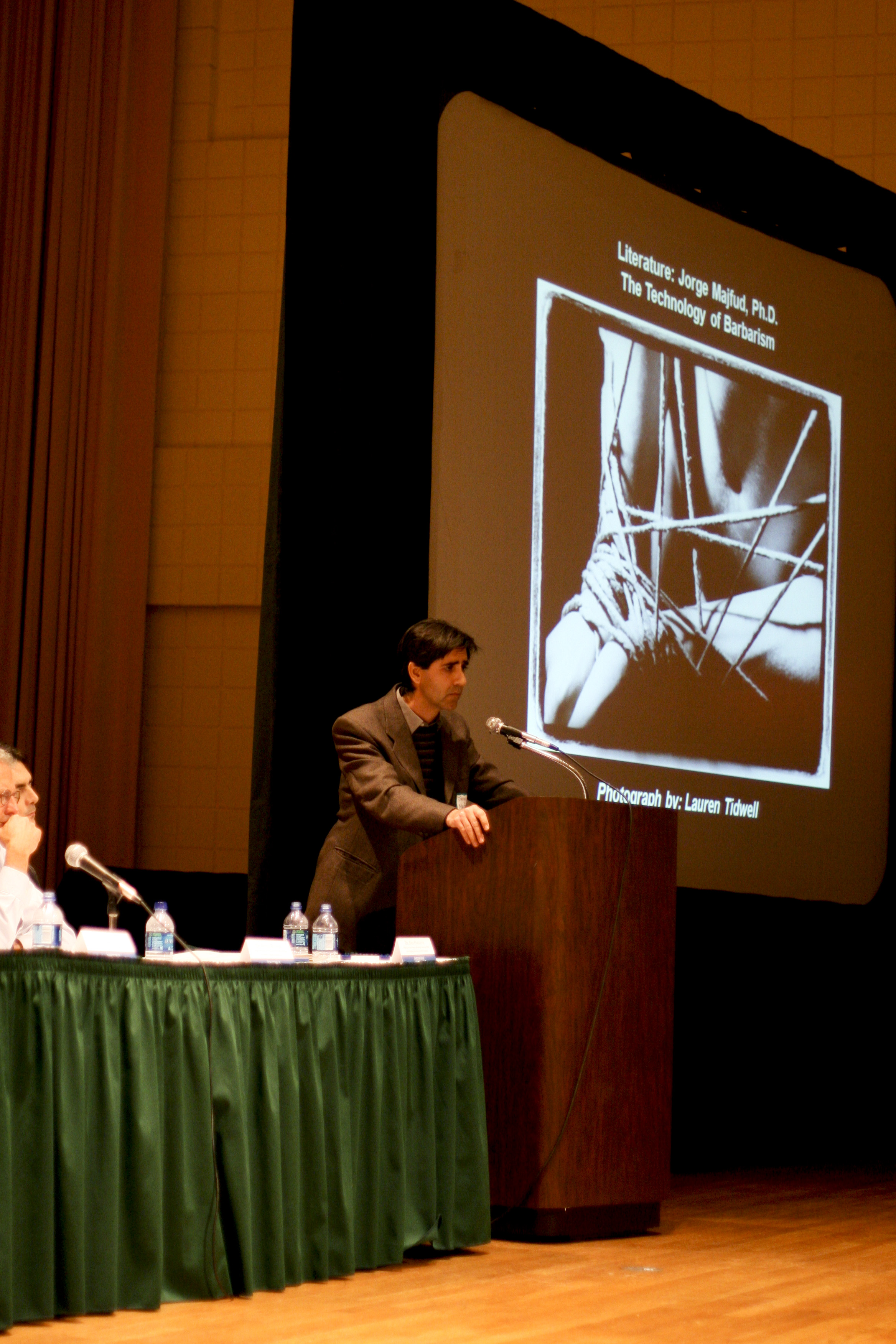
Debe estar conectado para enviar un comentario.