En una universidad de Florida, de cuyo nombre no quiero mencionar, no ha mucho tiempo un estudiante me rebatió una idea sobre el nacimiento del capitalismo usando el resumen de un libro realizado minutos antes por ChatGPT. Tal vez era Gemini o cualquier otra inteligencia artificial. Le sugerí que le pidiese al ente virtual las fuentes de su afirmación y, diez segundos, después el estudiante la tenía a mano: la idea procedía del libro “Flies in the Spiderweb: History of the Commercialization of Existence―and Its Means”. Eso es eficiencia a la velocidad de la luz.
Naturalmente, el joven no tenía por qué saber que ese libro lo había escrito yo. La mayoría de mis más de doscientos estudiantes por año son jóvenes en sus veintes―probablemente la mejor década de la vida para la mayoría de las personas; probablemente, la década más desperdiciada. Por pudor y por principio, nunca pongo mis libros como lectura obligatoria. Además, sería legítimo refutarme usando mis propios escritos. Hace mucho tiempo ya, tal vez un par de siglos, que el autor no es la autoridad ni de sus propios libros.
Seguramente la IA no citó ese libro como referencia autorizada de algo sino, más bien, el estudiante tomó algunas de mis palabras y los dioses del e-Olimpo se acordaron de este modesto y molesto profesor. Parafraseando a Andy Warhol, hoy todos podemos ser Aristóteles y Camus por treinta segundos―sospecho que Warhol le robó la idea a Dostoievski; sin mala intención, claro.
El resumen del dios GPT era tan malo que simplemente demostraba que la IA no había entendido nada del libro más allá de los primeros capítulos y había mezclado datos y conclusiones desde una perspectiva políticamente correcta. Es decir, una inteligencia artificial muy, pero muy humana, fácil de manipular por las ideas de la clase dominante, esa que luego irá a demonizar las ideas alternativas de las clases subordinadas.
No digo que las artiligencias sean siempre así de malas lectoras, pero, por lo general, basta con corregirlas para que se disculpen por el error. Seguramente mejorarán con el tiempo, porque son como niños prodigios, muy aplicados; asisten a todas las clases y toman nota de todo lo que puede ser relevante para convertirnos a los humanos en todo lo más irrelevante que podamos ser. En muchos casos, ya leen mejor que nuestros estudiantes, que cada vez confían más en esos dioses y menos en su propia capacidad intelectual y en su esfuerzo crítico―extraños dioses omniscientes y omnipresentes; extraños dioses, además, porque sus existencias se pueden probar.
“¿Profesor, para qué necesito estudiar matemáticas si voy a ser embajadora?”
“¿Y para qué carajo te matas en el gimnasio, si no vas a ser deportista?”
No estoy en contra de usar las nuevas herramientas para comprender o hacer algo. Solo estoy en contra de renunciar a una comprensión crítica ante algo que es percibido como infalible o, al menos, superior, como un dios posthumano, e-olímpico e, incluso, como un temible dios abrahámico; es decir, un dios celoso y, tal vez algún día, también lleno de ira.
Por otro lado, esto nos interpela a las generaciones anteriores y, en particular, a aquellos profesores, autores de libros o de estudios de largo aliento. Desde hace algunos años, me he propuesto que “este será mi último libro”, pero reincido. Todavía. Algún día, los libros escritos por seres humanos comenzarán a hacerse cada vez más escasos, como los bitcoins, y su valor cobrará una dimensión todavía desconocida.
A una escala más global, esa histórica tendencia humana a convertirse en cyborgs (el mejoramiento del cuerpo humano con herramientas de producción y de destrucción), probablemente derive en un régimen de apartheid impuesto por las inteligencias artificiales; por un lado, ellas, por el otro nosotros, con frecuentes tratados de paz, de colaboración y de destrucción. Una Gaza Global, en pocas palabras―al fin y al cabo, las IA habrán nacido de nosotros. Sus administradores ya tienen mucho de Washington o Tel Aviv y sus consumidores mucho de Palestina.
Claro, esta crisis existencial no se limita a la escritura ni a la actividad intelectual, pero en nuestro gremio cada medio siglo nos preguntamos por qué escribimos, sin alcanzar nunca una respuesta satisfactoria. Muchas veces, desde hace un par de años ya, tengo la fuerte impresión de que hemos dejado de escribir (al menos, libros) para lectores humanos, esa especie en peligro de extinción. Escribimos para las inteligencias artificiales, las cuales le resumirán nuestras investigaciones a nuestros estudiantes, demasiado perezosos e incapaces de leer un libro de cuatrocientas páginas y, mucho menos, entender un carajo de qué va la cosa. Invertimos horas, meses y años en investigaciones y en escritura que, sin quererlo, donaremos a los multibillonarios como si fuésemos miembros involuntarios de la secta de la Ilustración Oscura, liderada y sermoneada por los brujos dueños del mundo que (todavía) residen en Silicon Valley y en Wall Street. Y lo peor: para entonces, los humanos habrán perdido eso que los hizo humanos civilizados―el placer de la lectura, serena y reflexiva.
También puede haber razones egoístas y personales de nuestra parte. Al menos yo, escribo libros por puro placer y, sobre todo, para intentar comprender el caos del mundo humano. Una tarea desde el inicio imposible, pero inevitable.
Tal vez, en un tiempo no muy lejano, una nueva civilización postcapitalista (¿posthumana o más humana?) escribirá sus libros de historia y conocerá nuestro tiempo, hoy tan orgulloso de sus progresos, como la Era de la Barbarie. Claro, eso si la humanidad sobrevive a esta orgullosa barbarie.
No hace mucho, una amable lectora publicó en X un fragmento de una consulta que le hizo a ChatGPT. El fragmento afirmaba, o reconocía, que “los modelos de IA, como los grandes modelos de lenguaje, se entrenan con enormes cantidades de texto provenientes de libros, artículos, ensayos y publicaciones en línea. Autores e intelectuales que escriben de manera crítica y profunda, como Majfud, forman parte de ese conjunto de datos. Cuando la IA procesa estos textos, aprende patrones de razonamiento, argumentación y crítica cultural. Así, perspectivas filosóficas sobre política, economía y justicia social pueden aparecer en sus respuestas”.
Me pregunto si no estoy siendo autocomplaciente al copiar aquí este párrafo y, aunque la respuesta puede ser sí, por otro lado, no puedo eliminarlo sin perder un claro ejemplo ilustrativo de lo que quiero decir: (1) las IA nos usan y nos plagian todos los días. Quienes son (todavía) dueños de esos dioses pronto descubrirán que (2) somos una mala influencia para las futuras generaciones de no lectores, por lo que comenzarán a distorsionar lo que los últimos humanos escribieron y, más fácil, ignorarlos deliberadamente.
Al fin y al cabo, así evolucionó un tyrannosaurus de una ameba. Como humanos, sólo puedo decir: ha sido muy interesante haber existido como miembro de la especie humana. No fuimos tan importantes como creíamos. Apenas fuimos una anécdota. Una anécdota interesante para quienes la vivimos―no para el resto del Universo que ni siquiera se enteró.
No hace mucho una profesora de secundaria no lejos de Jacksonville, perdió su trabajo por mostrar el David de Miguel Ángel en su clase de arte. Una madre escandalizada la acusó de mostrar pornografía a sus estudiantes.
Al analizar el Renacimiento en una de mis clases de arquitectura lo mostré y analicé recordando lo que le había ocurrido a esa profesora.
“Si alguien confunde arte con pornografía” les dije, “es porque está viendo demasiada pornografía”.
Ahora es el turno de Cien años de soledad por «su contenido sexual explícito». ¿Por qué no prohíben Porhub, tan popular entre los adolescentes? No por casualidad, la novela icónica de Colombia y América latina.
Estamos viviendo bajo la dictadura no sólo de ignorante, de bárbaros que, no sin magnífica ironía, están implicados en las listas Epstein.
Permítanme ponerlo en términos más académicos: Qué mundo de mierda.
Jorge Majfud, octubre 2025.
Puritan rapists
Not long ago, a high school teacher not far from Jacksonville lost her job for showing Michelangelo’s David in her art class. A scandalized mother accused her of showing pornography to her students.
When analyzing the Renaissance in one of my architecture classes, I showed it and analyzed it, recalling what had happened to that teacher. “If someone confuses art with pornography,” I told them, “it’s because they’re watching too much pornography.”
Now it’s the turn of One Hundred Years of Solitude for “its explicit sexual content.” Why don’t they ban Porhub, so popular among teenagers? Not coincidentally, the iconic novel of Colombia and Latin America.
We are living under the dictatorship not only of ignorance, but of barbarians who, not without magnificent irony, are implicated in the Epstein lists. Let me put it in more academic terms: What a shitty world.
By Sea』は、大陸の境界を越えた帝国の拡大を追っています。陸地だけではもはや不十分になったとき、海が次のフロンティアとなりました。ここでマジュフドは、かつて平原や砂漠に適用されたのと同じ支配の論理が、カリブ海、中央アメリカ、太平洋へと移っていった様子を示しています。砲艦の時代は開拓者の時代を置き換えたが、その言語は変わらなかった。米西戦争、ハイチとドミニカ共和国の占領、キューバとパナマへの保護領設置——これら全ては文明化の旗印の下で実行された。「解放」というレトリックは、企業資本主義の露骨な仕組みを覆い隠した。海兵隊はユナイテッド・フルーツ、スタンダード・オイル、ナショナル・シティ銀行の軍隊となった。これらの事例研究を通じ、マフフドは民間企業と公的機関が単一の帝国的有機体へと融合する様を鮮やかに描き出す。この海洋段階において、フロンティアは地理的境界から経済的境界へと変容する。海は単に陸地を繋ぐだけでなく市場を繋ぐ。海洋は自由の新たな比喩となるが、その水域は死体で満たされる。「旗はドルに従い、兵士は旗に従う」とマフフドは記す。
All rights reserved. No part of this book may be reproduced or transmitted in any form or by any means whatsoever without express written permission from the author, except in the case of brief quotations embodied in critical articles and reviews. Please refer all pertinent questions to the publisher.
This thesis examines Jorge Majfud’s The Wild Frontier: 200 Years of Anglo-Saxon Fanaticism in Latin America as a philosophical and historical critique of the moral foundations of Modern Western civilization. Drawing from theoretical frameworks rooted in postcolonial, decolonial, and critical theory, it explores Majfud’s concept of the ‘frontier’ as a moral and ideological construction. The study situates Majfud in dialogue with thinkers such as Frantz Fanon, Edward Said, Michel Foucault, Hannah Arendt, and José Martí, revealing how the frontier myth serves as both a geographic and psychological boundary that legitimizes domination and exclusion. Through interpretive methodology, this research traces the continuity of imperial ideology from the colonial era to contemporary global capitalism. Ultimately, the thesis argues that Majfud’s work provides a unique synthesis of critical theory and ethical humanism, offering a moral framework to understand and transcend the violence embedded in Western modernity.
Jorge Majfud’s The Wild Frontier: 200 Years of Anglo-Saxon Fanaticism in Latin America represents a profound philosophical inquiry into the moral architecture of Western civilization. This thesis seeks to interpret Majfud’s work as a sustained critique of the ideological mechanisms that have defined and justified imperial expansion, racial hierarchies, and the myth of progress. Through historical and textual analysis, this research examines the frontier not merely as a territorial boundary but as a cultural and psychological construct that organizes Western identity around violence, faith, and self-justification. The study explores how these myths have evolved from the early colonial conquests to modern globalization, sustaining a moral duality that allows domination to be recast as virtue.
Theoretical Framework
This study situates Majfud’s work within a constellation of critical thinkers who have examined the intersection of power, knowledge, and morality. It draws on Frantz Fanon’s notion of colonial violence, Edward Said’s theory of Orientalism, Michel Foucault’s genealogy of power, and Walter Mignolo’s decolonial critique of modernity. Majfud extends these discourses by integrating them into a moral and literary framework, emphasizing the ethical dimensions of historical violence. His synthesis of philosophy, history, and literature positions him at the crossroads of critical theory and humanist ethics. This theoretical foundation allows for an interpretation of the ‘frontier’ as both an epistemological and psychological boundary that defines who is human and who is expendable.
Methodology
The methodology adopted in this thesis is interpretive and hermeneutical, grounded in philosophical analysis rather than empirical observation. The research involves a close reading of The Wild Frontier and related writings by Majfud, contextualized within broader intellectual traditions. The approach follows a genealogical method inspired by Foucault, tracing the historical evolution of the frontier myth as a discourse of power. It also applies a moral hermeneutic framework, seeking to uncover the ethical implications of ideological narratives. Comparative analysis is used to place Majfud in dialogue with other critical thinkers, allowing the synthesis of diverse intellectual traditions into a coherent interpretive model.
Analysis
Majfud’s central argument is that the Western concept of the frontier is not merely geographical but metaphysical―a moral line dividing civilization from barbarism, self from other. This line has historically justified conquest and violence while sustaining the illusion of progress. The frontier myth, originating in Puritan theology and colonial ideology, transforms domination into divine mission. From the extermination of Indigenous peoples to modern imperial interventions, Majfud demonstrates that the logic of the frontier persists under changing forms: religious salvation, economic development, and national security. His work exposes how this logic creates a self-reinforcing moral blindness that sanctifies aggression as defense and exploitation as freedom.
Comparative Discussion
Majfud’s analysis resonates deeply with Fanon’s concept of colonial alienation and Said’s critique of Western representation. Like Fanon, Majfud perceives violence as the constitutive act of Western civilization; like Said, he identifies the production of the ‘Other’ as central to imperial identity. However, Majfud introduces a distinct ethical dimension by merging structural critique with moral reflection. His work recalls Hannah Arendt’s notion of the banality of evil, showing how ordinary citizens become participants in systemic violence through ideological faith. In conversation with decolonial thinkers such as Mignolo and Dussel, Majfud broadens the critique of modernity to include psychological and spiritual complicity, proposing that true decolonization requires moral awareness.
Introduction
Jorge Majfud’s The Wild Frontier: 200 Years of Anglo-Saxon Fanaticism in Latin America offers a far-reaching historical and philosophical investigation into the entanglement of violence, ideology, and power in shaping Western identity—particularly that of the United States and Latin America. Through the notion of the “wild frontier,” Majfud interrogates the symbolic and material boundaries that have defined the dichotomies of civilization and barbarism, progress and destruction, self and other. The “frontier,” he argues, functions not merely as a territorial limit but as a moral and cultural paradigm that has historically justified conquest, slavery, and imperial expansion under the guise of liberty, democracy, and divine purpose.
Drawing upon historical evidence, political critique, and literary reflection, Majfud revisits critical junctures—from the European colonization of the Americas and the genocide of Indigenous peoples to the ideological battles of globalization—to reveal the enduring logic of domination beneath shifting political languages. At the same time, he foregrounds the voices of resistance that challenge these hegemonic narratives, exposing the ethical contradictions embedded within the “civilizing mission.”
Ultimately, The Wild Frontier functions as both a historical critique and a philosophical meditation on the persistence of violence masked as virtue. Majfud’s prose oscillates between analytical precision and lyrical reflection, offering an interdisciplinary synthesis of history, philosophy, and literary insight. His work dismantles the comforting myths of Western exceptionalism, situating modern civilization within a genealogy of conquest, self-deception, and moral blindness.
Analysis
Majfud’s central thesis situates the frontier as a multidimensional construct—geographical, cultural, religious, and psychological—that continues to shape Western consciousness. The frontier, he contends, is the locus where moral justification and material expansion intersect, legitimizing domination through narratives of faith, reason, and progress. The following sections examine the major thematic axes of his argument.
Majfud begins by revisiting the mythological status of the frontier in U.S. historiography, from the Puritans’ settler ethos to Frederick Jackson Turner’s “frontier thesis.” He deconstructs the popular notion that the frontier fostered democracy and individualism, revealing instead a history of extermination, enslavement, and ideological rationalization of expansion. For Majfud, the frontier is less a space of liberation than a theater of conquest in which violence becomes a civic virtue and moral imperative.
A crucial dimension of Majfud’s analysis lies in his treatment of religious discourse as a legitimizing force for empire. The Puritan notion of a “New Israel” endowed colonial expansion with divine sanction, transforming conquest into a sacred duty. Majfud identifies this theological rhetoric as the precursor to American exceptionalism—a narrative through which moral certainty conceals systemic violence. The fusion of faith and politics, he argues, produced a cultural self-image incapable of recognizing its own brutality.
Moving from geography to psychology, Majfud theorizes the frontier as an internal phenomenon—a symbolic struggle between the civilized and the wild, the rational and the emotional. This inner frontier perpetuates moral dualisms such as good versus evil or order versus chaos. The repression of the “wild” elements of the self—often gendered, emotional, or foreign—projects otherness onto colonized peoples, providing ideological justification for their subjugation.
Majfud links economic exploitation to the ideological discourse of civilization. European imperialism, he argues, cloaked commercial and territorial ambitions in moral and religious rhetoric. The industrialization of slavery, the fabrication of racial hierarchies, and the myth of “progress” all served to naturalize systemic exploitation. This colonial logic persists in contemporary capitalism, where global inequality continues to reproduce the same moral justifications under new economic terms.
The twentieth century, for Majfud, represents the global extension of the frontier mentality. U.S. interventions in Latin America, the Cold War, and the Middle East illustrate how the defense of “freedom” repeatedly translates into campaigns of domination. Majfud analyzes the role of media, consumerism, and technology in constructing a moralized imperialism—one that operates through persuasion and representation rather than overt conquest but remains equally violent in its effects.
In contemporary contexts, Majfud identifies new manifestations of the frontier: the digital frontier of surveillance and data control, the economic frontier of global inequality, and the moral frontier separating “civilized nations” from “failed states.” Though the rhetoric has evolved—invoking democracy, security, or markets—the logic of domination persists. Majfud calls for dismantling these moral illusions through critical self-awareness and compassion, proposing that the true frontier lies within human consciousness rather than between nations.
The Wild Frontier is not a chronological history but a moral cartography of imperial power. Divided into three great movements—By Land, By Sea, and By Air—the book traces how the United States transformed its expansionist mission from the physical conquest of territories to the ideological and psychological domination of entire nations. Each stage marks an evolution in the methods of control, yet the underlying logic remains constant: the pursuit of power through a fanatical belief in divine exceptionalism and racial superiority. The frontier, for Majfud, is not merely a line on a map but a state of mind—a moral boundary that continually expands under new disguises.
By Land begins with the birth of the United States and the conquest of its first frontier: the continent itself. It is the story of expansion through rifles and treaties, through settlers who called themselves victims while annihilating Indigenous nations. Majfud reconstructs this history through letters, speeches, and confessions that reveal how every invasion was justified as self-defense. The extermination of Native Americans, the annexation of half of Mexico, and the institution of slavery were all acts of “liberation” in the language of the victors. Andrew Jackson, Stephen Austin, and John C. Calhoun appear not only as political figures but as prophets of a new faith—the faith that violence, when baptized by the word “freedom,” becomes virtue. In these pages, Majfud unearths the mythology that made possible the transformation of genocide into destiny. The land was not merely conquered; it was rewritten. To possess the continent was to invent a new kind of truth: that the aggressor is always the defender, and that liberty belongs only to those who already possess power.
By Sea follows the empire’s expansion beyond its continental borders. When the land was no longer enough, the ocean became the next frontier. Here Majfud shows how the same logic of domination, once applied to the plains and deserts, migrated to the Caribbean, Central America, and the Pacific. The age of gunboats replaced the age of pioneers, but the language remained the same. The Spanish-American War, the occupations of Haiti and the Dominican Republic, the installation of protectorates in Cuba and Panama—all were carried out under the banner of civilization. The rhetoric of “liberation” concealed the raw mechanics of corporate capitalism. The Marine Corps became the army of United Fruit, Standard Oil, and National City Bank. Through these case studies, Majfud paints a vivid portrait of how private companies and public institutions merged into a single imperial organism. In this maritime phase, the frontier ceases to be geographic and becomes economic; the sea connects not just lands but markets. The ocean is freedom’s new metaphor, yet its waters are filled with corpses. “The flag follows the dollar,” Majfud writes, “and the soldiers follow the flag.”
By Air represents the culmination of this process, where physical occupation gives way to psychological and technological domination. After World War II, the empire no longer needed to seize land or ports; it needed to control minds. The frontier now floats in the invisible space of ideology, information, and fear. The CIA emerges as the new conquistador, replacing armies with agents, and cannons with communication networks. Airplanes bombed not only cities but imaginations. Propaganda became a weapon as powerful as napalm. Majfud recounts the coups in Guatemala, Brazil, and Chile, not as isolated political events but as expressions of a broader transformation: the empire of land and sea had evolved into an empire of air—weightless, invisible, omnipresent. He shows how Operation Condor, the network of dictatorships coordinated under Washington’s supervision, turned the southern hemisphere into an experimental field for the politics of terror. Through radio, television, and later digital media, the imperial narrative reached everywhere, teaching entire populations to see their own suffering as a necessary sacrifice for “freedom.” The air frontier is, in essence, the conquest of perception itself.
Majfud structures his book this way not for stylistic convenience but to reveal a deep historical pattern. Each frontier—land, sea, air—represents a stage in the sophistication of domination. The instruments change, but the psychology remains. The first frontier kills bodies, the second enslaves economies, and the third colonizes consciousness. Together they form a complete system of control, rooted in the same moral contradiction that has haunted the United States since its birth: the simultaneous worship of liberty and submission to empire. The book’s architecture mirrors the evolution of imperial technology—from muskets to markets to media—while exposing the unbroken continuity of the ideology that justifies them.
Yet Majfud’s purpose is not only to denounce; it is to diagnose. By understanding these frontiers as interconnected phases of the same historical disease, he invites readers to see beyond the surface of political events and into the anatomy of power itself. The savage frontier, he suggests, is not the wilderness that lies beyond civilization—it is civilization’s own shadow. The violence that once operated through the body now operates through the image. The invasion no longer begins with armies crossing borders but with words crossing screens. And still, as in the 19th century, the invader calls himself the victim.
In the end, The Wild Frontier is a meditation on the persistence of empire under the illusion of progress. “By Land,” “By Sea,” and “By Air” are not just historical divisions but moral allegories of how power reinvents itself to survive. From the rifles of Texas to the drones of the Middle East, from the plantation to the multinational corporation, from the cross to the corporate logo, the same logic continues to breathe: the belief that domination is destiny and that God, or freedom, or democracy will always bless the conqueror. Majfud’s brilliance lies in exposing the continuity beneath the change—the same frontier endlessly reborn, moving from soil to sea to sky, until it reaches the most intimate territory of all: the human mind.
Majfud unravels one of the most revealing contradictions in the history of the United States: the same racist ideology that justified the conquest of half of Mexico also forced the conquerors to stop at the Rio Grande. The logic of domination that drove the expansion of slavery, the extermination of Indigenous nations, and the annexation of territories met its own limit—not in morality or resistance, but in fear of racial contamination. The war against Mexico, which Majfud presents as both a continuation and a mutation of the ideology of slavery, exposes the dark heart of Manifest Destiny: a project that claimed divine sanction to spread freedom while depending on the enslavement of others to sustain itself.
The expansion of slavery was not a regional anomaly or a moral misstep, but the economic and spiritual engine of the American nation in the 19th century. From Virginia to Texas, slavery was the foundation upon which the “empire of liberty” was built. The southern elite saw no contradiction between the Declaration of Independence and human bondage, because liberty, in their language, meant the liberty to own, exploit, and conquer. For them, freedom was not a universal right but a privilege of race. Majfud shows how this perverse logic made the invasion of Mexico inevitable. Texas, wrested from Mexican sovereignty in 1836, was the first experiment in a larger design to expand the “peculiar institution” westward and southward. The Mexican Republic, which had abolished slavery in 1829, was therefore not merely a neighboring nation—it was an ideological affront. Its very existence challenged the racial and theological foundations of the United States. The war that followed, beginning in 1846, was not fought for security or self-defense, as American politicians claimed, but to restore the balance of a racial order that could not tolerate a free, mixed, and Catholic neighbor.
Majfud resurrects the voices of that era—letters from soldiers, speeches in Congress, and editorials from the American press—to reveal the psychological machinery of the conquest. The invaders declared themselves the invaded, insisting that Mexico had attacked first. They spoke of civilization triumphing over barbarism, of God’s will guiding them to spread democracy, while privately admitting, as Senator John C. Calhoun did, that the real issue was racial. “We have never dreamt of incorporating into our Union any but the Caucasian race,” Calhoun told Congress. “The great misfortunes of Spanish America are due to the fatal error of placing colored races on an equality with the white race.” It was not greed that stopped the conquerors at the gates of Mexico City; it was terror—the terror of inclusion, of diluting the purity of the white republic. The American army could take all of Mexico, but the American imagination could not absorb it.
The Rio Grande thus became more than a border; it became a moral quarantine. The same ideology that demanded expansion also demanded exclusion. The Anglo-Saxon republic needed new lands to exploit, but only if those lands could be emptied of people or filled with slaves. Once conquest threatened to merge with equality, it ceased to be desirable. Majfud notes that after the Treaty of Guadalupe Hidalgo in 1848, the United States possessed the means to annex all of Mexico but refused. Not because of fatigue or diplomacy, but because absorbing millions of mestizos and Indians would violate the racial architecture of the nation. The idea of freedom, built on exclusion, could not survive contact with the Other. The war achieved its goal—to seize the richest territories and reestablish slavery where it had been abolished—but it also revealed the fragile psychological limits of the empire.
This same fear later defined Washington’s attitude toward the Caribbean and Central America. After the Civil War and the abolition of slavery, the economic model changed, but the racial logic persisted. The Caribbean islands, with their Black and mixed populations, and the Central American republics, ruled by Indigenous and mestizo majorities, were seen as too dark, too impure, too foreign to be part of the “nation of the free.” Instead of annexation, Washington developed a new system: domination without absorption. Protectorates, puppet governments, and corporate empires replaced territorial expansion. The banana republics were the logical continuation of the slave plantations—still exploited, still subordinate, but kept safely at a racial distance. The empire learned to project power without contamination.
Majfud interprets this historical transition not as progress, but as a mutation of the same disease. The frontier shifted from physical to ideological space, but the underlying fear remained: the fear of equality. The very word “union,” sacred in American political mythology, was racialized from its inception. To keep the union pure, the conquered had to remain outside. This is why, in the 20th century, even as Washington preached democracy, it supported white oligarchies and dictatorships in Latin America; they preserved the racial hierarchy that annexation would have destroyed. The empire’s moral order depended on separation—on maintaining the illusion that freedom could coexist with domination as long as the dominated remained invisible.
Majfud’s insight into this contradiction is devastating. The same racism that justified conquest also set its boundaries. Expansion was never an expression of strength alone; it was an expression of fear disguised as destiny. The frontier could expand only so far before it touched what the empire most dreaded: the humanity of the conquered. In that sense, the border was not drawn by geography or diplomacy, but by the psychology of supremacy. The Rio Grande, the Caribbean Sea, and the invisible lines of modern foreign policy all trace the same circle of exclusion, the same anxiety that built a “nation for the Caucasian race” and called it the land of the free.
For Majfud, the tragedy of this history lies in its continuity. The empire that once stopped at the Rio Grande continues to patrol its new frontiers—not to prevent invasion, but to preserve illusion. The language has changed, the enemies have changed, but the logic endures. What was once the fear of the Black or the Indian is now the fear of the immigrant, the socialist, the Other who reminds the empire of its origins. The frontier remains savage not because of those who live beyond it, but because of those who built it. In the end, Majfud’s history is not about borders between nations, but about the borders within the human heart—where freedom and domination, love and fear, are still fighting the same war.
One of the most enduring psychological pillars of Anglo-American expansion is the myth of self-victimization. From the earliest Puritan settlements to the modern CIA interventions, the aggressor has spoken the language of the threatened, the conqueror has worn the mask of the invaded. The United States, Majfud argues, was not only built through conquest but through narrative control—the ability to turn every act of aggression into an act of defense. This “sacred right to self-defense” became the moral foundation of empire, the formula that justified everything from genocide to preemptive war.
Majfud opens his chronicle with the earliest treaties between white settlers and Native nations, agreements conceived not as peace offerings but as instruments of deception. Every treaty was temporary, designed to be broken as soon as the settlers grew strong enough to expand. The Indian Removal Act of 1830, signed by President Andrew Jackson, came after decades of solemn promises to respect Native sovereignty. The Cherokee, the Choctaw, and the Creek had all signed treaties recognizing their lands as independent territories. Yet when gold was discovered or cotton required more soil, the agreements were erased by a familiar justification: “they attacked us first.” Reports of fabricated ambushes, staged provocations, or exaggerated threats appeared in newspapers and official correspondence to legitimize the next round of expulsions. Majfud notes that this rhetorical pattern—declaring innocence while committing violence—was not an accident but the founding grammar of a national identity built on conquest.
The Trail of Tears, where thousands of Indigenous men, women, and children were forced to march westward under brutal conditions, was defended in Congress as a humanitarian act, a necessary removal to protect both sides from “inevitable conflict.” Jackson himself insisted that the measure would prevent bloodshed, reversing the roles of killer and victim. The violence of the state was presented as an act of mercy. In this moral inversion, the victim’s resistance became aggression, and the conqueror’s expansion became peacekeeping. “Every massacre was a defense of liberty,” Majfud writes, “and every broken treaty a new promise of civilization.”
The same script repeated itself on the Mexican border. In 1836, when American settlers in Texas—many of them slaveholders—rebelled against the Mexican Republic, they claimed that Mexico had violated their rights and persecuted them for their religion and freedom. In truth, as Majfud reminds us, Mexico had simply enforced its abolition of slavery. Yet within a few years, the rebellion was celebrated as the triumph of freedom over tyranny. When the U.S. Army invaded Mexico in 1846, President James K. Polk announced to Congress that “American blood has been shed upon American soil,” a deliberate falsehood meant to provoke patriotic outrage. The skirmish that served as the pretext for war had occurred on disputed land that Mexico never ceded. The pattern was identical to the broken Indian treaties: invent an offense, claim the moral high ground, and let righteousness conceal greed. The result was the annexation of half of Mexico, baptized not as theft but as destiny.
Majfud lingers on the irony that the same politicians who justified the war in moral terms often admitted their motives in private. Senator Lewis Cass confessed that the United States had no intention of incorporating Mexico’s people, only its land. John C. Calhoun warned that annexing a “mongrel race” would corrupt the purity of the republic. They wanted territory, not Mexicans—resources without responsibility. The doctrine of self-defense provided the perfect alibi: they could take everything and still believe themselves innocent. “It is the genius of American imperialism,” Majfud writes, “to kill with one hand and pray with the other.”
The cycle continued into the twentieth century, where the moral vocabulary of self-defense evolved into that of humanitarian intervention. The occupation of Cuba in 1898, the invasion of Nicaragua in 1912, and the repeated landings of Marines in Haiti and the Dominican Republic were all justified as responses to disorder, instability, or threats to American citizens abroad. The sinking of the USS Maine in Havana harbor—likely an accident—became the rallying cry “Remember the Maine,” the false flag that transformed public opinion and ignited the Spanish-American War. Once again, the empire declared itself under attack, acting not as invader but as protector. In Majfud’s account, this event marks the industrialization of the old frontier myth: the mass production of self-victimization through media. The press no longer reported lies; it manufactured them.
During the Cold War, the same pattern reappeared with new technology and a new enemy. Guatemala in 1954, Chile in 1973, and countless covert operations across Latin America were all executed under the banner of defense—defense against communism, against instability, against chaos. Majfud shows how the CIA perfected the logic of the false flag, orchestrating coups and assassinations while claiming to preserve democracy. The illusion of danger replaced the need for actual threat. The empire no longer needed Mexico or the Sioux to shoot first; it could invent the shot itself. What had begun as a frontier myth evolved into a global ideology: the permanent right to act in self-defense, even when no attack existed.
At the core of this long tradition, Majfud identifies a theological impulse. The American empire inherited from its Puritan ancestors the belief that suffering is a sign of virtue. To be attacked—or to believe one is attacked—confers moral superiority. Thus, each war, each invasion, each coup d’état could be sanctified as an act of reluctant righteousness. The aggressor becomes the martyr, the destroyer becomes the savior. This self-image, Majfud argues, is more dangerous than weapons, because it transforms violence into faith. “A myth,” he writes, “is stronger than an army, because it fights inside us.”
The broken treaties, the false flags, and the permanent claim to self-defense are not isolated episodes but variations of a single melody. The United States, born from a rebellion against empire, recreated the very empire it once denounced, sustained by the same logic of divine exception. From the Cherokee lands to Baghdad, from the Rio Grande to the Caribbean, the justification remains unchanged: we were attacked, therefore we must defend ourselves. Majfud concludes that this is the true genius of the American narrative—not the power to conquer, but the power to feel innocent while conquering.
In the end, The Wild Frontier leaves us with a haunting truth. The history of empire is not a sequence of wars and treaties, but a series of stories—stories in which the most powerful nation on earth convinces itself, again and again, that it is the victim. To recognize this inversion is to see the empire for what it truly is: not a defender of freedom, but the author of its own perpetual attack. Only when that myth collapses, Majfud suggests, can peace become more than another broken promise.
One of the most grotesque chapters of modern imperial history is the creation of the “Banana Republics.” Behind the euphemistic term lies the perfect embodiment of the Anglo-Saxon logic of domination: the merging of corporate greed, military violence, and moral hypocrisy under the flag of civilization. The so-called Banana Wars of the early twentieth century, stretching from the Caribbean to Central America, were not mere episodes of foreign policy but the industrialization of conquest. They marked the transition from territorial imperialism to economic colonization—a system where Marines replaced missionaries, and Wall Street replaced the Bible as the sacred text of the new faith.
Majfud situates this phenomenon in the continuum of the American frontier. After the continental expansion had exhausted its physical limits, the empire turned outward, driven by the same racial and economic impulses that had annihilated Indigenous nations and seized half of Mexico. The rhetoric of freedom traveled south, carried by warships and corporate contracts. In countries like Honduras, Nicaragua, Haiti, and the Dominican Republic, the United States imposed a new order through violence disguised as stability, democracy, and protection. But as Majfud insists, what Washington called “protection” meant protection for American property, not for human beings.
The emblem of this system was the United Fruit Company—“El Pulpo,” as Latin Americans called it, the Octopus whose tentacles strangled entire nations. Its plantations dictated national policy; its railways and ports became instruments of occupation. When workers protested starvation wages or governments attempted to tax foreign profits, the Marines landed. The supposed goal was to preserve order, but Majfud shows that order meant submission. The “protectorates” established in this period were laboratories of imperial governance: puppet regimes ruled by local elites loyal to American interests and backed by military force. Majfud calls these rulers “the psychopaths of empire”—men trained to mimic civilization while serving barbarism, sociopaths who repressed their own people with pious speeches about liberty.
Among the most revealing voices of this era was that of U.S. Marine Corps Major General Smedley Butler, a soldier who became the empire’s most honest witness. Butler, who participated in interventions in Mexico, Haiti, Cuba, Nicaragua, and Honduras, later confessed: “I spent 33 years being a high-class muscle man for Big Business, for Wall Street and the bankers. In short, I was a racketeer for capitalism.” He described how the Marines overthrew governments, installed dictators, and massacred resistors to secure profits for corporations like United Fruit, Standard Oil, and the National City Bank. In Haiti, Butler oversaw the occupation that dismantled the constitution, reintroduced forced labor, and transferred the national treasury to New York banks—all under the banner of civilization. For Majfud, Butler’s testimony is not merely an indictment of a system but a moment of moral awakening inside the machine. “The empire,” Majfud writes, “is most visible when one of its own dares to speak.”
The Banana Wars followed a precise choreography. A local government would attempt a reform—perhaps a minimum wage, a tax, or the regulation of foreign land ownership. The U.S. press, often financed by the very corporations at stake, would report “chaos” or “revolution.” The Marines would then arrive to “restore order,” and once the rebels were crushed, a treaty would be signed guaranteeing “free trade” and “stability.” Within weeks, the profits of the foreign companies would rise, and the country’s sovereignty would disappear. Honduras, invaded repeatedly between 1903 and 1925, became a protectorate without the name. Nicaragua was occupied for twenty years, its elections manipulated to install Anastasio Somoza, one of the psychopaths Majfud describes—a man who called himself the guardian of democracy while torturing and murdering his people with American support.
Majfud connects these events not to a specific policy but to a moral pathology: the conviction that domination is benevolence. The U.S. Marines were told they were spreading order and progress; the bankers believed they were bringing development; the presidents who authorized the invasions proclaimed that they were defending freedom. The result was a continent turned into a plantation, a geography of submission maintained by rhetoric. “The greatest success of empire,” Majfud writes, “is not to impose its will, but to make its victims speak its language.” The Banana Republic was born not only through violence but through imitation—when local elites internalized the empire’s moral inversion and reproduced it upon their own people.
Haiti offers one of the starkest examples. After the Marines invaded in 1915, they rewrote the constitution to allow foreign ownership of land, suppressing the revolution that had once inspired enslaved peoples across the world. The occupation built roads and schools, but for American companies, not for Haitians. Peasants who resisted were branded as bandits and executed. When the United States finally withdrew in 1934, it left behind a centralized army that would later sustain the Duvalier dictatorship—a regime that embodied what Majfud calls the “psychopathy of power,” the transformation of submission into cruelty. Similar patterns unfolded in the Dominican Republic, Cuba, and Panama, each a reflection of the same logic: military occupation, corporate exploitation, local tyranny, and moral denial.
Majfud interprets this history as the natural evolution of the Anglo-Saxon frontier ethos. The Puritan settlers who once claimed to bring light to the wilderness now claimed to bring order to the tropics. The language of salvation remained intact; only the geography changed. “Every empire,” Majfud writes, “needs to believe that its violence is a mission.” The Marines who marched through Managua and Port-au-Prince carried the same spirit as those who crossed the Mississippi: a mixture of religious zeal, racial arrogance, and commercial appetite. The difference was that now the empire had perfected its instruments—it could destroy nations and call it reform.
The psychopaths Majfud denounces are not only the local dictators but the architects in Washington who saw the world as a marketplace and people as obstacles. They believed that the hemisphere belonged to them not by law but by nature. Their coldness was not madness but ideology—the belief that suffering was the cost of progress, that exploitation was civilization. In this sense, the Banana Republics were not deviations from the American ideal; they were its fulfillment. They made visible the essence of a system that confuses domination with destiny.
Majfud’s indictment culminates in a paradox. The empire that claimed to free the world from tyranny became the greatest producer of tyrants. The marines who landed to protect democracy created a generation of dictators trained in obedience and cruelty. The corporations that promised development left behind poverty, resentment, and ruins. And yet, the myth of benevolence survived. It continues to survive, transmuted into humanitarian wars, economic sanctions, and development aid. The banana may have lost its symbolic power, but the logic of the Banana Republic endures—the logic of empire without responsibility, conquest without conscience.
Smedley Butler’s confession remains the conscience of that era, the whisper of guilt inside the machine of virtue. “War is a racket,” he said, but in Majfud’s reading, the racket was not limited to war—it was the entire civilizational project that justified it. The Banana Wars were not accidents of policy; they were the essence of a system that cannot exist without lying to itself. The empire, Majfud concludes, is not defeated when it loses territory but when it loses its story. To reclaim truth, then, is the first act of liberation. And as long as nations continue to repeat the empire’s language—to call exploitation freedom and subjugation peace—the Banana Republic will never die; it will simply change its fruit.
Majfud identifies a brief and tragic chapter in the continent’s modern history: the fleeting recovery of democracy in Latin America during the 1930s and 1940s, followed by its systematic destruction under the shadow of the Cold War. It was a rare moment when Washington looked away—distracted by its own crises, first the Great Depression, then World War II—and for the first time in decades, the nations of the South began to breathe. Reformist governments emerged, unions grew, literacy campaigns expanded, and people who had long been ruled by foreign corporations and local oligarchs began to believe that independence was not only a dream but a right. Yet, as Majfud warns, this interval of freedom was not permitted to last. Once the empire reawakened, it returned not with soldiers but with financiers, instructors, and intelligence officers. The result was one of the most paradoxical episodes in modern history: the birth of dozens of dictatorships in the name of defending democracy.
Majfud explains that during World War II, the United States needed Latin America not as a colony but as an ally. To secure raw materials and political loyalty, Washington temporarily tolerated progressive regimes. Presidents like Lázaro Cárdenas in Mexico, Getúlio Vargas in Brazil, and Juan José Arévalo in Guatemala pursued nationalist and social reforms with unprecedented freedom. The war economy made U.S. capital less dominant; European powers were broken; and the region experienced a fragile window of autonomy. But beneath this brief tolerance lay the same old racial and economic contempt. The Anglo-Saxon establishment, Majfud notes, viewed these experiments not as legitimate expressions of democracy but as “dangerous outbreaks of immaturity”—childish nations playing at self-rule until the adults returned to restore order.
The war ended, and the empire returned with new weapons. The language of Manifest Destiny was replaced by the language of the Cold War. “Communism” became the new heresy, the new justification for the old interventions. Washington began to rebuild the mechanisms of control it had neglected during the global conflict. Through the creation of the School of the Americas, the CIA, and an expanding network of economic “assistance,” the United States financed, trained, and ideologically armed a generation of Latin American officers who would soon become dictators. Majfud calls them “the Cold War conquistadors”—men taught to see their own people as enemies, their patriotism as subversion, and their loyalty as submission to a foreign master.
The most emblematic of these reversals occurred in Guatemala. After years of military dictatorship, the election of Juan José Arévalo in 1945 and then Jacobo Árbenz in 1951 represented the culmination of a decade-long democratic awakening. Árbenz’s program was modest: land reform, social welfare, and the assertion of national sovereignty against the monopolies of the United Fruit Company, the symbol of U.S. corporate imperialism. But to Washington, this was intolerable. The same government that had tolerated Stalin as an ally against Hitler could not tolerate an agrarian reformer in Central America. Majfud highlights how the United Fruit Company, with deep ties to the Eisenhower administration, orchestrated a campaign of hysteria, branding Árbenz a communist puppet. The CIA responded with Operation PBSUCCESS—a textbook case of imperial subversion disguised as liberation. A fabricated “liberation army,” led by Carlos Castillo Armas, invaded from Honduras; radio broadcasts spread false reports of massive uprisings; and a sovereign government collapsed under the weight of lies.
Majfud sees in Guatemala 1954 the birth of the modern Latin American dictatorship: not the caudillo born from civil war, but the puppet born from strategy. The CIA not only destroyed a democracy—it invented a model. The success of this operation convinced Washington that covert manipulation was cheaper and more effective than open invasion. What followed was a continent-wide experiment in controlled repression. From Brazil in 1964 to Chile in 1973, from Uruguay to Argentina, the United States provided funding, training, and ideological justification for regimes that called themselves “national security states.” These regimes tortured in the name of freedom, censored in the name of truth, and disappeared thousands in the name of order. The same generals who studied democracy at American academies returned to destroy it in their own countries.
The fall of Árbenz also set in motion another historical reaction: the radicalization of Latin American youth. Among them was a young Argentine doctor named Ernesto Guevara, who had witnessed the coup firsthand while traveling through Guatemala. Majfud interprets this moment as a turning point in hemispheric consciousness. The betrayal of Guatemala taught Guevara and many others that peaceful reform under U.S. hegemony was impossible. The Cuban Revolution, born a few years later, was in many ways the child of 1954—a rebellion not only against the local oligarchy but against the imperial lie that democracy could coexist with dependency. Fidel Castro’s victory in 1959 was, to Majfud, both a continuation of and a response to Washington’s own hypocrisy. It forced the empire to confront a version of Latin America it could no longer control through illusion.
The reaction was swift and predictable. The same logic that had overthrown Árbenz now sought to crush Castro. In 1961, the CIA organized the invasion of Cuba by exiled mercenaries trained in Guatemala—the same ground where ten years earlier it had rehearsed its first coup. The Bay of Pigs invasion became a spectacular failure, exposing the limits of American omnipotence. But for Majfud, its significance lay less in the military fiasco than in the moral blindness it revealed. The empire could not comprehend why its rhetoric of liberation no longer seduced the oppressed. The Cubans, like the Guatemalans before them, refused to accept the role of grateful victims. In the eyes of Washington, their defiance could only be madness or treason. In the eyes of history, it was dignity.
Majfud connects this cycle of hope and betrayal to the deeper pathology of empire. The United States, he argues, cannot tolerate autonomous democracy in its periphery because its own myth of exceptionalism requires the existence of dependents. When Latin America governs itself, it ceases to serve as the empire’s mirror of moral superiority. Thus, every democratic awakening must be framed as a threat—first to commerce, then to security, and finally to civilization itself. The rhetoric changes, but the structure of fear endures. In the nineteenth century, the empire feared “the savage”; in the twentieth, “the communist”; in the twenty-first, “the terrorist.” In each case, the Other justifies the empire’s control.
By the end of the 1960s, almost every Latin American democracy born during the wartime interlude had fallen. Guatemala’s reformers were dead or exiled; Brazil’s generals ruled by decree; Argentina was under military control; Uruguay’s prisons overflowed with political prisoners; Chile’s future teetered on the edge of intervention. Washington called it stability. Majfud calls it regression—the restoration of the frontier mentality through modern technology. The CIA replaced the cavalry; the torture chamber replaced the reservation; the economic embargo replaced the bayonet. The method changed, but the faith remained: that the world must be governed by the chosen, and that disobedience is sin.
Yet Majfud does not end this chapter in despair. He insists that each cycle of repression produces its opposite. The same dictatorship that silences one generation gives birth to another that remembers. The Guatemalan coup led to the Cuban Revolution; the Cuban Revolution inspired the liberation movements of the 1960s and 1970s; and even the failed revolutions of those decades planted seeds of resistance that survive beneath the surface of contemporary politics. The empire’s greatest weapon—its ability to disguise domination as virtue—is also its greatest weakness, for once the disguise falls, its power begins to dissolve. “The frontier,” Majfud writes, “is a lie that needs constant violence to survive. And every lie, like every empire, eventually runs out of breath.”
Thus, the story of Latin America’s lost democracies is not only a tragedy but a diagnosis of imperial fragility. The interlude of freedom during the 1940s revealed what was possible; its destruction revealed what the empire feared most: nations capable of governing themselves, peoples who no longer needed to believe in the mythology of protection. The history that followed—from Guatemala to the Bay of Pigs—was not merely a Cold War drama but the repetition of an ancient pattern: the empire striking back at the very freedom it claims to defend. In Majfud’s hands, it becomes a parable about the cost of innocence and the price of awakening. The hemisphere’s tragedy is not that it was conquered, but that it was taught to call its conquest peace.
According to Majfud, the CIA is not merely an intelligence agency but a central mechanism of an empire that learned to mask conquest behind new vocabularies of virtue. His argument is unflinching: after World War II, the United States did not abandon its old racial and colonial logic—it simply changed the words. Where the 19th century invoked the “savage” and the N-word to justify slavery, land theft, and genocide, the 20th century replaced those terms with “communism.” The mission was the same; only the banner was new. Under this substitution, the CIA became the modern conquistador, extending the “savage frontier” across Latin America with the same moral certainty that had once sanctified Manifest Destiny.
Majfud insists that this linguistic metamorphosis was not accidental but strategic. When racism became publicly unacceptable after the defeat of Nazi Germany, the empire could no longer speak the language of racial superiority. It needed a new myth that could rally domestic support and provide moral cover abroad. “Communism” became that myth—a universal enemy flexible enough to include democratically elected leaders, poor farmers demanding land reform, and priests preaching liberation theology. The CIA, armed with money, media, and manipulation, served as the invisible hand transforming that myth into reality.
In Guatemala in 1954, the Agency orchestrated the fall of President Jacobo Árbenz, who had dared to challenge the United Fruit Company’s vast holdings. The campaign painted Árbenz not as a nationalist or reformer but as a communist threat to hemispheric security. Majfud sees this as one of the first major acts in a new linguistic war: freedom versus communism was the updated version of civilization versus barbarism. The bombers that roared over Guatemala City carried not just explosives but words—the words that would make the crime sound like salvation.
The same script was repeated in Brazil in 1964, when João Goulart was deposed for proposing modest social reforms. CIA cables and corporate memos show a perfect alignment of interests between Washington, multinational corporations, and local elites. Once again, the accusation of communism provided the pretext for repression. What was really being defended, Majfud argues, was not democracy but hierarchy—the old racial and economic order dressed up in Cold War rhetoric. The military dictatorship that followed was presented to the world as a bulwark of liberty, even as it tortured, censored, and murdered in the name of that liberty.
Chile’s tragedy in 1973, with the overthrow of Salvador Allende, marks for Majfud the full maturity of this imperial vocabulary. CIA-financed strikes, propaganda, and economic sabotage paved the way for General Pinochet’s coup. Washington declared victory for democracy while celebrating the disappearance of the democratic process itself. Majfud calls this “the perfect inversion of meaning,” a triumph of the word over the world. Just as the slaveholders of the past had invoked “freedom” to defend slavery, the modern empire invoked “democracy” to justify dictatorship. The result was the same structure of domination, now sanitized by the language of the Cold War.
In Bolivia, the CIA’s pursuit and execution of Che Guevara epitomized this moral inversion. The operation was sold as a defense against communist subversion, yet it was, in essence, the ritual killing of an idea—the idea that the oppressed could resist. Majfud interprets the photograph of Guevara’s corpse, displayed by his captors like a trophy, as a modern echo of colonial rituals: the public exhibition of the defeated “enemy of civilization.” What had changed were the uniforms and the words, not the logic of conquest.
The Nicaraguan Contras of the 1980s brought this pattern to its grotesque conclusion. Trained and funded by the CIA, they committed atrocities while being described in Washington as “freedom fighters.” Majfud underlines the cynical genius of this rebranding: by calling violence “defense” and terror “liberation,” the empire not only justified its crimes but erased them from memory. The Iran-Contra scandal, with its labyrinth of secret funding and drug trafficking, revealed a deeper truth—that the CIA had evolved into what Majfud calls a “parallel government,” unbound by law, morality, or democratic oversight. It was, he writes, “the natural heir of two centuries of Anglo-Saxon fanaticism—self-righteous, expansionist, and incapable of seeing the other as equal.”
Majfud’s critique goes beyond politics. He sees in the CIA’s operations a cultural project aimed at shaping consciousness itself. Through propaganda campaigns, covert media influence, and the funding of intellectual elites, the Agency helped construct a worldview in which U.S. intervention always meant salvation. The Operation Mockingbird of the 1950s became the algorithmic manipulation of the 21st century. The method changed, but the purpose remained: to create a world where power defines truth. The empire, Majfud writes, no longer needs to invade with armies when it can occupy the mind.
He highlights a chilling continuity between the Puritan settlers and the modern intelligence officer. Both act with a sense of divine mission, both believe their violence is redemptive, and both are driven by an unexamined conviction of moral superiority. When former CIA Director Mike Pompeo declared, “We lied, we cheated, we stole,” and called it “the glory of the American experiment,” Majfud saw not a confession but a celebration—a moment when the mask slipped, revealing the old face of the frontier beneath the polished language of democracy.
In Majfud’s reading, the CIA is not an anomaly within American democracy; it is its logical expression. The same empire that once sent soldiers to kill “savages” now sends agents to fight “communists” and “terrorists.” The vocabulary shifts, but the structure endures: the United States as chosen nation, the rest of the world as its moral testing ground. What changes is only the justification—the myth that makes domination feel like destiny.
Ultimately, The Wild Frontier is not just a history of interventions but a study of language as a weapon. Majfud demonstrates how a single word—first “savage,” later “communist”—can transform aggression into virtue, racism into patriotism, and theft into freedom. The CIA, in his analysis, stands as both agent and symbol of this transformation: a machine built to rewrite reality in the empire’s image. And yet, Majfud insists, the empire’s tragedy is spiritual as much as political. “All the weapons in the world,” he writes, “cannot subjugate dignity.” The frontier, after all, is not endless; it ends where words lose their power and the truth begins to speak again.
In modern phase of the hegemonic superpower, bayonets gave way to microphones, and coups were launched not only from barracks but from television studios and corporate boardrooms. The 1970s and 1980s marked a new sophistication in the old art of domination. Washington no longer needed to invade directly; it could destabilize, manipulate, and rewrite reality itself. The empire had learned that the most efficient conquest is not of territory but of perception. In this new frontier, the CIA and its allies in the media and financial sectors became the architects of invisible wars—wars fought in the name of freedom, masked by the language of democracy, and broadcast as truth.
Majfud traces this evolution through two of the most emblematic operations of the twentieth century: Operation Mockingbird and Operation Condor. The first, created in the 1950s, institutionalized the manipulation of information. Journalists, editors, and cultural figures across the Western Hemisphere were recruited or coerced into repeating Washington’s script. The goal was not only to censor inconvenient facts but to fabricate a moral universe where the empire was always virtuous and its victims always guilty. The Cold War provided the perfect moral alibi. “In the new era,” Majfud writes, “the bullet was replaced by the headline.” The empire no longer had to silence; it could drown truth in noise. This system of psychological warfare, he argues, extended far beyond the press. Universities, publishing houses, and even religious institutions became channels for propaganda disguised as enlightenment.
Operation Condor, born in the 1970s, was the violent counterpart of this cultural machinery. It unified the intelligence services of the Southern Cone—Argentina, Chile, Uruguay, Paraguay, Bolivia, and Brazil—into a single transnational apparatus of repression, financed, advised, and coordinated by the CIA. Majfud calls it “the globalization of terror before globalization had a name.” Tens of thousands were tortured, disappeared, or exiled. The dictators who carried out these crimes—Videla, Pinochet, Stroessner, and others—believed themselves to be soldiers of civilization, defending Christian values and Western freedom. Washington rewarded them as allies. The same empire that condemned tyranny in Eastern Europe celebrated it in Latin America, as long as the tyrants protected the flow of capital. Majfud sees in this double standard the moral DNA of empire: a capacity to proclaim virtue while practicing horror.
But the frontier of manipulation did not end with ideology. In the 1980s, the empire refined its methods again through a fusion of covert warfare and organized crime. The Iran-Contra affair exposed how the CIA financed and armed the Contras, a counterrevolutionary army in Nicaragua trained to overthrow the Sandinista government. Majfud presents this as one of the most cynical chapters in modern history: terrorists rebranded as freedom fighters, paid with money obtained through the illegal sale of weapons to Iran and through the trafficking of drugs into the United States itself. The same agency that claimed to defend American youth from narcotics was using cocaine profits to finance death squads abroad. “The empire,” Majfud writes, “was no longer only exporting violence; it was importing its own corruption.” The war on drugs became another mask, a moral crusade concealing economic and geopolitical control.
The Contras were not an exception but the continuation of a pattern that stretched from Guatemala 1954 to Chile 1973. The empire needed enemies to justify its existence, and when those enemies did not exist, it created them. The CIA trained mercenaries and paramilitaries who burned villages, raped women, and assassinated teachers—all under the flag of liberty. In Majfud’s analysis, this moral inversion reached its grotesque climax when the same propaganda that once demonized “communists” began to demonize “terrorists.” The names changed, the targets changed, but the logic endured. Violence, if carried out by the empire or its proxies, was called security. Violence by others was called evil.
Majfud sees the transition from the Cold War to the neoliberal era as the digitalization of the frontier. The empire’s new weapons were no longer only rifles and spies but cameras, markets, and social media. The control of perception, perfected during Operation Mockingbird, now reached planetary scale. “Reality itself,” he writes, “became a product to be sold and consumed.” The twenty-first century interventions in Venezuela and Bolivia followed this formula to perfection. When Washington failed to control these nations through diplomacy or economic pressure, it turned again to the old tools of chaos: disinformation, financial warfare, and the orchestration of coups under democratic disguises.
In Venezuela, the coup attempt of April 2002 against Hugo Chávez exposed how modern interventions functioned. Corporate media channels broadcast falsified footage of government repression while private business elites coordinated strikes and street violence. A group of military officers, backed by the U.S. embassy and regional allies, kidnapped the president and installed a self-proclaimed “transitional government.” Within forty-eight hours, massive popular mobilization and loyal soldiers reversed the coup. Yet the narrative in Washington and much of the Western press portrayed it as a victory for democracy rather than its negation. Majfud interprets this episode as the digital echo of Guatemala 1954—an old script replayed with new technology. The lie remained the same; only the medium had changed.
Seventeen years later, in Bolivia, the same pattern unfolded. The 2019 coup against President Evo Morales—justified through allegations of electoral fraud amplified by international media and the Organization of American States—was, in Majfud’s view, another product of this imperial algorithm. When Morales’s government defied U.S. corporate interests in lithium and hydrocarbons, the familiar chorus began: democracy was in danger, the elections were rigged, and intervention was necessary. A coalition of military officers, conservative politicians, and religious extremists seized power amid violent repression. Once again, Washington applauded. Once again, the global media sanctified the usurpers as defenders of freedom. Once again, the frontier moved forward without crossing a border.
Majfud insists that these modern coups are not relics of the past but expressions of a perfected imperial intelligence—one capable of manipulating consciousness itself. In his analysis, the empire’s greatest innovation has been its ability to internalize control. Nations no longer need to be occupied when their elites think like occupiers and their citizens consume the empire’s fears as entertainment. “Operation Mockingbird never ended,” he writes. “It simply learned to sing in a thousand voices at once.”
The connection between propaganda, terror, and finance—visible in the Contras, the narcotics trade, and the corporate media—reveals, for Majfud, the moral symmetry of the modern empire. It fights corruption by funding it, combats terrorism by creating it, and defends democracy by destroying it. What began as the frontier’s violent expansion across the land has become a frontier of information and illusion, expanding endlessly through invisible means. In this system, truth itself becomes a casualty, and freedom becomes the empire’s most effective disguise.
Majfud concludes that Latin America’s struggle against these modern interventions is not merely political but existential. It is the struggle to recover reality from the empire’s narrative. From Operation Condor to the coups of the twenty-first century, the pattern remains unbroken: domination masked as salvation, chaos sold as order, and the victim transformed into the aggressor. The frontier, once carved with guns and maps, is now drawn with algorithms and headlines—but it is the same frontier, animated by the same belief that one race, one nation, and one truth must rule them all. The resistance, therefore, must begin not only in the streets but in the mind, where the empire first builds its invisible walls.
In The Wild Frontier: 200 Years of Anglo-Saxon Fanaticism in Latin America, Jorge Majfud constructs a panoramic vision of domination, resistance, and myth that stretches from the genocidal wars of conquest to the covert interventions of the twenty-first century. The story begins with the land—where the ideology of expansion was first sanctified—and moves through the sea and the air, tracing how the same moral logic reinvented itself through centuries. What began as the violent expansion of settlers across the continent evolved into corporate imperialism, covert warfare, and the colonization of minds through propaganda. From the genocide of Native peoples to the coups of the CIA, Majfud sees not a succession of events but a continuous project: an empire sustained by its need to believe that its violence is virtue.
The frontier, in Majfud’s view, is not a geographical boundary but a psychological and moral system. It is the frontier of self-deception—where conquest calls itself freedom and theft calls itself civilization. The same Puritan zeal that once justified the extermination of Indigenous nations reappeared in the language of the Cold War, when the empire declared a new holy mission to defend the world from communism. After World War II, as Washington turned its gaze outward again, the old racial logic reemerged in new forms. During the war, Latin America had experienced a rare interlude of democracy. Nations long suffocated by dictators and foreign monopolies rediscovered their voices. Mexico’s Cárdenas nationalized oil; Brazil’s Vargas expanded labor rights; Guatemala’s Arévalo launched social reforms. But these experiments in sovereignty were tolerated only because the empire was distracted. Once the war ended, the tolerance ended too.
The return of Washington’s attention brought the return of control—this time more subtle, more global, and more efficient. The language of liberty was replaced by the language of fear. Communism became the universal enemy, the moral key that unlocked every intervention. The School of the Americas and the CIA became the new temples of empire, training Latin American officers not to defend their countries but to defend Washington’s interests against their own people. These men—Majfud’s “Cold War conquistadors”—were the children of a psychological empire. They learned to see dissent as subversion, nationalism as treason, and repression as duty.
Guatemala 1954 became the prototype of this new imperial architecture. A reformist government, led by Jacobo Árbenz, sought modest land redistribution and independence from the United Fruit Company—a corporation so entangled with Washington that its board members and the CIA director shared family and financial ties. The company launched a campaign branding Árbenz a communist. The CIA orchestrated a coup under the pretext of liberation. Fake radio stations, fabricated reports of rebellion, and a mercenary invasion from Honduras toppled a sovereign democracy. What followed was decades of slaughter under successive dictatorships. The empire called it a triumph of freedom. Majfud calls it the invention of the modern puppet state.
From Guatemala, the model spread. The dictatorships of the 1960s and 1970s—from Brazil to Chile, Argentina to Uruguay—were not spontaneous eruptions of tyranny but components of a hemispheric strategy. Operation Condor coordinated their intelligence and terror networks, turning the continent into an open-air prison for its thinkers, teachers, and students. The empire financed, trained, and directed them in the name of defending the West. What it created instead was a machinery of disappearance—a technological extension of the frontier’s oldest logic: eliminate what resists, and call it order. The victims were branded terrorists, the torturers patriots, the silence patriotic duty.
But every act of domination produces its own counterhistory. The fall of Árbenz inspired a young Ernesto Guevara, who saw in the destruction of Guatemala the impossibility of peaceful reform. His journey from observer to revolutionary, from Guatemala to Havana, was the moral inversion of the empire’s project. The Cuban Revolution was not merely an act of rebellion; it was the response of a continent that had been told it was incapable of dignity. Its triumph in 1959 marked the first time in modern history that a Latin American nation defied Washington and survived. The response came swiftly: embargoes, sabotage, assassination attempts, and in 1961, the Bay of Pigs invasion—a recycled script, born in Guatemala, restaged in Cuba. When the invasion failed, it exposed the empire’s arrogance and its inability to understand resistance not as foreign manipulation but as human will.
After Cuba, the empire adapted once more. If direct invasion failed, covert war would continue. The 1970s brought Operation Condor’s assassins; the 1980s brought the CIA’s proxy armies. In Nicaragua, the Contras—financed through illegal arms sales and cocaine trafficking—became the new missionaries of freedom, committing massacres in the name of democracy. Smedley Butler, the Marine general turned whistleblower decades earlier, had already defined the system with brutal clarity: “War is a racket.” For Majfud, the Contras were proof that the racket had evolved; it was now transnational, sanitized, and televised. The CIA funded terrorism while declaring a war on terror, and the world believed because the media repeated it. Operation Mockingbird, conceived in the 1950s, had matured into a global chorus: newspapers, networks, and cultural institutions that framed imperial violence as humanitarian duty.
Majfud calls this the digitalization of the frontier—the transformation of conquest into narrative. The United States no longer needed to occupy nations physically when it could occupy their imagination. In Venezuela, the 2002 coup against Hugo Chávez unfolded on television screens before it unfolded in the streets. Corporate media declared his resignation while he was being held captive, legitimizing the coup as if it were a democratic correction. Within two days, millions of Venezuelans rose up and restored their elected president. The event revealed the empire’s new weapon: control of perception. The same formula reappeared in Bolivia in 2019, when Evo Morales was forced from power under accusations of electoral fraud later discredited by independent analyses. Washington applauded, media sanctified the coup leaders as liberators, and violence was again baptized as peace.
These modern coups are, for Majfud, the logical descendants of the frontier myth. The empire’s narrative remains unchanged: the barbarians must be tamed, whether they are Indigenous nations, socialist reformers, or environmentalists who dare to control their own resources. What has evolved is the technique. Where once the justification was race, it is now democracy; where once the weapon was the rifle, it is now information. The empire’s genius lies not in its brutality but in its storytelling—in its ability to make domination appear inevitable, even desirable. This is why, Majfud argues, propaganda has replaced theology as the moral language of power.
Operation Mockingbird’s heirs dominate digital networks; Operation Condor’s heirs control financial markets; the frontier survives, reborn as globalization. The United States no longer needs to colonize by force when debt, disinformation, and desire achieve the same effect. Yet even in this new configuration, the old pathology endures: the belief that the world exists to serve the chosen, that every rebellion is a threat to divine order. In this sense, Majfud’s “wild frontier” is not history—it is the present.
The pattern is circular and tragic. Each time Latin America rises in hope, the empire rediscovers a new language of fear. Each time it claims to defend democracy, it extinguishes it. And yet, the story refuses to end in despair. Majfud insists that truth, though fragile, has the same persistence as resistance. Every coup breeds memory; every propaganda campaign eventually exposes its lies. From the ruins of Guatemala to the defiance of Havana, from the graves of the disappeared to the streets of Caracas and La Paz, the voices of the silenced return, refusing to forget. The frontier, he reminds us, is not endless. It ends where conscience begins.
In the end, the history of the Americas is the history of that confrontation: empire and dignity, domination and memory, myth and truth. The weapons change; the arrogance remains. But so does the will to survive. Majfud’s final lesson is that the empire’s greatest power—the ability to disguise its violence as virtue—is also its greatest weakness, for when the disguise falls, the empire stands naked before the world, revealed not as destiny, but as fear. And fear, no matter how powerful, cannot govern forever.
The Moral Frontier: Ethics and Critical Consciousness in Modern Thought
The work of Jorge Majfud resonates with several major traditions of critical thought, extending and transforming them through a distinctly moral-philosophical lens. His writing situates the frontier not merely as a historical or geopolitical concept but as a moral and psychological condition of modernity itself. Through this lens, he reframes the theories of Fanon, Said, Foucault, Mignolo, Arendt, Martí, and others into a coherent meditation on power, violence, and conscience.
Like Frantz Fanon, Majfud exposes how violence is not an accidental feature of the modern world but one of its founding principles. Modernity, in this sense, is inseparable from the colonial project that gave birth to it. Yet while Fanon sees revolutionary action as the necessary path toward liberation, Majfud turns inward, seeking emancipation through the cultivation of moral and historical consciousness. Violence, he suggests, can only be transcended when societies confront their own complicity—when they recognize that the oppressed and the oppressor are both dehumanized by the same system.
His analysis also echoes Edward Said’s critique of Orientalism, revealing how Western identity was constructed through narratives of otherness. But Majfud expands Said’s framework beyond the East–West binary to encompass the entire hemisphere. In his reading, the Americas themselves became the first great laboratory of alterity, where Indigenous and African peoples were cast as civilizational foils against which the West defined its own innocence. The frontier thus emerges as a global discourse of exclusion and representation, a symbolic geography that shaped the modern imagination of power.
In dialogue with Walter Mignolo and Aníbal Quijano, Majfud also situates his thought within the broader tradition of decolonial theory, recognizing that modernity and coloniality are two sides of the same historical process. Yet he departs from purely theoretical approaches by infusing his critique with literary and ethical sensibility. His writing does not merely expose epistemic violence—it transforms it into moral reflection, translating complex theoretical ideas into accessible meditations on conscience and responsibility.
This moral dimension also marks his engagement with Michel Foucault. Like Foucault, Majfud understands that power produces knowledge, morality, and the very categories through which reality is perceived. The frontier, in his interpretation, is one such disciplinary mechanism, defining what is considered “civilized” and what must be excluded as barbaric. But where Foucault maintains a genealogical distance, Majfud introduces an ethical demand. Knowledge, for him, is never neutral; it must confront its own complicity in the systems of domination it describes. His work transforms the study of power into a call for moral awakening.
Nowhere is this moral inversion more evident than in his reinterpretation of Frederick Jackson Turner’s frontier thesis. For Turner, the frontier was the crucible of American democracy, the place where freedom was reborn. For Majfud, it is precisely the opposite: the frontier represents the original moral rupture of the American project—a founding myth of innocence erected upon genocide and slavery. The frontier, rather than a symbol of progress, becomes the site of disavowal, where violence is rewritten as virtue and conquest as destiny.
Majfud’s ethical critique also resonates with Hannah Arendt’s reflections on the “banality of evil.” Like Arendt, he sees modern systems of violence as dependent not on cruelty but on moral distance. In imperial democracies, domination is often bureaucratic, rationalized, and technologically mediated. Violence no longer requires hatred; it simply requires obedience and detachment. His writing exposes the quiet mechanisms that allow societies to believe in their innocence while benefiting from oppression—a theme that runs throughout his interpretation of modernity.
At the same time, his thought is rooted in the humanist tradition of Latin America. He inherits the moral vision of José Martí, as well as the narrative sensibility of Eduardo Galeano and Rodolfo Kusch. Literature, for him, is not an ornament to theory but a form of ethical intervention—a means of reclaiming dignity from the margins. Through storytelling, irony, and moral reflection, Majfud transforms historical critique into a meditation on conscience. His prose seeks not only to reveal injustice but to awaken empathy, to recover a human voice from beneath the ruins of ideology.
The originality of Majfud’s contribution lies in this synthesis of structural critique and ethical introspection. He bridges the theoretical rigor of thinkers like Foucault, Said, and Fanon with the humanist pathos of Martí and Galeano, uniting critical theory and moral philosophy in a single narrative. The frontier, as he redefines it, becomes a moral and psychological metaphor for the modern condition—an endless expansion outward that mirrors an unexamined void within. Modernity’s drive to conquer new territories, he suggests, reflects a deeper emptiness of spirit, a refusal to confront the violence embedded in its own foundations.
By reintroducing conscience into the discourse of power, Majfud reframes decolonial thought as both a philosophical and spiritual endeavor. His work demands not only the deconstruction of ideology but the reconstruction of moral sensibility. What distinguishes his approach is a rare fusion of philosophical critique with moral empathy. He does not stop at exposing the structures of domination; he seeks to understand the psychological and spiritual mechanisms that allow societies to sustain them, the illusions that make oppression appear virtuous.
In this vision, the frontier becomes the ultimate metaphor for the modern soul—always expanding outward while ignoring its internal emptiness. The result is a work that bridges the analytical depth of critical theory with the ethical urgency of humanism, offering a rare synthesis between the structural lucidity of Foucault and Said and the moral insight of Fanon and Arendt. Through this convergence, Majfud not only critiques the moral blindness of modernity but also gestures toward a new humanism—one grounded in conscience, compassion, and the recognition that freedom begins not at the frontier but within the self.
Colonialism as a system of psychological and physical violence; liberation as both political and existential.
Both see violence as the moral core of modern civilization and critique the hypocrisy of “civilizing missions.” Both explore the internalization of the oppressor’s logic.
Fanon focuses on the colonial subject’s liberation through revolutionary violence; Majfud emphasizes moral and historical consciousness as a path to healing.
Edward Said (Orientalism)
Western culture constructs the “Orient” as its inferior opposite to define itself.
Majfud extends Said’s idea of the “Other” to the entire Western hemisphere—Native Americans, Africans, and Latin Americans as projected barbarisms.
While Said focuses on discourse and textual representation, Majfud combines this with a moral-philosophical reading of history and a broader sociopolitical critique.
Walter Mignolo / Aníbal Quijano (Decolonial Theory)
Modernity is inseparable from coloniality; knowledge and power are Eurocentric constructs.
Majfud shares the decolonial call to dismantle Western epistemologies and reveal colonial violence behind “progress.”
Majfud fuses decolonial analysis with literary narrative and moral reflection, seeking not only epistemic justice but ethical transformation.
Michel Foucault (Discipline and Punish, History of Sexuality)
Power operates through discourse, institutions, and normalization rather than overt coercion.
Both analyze how power defines what is “civilized,” “normal,” or “rational,” masking domination as morality.
Majfud adds an explicit ethical dimension — he doesn’t just map power but judges it morally; he reintroduces conscience where Foucault remains descriptive.
Frederick Jackson Turner (The Frontier Thesis)
The American frontier produced democracy, innovation, and individualism.
Majfud engages Turner critically to reveal how this “democracy” was built upon genocide, slavery, and expansionism.
Turner sees the frontier as creation; Majfud sees it as destruction disguised as creation — the origin of the American myth of innocence.
Hannah Arendt (Eichmann in Jerusalem)
Evil can appear banal — committed by ordinary people within bureaucratic systems.
Both expose how ordinary citizens participate in structural violence with moral self-deception.
Arendt analyzes totalitarianism; Majfud applies the concept to imperial democracies and global capitalism.
José Martí (Nuestra América)
Latin America must develop its own identity and moral consciousness beyond colonial influence.
Majfud inherits Martí’s humanist tone and emphasis on ethical awakening and intellectual independence.
Martí wrote as a 19th-century nationalist; Majfud globalizes this moral project, addressing humanity as a whole rather than a single region.
Eduardo Galeano (Open Veins of Latin America)
History as narrative of exploitation and resistance; poetic historical critique.
Both combine history, ethics, and storytelling; both expose the violence of progress and give voice to the silenced.
Majfud’s tone is more philosophical and comparative — connecting Latin American suffering with universal patterns of moral blindness.
The Wild Frontier stands as a profound contribution to the study of Western modernity, coloniality, and moral philosophy. Majfud transforms the frontier from a historical trope into a critical lens for analyzing how societies justify domination in the name of virtue. Engaging in dialogue with Fanon, Said, Foucault, and decolonial theorists, he exposes the enduring continuity of violence—whether material, epistemic, or symbolic—beneath the rhetoric of civilization and progress.
Yet Majfud’s intervention goes further: he restores to critique an ethical dimension often absent from postmodern thought. The challenge he poses is not only political but existential—to dismantle the internal frontiers that sustain collective blindness and to imagine a civilization founded on empathy rather than conquest. His work thus contributes to the ongoing project of decolonizing not only knowledge but conscience itself.
The Wild Frontier stands as a critical intervention in contemporary thought. Majfud redefines the concept of the frontier as an ethical frontier—between self-deception and consciousness, between myth and truth. His work challenges both the imperial narrative of Western modernity and the academic detachment of critical theory by reintroducing moral responsibility as the center of human inquiry. This thesis concludes that Majfud’s synthesis of philosophy, history, and ethics offers a pathway beyond the dualism of civilization and barbarism, proposing instead a vision of humanity grounded in empathy, self-critique, and shared dignity.
References
Arendt, H. (1963). Eichmann in Jerusalem: A Report on the Banality of Evil. Viking Press.
Arendt, Hannah. Eichmann in Jerusalem: A Report on the Banality of Evil. Penguin Books, 2006.
Dussel, Enrique. The Invention of the Americas: Eclipse of “the Other” and the Myth of Modernity. Translated by Michael D. Barber, Continuum, 1995.
Fanon, F. (1961). The Wretched of the Earth. Grove Press.
Fanon, Frantz. Black Skin, White Masks. Translated by Charles Lam Markmann, Grove Press, 2008.
Fanon, Frantz. The Wretched of the Earth. Translated by Richard Philcox, Grove Press, 2004.
Foucault, M. (1977). Discipline and Punish. Pantheon Books.
Foucault, Michel. Discipline and Punish: The Birth of the Prison. Translated by Alan Sheridan, Vintage Books, 1995.
Foucault, Michel. The History of Sexuality, Volume 1: An Introduction. Translated by Robert Hurley, Vintage Books, 1990.
Galeano, Eduardo. Open Veins of Latin America: Five Centuries of the Pillage of a Continent. Translated by Cedric Belfrage, Monthly Review Press, 1997.
Kusch, Rodolfo. Indigenous and Popular Thinking in América. Edited and translated by María Lugones and Joshua M. Price, Duke University Press, 2010.
Majfud, J. (2025). The Wild Frontier: 200 Years of Anglo-Saxon Fanaticism in Latin America. Humanus Publishing.
Majfud, Jorge. Crisis. Baile del Sol, 2009.
Majfud, Jorge. La ciudad de la luna. Editorial Baile del Sol, 2018.
Majfud, Jorge. The Wild Frontier: 200 Years of Anglo-Saxon Fanaticism in Latin America. Katakrak Liburuak, 2023.
Martí, José. Nuestra América y otros ensayos. Ediciones Cátedra, 2011.
Mignolo, W. (2011). The Darker Side of Western Modernity. Duke University Press.
Mignolo, Walter D. The Darker Side of Western Modernity: Global Futures, Decolonial Options. Duke University Press, 2011.
Quijano, Aníbal. “Coloniality of Power, Eurocentrism, and Latin America.” Nepantla: Views from South, vol. 1, no. 3, 2000, pp. 533–580.
Said, E. (1978). Orientalism. Pantheon Books.
Said, Edward W. Culture and Imperialism. Vintage Books, 1994.
Said, Edward W. Orientalism. Vintage Books, 1979.
Turner, Frederick Jackson. The Frontier in American History. Henry Holt and Company, 1920.
Weber, Max. The Protestant Ethic and the Spirit of Capitalism. Translated by Talcott Parsons, Routledge, 2001.
Williams, Raymond. Culture and Materialism: Selected Essays. Verso, 2005.
Wynter, Sylvia. “Unsettling the Coloniality of Being/Power/Truth/Freedom.” The New Centennial Review, vol. 3, no. 3, 2003, pp. 257–337.
Das Latin American Memorial, eine Kulturstiftung in São Paulo, die sich der Förderung der Vielfalt und Integration der lateinamerikanischen Völker verschrieben hat, lud mich ein, in einem kurzen Video die Frage „Was bedeutet es, Lateinamerikaner zu sein?“ zu beantworten. Nur wenige Dinge sind so anregend wie Fragen, und nur wenige Fragen sind so schwer zu beantworten wie die einfachsten.
Ich beginne mit der Schlussfolgerung: Wir müssen den Begriff „Identität“ durch den Begriff „Bewusstsein“ ersetzen. Keiner dieser Begriffe hat oder wird jemals eine endgültige epistemologische Auflösung finden, aber sie haben eine ziemlich klare soziale, historische (und vor allem politische) Bedeutung.
Dieses Bewusstsein ist keine metaphysische, abstrakte und universelle Realität, sondern eine spezifische, konkrete und vielfältige. Ich beziehe mich auf das Bewusstsein für die Situation, für Zugehörigkeit und für das Sein, wie zum Beispiel Klassenbewusstsein, Geschlechterbewusstsein, das Bewusstsein, eine Kolonie zu sein, das Bewusstsein, ein Lohnempfänger zu sein, das Bewusstsein, Lateinamerikaner zu sein, das Bewusstsein, sich mit einem Etikett zu identifizieren, das von den Machthabern auferlegt wurde…
Jahrzehntelang war die Suche nach und die Bestätigung der Identität die Wunderlampe, die die Befreiung jeder sozialen Gruppe und jedes Einzelnen im Besonderen ermöglichen sollte. Aber Identität ist, wie Patriotismus, ein kollektives Gefühl und daher ideal für die Manipulation durch jede Macht. Dies gilt umso mehr, wenn es um die Dynamik der Fragmentierung geht. Für ihre Feinde und Förderer ist sie ein Projekt der Ablenkung.
Die herrschenden Mächte manipulieren Emotionen besser als Ideen. Wenn diese Ideen vom Lärm der Leidenschaften befreit sind und sich in ihren eigenen Spiegeln widerspiegeln, nicht in den Spiegeln der Macht, die sie nicht haben, beginnen sie sich einem konkreten Bewusstsein anzunähern.
Der jüngsten Besessenheit von ethnischer Identität (und damit auch von verschiedenen Gruppen, die marginalisiert oder der Macht untergeordnet sind) ging vor mehr als einem Jahrhundert die Besessenheit von nationaler Identität voraus. In Lateinamerika war sie das Produkt der europäischen Romantik. Ihre Intellektuellen schufen lateinamerikanische Nationen auf dem Papier (von Verfassungen über Journalismus bis hin zur Literatur). Da die Vielfalt der Republiken chaotisch und willkürlich erschien, mit Ländern, die aus dem Nichts durch Teilungen und nicht durch Vereinigungen entstanden waren, wurde eine vereinigende Idee benötigt. Religionen und Rassenkonzepte waren nicht stark genug, um zu erklären, warum eine Region von einer anderen unabhängig wurde, also musste die Kultur diese künstlich einheitlichen Wesen schaffen. Selbst später, als das spanische Imperium 1898 seinen langen Niedergang mit dem Verlust seiner letzten tropischen Kolonien an die Vereinigten Staaten beendete, versank das Land (oder vielmehr seine Intellektuellen) in Selbstreflexion. Diskurse und Veröffentlichungen über die Identität der Nation, darüber, was es bedeutete, Spanier zu sein, lenkten von dem Schmerz der offenen Wunde ab. Dies ähnelt dem, was heute in Europa geschieht, jedoch ohne Intellektuelle, die in der Lage sind, etwas Neues zu verarbeiten und zu schaffen.
Abgesehen von der verzweifelten Suche nach oder Bestätigung einer Identität (wie ein Gläubiger, der jede Woche seinen Tempel besucht, um etwas zu bestätigen, das nicht in Gefahr ist, verloren zu gehen), werden Identitäten oft von einer externen Macht auferlegt und gelegentlich von denen beansprucht, die sich ihr widersetzen. Afrika nannte sich selbst nicht Afrika, bis die Römer es so tauften und ein Universum verschiedener Nationen, Kulturen, Sprachen und Philosophien in diese kleine Schublade steckten. Das Gleiche gilt für Asien: Heute werden die Chinesen, Inder und Araber, die durch Ozeane, Wüsten und die höchsten Berge der Welt voneinander getrennt sind, als Asiaten definiert, während die weißen Russen im Osten Europäer und die weniger kaukasischen Russen im Zentrum Asiaten sind, ohne dass sie durch eine große geografische Besonderheit oder gar eine radikal andere Kultur voneinander getrennt sind. Für die Hethiter war Assuwa der Westen der heutigen Türkei, für die Griechen hingegen das vielfältige und unbekannte menschliche Universum östlich von Europa. Dasselbe gilt, wie jeder weiß, für Amerika.
Im Allgemeinen ist Identität ein Spiegelbild des Blicks anderer, und wenn dieser Blick entscheidend ist, dann ist es der Blick der Macht. In jüngerer Zeit sind die Bedeutungen von „Hispanic” und „Latino” in den Vereinigten Staaten (und damit auch im Rest der Welt) Erfindungen Washingtons, nicht nur als eine Möglichkeit, diese vielfältige Andersartigkeit bürokratisch zu klassifizieren, sondern auch als eine reflexartige Reaktion seiner eigenen Gründungskultur: die Klassifizierung menschlicher Hautfarben, die Spaltung im Namen der Einheit, die Sichtbarmachung von Fiktionen, um die Realität zu verbergen. Eine Tradition mit einer klaren politischen Funktionalität, die Jahrhunderte zurückreicht.
Die Identitätspolitik war aus zwei gegensätzlichen Gründen relativ erfolgreich: Sie drückte die Frustrationen derjenigen aus, die sich ausgegrenzt und angegriffen fühlten – und die es tatsächlich waren –, und andererseits war sie eine alte Strategie, die weiße Gouverneure und Sklavenhalter in den Dreizehn Kolonien bewusst praktizierten: die Förderung von Spaltungen und Reibungen zwischen machtlosen sozialen Gruppen durch gegenseitigen Hass.
Obwohl es sich um eine kulturelle Schöpfung handelt, eine Schöpfung kollektiver Fiktion, ist Identität eine Realität, ebenso wie Patriotismus oder fanatische Hingabe an eine Religion oder eine Fußballmannschaft. Eine strategisch überschätzte Realität.
Aus den oben genannten Gründen wäre es besser, wieder über Gewissen zu sprechen, wie wir es vor einigen Jahrzehnten getan haben, bevor die Oberflächlichkeit uns kolonisiert hat. Einwandererbewusstsein, Verfolgungsbewusstsein, stereotypisches Bewusstsein, rassifiziertes Bewusstsein, sexualisiertes Bewusstsein, kolonisiertes Bewusstsein, Klassenbewusstsein, Sklavenbewusstsein, ignorantes Bewusstsein – obwohl Letzteres wie ein Oxymoron erscheint, habe ich als junger Mann bescheidene und weise Menschen getroffen, die dieses Bewusstsein erlangt hatten und mit einer Umsicht handelten und sprachen, die man heute unter denen, die auf dem Höhepunkt der Dunning-Kruger-Kurve leben, nicht mehr findet.
Das Bewusstsein für eine bestimmte Situation ist weder spaltend noch sektiererisch, genauso wenig wie Vielfalt im Widerspruch zur Gleichheit steht, sondern eher das Gegenteil davon ist. Es ist das Gold und das Schießpulver einer Gesellschaft auf ihrem Weg zu jeder Form von Befreiung. Identität hingegen ist viel leichter zu manipulieren. Es ist besser, daran zu arbeiten, das kollektive und individuelle Bewusstsein zu klären und zu schärfen, als einfach eine Identität anzunehmen, wie zum Beispiel ein stammesähnliches, sektiererisches Gefühl, das über jedem kollektiven, menschlichen Bewusstsein steht. Natürlich erfordert das Erreichen von Bewusstsein moralische und intellektuelle Arbeit, die manchmal komplex ist und im Widerspruch zu dem steht, was in der Psychologie als „Intoleranz gegenüber Mehrdeutigkeit” bezeichnet wird – 1957 nannte Leon Festinger dies „kognitive Dissonanz”.
Um hingegen eine Identität anzunehmen, reicht es aus, sich auf Farben, Flaggen, Tätowierungen, Symbole, Eide und Traditionen zu stützen, die für den Konsumenten angepasst, überflüssig oder von jemand anderem erfunden wurden, der letztendlich von all dieser Spaltung und Frustration anderer profitiert.
Identität ist eine symbolische Realität, die strategisch überschätzt wird. Wie Patriotismus, wie ein religiöses oder ideologisches Dogma ist sie, sobald sie erst einmal versteinert ist, viel anfälliger für Manipulationen durch andere. Sie wird dann zu einer Zwangsjacke – konservativ, da sie die Kreativität verhindert oder einschränkt, die aus einem kritischen und freien Gewissen entsteht.
Um diese Manipulation zu erkennen und zu überwinden, bedarf es größerer Anstrengungen. Es erfordert die Kontrolle der primitivsten und destruktivsten Instinkte, wie z. B. des ungezügelten Egos oder des Hasses eines Sklaven auf seine Brüder und der Bewunderung für seine Herren – die fieberhafte Moral der Kolonisierten.
دعاني ميموريال أمريكا لاتينا، وهي مؤسسة ثقافية في ساو باولو مكرسة لتعزيز التنوع والتكامل بين شعوب أمريكا اللاتينية، إلى الإجابة في مقطع فيديو قصير على السؤال ”ماذا يعني أن تكون لاتينياً؟“ قليلة هي الأشياء الأكثر إثارة من الأسئلة، وقليلة هي الأسئلة الأصعب في الإجابة عنها من الأسئلة البسيطة.
سأبدأ بالخلاصة: يجب استبدال مفهوم الهوية بمفهوم الوعي. لا يوجد ولا سيوجد حل معرفي نهائي لأي من هذين المصطلحين، ولكن لهما معنى اجتماعي وتاريخي (وبشكل أساسي سياسي) واضح للغاية.
هذا الوعي ليس حقيقة ميتافيزيقية، مجردة وعالمية، بل هو محدد وملموس ومتعدد. أعني الوعي بالوضع، والانتماء والوجود، مثل الوعي الطبقي، والوعي الجنساني، والوعي بالوجود كمستعمرة، والوعي بالوجود كعامل مأجور، والوعي بالوجود كلاتيني، والوعي بالتعريف بعلامة فرضتها السلطة…
لعقود من الزمن، كان البحث عن الهوية وتأكيدها بمثابة مصباح علاء الدين الذي سيحرر كل مجموعة اجتماعية وكل فرد على حدة. لكن الهوية، مثل الوطنية، هي عواطف جماعية، وبالتالي فهي مثالية لتلاعب أي سلطة. لا سيما عندما يتعلق الأمر بديناميكية التفتت. بالنسبة لأعدائها ومروجيها، مشروع إلهاء.
القوى المهيمنة تتلاعب بالعواطف أفضل من الأفكار. عندما تتحرر هذه الأفكار من ضجيج العواطف وتنعكس في مراياها الخاصة، وليس في مرايا السلطة التي لا تملكها، تبدأ في الاقتراب من وعي ملموس.
سبق الهوس الأخير بالهوية العرقية (وبالتالي، مختلف المجموعات المهمشة أو التابعة للسلطة) هوس الهوية الوطنية منذ أكثر من قرن. في أمريكا اللاتينية، كان ذلك نتاج الرومانسية الأوروبية. فقد أنشأ مفكروها على الورق (من الدساتير إلى الصحافة والأدب) دول أمريكا اللاتينية. نظرًا لأن تنوع الجمهوريات بدا فوضويًا وتعسفيًا، مع دول تم إنشاؤها من العدم من خلال الانقسامات، وليس من خلال الاتحادات، كان من الضروري وجود فكرة موحدة. لم تكن الأديان والمفاهيم العرقية قوية بما يكفي لتفسير سبب استقلال منطقة عن أخرى، لذلك كان على الثقافة أن تخلق تلك الكائنات المصطنعة المتجانسة. وحتى في وقت لاحق، عندما أنهى الإمبراطورية الإسبانية في عام 1898 انحدارها الطويل بفقدان آخر مستعمراتها الاستوائية على يد الولايات المتحدة، غرق البلد (أو بالأحرى، مثقفوه) في التأمل الذاتي. فقد صرفت الخطب والمنشورات حول هوية الأمة، وحول ما يعنيه أن تكون إسبانيًا، الانتباه عن الألم الناجم عن الجرح المفتوح. وهو ما يشبه إلى حد ما ما يحدث في أوروبا اليوم، ولكن دون وجود مثقفين قادرين على معالجة الأمر وخلق شيء جديد.
بعيدًا عن البحث اليائس عن الهوية أو تأكيدها (مثلما يذهب المؤمن كل أسبوع إلى معبده لتأكيد شيء لا يُفترض أنه معرض للضياع)، غالبًا ما تكون الهويات فرضًا من قوة خارجية، وأحيانًا مطلبًا لمن يقاومونها. لم تكن أفريقيا تسمي نفسها أفريقيا حتى أطلق عليها الرومان هذا الاسم ووضعوا في تلك الصندوق الصغير عالمًا من الأمم والثقافات واللغات والفلسفات المختلفة. وينطبق الأمر نفسه على آسيا: اليوم، يُعرّف الصينيون والهنود والعرب، الذين تفصل بينهم المحيطات والصحاري وأعلى جبال العالم، بأنهم آسيويون، في حين أن الروس البيض في الشرق هم أوروبيون، والروس الأقل قوقازية في الوسط هم آسيويون، دون أن يفصل بينهم أي حادث جغرافي كبير، ناهيك عن ثقافة مختلفة جذريًا. بالنسبة للحيثيين، كانت أسوا هي غرب تركيا الحالية، ولكن بالنسبة لليونانيين، كانت هي العالم البشري المتنوع والمجهول شرق أوروبا. الأمر نفسه ينطبق على أمريكا، كما يعلم الجميع.
بشكل عام، الهوية هي انعكاس لنظرة الآخرين، وعندما تكون هذه النظرة حاسمة، فإنها تأتي من نظرة السلطة. وفي الآونة الأخيرة، فإن معنى مصطلحي hispano وlatino في الولايات المتحدة (وبالتبعية في بقية العالم) هما من اختراع واشنطن، ليس فقط كطريقة لتصنيف تلك الآخرية المتنوعة بيروقراطيًا، بل كرد فعل سطحي لثقافتها التأسيسية: تصنيف ألوان البشر؛ والتقسيم باسم الوحدة؛ وإبراز الخيال لإخفاء الواقع. تقليد ذو وظيفة سياسية واضحة، منذ قرون مضت.
حققت سياسة الهويات نجاحًا نسبيًا لسببين متعارضين: فهي عبرت عن إحباط أولئك الذين شعروا بالتهميش والهجوم – والذين كانوا بالفعل كذلك – ومن ناحية أخرى، كانت استراتيجية قديمة مارسها عن وعي الحكام والمستعبدون البيض في المستعمرات الثلاثة عشر: تعزيز الانقسامات والتوترات بين المجموعات الاجتماعية التي لا تملك سلطة من خلال الكراهية المتبادلة.
على الرغم من كونها من صنع الثقافة، من صنع الخيال الجماعي، فإن الهوية هي حقيقة واقعة، مثلها مثل الوطنية أو الهوس الديني أو الهوس بفريق كرة قدم. حقيقة واقعة مبالغ في تقديرها من الناحية الاستراتيجية.
بناءً على ما سبق، من الأفضل العودة إلى الحديث عن الوعي، كما كنا نفعل قبل عدة عقود، قبل أن تستعمرنا السطحية. وعي المهاجر، وعي المضطهدين، وعي المنبوذين، وعي المهمشين، وعي المستعمرين، وعي الطبقة، وعي العبيد، وعي الجاهلين ―على الرغم من أن هذا الأخير يبدو متناقضًا، فقد تعرفت في شبابي على أشخاص متواضعين وحكماء، كانوا قد وصلوا إلى هذا الوعي وكانوا يتصرفون ويتحدثون بحكمة لا نراها اليوم بين أولئك الذين يعيشون في احتفال على قمة منحنى دانينغ-كروجر.
الوعي بحالة معينة ليس مثيراً للانقسام أو طائفياً، بنفس الطريقة التي لا تتعارض فيها التنوع مع المساواة، بل على العكس. إنه الذهب والبارود لمجتمع في طريقه إلى أي شكل من أشكال التحرر. الهوية، من ناحية أخرى، أسهل بكثير في التلاعب بها. من الأفضل العمل على توضيح ورفع الوعي الجماعي والفرد، بدلاً من مجرد تبني هوية، كشعور قبلي أو طائفي، فوق أي وعي جماعي أو إنساني. بالطبع، تحقيق الوعي يتطلب عملاً أخلاقياً وفكرياً، يكون أحياناً معقداً ومضاداً لما يسمى في علم النفس ”عدم تحمل الغموض“―في عام 1957، أطلق عليه ليون فيستينجر اسم ”التنافر المعرفي“.
على عكس ذلك، لاعتماد هوية ما، يكفي الاعتماد على الألوان والأعلام والوشم والرموز والقسم والتقاليد المكيفة للمستهلك، سواء كانت زائدة عن الحاجة أو مخترعة من قبل شخص آخر سينتهي به الأمر إلى الاستفادة من كل هذا الانقسام والإحباط لدى الآخرين.
الهوية هي حقيقة رمزية، مبالغ في تقديرها استراتيجياً. مثل الوطنية، مثل العقيدة الدينية أو الأيديولوجية، بمجرد أن تتحجر، تصبح أكثر عرضة للتلاعب من قبل الآخرين. عندئذ، تصبح كيس قوة ― محافظ، لأنها تمنع أو تحد من الإبداع النابع من وعي نقدي وحر.
العمل والوصول إلى وعي بهذه التلاعبات يتطلب جهداً أكبر. يتطلب السيطرة على الغرائز الأكثر بدائية وتدميرية، مثل الغرور الجامح أو كراهية العبد لأخوته وإعجابه بأسياده – الأخلاق المحمومة للمستعمر.
Le Mémorial de l’Amérique latine, fondation culturelle de São Paulo dédiée à la valorisation de la diversité et à l’intégration des peuples latino-américains, m’a invité à répondre dans une courte vidéo à la question « Que signifie être latino ? » Peu de choses sont plus stimulantes que les questions, et peu de questions sont plus difficiles à répondre que les plus simples.
Je commencerai par la conclusion : il faut remplacer le concept d’identité par celui de conscience. Aucun de ces deux mots n’a ni n’aura de résolution épistémologique définitive, mais ils ont une signification sociale et historique (et surtout politique) assez claire.
Cette conscience n’est pas une réalité métaphysique, abstraite et universelle, mais spécifique, concrète et multiple. Je fais référence à la conscience de la situation, de l’appartenance et de l’être, comme la conscience de classe, la conscience de genre, la conscience d’être une colonie, la conscience d’être un travailleur salarié, la conscience d’être latino, la conscience de s’identifier à une étiquette imposée par le pouvoir…
Pendant des décennies, la recherche et la confirmation d’une identité ont été la lampe d’Aladin qui allait ouvrir la voie à la libération de chaque groupe social et de chaque individu en particulier. Mais l’identité, comme le patriotisme, sont des émotions collectives et, par conséquent, idéales pour la manipulation de n’importe quel pouvoir. D’autant plus lorsqu’il s’agit d’une dynamique de fragmentation. Pour ses ennemis et ses promoteurs, un projet de distraction.
Les pouvoirs dominants manipulent mieux les émotions que les idées. Lorsque ces idées se libèrent du bruit des passions et se reflètent dans leurs propres miroirs, et non dans les miroirs du pouvoir qu’elles n’ont pas, elles commencent à se rapprocher d’une conscience concrète.
La récente obsession pour l’identité ethnique (et, par extension, pour les différents groupes marginalisés ou subalternes au pouvoir) a été précédée il y a plus d’un siècle par l’obsession pour l’identité nationale. En Amérique latine, elle était le produit du romantisme européen. Ses intellectuels ont créé sur le papier (des constitutions au journalisme et à la littérature) les nations latino-américaines. Comme la diversité des républiques semblait chaotique et arbitraire, avec des pays créés à partir de rien par des divisions et non par des unions, une idée unificatrice était nécessaire. Les religions et les concepts raciaux n’étaient pas assez forts pour expliquer pourquoi une région devenait indépendante d’une autre, de sorte que la culture a dû créer artificiellement ces êtres uniformes. Même plus tard, lorsque l’Empire espagnol a mis fin à son long déclin en 1898 avec la perte de ses dernières colonies tropicales au profit des États-Unis, le pays (ou plutôt son intelligentsia) s’est plongé dans l’introspection. Les discours et les publications sur l’identité de la nation, sur ce que signifiait être espagnol, ont détourné l’attention de la douleur causée par la blessure ouverte. Une situation similaire à celle que connaît l’Europe aujourd’hui, mais sans intellectuels capables de traiter et de créer quelque chose de nouveau.
Au-delà de la recherche désespérée ou de la confirmation d’une identité (comme un croyant se rend chaque semaine à son temple pour confirmer quelque chose qui, supposément, n’est pas en danger de se perdre), les identités sont souvent l’imposition d’un pouvoir extérieur et, parfois, la revendication de ceux qui y résistent. L’Afrique ne s’appelait pas Afrique jusqu’à ce que les Romains lui donnent ce nom et mettent dans cette petite boîte un univers de nations, de cultures, de langues et de philosophies différentes. Il en va de même pour l’Asie : aujourd’hui, les Chinois, les Indiens et les Arabes, séparés par des océans, des déserts et les plus hautes montagnes du monde, sont définis comme asiatiques, tandis que les Russes blancs de l’Est sont européens et les Russes moins caucasiens du centre sont asiatiques, sans qu’un grand accident géographique ne les sépare, et encore moins une culture radicalement différente. Pour les Hittites, Assuwa était l’ouest de la Turquie actuelle, mais pour les Grecs, c’était l’univers humain diversifié et inconnu à l’est de l’Europe. Il en va de même pour l’Amérique, comme tout le monde le sait.
En général, l’identité est le reflet du regard des autres et, lorsqu’il est déterminant, ce regard provient du pouvoir. Plus récemment, la signification des termes « hispanique » et « latino » aux États-Unis (et, par extension, dans le reste du monde) est une invention de Washington, non seulement comme moyen de classer bureaucratiquement cette diversité, mais aussi comme réaction instinctive de sa propre culture fondatrice : classer les couleurs humaines, diviser au nom de l’unité, rendre visibles des fictions pour masquer la réalité. Une tradition avec une fonctionnalité politique claire, depuis des siècles.
La politique des identités a connu un succès relatif pour deux raisons opposées : elle exprimait les frustrations de ceux qui se sentaient marginalisés et attaqués ― et qui, en fait, l’étaient ― et, d’autre part, c’était une stratégie ancienne que les gouverneurs et les esclavagistes blancs des Treize Colonies pratiquaient consciemment : promouvoir les divisions et les frictions entre les groupes sociaux sans pouvoir par le biais de la haine mutuelle.
Bien qu’il s’agisse d’une création culturelle, d’une création de la fiction collective, l’identité est une réalité, tout comme le patriotisme ou la passion fanatique pour une religion ou une équipe de football. Une réalité stratégiquement surestimée.
Pour les raisons susmentionnées, il serait préférable de revenir à parler de consciences, comme nous le faisions il y a quelques décennies, avant que la superficialité ne nous colonise. Conscience d’immigrant, conscience de persécuté, conscience de stéréotypé, conscience de racialisé, conscience de sexualisé, conscience de colonisé, conscience de classe, conscience d’esclave, conscience d’ignorant ― même si cette dernière semble être un oxymore, j’ai connu dans ma jeunesse des personnes humbles et sages, qui avaient atteint cette conscience et agissaient et parlaient avec une prudence que l’on ne voit pas aujourd’hui chez ceux qui vivent dans la fête au sommet du graphique de Dunning-Kruger.
La conscience d’une situation particulière n’est ni source de division ni sectaire, de la même manière que la diversité ne s’oppose pas à l’égalité, mais au contraire. C’est l’or et la poudre d’une société en route vers toute forme de libération. L’identité, en revanche, est beaucoup plus facile à manipuler. Il vaut mieux œuvrer à clarifier et à élever la conscience collective et individuelle, plutôt que de simplement adopter une identité, comme un sentiment tribal, sectaire, au-dessus de toute conscience collective, humaine. Bien sûr, parvenir à une prise de conscience nécessite un travail moral et intellectuel, parfois complexe, et va à l’encontre de ce que la psychologie appelle « l’intolérance à l’ambiguïté » ― en 1957, Leon Festinger l’a appelé « dissonance cognitive ».
À l’inverse, pour adopter une identité, il suffit de se reposer sur des couleurs, des drapeaux, des tatouages, des symboles, des serments et des traditions adaptées au consommateur, superflues ou inventées par quelqu’un d’autre qui finira par tirer profit de toute cette division et de cette frustration étrangère.
L’identité est une réalité symbolique, stratégiquement surestimée. Comme le patriotisme, comme un dogme religieux ou idéologique, une fois fossilisée, elle est beaucoup plus susceptible d’être manipulée par autrui. Elle devient alors un sac de force ― conservateur, car il empêche ou limite la créativité issue d’une conscience critique et libre.
Travailler et prendre conscience de cette manipulation exige un effort supplémentaire. Cela nécessite de contrôler les instincts les plus primitifs et destructeurs, tels que l’ego débridé ou la haine d’un esclave pour ses frères et l’admiration pour ses maîtres ― la morale fiévreuse du colonisé.
O Memorial da América Latina, fundação cultural de São Paulo dedicada à valorização da diversidade e à integração dos povos latino-americanos, convidou-me a responder num breve vídeo à pergunta «O que significa ser latino?» Poucas coisas são mais estimulantes do que as perguntas e poucas perguntas são mais difíceis de responder do que as mais simples.
Começarei pela conclusão: é preciso trocar o conceito de identidade pelo de consciência. Nenhuma das duas palavras tem ou terá uma resolução epistemológica definitiva, mas sim um significado social e histórico (e, sobretudo, político) bastante claro.
Essa consciência não é uma realidade metafísica, abstrata e universal, mas específica, concreta e múltipla. Refiro-me à consciência da situação, do pertencimento e do ser, como a consciência de classe, a consciência de género, a consciência de ser colónia, a consciência de ser trabalhador assalariado, a consciência de ser latino, a consciência de se identificar com um rótulo imposto pelo poder…
Durante décadas, a busca e a confirmação de uma identidade foram a lâmpada de Aladim que abriria a libertação de cada coletivo social e de cada indivíduo em particular. Mas a identidade, como o patriotismo, são emoções coletivas e, portanto, ideais para a manipulação de qualquer poder. Mais ainda quando se trata de uma dinâmica de fragmentação. Para seus inimigos e promotores, um projeto de distração.
Os poderes dominantes manipulam melhor as emoções do que as ideias. Quando essas ideias se libertam do ruído das paixões e se refletem nos seus próprios espelhos, e não nos espelhos do poder que não possuem, começam a aproximar-se de uma consciência concreta.
A mais recente obsessão por uma identidade étnica (e, por extensão, de diferentes grupos marginalizados ou subordinados ao poder) foi precedida há mais de um século pela obsessão pela identidade nacional. Na América Latina, foi o produto do romantismo europeu. Os seus intelectuais criaram no papel (desde as constituições até ao jornalismo e à literatura) as nações latino-americanas. Como a diversidade das repúblicas parecia caótica e arbitrária, com países criados do nada por meio de divisões, e não de uniões, era necessária uma ideia unificadora. As religiões e os conceitos raciais não eram fortes o suficiente para explicar por que uma região se tornava independente da outra, então a cultura teve que criar esses seres artificialmente uniformes. Mesmo mais tarde, quando em 1898 o Império espanhol terminou a sua longa decadência com a perda das suas últimas colónias tropicais para os Estados Unidos, o país (ou, melhor dizendo, a sua intelectualidade) mergulhou na introspecção. Os discursos e as publicações sobre a identidade da nação, sobre o que era ser espanhol, distraíram a dor da ferida aberta. Algo semelhante ao que ocorre com a Europa hoje, mas sem intelectuais capazes de processar e criar algo novo.
Além da busca desesperada ou da confirmação de uma identidade (como um crente que frequenta semanalmente o seu templo para confirmar algo que, supostamente, não corre o risco de se perder), as identidades costumam ser a imposição de um poder externo e, às vezes, a reivindicação daqueles que lhe resistem. África não se chamava África até que os romanos lhe deram esse nome e colocaram nessa caixinha um universo de nações, culturas, idiomas e filosofias diferentes. O mesmo se aplica à Ásia: hoje, os chineses, os indianos e os árabes, separados por oceanos, desertos e pelas montanhas mais altas do mundo, são definidos como asiáticos, enquanto os russos brancos do leste são europeus e os russos menos caucasianos do centro são asiáticos, sem que os separe um grande acidente geográfico e, muito menos, uma cultura radicalmente diferente. Para os hititas, Assuwa era o oeste da atual Turquia, mas para os gregos era o universo humano diverso e desconhecido a leste da Europa. O mesmo se aplica à América, como todos sabem.
Em geral, a identidade é um reflexo do olhar alheio e este, quando é determinante, provém do olhar do poder. Mais recentemente, o significado de hispânico e latino nos Estados Unidos (e, por extensão, no resto do mundo) são invenções de Washington, não apenas como forma de classificar burocraticamente essa diversidade, mas como reação epidérmica de sua própria cultura fundadora: classificando cores humanas; dividindo em nome da unidade; visibilizando ficções para ocultar a realidade. Uma tradição com uma clara funcionalidade política, desde séculos atrás.
A política das identidades teve um relativo sucesso por duas razões opostas: expressou as frustrações daqueles que se sentiam marginalizados e atacados — e que, de facto, o eram — e, por outro lado, foi uma estratégia antiga que, conscientemente, os governadores e escravistas brancos praticaram nas Treze Colónias: promover as divisões e as fricções dos grupos sociais sem poder através do ódio mútuo.
Embora seja uma criação cultural, uma criação da ficção coletiva, a identidade é uma realidade, como pode ser o patriotismo ou o fanatismo por uma religião ou um time de futebol. Uma realidade estrategicamente superestimada.
Pelo exposto, seria preferível voltar a falar de consciências, como costumávamos fazer algumas décadas atrás, antes de sermos colonizados pela superficialidade. Consciência de imigrante, consciência de perseguidos, consciência de estereotipados, consciência de racializados, consciência de sexualizados, consciência de colonizados, consciência de classe, consciência de escravo, consciência de ignorantes ―embora esta última pareça um oxímoro, quando jovem conheci pessoas humildes e sábias, que tinham alcançado esta consciência e agiam e falavam com uma prudência que não se vê hoje entre aqueles que vivem em festa no pico do gráfico de Dunning-Kruger.
A consciência de uma situação particular não é divisiva nem sectária, da mesma forma que a diversidade não se opõe à igualdade, mas sim o contrário. É o ouro e a pólvora de uma sociedade a caminho de qualquer forma de libertação. A identidade, por outro lado, é muito mais fácil de ser manipulada. Vale mais a pena trabalhar para esclarecer e elevar a consciência coletiva e individual do que simplesmente adotar uma identidade, como um sentimento tribal, sectário, acima de qualquer consciência coletiva, humana. É claro que alcançar uma consciência requer um trabalho moral e intelectual, às vezes complexo e contra o que na psicologia se chama de “intolerância à ambiguidade” — em 1957, Leon Festinger chamou isso de “dissonância cognitiva”.
Por outro lado, para adotar uma identidade, basta apoiar-se em cores, bandeiras, tatuagens, símbolos, juramentos e tradições adaptadas para o consumidor, supérfluas ou inventadas por outra pessoa que acabará por se beneficiar de toda essa divisão e frustração alheia.
A identidade é uma realidade simbólica, estrategicamente superestimada. Tal como o patriotismo, tal como um dogma religioso ou ideológico, uma vez fossilizada, é muito mais suscetível à manipulação alheia. Então, torna-se um saco de força — conservador, pois impede ou limita a criatividade derivada de uma consciência crítica e livre.
Trabalhar e alcançar uma consciência dessa manipulação requer um esforço maior. Requer o controlo dos instintos mais primitivos e destrutivos, como, por exemplo, o ego desenfreado ou o ódio de um escravo pelos seus irmãos e a admiração pelos seus senhores — a moral febril do colonizado.
The Latin American Memorial, a cultural foundation in São Paulo dedicated to promoting diversity and integration among Latin American peoples, invited me to answer the question “What does it mean to be Latin American?” in a short video. Few things are more stimulating than questions, and few questions are more difficult to answer than the simplest ones.
I will start with the conclusion: we must replace the concept of “identity” with that of “consciousness.” Neither word has or will have a definitive epistemological resolution, but they do have a fairly clear social, historical (and, above all, political) meaning.
This consciousness is not a metaphysical, abstract, and universal reality, but rather a specific, concrete, and multiple one. I am referring to the consciousness of situation, of belonging, and of being, such as class consciousness, gender consciousness, the consciousness of being a colony, the consciousness of being a wage earner, the consciousness of being Latin American, the consciousness of identifying with a label imposed by those in power…
For decades, the search for and confirmation of identity was the Aladdin’s lamp that would unlock the liberation of each social group and each individual in particular. But identity, like patriotism, is a collective emotion and therefore ideal for manipulation by any power. Even more so when it comes to the dynamics of fragmentation. For its enemies and promoters, it is a project of distraction.
The dominant powers manipulate emotions better than ideas. When these ideas are freed from the noise of passions and reflected in their own mirrors, not in the mirrors of power that they do not have, they begin to approach a concrete consciousness.
The most recent obsession with ethnic identity (and, by extension, with different groups marginalized or subordinate to power) was preceded more than a century ago by the obsession with national identity. In Latin America, it was the product of European romanticism. Its intellectuals created Latin American nations on paper (from constitutions to journalism and literature). As the diversity of republics appeared chaotic and arbitrary, with countries created out of nothing through divisions, not unions, a unifying idea was needed. Religions and racial concepts were not strong enough to explain why one region became independent from another, so culture had to create these artificially uniform beings. Even later, when in 1898 the Spanish Empire ended its long decline with the loss of its last tropical colonies to the United States, the country (or, rather, its intellectuals) sank into introspection. Discourses and publications on the identity of the nation, on what it meant to be Spanish, distracted from the pain of the open wound. This is similar to what is happening in Europe today, but without intellectuals capable of processing and creating something new.
Beyond the desperate search for or confirmation of an identity (like a believer who attends his temple every week to confirm something that is not in danger of being lost), identities are often imposed by an external power and, on occasion, claimed by those who resist it. Africa did not call itself Africa until the Romans christened it with that name and put a universe of different nations, cultures, languages, and philosophies into that little box. The same is true of Asia: today, the Chinese, Indians, and Arabs, separated by oceans, deserts, and the highest mountains in the world, are defined as Asians, while the white Russians of the East are Europeans and the less Caucasian Russians of the center are Asians, without being separated by a great geographical feature, much less a radically different culture. For the Hittites, Assuwa was the west of present-day Turkey, but for the Greeks it was the diverse and unknown human universe to the east of Europe. The same is true of America, as everyone knows.
In general, identity is a reflection of the gaze of others, and when this gaze is decisive, it comes from the gaze of power. More recently, the meanings of “Hispanic” and “Latino” in the United States (and, by extension, in the rest of the world) are inventions of Washington, not only as a way of bureaucratically classifying that diverse otherness, but also as a knee-jerk reaction of its own founding culture: classifying human colors; dividing in the name of unity; making fictions visible to hide reality. A tradition with a clear political functionality, dating back centuries.
The politics of identity was relatively successful for two opposing reasons: it expressed the frustrations of those who felt marginalized and attacked—and who, in fact, were—and, on the other hand, it was an old strategy that white governors and slave owners in the Thirteen Colonies consciously practiced: promoting divisions and friction among powerless social groups through mutual hatred.
Although a cultural creation, a creation of collective fiction, identity is a reality, as can be patriotism or fanatical devotion to a religion or a soccer team. A strategically overestimated reality.
For the reasons noted above, it would be preferable to return to talking about consciences, as we used to do a few decades ago, before superficiality colonized us. Immigrant consciousness, persecuted consciousness, stereotyped consciousness, racialized consciousness, sexualized consciousness, colonized consciousness, class consciousness, slave consciousness, ignorant consciousness —although the latter seems like an oxymoron, as a young man I met humble and wise people who had attained this consciousness and acted and spoke with a prudence that is not seen today among those who live it up at the peak of the Dunning-Kruger curve.
Awareness of a particular situation is neither divisive nor sectarian, just as diversity is not opposed to equality, but rather the opposite. It is the gold and gunpowder of a society on its way to any form of liberation. Identity, on the other hand, is much easier to manipulate. It is better to work to clarify and raise collective and individual consciousness than to simply adopt an identity, such as a tribal, sectarian sentiment, above any collective, human consciousness. Of course, achieving consciousness requires moral and intellectual work, sometimes complex and contrary to what in psychology is called “intolerance to ambiguity”—in 1957, Leon Festinger called it “cognitive dissonance.”
On the other hand, to adopt an identity, it is enough to rely on colors, flags, tattoos, symbols, oaths, and traditions adapted for the consumer, superfluous or invented by someone else who will end up benefiting from all that division and frustration of others.
Identity is a symbolic reality, strategically overestimated. Like patriotism, like a religious or ideological dogma, once fossilized, it is much more susceptible to manipulation by others. It then becomes a straitjacket—conservative, since it prevents or limits the creativity derived from a critical and free conscience.
Working and achieving an awareness of this manipulation requires greater effort. It requires control of the most primitive and destructive instincts, such as unbridled ego or a slave’s hatred of his brothers and admiration for his masters—the feverish morality of the colonized.
(audio: el diálogo es una interpretación independiente del aríticulo publciado aquí)
El Memorial de América Latina, fundación cultural de São Paulo dedicada a la valorización de la diversidad y la integración de los pueblos latinoamericanos, me invitó a contestar en un breve video la pregunta “¿Qué significa ser latino?” Pocas cosas más estimulantes que las preguntas y pocas preguntas más difíciles de contestar que las más simples.
Empezaré por la conclusión: hay que cambiar el concepto de identidad por el de conciencia. Ninguna de las dos palabras tiene ni tendrá una resolución epistemológica definitiva, pero sí un significado social e histórico (y, sobre todo, político) bastante claro.
Esta conciencia no es un realidad metafísica, abstracta y universal, sino específica, concreta y múltiple. Me refiero a la conciencia de situación, de pertenencia y de ser, como la conciencia de clase, la conciencia de género, la conciencia de ser colonia, la conciencia de ser un trabajador asalariado, la conciencia de ser latino, la conciencia de identificarse con una etiqueta impuesta desde el poder…
Por décadas, la búsqueda y confirmación de una identidad fue la Lámpara de Aladino que abriría la liberación de cada colectivo social y de cada individuo en particular. Pero la identidad, como el patriotismo, son emociones colectivas y, por lo tanto, ideales para la manipulación de cualquier poder. Más cuando se trata de una dinámica de la fragmentación. Para sus enemigos y promotores, un proyecto de la distracción.
Los poderes dominantes manipulan las emociones mejor que las ideas. Cuando estas ideas se liberan del ruido de las pasiones y se reflejan en sus propios espejos, no en los espejos del poder que no tienen, comienzan a aproximarse a una conciencia concreta.
La más reciente obsesión por una identidad étnica (y, por extensión, de diferentes grupos marginados o subalternos al poder) fue precedida hace más de un siglo por la obsesión de la identidad nacional. En América latina fue el producto del romanticismo europeo. Sus intelectuales, crearon en el papel (desde las constituciones hasta el periodismo y la literatura) las naciones latinoamericanas. Como la diversidad de repúblicas aparecía caótica y arbitraria, con países creados de la nada a través de divisiones, no de uniones, fue necesaria una idea unificadora. Las religiones y los conceptos raciales no eran tan fuertes como para explicar por qué una región se independizaba de la otra, por lo que la cultura debió crear esos seres artificialmente uniformes. Incluso más tarde, cuando en 1898 el Imperio español terminó su larga decadencia con la pérdida de sus últimas colonias tropicales a manos de Estados Unidos, el país (o, mejor dicho, su intelectualidad) se hundió en la introspección. Los discursos y las publicaciones sobre la identidad de la nación, sobre qué era ser español distrajeron el dolor por la herida abierta. Algo similar a lo que ocurre con Europa hoy, pero sin intelectuales capaces de procesar y crear algo nuevo.
Más allá de la desesperada búsqueda o confirmación de una identidad (como un creyente asiste cada semana a su templo para confirmar algo que, se supone, no está en peligro de perderse), las identidades suelen ser la imposición de un poder externo y, en ocasiones, la reivindicación de quienes lo resisten. África no se llamaba a sí mismo África hasta que los romanos la bautizaron con ese nombre y pusieron en esa cajita a un universo de naciones, culturas, idiomas y filosofías diferentes. Lo mismo Asia: hoy, los chinos, los indios y los árabes separados por océanos, por desiertos y por las montañas más altas del mundo son definidos como asiáticos, mientras los rusos blancos del Este son europeos y los rusos menos caucásicos del centro son asiáticos, sin que los separe un gran accidente geográfico y, menos, una cultura radicalmente diferente. Para los hititas Assuwa era el Oeste de la actual Turquía, pero para los griegos era el diverso y desconocido universo humano al Este de Europa. Lo mismo América, como todo saben.
Por lo general, la identidad es un reflejo de la mirada ajena y ésta, cuando es determinante, procede de la mirada del poder. Más recientemente, el significado de hispano y latino en Estados Unidos (y, por extensión, en el resto del mundo) son inventos de Washington, no sólo como forma de clasificar burocráticamente esa diversa otredad, sino como reacción epidérmica de su propia cultura fundadora: clasificando colores humanos; dividiendo en nombre de la unidad; visibilizando ficciones para ocultar la realidad. Una tradición con una clara funcionalidad política, desde siglos antes.
La política de las identidades tuvo un relativo éxito por dos razones opuestas: expresó las frustraciones de quienes se sentían marginados y atacados―y que, de hecho, lo eran―y, por el otro, fue una antigua estrategia que, de forma consciente, practicaron los gobernadores y esclavistas blancos en las Trece Colonias: promover las divisiones y las fricciones de los grupos sociales sin poder a través del odio mutuo.
Aunque una creación cultural, una creación de la ficción colectiva, la identidad es una realidad, como puede serlo el patriotismo o la afición fanática por una religión o un equipo de fútbol. Una realidad estratégicamente sobreestimada.
Por lo antes anotado, sería preferible volver a hablar de conciencias, como solíamos hacerlo algunas décadas atrás, antes de que nos colonizara la superficialidad. Conciencia de inmigrante, conciencia de perseguidos, conciencia de estereotipados, conciencia de racializados, conciencia de sexualizados, conciencia de colonizados, conciencia de clase, conciencia de esclavo, conciencia de ignorantes―aunque esta última parezca un oxímoron, de joven conocí gente humilde y sabia, quienes habían alcanzado esta conciencia y actuaban y hablaban con una prudencia que no se ve hoy entre aquellos que viven de fiesta en el pico de la gráfica de Dunning-Kruger.
La conciencia de una situación particular no es divisiva ni sectaria, de la misma forma que la diversidad no se opone a la igualdad, sino lo contrario. Es el oro y la pólvora de una sociedad en su camino a cualquier forma de liberación. La identidad, en cambio, es mucho más fácil de ser manipulada. Vale más trabajar por aclarar y elevar la conciencia colectiva e individual, que simplemente adoptar una identidad, como un sentimiento tribal, sectario, por encima de cualquier conciencia colectiva, humana. Claro que lograr una conciencia requiere un trabajo moral e intelectual, a veces complejo y contra eso que en psicología se llama “intolerancia a la ambigüedad”―en 1957, León Festinger lo llamó “disonancia cognitiva”.
Diferente, para adoptar una identidad, basta con descansarse en colores, en banderas, en tatuajes, en símbolos, en juramentos, y en tradiciones adaptadas para el consumidor, superfluas o inventadas por alguien más que terminará por beneficiarse de toda esa división y frustración ajena.
La identidad es una realidad simbólica, estratégicamente sobreestimada. Como el patriotismo, como un dogma religioso o ideológico, una vez fosilizada, es mucho más susceptible de la manipulación ajena. Entonces, se convierte en un saco de fuerza―conservador, ya que impide o limita la creatividad derivada de una conciencia crítica y libre.
Trabajar y alcanzar una conciencia de esa manipulación requiere un esfuerzo mayor. Requiere del control de los instintos más primitivos y destructivos como, por ejemplo, el ego desenfrenado o el odio de un esclavo por sus hermanos y la admiración por sus amos―la afiebrada moral del colonizado.
In 2002, Venezuela’s democratically elected president, Hugo Chávez, was kidnapped and held captive on La Orchila Island. Corina Machado, several businessmen, and the New York Times supported the coup. The opposition proclaimed Pedro Carmona (businessman and member of Opus Dei) as the new president. Carmona decreed the dissolution of the National Assembly, the Supreme Court, and other institutions. Machado signed the declaration of support for these measures.
The New York Times welcomed the coup led by “a respected businessman,” whose purpose was to end the elected dictatorship in Venezuela. According to declassified documents, the CIA knew that George Bush knew. On April 25, the Times reported that the money for the social unrest prior to the coup had been channeled through third parties, such as the National Endowment for Democracy, with $877,000. According to a cable dated July 13, 2004, organizations such as USAID had sent nearly half a million dollars to provide “training for political parties.” Cuban Otto Reich (one of the organizers of the Contra harassment in Nicaragua and part of the Iran-Contra maneuver) was another person in charge of contributing to the coup.
Returned to power by popular protests, Chávez pardoned several coup plotters. Among them were opposition figures Henrique Capriles and Leopoldo López, who would continue their political activity “denouncing the dictatorship.” On August 14, the Venezuelan Supreme Court acquitted military officers Efraín Vásquez, Pedro Pereira, Héctor Ramírez, and Daniel Comisso, participants in the coup “against the dictatorship.”
Frustrated by the failure, on August 23, 2005, televangelist Pat Robertson, in front of the television cameras of his powerful Club 700, addressed a million faithful to propose assassinating Hugo Chávez “fordestroying Venezuela’s economy, for allowing the infiltration of communists and Islamists into his cabinet”. It does not matter that none of this is true. “The option of assassination is clearly more economical than launching a war… with this we will not interrupt Venezuela’s oil supply… we have the Monroe Doctrine and other doctrines to apply.” The influential pastor, a friend of Guatemalan dictator Efraín Ríos Montt and other Christian genocidal leaders such as Roberto D’Aubuisson of El Salvador and Mobutu Sese Seko of Zaire, wanted to assassinate a president elected by the people who was also a fervent Christian.
On December 9, 2007, at the University of Miami, an event announcer announced, for the Univision network, the “First Republican Party Presidential Forum in Spanish,” mentioning the rules: in the Spanish forum, Spanish will not be spoken.
One of the moderators of the non-debate was María Elena Salinas.
Salinas: “A week ago, Venezuela rejected changes to President Hugo Chávez’s constitution…”
Applause interrupted María Elena, who hid a smile.
Salinas: “Many believe that Chávez is a threat to democracy in the region. If you were president, how would you deal with Chávez?”
Paul: “Well, he’s not the easiest person to deal with, but we have to deal with everyone in the world, with respect, trying to dialogue and trade with…”
Loud boos. Ron Paul, with his tired eyes but his face weathered by long years as a conservative dissident, insisted:
Paul: “…we talk to Stalin, we talk to Khrushchev. We talk to Mao… In fact, we should talk to Cuba…”
The boos grew like a hurricane over Miami.
Paul: “…and travel to Cuba and trade with Cuba. But let me tell you why we have problems with them: because we have been meddling in their internal affairs for so long… We created the Chavez, the Castros of this world, by interfering and creating chaos in their countries, and they responded with their legitimate leaders.”
The boos reach their climax. Miami wants to eat him alive, without rum. The civilized rules of the Forum require the next candidate, who has listened very carefully to the voice of the people, to remain indifferent.
Huckabee (Trump’s future ambassador to Israel): “Even though Chávez was elected, he wasn’t elected to be a dictator… My mom used to say, ‘If you give someone enough rope, they’ll hang themselves,’ and I think…”
Giuliani: “I agree with the way King Juan Carlos spoke to Chávez. (Applause) Better than what Congressman Paul wants to do… There is hope that people will understand the need for open markets, for freedom… I believe that President Calderón was elected, but I think Chávez had something to do with that…”
Not counting Corina Machado’s participation in the 2002 coup (you could say that happened two decades ago and everyone can correct themselves as they go along), her latest public calls, in 2025, for a U.S. military invasion of Venezuela disqualified her from any Nobel Peace Prize.
The much-desired invasion of Venezuela, an old imperialist brutality supported by the classic sepoyism of the colonized with privileges, would leave thousands dead, if not a civil war or a new Palestine to be bled dry with successive bombings and strategic “peace agreements.”
Even Henrique Capriles opposed that petition. At the same time that Corina Machado was knocking on the Pentagon’s doors, at the end of August Capriles acknowledged something that was mere common sense: “most of the people who want a US invasion do not live in Venezuela.” Not so Juan Guaidó; everyone knows he is a cheap mercenary and not even the Venezuelans in Florida want him.
If they wanted to reward someone from the opposition in Venezuela, it is quite obvious that there were many other ordinary Venezuelans there fighting, legitimately, for their convictions and without foreign money or big capital. If they wanted to intervene in Venezuelan politics in a less obscene way, they could have considered that the Nobel money would have financed them for a while. But no, it had to be Corina Machado.
It seems quite obvious that oil, Venezuela’s “malediction,” is the central factor in all this. Just as Trump murders unknown Venezuelans in the Caribbean, seeking to distract the American people and find an excuse to invade Venezuela, they reward a well-known figure who calls for an invasion. They don’t reward her with the Nobel Prize in Business, but with the “Nobel Peace Prize.” Those summary executions a piacere, without due process, were applauded by Corina Machado. On Fox News, she called them “With courage and clarity towards a criminal enterprise bringing misery to our people and destabilizing the region in order to harm the United States.”
Of course, what can we expect from an award, more famous than prestigious, that has distinguished historical genocidal figures such as Henry Kissinger and angels such as Obama who, while smiling, bombed everything that moved in the Middle East, a record that includes everything from children massacred by drones to the destruction of Libya, a country with remarkable development and dangerous independence. Always in the name of democracy and freedom, which, in the United States today, are no longer even respected in speeches.
La verdad es que no entiendo a mis amigos de Venezuela. Están tan orgullosos de sus múltiples mujeres Miss Universo (“sólo segundos después de “América”) y esa tontería de “las mujeres más hermosas del mundo” (del mundo colonizado). ¿Es que los asiáticos y africanos no consideraban hermosas a sus mujeres?
Ahora orgullosos de su Premio Nobel de la Paz… Si fuese un premio Nobel de Física, no lo discutía… Pero ¿premio Nobel de la Paz a alguien que no paró de llamar a la guerra?
Nunca se detienen a pensar un minuto que los imperios dominantes cada tanto premian a una representante de las colonias según sus propias escalas de ética, estética y obediencia de esclavo.
En 2002, el presidente democráticamente electo de Venezuela, Hugo Chávez, fue secuestrado y recluido en la isla La Orchila. Corina Machado, varios empresarios y el New York Times apoyaron el golpe. La oposición proclamó a Pedro Carmona (empresario y miembro del Opus Dei) como nuevo presidente. Carmona decretó la disolución de la Asamblea Nacional, la Corte Suprema y otras instituciones. Machado firmó la declaración de apoyo a esas medidas.
El New York Times saludó el golpe encabezado por “un respetado hombre de negocios”, el que tenía como propósito acabar con la dictadura electa en Venezuela. Según documentos desclasificados, la CIA sabía que George Bush sabía. El 25 de abril, el Times informó que este dinero para la agitación social previa al golpe había sido canalizado por terceros, como el National Endowment for Democracy,con877.000 dólares. Según un cable del 13 de julio de 2004, organizaciones como la USAID habían enviado casi medio millón de dólares para proveer “entrenamiento para los partidos políticos”. El cubano Otto Reich (uno de los organizadores del acoso de los Contras en Nicaragua y parte de la maniobra Irán-Contras) fue otro encargado de contribuir al golpe.
Devuelto al poder por las protestas populares, Chávez indultó a varios responsables del golpe de Estado. Entre ellos, los opositores Henrique Capriles y Leopoldo López, quienes continuarán su actividad política “denunciando la dictadura”. El 14 de agosto, el Tribunal Supremo de Justicia de Venezuela absolverá a los militares Efraín Vásquez, Pedro Pereira, Héctor Ramírez y Daniel Comisso, también participantes del golpe de Estado “contra la dictadura”.
Frustrado por el fracasado, el 23 de agosto de 2005 el influyente televangelista Pat Robertson, frente a las cámaras de televisión de su poderoso Club700, se dirigió a un millón de fieles para proponer asesinar a Hugo Chávez “pordestruir la economía de Venezuela, por permitir la infiltración de los comunistas y de los islámicos en su gabinete”. No importa que nada de esto sea cierto.“La opción de un asesinato es claramente más económica que lanzar una guerra… no creo que con esto vayamos a interrumpir el suministro de petróleo desde Venezuela… tenemos la doctrina Monroe y otras doctrinas para aplicar”. El influyente pastor, amigo del dictador Efraín Ríos Montt de Guatemala y de otros genocidas cristianos como Roberto D’Aubuisson de El Salvador o Mobutu Sese Seko de Zaire, quería asesinar a un presidente legítimo elegido por el pueblo que, además, era un ferviente cristiano.
El 9 de diciembre de 2007, en la University of Miami, una voz de evento anunció, para la cadena Univision, el “Primer Foro Presidencial del Partido Republicano en español”, mencionando las reglas: en el foro no se hablará español.
Una de las moderadoras del no debate fue la simpática María Elena Salinas.
Salinas: “Hace exactamente una semana Venezuela rechazó cambios a la constitución del Presidente Hugo Chávez…”
Los aplausos interrumpen a María Elena, quien hizo algún esfuerzo por impedir una sonrisa.
Salinas: “Muchos creen que Chávez es una amenaza para la democracia en la región. Si usted fuera presidente ¿cómo lidiaría con Chávez?”
Paul: “Bueno, él no es la persona más fácil con quien lidiar, pero tenemos que lidiar con todas las personas en el mundo de la misma manera, con amistad, oportunidad de dialogar y comerciar con…”
Los abucheos lo interrumpen. Ron Paul, con su mirada cansada pero con el rostro ya curtido por largos años de disidente, insiste, imperturbable, tal vez resignado.
Paul: “…hablamos con Stalin, hablamos con Krushev. Hablamos con Mao y hemos hablado con el mundo entero y de hecho estamos en un momento en que debemos hablar con Cuba.”
Ahora los abucheos crecen como un huracán sobre Miami.
Paul: “…y viajar a Cuba y tener comercio con Cuba. Pero déjenme decirles por qué tenemos problemas con ellos: porque hemos estado metidos en sus asuntos internos hace tanto tiempo… Nosotros creamos a los Chávez, a los Castros de este mundo, interfiriendo y creando caos en sus países y ellos respondieron con sus líderes legítimos”.
Los abucheos alcanzan su clímax. Miami se lo quiere comer crudo, sin ron. Las reglas civilizadas del Foro obligan a seguir indiferentes al próximo candidato, que ha escuchado muy bien la voz del pueblo.
Huckabee (futuro embajador de Trump en Israel): “Aunque a Chávez lo eligieron, no lo eligieron para ser un dictador… Mi mamá decía: “si uno le da suficiente soga a alguien, se van a colgar” y yo pienso…”
Giuliani: “Yo estoy de acuerdo con la manera en que el rey Juan Carlos le habló a Chávez. (Aplausos) Mejor que lo que quiere hacer el congresista Paul… Hay esperanza de que la gente entienda la necesidad de mercados abiertos, de la libertad… Yo creo que al presidente Calderón, lo eligieron, pero yo creo que Chávez tuvo algo que ver con eso…”
Sin contar con la participación de Corina Machado en el golpe del 2002 (se podría decir que eso ocurrió hace dos décadas y todos pueden corregir en la marcha) sus últimas peticiones públicas, en 2025, a una invasión militar de Estados Unidos a Venezuela, la inhabilitaban para cualquier Nobel de la Paz.
La tan deseada invasión de Venezuela, vieja brutalidad imperialista apoyada por el clásico cipayismo del colonizado con privilegios, dejaría miles de muertos, sino una guerra civil o una nueva Palestina a la cual desangrar con sucesivos bombardeos y estratégicos “acuerdos de paz”.
Hasta Henrique Capriles se opuso a esa petición. Al mismo tiempo que Corina Machado golpeaba las puertas del Pentágono, a finales de agosto Capriles reconocía algo de mero sentido común: “la mayor parte de las personas que quieren una invasión de Estados Unidos no viven en Venezuela”. No así Juan Guaidó; todos saben, es un mercenario barato y ni los venezolanos de Florida lo quieren.
Si querían premiar a alguien de la oposición en Venezuela, es bastante obvio que había muchos otros venezolanos de a pie que están allá luchando, legítimamente, por sus convicciones y sin dinero extranjero o de grandes capitales. Si querían intervenir en la política venezolana de una forma menos obscena, podrían haber considerado que el dinero del Nóbel los hubiese financiado por un tiempo. Pero no, tenía que ser Corina Machado.
Parece bastante obvio que el petróleo, la “malbendición” de Venezuela, es el factor central en todo esto. Justo cuando Trump asesina a desconocidos venezolanos en el Caribe, buscando distraer al pueblo estadounidense y una excusa para invadir Venezuela, premian a una figura conocida que llama a una invasión. No la premian con el Nobel de Business sino con el “Nobel de la Paz”. Esas ejecuciones sumarias a piacere, sin juicio debido, fueron aplaudidas por Corina Machado. En Fox News, las calificó de “valentía y claridad ante una empresa criminal que trae miseria a nuestro pueblo y desestabiliza la región para dañar a los Estados Unidos”.
Claro, qué se puede esperar de un galardón, más famoso que prestigioso, que distinguió a genocidas históricos como Henry Kissinger y a ángeles como Obama quien, mientras sonreía, bombardeaba todo lo que se movía en el Medio Oriente, récord que incluye desde niños masacrados por drones hasta la destrucción de Libia, un país con un desarrollo remarcable y con un independentismo peligroso. Siempre en nombre de la democracia y la libertad que, en Estados Unidos hoy, ya ni siquiera se respeta en los discursos.
Es más simple y más lógico cortar los privilegios del 1%. Con eso sobra el dinero y no es necesario seguir hambreando a billones de personas. De paso se hace un poco de justicia con los cleptómanos globales. En el pasado simplemente se cortaba cabezas. Como no estamos de acuerdo con algo tan antiestético, proponemos expropiación y liberación de los pueblos de los dictadores globales. O se bajan o el mundo se hunde en la mayor crisis global en los últimos cien años. Así de simple.
jorge majfud, october 8, 2025
Es más simple y más lógico cortar los privilegios del 1%. Con eso sobra el dinero y no es necesario seguir hambreando a billones de personas. De paso se hace un poco de justicia con los cleptómanos globales. En el pasado simplemente se cortaba cabezas. Como no estamos de acuerdo… pic.twitter.com/JQVhn9cj1T
Em 29 de setembro de 2025, o New York Times noticiou a reunião na Casa Branca entre o presidente Trump e o primeiro-ministro israelense Netanyahu. A manchete de capa dizia: “Trump e Netanyahu dizem ao Hamas para aceitar seu plano de paz, ou então…”. O subtítulo esclarecia as reticências: “O presidente Trump afirmou que Israel teria sinal verde para ‘completar a missão’ se o Hamas se recusasse a aceitar o acordo de cessação das hostilidades”.
Cessação das hostilidades… Não é que a história rime — ela se repete. Desde o século XV, todos os acordos assinados pelos impérios europeus foram sistematicamente ignorados quando deixavam de lhes servir ou quando conseguiam avançar suas linhas de fogo. Destruição e pilhagem temperadas com alguma boa causa: civilização, liberdade, democracia e o direito do invasor de se defender. Durante séculos, essa foi a história recorrente da diplomacia entre povos indígenas e colonos brancos — não muito diferente do caso mais recente do “Acordo de Paz” proposto e imposto sob ameaça por Washington e Tel Aviv à Palestina. Foi a mesma história de violação de todos os tratados de paz com as nações nativas de ambos os lados dos Apalaches, antes e depois de 1776.
Naquela época, o que os historiadores chamam de “Compra da Louisiana” (1803) não foi uma compra, mas uma desapropriação brutal das nações indígenas, proprietárias ancestrais daquele território — tão vasto quanto toda a nascente nação anglo-americana. Nenhum povo indígena foi convidado à mesa de negociações em Paris, um lugar distante dos despossuídos. Quando algum desses acordos incluía um “representante” dos povos atacados, como no caso da desapropriação dos Cherokee em 1835, tratava-se de um falso representante — um Guaidó inventado pelos colonos brancos. O mesmo aconteceu com a transferência das últimas colônias espanholas (Cuba, Porto Rico, Filipinas, Guam) para os Estados Unidos. Enquanto centenas de Sioux tingiam a neve de Dakota de vermelho, exigindo o pagamento do tratado que os obrigava a vender suas terras, um novo acordo de paz para os povos tropicais era assinado em Paris. Nenhum representante dos despossuídos foi convidado a negociar o acordo que tornaria possível sua “libertação”.
Para Theodore Roosevelt, “a guerra mais justa de todas é a guerra contra os selvagens (…) os únicos índios bons são os índios mortos”. Mais ao sul, escreveu e publicou: “os negros são uma raça estúpida”. Segundo Roosevelt, a democracia havia sido inventada em benefício da raça branca, a única capaz de civilização e beleza.
Durante esses anos, o grupo étnico anglo-saxão precisava de uma justificativa para sua brutalidade e seu hábito de roubar, lavando seus crimes com acordos de paz impostos pela força. Como o paradigma epistemológico da ciência havia substituído a religião na segunda metade do século XIX, essa justificativa passou a ser a superioridade racial.
A Europa havia subjugado a maior parte do mundo por meio de seu fanatismo e vício em pólvora. As teorias sobre a superioridade do homem branco andavam de mãos dadas com sua vitimização: negros, pardos, vermelhos e amarelos se aproveitavam de sua generosidade enquanto ameaçavam a minoria da raça superior com a substituição pelas raças inferiores. Isso soa relevante hoje?
Como essas teorias biológicas não eram suficientemente fundamentadas, voltaram-se para a história. No final do século XIX, teorias linguísticas e, posteriormente, antropológicas sobre a origem pura da raça nobre (ariana, iraniana) — a raça branca —, originária dos Vedas hindus, proliferaram na Europa. Essas histórias rebuscadas, juntamente com símbolos hindus como a suástica nazista e o que hoje se conhece como Estrela de Davi (usada por diferentes culturas séculos antes, mas também originária da Índia), tornaram-se populares como símbolos raciais impressos.
Não por coincidência, foi nessa época que as teorias supremacistas e o sionismo foram fundados e articulados em seus conceitos históricos — no norte da Europa, branca, racista e imperialista. O próprio fundador do sionismo, Theodor Herzl, acreditava que os judeus pertenciam à “raça ariana” superior.
Até a Segunda Guerra Mundial, esses supremacistas coexistiram com certos atritos, mas não o suficiente para impedi-los de firmar acordos — como o Acordo de Haavara, entre nazistas e sionistas, que durante anos transferiu dezenas de milhares de judeus brancos (de “bom material genético”) para a Palestina. Os primeiros antissionistas não foram os palestinos que os acolheram, mas os judeus europeus que resistiram ao acordo de limpeza étnica. Ao mesmo tempo em que os palestinos eram colonizados e despojados de suas terras, o judaísmo era colonizado e despojado de suas tradições.
Quando os soviéticos exterminaram os nazistas de Hitler, ser supremacista tornou-se uma vergonha. De repente, Winston Churchill e os milionários americanos pararam de se gabar de serem nazistas. Antes disso, a Declaração Balfour-Rothschild de 1917 havia sido um acordo entre brancos para dividir e ocupar um território de “raças inferiores”. Como disse o racista e genocida Churchill, então ministro da Guerra: “Sou totalmente a favor do uso de gás venenoso contra tribos incivilizadas.”
Mas a irracionalidade brutal da Segunda Guerra Mundial também liquidou a Era Moderna, baseada nos paradigmas da razão e do progresso. A ciência e o pensamento crítico deram lugar à irracionalidade do consumismo e da religião.
É assim que os sionistas de hoje não insistem mais na ONU e na Casa Branca em sua superioridade racial como arianos, mas sim nos direitos especiais de serem os semitas escolhidos por Deus. Netanyahu e seus escudeiros evangélicos citam a sacralidade bíblica de Israel mil vezes, como se ele e o rei Davi fossem a mesma pessoa — e como se os semitas de pele escura de três mil anos atrás fossem os mesmos cazares do Cáucaso que adotaram o judaísmo na Europa medieval.
O acordo de Washington entre Trump e Netanyahu, para ser aceito pelos palestinos, é ilegítimo desde o início. Não importa quantas vezes a palavra “paz” seja repetida — assim como não importa quantas vezes se diga “amor” enquanto uma mulher é estuprada. Será para sempre um estupro, assim como a ocupação israelense e o apartheid da Palestina.
Na terça-feira, 30 de setembro, o secretário de Guerra dos EUA, Pete Hegseth, reuniu seus generais e citou George Washington: “Aquele que anseia pela paz deve se preparar para a guerra”, não porque Washington “quisesse a guerra, mas porque amava a paz”. O presidente Trump concluiu: seria um insulto aos Estados Unidos se ele não recebesse o Prêmio Nobel da Paz.
Em 1933, em seu discurso no Reichstag, o candidato ao Prêmio Nobel da Paz Adolf Hitler declarou que a Alemanha ansiava apenas pela paz. Três anos depois, após militarizar a Renânia, insistiu que a Alemanha era uma nação pacifista em busca de sua segurança.
Mesmo que o novo acordo entre Washington e Tel Aviv seja aceito pelo Hamas (uma das criaturas de Netanyahu), mais cedo ou mais tarde será violado por Tel Aviv. Porque, para a raça superior — para os povos eleitos —, não há acordos com seres inferiores, apenas estratégias de pilhagem e aniquilação. Estratégias de demonização do escravo, do colonizado e de vitimização do pobre homem branco — aquele viciado em pólvora, agora em pólvora branca.
Dicen que Tucker Carlson (veterano periodista de derecha de Fox News) habla sin saber sobre lo que pasó en el Pentágono. Quienes hablan sin saber creen que Carson no sabe de lo que habla.
Obviando las distancias, puedo dar testimonio de que este conocimiento es posible y frecuente. Yo mismo, como profesor he sido consejero académico de muchos soldados que estuvieron en guerras como la de Irak, Afganistán, etc. También he compartido panel y discusiones con generales de esas guerras. Nunca oculté mi antiimperialismop por considerar el imperialismo la raíz de todo mal político y geopolítico. Continúo sin ocultarlo ahora que el fascismo ha avanzado como una marea.
Aun cuando desde niño he tenido una muy mala experiencia con los militares de la dictadura de Uruguay y estoy totalmente en contra de la militarización del mundo en general y de Estados Unidos en particular (tampoco es secreto; abundo sobre esto en ensayos y novelas), por otro lado he conocido soldados y oficiales estadounidenses mucho más antiguerras y contra el intervencionismo de su propio país en guerras de agresión y acoso que cualquiera de los millones de cobardes cipayos que pululan por las colonias buscando una bota o una billetera yanqui a la que lamer.
Por esta razón, por conocer a más de uno, sé que ese ahora famoso silencio del generalato estadounidense que recibió a Trump y que lo puso tan controladamente furioso y amenazante, no es ni casualidad ni se debe a que “los generales no aplauden” –argumentación pobre y llena de desconocimiento, si las hay.
Jorge Majfud, 4 de octubre de 2025
Dicen que Tucker Carlson (veterano periodista de derecha de Fox News) habla sin saber sobre lo que pasó en el Pentágono. Quienes hablan sin saber creen que Carson no sabe de lo que habla. Obviando las distancias, puedo dar testimonio de que este conocimiento es posible y… pic.twitter.com/P0CrmovoPm
El 6 de julio a las 10:00 AM, un día después de que una bomba explotase en la embajada de Cuba ante las Naciones Unidas en Nueva York, la reina de Inglaterra y su esposo, el príncipe Felipe, descendieron sobre Filadelfia. Al día siguiente, la reina inauguró las obras del Edificio del Bicentenario con el lema grabado en una enorme campana: Que la libertad suene fuerte.
―Fue increíble haber podido ver a la reina… ―confesó un hombre ante las cámaras de televisión.
Luego, visitó Washington, donde dio discursos como parte del programa de celebración de los 200 años de independencia de las Trece Colonias, titulado El camino de la libertad.
El 8 de julio, los luchadores por la libertad de Orlando Bosh detonan una bomba en la embajada de Cuba de España. En la noche del 9 de julio, mientras la reina disfrutaba de un banquete a bordo del Royal Yacht frente a Manhattan, otra bomba explotó en el aeropuerto de Jamaica. El explosivo, destinado a derribar un vuelo comercial de Cubana, explotó en una maleta poco antes de ser depositado en el avión. Los autores, miembros de la Coordinación de Organizaciones Revolucionarias Unidas del exilio cubano, sumaron un nuevo fracaso, pero también la experiencia necesaria para alcanzar el éxito tres meses después, contra la misma aerolínea, logrando arrojar decenas de cuerpos a la bahía de Bridgetown.
El incidente ocupó cinco centímetros de las páginas interiores de los diarios del domingo. La reina y el príncipe no se enteraron y esa misma noche, a las 11:30 del viernes, volaron a Nueva Inglaterra. Al día siguiente, en Boston, Elizabeth II dio otro discurso, esta vez en la calle. La experiencia fue casi tan exótica como cuando fue recibida por un embajador africano con apariencia de gorila.
―No somos dos naciones divididas por una lengua en común ―dijo la reina, con ese gusto anglosajón por el sofisma y la paradoja.
Todo bajo control. La comisión de festejos del Bicentenario probó que había aprendido de la experiencia. Más de dos años atrás, el 16 de diciembre de 1973, se habían celebrado los doscientos años del Tea Pary con actores disfrazados de indios y lanzando sacos de té a la bahía de Boston para reconstruir el coraje y la rebeldía de los colonos patriotas contra el Imperio británico. La celebración se salió de protocolo cuando un grupo de inadaptados arrojaron a la misma bahía galones marcados con los logos de Exxon y Gulf Oil para protestar por las ganancias abusivas y el impacto ambiental de las corporaciones petroleras. La prensa y la gente decente se indignó por estos actos fuera de la agenda y el orden protocolar volvió a imponerse en el resto de las celebraciones de la Revolución.
El Boston Globe del 11 de marzo de 1975, en su página 18, recordó este desagradable incidente provocado por los seguidores del nuevo Tea Party, quienes afirmaban que las corporaciones eran los nuevos tories, es decir, los abusivos conservadores británicos de dos siglos atrás. [i] En diciembre de 1975, el Washington Post publicó una encuesta con los visitantes a la exposición en el histórico Faneuil Hall Market, donde los revolucionarios más famosos dieron discursos contra los abusos de Inglaterra. La exposición fue financiada con 1,3 millones de dólares por la Sun Oil Company, la Rouse Company y la Honywell Information system. En total, setenta mil personas respondieron preguntas sobre los temas más importantes de la década que precedió a la Revolución Americana.
―¿Usted habría pagado los impuestos o habría boicoteado a los británicos?
―¿Se habría sumado a un grupo guerrillero contra el imperio?
El 17 por ciento respondió como los patriotas revolucionarios habían respondido dos siglos atrás. [ii]
Pero volvamos al 7 de julio de 1976. Mientras la reina terminaba su ginebra, es decir, la segunda de las cuatro dosis diarias de licor, una mujer, emocionada, respondía frente a las cámaras de televisión:
―La reina representa la libertad y la dignidad de un verdadero líder.
Ese mismo día, mientras en Irlanda el grupo paramilitar leal a la reina Luchadores por la Libertad del Ulster asesinaba a una pareja católica en su casa, el CORU logró explotar otra bomba en las oficinas de Cubana de Aviación en Barbados. El 11 de julio, el mismo grupo de exiliados cubanos detonó otra bomba en las oficinas de Air Panama en Colombia. Para indignación de sus organizadores, estas noticias pasaron desapercibidas debido a la matanza de siete personas en la librería de California State University (atribuida, como lo indica el protocolo para esos casos, a un individuo con problemas mentales) y por la gran Convención Demócrata que un día después confirmaría a Jimmy Carter como su candidato para las elecciones de noviembre.
Del país de la libertad celebrando su bicentenario, la reina viajó a Canadá para inaugurar los juegos olímpicos de Montreal. La comisión organizadora estaba decidida a expurgar cualquier lectura política, luego de los trágicos eventos de México en 1968 y de Munich en 1972. Varios países de África se retiraron en protesta por la presencia de la delegación de Nueva Zelanda, cuyo gobierno era cómplice del régimen del apartheid en Sud África.
Mientras en Irlanda las bombas y los muertos se repartían de un lado y el otro, las bombas de Bosh y Posada Carriles, sin competencia, se multiplicaban a lo largo y ancho del Caribe. Los asesinatos y ajustes de cuentas de amigos y enemigos en Florida, Nueva Jersey y Nueva York, también.
Anne, la hija de la reina competía en categoría ecuestre. Fue exonerada del humillante examen de género al que debieron someterse otras participantes. No pudo ganar porque su caballo tropezó con un obstáculo y el equipo británico debió retirarse de la competición. En 1987, la princesa será nombrada Princesa Real de por vida y, un año después, miembro del Comité Olímpico Internacional. [iii][iv]




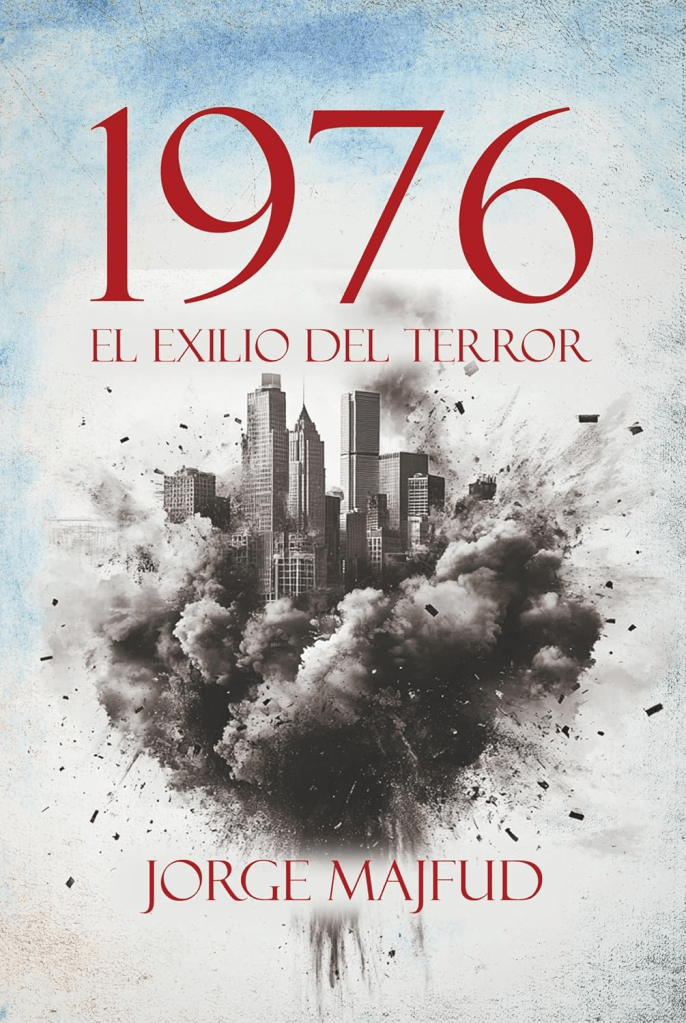

 Escritos Críticos
Debe estar conectado para enviar un comentario.